
China Life(601628)

Search documents
A股保险板块上扬,新华保险涨超5%
Mei Ri Jing Ji Xin Wen· 2026-01-26 02:20
Group 1 - The A-share insurance sector experienced an upward trend on January 26, with New China Life Insurance rising over 5% [1] - China Life Insurance and China Pacific Insurance both increased by more than 3% [1] - China Reinsurance and Ping An Insurance also saw gains, following the positive movement in the sector [1]





越来越多的人跑去香港买保险
吴晓波频道· 2026-01-26 00:29
Core Viewpoint - The insurance sector is becoming increasingly attractive to investors, with significant growth in both the A-share market and the Hong Kong insurance market, driven by lower interest rates and a shift of capital from traditional savings to higher-yielding insurance products [3][4][5]. Group 1: Insurance Market Performance - As of January 25, 2026, the A-share market's three-year return is 31.01%, while the insurance industry index has achieved a return of 51.75% [4]. - In the first three quarters of 2025, the five major listed insurance companies in A-shares reported a total net profit of 426 billion yuan, marking a year-on-year increase of 33.5% [5]. - Major insurance companies such as China Life and Ping An have shown substantial growth in both revenue and net profit, with China Life's net profit increasing by 60.5% year-on-year [6]. Group 2: Hong Kong Insurance Market Dynamics - The Hong Kong insurance market has seen a surge in mainland Chinese investors, with 50.5% year-on-year growth in new policy premiums in the first half of 2025, and 29% of new policies purchased by mainland visitors [10]. - Hong Kong's insurance products offer greater flexibility and higher investment returns compared to mainland products, attracting more sophisticated mainland investors [10][11]. - The majority of new policies in Hong Kong are denominated in US dollars (79.8%), highlighting the preference for foreign currency products among investors [12]. Group 3: Investment Opportunities in Hong Kong Insurance - Hong Kong's dividend insurance products have a much higher expected return compared to mainland products, with potential returns reaching 4%-6% over 30 years [20][21]. - The advantages of Hong Kong's critical illness insurance include higher leverage, multiple payout options, and broader coverage compared to mainland offerings [26][30]. - Innovative financial strategies, such as leveraging loans to invest in high-yield insurance products, are being explored by investors, although they carry significant risks [32][33]. Group 4: Broader Investment Trends - The Hong Kong stock market is becoming a preferred destination for mainland companies, with a record IPO financing amount of 286.3 billion HKD in 2025, indicating a robust market environment [34][35]. - The average daily trading volume in the Hong Kong stock market increased by 90% in 2025, reflecting heightened investor interest and market activity [38]. - The Hang Seng Index rose by 25.77% in 2025, showcasing strong performance amid favorable market conditions [39]. Group 5: Strategic Importance of Hong Kong - Nearly 80% of mainland enterprises are choosing Hong Kong as their global expansion starting point, benefiting from its financial services and strategic location [42]. - Hong Kong's unique position as a free trade port allows for flexible currency transactions, making it an attractive option for businesses looking to mitigate exchange rate risks [43]. - The presence of a large pool of professional service providers in Hong Kong supports mainland companies in navigating international markets effectively [46].


官宣!百亿险资,股权投资!
Zheng Quan Shi Bao Wang· 2026-01-25 18:21
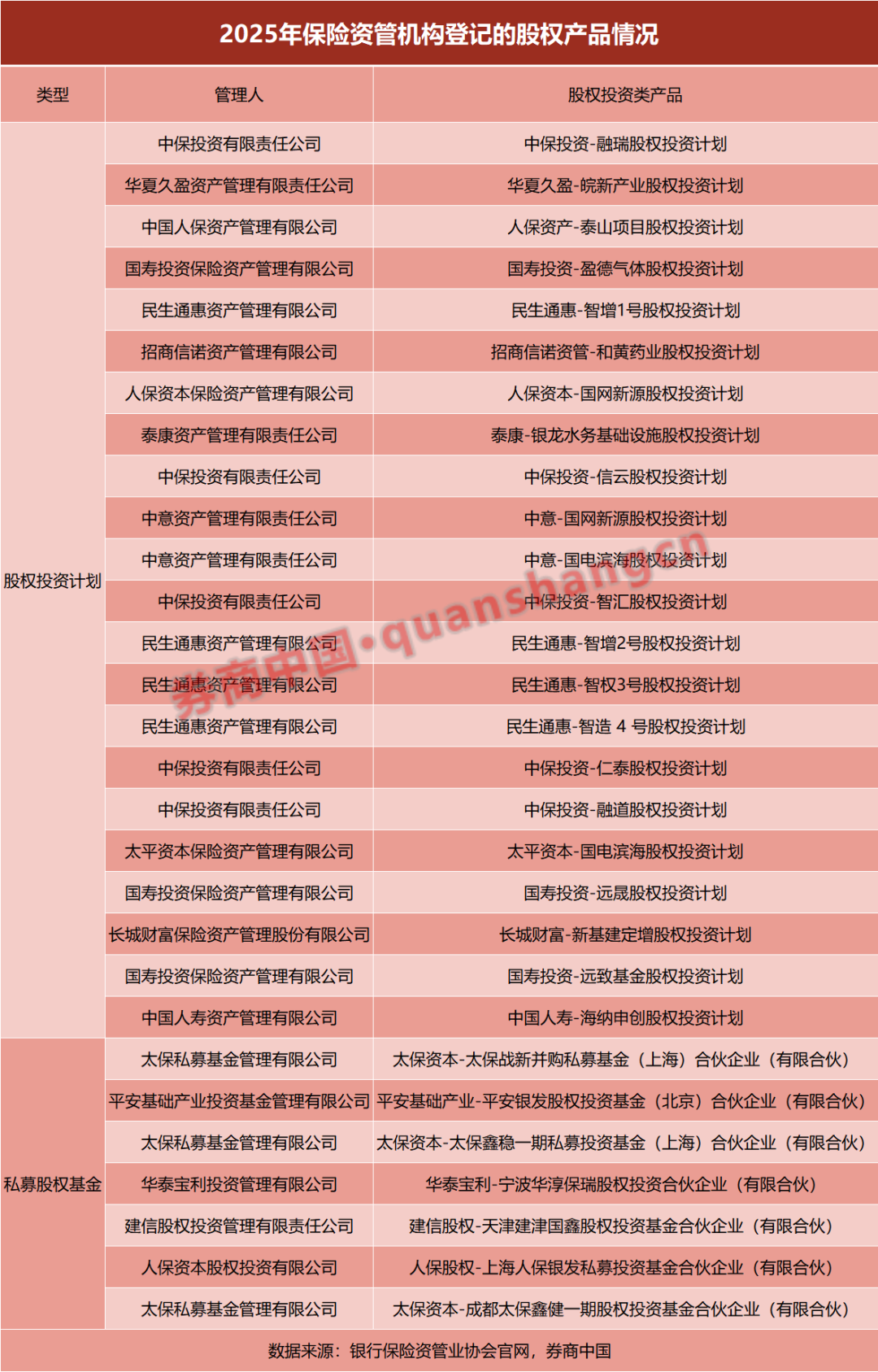
Core Viewpoint - China Life Insurance has announced significant investments in two funds, totaling nearly 12.5 billion yuan, continuing the trend of insurance companies increasing their equity investments [2][5]. Group 1: Investment Plans - China Life plans to invest 8.5 billion yuan in a pension industry fund, with a focus on both existing and new pension real estate projects, aiming to enhance asset management and operational income [3]. - The company will also invest 4 billion yuan in a Yangtze River Delta technology innovation fund, targeting sectors such as artificial intelligence, integrated circuits, and biomedicine, with at least 70% of the investment directed towards AI [4]. Group 2: Strategic Alignment - These investments align with national strategic directions and are expected to improve investment returns for insurance funds, while also enhancing the quality and returns of equity investment layouts [5]. - The investment strategy emphasizes a combination of light and heavy asset models, focusing on strategic allocation, value investment, and long-term investment principles [3]. Group 3: Industry Trends - In 2025, insurance asset management institutions registered 22 equity investment plans with a total scale of 33.532 billion yuan, indicating a growing trend in equity investment among insurance companies [6]. - The registration of private equity funds also saw significant activity, with various companies participating in the market, reflecting a robust interest in equity investment opportunities [10].
抢占投资风口 险资密集落子私募基金
Bei Jing Shang Bao· 2026-01-25 17:18
Core Viewpoint - Insurance capital is increasingly flowing into the primary market, driven by the dual forces of regulatory policies promoting long-term investments and a low-interest-rate environment, with a focus on strategic emerging industries such as artificial intelligence and renewable energy [1][4]. Group 1: Investment Activities - On January 23, China Life announced an investment of 4 billion yuan to establish the Huizhi Yangtze River Delta (Shanghai) Private Fund Partnership, focusing on artificial intelligence and related applications [3]. - China Life also plans to establish the Beijing Guoshou Pension Industry Equity Investment Fund Phase II, concentrating on the pension industry [3]. - Since 2025, there has been a surge in insurance capital entering the private investment market, with significant funds being allocated to sectors like renewable energy and healthcare [4]. Group 2: Investment Trends - The investment strategy of insurance capital continues to emphasize hard technology sectors, including new energy, automotive, and biomedicine [5]. - Insurance capital is focusing on sectors that align with national long-term strategic directions, characterized by high growth potential and technological barriers, which can provide stable long-term returns [6]. - Future trends for insurance private equity funds are expected to include broader investment areas, deeper collaboration models, and a greater emphasis on industry-specific research capabilities [6].

非银金融行业周报:偏股基金新发同比明显增长,公募强化基准约束-20260125
KAIYUAN SECURITIES· 2026-01-25 12:45
Investment Rating - The industry investment rating is "Overweight" (maintained) [1] Core Insights - The report indicates a significant improvement in market trading volume and new fund issuance at the beginning of 2026, which is favorable for the fundamentals of financial IT and brokerage sectors. Brokerage firms are expected to continue rapid growth in their brokerage business, while investment banking, asset management, and overseas expansion are likely to enhance the return on equity (ROE) of leading brokerage firms. The insurance sector has also seen a strong start in both individual and bank-insurance channels, with a continued trend of deposit migration, suggesting a positive outlook for the insurance sector in the spring market [4][6]. Summary by Sections Brokerage Sector - Daily average trading volume for stock funds reached 3.44 trillion, down 16% week-on-week; however, the average trading volume since the beginning of 2026 is 3.64 trillion, a 105% increase compared to Q1 2025 [4] - New stock and mixed fund issuance in January 2026 totaled 44.3 billion, a 56% year-on-year increase [4] - The "Public Fund Performance Benchmark Guidelines" was officially released on January 23, 2026, establishing stricter standards for benchmark selection and changes, enhancing performance evaluation and compensation management systems [4] Insurance Sector - The fourth quarter of 2025 saw a stable research value for ordinary life insurance products at 1.89%, slightly down from 1.90% in the previous quarter, indicating a trend towards stability [6] - The individual insurance channel is under pressure due to various factors, but the strong start in 2026 is expected to improve new policy growth, aided by favorable market conditions [6] - The stabilization of long-term interest rates and a favorable equity market are expected to enhance net assets and profitability for insurance companies, with a potential valuation recovery towards 1x PEV for leading firms [6] Recommended Stocks - Recommended stocks include Guangfa Securities, Guotai Junan, Huatai Securities, and China International Capital Corporation H, as well as China Life, China Pacific Insurance, and Ping An Insurance [7]


官宣!百亿险资,股权投资!
券商中国· 2026-01-25 12:12
Core Viewpoint - The article highlights China Life's significant investment plans in the equity market, focusing on a total commitment of nearly 12.5 billion yuan in two funds targeting the aging industry and technology innovation in the Yangtze River Delta region [1][4]. Group 1: Investment in Aging Industry Fund - China Life plans to invest approximately 8.5 billion yuan in a second phase of the Beijing Guoshou Aging Industry Equity Investment Fund, with a total commitment of 8.4915 billion yuan from China Life and 0.0085 billion yuan from Guoshou Qiyuan [2]. - The fund will focus on investments in the aging industry, utilizing a combination of light and heavy asset strategies, emphasizing "strategic allocation, value investment, and long-term investment" [2]. - The investment aims to enhance asset management and operational income through acquisitions of existing aging real estate projects and the expansion of new projects, contributing to the construction of the Guoshou health ecosystem [2]. Group 2: Investment in Yangtze River Delta Technology Innovation Fund - China Life is set to invest 4 billion yuan in the Huizhi Yangtze River Delta (Shanghai) Private Fund Partnership, with a total commitment of 5.0515 billion yuan from all partners [3]. - The fund will primarily target technology innovation companies in three leading sectors: artificial intelligence, integrated circuits, and biomedicine, with at least 70% of the investment allocated to artificial intelligence [3]. - Key focus areas within artificial intelligence include smart chips, intelligent software, and AI infrastructure, aligned with the "5+6" strategic framework for technological innovation [3]. Group 3: Broader Context of Insurance Capital Investment - The investments are part of a broader trend where insurance companies are increasing their equity investment activities, with 22 equity investment plans registered in 2025, totaling 33.532 billion yuan, and 7 private equity funds with a total of 35.006 billion yuan [5][8]. - China Life's transactions align with national strategic directions, aiming to enhance investment returns and capture opportunities from technological innovation, thereby improving the quality and returns of equity investment layouts [4].

金融行业周报(2026、01、25):业绩比较基准新规正式落地,坚定保险中长期向好逻辑-20260125
Western Securities· 2026-01-25 10:30
Investment Rating - The report maintains a positive long-term outlook for the insurance sector, indicating a strong continuity in market performance despite recent fluctuations [2][12][16]. Core Insights - The financial sector experienced a mixed performance this week, with the non-bank financial index down by 1.45%, underperforming the CSI 300 index by 0.83 percentage points. The insurance sector saw a decline of 4.02%, while the brokerage sector decreased by 0.61% [1][10]. - The insurance sector's performance is driven by two main factors: policy support leading to economic recovery and liquidity easing combined with a strong stock market. The report suggests a shift from liquidity-driven growth to a focus on macro policy support and economic recovery expectations [2][13][16]. - The brokerage sector is expected to benefit from new regulations that enhance investment management quality, with a recommendation to focus on larger, undervalued firms and those involved in mergers and acquisitions [3][18]. - The banking sector is facing a slight decline, but there are signs of recovery in profitability for leading banks, with recommendations to focus on banks with high dividend yields and those expected to benefit from market conditions [19][21]. Summary by Sections Insurance Sector - The insurance sector's recent decline is attributed to short-term market sentiment and liquidity changes, but the long-term outlook remains positive due to strong support from both the liability and asset sides [2][12][16]. - Key recommendations include focusing on companies like China Pacific Insurance, China Ping An, China Life (H), and China Taiping, with a specific recommendation for New China Life [4][16]. Brokerage Sector - The brokerage sector's performance is slightly better than the overall market, with a focus on the new guidelines from the regulatory body that aim to improve fund management quality [3][17]. - Recommended firms include Guotai Junan, Huatai Securities, and others, particularly those with strong merger and acquisition prospects [4][18]. Banking Sector - The banking sector has shown a decline but is expected to stabilize, with recommendations to focus on banks with high earnings elasticity and strong dividend yields [19][21]. - Specific banks to watch include Hangzhou Bank, Ningbo Bank, and others, with a focus on those that have previously been undervalued [4][21].


2025Q4公募基金持仓分析:保险持仓环比显著上行
GF SECURITIES· 2026-01-25 10:28
Investment Rating - The industry investment rating is "Buy" [3] Core Insights - The report highlights a significant increase in insurance holdings, with public fund holdings in the non-bank financial sector rising from 1.49% in Q3 2025 to 2.48% in Q4 2025, driven by market style rebalancing and marginal support from the sector's fundamentals [24][34] - The report notes that despite the ongoing pursuit of high-elasticity technology sectors, the non-bank financial sector is at a historical low valuation, with strong performance in the insurance sector and increased trading volumes in brokerage firms, indicating fundamental resilience [24][34] - The report suggests that the public fund holdings in the securities sector increased slightly from 0.63% in Q3 2025 to 0.71% in Q4 2025, reflecting improved performance trends and the appeal of low valuations [33] Summary by Sections New Public Fund Issuance - In Q4 2025, the number of newly issued funds remained stable at approximately 477, with a year-on-year increase of 81% compared to 264 in Q4 2024, while the issuance volume decreased by 15.19% year-on-year [12][19] - The share of newly issued equity funds decreased from 41% in the previous quarter to 32%, while mixed fund shares increased from 15% to 19% [12] Non-Bank Financial Fund Holdings - Public fund holdings in the non-bank financial sector increased, with the total market capitalization share rising to 2.48% in Q4 2025 [24] - The report attributes this increase to a shift in funds from crowded technology sectors to undervalued defensive sectors, alongside a recovery in northbound capital allocations [24] Major Non-Bank Companies' Holdings - The report indicates that major non-bank companies saw slight increases in public fund holdings, with China Ping An leading at 1.11% and China Pacific Insurance at 0.35% [41] - The report recommends focusing on key companies such as CITIC Securities, Huatai Securities, and China Ping An for potential investment opportunities [24][41]

险资密集落子私募基金,长线资本抢占产业投资风口
Bei Jing Shang Bao· 2026-01-25 10:25
Core Insights - Insurance capital is increasingly flowing into the primary market, driven by the dual forces of regulatory policies promoting long-term investments and a low-interest-rate environment [1][4] - China Life announced a partnership to establish a private equity fund focusing on artificial intelligence and related applications, with a total investment of 4 billion yuan [3][4] - Since 2025, there has been a surge in insurance capital entering the private equity market, with significant investments in sectors like renewable energy and biomedicine [4][5] Investment Trends - Insurance funds are actively investing in private equity, with a focus on hard technology sectors such as artificial intelligence, integrated circuits, and renewable energy [5][6] - The investment strategy aligns with national strategic directions, emphasizing high growth potential and technological barriers, which are expected to yield stable long-term returns [5][6] - The insurance sector is encouraged to support venture capital through diversified investment tools, enhancing the development of long-term and patient capital [5][6] Future Outlook - Predictions indicate that insurance capital will expand its investment scope to include more hard technology and livelihood-related industries by 2026 [6] - There is an expectation for deeper collaboration models, potentially enhancing direct investment capabilities or linking with industrial capital [6] - Insurance capital is likely to focus more on niche sectors, strengthening research and investment capabilities to navigate uncertainties while adjusting investment rhythms and exit strategies [6]


非银金融行业周报(2026/1/19-2026/1/23):4Q25非银板块边际迎来显著增配,业绩快报释放高增长信号-20260125
Shenwan Hongyuan Securities· 2026-01-25 09:13
Investment Rating - The report maintains a positive outlook on the brokerage sector, indicating it is currently undervalued compared to the market, with a recommendation to focus on the sector's beta attributes and potential catalysts such as upcoming earnings reports [2][3]. Core Insights - The brokerage sector has seen a significant increase in allocation from active equity funds, with the proportion of non-bank sector holdings rising to 2.96%, up 102 basis points quarter-over-quarter, surpassing the three-year average of 1.63% [2]. - The report highlights that the earnings forecasts for 2025 are showing strong growth, with companies like Everbright Securities expecting a net profit of 3.73 billion yuan, a year-on-year increase of 22% [2]. - The insurance sector is experiencing a decline, with the insurance index dropping 4.62%, underperforming the market [2]. Summary by Sections Market Review - The Shanghai Composite Index closed at 4,702.50, with a decline of 0.62% over the week, while the non-bank index fell by 1.45% [5]. Non-Bank Sector Insights - The report notes that the brokerage sector is currently experiencing a mismatch between fundamentals and valuations, suggesting a potential for recovery as market conditions improve [2]. - Key brokerage firms such as Huatai Securities and CITIC Securities are highlighted for their strong performance and growth potential [2]. Individual Company Announcements - China Pacific Insurance reported a cumulative premium income growth of 8.1% for 2025, indicating resilience in its business model [10]. - Guotai Junan Securities anticipates a significant increase in net profit for 2025, projecting a growth of approximately 406% [13]. - Northeast Securities expects a net profit increase of 69.06% for 2025, driven by enhanced market conditions [14]. Investment Recommendations - The report recommends focusing on leading brokerage firms with strong competitive positions, such as Guotai Junan, GF Securities, and CITIC Securities, as well as firms with high earnings elasticity like Huatai Securities and Dongfang Securities [2]. - In the insurance sector, companies like China Life, New China Life, and Ping An are recommended for their potential value re-evaluation opportunities [2].