CHINA TELECOM(601728)

Search documents
eSIM解禁一月真实体验:移动高冷、联通亲切,线下都很拉胯?
3 6 Ke· 2025-12-05 11:20
Core Insights - The introduction of eSIM technology in China marks a significant shift in the telecommunications industry, allowing for a "slot-free" mobile experience that has been long awaited [1][4][5] - The delay in eSIM adoption was primarily due to security concerns related to telecom fraud, which have now been addressed through advancements in identity verification technology [5][8] - The market demand for eSIM-compatible devices, such as the new iPhone Air, has pressured telecom operators to expedite the rollout of eSIM services [8] Industry Overview - eSIM, or embedded SIM, integrates the SIM card directly into the device, eliminating the need for a physical card slot [4] - The technology has been available in devices like smartwatches and tablets for years, but its implementation in smartphones has faced regulatory delays [4][5] - The recent approval from the Ministry of Industry and Information Technology (MIIT) allows major telecom operators in China to begin commercial trials of eSIM [1] Operator Experience - The user experience for eSIM activation varies significantly among the three major telecom operators: China Mobile, China Unicom, and China Telecom [9][12] - China Mobile's app is less user-friendly, requiring mandatory login and making it difficult for new users to access eSIM services [13][15] - In contrast, China Unicom offers a more accessible app experience, allowing users to find nearby service points without logging in [16][18] - China Telecom's app is somewhat balanced, providing visibility for eSIM services but still requiring login for full access [20][22] Activation Process - The eSIM activation process involves several steps, including scanning the device's IMEI code and downloading configuration files via Wi-Fi [29] - The overall time taken for activation ranges from 15 to 20 minutes, depending on the operator and the staff's familiarity with the eSIM process [31] - Users must visit physical stores to activate eSIM, which contradicts the technology's digital nature and highlights the current limitations in service delivery [45][50] Future Outlook - eSIM technology is expected to enhance device design by saving space, allowing for larger batteries or improved cooling systems in smartphones [46] - However, the current eSIM experience in China is still evolving, with significant room for improvement in terms of convenience and efficiency [48][50] - As technology and policies continue to develop, a more streamlined eSIM activation process is anticipated, aligning with global standards [51]




2025 数智科技生态大会:中国电信董事长柯瑞文畅谈人工智能战略布局
Sou Hu Cai Jing· 2025-12-05 10:45
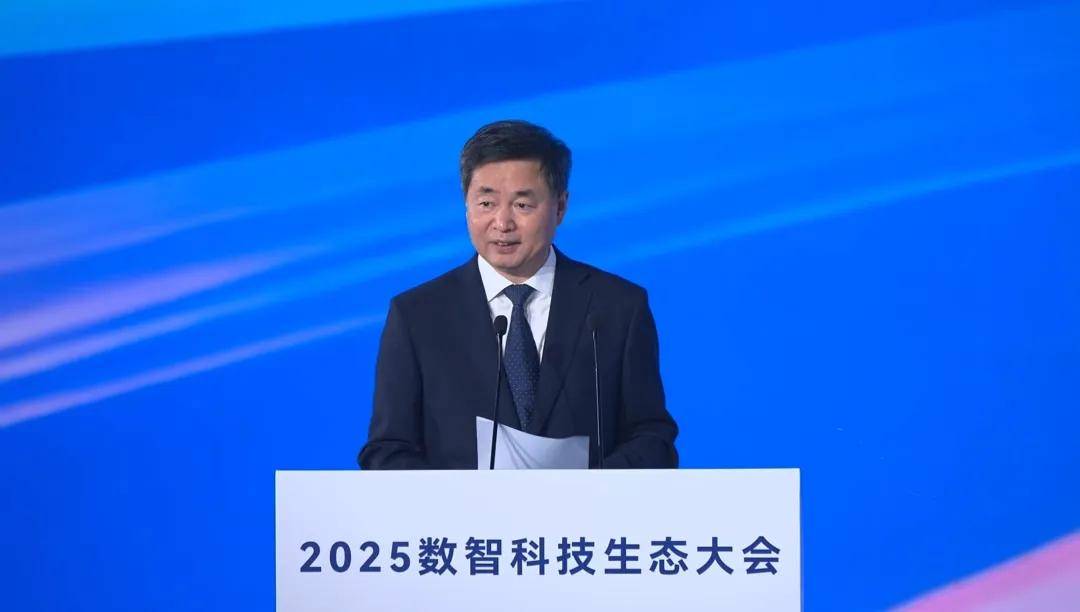
12月5日,中国电信2025 数智科技生态大会在美丽的羊城盛大举行。中国电信董事长柯瑞文出席大会并发表主旨演讲,深入阐述中国电信在人工智能领域 的战略布局、发展成果与未来展望,为推动人工智能与经济社会深度融合指明方向。 二是推动人工智能创新发展,急需构建高水平开放合作体系。人工智能发展是技术、算力、数据及场景深度融合的系统工程,需研发机构、企业、客户、 产业链各方协同攻关。针对算力有效供给不足、高质量数据缺乏等问题,需统筹资源、打破数据壁垒,实现数据可信流通,为 AI 模型迭代提供基础。 三是人工智能发展必须守住安全底线,构建全方位安全治理能力。人工智能深度应用带来新安全风险,安全成为发展基石。需构建覆盖云网数据模型应用 的动态防护体系,防范深度伪造、算法攻击等风险,同时重视 AI 带来的伦理挑战,加强治理,推动人工智能健康有序发展。 国家对数字中国建设作出部署,提出加快人工智能等数字技术创新。中国电信坚决贯彻落实党中央决策部署,主动融入国家人工智能发展战略,发挥国家 队和主力军作用,加快建设五位一体的智能服务体系,携手合作伙伴打造国家战略基础设施,提供数智化产品和服务。 一是加快建设新型数字信息基础设施,筑 ...

通信行业资金流入榜:实达集团、永鼎股份等净流入资金居前
Zheng Quan Shi Bao Wang· 2025-12-05 09:07
Market Overview - The Shanghai Composite Index rose by 0.70% on December 5, with 29 out of the 31 sectors in the Shenwan classification experiencing gains, led by non-bank financials and non-ferrous metals, which increased by 3.50% and 2.84% respectively [1] - The communication sector also saw an increase of 1.23% [1] - The banking sector was the only one to decline, with a drop of 0.58% [1] Capital Flow - The net inflow of capital in the two markets reached 16.316 billion yuan, with 20 sectors experiencing net inflows [1] - The non-bank financial sector had the highest net inflow of 4.487 billion yuan, followed by the non-ferrous metals sector with a net inflow of 3.781 billion yuan [1] - Conversely, 11 sectors experienced net outflows, with the household appliances sector leading with a net outflow of 1.202 billion yuan, followed by the media sector with a net outflow of 1.04 billion yuan [1] Communication Sector Performance - The communication sector had a net inflow of 2.729 billion yuan, with 106 out of 124 stocks in the sector rising, including 3 stocks hitting the daily limit [2] - The top three stocks with the highest net inflow were Shida Group (1.135 billion yuan), Yongding Co. (962 million yuan), and Taicheng Light (553 million yuan) [2] - Eight stocks in the communication sector experienced net outflows exceeding 100 million yuan, with ZTE Corporation leading at 955 million yuan [3] Communication Sector Capital Inflow - The top stocks in the communication sector by capital inflow included: - Shida Group: +9.93%, turnover rate 36.14%, inflow 1.134 billion yuan - Yongding Co.: +10.03%, turnover rate 13.55%, inflow 962 million yuan - Taicheng Light: +9.25%, turnover rate 21.27%, inflow 553 million yuan [2] Communication Sector Capital Outflow - The top stocks in the communication sector by capital outflow included: - ZTE Corporation: -2.26%, turnover rate 4.12%, outflow 954.91 million yuan - Zhongji Xuchuang: +0.29%, turnover rate 2.56%, outflow 567.94 million yuan - Xinyi Sheng: +0.87%, turnover rate 4.00%, outflow 407.15 million yuan [3]





中国电信共链大会发起成立两大生态联盟,共筑产业协同新生态
Di Yi Cai Jing· 2025-12-05 07:40
Core Viewpoint - China Telecom is enhancing its industrial chain through the establishment of two new alliances aimed at driving digital consumption and data operations, marking a shift towards a more intelligent and collaborative development phase in the industry [1] Group 1: Digital Consumption Rights Ecosystem Alliance - The Digital Consumption Rights Ecosystem Alliance focuses on resource integration and consumer activation, aiming to support public services and industrial growth through platform empowerment [1] - This alliance is designed to facilitate the transition towards a more digital and consumer-oriented economy [1] Group 2: Penetrative Regulatory Ecosystem Alliance - The Penetrative Regulatory Ecosystem Alliance utilizes China Telecom's self-developed intelligent regulatory platform, "Yufeng," to strengthen enterprise risk control measures [1] - This initiative aims to create a robust risk management framework for businesses, ensuring compliance and security within the industry [1] Group 3: Synergy and Innovation - Both alliances are complementary, working together to build an open, intelligent, and secure industrial ecosystem [1] - The collaboration is expected to inject innovative momentum into the high-quality development of the industrial chain [1]
中国电信:推进网联无人机应用规模化 已在30省落地超500个项目
Xin Lang Cai Jing· 2025-12-05 06:56
Core Viewpoint - China Telecom has introduced an AI-driven low-altitude economy capability system during the 2025 Digital Technology Ecological Conference, aiming to enhance the application of networked drones across various sectors [1] Group 1: Product Launches - The company launched the Tianyi Star Shield low-altitude reconnaissance countermeasure platform [1] - The Tianyi Star Kan low-altitude government unified flight platform was also introduced [1] - An upgrade to the Tianyi Star Cloud low-altitude flight operation platform to version 5.0 was announced [1] Group 2: Strategic Focus - China Telecom aims to accelerate the cultivation of open low-altitude economic scenarios [1] - The company is focusing on deepening applications in unified flight, rural governance, public security, and emergency rescue [1] - A collaborative force for low-altitude emergency rescue has been established [1] Group 3: Project Implementation - The company has implemented over 500 projects across 30 provinces in China [1] - The scale of networked drone applications is being promoted for further development [1]
2025数智科技生态大会开幕,高通孟樸:云强、网稳、端智能,推动AI真正普惠落地
Huan Qiu Wang· 2025-12-05 06:53
Core Insights - The 2025 Digital Intelligence Technology Ecological Conference, hosted by China Telecom, focuses on the theme "Intelligent Navigation, Intelligent Coexistence," discussing trends in AI, satellite communication, and low-altitude economy [1] Group 1: AI Development and Collaboration - The "Intelligent Cloud Ecosystem" is a key topic at the conference, emphasizing the importance of collaboration among network operators, cloud service providers, and terminal manufacturers for AI's widespread adoption [3][6] - Qualcomm's Chairman in China, Meng Pu, highlights that the rapid evolution of large models and network infrastructure has laid the foundation for AI development, stressing the need for a collaborative approach among cloud, network, and terminal sides to realize AI's potential [3][4] Group 2: Practical Applications and Innovations - Qualcomm has collaborated with China Telecom over the past year to develop terminal-side AI applications, including the Tianyi AI glasses and the Maigang AI phone, which allows users to access AI services easily [4][7] - The focus on terminal-side AI is crucial for addressing privacy, security, performance, and latency issues, making it essential for AI to operate close to users rather than solely relying on data centers [6][7] Group 3: Future Outlook - For AI to be truly accessible, it must meet three conditions: strong cloud capabilities, stable network performance, and intelligent terminal devices, aligning with the conference's theme of making AI services available to everyone [3][6]

中国电信天翼视联董事长胡伟良:“AI+安防”是重点融合应用方向
Sou Hu Cai Jing· 2025-12-05 04:11
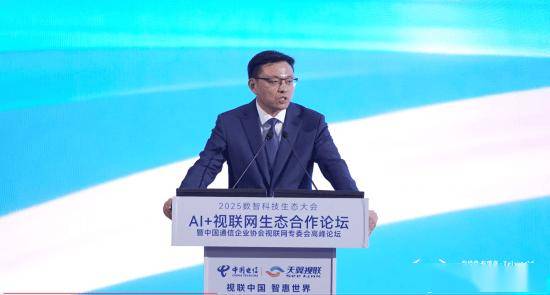
Core Insights - The conference focused on the development of the AI+ visual internet ecosystem, highlighting the importance of collaboration and innovation in the industry [1] Industry Trends - National policies have emphasized "AI+ security" as a key integration application direction, promoting intelligent front-end deployment and platform integration [3] - The market for "AI+ security" is rapidly expanding, driven by demand iteration and the rise of large models and multimodal technologies, enhancing AI algorithm capabilities [3] - Technological advancements, such as DeepSeek, have significantly lowered the application threshold for large models, shifting the core engine of AI development from computing power to data-driven approaches [3] Strategic Implementation - The company aims to solidify its position in national video infrastructure through the "1233 strategy," focusing on technological innovation and open collaboration as core competitive advantages [3] - Emphasis on the integration of cloud, network, terminal, intelligence, data, and security to tackle core technologies [4] - Development of a unified platform that integrates "one network, one cloud" to enhance operational efficiency [4] Core Capabilities - The company has achieved end-to-end security that is self-controlled, creating a differentiated advantage [4] - A comprehensive terminal system has been established for both consumer and industry applications [4] - AI application upgrades have been implemented through standardized products, enabling AI+ empowerment across multiple industries [4] Domestic and International Development - The company has achieved integrated operational services and collaborative governance in the domestic visual internet sector [4] - Strengthening partnerships with overseas operators to create a comprehensive capability supply system and innovate export models [4] Ecosystem Collaboration - The company advocates for an open cooperation development philosophy, emphasizing the importance of collaborative capabilities across the entire ecosystem [4] - Achievements include the integration of platforms, terminals, applications, AI, data, and capital into a cohesive operational framework [4] Collaborative Logic - The company adheres to four major cooperation logics: integration of industry and capital, synergy of self-research and collaboration, coordination of development and security, and interaction between centralized and decentralized approaches [5] - A commitment to high-quality development through deep integration of AI and terminals, alongside an open ecological cooperation path [5]
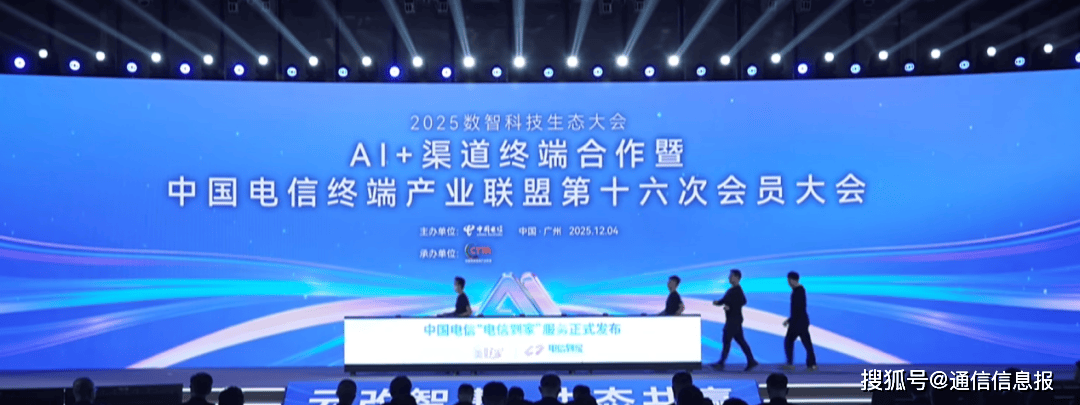
2025数智科技生态大会|中国电信携手AI终端生态合作伙伴 智惠千家万户
Sou Hu Cai Jing· 2025-12-05 02:08
Core Insights - The 2025 Digital Technology Ecological Conference in Guangzhou highlights China's Telecom's commitment to embracing artificial intelligence (AI) and upgrading its strategy from "cloud transformation" to "intelligent benefits" [1][2] - AI terminals are significantly changing lifestyles, with various innovative products showcased at the conference [1] Group 1: AI Capability Enhancement - China Telecom is systematically building its AI capabilities, with its "Star Sea" data intelligence platform gathering over 10 trillion tokens of general model corpus and 14 industry datasets, totaling over 350TB [2] - The company employs a dual-track strategy of "independent + ecosystem" for model development, launching over 80 industry models and 30 intelligent applications, serving more than 20,000 industry clients [2] Group 2: Innovative Consumer Products and Experiences - The launch of the new generation Tianyi AI Central Screen integrates communication, entertainment, security, and smart home control, enhancing digital life with a focus on user interaction [4] - The "Star Little Chen Terminal Intelligent Agent" redefines call experiences with features like real-time fraud alerts and smart meeting assistance, enhancing both personal and professional communication [5] Group 3: Collaboration and AI Terminal Popularization - China Telecom initiated the AI + Terminal Cooperation Star Plan, signing key partnerships with major companies like Huawei and Xiaomi to expand its terminal ecosystem [7] - The "Jingyi Huanneng Plan" with JD.com allows consumers to enjoy operator subsidies and a seamless purchasing experience for AI devices, enhancing service efficiency [7][8] Group 4: Consumer Incentives and Outreach - In Shaanxi, over 1,000 mobile sales stores are integrated into the "National Subsidy" program, offering substantial discounts on AI devices, with some models seeing up to 2,000 yuan in total savings [8] - The "AI Terminal Going to the Countryside" initiative in Shandong promotes AI technology in rural areas, resulting in a 45% increase in AI terminal sales in covered counties [8] Group 5: Service Innovations - The "Telecom to Home" service allows users to book professionals for various business operations and terminal deliveries, enhancing customer service and convenience [10]
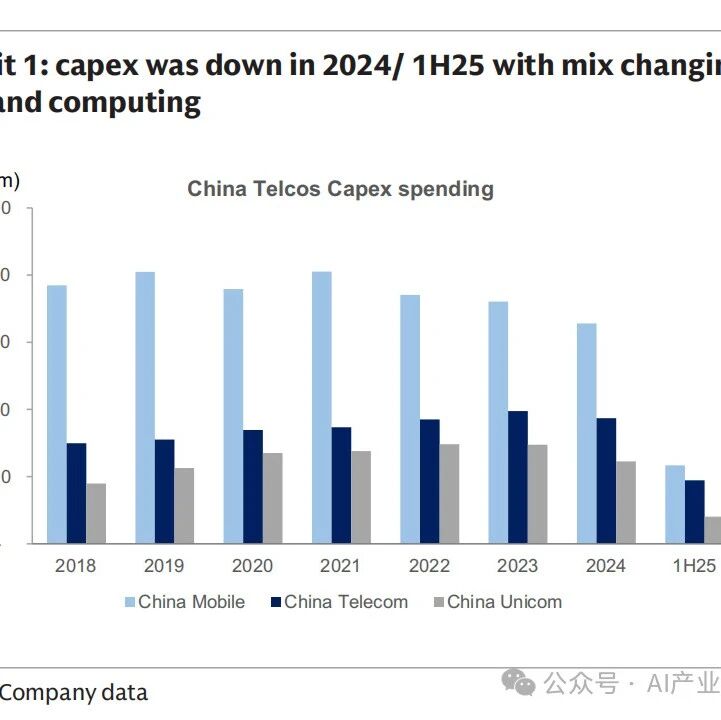
高盛:中国运营商资本开支转向AI,2025年电信网络支出将减少
傅里叶的猫· 2025-12-04 13:36
Core Insights - The report highlights a shift in capital expenditure by telecom operators towards computing infrastructure, driven by a reduction in traditional telecom network spending and an increasing demand for AI capabilities [3][4]. Capital Expenditure Trends - In 2024 and the first half of 2025, capital expenditure by Chinese telecom operators is expected to decline, primarily due to reduced spending on traditional telecom networks like 5G. However, there is a notable increase in investments in AI and computing infrastructure to meet growing market demands [4][8]. - Goldman Sachs projects that despite a further decrease in telecom network spending in 2025, the growth in capital expenditure related to intelligent computing capabilities will partially offset this decline, leading to an overall decrease in annual capital expenditure [8]. Specific Operator Projections - China Telecom is expected to have a capital expenditure of 84 billion RMB in 2025, down from 94 billion RMB in 2024, with an increase in investments related to computing platforms [8]. - China Unicom's capital expenditure is projected to be 55 billion RMB in 2025, down from 61 billion RMB in 2024, primarily due to reduced 5G-related capital expenditure, but with a simultaneous increase in AI infrastructure investments [8]. Competitive Advantage - Telecom operators possess their own Internet Data Center (IDC) resources, which reduces reliance on external IDC suppliers and helps lower overall operational costs [7].
两家保险巨头的九大重仓股
表舅是养基大户· 2025-12-04 13:34
Core Viewpoint - The article discusses the significant role of the insurance-related private equity fund "Guofeng Xinghua," established by China Life and Xinhua Insurance, in the current market landscape, highlighting its substantial capital and investment strategies [5][6][7]. Group 1: Fund Overview - Guofeng Xinghua is a unique private equity fund that does not sell products externally and is the first insurance-related off-balance-sheet private equity fund in the market [6]. - The fund has a total scale of 1.1 trillion yuan, with three phases: 500 billion yuan for Phase I, 200 billion yuan for Phase II, and 400 billion yuan for Phase III [7]. - This fund's scale positions it among the top ten active equity fund managers in the market, significantly influencing investment trends within the insurance sector [7]. Group 2: Stock Holdings - The fund currently holds nine stocks among the top ten shareholders of listed companies, with four of them being newly added in the third quarter [9]. - The stocks include major companies such as Yili, Sinopec, and China Telecom, with most having market capitalizations around or above 200 billion yuan [11][12]. - A notable characteristic is that eight of the nine stocks have shown negative profit growth in the first three quarters, indicating a focus on stability rather than growth [12]. Group 3: Valuation and Dividend Analysis - The price-to-earnings (PE) ratios of the stocks range from 10 to 23, with Yili being the most expensive at 23 times [12]. - The dividend yields for 2024 are generally above 3.5%, with some stocks exceeding 5%, suggesting that these investments are more attractive compared to last year [12]. - The dividend payout ratios for all nine stocks exceed 50%, with Yili's payout ratio over 90%, indicating a commitment to shareholder returns [13]. Group 4: Investment Strategy Insights - The article emphasizes that the insurance private equity fund is likely not fully invested yet, with ongoing capital inflows expected as the model transitions from pilot to regular operation [15]. - It highlights the importance of long-term investment strategies in the current low-interest-rate environment, suggesting that both A-shares and Hong Kong stocks with high dividends are worth considering as core assets [16]. - The article also notes that institutional investors are increasingly attracted to high-dividend stocks, particularly those with monopolistic characteristics, as they ensure sustainable future dividends [16].