
CEB BANK(601818)

Search documents
中国光大银行(06818) - 二零二五年度中期股息-股息货币选择表格
2026-01-26 08:31
+ CCS3763 EBBH + NAME(S) AND ADDRESS OF REGISTERED SHAREHOLDER(S) 登記股東之姓名及地址 (A joint stock company incorporated in the People's Republic of China with limited liability) (於中華人民共和國註冊成立的股份有限公司) (Stock code 股份代號:6818) DIVIDEND CURRENCY ELECTION FORM FOR 2025 INTERIM DIVIDEND OF RMB 0.105 PER SHARE ("2025 INTERIM DIVIDEND") 二零二五年度中期股息每股人民幣 0.105 元(「二零二五年度中期股息」) 股息貨幣選擇表格 Registered shareholders will automatically receive their cash dividends in Hong Kong dollars unless they elect to receive them in Renminbi. No ...
3.5亿诈骗案最新进展!招商银行、平安银行等被光大银行起诉
Xin Lang Cai Jing· 2026-01-26 00:55
Core Viewpoint - A significant fraud case involving multiple banks has reached a new development, with a total claim of 489 million yuan, including 350 million yuan in principal and 139.4 million yuan in fund occupation fees [1][12]. Group 1: Background of the Fraud Case - The fraud originated from Liu, the legal representative of Juyin Yuan Company, who conspired with Zhang, an assistant bank manager, to secure a 350 million yuan loan by providing false information [2][3]. - Liu concealed the company's substantial debts and misrepresented the need for funds, leading to a series of fraudulent loan applications [2][3]. Group 2: Execution of the Fraud - The fraudulent scheme involved a complex process where funds were transferred between banks under false pretenses, including the modification of financial statements and the creation of fake loan documents [3][5]. - The funds were eventually funneled to Juyin Yuan Company through various banking channels, including a securities company and another bank, all facilitated by forged documents [5][6]. Group 3: Legal Proceedings and Outcomes - Following the fraud, Liu was sentenced to life imprisonment for contract fraud, while Zhang received a six-year prison term for loan fraud [7]. - The case has led to ongoing legal disputes between banks, with the latest court ruling stating that the agreements made under fraudulent circumstances are invalid, thus dismissing claims for repayment of the loan [11][12].



这家券商陷3.5亿“通道”迷局漩涡!谁该为“假公章”买单?
券商中国· 2026-01-25 23:25
Core Viewpoint - The article discusses a legal dispute involving Jinlong Co., Ltd. and Zhongshan Securities, stemming from a channel business transaction that occurred a decade ago, highlighting the ongoing risks and responsibilities associated with such financial arrangements [2][3][4]. Group 1: Background of the Dispute - The dispute originated from a 3.5 billion yuan transaction where Everbright Bank's Changchun branch claims its funds were misappropriated through fraudulent activities involving employees and the actual controller of the financing party [2][4]. - The lawsuit seeks a total of 489 million yuan, including damages for the occupied funds, as Everbright Bank alleges that the involved parties should bear joint liability for the losses incurred [4][11]. Group 2: Legal Proceedings and Historical Context - This is not the first lawsuit; Everbright Bank previously sued the Wuxi branch of China Merchants Bank in 2015 over the same issue but lost the case [6][8]. - The Supreme Court ruled that the agreements involved were fraudulent and did not reflect the true intentions of Everbright Bank, leading to a dismissal of their claims [8][9]. Group 3: Implications for Channel Business - The article emphasizes the ongoing scrutiny of channel business practices, particularly after the introduction of asset management regulations aimed at curbing such activities [11][12]. - Judicial precedents indicate that channel providers may be held liable for losses, as seen in cases where trust companies were required to compensate investors for negligence in managing channel business [10][12].



每周股票复盘:光大银行(601818)拟赎回350亿元优先股
Sou Hu Cai Jing· 2026-01-24 17:48
Core Viewpoint - China Everbright Bank (601818) has shown a slight increase in stock price, closing at 3.37 yuan, reflecting a 0.6% rise from the previous week, with a total market capitalization of 199.12 billion yuan [1]. Trading Information Summary - On January 19, China Everbright Bank executed a block trade with a transaction amount of 6.04 million yuan [2]. Company Announcement Summary - China Everbright Bank plans to redeem 3.5 billion shares of preferred stock on February 11, 2026, with an issuance scale of 35 billion yuan. The redemption price will include the face value plus accrued dividends up to the day before redemption [1][2].
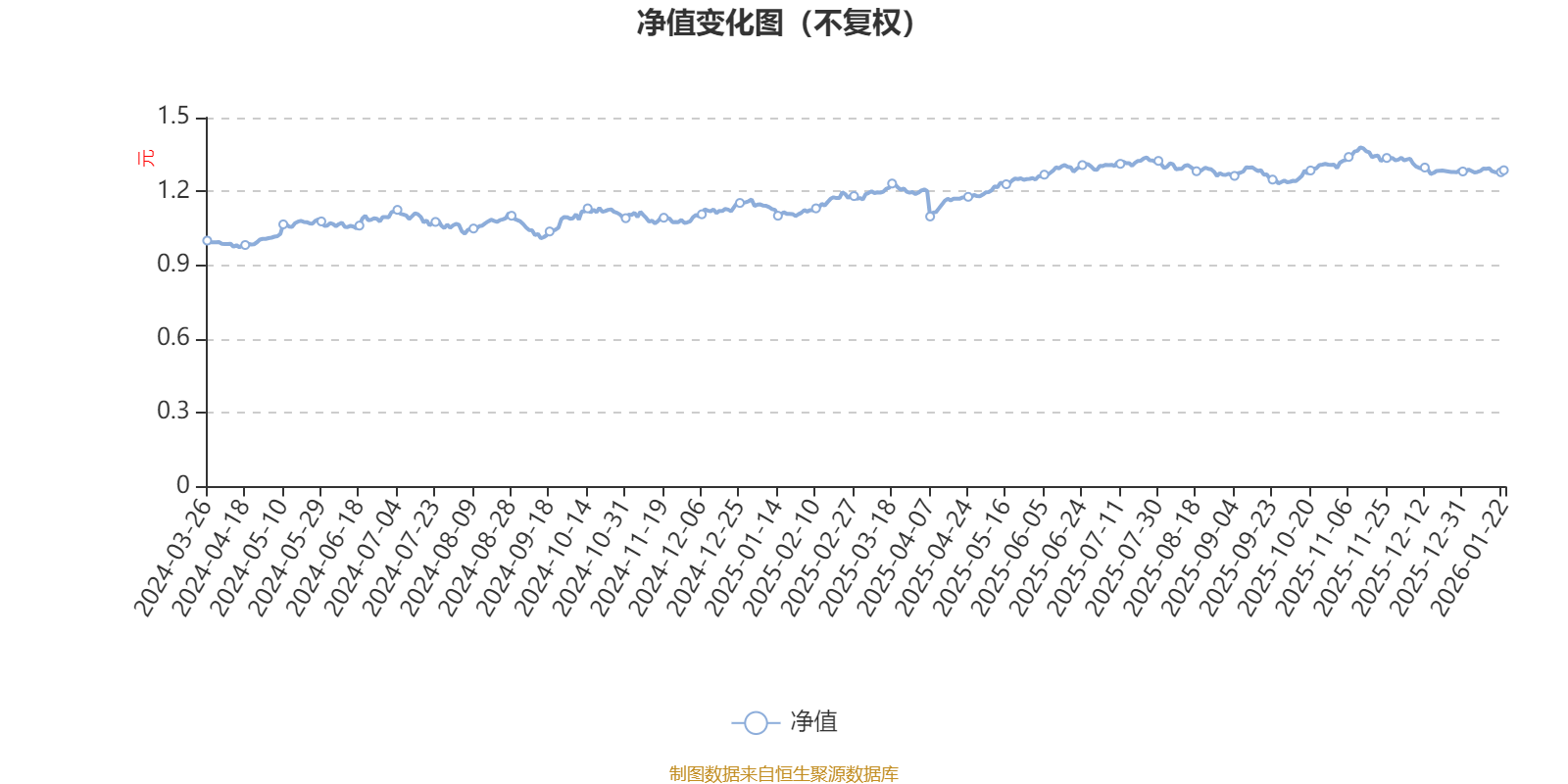
平安港股通红利精选混合发起式A:2025年第四季度利润1196.43万元 净值增长率3.5%
Sou Hu Cai Jing· 2026-01-24 09:43
Core Viewpoint - The AI Fund Ping An Hong Kong Stock Connect Dividend Select Mixed Fund A (021046) reported a profit of 11.96 million yuan for Q4 2025, with a net asset value growth rate of 3.5% during the period [3]. Fund Performance - As of January 22, the fund's unit net value was 1.286 yuan, with a fund size of 389 million yuan [3][17]. - The fund's performance over the past three months showed a return of -0.63%, ranking 588 out of 621 comparable funds; over the past six months, it returned -0.69%, ranking 607 out of 621; and over the past year, it achieved a return of 19.68%, ranking 525 out of 613 [4]. Investment Strategy - The fund manager indicated that in the context of declining cash yields, high-dividend assets have shown a "quasi-fixed income" characteristic, becoming a dominant investment style in Q4. In contrast, growth sectors faced increased volatility and pressure due to market sentiment and fluctuating fundamental expectations [3]. - The fund will continue to focus on stable high-dividend stocks, particularly in the financial, telecommunications, energy, and public utility sectors, which are expected to provide visibility and stable profits during the economic recovery [3]. Risk Metrics - The fund's Sharpe ratio since inception is 1.3198, indicating a favorable risk-adjusted return [9]. - The maximum drawdown since inception is 10.87%, with the largest quarterly drawdown occurring in Q2 2025 at 9.1% [12]. Portfolio Composition - The average stock position since inception is 85.49%, with a peak of 89.53% at the end of H1 2024 and a low of 71.51% at the end of Q3 2024 [15]. - The fund has a high concentration of holdings, with the top ten stocks including China National Offshore Oil, China Mobile, CITIC Bank, Bank of China, and others [20].


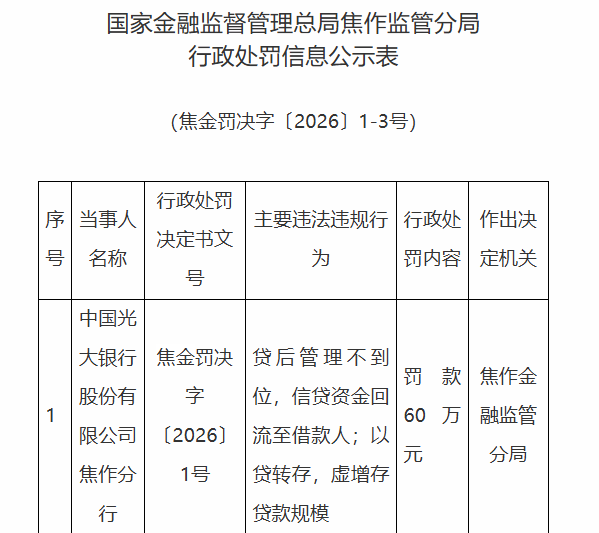
光大银行焦作分行违规被罚60万 贷后管理不到位等
Zhong Guo Jing Ji Wang· 2026-01-24 06:24
Core Viewpoint - The China Banking and Insurance Regulatory Commission has imposed penalties on China Everbright Bank's Jiaozuo branch for violations related to loan management and fund misappropriation [1]. Group 1: Penalties Imposed - China Everbright Bank's Jiaozuo branch was fined 600,000 yuan for inadequate post-loan management and for allowing loan funds to flow back to borrowers, as well as for inflating deposit and loan figures through loan transfers [1][3]. - Wu Zhipeng, the former manager of the corporate business department at the Jiaozuo branch, received a warning for similar violations regarding post-loan management [1][4]. - Ren Liping, the former vice president of the Jiaozuo branch, was also warned for inflating deposit and loan figures through loan transfers [1][4].
中山证券被光大银行长春分行起诉 陷入4.89亿元案件纠纷
Xi Niu Cai Jing· 2026-01-24 00:57
Group 1 - The core issue involves a lawsuit filed by Everbright Bank against Zhongshan Securities and other parties, claiming joint liability for damages amounting to 489 million yuan due to a fraudulent investment scheme [2][5] - The lawsuit stems from a 2014 agreement where Zhongshan Securities was instructed by China Merchants Bank Wuxi Branch to manage a directed asset management plan, which involved a loan of 350 million yuan to Liuhe Rice Industry [4][5] - Zhongshan Securities reported a significant decline in its financial performance for 2025, with operating revenue of 550 million yuan, a decrease of 29.17%, and a net profit of 21.1 million yuan, down 88.06% year-on-year [5][6] Group 2 - The decline in Zhongshan Securities' performance is attributed to substantial drops in key revenue streams, including investment banking fees, asset management fees, and investment income [6] - Specifically, net income from investment banking fees fell by 71.53% to 10.82 million yuan, while asset management fees decreased by 73.02% to 4.87 million yuan [6]

起投门槛“多级连跳” 黄金积存业务悄然生变
Zhong Guo Jing Ying Bao· 2026-01-23 18:52
Core Viewpoint - The recent surge in gold prices has led to a historical high of $4,800, prompting banks to raise the minimum investment thresholds for gold accumulation products, reflecting a shift in risk management strategies and product positioning in the banking sector [1][2][3] Group 1: Changes in Investment Thresholds - Many banks have increased the minimum investment amount for gold accumulation products to over 1,000 yuan, with examples including ICBC raising its threshold from 1,000 yuan to 1,100 yuan and Ningbo Bank from 1,000 yuan to 1,200 yuan [2][3] - The adjustments in thresholds have been frequent, with ICBC raising its minimum investment five times since early 2025, from 650 yuan to 1,100 yuan [2][3] Group 2: Reasons for Increased Thresholds - The increase in thresholds is attributed to multiple factors, including heightened market volatility, regulatory compliance requirements, and risk management strategies aimed at reducing potential complaints and reputational risks [3][4] - Banks are also responding to the rising gold prices, which have surpassed 1,000 yuan per gram, leading to higher minimum investment amounts due to the nature of gold accumulation products [4][6] Group 3: Impact on Investors - The rising thresholds may lead some investors to explore alternative gold investment channels, but for many, bank accumulation products remain a preferred option due to their convenience and liquidity [5][6] - The shift towards higher investment thresholds indicates a transition from a "universal" investment approach to a more "quasi-professional" one, requiring investors to possess greater knowledge and risk awareness [6][7] Group 4: Future Outlook - The outlook for gold prices suggests continued high volatility, with potential short-term corrections expected due to various geopolitical and economic factors, including a possible 15%-20% pullback under extreme scenarios [7] - Investors are advised to carefully assess their risk tolerance and investment knowledge in light of the evolving landscape of gold accumulation products and enhanced bank risk management measures [7]


丈量地方性银行(1):江苏127家区域性银行全梳理-20260123
GF SECURITIES· 2026-01-23 11:08
Investment Rating - The industry investment rating is "Buy" [2] Core Insights - The report provides a comprehensive analysis of 127 regional banks in Jiangsu Province, highlighting their asset and liability structures, profitability, and asset quality [6][18] - Jiangsu's regional banks have shown a significant increase in asset growth, with major city commercial banks growing at 19.4%, surpassing the growth of listed city commercial banks at 14.2% [24][26] - The report indicates that the loan-to-asset ratio for city commercial banks is projected to reach 48.4% in 2024, reflecting a gradual increase in lending activities [30] - Jiangsu's regional banks exhibit better return on assets (ROA) compared to listed banks, with city commercial banks outperforming by 16 basis points and rural commercial banks by 9 basis points [6][42] - The asset quality of Jiangsu's regional banks is superior to that of listed banks, with lower non-performing loan ratios and higher provision coverage ratios [6][42] Summary by Sections 1. Economic Structure of Jiangsu Province - Jiangsu Province is focusing on new industrialization and strategic emerging industries, with significant contributions from cities like Nanjing and Suzhou [13][14] 2. Overview of 127 Regional Banks in Jiangsu - The report categorizes the banks into city commercial banks, rural commercial banks, and others, with a total of 127 banks established between 2006 and 2015 [18][20] 3. Asset/Liability Structure - The asset growth of major city commercial banks is accelerating, while rural commercial banks are experiencing a decline in growth rates [24][26] - The loan-to-asset ratio for city commercial banks is expected to increase to 48.4% by 2024, indicating a shift towards more lending [30] 4. Profitability - Jiangsu's regional banks have a higher ROA compared to listed banks, with city commercial banks showing a 16 basis point advantage [6][42] 5. Asset Quality/Capital Levels - Jiangsu's regional banks maintain a lower non-performing loan ratio compared to listed banks, with city commercial banks having a 30 basis point lower ratio [6][42]


推销客户的基金亏损 光大银行锦州分行被判赔一半损失
Zhong Guo Jing Ji Wang· 2026-01-23 06:44
一审法院认为,被告某银行锦州分行系案涉"汇添富稳健添盈一年持有期混合型证券投资基金"的代销 机构,原告王某通过被告购买上述理财产品,双方构成金融服务法律关系。 中国经济网北京1月23日讯 信网/信号新闻21日报道《推销基金时未充分告知风险光大银行锦州分 行被判承担客户一半损失》显示,王女士在中国光大银行股份有限公司锦州分行(以下简称"光大银行 锦州分行")理财经理的推荐下,投入600万元购买了一款中风险基金,后续分两次赎回,但第二次赎 回时本金部分产生了14万余元的亏损,于是将光大银行锦州分行告上法庭。 近日,信号新闻获悉,一审法院审理后认为,光大银行锦州分行在销售该理财产品过程中,未对客 户进行书面风险告知、未履行风险评估义务,对客户投资损失存在过错,需承担50%本金损失的赔偿 责任。光大银行锦州分行提起上诉,被二审法院驳回。 裁判文书网发布的《辽宁省锦州市中级人民法院民事判决书》((2025)辽07民终1743号)显 示,一审法院查明事实如下: 原告王某多次在被告某银行锦州分行购买金融理财产品,被告为原告指定专属理财经理裴超。被告 某银行锦州分行于2020年4月7日对原告王某进行购买理财产品进行了风险评估 ...