
CGS(601881)

Search documents
非银金融周报:融资保证金比例上调,金监总局部署2026年监管工作-20260118
HUAXI Securities· 2026-01-18 14:52
Investment Rating - The industry rating is "Recommended" [5] Core Insights - The adjustment of the financing margin ratio from 80% to 100% aims to cool down excessive leverage and maintain market stability. This change will take effect on January 19, 2026, and applies only to new financing contracts [3][4][15][7] - As of January 14, 2026, the total market financing balance reached a historical high of 2.68 trillion yuan, with the margin balance accounting for 2.59% of the A-share market capitalization, indicating an increase from the average level of 2.40% in 2025 [4][15] - The non-bank financial sector index fell by 2.63%, underperforming the CSI 300 index by 2.06 percentage points, ranking 26th among all primary industries. The securities sector decreased by 2.21%, while the financial technology sector increased by 1.34% [2][13] Summary by Sections Market and Sector Performance - The average daily trading volume of A-shares for the week of January 11-17, 2026, was 34.651 billion yuan, a 21.5% increase week-on-week and a 189.4% increase year-on-year. The average trading volume for the first quarter of 2026 is 31.585 billion yuan, up 107.7% from the same period in 2025 [19] - In the same week, three new stocks were issued, raising 2.025 billion yuan, while two new stocks were listed, raising 1.484 billion yuan. Year-to-date, three A-share IPOs have raised 3.039 billion yuan [19] Financing Margin Ratio Adjustment - The financing margin ratio adjustment is a regulatory measure to prevent systemic risks and protect investors' rights. The increase in the minimum margin requirement is intended to curb market overheating and ensure a smooth market transition [4][7][15] Regulatory Developments - The National Financial Supervision Administration held a regulatory work meeting on January 15, 2026, outlining five key tasks for the year, including risk resolution for small and medium-sized financial institutions and enhancing regulatory quality. The focus for 2026 is on preventing systemic risks and ensuring high-quality industry development [8][16][17]





券商开年密集发债 重资本业务扩张需求激增
Zhong Guo Ji Jin Bao· 2026-01-18 14:11
Core Viewpoint - The bond issuance by securities firms has surged significantly at the beginning of 2026, driven by a strong A-share market and increased capital demand for business expansion and transformation [1][2]. Group 1: Bond Issuance Growth - As of January 17, 2026, the total bond issuance by securities firms reached 119.52 billion yuan, marking a year-on-year increase of 71.87% [2]. - The number of bonds issued totaled 44, which is an increase of 2 compared to the same period last year [2]. - Major firms like China Galaxy and Shenwan Hongyuan have received approval for substantial bond issuances, indicating a trend towards diversification in bond issuance among both traditional and internet-based securities firms [2]. Group 2: Market and Policy Factors - The increase in bond issuance is attributed to a combination of business transformation, policy guidance, and a low-cost financing environment [3]. - The active A-share market has led to a growing demand for capital-intensive business models, prompting securities firms to seek additional capital through bond issuance [3]. - The current low interest rate environment has made bond issuance an attractive option for firms looking to refinance existing high-interest debt and optimize their financial structures [3][4]. Group 3: Implications for the Industry - The bond issuance trend is expected to continue in the short to medium term, as long as market activity remains robust [5]. - The competitive landscape is shifting towards a "stronger gets stronger" dynamic, where leading firms are more willing and able to finance their operations [6]. - Increased capital strength among securities firms is likely to enhance their market-making and liquidity provision capabilities, contributing to market stability and supporting the real economy [6][7]. Group 4: Differentiation Among Firms - The current bond issuance trend is characterized by a concentration among leading firms, which benefit from higher credit ratings and lower financing costs [7]. - This differentiation may lead to a widening gap in financing capabilities between large and small securities firms, potentially increasing industry concentration [7].

券商开年密集发债,重资本业务扩张需求激增
Zhong Guo Ji Jin Bao· 2026-01-18 12:35
Group 1 - The core viewpoint of the article highlights a significant surge in bond issuance by securities firms at the beginning of 2026, driven by a strong A-share market and an increase in capital demand, with a total issuance of 119.52 billion yuan, representing a year-on-year growth of 71.87% [1][2] - The bond issuance is characterized by diversification, with both traditional leading firms like China Galaxy and internet brokers like East Money participating, and various types of products being issued, including conventional corporate bonds and perpetual subordinated bonds [2][3] - The bond issuance trend is a continuation from 2025, where the total issuance exceeded 1.89 trillion yuan, with both the number and scale of bonds issued showing over 44% year-on-year growth [3] Group 2 - The increase in bond issuance is attributed to a combination of business transformation, policy guidance, and a low-cost environment, with firms transitioning from traditional channel businesses to capital-intensive models [4][5] - The active A-share market has led to a growing demand for capital-intensive business expansion, prompting firms to leverage debt financing to seize profit opportunities [4][6] - The current low interest rate environment has made bond issuance an attractive option for firms to refinance high-interest debt and optimize financial structures, thereby enhancing profit margins for future business expansion [4][6] Group 3 - The regulatory environment has positively influenced the expansion of financing channels, with securities firms being included in the issuance of technology innovation bonds, aligning fundraising with national strategic goals [5][6] - The bond issuance trend is expected to continue in the short to medium term, as long as market activity remains robust, sustaining the demand for capital [6][7] - The competitive landscape is shifting towards a "stronger gets stronger" dynamic, where leading firms are better positioned to capitalize on low-cost debt financing, potentially widening the gap between them and smaller firms [7][8]



衍生品新规释放积极信号,关注板块发布业绩预增机遇
GF SECURITIES· 2026-01-18 10:26
Core Insights - The report highlights that new regulations in derivatives are expected to release positive signals for the non-bank financial sector, with a focus on companies likely to announce performance increases [1][5]. Group 1: Market Performance - As of January 16, 2026, the Shanghai Composite Index closed at 4101.91, down 0.45%, while the Shenzhen Component Index rose by 1.14% to 14281.08 [10]. - The average daily trading volume in the Shanghai and Shenzhen markets reached 3.47 trillion yuan, an increase of 21.50% month-on-month [5]. Group 2: Industry Dynamics and Weekly Commentary Insurance Sector - Listed insurance companies are expected to continue high growth, with improvements in long-term interest rate spreads anticipated [12][16]. - As of January 12, 2026, the total scale of private equity securities investment funds by insurance capital reached 184.5 billion yuan, with 11 funds established [16]. - The report suggests focusing on companies such as China Ping An, China Life, and New China Life for potential investment opportunities [16]. Securities Sector - The China Securities Regulatory Commission (CSRC) emphasized stability and quality improvement in its 2026 work meeting, aiming to prevent market volatility and enhance internal stability [17][18]. - The CSRC's new derivatives regulations aim to standardize the market, encourage risk management, and improve the income structure of brokerage firms [25][26]. - The report indicates that the derivatives market is expected to grow significantly, with the scale of over-the-counter derivatives increasing from 0.32 trillion yuan in 2015 to 2.38 trillion yuan in 2023, reflecting a compound annual growth rate of 29% [26]. Group 3: Key Company Valuations and Financial Analysis - China Ping An (601318.SH) has a current price of 66.33 yuan, with a target value of 85.17 yuan, indicating a buy rating [6]. - New China Life (601336.SH) is rated as a buy with a current price of 82.09 yuan and a target value of 94.21 yuan [6]. - China Life (601628.SH) is also rated as a buy, with a current price of 47.52 yuan and a target value of 55.47 yuan [6].


资本补充与业务扩张双线发力 券商开年发债规模同比增长超七成
Shang Hai Zheng Quan Bao· 2026-01-16 18:34
Group 1 - The core viewpoint of the articles highlights a significant increase in bond issuance by securities firms at the beginning of 2026, with a total issuance exceeding 119.8 billion yuan, representing a year-on-year growth of over 73% [1][2][4] - A total of 27 securities firms have issued 44 bonds as of January 16, 2026, with leading firms like Huatai Securities, Guotai Junan, and China Galaxy Securities showing notable issuance volumes of 17.5 billion yuan, 14.8 billion yuan, and 14 billion yuan respectively [2][3] - The bond issuance is driven by a combination of business expansion, rising funding needs, and a low-interest-rate environment, allowing firms to actively position for future growth and structural adjustments [1][4][5] Group 2 - The current bond issuance structure indicates a clear strategic direction, with 12 short-term financing bonds, 27 corporate bonds, and 3 subordinated bonds issued, primarily aimed at supplementing working capital and repaying maturing debts [2][3] - Some firms are also utilizing international financing channels to increase capital for overseas subsidiaries, as seen with GF Securities planning to raise over 6 billion HKD through H-share placements and convertible bonds [3] - The favorable market conditions, including a strong performance in the capital market and low interest rates, have created an attractive environment for bond issuance, allowing firms to optimize their debt structure through refinancing [4][5]

沪深两市单日成交额近4万亿 机构看好中资券商配置机会(附概念股)
Zhi Tong Cai Jing· 2026-01-16 12:46
Group 1 - The core viewpoint of the news is the adjustment of the minimum margin requirement for margin trading in the Shanghai and Shenzhen stock exchanges, increasing it from 80% to 100% for new margin contracts, which reflects a regulatory approach to stabilize the market and manage leverage [2][3] - The adjustment is expected to lead to a slowdown in the growth of margin financing in the short term, but it will create a more stable overall business environment for the securities industry [3] - The securities sector is anticipated to benefit from the migration of household deposits and the reconstruction of the stock market mechanism, which will support the growth of wealth management, investment banking, and institutional business [2][3] Group 2 - The adjustment of the margin requirement is seen as a measure to guide the market towards a healthier and more sustainable medium to long-term trend, similar to adjustments made in 2015 [2] - Companies in the securities industry, particularly those with strong capital and risk management capabilities, are recommended for investment opportunities [3] - The news highlights several Chinese securities firms listed in Hong Kong, including Huatai Securities, GF Securities, and China Galaxy, among others, indicating a broad interest in the sector [4]


中国银河证券:计算机行业开门红迎底部反转 AI应用与国产算力成全年投资双主线
Xin Lang Cai Jing· 2026-01-16 09:24
Core Viewpoint - The computer industry is expected to experience a strong start in early 2026, with a potential bottom reversal in industry prosperity driven by AI applications and opportunities in the domestic computing power supply chain [1][5]. Industry Performance - As of early 2026, the computer industry index has increased by 18.04%, ranking third among SW primary industries, significantly outperforming major indices such as the Shanghai Composite Index (3.96%), CSI 300 (2.42%), ChiNext Index (4.56%), and STAR Market 50 Index (11.66%) [6]. - The Wind AI application index has risen by 19.25%, indicating strong market recognition of the AI application sector, which is becoming a core driver for the rebound in the computer sector's prosperity [6]. AI Application Trends - The AI application sector is witnessing a series of favorable catalysts, reshaping flow logic. Major AI model companies like Zhipu and MiniMax have recently gone public and performed strongly, while international movements, such as NVIDIA's $1 billion collaboration with Eli Lilly and OpenAI's acquisition of Torch, further enhance the positive outlook for AI applications [2][6]. - The transition from traditional SEO (Search Engine Optimization) to GEO (Generative Engine Optimization) is accelerating, pushing AI applications from a technology validation phase to a commercial value realization phase [2][6]. Commercialization Pathways - B-end AI applications are expected to see the first wave of explosive growth, with a focus on sectors such as AI + marketing, AI + industrial software, AI + healthcare, and AI + finance [7]. - Traditional C-end companies with strong user bases and brand influence can further solidify their competitive advantages through AI empowerment, making them worthy of long-term investment tracking [7]. Computing Power Infrastructure - The domestic computing power sector is entering a new development cycle, with a recovery trend in AIDC bidding observed in Q4 2025. Major internet companies in China are expected to accelerate data center layouts in 2026 [3][7]. - If H200 supply is restored, it will significantly enhance large model training efficiency, further accelerating the implementation of AI applications and driving demand for domestic computing power chips in inference [3][7]. Investment Recommendations - The report suggests focusing on two main investment lines for 2026, with eight specific sub-sector recommendations: 1. Large model and MaaS vendors, including Alibaba-W, Zhipu, MiniMax, and iFlytek 2. Domestic computing power and data center supply chain, including Cambrian, Haiguang Information, Runze Technology, and Inspur 3. AI + marketing sector, including BlueFocus and Visual China 4. AI + industrial software sector, including Dingjie Zhizhi and BGI 5. AI + healthcare sector, including Jingtai Holdings and Weining Health 6. AI + office sector, including Kingsoft Office and Wanjing Technology 7. AI + ERP sector, including Kingdee International and Yonyou Network 8. AI + finance sector, including Hengsheng Electronics and Tonghuashun [8].
龙虎榜丨华胜天成今日跌9.95% 中国银河大连黄河路净卖出5.13亿元
Ge Long Hui A P P· 2026-01-16 09:11
Group 1 - The stock of Huasheng Tiancheng fell by 9.95% today, with a trading volume of 10.9 billion yuan and a turnover rate of 43.47% [1] - The Shanghai Stock Connect special seat bought 385 million yuan and sold 266 million yuan [1] - China Galaxy's Dalian Huanghe Road recorded a net sell of 513 million yuan [1]

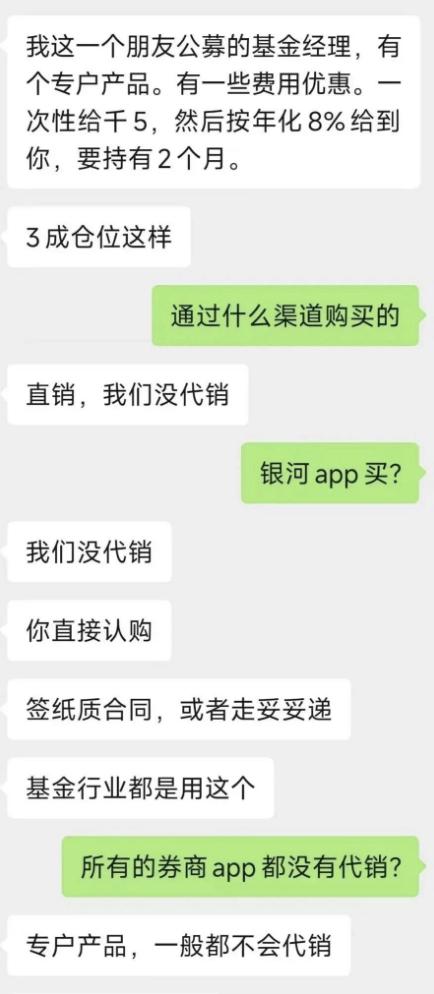
兜底又返佣,是公募违规销售?还是客户经理飞单?几个风险提示必看
Zhong Guo Jing Ji Wang· 2026-01-16 08:55
Core Viewpoint - Recent allegations have emerged regarding brokers promoting public fund products with illegal practices, including promises of guaranteed returns and commission rebates, raising concerns about compliance in the industry [1][10]. Group 1: Allegations and Responses - A netizen reported that a client manager from Galaxy Securities promoted a product from Jinxin Fund, promising capital protection and high rebates while encouraging investors to bypass official sales channels [5][12]. - Jinxin Fund responded quickly, stating that they have reported the illegal fundraising activities to the police and clarified that the involved product had not been officially sold or authorized for distribution [10][14]. Group 2: Regulatory Environment - Regulatory authorities have repeatedly mandated that brokers must standardize their marketing practices, prohibiting inducements for investors lacking the willingness or capacity to invest [10][16]. - The regulations require strict adherence to investor suitability management, ensuring that products are matched to investors' qualifications and risk tolerance [10][16]. Group 3: Product and Investor Requirements - Jinxin Fund's asset management plans are only available to qualified investors, with specific criteria such as a minimum family financial net asset of 3 million yuan or an average annual income of 400,000 yuan over the past three years [14][15]. - The minimum initial investment for collective asset management plans is set at 10 million yuan, and individual investments must meet certain thresholds depending on the type of product [14][15]. Group 4: Industry Practices and Risks - The practice of "flying orders," where brokers recommend products without company authorization, is highlighted as a significant risk, especially when combined with tactics like pooling funds to meet investment thresholds [16][17]. - Despite increased regulatory scrutiny, some industry personnel continue to engage in these risky practices, leading to penalties for both individuals and branches involved in such activities [17][18].

中国银河证券:技术突破交互革新 AI眼镜市场扩容竞争深化
智通财经网· 2026-01-16 07:49
Core Insights - The AI glasses are evolving into a new generation of human-computer interaction core carriers, with the industry experiencing a critical turning point in 2023 due to breakthroughs in multiple core technologies [1][2] - The integration of AI functionalities presents a high-value logic of "small incremental costs for large incremental experiences," which can naturally attract a large existing user base from traditional glasses and sunglasses [2] Technology Breakthroughs and Interaction Innovations - AI glasses are becoming the core carriers of human-computer interaction, with significant technological breakthroughs enabling lightweight devices to support complex voice and environmental interactions [1] - The introduction of specialized low-power chips provides the hardware foundation for offline voice interaction and real-time translation, optimizing power consumption and battery life [1] Market Expansion and Competitive Landscape - The global AI glasses market is in a phase of rapid expansion and structural differentiation, with AI glasses expected to account for 78% of smart glasses shipments by mid-2025, and global shipments projected to reach 20 million units by 2028 [3] - The market features a "one strong leader and many strong followers" structure, with leading companies taking the initiative while numerous brands follow suit, employing a dual-line product strategy [3] User Base and Market Potential - There are currently 2.2 billion people globally with vision impairment, and the global sunglasses market is projected to reach approximately $22.32 billion in 2024, providing a substantial user base for AI glasses [2] - The advancements in technology are transforming AI glasses from smartphone accessories to independent smart devices that can deliver value across multiple scenarios [2] Challenges in User Experience and Cost - The path to large-scale adoption of AI glasses faces challenges such as poor user experience leading to high return rates and high costs hindering market penetration [4] - Optical display (43%) and main control chips (31%) constitute a significant portion of the overall cost, with optical waveguide lenses and display technology being key cost constraints [4] Application Ecosystem and Privacy Concerns - The domestic market shows a fragmented brand ecosystem, limiting the core value of devices in daily scenarios, although some companies are making strides in ecosystem integration [4] - The lack of privacy and security standards needs to be addressed through industry collaboration to build user trust, which is essential for the growth of AI glasses [4]