
CTG DUTY-FREE(601888)

Search documents
最差的时光已经过去?中国中免能苦尽甘来吗
海豚投研· 2025-04-29 14:56
4 月 29 日晚,中国中免正式公布了 2025 年 1 季度财报。由于不久前海豚投研刚详细点评过年度业绩,且 A 股季报披露的信息相当有限,本次就仅做一个简要的 快评: 1、最差时间已过?收入下滑趋于收窄 :25 年一季度公司总收入 167.5 亿元,同比跌幅明显收窄到 11% 。虽然尚未完全扭转收入下滑的趋势,但相比之前 3 个季 度 20% 上下的收入跌幅,但 出现了初步的企稳迹象 ,最差的时间可能已经过去。 结合整体离岛免税行业的数据看,在海南旅游旺季、也是对免税行业最重要的 1 季度,海南岛接待游客数增长已同比回正到 6%。但 离岛免税购物人次和消费件数 仍同比分别下降了 28% 和 26%, 可见 "只看不买"、游客到消费者的转化率仍然偏低。 所幸 离岛免税客单价同比显著增长 19.5% 到 1,153 元, 在 持续的免税品销售结构逐渐向高价商品倾斜 的帮助下,虽然销售量仍比较萎靡, 本季离岛免税的销售 额同比跌幅已收窄到 11% 。相比先前 3 个季度 40% 上下的同比跌幅也是显著好转,同样呈现出最差情况已过的信号。 2、毛利率跌幅同样企稳: 伴随着营收跌幅的缩窄,中免在去年四季度呈现的重要 ...

中国中免Q1营收同比下滑10.96%,净利润下降15.8% | 财报见闻
Hua Er Jie Jian Wen· 2025-04-29 11:49
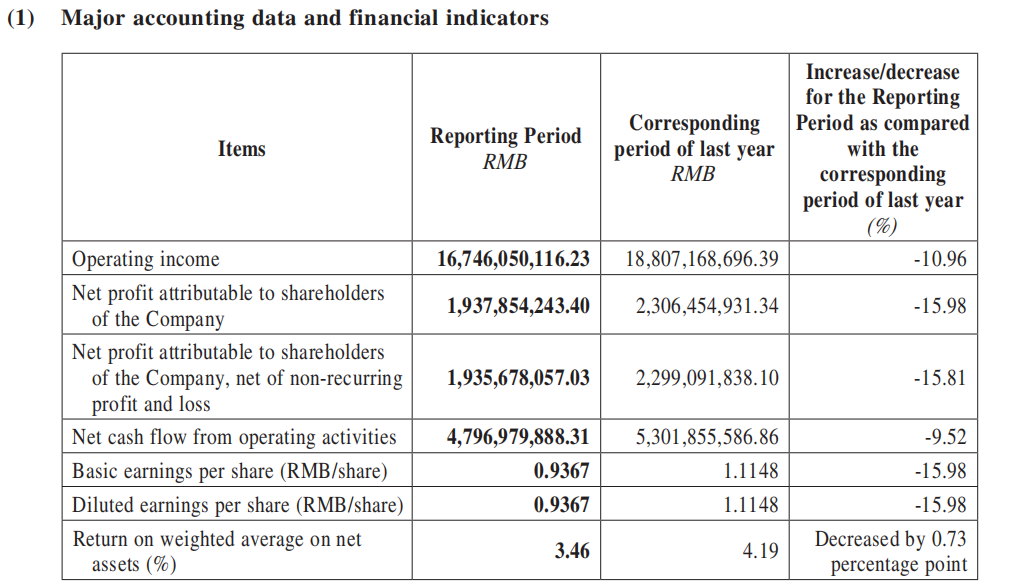
Core Insights - The global duty-free market experienced a slowdown last year, failing to return to pre-pandemic levels, with Hainan's offshore duty-free market also facing challenges due to various factors [1][2] Financial Performance - In Q1 2025, the company's operating income was RMB 16.75 billion, a year-on-year decline of 10.96% compared to RMB 18.81 billion in the same period last year [1][2] - The net profit attributable to shareholders was RMB 1.94 billion, down 15.98% from RMB 2.31 billion year-on-year [1][2] - The net cash flow from operating activities was RMB 4.80 billion, a decrease of 9.52% from RMB 5.30 billion in the previous year [1][2][5] Cost and Expense Management - The company's gross margin showed slight pressure, with operating costs decreasing by approximately 10.51%, which was slightly lower than the revenue decline [2] - Sales expenses were RMB 2.20 billion, down about 9.0% year-on-year, while management expenses were RMB 423 million, down about 11.0% [2] Asset and Equity Position - As of March 31, 2025, the total assets of the company reached RMB 80.46 billion, an increase of 5.51% from the beginning of the year, while equity attributable to shareholders was RMB 56.97 billion, up 3.40% [2] Inventory Management - The company's inventory balance at the end of the reporting period was RMB 15.75 billion, a decrease of approximately 9.21% from RMB 17.35 billion at the end of 2024 [3]

中证老年消费主题指数报1560.86点,前十大权重包含美年健康等
Jin Rong Jie· 2025-04-29 11:30
Core Viewpoint - The China Securities Elderly Consumption Theme Index has shown a decline of 4.38% over the past month, while it has increased by 1.14% over the last three months and decreased by 2.70% year-to-date [1] Group 1: Index Performance - The China Securities Elderly Consumption Theme Index is currently at 1560.86 points, with a base date of December 31, 2009, set at 1000.0 points [1] - The index's top ten holdings include companies such as Kaiying Network (6.62%), 37 Interactive Entertainment (5.37%), and New China Life Insurance (5.2%) [1] Group 2: Market Composition - The index's holdings are primarily listed on the Shenzhen Stock Exchange (62.02%) and the Shanghai Stock Exchange (37.98%) [1] - The industry composition of the index includes Communication Services (41.10%), Consumer Discretionary (27.49%), and Healthcare (13.49%) [2] Group 3: Index Adjustment Mechanism - The index samples are adjusted biannually, with adjustments occurring on the next trading day after the second Friday of June and December [2] - Weight factors are generally fixed until the next scheduled adjustment, with special circumstances allowing for temporary adjustments [2]




中国中免(01880) - 2025 Q1 - 季度业绩
2025-04-29 09:03
Financial Performance - The group's operating revenue for the first quarter of 2025 was RMB 16,746,050,116.23, a decrease of 10.96% compared to RMB 18,807,168,696.39 in the same period last year[5] - Net profit attributable to shareholders was RMB 1,937,854,243.40, down 15.98% from RMB 2,306,454,931.34 year-on-year[5] - Basic and diluted earnings per share were both RMB 0.9367, reflecting a decline of 15.98% from RMB 1.1148[5] - Total revenue for Q1 2025 was RMB 16,746,050,116.23, a decrease of 10.9% compared to RMB 18,807,168,696.39 in Q1 2024[15] - In Q1 2025, the operating profit was RMB 2,518,777,915.07, a decrease of 13.4% compared to RMB 2,908,342,158.40 in Q1 2024[16] - The net profit for Q1 2025 was RMB 2,055,785,045.68, down 15.6% from RMB 2,435,203,776.12 in Q1 2024[16] - Total comprehensive income for Q1 2025 was RMB 1,989,279,773.44, a decline of 18.6% from RMB 2,444,902,061.57 in Q1 2024[17] - Basic and diluted earnings per share for Q1 2025 were both RMB 0.9367, compared to RMB 1.1148 in Q1 2024, reflecting a decrease of 16%[17] Cash Flow - The net cash flow from operating activities decreased by 9.52%, amounting to RMB 4,796,979,888.31 compared to RMB 5,301,855,586.86 in the previous year[5] - Cash flow from operating activities in Q1 2025 was RMB 4,796,979,888.31, down 9.5% from RMB 5,301,855,586.86 in Q1 2024[18] - Cash inflow from operating activities totaled RMB 17,533,010,301.60, a decrease of 10% from RMB 19,479,675,572.83 in the previous year[18] - Cash outflow from operating activities was RMB 12,736,030,413.29, down 10.2% from RMB 14,177,819,985.97 in Q1 2024[18] - The net cash flow from investing activities was -RMB 257,075,174.83 in Q1 2025, an improvement from -RMB 418,523,186.44 in Q1 2024[19] - The net cash flow from financing activities was RMB 419,409,247.12 in Q1 2025, compared to -RMB 256,125,481.32 in Q1 2024, indicating a positive shift[19] - The ending cash and cash equivalents balance as of March 31, 2025, was RMB 39,645,949,676.26, an increase from RMB 36,299,634,567.48 at the end of Q1 2024[20] Assets and Liabilities - Total assets at the end of the reporting period were RMB 80,462,334,902.91, an increase of 5.51% from RMB 76,260,373,740.60 at the end of the previous year[5] - Total liabilities increased to RMB 17,542,386,009.83 as of March 31, 2025, up from RMB 15,312,036,850.03 as of December 31, 2024, reflecting a growth of 14.5%[14] - Non-current assets totaled RMB 20,687,437,920.30 as of March 31, 2025, an increase of 1.9% from RMB 20,299,935,210.56 as of December 31, 2024[12] - Long-term borrowings rose to RMB 3,233,561,026.15 as of March 31, 2025, up from RMB 2,567,047,228.16 as of December 31, 2024, marking a 26.0% increase[14] Shareholder Information - Shareholders' equity attributable to the parent company increased by 3.40% to RMB 56,967,607,780.59 from RMB 55,096,705,562.22[5] - The total number of ordinary shareholders was 302,747 as of the end of the reporting period[7] - The largest shareholder, China Tourism Group Co., Ltd., holds 50.30% of the shares, totaling 1,040,642,690 shares[8] Inventory and Expenses - The group reported a decrease in inventory, which stood at RMB 15,751,001,779.30, down from RMB 17,348,382,658.40[11] - Total operating costs for Q1 2025 were RMB 14,080,625,510.04, down 10.7% from RMB 15,772,875,379.76 in Q1 2024[15] - The company reported a decrease in research and development expenses to RMB 12,165,946.01 in Q1 2025 from RMB 355,002.40 in Q1 2024, reflecting a significant increase in investment in innovation[15] Government Subsidies - The company received government subsidies amounting to RMB 3,224,834.44, which are closely related to its normal business operations[6] Deferred Tax Assets - Deferred tax assets decreased to RMB 1,078,353,695.92 as of March 31, 2025, from RMB 1,204,425,069.30 as of December 31, 2024, a decline of 10.5%[12]
解密主力资金出逃股 连续5日净流出495股
Zheng Quan Shi Bao Wang· 2025-04-28 09:55
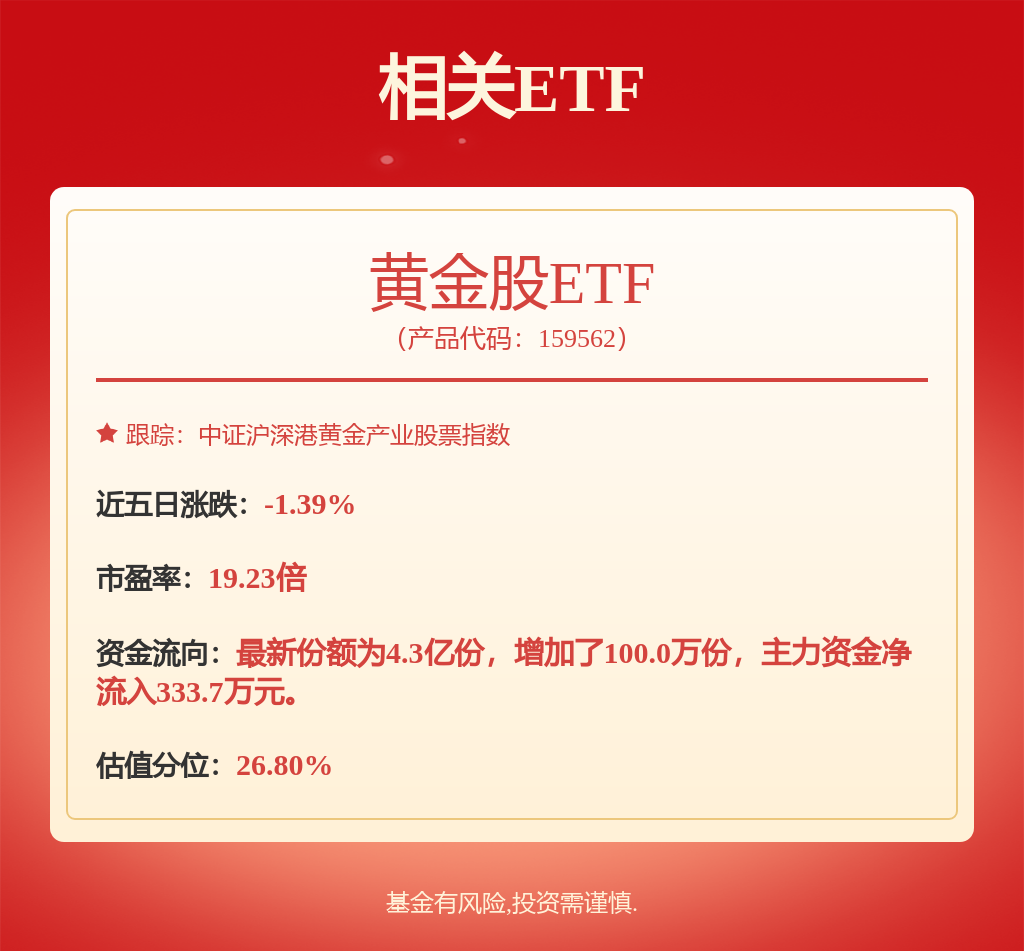
Group 1 - As of April 28, a total of 495 stocks in the Shanghai and Shenzhen markets have experienced net outflows of main funds for five consecutive days or more [1] - The stock with the longest consecutive net outflow is Gao Meng New Materials, with 17 days, followed by *ST Jiu You with 16 days [1] - The largest total net outflow amount is from Light Media, with a cumulative net outflow of 2.024 billion yuan over five days [1] Group 2 - China Duty Free has seen a cumulative net outflow of 1.803 billion yuan over 13 days, ranking second in total outflow [1] - The stock with the highest net outflow ratio relative to trading volume is *ST Longyu, which has seen a 26.28% decline over the past six days [1] - The table lists various stocks with their respective net outflow days, amounts, ratios, and cumulative price changes, indicating a trend of declining stock prices among those with significant net outflows [1][2] Group 3 - The gold stock ETF (product code: 159562) tracks the CSI Hong Kong and Shanghai Gold Industry Stock Index and has seen a 1.39% decline over the past five days [4] - The ETF has a price-to-earnings ratio of 19.23 times and has experienced a net inflow of 3.337 million yuan, with the latest share count increasing by 1 million to 430 million [4]




海南主题组合报告:海南自贸港:面对全球贸易变局的一张王牌
Shenwan Hongyuan Securities· 2025-04-28 08:41
Group 1 - The establishment of Hainan Free Trade Port is a significant strategic decision by the Chinese government to respond to global trade changes and enhance domestic consumption, especially in light of the U.S. imposing "reciprocal tariffs" [2][35] - The year 2025 marks a critical milestone for Hainan Free Trade Port as it aims to achieve "closure," allowing for a unique operational model where goods can flow freely between Hainan and international markets while being regulated for entry into mainland China [2][14] - Hainan is expected to become a "tax haven" due to four key policies: 1) Exemption from tariffs for products with over 30% value-added processing; 2) Zero tariffs on non-negative list goods post-closure; 3) A reduced corporate income tax rate of 15% for qualifying businesses; 4) A progressive personal income tax structure capped at 15% [2][28][30] Group 2 - Hainan is positioned as a dual circulation hub, leveraging its geographical advantages to attract global capital, particularly from foreign enterprises seeking access to the Chinese market [12][31] - The tourism sector is being developed to attract international visitors and promote high-end consumption, with initiatives like duty-free shopping and international medical tourism [41][46] - The report highlights the rapid growth of new enterprises in Hainan, with over 150,000 new companies established annually from 2020 to 2024, indicating a robust investment environment [33]


“离境退税”新政重磅来袭!这几大投资方向获关注
Sou Hu Cai Jing· 2025-04-28 06:02
Group 1 - The recent policy changes regarding the departure tax refund system have positively impacted the stock prices of related companies, with notable increases in A-share and Hong Kong-listed companies [2][3] - The new policy, issued by multiple government departments, aims to enhance the departure tax refund experience by lowering the minimum refund threshold and increasing the cash refund limit, among other measures [4][5] - The policy changes are expected to significantly boost inbound tourism and consumption, with a projected 1.3 billion inbound tourists in 2024, reflecting a growth of over 60% year-on-year [5][6] Group 2 - Companies involved in the departure tax refund business have diversified, including direct operators like China Duty Free Group and Wangfujing, as well as logistics and technology providers like Lakala and SF Express [6] - The optimization of the departure tax refund policy is anticipated to drive growth in various sectors, including retail, tourism, and dining, benefiting companies that cater to inbound tourists [6][7] - Research indicates that the optimized departure tax refund policy will favor the retail sector, particularly department stores, and related industries such as hotels and restaurants, enhancing the overall consumer market [7]
港股概念追踪 | 五一旅游热度持续攀升!境内游预订人次暴涨超100% 机构称旅游市场β延续(附概念股)
智通财经网· 2025-04-27 23:31
Group 1 - The tourism market is experiencing a significant increase in activity as the "May Day" holiday approaches, with online hotel and flight searches rising sharply, indicating a peak in bookings [1][2] - Domestic travel bookings for the "May Day" holiday have more than doubled compared to the same period last year, with self-driving tours, free travel, and group tours showing particularly high growth [1] - The "May Day" holiday is characterized by three main trends: rapid growth in long-distance travel, a two-way increase in cross-border travel, and a resurgence in county-level tourism, contributing to structural growth in the tourism market [1][3] Group 2 - Ctrip's report indicates that the holiday travel consumption is marked by explosive growth in long-distance travel and a significant increase in inbound travel orders, which surged by 173% year-on-year [1][3] - The proportion of cross-city accommodation orders has exceeded 80%, with deep travel users planning to stay for two days or more expected to reach 20% [3] - Popular domestic destinations include traditional cities like Beijing and Shanghai, while emerging destinations such as Taiyuan and Yining are also seeing significant growth in hotel bookings [3][4] Group 3 - The overall transaction volume (GMV) for travel services has increased by approximately 65% year-on-year, with product diversity growing by 55.25% [3] - The "May Day" holiday is expected to reach a historical peak in travel heat, with the travel peak anticipated to occur in the first two days of the holiday [4] - The Ministry of Commerce and other departments have announced policies to optimize the outbound tax refund system, which is expected to boost inbound tourism and shopping [4][5] Group 4 - Companies like Ctrip are expected to benefit from the growing demand for travel, as high-level consumption continues to expand [6] - Huazhu Group's adjusted EBITDA for Q4 2024 is projected to grow by 10%, with an upward revision of EBITDA forecasts for 2025-2026 [6] - China Duty Free Group is expected to see revenue growth driven by the recovery of port traffic and operational optimizations, with new store policies creating growth opportunities [6]

打通消费堵点!离境退税政策细则公布,起退点继续下调
Xuan Gu Bao· 2025-04-27 23:30
据央广网4月27日报道,商务部等6部门出台《关于进一步优化离境退税政策扩大入境消费的通知》,通 知提出,下调离境退税起退点。境外旅客同日同店购买退税物品金额达到200元人民币,且符合其他相 关规定的,可以申请办理离境退税。优化离境退税支付服务。 *风险提示:股市有风险,入市需谨慎 江海证券认为,此前免税店针对的顾客包括国内消费者和国外旅游者,免税店主要以进口商品为主,国 产商品进入免税店比重较小,部分免税店销售国有商品其实是有税商品,且品类有限。此次即买即退政 策后,预计免税店会引入更多的国产商品,退税流程也将更加便捷。 此外,利好国内的商贸零售行业,特别是百货公司,百货公司可申请增加退税和"即买即退"业务,境外 旅客退税便利度提升,目前该政策先后在上海、北京、广东、四川、浙江、深圳等地开展试点,利好当 地百货等零售业态公司。 公司方面,据招商证券表示,中国中免、格力地产(珠免集团)、王府井为A股主要免税公司。 *免责声明:文章内容仅供参考,不构成投资建议 此外,将现金退税限额上调至20000元人民币。推动退税代理机构与支付机构、清算机构等加强合作, 在风险可控的前提下,通过移动支付、银行卡、现金等多种方式提 ...


摩根士丹利:中国中免_海南线下免税店 3 月销售额同比降幅收窄,何时开始转正
摩根· 2025-04-27 03:55
Investment Rating - The investment rating for China Tourism Group Duty Free is Equal-weight [8] Core Insights - Hainan's offline duty-free sales showed a year-over-year decline of 5% in March 2025, which is an improvement from a 13% decline in the first two months of 2025. The average daily sales were RMB 94 million [4][11] - The daily shopper count decreased by 26% year-over-year to 17,700, while spending per shopper increased by 28% to RMB 6,500. The growth in average spending per shopper may be attributed to a rise in electronic product sales, although this may not significantly impact margins [4][11] - The macroeconomic outlook remains uncertain, particularly with potential tariff escalations expected to impact the second half of 2025. The performance of Hainan's duty-free market is closely tied to middle-class spending [2][11] - The Hainan government is anticipated to release details regarding the free-trade-zone policy later this year, which could affect duty-free operators [3] Summary by Sections Sales Trends - In March 2025, Hainan's offline duty-free sales were RMB 94 million per day, reflecting a 5% year-over-year decline, which is an improvement from the 13% decline observed in the first two months of 2025. Daily sales were 35% lower than in the first two months of 2025 and 25% lower than the pre-COVID seasonality of March 2015-2019 [4][11] - Assuming that the sales trends from April to December 2025 follow pre-COVID seasonality, the year-over-year decline in sales may remain in the low to mid-single digits for the second and third quarters of 2025. However, a lower year-over-year comparison base in the fourth quarter of 2025 may lead to positive sales growth for the full year [11] Economic Factors - The report highlights that the macroeconomic conditions are critical for Hainan's duty-free market, which is more sensitive to middle-class spending. The uncertainty in the macro outlook and potential tariff impacts are significant considerations for future performance [2][11] - The anticipated free-trade-zone policy from the Hainan government is expected to be released later this year, which could have implications for duty-free operators [3]