CCB(601939)

Search documents
新成果!深圳建行亮相金博会
券商中国· 2025-11-21 01:36
Core Viewpoint - Shenzhen Construction Bank (Shenzhen Bank) showcases its commitment to supporting the real economy and addressing public concerns through comprehensive financial services at the 19th Shenzhen International Financial Expo, focusing on five key areas of development [2][12]. Group 1: Technology-Driven Financial Services - Shenzhen Bank has established a digital financing platform for small and micro technology enterprises, providing tailored financial products and services, with a technology loan balance exceeding 2.44 trillion yuan, adding over 48 billion yuan in the first ten months of the year [3][5]. - The bank has developed a "circle-chain" service model for leading technology enterprises, offering customized digital industrial chain platforms and serving over 9,000 enterprises nationwide [5]. Group 2: Green Finance Initiatives - Shenzhen Bank has accelerated the innovation of green financial products, achieving a green loan growth rate exceeding 25% this year, significantly higher than the overall loan growth rate [6]. - The bank has actively supported emerging green industries, providing loans to nearly 1,000 enterprises and launching the first batch of "water-saving loans" in collaboration with local associations [6]. Group 3: Inclusive Finance - The bank has focused on enhancing financial services for small and micro enterprises, with a total inclusive loan balance of 364 billion yuan and serving over 106,000 clients as of October 2025 [7][8]. - Shenzhen Bank has implemented a digital and platform-based approach to improve the efficiency of financial services, successfully providing 3.88 million yuan in emergency financing to a small jewelry company [7][8]. Group 4: Elderly Care Financial Services - In response to the aging population, Shenzhen Bank has developed a comprehensive pension financial service system, integrating various products and services to meet the diverse needs of elderly clients [9]. - The bank has established specialized financial service outlets and teams to provide tailored investment and financial education services for seniors [9]. Group 5: Digital Currency Applications - As a pilot institution for digital RMB, Shenzhen Bank has launched the "Digital RMB Smart Payment Worry-Free Platform" to address consumer pain points in the prepaid sector, covering 1,569 merchants and providing services to 960,000 consumers [11]. - The bank plans to expand the application of digital RMB in various prepaid scenarios, including elderly care and sports services [11].


小红日报 | 中国银行涨超4%创新高,标普红利ETF(562060)标的指数收跌0.36%
Xin Lang Ji Jin· 2025-11-21 01:02
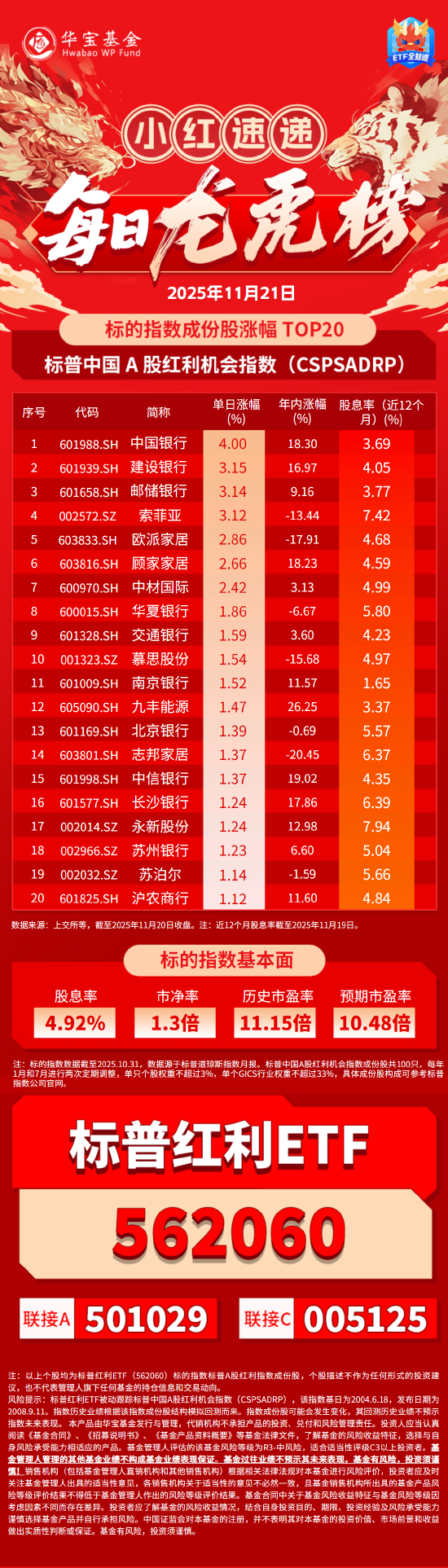
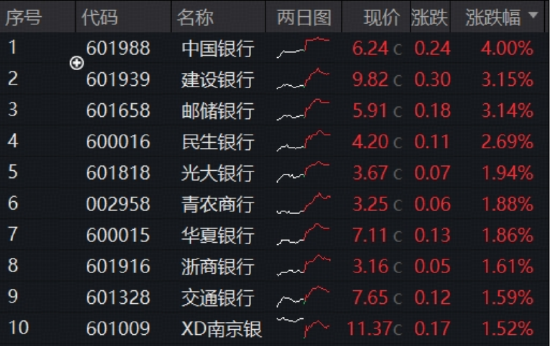
Core Insights - The article highlights the top-performing stocks in the S&P China A-Share Dividend Opportunity Index, showcasing significant gains and dividend yields for various companies [1] Group 1: Stock Performance - China Bank (601988 SH) leads with a 4.00% daily increase and an 18.30% year-to-date gain, along with a dividend yield of 3.69% [1] - Construction Bank (601939 SH) follows with a 3.15% daily rise and a 16.97% year-to-date increase, offering a dividend yield of 4.05% [1] - Postal Savings Bank (601658.SH) shows a daily increase of 3.14% and a year-to-date gain of 9.16%, with a dividend yield of 3.77% [1] Group 2: Notable Declines - Home Depot (002572.SZ) has a daily increase of 3.12% but a year-to-date decline of 13.44%, with a dividend yield of 7.42% [1] - Oppein Home Group (603833.SH) experiences a 2.86% daily rise but a significant year-to-date drop of 17.91%, with a dividend yield of 4.68% [1] - Kuka Home (603816.SH) shows a daily increase of 2.66% and a year-to-date gain of 18.23%, with a dividend yield of 4.59% [1] Group 3: Additional Performers - Huaxia Bank (600015.SH) has a daily increase of 1.86% but a year-to-date decline of 6.67%, with a dividend yield of 5.80% [1] - Beijing Bank (601169 SH) shows a daily increase of 1.39% and a slight year-to-date decline of 0.69%, with a dividend yield of 5.57% [1] - CITIC Bank (601998.SH) has a daily increase of 1.37% and a year-to-date gain of 19.02%, with a dividend yield of 4.35% [1]




银行股狂飙!中行最高涨幅5.17%,建行市值重回2万亿大关
Xin Lang Cai Jing· 2025-11-21 00:37
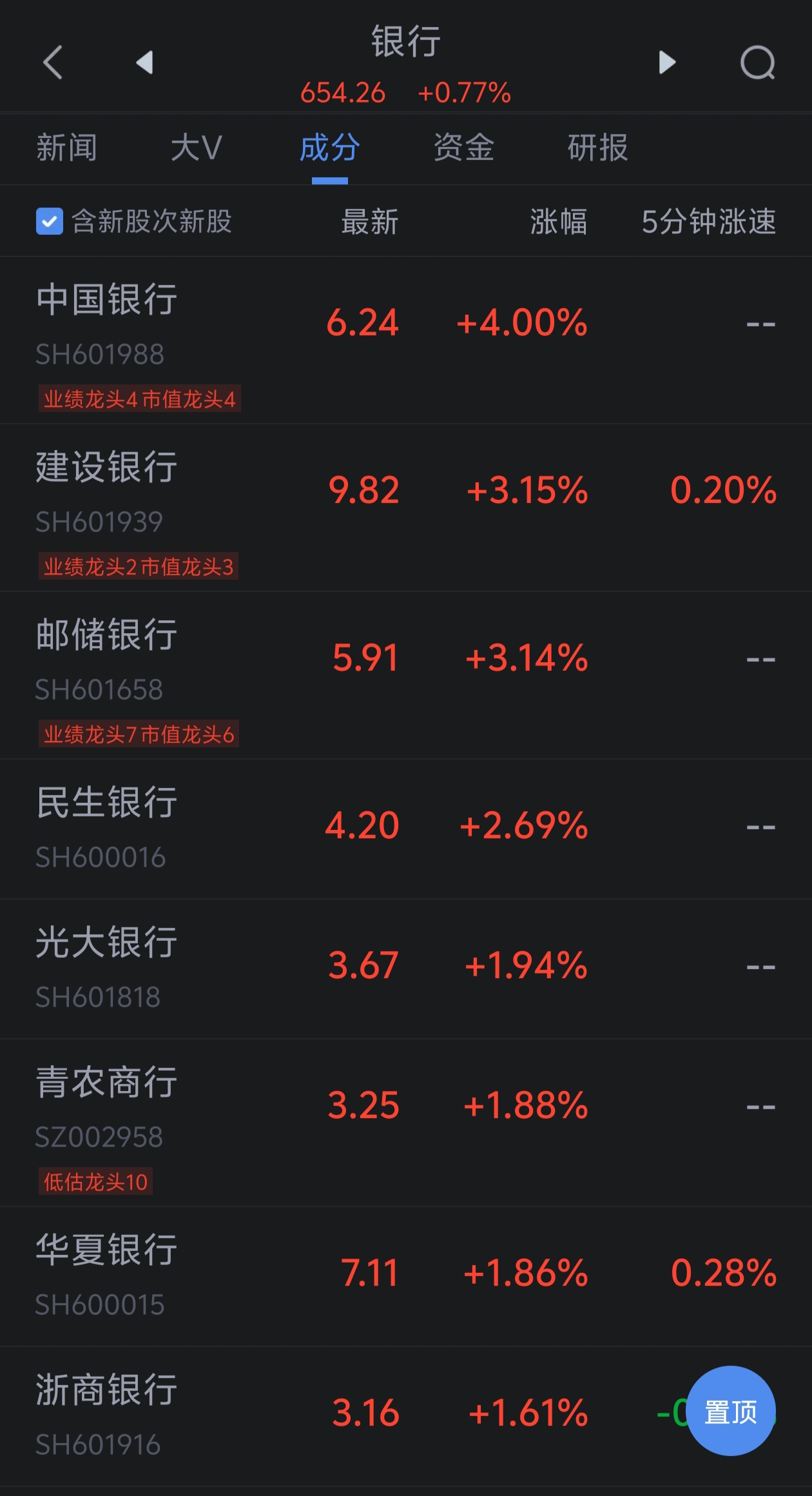
Core Viewpoint - The A-share market continues to see a strong performance in the banking sector, with significant gains in bank stocks despite a generally mixed market environment [3][4]. Group 1: Stock Performance - On November 20, the banking sector in the A-share market showed robust growth, with China Bank reaching a maximum increase of 5.17%, marking its second consecutive day of historical highs and an annual increase of over 18%, with a market capitalization of 1.85 trillion yuan [4][7]. - Other major banks also experienced notable gains, with China Construction Bank and Postal Savings Bank both rising over 4%, while Minsheng Bank and Everbright Bank increased by over 3% [6][7]. - The market capitalization of China Construction Bank has returned to over 2 trillion yuan, while Agricultural Bank of China remains the largest by market cap at 2.77 trillion yuan, despite a slight decline in its stock price [7]. Group 2: Dividend Distribution - There is a growing trend of mid-term dividends among A-share listed banks, with over 25 banks confirming mid-term dividends for 2025 [10][11]. - Recent dividend distributions include Suzhou Bank distributing 2.1 yuan per 10 shares, totaling 9.39 billion yuan, and Hangzhou Bank distributing 0.38 yuan per share, totaling 27.55 billion yuan [10]. - Notably, Industrial and Commercial Bank of China leads in total dividend distribution with 503.96 billion yuan, while other major banks like China Construction Bank and Agricultural Bank of China are also set to distribute significant amounts [11].
金融护航民营经济“枝繁叶茂”
Jin Rong Shi Bao· 2025-11-21 00:15
Core Insights - The article highlights the significant role of private enterprises in China's economic development, emphasizing their contribution to job creation, market prosperity, and improved living standards [1][2][3] - It discusses the financial support provided by banks to private enterprises, showcasing the growth in loans and the establishment of specialized financial services to meet the unique needs of these businesses [2][6] Group 1: Financial Support for Private Enterprises - As of September 2025, the balance of inclusive micro and small loans reached 36.1 trillion yuan, a year-on-year increase of 12.2%, while loans to the private economy totaled 71.1 trillion yuan, growing by 5.4% [1] - Major state-owned banks have significantly increased their lending to private enterprises, with Agricultural Bank of China reporting a loan balance of 7.51 trillion yuan, an increase of 973.6 billion yuan, reflecting a growth rate of 14.9% [2] - The banking sector is actively customizing financial products to address the diverse needs of private small and micro enterprises, moving away from traditional lending models [3][6] Group 2: Innovative Financial Solutions - Agricultural Bank of China has developed a "five-special" mechanism to enhance its service to private enterprises, optimizing the policy environment for their support [2] - Zhejiang Agricultural Bank utilized a "government-bank-guarantee" model to facilitate a 10 million yuan loan for a biotechnology company, aiding in prototype testing and platform development [4] - Zhejiang Merchants Bank has implemented a financial advisor system and "Zhejiang Silver Good Standard" to improve the quality and efficiency of services for private enterprises [5] Group 3: Addressing Financing Challenges - Despite improvements, challenges remain in financing for private enterprises, with issues such as high costs and mismatched repayment terms still prevalent [3][6] - The State Council has issued measures to promote private investment, emphasizing the need for banks to set annual service goals for private enterprises and to implement a system of due diligence exemption [6][7] - Financial management departments are encouraged to relax certain requirements for small and micro enterprises to facilitate better lending practices [8]


央行开展3000亿元7天期逆回购操作;中国银行回应股价创历史新高 | 金融早参
Mei Ri Jing Ji Xin Wen· 2025-11-20 23:09
点评:央行开展3000亿元7天期逆回购操作显示其积极调控市场流动性,以应对短期资金压力和稳定市 场利率。操作利率维持不变表明央行对当前经济环境持中性态度。 NO.2 中国银行回应股价创历史新高 据中证金牛座,11月20日,银行板块表现强势,中国银行涨超4%,股价再创历史新高。针对股价异 动,中国银行董事会办公室投资者关系团队相关工作人员表示:"公司基本面未发生重大变化,目前正 持续关注股价波动情况。此次股价上涨,一方面得益于银行板块整体上涨趋势的带动,并非我行个例; 另一方面,公司三季报披露的主要经营数据保持稳健,基本面支撑下股价得到合理反映。" |2025年11月21日星期五| NO.1央行开展3000亿元7天期逆回购操作 11月20日,央行开展3000亿元7天期逆回购操作,投标量3000亿元,中标量3000亿元,操作利率为 1.40%,与此前持平。当日有1900亿元7天期逆回购到期。 (文章来源:每日经济新闻) NO.3农发行与建设银行签订全面合作协议 11月19日,中国农业发展银行(简称"农发行")与中国建设银行股份有限公司(简称"建设银行")在京 签订全面合作协议。双方采用"总行+分行"签约形式,13 ...
建设银行(00939.HK):11月20日南向资金增持2330.7万股
Sou Hu Cai Jing· 2025-11-20 19:25
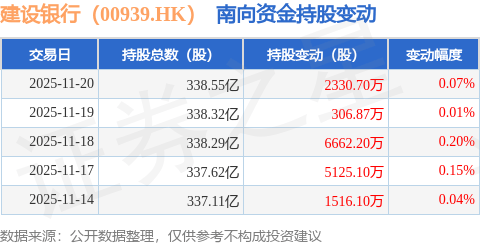
Group 1 - The core point of the article highlights that southbound funds have increased their holdings in China Construction Bank (00939.HK) by 23.307 million shares on November 20, 2025, marking a total net increase of 159 million shares over the past five trading days [1] - Over the last 20 trading days, southbound funds have increased their holdings on 18 occasions, resulting in a cumulative net increase of 548 million shares [1] - As of now, southbound funds hold a total of 33.855 billion shares of China Construction Bank, which accounts for 14.08% of the company's total issued ordinary shares [1] Group 2 - The trading data shows that on November 19, 2025, the total number of shares held was 33.832 billion, with a change of 3.0687 million shares, reflecting a 0.01% increase [2] - On November 18, 2025, the total shares held were 33.829 billion, with a change of 66.622 million shares, indicating a 0.20% increase [2] - The bank's main business segments include corporate banking, personal banking, and fund operations, providing a range of services such as corporate deposits, loans, asset management, and international financing [2]
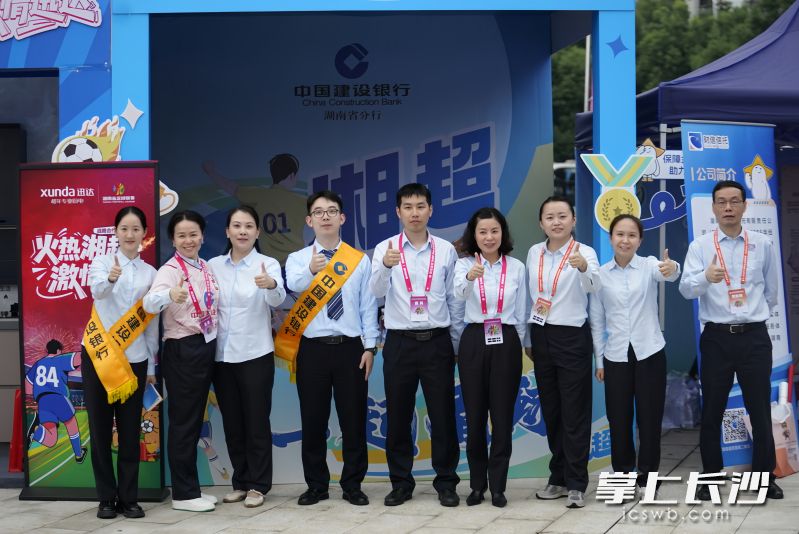
清新“建行蓝”火热助力湘超联赛
Chang Sha Wan Bao· 2025-11-20 12:31
Core Insights - The China Construction Bank (CCB) Hunan Branch is actively engaging in the 2025 Hunan Provincial Football League ("Xiangchao") as a strategic partner, providing financial services at the event to enhance the spectator experience [1][4] - CCB has established a service team that offers various financial products and educational resources to attendees, focusing on consumer benefits and fraud prevention [3][4] Group 1 - CCB's service booth has become a popular spot for fans, providing amenities like tissues and promotional items while offering financial consultations and demonstrations of mobile banking features [3] - The bank is conducting financial literacy campaigns, educating fans on topics such as fraud prevention and safe financial practices through relatable examples and slogans [3][4] Group 2 - CCB's rapid response to fan needs includes the launch of a promotional campaign that provided 100,000 yuan in shopping vouchers within 72 hours, enhancing the event's economic impact [4] - The "CCB Life" platform has partnered with 250 local merchants to create a seamless experience for fans, integrating ticketing, coupon distribution, and consumption [4] - CCB Hunan Branch aims to continue its involvement in the league and explore innovative "finance + sports" models to stimulate local economic growth [4]
到处点火 又不拉板
Datayes· 2025-11-20 11:49
Core Viewpoint - The article discusses the current state of the A-share market, highlighting the mixed performance of various sectors and the impact of external factors such as Nvidia's earnings report. It emphasizes the ongoing volatility and the potential for investment opportunities, particularly in bank stocks and storage leaders, while also noting the challenges faced by the broader market. Market Performance - A-shares experienced a collective decline, with the Shanghai Composite Index down 0.40%, Shenzhen Component down 0.76%, and ChiNext down 1.12% on November 20. The total trading volume was 17,227.98 billion yuan, a decrease of 200.48 billion yuan from the previous day, with over 3,800 stocks declining [12]. - The banking sector showed resilience, with major banks like China Bank and Industrial and Commercial Bank of China reaching historical highs, each exceeding a market capitalization of 20 billion yuan [12]. Sector Analysis - The storage sector saw significant gains, with six major storage leaders experiencing a surge in total market capitalization approaching 7 trillion yuan, influenced by Nvidia's Q3 performance exceeding expectations [3]. - The real estate sector is expected to receive a boost from potential new stimulus policies, including mortgage subsidies for first-time homebuyers, which could enhance market sentiment [6]. Investment Trends - The article notes a shift in investment behavior, with high-net-worth individuals driving new A-share account openings, contrasting with lower participation from ordinary residents. The number of new A-share accounts rose from 1.65 million to 2.94 million between June and September, indicating a potential focus on wealthier investors [4]. - The concept of "deposit migration" is gaining traction, as investors move funds from low-yield savings accounts to higher-yield stock investments, which could enhance market liquidity and consumer confidence through the "wealth effect" [4]. Technical Indicators - The market is currently in a tug-of-war around the 4,000-point mark, with concerns about a potential peak in the bull market. Various indicators, including equity risk premium and trading volume, suggest a short-term correction may be imminent, although no definitive signals of a market top have emerged [10][11]. - The article highlights that while some technical indicators show signs of overbought conditions, the overall valuation metrics remain within reasonable ranges, suggesting that the bull market may continue with support from retail deposits and public funds [11].



逾2000亿“红包雨”来袭,“银伟大”炸裂上涨,中行、工行再创新高!银行10月以来跑赢创业板15%,机构:增配
Xin Lang Ji Jin· 2025-11-20 11:43
Core Viewpoint - The banking sector has shown strong performance, driven by style rotation and significant mid-term dividend distributions, with major state-owned banks leading the gains [3][5]. Group 1: Market Performance - On November 20, major banks experienced a rally, with China Bank rising over 5% and Industrial and Commercial Bank of China increasing by over 2%, both reaching historical highs [1]. - The China Banking Index has accumulated an 8.95% increase since the beginning of October, outperforming the broader market and exceeding the ChiNext Index by 15 percentage points [4]. Group 2: Dividend Distributions - A total of 24 listed banks have announced mid-term dividends, with a combined payout of nearly 263.8 billion yuan, marking a historical high [5]. - The six major state-owned banks are set to distribute a total of approximately 204.66 billion yuan in dividends, with most record dates concentrated in December [5]. Group 3: Investment Appeal - The banking sector is viewed as a defensive investment due to its low valuation and high dividend yield, making it attractive to investors seeking stability [5]. - As of the end of September, the China Banking Index had a price-to-book ratio of 0.67, placing it in the lower 35.69% percentile over the past decade, while the dividend yield reached 4.29%, significantly above the 10-year government bond yield of 1.88% [5]. Group 4: ETF Activity - The largest banking ETF (512800) saw its price rise by 1.9%, reaching a new high for the month, with a total trading volume of 1.491 billion yuan, indicating increased market interest [2]. - The banking ETF has experienced a significant increase in scale, reaching 20.615 billion yuan, reflecting strong investor demand [6].


124家A股公司股息率超5%,历年高股息“牛股”含金量如何?
Di Yi Cai Jing· 2025-11-20 11:20
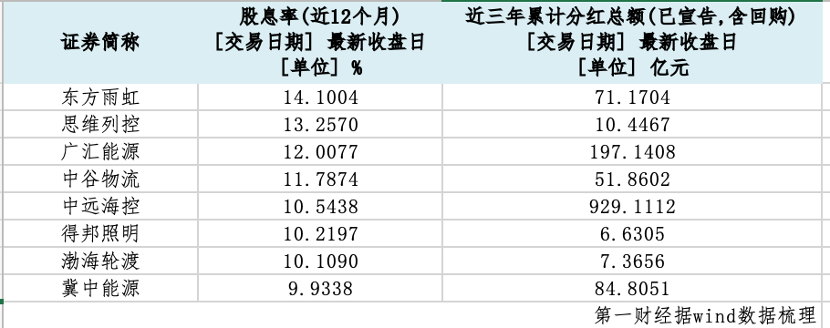
Group 1: Bank Sector Performance - The bank sector is becoming a market focus, with A-share banks showing strong performance, particularly China Bank, which rose 4% to reach a historical high [1] - As of November 20, the total market capitalization of the four major banks in A-shares has exceeded 2 trillion yuan [1] - In the Hong Kong market, Minsheng Bank led gains with over 3% increase, while other banks also saw significant rises [1] Group 2: High Dividend Stocks - There are currently 124 companies in A-shares with a dividend yield exceeding 5%, with 7 companies yielding over 10% [2][3] - The top three companies with the highest dividend yields are Dongfang Yuhong (14.1%), Siwei Liekong (13.25%), and Guanghui Energy (12%) [3][4] - High dividend stocks are not limited to the banking sector but are also found in utilities, energy, and telecommunications, providing a buffer against market volatility [2][3] Group 3: Dividend Distribution Trends - As of November 20, 24 out of 42 A-share listed banks have announced mid-term dividends totaling approximately 263.8 billion yuan, marking an increase from the previous year [1] - Regulatory bodies are encouraging companies to enhance shareholder returns through measures like "cancellation-style buybacks" and multiple annual dividends [5] Group 4: Long-term Dividend Trends - For the 2024 reporting period, the companies with the highest projected dividend yields are Haoxiangni (16.91%), Meiyingsen (15.95%), and Jinshi Technology (14.97%) [6] - In 2023, the top dividend yielders included Libai Co. (15.34%), Rong'an Real Estate (13.06%), and Yutong Bus (11.32%) [7][8] Group 5: Characteristics of High Dividend Companies - High dividend companies are typically found in stable sectors like utilities, energy, telecommunications, and consumer staples, which are less affected by economic cycles [8] - These companies often have clear and stable dividend policies, viewing consistent dividends as a means to maintain credibility and attract long-term investors [8] Group 6: Risks Associated with High Dividend Strategies - High dividend strategies may carry risks, as some companies with high yields may face declining performance or debt issues [10][12] - The phenomenon of "high dividend traps" can occur when a company's stock price falls, artificially inflating the dividend yield without a corresponding increase in earnings [12]