
CICC(601995)

Search documents
2025年券商A股股权承销总额突破1万亿元;西部证券:西部期货总经理赵耀辞职 | 券商基金早参
Mei Ri Jing Ji Xin Wen· 2026-01-06 01:08
Group 1 - The total amount of A-share underwriting by securities firms in 2025 exceeded 1 trillion yuan, with a year-on-year growth of 226.1%, reaching 10,222.68 billion yuan [1] - Five leading securities firms accounted for 74.5% of the total market share, indicating a significant concentration effect in the industry [1] - CITIC Securities ranked first with a total underwriting amount of 2,416.68 billion yuan, followed by Guotai Junan and CICC with 1,506.59 billion yuan and 1,374.87 billion yuan respectively [1] Group 2 - The resignation of Zhao Yao, the general manager of Western Futures, raises concerns about the strategic continuity of the company, although he will remain as a consultant [2] - The chairman of Western Futures, Wang Baohui, will temporarily assume the general manager's responsibilities for a period not exceeding six months [2] - The management change may prompt investors to reassess the governance structure of futures companies under securities firms, potentially accelerating competition within the sector [2] Group 3 - The public fund fee reform has officially concluded, resulting in annual savings of over 50 billion yuan for investors [3] - The reform involved three phases, with the final phase focusing on reducing sales fees, leading to significant cost reductions for fund holders [3] - The low fee environment is expected to enhance market activity and improve capital allocation efficiency, supporting the stable operation of the capital market [3]




Wind:2025年港股股权融资市场融资总额达6122亿港元 增长比率达250.91%
Zhi Tong Cai Jing· 2026-01-05 23:05
(原标题:Wind:2025年港股股权融资市场融资总额达6122亿港元 增长比率达250.91%) 智通财经APP获悉,1月6日,Wind发布2025年度港股承销排行榜。二级市场流动性的深度修复与风险偏好的显著回升,为一级股权融资市场提供 了理想的"发行窗口",港股股权融资呈现出爆发式增长态势。据统计,2025年全年,港股股权融资市场融资总额达6,122亿港元,较去年同期1,745 亿港元明显翻倍,增长比率达250.91%,实现了规模上的跃迁。这一激增得益于大型中概股回归及特专科技企业(18C)的常态化发行,不仅重塑了 香港作为全球新股募资中心的地位,更在南下资金定价权提升的背景下,完成了从"估值洼地"向"资产定价枢纽"的核心转型。 2025年,港股二级市场的强劲复苏为一级股权融资提供了绝佳的"发射窗口",恒生综合指数全年上涨30.98%。值得关注的是,市场风格呈现出明 显的"双轮驱动"特征:一方面,恒生金融类指数以39.26%的涨幅跨越式领跑,反映出宏观流动性改善下权重板块的压舱石作用;另一方面,恒生 科技指数与可持续发展企业指数分别上涨23.45%与31.36%,显示出资本对新质生产力与ESG长线价值的高 ...



券商投行业务竞争格局重塑 业内分析师普遍预判 2026年投行业务收入有望保持加速上升态势
Zheng Quan Ri Bao· 2026-01-05 17:15
对于未来投行业务的竞争走向,萨摩耶云科技集团首席经济学家郑磊在接受《证券日报》记者采访时表 示:"头部券商凭借资本与平台优势,将在全赛道继续领跑;中小券商唯有'区域深耕+赛道聚焦+轻资本 协同',才能把'三投联动'做成'小而美'版本,在细分赛道里实现错位超车。" 五家头部券商掌控七成市场 Wind资讯数据显示,按发行日统计,2025年,券商A股股权承销金额合计为10222.68亿元,同比增长 226.1%。 具体来看,2025年共有5家券商的承销规模突破1000亿元。其中,中信证券以2416.68亿元的总承销金额 占据行业榜首;强强联合后的国泰海通以1506.59亿元的承销金额跃升至行业第二名;中金公司以 1374.87亿元的承销金额位居第三名;中银证券、中信建投分别以1175.92亿元、1139.46亿元跻身前五。 仅这五家券商的股权承销合计金额就占据全市场74.5%的份额,头部集聚效应愈发凸显。 细分领域的竞争同样看点十足,券商在不同赛道呈现差异化竞争格局。IPO业务方面,2025年全年券商 承销金额合计1308.35亿元,同比增长97.4%。其中,中信证券以246.54亿元的承销金额领跑,国泰海 通、中 ...


券商投行业务竞争格局重塑
Zheng Quan Ri Bao· 2026-01-05 16:51
Core Insights - The investment banking sector is expected to see accelerated revenue growth in 2026, driven by the core mission of serving the real economy and the continued strength of equity underwriting [1][4] Group 1: Market Overview - In 2025, the total equity underwriting amount by securities firms in the A-share market exceeded 1 trillion yuan, with a year-on-year increase of 226.1% [1][2] - Five leading securities firms accounted for 74.5% of the total market share, with CITIC Securities leading at 2416.68 billion yuan in underwriting [2] Group 2: Competitive Landscape - In the IPO segment, the total underwriting amount reached 1308.35 billion yuan in 2025, marking a 97.4% increase year-on-year, with CITIC Securities again leading the market [2][3] - The competition in the technology innovation sector is notable, with CITIC Securities leading in the Sci-Tech Innovation Board IPO underwriting at 168.95 billion yuan [3] Group 3: Business Growth Drivers - The refinancing business has become a key driver for the growth of equity underwriting, with a total of 8267.2 billion yuan in underwriting for private placements in 2025, a 300.05% increase year-on-year [3] - The convertible bond market is also becoming increasingly competitive, with total underwriting reaching 647.13 billion yuan, a 66.97% increase year-on-year [3] Group 4: Future Outlook - Analysts predict that the investment banking revenue will continue to accelerate in 2026, particularly for firms with a mature "three-in-one" mechanism [4][5] - The "three-in-one" mechanism integrates research, investment, and banking services, creating a closed-loop process that enhances value creation and service delivery [5]
新年首个交易日A股放量大涨!上证指数收复4000点大关
Shen Zhen Shang Bao· 2026-01-05 11:42
Market Performance - The A-share market opened positively in 2026, with all three major indices rising: Shanghai Composite Index at 4023.42 points (+1.38%), Shenzhen Component Index at 13828.63 points (+2.24%), and ChiNext Index at 3294.55 points (+2.85%) [1] - The trading volume in the Shanghai, Shenzhen, and Beijing markets reached 25,672 billion yuan, an increase of 5,015 billion yuan compared to the previous day, with over 4,100 stocks rising [1] Market Outlook for 2026 - Securities firms are generally optimistic about the A-share market in 2026, expecting the bull market to continue, driven by policy shifts and improved liquidity [2] - Analysts suggest that the current market is in the mid-stage of a bull market, with a potential for index fluctuations but overall upward movement [2] - Key trends supporting the market include the restructuring of international monetary order, advancements in AI applications, and performance realization in China's innovative industries [2] Sector Analysis and Investment Strategies - Analysts recommend focusing on three main lines for investment: growth sectors, external demand breakthroughs, and cyclical reversals [4] - Key sectors to watch include new energy, non-ferrous metals, basic chemicals, oil and petrochemicals, non-bank financials, military industry, machinery, and computing [4] - The AI growth sector and cyclical sectors benefiting from commodity price recovery are highlighted as areas of high certainty for investment [5] - Specific themes to focus on include new materials, solid-state batteries, commercial aerospace, and nuclear power [4][5]

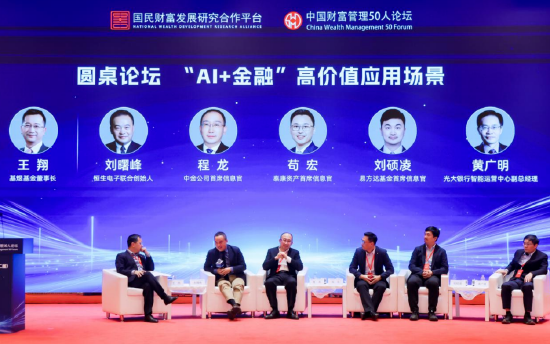
程龙:AI应用须匹配生产关系变革 遵循“小切口、大纵深”布局场景
Xin Lang Cai Jing· 2026-01-05 09:24
专题:中国财富管理50人论坛2025年会 1月5日金融一线消息,中国财富管理50人论坛2025年会近日在京召开,本届年会的主题是"迈向'十五 五'建设金融强国"。在"'AI+金融'高价值应用场景"圆桌论坛上,中金公司首席信息官程龙表示,中金公 司在应用大模型建设中,坚持"价值为纲、场景为王",重点聚焦三类场景。一是提升运营效率降低成 本,如投行文档智能撰写、销售服务、智能问答等;二是防控关键风险,如推出中金智阅文档审核方 案,破解上市公司披露风险难题;三是产品创新,如对外推出"中金点睛"数字化投研服务。选择场景需 要遵循 "小切口、大纵深、高密度、一体化"的原则,优先布局高业务价值、传统方法难解决、容错率 适配的场景。他强调,AI作为一种新的生产力,需要生产关系的相应变化,来实现真正的释放。 责任编辑:王进和 专题:中国财富管理50人论坛2025年会 1月5日金融一线消息,中国财富管理50人论坛2025年会近日在京召开,本届年会的主题是"迈向'十五 五'建设金融强国"。在"'AI+金融'高价值应用场景"圆桌论坛上,中金公司首席信息官程龙表示,中金公 司在应用大模型建设中,坚持"价值为纲、场景为王",重点聚焦三 ...
中金公司(601995) - 中金公司H股公告(股份发行人的证券变动月报表)
2026-01-05 09:15
股份發行人及根據《上市規則》第十九B章上市的香港預託證券發行人的證券變動月報表 截至月份: 2025年12月31日 狀態: 新提交 本月底法定/註冊股本總額: RMB 4,827,256,868 備註: 致:香港交易及結算所有限公司 公司名稱: 中國國際金融股份有限公司 呈交日期: 2026年1月5日 I. 法定/註冊股本變動 | 1. 股份分類 | 普通股 | 股份類別 | H | | 於香港聯交所上市 (註1) | | 是 | | | --- | --- | --- | --- | --- | --- | --- | --- | --- | | 證券代號 (如上市) | 03908 | 說明 | | | | | | | | | | 法定/註冊股份數目 | | | 面值 | | 法定/註冊股本 | | | 上月底結存 | | | 1,903,714,428 | RMB | | 1 RMB | | 1,903,714,428 | | 增加 / 減少 (-) | | | | | | RMB | | | | 本月底結存 | | | 1,903,714,428 | RMB | | 1 RMB | | 1,903,7 ...
中金公司(03908) - 截至二零二五年十二月三十一日股份发行人的证券变动月报表
2026-01-05 08:30
股份發行人及根據《上市規則》第十九B章上市的香港預託證券發行人的證券變動月報表 截至月份: 2025年12月31日 狀態: 新提交 致:香港交易及結算所有限公司 I. 法定/註冊股本變動 | 1. 股份分類 | 普通股 | 股份類別 | H | | 於香港聯交所上市 (註1) | | 是 | | | --- | --- | --- | --- | --- | --- | --- | --- | --- | | 證券代號 (如上市) | 03908 | 說明 | | | | | | | | | | 法定/註冊股份數目 | | | 面值 | | 法定/註冊股本 | | | 上月底結存 | | | 1,903,714,428 | RMB | | 1 RMB | | 1,903,714,428 | | 增加 / 減少 (-) | | | | | | RMB | | | | 本月底結存 | | | 1,903,714,428 | RMB | | 1 RMB | | 1,903,714,428 | | 2. 股份分類 | 普通股 | 股份類別 | A | | 於香港聯交所上市 (註1) | | 否 | | | --- | ...
【中金2026展望:泡沫加速!美国“财政主导”利好中美股市和金银铜】中金公司预计,2026年特朗普政府将转向财政货币双宽松,美联储常态化扩表释放流动性,缓解美国经济三大症结(信心扰动、小企业扩张迟滞、地产疲弱)。宽松环境利好科技、工业、资源板块,并推动美元趋势性贬值。弱美元周期下,人民币有...
Sou Hu Cai Jing· 2026-01-05 08:10
Core Viewpoint - CICC predicts that by 2026, the Trump administration will shift towards a dual approach of fiscal and monetary easing, which will benefit both US and Chinese stock markets as well as gold, silver, and copper [1] Group 1: Economic Environment - The Federal Reserve is expected to normalize its balance sheet expansion, releasing liquidity to alleviate three major issues in the US economy: confidence disturbances, stagnation in small business expansion, and weakness in the real estate sector [1] - A loose monetary environment is favorable for the technology, industrial, and resource sectors, while also promoting a trend of dollar depreciation [1] Group 2: Currency and Market Impact - During a weak dollar cycle, there is potential for the renminbi to appreciate, leading to a global rebalancing of funds that will boost A-shares and Hong Kong stocks [1] - New economy sectors are expected to continue leading the market, while the consumer demand sector is likely to experience a rebound [1] Group 3: Inflation-Linked Assets - Assets such as gold, silver, and copper are anticipated to benefit from inflationary trends [1]
REITs月度观察(20251201-202501231):二级市场价格延续下跌态势,新增多只产品申报及受理-20260105
EBSCN· 2026-01-05 07:25
1. Report Industry Investment Rating No relevant content provided. 2. Core Viewpoints of the Report - The secondary - market prices of publicly - offered REITs in China continued the downward trend in December 2025. The performance of REITs was weaker compared to other mainstream asset classes. The primary market had new product applications and acceptances, and the policy environment was optimized with the expansion of the REITs issuance scope and the introduction of relevant development promotion policies [1][2][40] 3. Summary by Directory 3.1 Primary Market 3.1.1 Listed Projects - As of December 31, 2025, there were 78 publicly - offered REITs in China, with a total issuance scale of 201.749 billion yuan (excluding expansion). The traffic infrastructure category had the largest issuance scale at 68.771 billion yuan, followed by the park infrastructure category at 32.933 billion yuan. In December 2025, one new REIT, Huaxia Anbo Warehouse REIT, was listed, with an issuance scale of 2.448 billion yuan and an asset type of warehousing and logistics [11]. 3.1.2 Pending - Listing Projects - As of December 31, 2025, there were 19 REITs pending listing, including 16 initial - offering REITs and 3 REITs pending expansion. During the month, the project status of several REITs was updated, such as "accepted", "feedback received", "declared", and "approved" [14]. 3.2 Secondary - Market Performance 3.2.1 Price Trends - **At the level of major asset classes**: In December 2025, the secondary - market prices of publicly - offered REITs continued the downward trend. The returns of China's publicly - offered REITs were - 2.51%, ranking behind A - shares, convertible bonds, gold, pure bonds, and US stocks, and ahead of crude oil [16]. - **At the underlying asset level**: Both equity - type and franchise - type REITs' prices declined, with franchise - type REITs having a larger decline. Among different underlying asset types, new infrastructure - type REITs had the largest increase, and new infrastructure and affordable housing - type REITs had better returns at 1.24% and 0.05% respectively [20][22]. - **At the single - REIT level**: In December 2025, 23 REITs rose and 55 fell. The top three in terms of increase were Huatai Nanjing Jianye REIT, CICC Chongqing Liangjiang REIT, and Huaxia Fund China Resources Youchao REIT [24]. 3.2.2 Trading Volume and Turnover Rate - **At the underlying asset level**: In December 2025, the trading volume of publicly - offered REITs decreased compared to the previous month. The water conservancy facilities - type REITs had the highest average daily turnover rate. The top three in terms of trading volume were traffic infrastructure, consumer infrastructure, and park infrastructure categories. The top three in terms of average daily turnover rate were water conservancy facilities, municipal facilities, and new infrastructure categories [26]. - **At the single - REIT level**: The trading volume and turnover rate of single REITs continued to show differentiation. The top three in terms of trading volume were CICC Puluosi REIT, Huaxia China Communications Construction REIT, and Huaxia Fund China Resources Youchao REIT. The top three in terms of trading amount were Huaxia China Resources Commercial REIT, Huaxia China Communications Construction REIT, and Zheshang HuHangYong REIT. The top three in terms of turnover rate were Huaxia Anbo Warehouse REIT, CITIC Construction Shenyang International Software Park REIT, and ICBC Inner Mongolia Energy Clean Energy REIT [27]. 3.2.3 Main - Force Net Inflow and Block Trading - **Main - force net inflow situation**: In December 2025, the total main - force net inflow was 119.71 million yuan, indicating an increase in market trading enthusiasm compared to the previous month. The top three underlying asset types in terms of main - force net inflow were traffic infrastructure, consumer infrastructure, and warehousing and logistics. The top three single REITs in terms of main - force net inflow were Huaxia China Resources Commercial REIT, Huaxia Anbo Warehouse REIT, and China Merchants Expressway REIT [30]. - **Block trading situation**: In December 2025, the total block - trading amount was 1.29 billion yuan, a decrease compared to the previous month. There were block trades on 19 trading days. December 29 had the highest single - day block - trading amount. The top three single REITs in terms of block - trading amount were Huaxia Shouchuang Outlet Mall REIT, China Merchants Expressway REIT, and Southern Runze Technology Data Center REIT [35]. 3.3 Related Policies - On December 1, the National Development and Reform Commission issued the "List of Industry Scope for Infrastructure Real Estate Investment Trust Fund (REITs) Projects (2025 Edition)", expanding the issuance scope of infrastructure REITs to 15 industries, mainly adding commercial office facilities and urban renewal facilities. On December 31, the China Securities Regulatory Commission issued the "Notice on Promoting the High - Quality Development of the Real Estate Investment Trust Fund (REITs) Market" and the "Announcement on Launching the Pilot Program of Commercial Real Estate Investment Trust Funds". The Shanghai and Shenzhen Stock Exchanges also revised and issued the business rules for publicly - offered REITs [40].