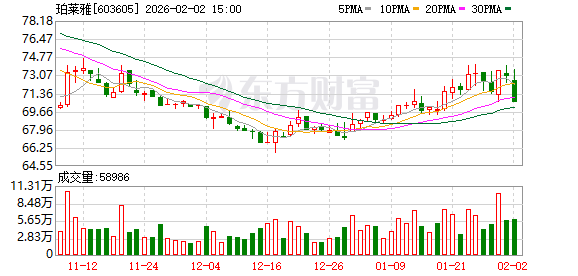
Proya(603605)

Search documents
——化妆品医美行业周报20260209:雅诗兰黛在华业绩双位数增长,1月天猫美妆品类高增-20260210
Shenwan Hongyuan Securities· 2026-02-10 03:05
Investment Rating - The report maintains a positive outlook on the cosmetics and medical beauty sector, indicating strong performance compared to the market [2][3]. Core Insights - Estee Lauder reported a double-digit growth in China, with net sales reaching RMB 29.35 billion, a year-on-year increase of 6%, and profits improving by 127% to RMB 1.12 billion [2][6]. - The Tmall beauty category saw a significant increase of 24% year-on-year in January 2026, indicating a strong start to the year for the beauty market [2][25]. - The report highlights the government's focus on promoting service consumption, which is expected to drive growth in key sectors, including beauty and personal care [7][8]. Summary by Sections Industry Performance - The cosmetics and medical beauty sector outperformed the market, with the Shenwan Beauty Care Index rising by 3.7% from January 30 to February 6, 2026 [3]. - The top-performing stocks in the sector included Betaini (+13.5%), Huaxi Biological (+12.0%), and Beijia Clean (+10.8%) [3]. Company Performance - Estee Lauder's sales in mainland China surged by 13% to RMB 6.44 billion, confirming the recovery of international beauty brands in the Chinese market [2][6]. - The report notes that the overall retail sales of cosmetics in December 2025 grew by 8.8%, with a total retail sales of RMB 465.3 billion for the year, reflecting a steady recovery in consumer spending [18][19]. Market Trends - The report emphasizes the shift in consumer focus towards personalized and high-quality services, with emotional and experiential services becoming new consumption hotspots [8][10]. - The government is implementing measures to stimulate service consumption, which is expected to play a crucial role in driving economic growth [7][8]. E-commerce Insights - The report discusses the acquisition of Beijing Lianshi by Yiwang Yichuang, which aims to enhance AI-driven marketing capabilities, indicating a trend towards digital transformation in the industry [12][13]. - The report highlights the competitive landscape in the e-commerce sector, with domestic brands gaining market share against international competitors [26].


化妆品医美行业周报:雅诗兰黛在华业绩双位数增长,1月天猫美妆品类高增-20260210
Shenwan Hongyuan Securities· 2026-02-10 01:46
Investment Rating - The report indicates a positive outlook for the cosmetics and medical beauty sector, with strong performance compared to the market [2][3]. Core Insights - Estee Lauder reported double-digit growth in China, with net sales reaching RMB 29.35 billion, a year-on-year increase of 6%, and profits improving by 127% to RMB 1.12 billion [8][26]. - The Tmall beauty category saw a significant increase of 24% year-on-year in January 2026, indicating strong consumer demand and confidence in the market [8][29]. - The report highlights the government's focus on promoting service consumption, which is expected to drive growth in key sectors, including beauty and personal care [9][10]. Summary by Sections Industry Performance - The cosmetics and medical beauty sector outperformed the market, with the Shenwan Beauty Care Index rising by 3.7% from January 30 to February 6, 2026 [3]. - The Shenwan Cosmetics Index increased by 2.8%, outperforming the Shenwan A Index by 4.4 percentage points [3]. Company Highlights - Estee Lauder's sales in mainland China surged by 13% to RMB 6.44 billion, confirming the recovery of international beauty brands in the Chinese market [8][26]. - The report notes that the top-performing stocks in the sector included Betaini (+13.5%), Huaxi Biological (+12.0%), and Beijia Clean (+10.8%) [4]. E-commerce Insights - The report provides data on the performance of domestic brands on platforms like Douyin and Tmall, showing significant growth in GMV for several brands [20]. - For instance, the brand "毛戈平" saw a GMV increase of 298% in December 2025 [21]. Market Trends - The overall retail sales of cosmetics in December 2025 grew by 8.8%, with a total retail sales figure of RMB 465.3 billion for the year, reflecting a steady recovery in consumer spending [22][23]. - The report emphasizes the shift in consumer preferences towards personalized and high-quality products, indicating a strategic opportunity for brands to innovate [10][11].




商贸零售行业周报:美团拟收购叮咚买菜,打造即时零售供应链优势
KAIYUAN SECURITIES· 2026-02-08 10:25
Investment Rating - The industry investment rating is "Positive" (maintained) [1] Core Views - The report highlights Meituan's acquisition of Dingdong Maicai for approximately $717 million, aiming to enhance its instant retail supply chain efficiency. Dingdong Maicai has achieved profitability for 12 consecutive quarters and operates over 1,000 front warehouses in China, with a monthly purchasing user base exceeding 7 million [4][24][27] - The report emphasizes the importance of supply chain efficiency and product quality in the competitive landscape of the instant retail industry, suggesting that the focus will shift towards these aspects post-acquisition [27] Summary by Sections Industry Dynamics - Meituan's acquisition of Dingdong Maicai is expected to create synergies in supply chain, regional layout, and warehouse scale, enhancing operational efficiency in the East China region [24][27] - Dingdong Maicai's established direct sourcing and self-operated production capabilities are anticipated to be preserved and amplified within Meituan's platform [27] Investment Themes - Investment Theme 1: Focus on high-end and fashionable gold jewelry brands, recommending companies like Laopuhuangjin and Chaohongji, which are expected to benefit from the emotional consumption trend [6][29] - Investment Theme 2: Emphasize retail companies adapting to trends and AI-enabled cross-border e-commerce leaders, with recommendations for Yonghui Supermarket and Aiyingshi [6][29] - Investment Theme 3: Highlight domestic beauty brands that cater to emotional value and innovative safe ingredients, recommending brands like Maogeping and Pola [6][29] - Investment Theme 4: Focus on differentiated medical beauty product manufacturers and leading chain medical beauty institutions, recommending Meilitiantian Medical Health and Aimeike [6][29] Market Performance - The retail and social service indices reported a slight decline of 0.34% and a slight increase of 0.02% respectively during the week of February 2 to February 6, 2026 [14][15] - The brand cosmetics sector showed the highest weekly increase of 4.99%, while the watch and jewelry sector led with a year-to-date increase of 16.56% [16][19] Company Highlights - Laopuhuangjin reported a significant revenue increase of 250.9% in FY2025H1, driven by brand expansion and customer base growth [31][32] - Chaohongji is expected to achieve a net profit growth of 125% to 175% in 2025, supported by differentiated product strength and multi-channel marketing [31][32] - Meilitiantian Medical Health anticipates a net profit increase of at least 34% in 2025, driven by both internal growth and acquisitions [39][40]



美妆行业更新:美护修复,关注高成长与边际改善
GUOTAI HAITONG SECURITIES· 2026-02-08 06:35
Investment Rating - The report assigns an "Accumulate" rating for the cosmetics industry, indicating a positive outlook for selected companies within the sector [5]. Core Insights - The beauty industry is expected to maintain steady growth in 2026, driven by product innovation and the rising trend of domestic brands. The report suggests a bottom-up selection of high-growth products and brands with strong potential, as well as companies that exhibit resilience amid product and channel changes [2][5]. Summary by Sections Industry Overview - The report highlights that the cosmetics sales during the off-peak season have shown marginal improvement. It suggests focusing on products and brands with strong growth momentum and resilience in the face of changing product and channel dynamics [2]. Key Investment Points - The report identifies two main lines of investment: 1. **High-Growth Companies**: Companies like RuYuchen, BeiJiaJie, MaoGePing, LinQingXuan, and ShangMei are expected to perform well due to strong fundamentals and product innovation [5]. 2. **Brands with Strong Asset Value**: Companies such as BeiTaiNi and PoLaiYa are anticipated to see marginal improvements following adjustments in their channels and product structures [5]. Market Performance - According to data from the National Bureau of Statistics, the retail sales of cosmetics in December 2025 grew by 8.8% year-on-year, significantly outpacing the overall retail growth of 0.9%. The annual retail sales for cosmetics in 2025 reached 465.3 billion yuan, reflecting a 5.1% year-on-year increase [5]. Company Valuations - The report provides a valuation table for key companies, indicating their earnings per share (EPS) and price-to-earnings (PE) ratios for 2025E, 2026E, and 2027E. For instance, RuYuchen has an EPS of 0.59 yuan for 2025E with a PE of 60, while BeiTaiNi has an EPS of 1.10 yuan for 2025E with a PE of 43 [7].

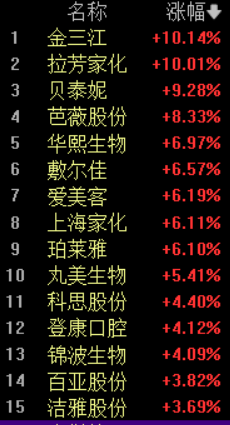
美容护理板块逆势拉升,拉芳家化涨停,贝泰妮涨超9%
Jin Rong Jie· 2026-02-05 02:19
Group 1 - The beauty care sector is experiencing a surge, with companies like Lafang Jiahua hitting the daily limit up, Jin Sanjiang rising over 10%, and others like Beitaini and Babi shares also showing significant gains [1][2] - Men's skincare products are becoming increasingly popular among Generation Z, with brands like C Coffee and Gu Yu seeing sales growth of 1900% and 1000% respectively during the recent holiday season [1] - Shanghai is focusing on consumer upgrades and market innovation, with plans to enhance domestic brands and improve inbound consumer services by 2026 [2][3] Group 2 - The beauty raw materials sector is witnessing a rapid increase in demand for specialized ingredients tailored to Chinese skin types, benefiting companies with core R&D capabilities [4] - Domestic beauty brands are gaining recognition and are expected to continue growing, especially those with innovative products and multi-channel operations [4] - The demand for cosmetic testing services is rising due to stricter regulations and consumer focus on product efficacy, creating opportunities for companies with advanced technical capabilities [5] Group 3 - Lafang Jiahua is a well-established beauty company focusing on hair care and skincare, actively pursuing brand rejuvenation and increasing R&D investments [6] - Huaxi Biological is a leading biotech firm specializing in hyaluronic acid, benefiting from the trend of domestic raw material production and industry upgrades [6] - Porlaia is a top domestic beauty brand known for effective skincare products, expected to increase R&D investments and expand its market leadership [6] - Beitaini specializes in sensitive skin care and has gained market recognition through collaborations with dermatological institutions, poised to benefit from the growing efficacy skincare market [6]


美妆行业周度市场观察-20260204
Ai Rui Zi Xun· 2026-02-04 06:45
Investment Rating - The report does not explicitly provide an investment rating for the beauty industry Core Insights - The beauty industry is undergoing significant changes due to various factors including policy shifts, consumer preferences, and technological advancements Industry Trends - Hainan's "zero tariff, low tax rate, and simplified tax system" policy is expected to transform the region into a global beauty industry hub, allowing international brands to penetrate the market while enhancing the competitiveness of domestic brands [1] - The beauty sector is experiencing a shift from price competition to value competition, driven by the need for genuine product efficacy and core ingredient transparency [4] - The clean beauty segment is facing polarization, with some brands exiting the market while major players continue to invest, indicating a potential growth opportunity in this area [5] - The emergence of beauty robots is seen as a blue ocean market, with companies testing consumer acceptance in 2026 [5] - Multi-functional makeup products that combine skincare benefits are gaining popularity, reflecting a trend towards efficiency and convenience among consumers [6] - The men's skincare market is projected to grow significantly, with domestic brands gaining traction in a traditionally dominated space [8] - The beauty industry is transitioning to a "hardcore metrics" era, emphasizing scientific validation and emotional resonance in branding [8] - The withdrawal of foreign beauty brands from the Chinese market indicates a shift in competitive dynamics, with local brands rising and online costs increasing [9] - ESG (Environmental, Social, Governance) considerations are becoming crucial for brand differentiation and competitive advantage in the beauty sector [10] - The global beauty market is witnessing increased mergers and acquisitions, reshaping the competitive landscape [11] - The Chinese beauty market is expected to reach a transaction volume of over 1.1 trillion yuan, with domestic brands capturing a significant market share [12] Brand Dynamics - New domestic brands are successfully leveraging unique ingredients and precise marketing strategies to thrive in the competitive landscape [14] - The brand "C咖" has emerged as a leader in the oil skin care segment by focusing on scientific innovation and consumer needs [15] - The brand "半亩花田" is seeking to go public, reflecting the trend of marketing optimization and product upgrade in the domestic beauty industry [15] - The introduction of high-end fragrance cleaning products indicates a shift towards quality in the home cleaning market, targeting the upgrading consumer demand [16]
量化大势研判202602:市场△gf继续保持扩张
Guolian Minsheng Securities· 2026-02-04 05:29
- The report introduces a quantitative model framework for market trend analysis, focusing on five asset style stages: external growth, quality growth, quality dividend, value dividend, and bankruptcy value. The model evaluates assets based on their intrinsic attributes and prioritizes them using the sequence of g > ROE > D, analyzing whether there are "good assets" and whether they are "expensive" [5][8][9] - The model incorporates key factors such as expected growth (gf), actual growth (g), profitability (ROE), high dividend (D), and bankruptcy value (B/P). Each factor is associated with specific market phases, e.g., expected growth is relevant across all phases, while profitability is emphasized during maturity phases [9][12] - The quantitative model has demonstrated strong historical performance, achieving an annualized return of 27.67% since 2009. It has shown consistent excess returns in most years, particularly post-2017, with limited effectiveness in years like 2011, 2012, and 2016 [19][22] - The model's backtesting results for specific years include notable excess returns, such as 51% in 2009, 36% in 2013, and 62% in 2022. However, it also recorded underperformance in years like 2011 (-11%) and 2014 (-4%) [22] - The report details six specific strategies derived from the model, each focusing on different factors: - **Expected Growth Strategy**: Selects industries with the highest analyst-forecasted growth rates. Recent recommendations include sectors like automotive sales, lithium equipment, and tungsten [38][39] - **Actual Growth Strategy**: Focuses on industries with the highest unexpected growth (△g). Current recommendations include photovoltaic equipment, insurance, and coal chemical sectors [40][41] - **Profitability Strategy**: Targets high-ROE industries with low valuations under the PB-ROE framework. Recommended sectors include copper, liquor, and non-dairy beverages [43][44] - **Quality Dividend Strategy**: Utilizes a DP+ROE scoring system to identify industries. Current recommendations include forestry, lithium equipment, and fiberglass [46][47] - **Value Dividend Strategy**: Employs a DP+BP scoring system. Recommended sectors include security, daily chemicals, and buses [49][50] - **Bankruptcy Value Strategy**: Focuses on industries with the lowest PB+SIZE scores. Current recommendations include automotive sales, ceramics, and cotton textiles [53][54]





商贸零售行业 2 月投资策略:金价波动不改金饰龙头长期逻辑,AI+赋能代运营商业务破局
Guoxin Securities· 2026-02-03 05:26
Group 1: Core Insights - The report maintains an "outperform" rating for the retail sector, indicating potential for growth in the consumer market, particularly in the jewelry and beauty segments, as well as cross-border e-commerce [3][51]. - Fluctuations in gold prices have short-term emotional impacts on the jewelry sector, but the long-term growth logic remains intact, driven by brand building, craftsmanship innovation, and cultural storytelling [1][12]. - AI applications are rapidly being integrated into the retail sector, particularly through online service providers, which are leveraging deep partnerships with major e-commerce platforms to enhance consumer insights and brand strategies [2][19]. Group 2: Industry Summaries - In the gold and jewelry sector, companies with a high proportion of investment gold business, such as Cai Bai Co., are expected to achieve stable growth despite short-term price fluctuations, with projected net profits for 2025 expected to increase by 47.43% to 71.07% [1][14]. - The beauty and personal care sector is seeing a return to low valuations, with traditional leaders showing signs of recovery and new product launches expected to drive growth [3][51]. - Cross-border e-commerce leaders have demonstrated strong resilience against risks, with AI applications expected to enhance cost efficiency and product innovation, providing a catalyst for sustained growth [3][51]. Group 3: Recent Industry Data - In December 2025, the total retail sales of consumer goods reached 45,136 billion yuan, with a year-on-year growth of 0.9%, indicating a weak overall growth trend influenced by high base effects from the previous year [24][30]. - Online retail sales for the year reached 159,722 billion yuan, growing by 8.6%, with physical goods online retail accounting for 26.1% of total retail sales, reflecting a slight increase in penetration [25][30]. - The jewelry category saw a year-on-year growth of 5.9% in December, supported by rising prices and holiday gifting demand, while the cosmetics category grew by 8.8% due to promotional activities and consumption upgrades [30].

未知机构:申万化妆品26年1月抖音渠道重点国货GMV同比基于蝉妈妈数据分析-20260203
未知机构· 2026-02-03 01:45
Summary of Key Points from the Conference Call Records Industry Overview - The records focus on the cosmetics industry in China, specifically analyzing the Gross Merchandise Value (GMV) of various brands in January 2026 through data from the Douyin platform. Key Companies and Their Performance 1. 上美股份 (Shangmei Group) - Total GMV for 韩束 (Hansu) and its sub-brands in January was approximately 6.6 billion CNY, representing a 9% increase year-over-year [1] - 韩束 brand GMV was about 5.3 billion CNY, showing a decline of 3% [1] - NewPage brand GMV reached approximately 0.7 billion CNY, marking a significant increase of 120% [1] - 极方 (Jifang) achieved a GMV of 0.1 billion CNY, with rapid growth year-over-year [1] - 聚光白 (Juguangbai) also recorded a GMV of 0.1 billion CNY, indicating high growth [1] - 安敏优 (Anminyou) had a GMV of 0.3 billion CNY, with a remarkable year-over-year growth of 267% [1] 2. 珀莱雅 (Proya) - The three major brands under Proya had a combined GMV of 3.5 billion CNY in January, reflecting a 2% increase [1] - The main brand, 珀莱雅, generated a GMV of approximately 2.8 billion CNY, down by 2% [1] - 彩棠 (Caitang) brand GMV was 0.3 billion CNY, showing a decline of 12% [1] - OR洗护 (OR Hair Care) brand GMV reached 0.3 billion CNY, with a substantial increase of 148% [1] 3. 若羽臣 (Ruoyuchen) - The combined GMV for the brands 绽家 (Zhanjia), 斐萃 (Feicui), and Nuibay was 1.7 billion CNY [2] - 绽家 brand GMV was 0.7 billion CNY, increasing by 88% [2] - 斐萃 brand GMV was 0.8 billion CNY, showing a remarkable growth of 345% [2] 4. 丸美股份 (Marubi) - The total GMV for its two main brands was 2.6 billion CNY, reflecting a 1% increase [2] - 主品牌丸美 (Marubi) had a GMV of approximately 1.8 billion CNY, up by 5% [2] - 恋火 (Lianhuo) brand GMV was 0.8 billion CNY, down by 7% [2] 5. 毛戈平 (Mao Geping) - The brand achieved a GMV of approximately 2.9 billion CNY, with an increase of 78% [2] 6. 林清轩 (Lin Qingxuan) - The brand's GMV was 2.6 billion CNY, reflecting a significant increase of 145% [2] 7. 薇诺娜 (Winona) - The brand recorded a GMV of 1.0 billion CNY, with a growth of 156% [2] 8. 润本 (Runben) - The brand's GMV was approximately 0.4 billion CNY, showing a slight decline of 1% [2] 9. 福瑞达 (Furuida) - The two major brands under Furuida had a combined GMV of about 0.8 billion CNY, increasing by 12% [2] 10. 水羊股份 (Shuiyang) - The four major brands achieved a GMV of approximately 0.7 billion CNY, doubling year-over-year [2] 11. 上海家化 (Shanghai Jahwa) - The three skincare brands under Shanghai Jahwa had a combined GMV of about 0.9 billion CNY, reflecting a significant increase of 252% [2] 12. 植物医生 (Plant Doctor) - The brand's GMV in December was 0.1 billion CNY, showing a decline of 5% [2] 13. 拉芳 (Lafang) - The brand achieved a GMV of approximately 0.1 billion CNY, with an increase of 135% [2] Additional Insights - The data indicates a mixed performance across various brands, with some experiencing significant growth while others faced declines. - The overall trend suggests a competitive landscape in the cosmetics industry, with emerging brands showing strong growth potential, particularly in the Douyin channel. This analysis highlights the dynamic nature of the cosmetics market in China, emphasizing the importance of monitoring GMV trends for investment opportunities and risk assessment.


珀莱雅:累计回购股份290800股
Zheng Quan Ri Bao· 2026-02-02 13:41
Group 1 - The company, Proya, announced that as of January 31, 2026, it has repurchased a total of 290,800 shares through centralized bidding, which represents 0.07% of the company's current total share capital [2]