
Proya(603605)

Search documents
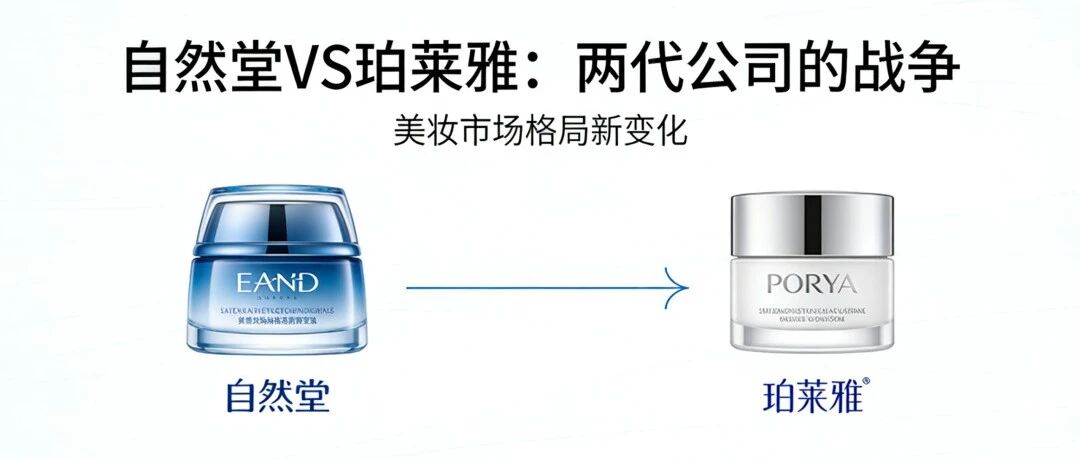
自然堂输给珀莱雅,是两代公司的战争
新消费智库· 2026-03-18 14:24
Core Viewpoint - The competition between brands like Chando and Proya is not merely a brand rivalry but represents a generational shift in the Chinese beauty industry, where first-generation companies are being outperformed by second and third-generation companies that adapt to new consumer behaviors and market dynamics [2][34]. Group 1: First-Generation Companies - First-generation companies like Chando, Pechoin, and Shanghai Jahwa thrived in an era focused on distribution and brand management, leveraging traditional retail channels to control sales [4][10]. - These companies built their success on a solid foundation of distribution networks and advertising, which are now becoming less effective in the current market landscape [8][10]. - Chando was perceived as a high-end domestic brand, particularly in lower-tier cities, but struggles to adapt to the new content-driven consumer environment [8][28]. Group 2: Second-Generation Companies - Second-generation companies such as Proya, Han Shu, and Winona emerged in the e-commerce and content era, focusing on user-driven strategies and rapid product iteration [11][15]. - Proya's success is attributed not just to effective marketing but to its organizational structure that aligns with modern content distribution systems, making it more agile and responsive to consumer needs [19][20]. - The shift from channel control to content platform control has fundamentally changed how brands grow, with visibility becoming more critical than mere shelf presence [13][14]. Group 3: Third-Generation Companies - Third-generation companies like Kefu Mei and Juzi Biotech are defining a new narrative by focusing on efficacy, ingredients, and medical storytelling to build consumer trust [2][31]. - These companies are not just competing for shelf space or online visibility but are creating new standards for consumer engagement and product relevance [31][34]. Group 4: Market Dynamics and Challenges - As online growth opportunities plateau and platform costs rise, first-generation companies like Chando are returning to their strengths in offline retail, indicating a recognition of their limitations in the new market [2][38]. - The challenge for Chando is not merely about whether to focus on online or offline strategies but whether it can rekindle strong consumer demand among a new generation [37][40]. - The beauty industry is evolving, and first-generation companies must confront the reality that their established advantages are diminishing in the face of new consumer expectations and competitive models [29][33].


2026年春季美容护理行业投资策略:行业稳健发展,把握结构性机会
Shenwan Hongyuan Securities· 2026-03-17 15:26
Group 1 - The beauty and personal care sector has shown a slight decline of 0.4% since the beginning of 2026, with significant stock performance variation among key players, ranging from -27.3% to 35.6% [4][12] - The cosmetics market is characterized by intense competition, with domestic brands making significant advancements in R&D and distribution, while international brands are adapting with localized products and flexible marketing strategies [4][20] - The medical beauty sector is witnessing a surge in new products and innovations, with a focus on affordable and specialized offerings, positioning domestic companies to compete effectively against foreign counterparts [4][48] Group 2 - The e-commerce operation segment is undergoing a transformation, with companies like RuYuchen and YiWangYiChuang leveraging self-owned brands and AI to create new growth trajectories [4][43] - Key recommendations for investment include brands with strong channel and product matrices such as MaoGePing and ShangMei, as well as companies like AiMeiKe and LangZi in the medical beauty space [4][45] - The report emphasizes the importance of promotional events like 618 and Double 11, which are critical for brand visibility and sales growth in the competitive online landscape [4][37] Group 3 - The skincare and makeup market is expected to enter a consolidation phase, with strong brands likely to thrive while weaker ones may struggle, particularly in segments like fragrance and hair care [20][21] - Domestic brands are increasingly capturing market share from international brands, with a notable decline in the latter's market presence over recent years [22][27] - The report highlights the strategic importance of product innovation and family series development, as seen with brands like Peiliya, which successfully extend their product lines to enhance sales [28][30]


悦芙媞三大新品上市,以系统思维破解年轻肌“三角困局”
FBeauty未来迹· 2026-03-13 13:39
Core Viewpoint - The article discusses the brand upgrade and product launch of Proya's skincare brand, Yuefuti, which targets young skin by addressing their specific skincare needs through innovative products and a deep understanding of their lifestyle [2][20]. Brand Upgrade - Yuefuti has undergone a comprehensive brand upgrade since August last year, introducing a new slogan "Youth Research, Joyful Vitality" and a refreshed visual identity to resonate more with the younger generation [2][3]. - The brand aims to redefine scientific skincare standards for young skin by leveraging Proya's global research capabilities [3]. Understanding Young Consumers - Yuefuti emphasizes the importance of understanding the lifestyle and skincare pain points of young consumers, which often intertwine in three core dimensions: skin issues, lifestyle contradictions, and skincare demands [6][7]. - The brand identifies that young skin, while having natural advantages, often suffers from issues like excess oil, leading to a vicious cycle of acne and sensitivity [6]. New Product Launches - Yuefuti has launched three new products: Dual-Tube Cleanser, Peach Makeup Remover, and Powder Essence, each addressing different stubborn skin issues faced by young consumers [9][16]. - The Peach Makeup Remover has been particularly noted for its innovative structure and effectiveness, quickly gaining popularity among users [11]. Innovative Solutions - The Dual-Tube Cleanser combines two formulations to provide both deep cleaning and gentle care, addressing the common dilemma of choosing between strong cleansing and mildness [12][14]. - The Powder Essence targets dullness and roughness caused by stress and lack of sleep, employing a three-level skin rejuvenation mechanism [16][18]. Research and Development - Yuefuti's product logic is supported by Proya's extensive research network, which includes R&D centers in Hangzhou, Shanghai, and Europe, ensuring a blend of local needs and international technology [21]. - The brand has maintained a double-digit growth in R&D expenses since 2022, with a projected R&D budget of 210 million yuan in 2024 and a total of 229 authorized patents [21]. Market Performance - In the first half of 2025, Yuefuti's sales volume increased by 3.31% year-on-year, indicating a steady growth trend and establishing its independent competitive strength in the young skincare market [23]. - The brand's recent upgrades and product launches reflect a redefinition of "skincare for young skin," focusing on efficiency and scientific formulation to meet complex skincare goals [23][24].

《未来研报》创刊词|100家企业,与美妆产业的长期主义
FBeauty未来迹· 2026-03-12 11:50
Core Viewpoint - The article emphasizes the evolution of the Chinese cosmetics industry over the past 47 years, highlighting the importance of sustainability and digital transformation as key drivers for future growth [5][6][30]. Group 1: Historical Context - The first National Tree Planting Day was established on March 12, 1979, marking a significant moment in China's environmental awareness [5]. - In the same year, the foundation for the Shenzhen Special Economic Zone was laid, symbolizing the start of China's economic reform [5]. - The Chinese cosmetics market has transformed from having no notable domestic products to becoming the world's largest cosmetics consumer market, with companies like L'Oréal generating over 50 billion yuan in revenue [6]. Group 2: Recent Developments - The past five years have seen significant changes in the cosmetics industry, particularly accelerated by the COVID-19 pandemic, which forced companies to recognize the necessity of digital transformation [8][9]. - In 2022, 56 companies participated in the first "Digital Future Forest" planting event, emphasizing the industry's commitment to digitalization [8]. - By 2023, the number of participating companies increased to 85, with a notable revenue growth disparity between digital leaders and laggards, highlighting digitalization as essential for survival [9][12]. Group 3: Sustainability Initiatives - In 2024, the "Beauty Sustainability Coalition" (BSC) was formed, with 85 companies releasing the first sustainability declaration for the Chinese cosmetics industry, aiming to create a responsible beauty ecosystem [12][14]. - The coalition's mission focuses on integrating sustainable development principles within the industry, promoting a collective approach to environmental responsibility [12][27]. Group 4: Technological Advancements - By 2025, the industry had progressed to an AI-driven phase, with companies like L'Oréal and Estée Lauder implementing AI in research and production processes, significantly reducing development cycles [14]. - The integration of AI and digital tools has transformed decision-making processes, shifting from intuition-based to data-driven approaches [14]. Group 5: Future Outlook - As of March 12, 2026, the BSC has reached 100 member companies, indicating a growing commitment to sustainability and collaboration within the industry [16][18]. - The article introduces the "Future Report" as a new initiative aimed at providing deep insights and trend analysis for industry decision-makers, addressing the need for clarity amidst information overload [20][21]. - The report will focus on macro trends, brand dynamics, retail channels, consumer insights, and supply chain innovations, aiming to guide the industry towards sustainable growth [23][30].




看见彼此,才会相认:珀莱雅把女性议题带入“共情时代”
FBeauty未来迹· 2026-03-08 15:22
Core Viewpoint - The article discusses the evolution of women's marketing, emphasizing that it has transitioned from bold declarations to a more nuanced understanding of women's experiences and relationships, particularly highlighted by the 2026 brand attitude film "I Recognize You" by Proya [4][9]. Summary by Sections Women's Marketing Evolution - Women's marketing has not lost its value but has entered a new phase where brands must genuinely understand and respect the complex experiences of women [4][6]. - The film "I Recognize You" represents a significant shift in the beauty industry, focusing on subtle, real moments among women rather than grand statements [5][9]. Authentic Representation - The film captures the unspoken understanding between women, showcasing both competition and support in their relationships, reflecting a more authentic portrayal of female experiences [6][7]. - It emphasizes the importance of recognizing shared struggles and efforts among women, moving away from simplistic narratives to a deeper emotional connection [7][11]. Brand's Long-term Commitment - Proya has been addressing women's issues for six years, evolving from responding to biases to understanding real relationships among women, indicating a deeper brand comprehension of women's roles and societal changes [9][12]. - The brand's approach has shifted from merely advocating for women to genuinely supporting them through various initiatives, such as the "Sky's the Limit" program for women's employment equality and mental health support for new mothers [12][13]. Industry-wide Implications - The changes in Proya's marketing reflect a broader transformation in the beauty industry, where the focus has shifted from product efficacy to emotional resonance and value alignment with consumers [13][14]. - The article highlights that successful brands now recognize the complexity of women's experiences and aim to present these authentically, marking a significant shift from previous marketing strategies [14].

商贸零售行业周报:38大促国货美妆表现亮眼,上美股份发布盈喜预告
KAIYUAN SECURITIES· 2026-03-08 13:35
Investment Rating - The investment rating for the retail industry is "Positive" (maintained) [1] Core Insights - The report highlights the strong performance of domestic brands during the 38 promotional event, with significant sales figures and consumer demand for effective skincare products [23][25] - The report emphasizes the importance of emotional consumption themes and recommends high-quality companies in high-growth sectors [6][30][31] Summary by Sections Retail and Social Services Market Review - The retail and social services indices reported declines of 3.91% and 3.63% respectively during the week of March 2 to March 6, 2026 [5][15] - Year-to-date, the retail index has decreased by 6.82%, while the social services index has increased by 3.01% [15][16] Industry Dynamics - Domestic brands performed well during the 38 promotional event, with leading brands like Proya achieving significant sales [23] - The report notes that the skincare product category is seeing strong demand, particularly for effective and functional products [23][25] Investment Recommendations - Investment focus areas include: - **Gold and Jewelry**: Recommend brands with differentiated product offerings such as Laopuhuang and Chaohongji [6][30] - **Offline Retail**: Highlight companies adapting to trends like Yonghui Supermarket and Aiyingshi [6][30] - **Cosmetics**: Focus on brands that meet emotional value and safety innovation, recommending brands like Maogeping and Proya [6][31] - **Medical Aesthetics**: Suggest companies with differentiated products and expanding chains, such as Meilitiantian Medical Health and Aimeike [6][31] Company Performance Highlights - **Shangmei Co.**: Expected revenue of 9.1-9.2 billion yuan for 2025, with a year-on-year growth of 34.0%-35.4% [27] - **Zhou Dafu**: Achieved a retail value increase of 17.8% year-on-year in Q3 2026 [32] - **Yonghui Supermarket**: Anticipated revenue decline but undergoing significant operational adjustments [32]



商贸零售行业周报:38大促国货美妆表现亮眼,上美股份发布盈喜预告-20260308
KAIYUAN SECURITIES· 2026-03-08 11:11
Investment Rating - The investment rating for the retail industry is "Positive" (maintained) [1] Core Insights - The report highlights the strong performance of domestic brands during the 38 promotional event, with significant sales figures and consumer demand for effective skincare products [23][25] - The report emphasizes the importance of emotional consumption themes and recommends high-quality companies in high-growth sectors [6][30][31] Summary by Sections Retail and Social Services Market Review - The retail and social services indices reported declines of 3.91% and 3.63% respectively during the week of March 2 to March 6, 2026, ranking 25th and 23rd among 31 primary industries [5][15] - Year-to-date, the retail index has decreased by 6.82%, while the social services index has increased by 3.01% [12][15] Industry Dynamics - The 38 promotional event saw domestic brands excel, with significant sales figures reported from live streaming platforms [23][25] - Key brands such as Pechoin and Betainy led in product selection and sales performance during the promotional period [23][24] Investment Recommendations - Investment focus areas include: - Gold and jewelry brands with differentiated product offerings, recommending companies like Laopuhuangjin and Chaohongji [6][30] - Offline retail companies adapting to market changes, recommending Yonghui Supermarket and Aiyingshi [6][30] - Domestic beauty brands that emphasize emotional value and innovative ingredients, recommending Maogeping and Shangmei [6][31] - Medical aesthetics firms with differentiated products, recommending Meilitiantian and Aimeike [6][31] Company Performance Highlights - Shangmei Co. is projected to achieve revenues of 9.1-9.2 billion yuan, a year-on-year increase of 34.0%-35.4%, with net profits expected to reach 1.14-1.16 billion yuan, up 41.9%-44.4% [27][29] - Zhou Dafu reported a retail value increase of 17.8% year-on-year for FY2026Q3, driven by product structure optimization [32]


国信证券晨会纪要-20260306
Guoxin Securities· 2026-03-06 01:24
Macro and Strategy - The 2026 government work report emphasizes the priority of "high-quality development" over "stability" with a GDP growth target adjusted to 4.5%-5.0%, aiming to balance growth and quality during a transitional period [7][8] - Fiscal policy remains "more proactive," with a total broad deficit of 11.89 trillion yuan and a deficit rate of approximately 8.1%, reflecting a slight decrease from the previous year [8] - Monetary policy is expected to remain "moderately loose," with anticipated adjustments including one rate cut and one reserve requirement ratio reduction in 2026 [8] Petrochemical Industry - The petrochemical industry investment strategy for March 2026 recommends focusing on rising crude oil and natural gas prices driven by geopolitical factors, particularly following military actions in the Middle East that disrupted energy supplies [9][10] - The conflict has led to significant price increases in European natural gas, with prices surging over 50% due to supply disruptions from Iran and Qatar [9] - The supply side is experiencing a downturn in fixed asset investment, indicating the end of the expansion cycle, while policies are aimed at eliminating low-priced, disordered competition [10] - Demand is expected to recover moderately due to global central banks entering a rate-cutting cycle, alongside growth in new energy and AI sectors driving demand for key chemicals [11] - The report forecasts Brent crude oil prices stabilizing between $70-$75 per barrel and WTI prices between $65-$70 per barrel in 2026, with specific investment recommendations for companies like China National Offshore Oil Corporation and China Petroleum [12] Retail Industry - The retail investment strategy for March 2026 highlights the proactive positioning of leading beauty brands for the upcoming International Women's Day promotions, with expectations for improved performance due to new product launches [17] - Gold prices have seen significant fluctuations, with a year-to-date increase of 22.34%, impacting consumer sentiment and sales in the jewelry sector [18] - The report maintains an "outperform" rating for the retail sector, suggesting that leading companies in gold and beauty will continue to grow despite short-term market volatility [19] Ctrip Group - Ctrip's Q4 2025 revenue grew by 20.8% year-on-year, outperforming expectations, with a total revenue of 15.4 billion yuan [20][21] - The company is focusing on enhancing user experience and optimizing traffic monetization, with significant growth in overseas bookings through its Trip.com platform [21] - Regulatory scrutiny regarding antitrust issues is a key concern, but the company's strong operational capabilities and supply chain integration are expected to support steady growth [22][23]




商贸零售行业3月投资策略:美护龙头积极布局38大促,金价高位分化行业需求
Guoxin Securities· 2026-03-06 00:50
Investment Rating - The report maintains an "Outperform" rating for the sector [3][44]. Core Insights - The beauty and personal care sector is expected to see growth driven by new product launches and promotional activities during the March 8th sales period, which is anticipated to provide positive data performance compared to the previous year's low base [1][12]. - The gold jewelry sector is experiencing significant price fluctuations, with COMEX gold prices increasing by 22.34% from the beginning of the year to March 2. Despite short-term impacts on consumer sentiment, the long-term growth logic for leading brands remains intact [2][15]. - The report highlights that the overall retail sector is expected to rebound due to policy support and the potential for increased consumer spending as the market stabilizes [3][20]. Summary by Sections Beauty and Personal Care - The March 8th promotional period is crucial for sales, with brands expected to leverage platform support and new product launches to drive growth [12][13]. - Major domestic brands are actively launching new products, enhancing brand loyalty and attracting new customers [13][16]. Gold Jewelry - The sector is influenced by gold price volatility, but leading companies are expected to maintain stable growth due to strong brand positioning and innovative product offerings [2][19]. - Companies with a high proportion of investment gold business are projected to achieve significant revenue growth, with estimates of net profit for 2025 ranging from 1.06 to 1.23 billion [18]. Market Trends - The retail sector's total sales in December 2025 showed a year-on-year growth of 0.9%, with online retail sales growing by 8.6% [20][24]. - The beauty and personal care segment outperformed the overall market, with a notable increase in online sales contributing to a positive outlook for the sector [29][37]. Investment Recommendations - The report recommends several companies across different segments, including: - Gold Jewelry: Cai Bai Co., Luk Fook Holdings, Lao Pu Gold, Chow Tai Fook, and Chao Hong Ji [3][44]. - Beauty and Personal Care: Proya, Betaini, Shangmei, Ruoyu Chen, and Dengkang Oral Care [3][44]. - Cross-border E-commerce: Anker Innovations, Small Commodity City, and Focus Technology [3][45]. - Offline Retail: Hangzhou Jie Bai, Jia Jia Yue, Chongqing Department Store, and Yonghui Supermarket [3][45].


珀莱雅(603605) - 珀莱雅化妆品股份有限公司关于股份回购进展公告
2026-03-02 08:30
| 证券代码:603605 | 证券简称:珀莱雅 | 公告编号:2026-006 | | --- | --- | --- | | 债券代码:113634 | 债券简称:珀莱转债 | | 珀莱雅化妆品股份有限公司 关于股份回购进展公告 本公司董事会及全体董事保证本公告内容不存在任何虚假记载、误导性陈述 或者重大遗漏,并对其内容的真实性、准确性和完整性承担法律责任。 公司于 2025 年 12 月 30 日召开第四届董事会第十一次会议,审议通过了《关 于以集中竞价交易方式回购股份方案的议案》,同意公司以自有资金通过集中竞价 交易方式进行股份回购,并在未来适宜时机用于股权激励或员工持股计划。本次 回购资金总额不低于人民币 8,000 万元(含本数),不超过人民币 15,000 万元(含 本数),回购的价格不超过人民币 100 元/股(含),不高于董事会通过回购决议前 30 个交易日公司股票交易均价的 150%,回购期限为自公司董事会审议通过本次回 购股份方案之日起 12 个月内。具体内容详见公司于 2025 年 12 月 31 日在上海证 券交易所网站(www.sse.com.cn)披露的《关于以集中竞价交易方式回 ...