PAB(000001)

Search documents
平安银行:10月24日起,平安金积存业务起购金额由900元上调至1100元
Cai Jing Wang· 2025-10-21 04:14
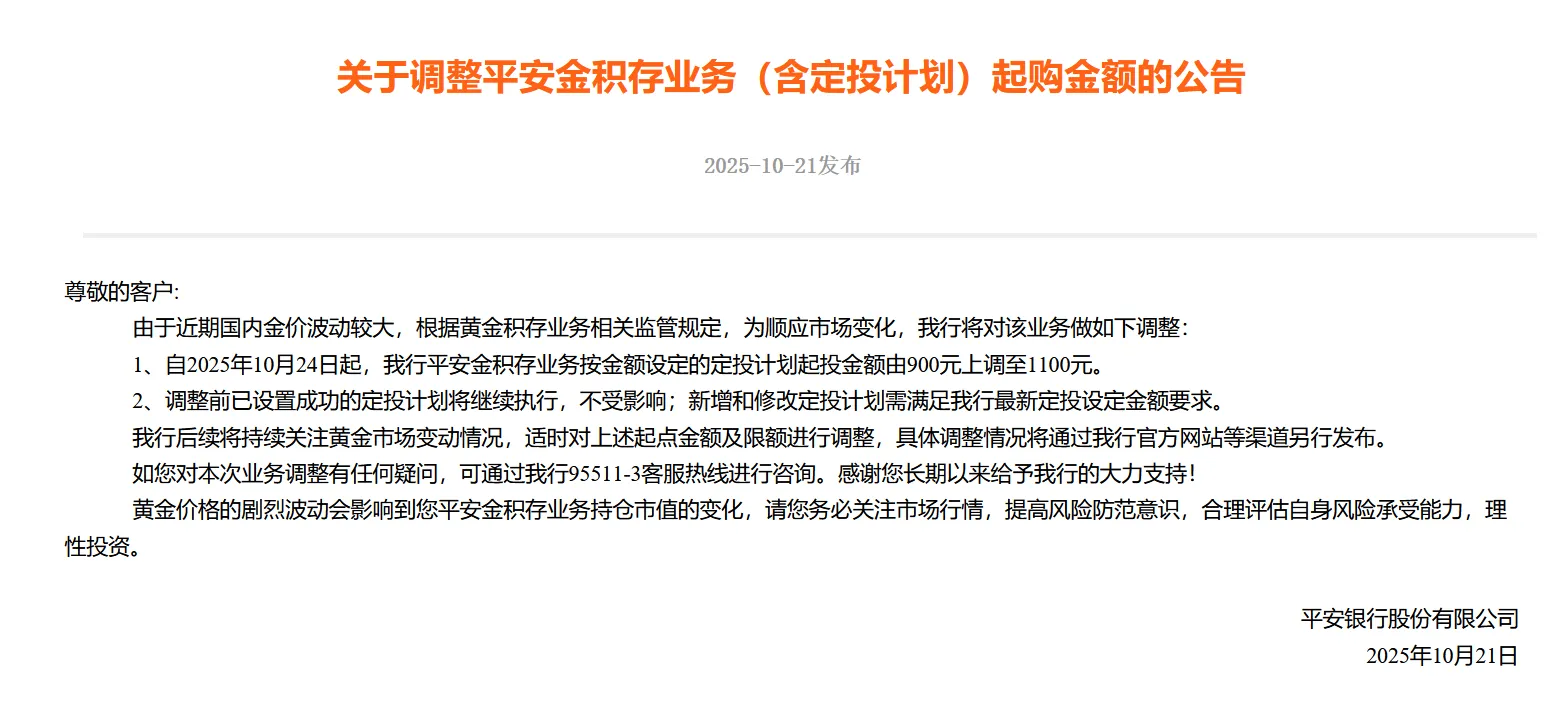
Core Points - Ping An Bank announced adjustments to its gold accumulation business due to recent fluctuations in domestic gold prices, in accordance with regulatory requirements [1] - Starting from October 24, 2025, the minimum investment amount for the gold accumulation plan will increase from 900 yuan to 1100 yuan [1] - Existing investment plans that were successfully set up before the adjustment will remain unaffected; however, new and modified plans must comply with the new minimum investment requirement [1] - The bank will continue to monitor changes in the gold market and may adjust the minimum investment amount and limits accordingly, with updates to be communicated through official channels [1]


摩根士丹利:国内银行股三季度“自然触底”,四季度及明年一季度迎配置良机
Huan Qiu Wang· 2025-10-21 03:31
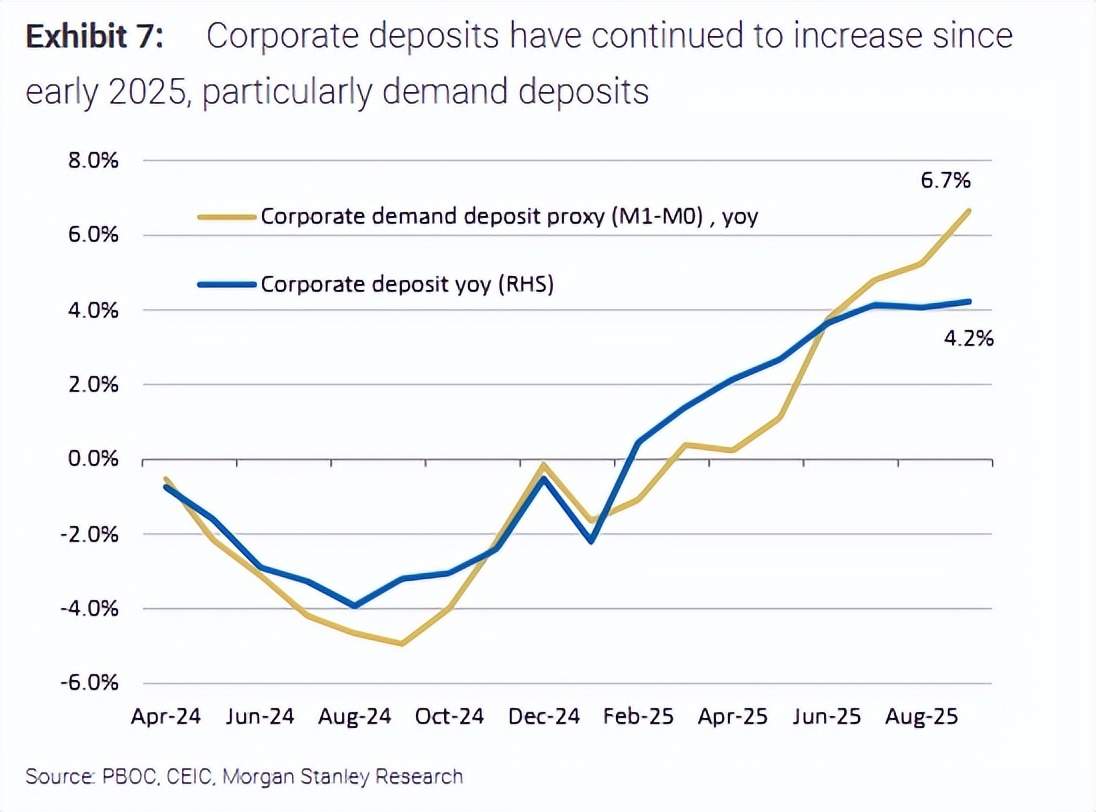
Core Viewpoint - Morgan Stanley's latest report indicates that after seasonal adjustments in Q3, Chinese bank stocks are entering a cyclical bottom, with promising investment opportunities expected in Q4 of this year and Q1 of next year. This cycle's bottoming is characterized as a "natural clearing" without large-scale stimulus interventions, marking a new development phase for the market [1]. Group 1: Economic Indicators and Market Dynamics - Multiple economic indicators suggest that the adjustment in the domestic banking system is nearing its end, with a rebound in M1 growth and improved industrial profits occurring without major economic stimulus [1]. - The report highlights that this is a significant milestone, indicating that the internal circulation dynamics of the Chinese economy are strengthening, and the financial system is becoming less dependent on policy stimulus [1]. Group 2: Factors Supporting Bank Stock Revaluation - Four key factors are expected to support the revaluation of bank stocks in the upcoming quarters: 1. The dividend distribution window is approaching, with Q4 typically seeing a concentration of dividend payouts from listed banks, enhancing the attractiveness of high-dividend characteristics for long-term capital [3]. 2. A stable interest rate environment is emerging, which will help alleviate the pressure from the continuous narrowing of banks' net interest margins, thus supporting profitability [3]. 3. The rollout of approximately 500 billion RMB in structural monetary policy tools will inject liquidity into the banking system and guide credit towards specific sectors, optimizing asset structures [3]. 4. Current policy support is more focused on precision and sustainability, avoiding "flood irrigation" and creating a more predictable operating environment for the banking industry [3]. Group 3: Investment Strategy Shift - The previous investment logic relying on macroeconomic strong stimulus is no longer effective. Investors are advised to strategically shift their focus [3]. - Future excess returns will not stem from sector-wide beta trends but rather from alpha opportunities, emphasizing the need to identify leading banks that can achieve earlier and stronger profit rebounds through superior risk management, efficient operating models, and high-quality customer bases in a "natural clearing" environment [3][4].

1.75亿,券商App月活创年内新高,最新排名来了
3 6 Ke· 2025-10-20 08:33
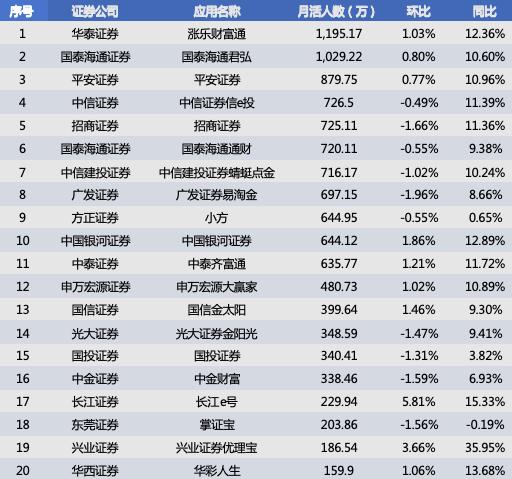
Core Insights - The active user count of stock trading apps serves as a crucial indicator of investor sentiment, with approximately 175 million active users in September 2025, reflecting a month-on-month increase of 0.74% and a year-on-year increase of 9.73%, marking a record high for the year [1][2]. Group 1: User Activity and Rankings - In September 2025, two brokerage apps surpassed 10 million monthly active users, while eleven apps exceeded 6 million, with the top three being Huatai Securities, Guotai Junan, and Ping An Securities [2][3]. - Huatai Securities' "Zhang Le Wealth" app led with 11.95 million active users, followed by Guotai Junan's app with 10.29 million, and Ping An Securities with 8.80 million [3]. - The overall growth momentum of brokerage app active users has slowed, with some apps experiencing slight month-on-month declines [1][2]. Group 2: Year-on-Year Growth - The app "Youlibao" from Industrial Securities saw a year-on-year increase of 35.95%, while several other apps, including Guojin Securities and Xihua Securities, reported over 20% growth [2][3]. - Only one app, Dongguan Securities' "Zhang Zheng Bao," experienced a year-on-year decline of 0.19% [2][3]. Group 3: AI Integration in Brokerage Apps - The rapid development of AI technology has led to an increasing demand for its application in the securities industry, with firms investing in financial technology to enhance their app services [4]. - Huatai Securities launched an independent AI application terminal "AI Zhang Le," integrating AI capabilities throughout key processes such as stock selection and trading [4]. - Guotai Junan introduced a new generation of fully AI-driven app "Lingxi," promoting deep integration of AI technology with diverse customer service scenarios [4]. Group 4: Future Directions for AI in Securities - Industry experts emphasize the need for brokerage firms to create differentiated services using AI, addressing challenges such as professional inadequacy and compliance risks associated with general AI models [4][5]. - The goal is to develop AI as a personalized "super AI service assistant" for users, enhancing the overall digital transformation of the securities industry [5].


股份制银行板块10月20日跌0.43%,浦发银行领跌,主力资金净流出2.29亿元
Zheng Xing Xing Ye Ri Bao· 2025-10-20 08:27
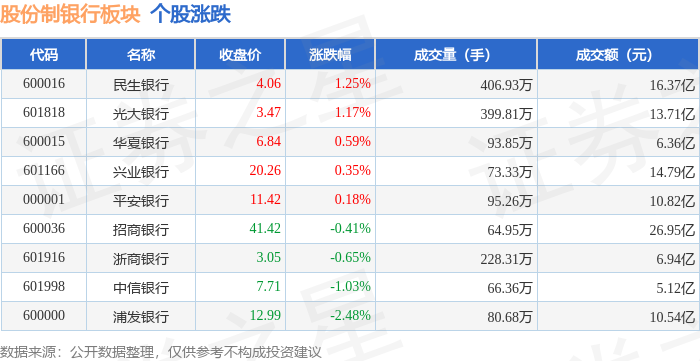
证券之星消息,10月20日股份制银行板块较上一交易日下跌0.43%,浦发银行领跌。当日上证指数报收 于3863.89,上涨0.63%。深证成指报收于12813.21,上涨0.98%。股份制银行板块个股涨跌见下表: | 代码 | 名称 | 收盘价 | 涨跌幅 | 成交量(手) | 成交额(元) | | --- | --- | --- | --- | --- | --- | | 600016 | 民生银行 | 4.06 | 1.25% | 406.93万 | 16.37亿 | | 601818 | 光大银行 | 3.47 | 1.17% | 399.81万 | 13.71亿 | | 600015 | 华夏银行 | 6.84 | 0.59% | 93.85万 | 6.36 Z | | 601166 | 兴业银行 | 20.26 | 0.35% | 73.33万 | 14.79亿 | | 000001 | 平安银行 | 11.42 | 0.18% | 95.26万 | 10.82亿 | | 600036 | 招商银行 | 41.42 | -0.41% | 64.95万 | 26.95亿 | | 601916 | 浙商 ...





高含权产品强势领跑持有期榜单,榜首近3月年化收益超30%
2 1 Shi Ji Jing Ji Bao Dao· 2025-10-20 01:13
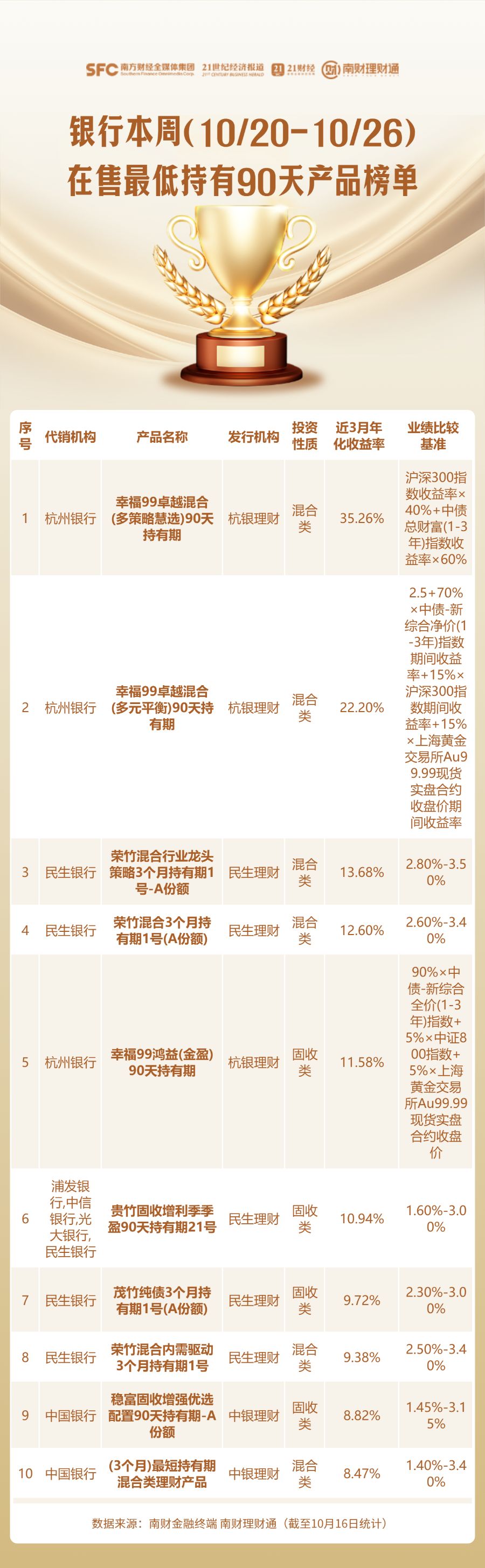
Core Insights - The article focuses on the performance of bank wealth management products with minimum holding periods, specifically highlighting the annualized returns of these products categorized by holding periods of 90 days, 180 days, and 365 days [1][6]. Group 1: Performance Rankings - The rankings are based on annualized returns calculated over the same period as the holding duration, with a focus on products currently available for sale [1]. - A total of 28 distribution institutions were analyzed, including major banks such as Industrial and Commercial Bank of China, Bank of China, and Agricultural Bank of China [1]. - The performance of various products is showcased, with notable returns such as 22.20% for Hangzhou Bank's "Happiness 99 Excellent Mixed" product with a 90-day holding period [4]. Group 2: Product Categories - The products are categorized based on their minimum holding periods: 90 days, 180 days, and 365 days, allowing investors to compare performance across different time frames [1][6]. - For the 180-day holding period, products like Hangzhou Bank's "Happiness 99 Excellent Mixed" achieved a return of 13.63% [7]. - The analysis also includes products with a 365-day holding period, with returns such as 11.89% for Hangzhou Bank's "Happiness 99 Excellent Mixed" [12]. Group 3: Investment Recommendations - The article emphasizes the importance of investors verifying the availability of products through the respective bank's app, as some products may be unavailable due to sold-out quotas or differences in product listings [1]. - It suggests that investors should consider the performance rankings as a reference point when selecting wealth management products [2].



前三季度主要金融数据变化怎么看
Xin Hua Wang· 2025-10-19 23:50
Core Viewpoint - The People's Bank of China reported that in the first three quarters of this year, RMB loans increased by 14.75 trillion yuan, with both broad money and social financing growth rates remaining high, creating a favorable monetary environment for economic recovery [1] Group 1: Loan Growth and Structure - As of the end of September, the balance of RMB loans reached 270.39 trillion yuan, a year-on-year increase of 6.6% [2] - The social financing scale stood at 437.08 trillion yuan, with a year-on-year growth of 8.7%, which is 0.7 percentage points higher than the same period last year [2] - The incremental social financing scale for the first three quarters totaled 30.09 trillion yuan, which is 4.42 trillion yuan more than the previous year [2] - The balance of inclusive small and micro loans was 36.09 trillion yuan, up 12.2% year-on-year, while medium and long-term loans for the manufacturing sector reached 15.02 trillion yuan, increasing by 8.2% [2] Group 2: Support for Key Industries - Key industries such as equipment manufacturing and high-tech manufacturing maintained high levels of prosperity, effectively releasing corporate financing demand [2] - A state-owned bank reported that manufacturing loans accounted for over half of its corporate loans, primarily in the form of medium and long-term loans, which align with the long-term needs of manufacturing enterprises for technological upgrades [2] Group 3: Policy Impact and Consumer Demand - Recent policy measures, including personal consumption loan subsidies and adjustments to housing purchase restrictions in major cities, have led to a rebound in consumer loan demand [3] - In September, the transaction volume of commercial housing in 30 major and medium-sized cities increased by approximately 7% year-on-year, indicating a recovery in personal housing loan demand [3] Group 4: Financing Costs and Transparency - Loan interest rates have remained low, with the weighted average interest rate for newly issued corporate loans at about 3.1%, down approximately 40 basis points year-on-year [5] - The implementation of the "loan transparency" initiative has helped reduce financing costs for small and medium-sized enterprises, ensuring that they are aware of all associated costs [4][5] Group 5: Monetary Policy and Economic Outlook - The current monetary policy remains moderately accommodative, with continuous effects from previous rate cuts and reserve requirement ratio reductions, supporting high growth rates in RMB loans [6] - The broad money (M2) balance reached 335.38 trillion yuan, growing by 8.4% year-on-year, while the narrow money (M1) balance was 113.15 trillion yuan, up 7.2% [7] - The economic indicators show strong vitality and resilience, with structural monetary policy tools expected to continue supporting key sectors [8]

信贷结构持续优化 前三季度主要金融数据变化怎么看
Ren Min Ri Bao· 2025-10-19 23:37
Core Viewpoint - The People's Bank of China reported that in the first three quarters of this year, RMB loans increased by 14.75 trillion yuan, with both broad money and social financing growth rates remaining high, creating a favorable monetary environment for economic recovery [1]. Financial Data Overview - As of the end of September, the balance of RMB loans reached 270.39 trillion yuan, a year-on-year increase of 6.6%. The total social financing scale was 437.08 trillion yuan, up 8.7% year-on-year, which is 0.7 percentage points higher than the same period last year. The cumulative increase in social financing for the first three quarters was 30.09 trillion yuan, 4.42 trillion yuan more than the previous year [3]. - By the end of September, the balance of inclusive small and micro loans was 36.09 trillion yuan, growing by 12.2% year-on-year, while medium and long-term loans for the manufacturing sector reached 15.02 trillion yuan, up 8.2% year-on-year [3]. Support for the Real Economy - Key industries such as equipment manufacturing and high-tech manufacturing maintained high levels of prosperity, with effective release of corporate financing demand. A state-owned bank reported that manufacturing loans accounted for over half of its corporate loans this year, primarily in the form of medium and long-term loans to support technological upgrades in the manufacturing sector [3]. - Recent policy financial tools have been deployed in various regions, targeting urban renewal, transportation, water services, logistics, and environmental protection, addressing capital shortages for major projects and boosting related credit growth [4]. Consumer Credit Trends - There has been a rebound in consumer credit demand, driven by the implementation of personal consumption loan interest subsidies and service industry loan subsidies. In September, the transaction volume in the real estate market increased by approximately 7% year-on-year, leading to a corresponding recovery in personal housing loan demand [4]. Financing Costs and Loan Rates - Loan interest rates have remained low, with the weighted average interest rate for newly issued corporate loans at approximately 3.1%, down about 40 basis points year-on-year. Similarly, the average interest rate for new personal housing loans was also around 3.1%, down about 25 basis points year-on-year [6]. - The introduction of the "Loan Clarity Paper" has made financing costs more transparent, helping to reduce the overall financing costs for small and medium-sized enterprises [5][6]. Monetary Policy Outlook - The current monetary policy remains moderately accommodative, with ongoing effects from previous rate cuts and reserve requirement ratio reductions. This has resulted in a high growth rate of RMB loans and low loan interest rates, indicating a sufficient supply of credit resources to meet the financing needs of the real economy [7]. - The broad money (M2) balance reached 335.38 trillion yuan, growing by 8.4% year-on-year, while the narrow money (M1) balance was 113.15 trillion yuan, up 7.2% year-on-year, reflecting increased business activity and consumer demand [8]. Future Policy Directions - The focus will continue on structural monetary policy tools to enhance financial support for key sectors, with expectations for ongoing collaboration between monetary and fiscal policies to sustain economic recovery [9].
前三季度主要金融数据变化怎么看(高质量发展看亮点·读数)
Ren Min Ri Bao· 2025-10-19 22:01
Core Insights - The People's Bank of China reported that in the first three quarters of this year, RMB loans increased by 14.75 trillion yuan, creating a favorable monetary environment for economic recovery [1] - The demand for corporate credit has been met, particularly in key sectors such as equipment manufacturing and high-tech manufacturing, which continue to show high levels of prosperity [2][3] Financial Data Overview - As of the end of September, the total RMB loans reached 270.39 trillion yuan, a year-on-year increase of 6.6%, while the total social financing scale was 437.08 trillion yuan, up 8.7% year-on-year [3] - The cumulative increase in social financing for the first three quarters was 30.09 trillion yuan, which is 4.42 trillion yuan more than the same period last year [3] - The balance of inclusive small and micro loans was 36.09 trillion yuan, growing by 12.2% year-on-year, and medium to long-term loans for the manufacturing sector reached 15.02 trillion yuan, up 8.2% year-on-year [3] Policy and Market Dynamics - Recent policy measures in regions like Jiangsu, Guangdong, and Guangxi have led to the deployment of new policy financial tools aimed at urban renewal, transportation, and environmental protection, addressing capital shortages in major projects [4] - The implementation of personal consumption loan interest subsidies and adjustments in housing purchase policies in major cities have contributed to a rebound in housing loan demand [4] Financing Costs and Loan Rates - Loan interest rates have remained low, with the weighted average interest rate for new corporate loans at approximately 3.1%, down about 40 basis points year-on-year [6] - The introduction of the "Loan Transparency Document" has helped reduce financing costs for small and medium enterprises, ensuring that they are aware of all associated costs [5][6] Monetary Policy Impact - The current monetary policy remains moderately accommodative, with measures such as reserve requirement ratio cuts and interest rate reductions showing positive effects on loan growth and economic stability [7][9] - The broad money supply (M2) reached 335.38 trillion yuan, growing by 8.4% year-on-year, indicating a healthy liquidity environment [8] Future Outlook - The fourth quarter is expected to see continued support for the real economy from monetary policy, alongside active fiscal measures aimed at promoting consumption and improving livelihoods [9] - The ongoing structural monetary policy tools are anticipated to enhance financial support for key sectors, fostering a more balanced economic supply-demand relationship [8][9]
银行密集清理低余额长期不动户
Nan Fang Du Shi Bao· 2025-10-18 23:09
Core Viewpoint - Multiple banks are initiating the cleanup of long-term inactive accounts, which include both personal and corporate accounts, to mitigate risks associated with money laundering and fraud, as well as to optimize resource management [2][3][4]. Group 1: Reasons for Cleanup - Long-term inactive accounts are susceptible to misuse by criminals for activities such as money laundering and telecom fraud, necessitating their removal to reduce gray areas [3]. - These accounts consume system resources and increase data storage and maintenance costs, thus cleaning them can enhance backend management and service response efficiency [3]. - Regulatory requirements mandate banks to perform customer identity verification and manage accounts that cannot be verified or have been inactive for long periods, aligning with anti-money laundering and account real-name management efforts [3]. Group 2: Consumer Risks - Long-term inactive accounts can incur management fees and annual fees, leading to gradual depletion of small balances if not monitored [4]. - Inactive accounts may be exploited by criminals, posing legal risks and credit vulnerabilities for consumers [5]. Group 3: Standards for Inactive Accounts - Different banks have varying criteria for defining "long-term inactive accounts," with examples including: - Industrial Bank defines it as accounts with a balance of 10 yuan or less and no transactions for over 365 days [6]. - New Feng Rural Commercial Bank considers accounts inactive if there have been no transactions for over three years and the balance is zero [6]. - Bank of China (Hainan branch) identifies accounts with no transactions in three years and a balance of 10 yuan or less as inactive [6]. - Jiuquan Rural Commercial Bank sets the threshold at two years of inactivity with a balance of 100 yuan or less [6]. Group 4: Variability in Standards - The differences in standards among banks stem from their autonomy in execution and varying risk preferences, with larger banks often adopting more cautious approaches compared to smaller banks [7]. - Some banks are extending the cleanup to corporate accounts and online channels, indicating a broader scope of the initiative [7]. Group 5: Regulatory Evolution - The current cleanup initiative reflects a shift from focusing on physical cards to managing account behaviors, indicating a deeper regulatory approach to account lifecycle management [8][9]. - The emphasis has transitioned from merely addressing card redundancy to ensuring the authenticity, activity, and traceability of accounts, highlighting an upgrade in regulatory requirements [9].



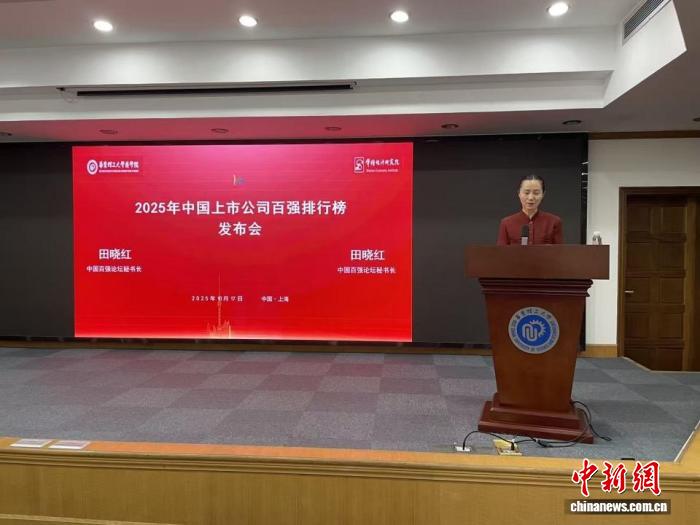
2025年中国上市公司百强排行榜发布
Zhong Guo Xin Wen Wang· 2025-10-18 04:09
Core Insights - The 2025 China Top 100 Listed Companies Ranking was released, showing a total profit of 66,119.84 billion RMB for the 500 listed companies, an increase of 2,354.24 billion RMB from the previous year [1] - The top ten companies remain unchanged, with Industrial and Commercial Bank of China leading with a profit of 4,218.27 billion RMB, remaining stable compared to last year [2] - Despite a decrease in the profit threshold for the ranking, the total profit still grew by 3.69%, driven by significant profit increases among leading companies [3] Summary by Categories Top Companies - The top ten companies include Industrial and Commercial Bank of China, China Construction Bank, Agricultural Bank of China, Bank of China, China Petroleum, China National Offshore Oil Corporation, China Merchants Bank, China Mobile, Ping An Insurance, and Kweichow Moutai [2] - China National Offshore Oil Corporation saw a profit increase of 9.83%, moving up one rank, while China Merchants Bank dropped one rank [2] Profit Distribution - Among the 500 listed companies, 97 companies reported profits exceeding 10 billion RMB, a decrease of 5 from the previous year; 24 companies exceeded 50 billion RMB, an increase of 5; and 12 companies surpassed 100 billion RMB, an increase of 2 [2] - The profit threshold for the ranking (the profit of the 500th company) was 1.464 billion RMB, down 11.22% from the previous year's 1.649 billion RMB [2] Overall Market Performance - The profit growth of leading companies compensated for the general profit decline among lower-ranked companies, highlighting the importance of top firms in driving overall profitability [3] - The strong performance of leading companies is seen as a key driver of high-quality economic development in China, providing confidence and momentum to the market [4]