
PAB(000001)

Search documents
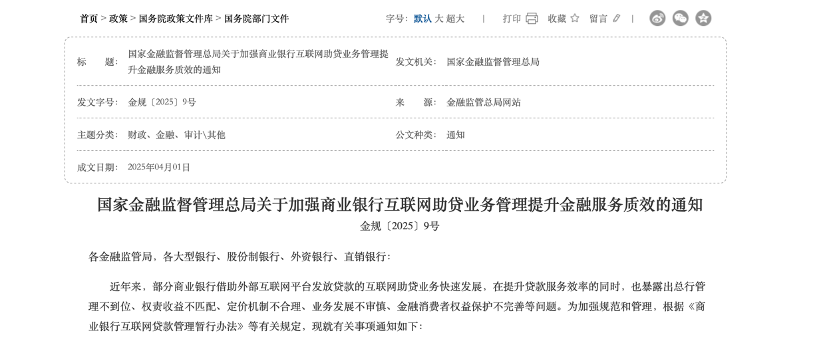
助贷新规10月1日落地,银行不得与名单外机构合作
2 1 Shi Ji Jing Ji Bao Dao· 2025-09-30 10:51
Core Viewpoint - The implementation of the new regulatory policy, referred to as the "Assisted Loan New Regulations," will significantly reshape the landscape of the assisted loan industry by establishing clear compliance boundaries for commercial banks' internet-assisted loan businesses [1][3]. Group 1: Regulatory Changes - The new regulation, effective from October 1, 2025, mandates commercial banks to adopt a "list management" system for assisted loan cooperation institutions, which has led to a lack of transparency regarding the cooperation lists of major banks [4][5]. - The regulation imposes strict controls on "comprehensive financing costs," particularly targeting products with annualized comprehensive costs exceeding 24%, which poses a challenge to existing business models in the assisted loan sector [1][9]. Group 2: Market Dynamics - The disclosed cooperation lists indicate a trend where major internet giants are preferred partners for banks, leading to a concentration of funds and resources in the hands of a few leading institutions [5][6]. - Various banks have begun to reveal their cooperation lists, with significant participation from both state-owned and private banks, although the six major state-owned banks have yet to disclose their lists [4][6]. Group 3: Business Models and Strategies - Banks like Ping An Bank have developed platforms such as the "Smart Loan Platform" to enhance compliance and safety while expanding their internet credit ecosystem, reflecting a shift towards more regulated and secure lending practices [7]. - Some banks are reconsidering their involvement in assisted loan businesses due to high default rates and rising customer acquisition costs, which are compressing profit margins [7]. Group 4: Financial Implications - The new regulations are expected to create a significant stratification in funding sources, with high-interest assets losing bank support while assets with annualized rates below 24% become highly competitive [9][10]. - Trust funds have seen a temporary increase in demand as an alternative funding source, but their higher costs and regulatory constraints limit their sustainability [10]. Group 5: Regulatory Focus Post-Implementation - Post-implementation, regulatory scrutiny will focus on pricing transparency and comprehensive cost control, particularly regarding the inclusion of service fees in the overall financing costs [11]. - The regulatory authorities will also evaluate banks' risk management capabilities and their adherence to core responsibilities in the assisted loan sector [11].





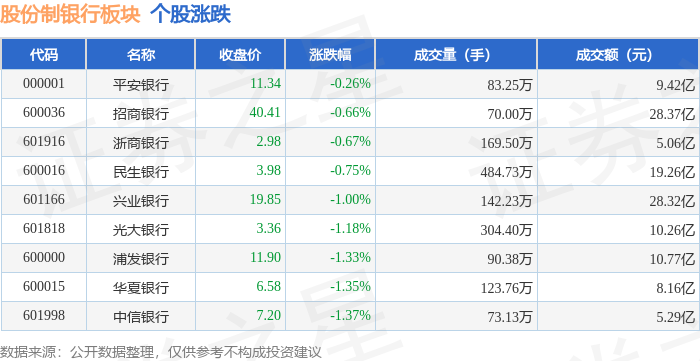
股份制银行板块9月30日跌0.92%,中信银行领跌,主力资金净流出22.07亿元
Zheng Xing Xing Ye Ri Bao· 2025-09-30 08:51
Core Insights - The banking sector experienced a decline of 0.92% on September 30, with CITIC Bank leading the drop [1] - The Shanghai Composite Index closed at 3882.78, up 0.52%, while the Shenzhen Component Index closed at 13526.51, up 0.35% [1] Banking Sector Performance - Ping An Bank closed at 11.34, down 0.26% with a trading volume of 832,500 shares and a transaction value of 942 million [1] - China Merchants Bank closed at 40.41, down 0.66% with a trading volume of 700,000 shares and a transaction value of 2.837 billion [1] - Zhejiang Commercial Bank closed at 2.98, down 0.67% with a trading volume of 1.695 million shares and a transaction value of 506 million [1] - Minsheng Bank closed at 3.98, down 0.75% with a trading volume of 4.847 million shares and a transaction value of 1.926 billion [1] - Industrial Bank closed at 19.85, down 1.00% with a trading volume of 1.422 million shares and a transaction value of 2.832 billion [1] - Everbright Bank closed at 3.36, down 1.18% with a trading volume of 3.044 million shares and a transaction value of 1.026 billion [1] - Shanghai Pudong Development Bank closed at 11.90, down 1.33% with a trading volume of 903,800 shares and a transaction value of 1.077 billion [1] - Huaxia Bank closed at 6.58, down 1.35% with a trading volume of 1.237 million shares and a transaction value of 816 million [1] - CITIC Bank closed at 7.20, down 1.37% with a trading volume of 731,300 shares and a transaction value of 529 million [1] Capital Flow Analysis - The banking sector saw a net outflow of 2.207 billion from institutional investors, while retail investors had a net inflow of 1.312 billion [1] - The table shows detailed capital flows for individual banks, indicating varying levels of net inflow and outflow among institutional, speculative, and retail investors [2]



平安银行将派发中期分红每10股2.36元,股权登记日10月14日
Bei Jing Shang Bao· 2025-09-29 13:57
Core Viewpoint - Ping An Bank announced a cash dividend distribution plan for 2025, reflecting its commitment to returning value to shareholders [1] Summary by Sections Dividend Distribution - The bank will distribute a cash dividend of RMB 2.36 per 10 shares, amounting to a total cash dividend of RMB 4.58 billion, based on a total share capital of 19.406 billion shares as of June 30, 2025 [1] - The dividend distribution will not include stock dividends or capital reserve transfers [1] Key Dates - The record date for the dividend distribution is set for October 14, 2025, while the ex-dividend date is October 15, 2025 [1]
平安银行:2025年半年度权益分派实施公告
Zheng Quan Ri Bao Zhi Sheng· 2025-09-29 13:40
证券日报网讯 9月29日晚间,平安银行发布2025年半年度权益分派实施公告称,公司2025年半年度权益 分派方案为每10股派2.3600元人民币现金(含税),股权登记日为2025年10月14日,除权除息日为2025 年10月15日。 (编辑 任世碧) ...
平安银行(000001) - 2025年半年度权益分派实施公告
2025-09-29 12:45
证券代码:000001 证券简称:平安银行 公告编号:2025-043 优先股代码:140002 优先股简称:平银优 01 平安银行股份有限公司 2025 年半年度权益分派实施公告 本公司及董事会全体成员保证信息披露的内容真实、准确、完整,没有虚假记载、误导 性陈述或重大遗漏。 平安银行股份有限公司 2025 年半年度权益分派方案已获 2025 年 8 月 22 日 召开的本公司第十二届董事会第四十二次会议审议通过,现将权益分派事宜公告 如下: 一、董事会审议通过利润分配方案等情况 1、根据本公司 2023 年年度股东大会的授权,2025 年 8 月 22 日,本公司第 十二届董事会第四十二次会议审议通过了《平安银行股份有限公司 2025 年中期 利润分配方案》:以本公司 2025 年 6 月 30 日的总股本 19,405,918,198 股为基数, 每 10 股派发现金股利人民币 2.36 元(含税),合计派发现金股利人民币 45.80 亿元,不送红股,不以公积金转增股本。 2、在实施本次利润分配方案的股权登记日前,若本公司总股本发生变动, 按照分配总额不变的原则,相应调整分配比例。 本公司 2025 年 ...
摩根士丹利基金管理(中国)有限公司关于旗下部分基金增加平安银行股份有限公司为销售机构并参与费率优惠活动的公告
Shang Hai Zheng Quan Bao· 2025-09-28 17:43
Group 1 - Morgan Stanley Fund Management (China) Co., Ltd. has signed a sales agreement with Ping An Bank to increase the bank's role as a sales institution for certain funds starting from September 29, 2025 [1] - The applicable funds include Morgan Stanley Stable Yield Bond Fund and Morgan Stanley Quality Credit Pure Bond Fund [1] - Investors can conduct various transactions such as account opening, subscription, regular investment, redemption, and fund conversion through Ping An Bank starting from the specified date [1][2] Group 2 - The minimum deduction amount and deduction date for regular investment can be set by Ping An Bank, adhering to the fund's announcement requirements [2] - Investors can agree on the deduction date with Ping An Bank, and if the deduction date is not a trading day, it will be postponed to the next trading day [3] - Specific procedures for business handling must follow Ping An Bank's regulations, and the fund subscription and regular investment may be suspended under certain circumstances [3] Group 3 - The fee discount activity for fund subscriptions and regular investments through Ping An Bank will start on September 29, 2025, with specific discount rates and activity duration to be announced by the bank [5] - The fee discount does not apply to fund redemption or conversion and is limited to front-end subscription models [6] - The rules and processes for the fee discount activity will be determined by Ping An Bank [6] Group 4 - A notice has been issued regarding the communication-based meeting for the Morgan Stanley Pure Bond Stable Growth 18-Month Regular Open Bond Fund, scheduled for September 26, 2025 [10] - The meeting will review amendments to the fund contract, with voting starting from October 23, 2025, to October 30, 2025 [11] - The rights registration date for participating in the meeting is October 22, 2025, and only registered fund holders can vote [16] Group 5 - The voting process includes both paper and telephone voting methods, with specific requirements for each [17][20] - The effectiveness of voting will be determined based on the clarity and completeness of the submitted votes [34][35] - The meeting's resolutions will be effective if at least half of the total fund shares are represented in the voting [37]

上市银行“十四五回望”之资负结构与息差变迁
CMS· 2025-09-28 15:09
Investment Rating - The report maintains a recommendation for the banking industry [3] Core Insights - The report provides a comprehensive analysis of the asset-liability structure and interest margin changes of 42 A-share listed banks during the "14th Five-Year Plan" period, highlighting a shift towards corporate loans on the asset side and a stronger retail focus on the liability side [12][14] - The asset-liability structure indicates a significant increase in the proportion of corporate loans, rising from 57.02% to 63.22% from the end of 2020 to mid-2025, while the proportion of demand deposits decreased from 41.94% to 30% [12][14] - The report notes a decline in both asset yield and interest margin, with the yield on interest-earning assets dropping from 4.43% to 3.32% and the net interest margin decreasing from 2.23% to 1.53% during the same period [14][15] Summary by Sections Overall Asset-Liability Structure and Interest Margin Changes - The asset-liability structure shows an increase in loan-to-earning asset ratio from 54.19% to 56.49%, with corporate loans making up a larger share of total loans [14][15] - The average yield on interest-earning assets decreased significantly, with the loan yield falling from 5.34% to 3.82% [15] - The net interest margin for listed banks remains higher than that of commercial banks, despite a decline [14][15] Changes in Each Banking Sector's Asset-Liability Structure and Interest Margin - City commercial banks experienced a more significant increase in the proportion of corporate loans, with their interest margin narrowing less compared to other banks [18] - The report highlights that the proportion of deposits in interest-bearing liabilities for state-owned banks decreased, while it increased for rural commercial banks [18] - The decline in interest-bearing liabilities' cost rate was most pronounced in city commercial banks, leading to a smaller reduction in their interest margin [18]


曹慰履新平安银行信用卡中心总裁,或将深耕财富客群
2 1 Shi Ji Jing Ji Bao Dao· 2025-09-28 10:41
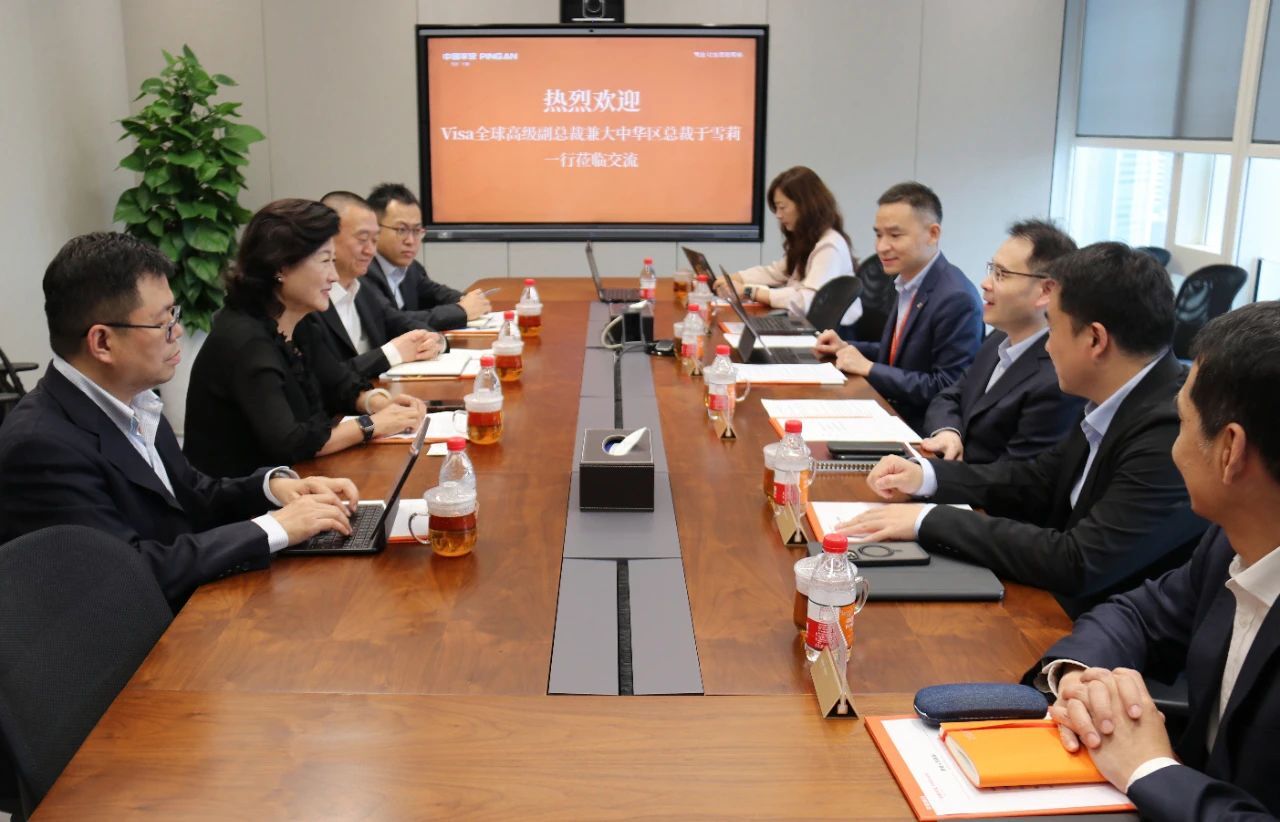
Core Viewpoint - The development of mid-to-high-end credit cards is expected to become a key entry point for banks in wealth management [1] Group 1: Leadership Changes and Strategic Direction - Ping An Bank has appointed Cao Wei as the new general manager of its credit card center, who has extensive experience in the credit card and retail finance sectors [2] - During his tenure at China Merchants Bank, Cao Wei emphasized the importance of credit cards as a tool for global travelers and promoted cross-border payment services [2] - The credit card sector remains a significant part of Ping An Bank's retail business, with credit card receivables amounting to 394.87 billion yuan, accounting for 22.88% of personal loans [3] Group 2: Strategic Meetings and Wealth Management Focus - In his first month, Cao Wei met with senior executives from Visa, indicating a strategic focus on leveraging Ping An Group's extensive customer resources to enhance wealth management through credit cards [4] - Ping An Bank aims to develop a more comprehensive wealth management system, using credit cards as a breakthrough to attract high-net-worth clients [4][6] Group 3: Credit Card Usage Trends and Revenue Sources - The relationship between mid-to-high-end credit cards and wealth management is evolving, with credit cards increasingly viewed as financial tools for cash flow rather than just payment instruments [7][8] - The bank's card transaction fees are becoming a significant revenue source, with Ping An Bank's card fee income at 6.408 billion yuan, showing a slight year-on-year decline of 0.1% [8] Group 4: Industry Trends and Competitive Landscape - The credit card industry in China is transitioning from rapid growth to a focus on high-quality development, with China Merchants Bank reporting an 8.54% year-on-year decline in credit card transaction volume [9] - Despite current challenges, China Merchants Bank remains optimistic about the long-term prospects of the credit card sector, emphasizing its importance to retail scale and brand contribution [9]
固收深度报告20250927:从42家上市银行半年报解读银行债券投资“攻守道”





Soochow Securities· 2025-09-27 14:32
1. Report Industry Investment Rating No information about the report industry investment rating is provided in the given content. 2. Core Viewpoints of the Report - External environment factors such as interest rate fluctuations, bond supply - demand, and policy orientation jointly impact bond investment returns. In H1 2025, the bond investment of 42 listed banks showed certain characteristics in scale, structure, and profit and loss, but there are still challenges in maintaining stable returns in the future [1]. - The overall bond investment scale of 42 listed banks expanded steadily in H1 2025. There were differences in the investment structure among different types of banks, with state - owned banks and city commercial banks having stable growth in the bond allocation portfolio, while joint - stock banks and rural commercial banks increased their efforts in the bond trading portfolio. The bond investment portfolio generally presented a pattern of "stable foundation and flexible gain" [1]. - The coupon income of 42 listed banks was generally stable in H1 2025 but showed a slight year - on - year decline. The fair value change loss was significant, and the investment income increased. However, the bond investment of the banking industry still faces pressure to maintain stable returns [1]. 3. Summary According to the Table of Contents 3.1 42 Listed Banks' Bond Investment Volume - **Overall Bond Investment Scale: Steady Expansion**: In H1 2025, the total scale of the three types of bond - type financial assets of 42 listed banks showed a steady expansion trend. The growth of debt investment - type financial assets measured at amortized cost was relatively slow, while the growth of trading financial assets measured at fair value and included in current profits and losses was relatively large, indicating that banks increased the proportion of trading positions [9]. - **Differentiated Bond Investment Distribution Structures among Different Bank Types**: In H1 2025, state - owned banks and city commercial banks showed stable growth in the bond allocation portfolio, which may be related to their participation in the primary - market issuance of important national and regional bond varieties. Joint - stock banks and rural commercial banks slightly weakened their bond allocation power but significantly increased their efforts in the bond trading portfolio, showing a differentiated feature of "stable allocation by large banks and prominent trading flexibility by small and medium - sized banks" [13]. - **Bond Investment Allocation Tilted towards Government - Related Bonds**: In H1 2025, commercial banks increased their allocation of government - related bonds, with an average month - on - month increase of about 10% for state - owned banks, joint - stock banks, and city commercial banks, and a slightly smaller increase for rural commercial banks. The allocation of financial bonds and other bonds was differentiated. All banks held a relatively large scale of government - related bonds, followed by financial bonds and credit - related bonds [18]. - **Correlation between Financial Asset Types and Bond Variety Structures**: The banking industry maintained a stable growth of interest - rate bonds in the bond allocation portfolio and increased the allocation of credit bonds, while the allocation of financial bonds was relatively weak. In the bond trading portfolio, interest - rate bonds and financial bonds were the core varieties, with a more significant increase than credit bonds, showing a "stable foundation and flexible gain" pattern [22]. 3.2 42 Listed Banks' Bond Investment Profit and Loss - **Coupon Income: Generally Stable and Still the Main Source of Income**: In H1 2025, the total coupon income of 42 listed banks decreased slightly year - on - year. Although the scale of held - to - maturity bonds increased, the decline in the coupon rate of newly issued bonds led to a decrease in coupon income. In the future, coupon income is still expected to be the main source of bond investment income for commercial banks [26]. - **Fair Value Change Loss: Losses in the Trading Level**: In H1 2025, the total fair value change loss of 42 listed banks decreased significantly year - on - year, indicating that it was difficult to obtain capital gains through short - term trading in the volatile bond market, and there were floating losses in bond trading [28]. - **Investment Income: Growth in All Bank Types**: In H1 2025, the actual investment income of 42 listed banks in the bond field increased significantly year - on - year. Although the book value appreciation of bond - type trading financial assets and other debt investment - type financial assets was not as good as that of the previous year, banks could still increase their investment income by selling floating - profit old bonds and waiting for the maturity of high - coupon bonds [31]. 3.3 Attribution and Summary - **External Environment Driving Factors: Interest Rate Fluctuations, Bond Supply - Demand, and Policy Orientation Jointly Impact Bond Investment Returns**: In H1 2025, the "more adjustments and fewer opportunities" bond market environment led to a general decline in the prices of existing bonds, resulting in a significant year - on - year decline in the fair value change loss of listed banks' bond investment. The supply of national bonds, local government bonds, and policy - based financial bonds increased, but the coupon rate of newly issued bonds decreased, leading to a decline in coupon income. Regulatory policies indirectly affected bond investment performance [35]. - **Banking Industry's Bond Investment Pressure and Future Outlook** - Overall Income Shows a Positive Trend but There Are Still Hidden Concerns: In H1 2025, the actual bond investment income of 42 listed banks increased slightly year - on - year, but the coupon income faced downward pressure in the interest - rate downward cycle, and it was more difficult to obtain spread income through band trading. Since H2 2025, the "stock - strong and bond - weak" pattern has emerged, and the loss caused by fair value change will be more obvious [3]. - Different Bank Types Show Differentiated Performance, and State - owned Banks' Pressure Is Relatively Controllable: State - owned banks can maintain a certain profit - making ability in the low - interest - rate volatile bond market due to their advantages in bond allocation and trading portfolios. Joint - stock banks, city commercial banks, and rural commercial banks are more vulnerable, and they may increase their capital allocation in the equity market, commodity market, and related structured fixed - income products in the future [3].
平安银行股份有限公司董事会决议公告
Shang Hai Zheng Quan Bao· 2025-09-26 18:03
Group 1 - The core point of the article is the resolutions passed by the Board of Directors of Ping An Bank during its 43rd meeting of the 12th session, which includes various amendments to management policies and approval of related party transactions [1][2][5][17][49][72]. Group 2 - The meeting was held in accordance with relevant laws and regulations, with all 13 directors present, including 5 independent directors [1][4]. - The resolutions included amendments to the "Valuation Management Measures for Financial Instruments" and the "Basic Management Measures for Market Risk" [2][5]. - The board approved the establishment of the "Management Measures for the Orange E-Loan Product" and revisions to the "Management Measures for Retail Loan Internet Business Cooperation Institutions" [8][11]. - The board also approved amendments to the "Management Measures for the Sale of Wealth Management Products" [14]. - The board approved related party transactions with New Fangzheng Holdings, Ping An International Financial Leasing, Lufax Holdings, and Far East Horizon, with all transactions receiving unanimous support from the independent directors [17][49][61][72]. Group 3 - The related party transaction with New Fangzheng involves structured deposits totaling up to RMB 12.1 billion and seven-day notice deposits up to RMB 9.7 billion, with total interest not exceeding RMB 3.15 billion [36][40]. - The transaction with Ping An International Financial Leasing involves a total principal amount of up to RMB 1.871 billion [49][53]. - The transaction with Lufax Holdings has a total upper limit of RMB 128.75 billion, including various service agreements and financial services [61][65]. - The transaction with Far East Horizon involves a new comprehensive credit limit of RMB 2 billion [72][76].