TCL TECH.(000100)

Search documents
突发!美国对多家中国显示产业链企业发起调查!
是说芯语· 2025-11-26 06:06
Core Viewpoint - The U.S. International Trade Commission (ITC) has initiated a "337 investigation" into specific liquid crystal devices and components, targeting several Chinese companies, including Huike, Hisense, and TCL, as well as international firms like LG and Westinghouse. This investigation stems from a complaint by BH Innovations LLC, alleging patent infringement on two U.S. patents [1][2]. Group 1: Investigation Details - The investigation was triggered by a complaint filed on August 29, claiming that certain products exported to and sold in the U.S. infringe on two U.S. patents (patent numbers 7,705,948 and 7,570,334). The ITC may issue exclusion and cease-and-desist orders if infringement is found [1]. - The implicated Chinese companies are significant players in the display industry, with Huike being a manufacturer of panels and terminal devices, while Hisense and TCL hold over 50% of the North American television market share [1]. Group 2: Involved Companies - The list of defendants includes numerous companies from various countries, such as: - Chinese companies: Guangdong Huike, Chongqing Huike, Hisense Group, TCL Electronics, and others [2]. - U.S. companies: HiSense US Corporation, VIZIO Holding Corp., TTE Technology Inc., LG Electronics USA, and Westinghouse Electric Corporation [3]. - Other international companies: TCL Smart Device (Vietnam) Co. Ltd. and LG Electronics, Inc. from South Korea [3]. Group 3: Industry Context - This is not the first instance of Chinese display companies facing a 337 investigation; Corning has previously initiated similar investigations against Chinese firms, focusing on patent barriers. Industry experts suggest that these investigations aim to curb the technological advancements of the Chinese display industry, particularly after domestic companies have significantly reduced the prices of products like glass substrates [3]. Group 4: Response Strategies - Chinese companies are not without recourse; for instance, BOE successfully defended against a previous OLED patent investigation by engaging in proactive measures and patent invalidation strategies. The current defendants have also begun their response procedures, including filing for patent invalidation reviews with the U.S. Patent and Trademark Office. However, the investigation process typically lasts 16-18 months, during which companies face high litigation costs and potential market share fluctuations [4].




中尺寸OLED市场应用激增 产业链产能扩张与技术创新齐加速
Zheng Quan Ri Bao Wang· 2025-11-25 13:59
Core Insights - The mid-size OLED display is leading a surge in the popularity of OLED panels, driven by its technical advantages in picture quality, color gamut, contrast, and response speed, particularly with refresh rates exceeding 240Hz, which is boosting demand in the high-end gaming market [1] - By 2025, OLED display shipments are expected to reach 2.62 million units, representing an 84% year-on-year growth [1] Industry Trends - OLED technology is expanding from mobile devices to mid-size screens in computers and automotive applications, with increasing demand noted [2] - The launch of the OLED-equipped iPad Pro by Apple is seen as a significant signal of the transition from LCD to OLED in high-end mid-size displays [2] - Companies like BOE Technology Group, Visionox, TCL Technology, and Lite-On Optoelectronics have already begun to position themselves in the OLED supply chain [2] Capacity Expansion - TCL Technology's subsidiary, TCL Huaxing, has initiated the construction of the world's first mass production line for 8.6-generation printed OLED panels in Guangzhou, with a total investment of 29.5 billion yuan and a designed monthly capacity of 22,500 glass substrates [2] - BOE's AMOLED production line in Chengdu is set to achieve mass production by Q4 2026, with a monthly capacity of 32,000 substrates, primarily for high-end laptops and tablets [3] Technological Innovation - The OLED industry is experiencing rapid technological innovation alongside capacity expansion, which is crucial for reducing costs and increasing market penetration [4] - Major players are adopting different technological routes: TCL Huaxing is focusing on printed OLED, BOE is using mature evaporation technology, and Visionox is betting on ViP technology [4] - The strategic significance of TCL's t8 project is not only in capacity expansion but also in a technological leap [4] Material Development - Lite-On Optoelectronics is accelerating breakthroughs in OLED terminal materials, achieving significant advancements in domestic OLED material production [5] - The company has developed Red Prime materials and completed the localization of Green Host and Red Host materials, with ongoing efforts in new generation narrow-spectrum dopant materials [5] - Lite-On Optoelectronics plans to raise up to 766 million yuan through convertible bonds to fund various projects, including the construction of new material production bases and smart upgrades [6] Market Outlook - The domestic OLED industry is transitioning from merely existing to focusing on quality, with technological innovation being key to meeting high-end demands [6] - The overall layout of the domestic OLED supply chain is becoming more comprehensive and mature, with expectations for accelerated advancement into high-end markets and increased international market share [6]



TCL华星拟在武汉扩产
WitsView睿智显示· 2025-11-25 03:23
Core Viewpoint - TCL Huaxing Optoelectronics Technology Co., Ltd. has signed an agreement to build a pilot verification platform for printed OLEDs in Donghu High-tech Zone, with an investment of approximately 1.5 billion yuan, aimed at enhancing China's innovation capability and global competitiveness in the new display sector [1]. Group 1 - The printed OLED pilot verification platform project will increase monthly production capacity from 3,000 to 9,000 large panels, focusing on upstream materials and equipment verification to accelerate the industrialization of printed OLEDs [1]. - Since its establishment in Wuhan in 2014, TCL Huaxing has invested over 80 billion yuan and created more than 17,000 jobs, developing a comprehensive industrial base that integrates R&D, manufacturing, and sales [2]. - In the first three quarters of 2025, TCL Huaxing achieved a revenue of 78.01 billion yuan, a year-on-year increase of 17.5%, and a net profit of 6.1 billion yuan, up 53.5% year-on-year [2].
美国ITC正式对液晶器件、组件及其下游产品启动337调查!多家中国企业为列名被告
Ge Long Hui· 2025-11-25 03:10
Core Points - The U.S. International Trade Commission (ITC) has voted to initiate a Section 337 investigation into certain liquid crystal devices, components, and products containing them [1] Group 1: Investigation Details - The investigation is identified by the code 337-TA-1462 [1] - The investigation targets specific liquid crystal devices and their downstream products [1] Group 2: Defendants Listed - Multiple companies are named as defendants, including: - HKC Corporation Ltd. of China - Chongqing HKC Optoelectronics Technology Co., Ltd. of China - HiSense Group Co., Ltd. of China - VIZIO Holding Corp. of the U.S. - TCL Electronics Holdings Ltd. of Hong Kong - LG Electronics, Inc. of South Korea - Westinghouse Electric Corporation of the U.S. [2]

TCL华星与武汉东湖高新区签约建设印刷OLED中试验证平台,项目投资约15亿元
Xin Lang Cai Jing· 2025-11-25 00:57
Core Viewpoint - The signing of the printed OLED pilot verification platform project between Wuhan East Lake High-tech Zone and TCL Huaxing Optoelectronics marks a significant investment in the development of OLED technology in China, aiming to enhance production capacity and focus on key upstream materials and equipment [1] Group 1 - The project plans to increase the monthly production capacity from 3,000 large panels to 9,000 large panels based on the existing 5.5-generation printed OLED pilot line [1] - The total investment for the project is approximately 1.5 billion yuan, equivalent to about 215 million USD [1] - The construction period for the project is set from 2025 to 2028 [1]

Mini LED话语权之战:TCL如何用8年成为关键先生
3 6 Ke· 2025-11-22 14:19
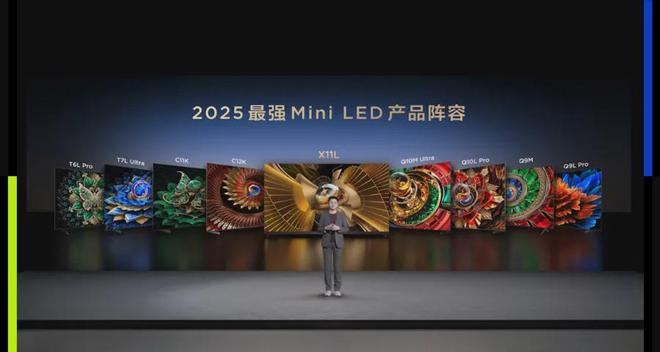
Core Viewpoint - TCL has successfully positioned itself as a leader in the display industry by focusing on Mini LED technology, diverging from the industry's trend towards OLED, and has developed a flagship product, the X11L SQD-Mini LED, which showcases significant technological advancements [2][4][42]. Group 1: TCL's Strategic Decision - In contrast to the industry's enthusiasm for OLED, TCL chose to deepen its investment in Mini LED technology, believing it to be superior in terms of technical limits, cost control, and overall performance [4][11]. - The decision to pursue Mini LED was made in 2017, amidst a strong industry focus on OLED, marking a significant divergence from prevailing trends [8][14]. - TCL's commitment to Mini LED involved a long-term exploration of technology, requiring collaboration with the entire supply chain to develop from scratch [5][12]. Group 2: Technological Advancements - TCL's Mini LED technology aims to achieve perfect black levels and infinite contrast ratios, which are traditionally associated with OLED, while maintaining the cost and longevity advantages of LCD [11][17]. - The X11L SQD-Mini LED features 20,736 backlight zones, setting a new industry standard for backlight partitioning and significantly enhancing contrast and brightness [21][42]. - TCL has set an ambitious target of achieving 10,000 nits of peak brightness, which surpasses current flagship mobile devices and aims to deliver an unparalleled viewing experience [23][25]. Group 3: Industry Impact - TCL's advancements in Mini LED technology have positioned it as a leader in the global market, with projections indicating it will be the top seller of Mini LED TVs in 2024 [21][22]. - The successful launch of the X11L SQD-Mini LED signifies a shift in the display technology landscape, marking TCL's transition from a follower to a leader in the high-end television market [42][43]. - The company's journey reflects a broader narrative of the Chinese display industry evolving from dependency on foreign technology to establishing its own technological pathways and innovations [43].
Mini LED话语权之战:TCL如何用8年成为关键先生
36氪· 2025-11-22 13:35
Core Viewpoint - TCL has successfully positioned its SQD X11L Mini LED television as a market leader by choosing to focus on Mini LED technology instead of following the OLED trend, demonstrating a long-term vision and commitment to innovation [6][20][61]. Group 1: Historical Context and Decision Making - The journey began at the 2017 CES, where OLED technology was highly praised, leading many companies to pursue it, while TCL opted to continue developing LCD technology with a focus on Mini LED [4][6][7]. - TCL's decision to invest in Mini LED was seen as a challenging yet correct path, as it allowed the company to leverage existing LCD supply chains and avoid the pitfalls associated with OLED technology [20][17]. - The internal debate at TCL regarding the future direction highlighted the contrast between the established OLED path and the uncertain Mini LED route, with the latter requiring significant R&D investment [12][13][14]. Group 2: Technical Development and Breakthroughs - TCL faced three major challenges in developing Mini LED technology: achieving extreme contrast, brightness, and color accuracy [22][24]. - The company established the Pangu Laboratory to address these challenges, focusing on system-level solutions and optimizing the entire production process from materials to final products [27][29]. - TCL's Mini LED technology achieved a significant milestone with the release of the X11G Max, featuring 20,736 backlight zones, which set a new industry standard [29][60]. Group 3: Industry Impact and Future Prospects - The launch of the X11L SQD-Mini LED television marked a pivotal moment for TCL, showcasing its ability to lead in display technology and shift the narrative from following to leading in the industry [61][62]. - The advancements made by TCL not only highlight the company's technical capabilities but also signify a broader transformation within the Chinese display industry, moving towards self-sufficiency and innovation [61][62]. - Looking ahead, TCL is poised to continue exploring new technologies and solutions, with a structured R&D roadmap in place to guide future developments [63].
当存储涨疯了,国产屏的红利缓解了手机、PC厂商的焦虑
Tai Mei Ti A P P· 2025-11-22 04:04
Group 1: Storage Market Dynamics - The recent surge in storage prices and the volatility of related company stocks have drawn renewed attention to the industry chain [2] - The demand for HBM storage driven by AI development is squeezing DRAM production capacity, leading to increased costs for smartphones and PCs [2][8] - TrendForce has revised down its global smartphone and laptop production forecasts for 2026, projecting declines of 2% and 2.4% respectively [2][11] Group 2: Display Panel Industry Growth - Over the past two decades, China's display panel industry has transformed from dependency on imports to becoming the world's largest manufacturing base [3][4] - The domestic display supply chain is more stable and complete compared to storage chips, giving Chinese manufacturers greater control [3] - The market size of China's display panel industry reached 396.2 billion yuan, accounting for 68.2% of the global market [5] Group 3: OLED Technology Advancements - Chinese manufacturers are heavily investing in OLED technology, with companies like Tianma and BOE establishing advanced production lines [5][7] - By the first half of 2025, Chinese manufacturers are expected to hold a 51.7% share of the global AMOLED smartphone panel market [7] - The demand for AMOLED panels is rising, while LCD panels maintain stable shipments in entry-level markets [7][11] Group 4: Cost Pressures and Strategic Responses - The increase in storage chip prices is expected to raise the BOM cost of smartphones by approximately 5-7% next year [8][9] - The share of storage in laptop BOM costs is projected to exceed 20% by 2026, leading to potential price increases of 5-15% for laptops [9][11] - Manufacturers are adjusting their product strategies, potentially reducing screen quality in lower-end models to manage costs [11][12] Group 5: Collaboration and Innovation - Companies are moving towards deep collaboration with panel manufacturers, shifting from traditional supplier relationships to joint technology development [16][20] - Xiaomi has established joint laboratories with panel manufacturers to enhance the entire supply chain [20][21] - The shift towards a collaborative model is seen as essential for competing with global leaders like Apple and for driving innovation in the display industry [21]


智能领航数字经济发展 ——写在2025中国5G+工业互联网大会开幕之际
Chang Jiang Ri Bao· 2025-11-22 01:12
Core Insights - The 2025 China 5G + Industrial Internet Conference opened in Wuhan, highlighting the integration of digital and physical economies as a key driver for high-quality economic development [1] Group 1: Industry Developments - The "5G + Industrial Internet" initiative has become a crucial force in promoting the deep integration of the real economy and the digital economy over the past five years [1] - Wuhan has established itself as a pilot city for "5G + Industrial Internet" applications, achieving significant milestones such as the construction of 300 digital production lines and 122 demonstration projects [5] - The city has been recognized as one of the first national pilot cities for "5G + Industrial Internet" integration applications and has the highest number of leading smart factories in the country [5] Group 2: Technological Innovations - AI technologies have generated direct economic benefits exceeding 540 million yuan for TCL, showcasing the financial impact of integrating AI in manufacturing [2] - The establishment of Wuhan Scene Technology Co., Ltd. aims to address challenges in resource matching and supply-demand alignment, focusing on ten key areas including digital transformation in manufacturing and smart healthcare [4] - The introduction of intelligent agents in factories, such as "Little Luban," has improved decision-making efficiency by 62% in fault management [2] Group 3: Future Directions - Wuhan plans to leverage opportunities in "5G + Industrial Internet" development, particularly in low-altitude economy and smart manufacturing, to promote the commercial deployment of 5G-A [5] - The city aims to create two major industrial clusters: "5G + Optoelectronic Information" and "Industrial Internet + Industrial Software," while advancing the large-scale application of industrial internet identification [5]
三星瑕疵屏幕引爆手机业“绿线门”,大厂售后按闹分配被吐槽
Di Yi Cai Jing· 2025-11-21 11:25
Core Viewpoint - The article discusses the consumer rights issues arising from the "green line" problem in smartphone screens, affecting major brands like OPPO, Vivo, Samsung, Xiaomi, and Huawei, highlighting the inconsistent after-sales service and warranty policies among these manufacturers [1][9]. Group 1: After-Sales Service Policies - OPPO and Vivo offer a warranty period of around four years, while Xiaomi, Huawei, and Honor typically provide one year of warranty service [3]. - OPPO announced free screen replacement for devices with green line issues within four years of purchase, while users with devices older than four years can receive discounted repair services [3]. - There are significant discrepancies in after-sales service experiences among OPPO users, with some receiving free replacements while others are denied service due to lack of purchase receipts [4][5]. Group 2: Consumer Complaints and Experiences - Many consumers report unreasonable demands for proof of purchase, such as requiring original receipts and packaging, which complicates the warranty claim process [4][8]. - Some users have successfully obtained free screen replacements after escalating complaints through various channels, despite being initially denied service [4][5]. - The article notes that even within the same brand, different service centers may apply different policies regarding the green line issue, leading to confusion and frustration among consumers [7][8]. Group 3: Technical Background of the Issue - The green line issue is a common fault in OLED displays, potentially caused by various factors such as chip failure or circuit issues [9][11]. - The problem has been linked to specific batches of screens supplied by Samsung, affecting multiple smartphone models [11]. - High temperatures and humidity are noted as conditions that can exacerbate the green line problem, with summer months being particularly problematic [12]. Group 4: Industry Response and Consumer Trust - There is a growing consumer expectation for a transparent and fair after-sales service system, especially in light of the marketing claims of high-quality products [13]. - The article emphasizes that the lack of a unified standard in after-sales service undermines consumer trust, as users feel that the service does not match the promised product quality [13].