Workflow
JCF(000420)
icon
Search documents
活力中国调研行丨探秘一根纤维背后的生产密码
Xin Hua She· 2025-07-18 04:40
Core Viewpoint - Jilin Chemical Fiber Group is leveraging technological innovation to transform and upgrade the traditional chemical fiber industry, showcasing China's innovative practices in this sector [1] Group 1: Technological Innovation - The company has implemented automation in key operational processes through smart equipment [1] - It has expanded its product range from traditional textile raw materials to carbon fiber, establishing a full production capability from raw silk to carbon fiber products and recycling [1] Group 2: Product Development - The carbon fiber materials produced are processed into end consumer products such as ski boards and bicycles [1] - The company is actively assembling carbon fiber bicycle frames in its composite sports and leisure equipment industrial park [3][8] Group 3: Production Facilities - Workers are seen packaging finished carbon fiber spools in the production workshop [4] - The company has automated production lines for carbon fiber, with workers monitoring the operations [17] - The artificial silk production workshop features robotic arms stacking finished silk spools [7]
2025年中国碳纤维布行业制造工艺、产业链、发展现状、代表品牌及未来前景:下游应用领域持续扩展,碳纤维布市场规模超70亿元[图]
Chan Ye Xin Xi Wang· 2025-07-16 01:12
Core Insights - The carbon fiber cloth industry in China is experiencing rapid growth, with a projected market size of approximately 7.713 billion yuan by 2024, driven by its applications in various sectors such as construction, aerospace, automotive, and high-end sports equipment [1][13]. Industry Overview - Carbon fiber cloth, known for its high strength, lightweight, and excellent corrosion resistance, is a key material for industry transformation, particularly in building reinforcement [1][4]. - The manufacturing of carbon fiber cloth involves processes such as weaving and molding, with machine weaving allowing for mass production [6]. - The industry supply chain includes raw materials (carbon fiber, resin, etc.), manufacturing, and downstream applications across multiple sectors [8][10]. Market Dynamics - The demand for high-performance carbon fiber is increasing, with the carbon fiber market in China expected to grow from 4.76 billion yuan in 2018 to 17.14 billion yuan by 2024, reflecting a compound annual growth rate (CAGR) of 23.8% [10]. - The aerospace sector is a significant downstream market for carbon fiber cloth, with applications in aircraft and spacecraft manufacturing, enhancing performance and fuel efficiency [11]. Competitive Landscape - The Chinese carbon fiber cloth industry features both international giants (e.g., TORAY, Hexcel) and domestic leaders (e.g., Guangwei Composite Materials, Hengshen) competing in the market [16][17]. - Companies are focusing on technological innovation and quality management to maintain competitive advantages in a rapidly evolving market [16]. Key Companies - Guangwei Composite Materials is a leading player with a comprehensive product range and a projected revenue of 1.452 billion yuan in 2024 [18]. - Zhongfu Shenying specializes in high-performance carbon fiber and is expected to generate 1.543 billion yuan in revenue in 2024 [20]. Industry Trends - The industry is moving towards lightweight materials to meet the demands of sectors like automotive and aerospace, with innovations in weaving techniques and ultra-thin carbon fiber cloth [22]. - Future developments include high-performance products exceeding T1000 grade, enhanced by nanomaterial modifications for improved durability [23]. - Multi-functional carbon fiber cloths are being developed, integrating features like conductivity and fire resistance, expanding market opportunities [25]. - Cost reduction strategies are being implemented through production process optimizations and recycling technologies, facilitating broader applications in civilian sectors [26].
国产碳纤维最新价格出炉,最高240元/千克
DT新材料· 2025-07-13 13:34
Core Viewpoint - The carbon fiber market in China is experiencing price stability, with expectations for future breakthroughs in production technology to enhance competitiveness [2][4]. Price Summary - As of July 11, 2025, the average price of carbon fiber in China is 83.75 yuan per kilogram, with specific prices for different grades: - Domestic T300 grade: 12K specifications priced between 80 to 90 yuan/kg, while 24/25K bundles range from 70 to 80 yuan/kg [1]. - Domestic T700 grade: 12K products priced between 90 to 120 yuan/kg, and 24K products range from 85 to 120 yuan/kg [1]. - Domestic T800 grade: 12K specifications priced between 180 to 240 yuan/kg [1]. Market Dynamics - T800 grade products command significantly higher prices due to their advanced technology and high-end applications, while smaller bundles (e.g., 12K) are priced higher than larger bundles (e.g., 48/50K) within the same grade due to complexity and performance advantages [2]. - The carbon fiber market is currently in a stagnant phase without major positive stimuli, but advancements in raw silk technology and production processes may lead to cost reductions and improved competitiveness in the future [2]. Technological Developments - A collaborative research project involving Jilin Chemical Fiber Group and several leading enterprises has successfully developed key technologies for the large-scale manufacturing of large bundle carbon fibers and composite materials, achieving stable production of high-performance 35K and above large bundle carbon fibers [3]. - The project has established a simulation model for the pultrusion process of large bundle carbon fibers and developed specialized high-efficiency pultrusion processes and equipment, enabling the stable mass production of high-performance pultruded plates [3]. Future Market Potential - The carbon fiber market is expected to benefit from applications in hydrogen storage and transportation, global wind turbine blade recovery, photovoltaic thermal carbon-carbon composites, low-altitude economy, and the domestic large aircraft supply chain [4].
吉林化纤,增长65%
DT新材料· 2025-07-08 15:32
Core Viewpoint - The article highlights the significant growth and transformation of China's carbon fiber industry, particularly focusing on Jilin Chemical Fiber's impressive sales increase and the shift towards a more integrated and responsive manufacturing model [3][5][10]. Group 1: Industry Growth and Performance - In the first half of 2025, China's carbon fiber industry surpassed previous expectations of "structural oversupply," with Jilin Chemical Fiber's sales increasing by 65% year-on-year, exceeding 25,000 tons, and projected to surpass 56,000 tons for the year [3]. - The production of downstream composite materials and products has grown by 5.9 times, indicating rising capacity utilization and internal absorption capabilities [3]. - Jilin Chemical Fiber's growth is attributed to a product structure adjustment focused on end-user scenarios, moving away from the previous "production determines sales" strategy [3]. Group 2: Manufacturing and Technological Advancements - The choice of technological pathways and internal structural adjustments are crucial for Jilin Chemical Fiber to move beyond the "cyclical carbon fiber manufacturing" paradigm [5]. - The company has achieved a high self-use rate of 91% for precursor materials and 50% for carbonized products, indicating a closed-loop manufacturing capability from raw materials to composite products [5]. - This manufacturing model ensures performance consistency during bulk delivery and provides flexibility to adjust to market fluctuations [5]. Group 3: Industry Collaboration and Policy Support - The article notes that Jilin Chemical Fiber's success is not isolated, as multiple industrial clusters across the country are forming around the vertical integration of carbon fiber production [6]. - Companies like Zhongfu Shenying and Guangwei Composites are establishing integrated platforms from precursor manufacturing to structural design, enhancing their competitive edge [6]. - Local governments are establishing special funds and pilot platforms to support the carbon fiber industry, aligning with the "14th Five-Year Plan" to promote advanced materials [8]. Group 4: Market Trends and Future Outlook - The focus of industry competition is shifting from "single performance indicators" to "system integration adaptability," emphasizing the need for companies to adapt to user processes and provide stable supply [10]. - Chinese carbon fiber is moving away from a "low-end substitution" mindset, developing capabilities to compete with international leaders in mid-modulus and mid-stress composite components [10]. - The carbon fiber industry is entering a "system engineering" phase, requiring companies to focus on core technologies and industry chain integration rather than just capacity and cost [10].
生产线“智力”全开!吉林化纤用党建“金钥匙”打开发展新局面
Xin Hua She· 2025-07-02 06:17
Core Insights - Jilin Chemical Fiber Group has launched a fully automated production line for 35,000 tons of biomass-based artificial silk, significantly reducing labor costs and increasing production efficiency [1][2] - The company emphasizes the role of grassroots party organizations in driving innovation and technological breakthroughs, leading to successful transformation and upgrades in production processes [2][3] Group 1 - The new automated hanging rod device developed by the company saves 50% of labor and increases per capita production efficiency by 30%, achieving advanced levels of industry automation [1] - The company has a history of over 60 years and focuses on high-quality development driven by strong party leadership, which enhances operational efficiency and innovation [2] - The production of 3K carbon fiber has seen a surge in market demand, with the company implementing 124 measures to improve production efficiency and reduce energy consumption [2] Group 2 - Each party branch within the company is assigned innovation projects, ensuring that every member contributes to enhancing the overall innovation capability of the organization [3] - The company aims to convert political and organizational advantages into developmental benefits, fostering a culture of innovation among all employees [3]
党旗在基层一线高高飘扬丨抓党建、谋创新、促发展——吉林一家化纤企业基层党组织这样做
Xin Hua Wang· 2025-07-01 02:06
Group 1 - The core viewpoint of the articles emphasizes the integration of party organization and innovation in driving the development of Jilin Chemical Fiber Group, showcasing how grassroots party organizations contribute to technological advancements and operational efficiency [1][2][3] - Jilin Chemical Fiber Group has implemented an automated production line that significantly reduces labor costs by 50% and increases per capita production efficiency by 30%, achieving advanced levels of industry automation [1] - The company has a history of over 60 years and focuses on high-quality development through strong party leadership, which has led to breakthroughs in key technologies and successful transformation and upgrading of its operations [2] Group 2 - The company has established a robust production base for high-quality artificial silk, acrylic fiber, and bamboo fiber, while also making continuous advancements in new materials, particularly in the production of 3K carbon fiber for high-end applications [2] - Under the leadership of party branches, the carbon fiber division has developed 124 measures to improve production efficiency and reduce energy consumption, resulting in increased product demand and market competitiveness [2] - Each party branch within the company is tasked with innovation projects, ensuring that all employees are engaged in enhancing innovation awareness and capabilities, effectively translating political and organizational advantages into business development advantages [3]
2025年中国腈纶供需及进出口现状简析,国产替代进程深化,净出口实现逆转[图]
Chan Ye Xin Xi Wang· 2025-06-04 01:43
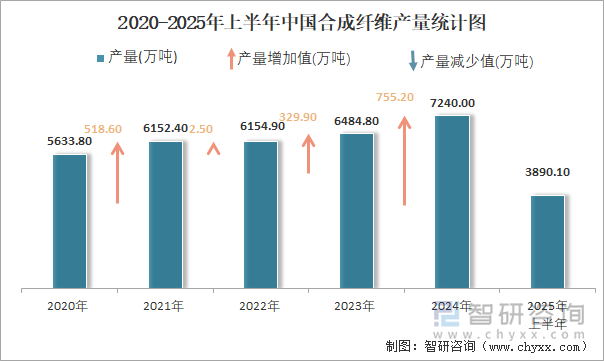
Core Viewpoint - The acrylic industry in China is transitioning to a weak balance phase after significant adjustments in supply and demand, with production expected to rise from 580,000 tons in 2019 to 620,000 tons by 2024, while demand slightly decreases from 643,000 tons to 619,300 tons during the same period, indicating a narrowing supply-demand gap and deepening domestic substitution process [1][10]. Industry Development Overview - Acrylic, also known as polyacrylonitrile, is a high molecular compound primarily used to produce acrylic fibers, which are known for their good weather resistance and vibrant dyeing capabilities, but have limitations in moisture absorption and wear resistance [2]. Policy Background - The acrylic industry is influenced by dual policies focusing on environmental governance and industrial upgrading, with the Ministry of Ecology and Environment emphasizing pollution control in the chemical fiber sector and promoting energy efficiency improvements [5][6]. Industry Chain - The acrylic industry chain relies on acrylonitrile as a core raw material produced by petrochemical companies, with vertical integration accelerating as leading companies establish their own acrylonitrile facilities to enhance cost control and extend into high-value areas like carbon fiber [8]. Current Industry Status - China produces over 30% of the world's acrylic fabrics and garments, with a significant shift in supply-demand dynamics leading to a narrowing gap by 2024, driven by capacity clearance and technological upgrades [10]. Trade Dynamics - The import-export landscape of the acrylic industry shows a reduction in imports from 89,000 tons to 44,400 tons and an increase in exports from 26,000 tons to 45,100 tons from 2019 to 2024, indicating enhanced international competitiveness of domestic acrylic products [12]. Competitive Landscape - The competitive landscape features a concentration of leading firms like Jilin Chemical Fiber, which has achieved a compound annual growth rate of 9.6% in revenue from 2020 to 2024, while international giants are also investing in high-end material development [14][16]. Development Trends - The acrylic industry is expected to accelerate the integration of green low-carbon technologies, aiming for a 30% reduction in carbon footprint through innovations in raw materials and recycling systems, while also developing high-performance differentiated products for emerging markets [18].
2025年吉林市新质生产力发展研判:推动一二三产联动发展,壮大“四个基地”和优势产业集群[图]
Chan Ye Xin Xi Wang· 2025-05-30 01:36
Macro Economic Analysis of Jilin City - Jilin City has implemented the "one center, four bases" strategy to promote traditional industry transformation and upgrade, achieving a GDP of 1633.23 billion yuan in 2024, a 5.0% increase from the previous year [1][2] - The primary industry added value reached 200.06 billion yuan, growing by 5.1%; the secondary industry added value was 590.67 billion yuan, increasing by 5.3%; and the tertiary industry added value was 842.50 billion yuan, up by 4.7% [2][4] Industrial Structure Analysis - Jilin City is focusing on enhancing its industrial structure by leveraging new quality productivity to create competitive advantages and scale advantages, promoting the development of a modern industrial system [8][24] - The city is emphasizing a "project-oriented" approach to drive the interlinked development of primary, secondary, and tertiary industries, strengthening its industrial clusters [8][24] Investment and Industrial Growth - Fixed asset investment in Jilin City is steadily increasing, with a growth rate of 5.5% in 2024, and significant investments in manufacturing and high-tech industries, which grew by 83.3% and 98.5% respectively [6][11] - The Jilin Chemical Park is a key support for the "one center, four bases" strategy, achieving an industrial output value of 783 billion yuan in 2023, accounting for over 40% of the city's total [17][19] Chemical Industry Analysis - The chemical industry is the largest pillar of Jilin City's economy, with a significant focus on upgrading and expanding production capacity, including a target to achieve a chemical industry output value growth of 20% [15][19] - Jilin Chemical Park hosts major chemical enterprises, contributing to a substantial portion of the city's industrial output [17][19] Carbon Fiber Industry Development - Jilin City has established itself as a leader in the carbon fiber industry, with a production capacity that ranks first globally for carbon fiber raw silk and first nationally for carbon fiber production [19][21] - The city has seen a significant increase in carbon fiber production, reaching 111,000 tons in 2023, a 38.3% year-on-year growth, with further expansion planned for 2024 [19][21] Policy Framework and Future Plans - Jilin City has introduced several policies to support industrial transformation and modernization, aiming for a scale industrial output value of approximately 3500 billion yuan by 2025 [11][13] - The city is focusing on innovation-driven development, enhancing the quality of its industrial chain, and promoting technological advancements in key sectors [24][25]
吉林化纤(000420) - 000420吉林化纤投资者关系管理信息20250528
2025-05-28 07:14
Group 1: Financial Performance and Projections - The carbon fiber gross margin is currently in a loss state, but price increases in March and May 2025 are expected to significantly improve performance [1] - The company has a production capacity of 600 tons/year for wet 3K carbon fiber and plans to increase capacity based on market conditions [2] - The revenue from viscose filament business is expected to remain high, with full production and sales in 2024, while carbon fiber revenue is projected to decline [6] Group 2: Market and Product Strategy - The company aims to expand its market share and improve service timeliness by leveraging regional resources and increasing R&D investment [4] - The company does not produce carbon fiber precursor yarn and has a total carbon fiber production capacity of 12,000 tons [2] - The company is actively exploring applications for carbon fiber in various fields, including wind power and aerospace [5] Group 3: Risk Management and Competitive Position - The company recognizes potential risks in the viscose and carbon fiber sectors and plans to implement strategies to mitigate these risks [3] - The company has achieved a significant increase in R&D investment, with a year-on-year growth of 502.56%, primarily focused on carbon fiber [5] - The chemical fiber industry is highly competitive, but the company has developed advantages in technology, talent, and market presence [6]
刚刚!证监会表态将出台深化“双创”改革政策措施!
天天基金网· 2025-05-21 11:46
Core Insights - The article highlights the positive trends in China's capital market, emphasizing the inflow of long-term funds and the increasing value of A-shares, particularly in high-tech sectors [3][4][5]. Group 1: Regulatory Developments - The Vice Chairman of the China Securities Regulatory Commission (CSRC) emphasized the importance of long-term investments, noting that social security, insurance, and pension funds have net bought over 200 billion yuan of A-shares this year, indicating a positive cycle of long-term capital inflow [3]. - The CSRC plans to introduce policies to deepen reforms in the Sci-Tech Innovation Board and the Growth Enterprise Market, aiming to provide better institutional support for innovative companies [4]. Group 2: Market Performance - In April, the national economy showed resilience with industrial output increasing by 6.1% year-on-year, and retail sales growing by 5.1%, reflecting a stable growth trend [5]. - The A-share market saw a record high in dividends and share buybacks in 2024, with total dividends reaching 2.4 trillion yuan and buybacks at 147.6 billion yuan, indicating a growing trend of companies returning value to shareholders [3]. Group 3: Company Developments - Xiaomi achieved a breakthrough in 3nm chip design, becoming the fourth company globally to release a self-developed 3nm processor, with R&D investment exceeding 13.5 billion yuan [6][7]. - The company plans to invest over 6 billion yuan in R&D this year, with a team of over 2,500 people, positioning itself among the top players in the domestic semiconductor design sector [7]. Group 4: Market Trends - The article notes a significant increase in the valuation of A-shares, with the CSI 300 index's price-to-earnings ratio at 12.6, which is notably lower than major overseas indices, highlighting the investment value of A-shares [4]. - The market is expected to see a rotation of investment themes, with a focus on AI industries and sectors benefiting from eased trade tensions, while also indicating potential recovery in banks and utilities due to recent regulatory changes [18].