
CHANGAN AUTOMOBILE-B(000625)

Search documents
国轩G刻电池为长安启源A06赋能极致快充与全域安全
起点锂电· 2025-10-01 09:41
Group 1 - The CINE2025 Solid-State Battery Exhibition and Industry Annual Conference will be held from November 6-8, 2025, at the Guangzhou Nansha International Convention and Exhibition Center, with over 200 exhibitors and 20,000 professional attendees expected [1] - The Gke Battery, developed by Guoxuan High-Tech, features 6C ultra-fast charging technology, allowing for a 9-minute charge to achieve a range of 300 kilometers, significantly enhancing user convenience and addressing range anxiety [2][3] - The Gke Battery system has a rated capacity of 121.5Ah and a nominal energy of 63kWh, weighing only 475kg, and is designed with a high level of integration and multiple safety protections [3][4] Group 2 - The Gke Battery incorporates advanced materials and structural innovations, including multi-dimensional optimized positive electrode materials and a composite separator with high thermal resistance, ensuring both rapid charging and high-temperature tolerance [3] - Safety features include dual collision safety design and compliance with the latest national standards to prevent internal short circuits, with operational stability in extreme temperatures ranging from -30°C to 60°C [3][4] - The design of the battery pack reduces component count by 30% and enhances space utilization, contributing to a quieter driving experience with noise levels below 65dB at a distance of 0.5 meters [4][5]




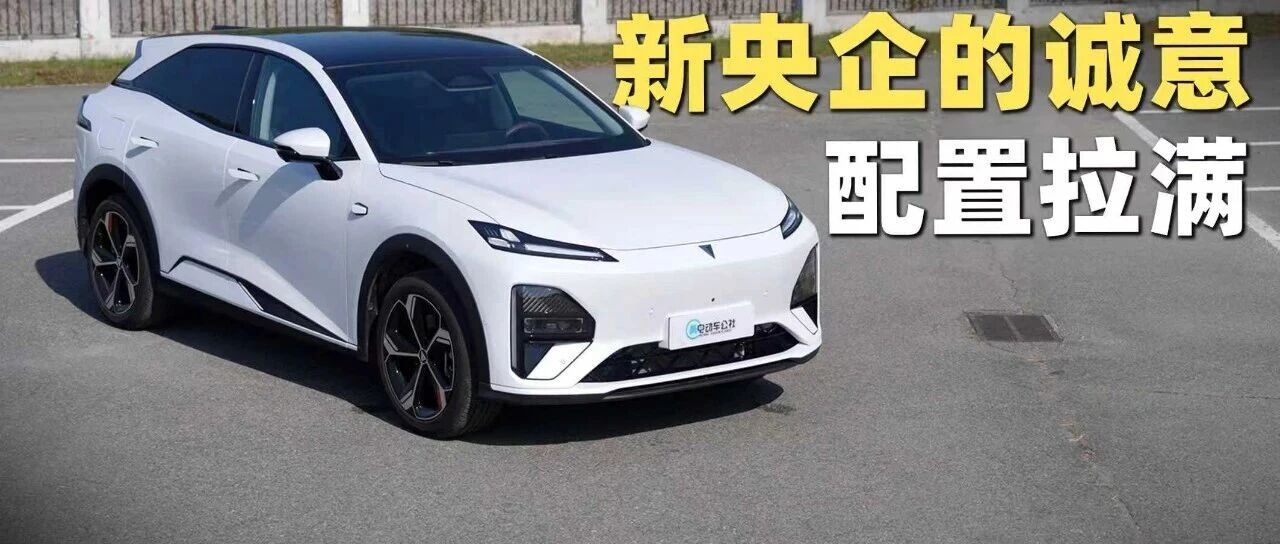
充电反向虚标,智能豪华拉满!这就是新央企的诚意?丨深蓝S07全解读
电动车公社· 2025-09-30 16:07
Core Viewpoint - The article highlights the evolution of Chinese automotive brands, particularly focusing on the new Deep Blue S07 model, which offers advanced features and comfort typically found in luxury vehicles, at a competitive price point [7][61]. Group 1: Vehicle Features - The Deep Blue S07 features a front seat with 16-way adjustments, including heating, ventilation, and massage functions, which were previously exclusive to luxury brands [2][3]. - It is equipped with a 1.5L four-cylinder range extender engine with a thermal efficiency of 44.39%, supporting 92 gasoline [10]. - The vehicle includes a 31.73 kWh lithium iron phosphate battery, providing a pure electric range of 230 km under CLTC standards [12]. Group 2: Charging and Efficiency - The charging speed is a critical factor for range extender vehicles, with the Deep Blue S07 achieving a 30-80% charge in 13 minutes and 30 seconds, which is 10% faster than the advertised 15 minutes [18]. - The range extender's efficiency is notable, with 1 liter of fuel generating 3.7 kWh of electricity, resulting in a fuel consumption of 3.8 L/100 km under NEDC standards, equating to approximately 0.3 yuan per kilometer [22]. Group 3: Interior and Comfort - The interior design emphasizes comfort and luxury, featuring high-quality materials such as suede and soft-touch plastics, which enhance the overall experience [34]. - The vehicle includes a 20-speaker sound system certified by Dolby Atmos, providing an immersive audio experience [36]. - Additional features like a "nano water ion oxygen air conditioning" system are available, which helps improve air quality and comfort [35]. Group 4: Driving Experience and Technology - The Deep Blue S07 is equipped with FSD variable damping shock absorbers, a feature typically found in vehicles priced above 200,000 yuan [48]. - It includes the Huawei Qiankun intelligent driving system with 25 sensors, offering advanced driving assistance and safety features [53][54]. - The vehicle allows users to adjust regenerative braking levels, catering to individual driving preferences [51]. Group 5: Market Position and Strategy - The Deep Blue S07 is positioned as a high-value vehicle, aiming to bring luxury features to the 150,000 yuan price segment, reflecting the company's commitment to quality and affordability [45][61]. - The model has gained approximately 250,000 users globally, indicating a significant impact on the automotive market [61].
寻求第二增长曲线 小鹏、长安等瞄准万亿市场加速飞行汽车布局
Xin Jing Bao· 2025-09-30 14:14
Core Insights - Chinese automotive companies are accelerating their investments in the flying car sector, with significant announcements from major players like Changan Automobile and XPeng Motors regarding their plans for production and delivery timelines [2][5][6] Company Developments - Changan Automobile announced the establishment of a joint venture for flying cars and aims to launch a flying car by 2030 [2] - XPeng Motors plans to mass-produce the world's first "car + airplane" combination flying car by 2026, having developed seven prototype models and invested billions [5] - GAC has also introduced its multi-rotor flying car, the GAC High Domain AirCab, with a planned price of no more than 1.68 million yuan, set to begin operations in the Guangdong-Hong Kong-Macao Greater Bay Area [5] - Other companies like Geely and FAW are still in the research and testing phases, with FAW's flying car project based in Shenzhen aiming for its first flight this year [6] Market Potential - Morgan Stanley predicts that the flying car industry could reach a market size of $300 billion by 2030 and $9 trillion by 2050, with China potentially becoming the largest urban low-altitude transportation market [3] - The low-altitude economy is expected to create multiple trillion-dollar segments, including low-altitude vehicle manufacturing, infrastructure, and operational services [7] Industry Trends - The flying car sector is seen as a response to the saturation of the smart automotive market, with companies seeking new growth avenues [7] - The integration of electric vertical takeoff and landing (eVTOL) vehicles and drones is being pursued through various development strategies, including self-research and partnerships [5] Challenges - Despite the promising outlook, flying cars face challenges related to costs and regulatory frameworks that must be addressed for widespread adoption [4][9] - High costs are attributed to the current stage of smart terminal development and the lack of a mature supply chain, which could hinder the industry's growth [10]


寻求第二增长曲线,小鹏、长安等瞄准万亿市场加速飞行汽车布局
Bei Ke Cai Jing· 2025-09-30 14:12
Core Viewpoint - Chinese automotive companies are accelerating their investments in the flying car sector, with several firms announcing plans for production and development timelines for flying vehicles by 2026 and beyond [1][2][4]. Group 1: Company Developments - Changan Automobile announced the establishment of a joint venture for flying cars and plans to launch a flight-capable vehicle by 2030 [1]. - Xiaopeng Motors aims to mass-produce the world's first "car + airplane" combination flying car by 2026, having developed seven prototype models with significant investment [2][4]. - GAC has also made strides in the flying car market, with plans to deliver its GOVY AirCab by the end of 2026, priced under 1.68 million yuan [4]. - Other companies like Geely and FAW are still in the research and testing phases, with FAW's flying car expected to make its first flight this year [5]. Group 2: Market Potential - Morgan Stanley predicts that the flying car industry could reach a market size of $300 billion by 2030 and $9 trillion by 2050, with China potentially becoming the largest urban low-altitude transportation market [2]. - The low-altitude economy is expected to create three trillion-dollar segments: low-altitude vehicle manufacturing, infrastructure, and operational services [8]. Group 3: Industry Trends - The flying car sector is seen as a response to the saturation of the smart automotive market, with companies seeking new growth avenues [7]. - The Chinese government has recognized the low-altitude economy as a strategic emerging industry, providing a favorable policy environment for its development [7]. Group 4: Challenges - Despite the promising outlook, flying cars face challenges such as high costs and regulatory hurdles that must be addressed for widespread adoption [3][10]. - The current high costs are attributed to the immature supply chain and the need for technological advancements in core components [10][11].
长安汽车:长安福特有新能源车规划 目前相关车型处于开发阶段
Zheng Quan Shi Bao Wang· 2025-09-30 12:15
Core Viewpoint - Changan Automobile has announced that Changan Ford is developing new energy vehicle models, which are currently in the development stage [1] Company Summary - Changan Ford is actively planning new energy vehicles, indicating a strategic shift towards electric mobility [1] Industry Summary - The announcement reflects a broader trend in the automotive industry towards the development of new energy vehicles, aligning with global sustainability goals [1]
开启商用车新能源智慧新纪元 长安跨越“双星”上市
Zhong Guo Qi Che Bao Wang· 2025-09-30 07:38
Core Viewpoint - The launch of the "Xingta" and "Kua Yue Xing Guang" models by Changan Kua Yue marks a significant step in the company's strategy towards electrification, intelligence, and internationalization in the commercial vehicle sector, showcasing the transition from manufacturing to intelligent manufacturing in Chinese commercial vehicle enterprises [1][3][17] Group 1: Strategic Layout - Changan Kua Yue focuses on user-centric development, emphasizing three strategic pillars: electrification, intelligence, and internationalization [3] - The simultaneous launch of the two new models enriches the product matrix and responds systematically to future logistics transportation ecosystems [3][5] Group 2: Market Performance - In the first eight months of 2025, Changan Kua Yue achieved sales of 106,000 units, representing a year-on-year growth of 7.5%, with an increasing proportion of new energy vehicles and continuous growth in export business [5] Group 3: Product Features - The "Xingta" model is designed as a flagship wide-body small truck, focusing on comfort, loading capacity, low energy consumption, high safety, and intelligence, aiming to be a wealth-creating partner for urban and cross-city logistics drivers [8][10] - The "Kua Yue Xing Guang" model emphasizes space and intelligence, targeting urban distribution logistics and short-distance passenger transport users [10][12] Group 4: Technological Innovation - Both models represent a multi-dimensional breakthrough in product development, transitioning the commercial vehicle industry from mere cargo tools to intelligent mobile spaces, supported by Changan Kua Yue's proprietary vehicle architectures [13][15] - The company adopts a development logic that defines needs based on real user scenarios, redefining the relationship between people, vehicles, and goods [15] Group 5: Future Outlook - The launch signifies a renewal of Changan Kua Yue's product line and a crucial step for Chinese commercial vehicle brands in the global arena amidst the trends of electrification and intelligence [17] - The company aims to continue prioritizing user needs and collaborating with global partners to create a new chapter in the commercial vehicle industry [17]

G刻赋能 启源新境——国轩G刻电池为长安启源A06赋能极致快充与全域安全
鑫椤锂电· 2025-09-30 07:32
Core Viewpoint - The launch of the Chang'an Qiyuan A06 electric sedan, equipped with Guoxuan High-Tech's G-Cell battery, marks a significant advancement in electric vehicle technology, emphasizing ultra-fast charging, long lifespan, and high safety standards [1][5]. Group 1: G-Cell Battery Technology - The G-Cell battery features 6C ultra-fast charging technology, allowing for a charging time of just 9 minutes to achieve a range of 300 kilometers, significantly enhancing user convenience and alleviating range anxiety [3]. - The battery system has a rated capacity of 121.5Ah and a nominal energy of 63kWh, weighing only 475kg, with an IP68 protection level, showcasing excellent lightweight and waterproof performance [3]. Group 2: Safety Features - The G-Cell battery incorporates dual collision safety designs and has passed rigorous safety tests, including side pillar and bottom scraping tests, ensuring it can withstand impacts and prevent fire or explosion even at high temperatures [4]. - The battery maintains a discharge capacity retention rate of 97.32% at -20°C, effectively addressing winter range reduction issues, and operates within a wide temperature range of -30°C to 60°C [4]. Group 3: User Experience and Design - The battery pack's ultra-thin lightweight design reduces the number of components by 30% and achieves a grouping volume efficiency of 75%, optimizing space utilization and enhancing the vehicle's EMC performance [4]. - Advanced vibration and noise reduction technologies ensure that noise levels are below 65dB at a distance of 0.5 meters, providing a quiet and comfortable driving experience in the Chang'an Qiyuan A06 [4]. Group 4: Market Implications - The launch of the Chang'an Qiyuan A06 represents a significant step for Chang'an Automobile in the new energy sector and serves as a model for the market application of Guoxuan High-Tech's G-Cell battery technology, promoting high-quality development in the electric vehicle industry [5].

走进中国长安汽车 解锁“新央企·新长安”高质量发展密码
Yang Shi Wang· 2025-09-30 07:31
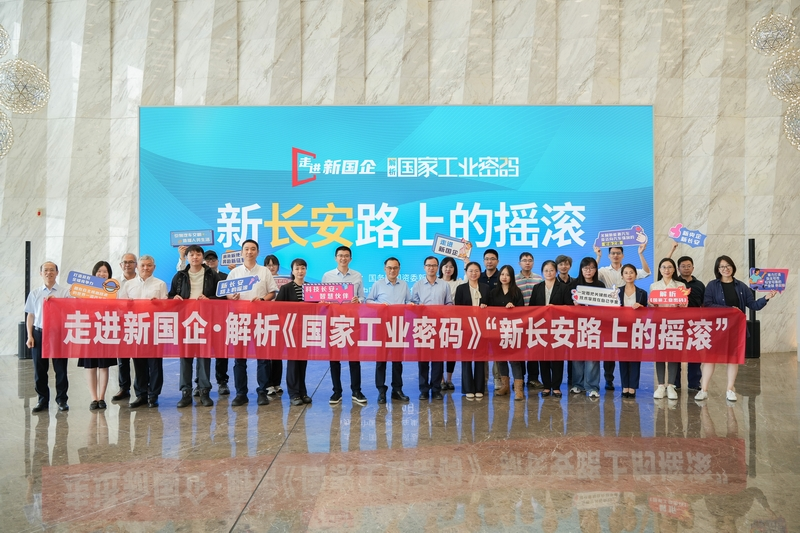
Core Insights - China Changan Automobile Group Co., Ltd. has officially established itself as a central enterprise directly managed by the State-owned Assets Supervision and Administration Commission (SASAC), marking the first level-one central enterprise headquartered in Chongqing [1] - The company showcased its transformation journey during the "New Changan Road Rock" brand event, emphasizing its commitment to technological innovation and high-quality development [2][5] - The leadership highlighted three key challenges faced by Changan: transitioning to new energy, competing against rapidly growing private enterprises, and maintaining a long-term development philosophy [2][3] Company Overview - Changan's development philosophy is encapsulated in a 16-character spirit that emphasizes innovation, openness, scientific rationality, and resilience [3] - The company aims to provide differentiated value to consumers, focusing on emotional, functional, and cost differences [3] Technological Advancements - Changan's collision safety laboratory is the first in China to integrate active and passive safety testing capabilities, achieving over 20 C-NCAP five-star models and 10 C-IASI GOOD models [5] - The smart factory, developed in collaboration with Huawei and China Unicom, represents a leading level of flexible manufacturing and has received multiple awards for its energy efficiency and innovation [5] Research and Development - The Tian Shu Intelligent Testing Center, set to be fully operational by October 2024, will focus on intelligent network testing and has received high recognition from government and industry bodies [6] - Changan's global R&D center has ranked first in the national enterprise technology center evaluation for 14 consecutive years, indicating its strong R&D capabilities [6] Testing Facilities - The Western Automobile Testing Ground in Chongqing spans 3,500 acres, equivalent to 5,555 standard basketball courts, and features 14 specialized test roads and over 70 types of unique surfaces [7] - The testing ground conducts over 20 million kilometers of testing annually, showcasing Changan's commitment to product quality and reliability [7]
年内58家车企披露中期分红超百亿元
Zheng Quan Ri Bao Wang· 2025-09-30 06:07
9月29日晚间,赛力斯(601127)集团股份有限公司(简称"赛力斯")披露2025年半年度利润分配预 案,拟派发现金红利5.06亿元(含税)。 今年以来,在汽车行业业绩稳健增长背景下,车企纷纷中期分红。据数据统计,截至9月30日,58家汽 车行业(申万一级)公司宣告中期分红(含一季报分红和中报分红),金额合计123.71亿元,同比增长 81.43%。 18家披露分红金额超1亿元 分红增多背后,是今年汽车行业业绩稳健增长。据数据统计,今年上半年,汽车行业上市公司合计实现 营业收入1.96万亿元,同比增长7.66%;实现归母净利润831.46亿元,同比增长0.45%。 行业分析人士认为,"金九银十"将至,汽车板块景气度有望上行。一方面,以旧换新效果进一步显现。 华泰证券认为,二季度汽车板块营收稳健增长,营收同比增长9%,环比增长16.6%,以旧换新政策或有 力支持"金九银十"旺季销售。 另一方面,海外收入占比增长带来行业韧性提升。广发证券认为,今年上半年,出口继续为乘用车板块 营收和利润增长贡献超额弹性。参考历史上政策延续年份的季节性规律,结合政策预期和资金使用额 度,预计今年下半年乘用车销量或仍有良好表现,维 ...

“四巨头”畅谈AI智驾:智能网联新能源汽车的未来发展
Zhong Guo Xin Wen Wang· 2025-09-30 05:37
Core Insights - The event "AI Chongqing Smart Driving Night and Qianli Technology Brand Launch" highlighted the collaboration among major automotive leaders to explore the future of smart connected electric vehicles in Chongqing [1][2] - The automotive industry is undergoing a transformation with the integration of AI, leading to vehicles evolving into intelligent robots that assist in daily life and work [1][2] Group 1: Industry Transformation - Chongqing aims to become a world-class hub for smart connected electric vehicles, focusing on the "AI+car" paradigm shift [1] - The future of automobiles is envisioned as self-cleaning, self-learning intelligent robots that serve as companions and assistants in various aspects of life [1][2] Group 2: Company Perspectives - Chang'an Automobile is exploring comprehensive mobility solutions involving land, sea, air, and humanoid robots, emphasizing the need for AI to drive significant advancements in traditional automotive manufacturing [2] - Geely Holding Group sees vast potential in AI applications within the automotive sector, enhancing traditional manufacturers' competitive edge [2] - Seres Group is focused on delivering exceptional user experiences through AI, aiming for vehicles to become intelligent mobile entities with safety, extended range, and service capabilities [2] - Qianli Technology envisions future vehicles as super intelligent entities that enhance work and life experiences, serving as companions and providing limitless possibilities for future living [2]
