GREE(000651)

Search documents
【格力电器(000651.SZ)】股息率超7%彰显价值底蕴——动态跟踪报告(洪吉然)
光大证券研究· 2025-09-25 23:06
Core Viewpoint - The company has demonstrated confidence in its future development by increasing its stake in the company, indicating a positive outlook on its value and growth potential [4] Group 1: Financial Performance - The expected dividend yield for 2025 exceeds 7%, with a projected profit of 33 billion and a cash dividend rate of 52%, resulting in a current expected yield of 7.7% [5] - Historical data shows that the company has had a dividend yield above 7% for approximately 31% of the time from 2013 to 2024, which typically corresponds to valuation bottoms [5] Group 2: Market Dynamics - Online price competition has eased in Q3 2025, allowing the company to regain market share, with significant price increases from various brands following the reduction of national subsidies [6] - The proportion of air conditioners sold online for under 2100 yuan has decreased from 57% in June to 44% in August, benefiting the company as it positions itself in the mid-to-high-end market [6] - The company's online retail volume grew by 21% year-on-year in August, compared to a 2% growth in the industry, and a 23% year-on-year increase in online retail volume from January to August [6] Group 3: International Expansion - The company held a product launch event in Thailand, marking its deepening presence in Southeast Asia, where its export share has increased from 30% to 80% over ten years [7] - In Indonesia, the company has emerged as a competitor against Japanese brands in a market with an annual air conditioner sales volume of nearly 4 million units [7] - In Thailand, the company transitioned to a localized operation model to enhance market responsiveness, while in Singapore, it has launched its brand to meet high energy efficiency standards [7]


智能装备亮相工博会 董明珠呼吁中国企业“卷”质量与技术
Nan Fang Du Shi Bao· 2025-09-25 14:36
9月23日,第25届中国国际工业博览会于上海盛大开幕。本届博览会以"工业新质,智造无界"为主题,展览面积 达30万平方米,规模水平实现历史之最。格力智能装备携多种创新产品及系统解决方案重磅现身,覆盖汽车及零 部件、新能源、3C电子、船舶钢构、教育培训等领域,尤其是工业机器人相关设备的惊艳亮相,进一步诠释 了"精工品质,格力智造"的品牌宗旨。 格力工业机器人秉承自主创新,掌握核心科技的设计理念,深耕核心零部件关键技术研究。2024年,重点项目数 控机床"高性能机器人专用伺服电机及控制"关键技术荣获广东省科技进步二等奖,经鉴定已达到国际领先水平。 格力"高速双五轴龙门加工中心"荣获2025年日内瓦国际发明展金奖,这一荣誉充分印证了中国智造在技术创新领 域的硬实力,已得到全球行业的高度认可。 工业机器人以机械臂为主要载体,其核心功能是替代人工完成重复性、标准化的手部作业,从控制逻辑来看,人 类手部动作依赖大脑神经中枢调控,而工业机器人则通过数字化程序实现精准控制。工业机器人各核心零件对应 人体关键结构:机器人机身相当于人体躯干,伺服电机承担关节运动控制功能,减速机相当于动力源头,控制与 驱动系统则如同人的大脑,负责 ...
格力电器(000651):股息率超7%彰显价值底蕴:——格力电器(000651.SZ)动态跟踪报告
EBSCN· 2025-09-25 06:04
Investment Rating - The report maintains a "Buy" rating for Gree Electric Appliances with a target price of 54.10 CNY [5][7]. Core Insights - The expected dividend yield for 2025 exceeds 7%, indicating strong value characteristics. The current expected dividend yield is 7.7% based on a profit forecast of 33 billion CNY and a 52% cash dividend rate [2][5]. - Historical data shows that the company has had a dividend yield above 7% for approximately 31% of the time from 2013 to 2024, typically corresponding to valuation bottoms [2]. - The company has seen a resilient online retail growth, with a 21% year-on-year increase in August, compared to a 2% growth in the industry [3]. - Gree Electric is accelerating its expansion in Southeast Asia, with a significant increase in its market share from 30% to 80% in the region [4]. Summary by Sections Dividend and Profitability - The projected dividend per share for 2025 is 2.86 CNY, with a cash dividend rate of 7.2% [15]. - The company’s net profit for 2025 is estimated at 33 billion CNY, with a growth rate of 2.63% [6]. Revenue and Growth - The expected revenue for 2025 is 194.89 billion CNY, with a growth rate of 2.55% [6]. - The company’s online retail price has increased, benefiting from a reduction in the proportion of low-priced air conditioning sales [3]. Market Position and Strategy - Gree Electric has shifted its operational model in Thailand to a localized subsidiary approach, enhancing market responsiveness [4]. - The company has successfully positioned itself against Japanese brands in Indonesia, indicating strong competitive capabilities [4]. Financial Metrics - The projected earnings per share (EPS) for 2025 is 5.90 CNY, with a price-to-earnings (P/E) ratio of 7 [6][15]. - The return on equity (ROE) is expected to be 22.88% in 2025, reflecting strong profitability [14].
董明珠霸气回怼“说话太满”:别骂我说话太满,这是自信
Sou Hu Cai Jing· 2025-09-24 07:32
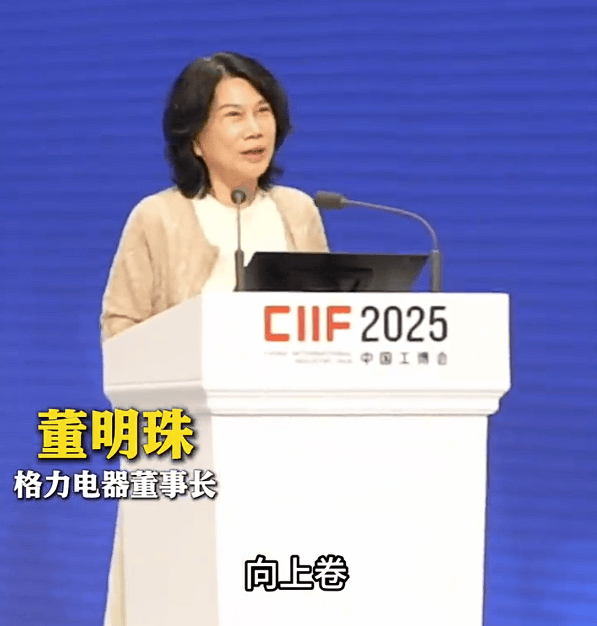
Core Viewpoint - The core message from Dong Mingzhu at the Shanghai Industrial Expo emphasizes the need for Chinese companies to focus on quality and technology rather than engaging in price wars, advocating for an upward competition in the industry [1][3][5]. Group 1: Industry Insights - Dong Mingzhu criticized the current state of the home appliance industry, stating that many companies are cutting corners and using low prices to attract consumers instead of investing in technology [3][5]. - She highlighted the issue of OEM (Original Equipment Manufacturer) production, arguing that it leads to lower quality products and encourages manufacturers to compromise on standards [5][7]. - Dong's consistent stance against price competition and her commitment to self-manufacturing at Gree demonstrate a long-term vision for elevating the quality of Chinese products on the global stage [7]. Group 2: Company Strategy - Gree Electric Appliances, under Dong Mingzhu's leadership, has maintained a policy of not engaging in OEM production, ensuring that all components are designed and manufactured in-house [7]. - The company prioritizes research and development over price competition, aiming to build consumer trust through reliable after-sales service and high-quality products [7]. - Dong's approach reflects a broader strategy for Chinese brands to enhance their reputation by focusing on quality and technological advancement, rather than succumbing to the pressures of low-cost competition [5][7].
2025,“老登股”溃败
Xin Lang Cai Jing· 2025-09-24 05:50
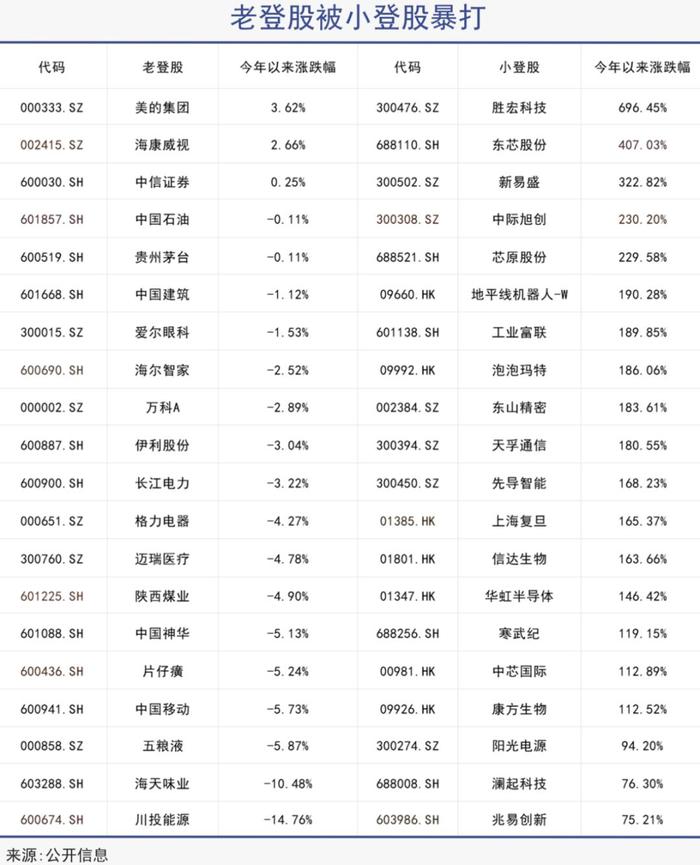
Core Viewpoint - The A-share market appears bullish on the surface, but underlying currents indicate significant divergence among investment styles and logic, leading to a "purging" of weaker stocks [1] Group 1: Market Dynamics - There is an unprecedented level of divergence between sectors, with high-valued tech stocks remaining strong while blue-chip and white-horse stocks decline sharply [1] - Approximately 70% of individual stocks are either stagnant or declining, highlighting a symbolic distinction between "old stocks" and "new stocks" [1] Group 2: Performance of Key Stocks - "Old stocks" such as liquor, real estate, coal, electricity, banks, and insurance are underperforming, while "new stocks" in AI, computing power, semiconductors, and robotics are thriving [3] - For instance, stocks like Midea Group and Kweichow Moutai have seen minimal gains or losses, while companies like Shenghong Technology and Dongxin Co. have experienced significant increases of 696.45% and 407.03%, respectively [3] Group 3: Industry Challenges - The liquor industry is facing a downturn, with a 0.9% decline in revenue to 239.7 billion yuan in the first half of the year, and a 5% drop in the second quarter due to a "ban on alcohol" [6][7] - Only 6 out of 23 listed liquor companies reported positive revenue and net profit growth, indicating a severe contraction in the sector [6] Group 4: Investment Trends - Investors are increasingly shifting focus from traditional sectors to technology, with notable figures like Lin Yuan publicly acknowledging investments in AI and semiconductor companies [8][9] - The current bull market is characterized by a lack of fundamentals, with capital flows driven more by narrative and "mind monopoly" rather than earnings per share (EPS) [9] Group 5: Future Outlook - The AI and semiconductor sectors are seen as having the potential for strong customer loyalty and ecological monopolies, similar to established brands in the liquor industry [12] - However, there are concerns about the sustainability of current valuations, as many companies in these sectors may not survive the inevitable market corrections [16]





A股“老登”持股曝光,敢不敢对号入座
第一财经· 2025-09-24 02:08
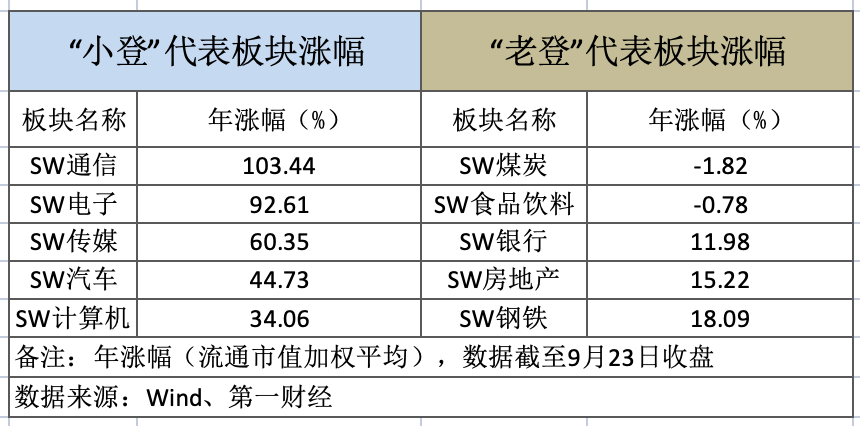
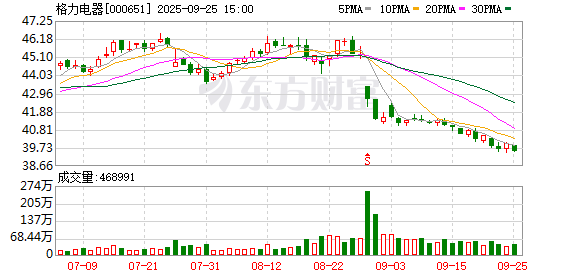
Core Viewpoint - The article discusses the significant divergence in stock market performance between traditional "old stocks" (represented by sectors like liquor, real estate, and coal) and "new stocks" (focused on technology sectors such as AI and semiconductors) in 2023, highlighting a shift in investor sentiment and market dynamics [2][9]. Group 1: Market Performance Overview - As of September 23, 2023, the Shanghai Composite Index has risen by 14.02%, with technology sectors like SW Communication and SW Electronics showing remarkable gains of 103% and 93% respectively, while traditional sectors like SW Coal and SW Food & Beverage have declined by 1.82% and 0.78% [2][3]. - The article notes that many traditional blue-chip stocks have underperformed, with 16 out of 21 stocks in the SW liquor sector experiencing price declines this year, including a 3.16% drop in Kweichow Moutai [5][6]. Group 2: Individual Stock Performance - Notable "new stocks" include Cambricon Technologies (688256.SH), which has seen a price increase of 105.22%, and other companies in the AI sector like NewEase (300502.SZ) and Zhongji Xuchuang (300308.SZ), with annual gains of 329% and 253% respectively [4][6]. - In contrast, several "old stocks" such as Haitian Flavoring (603288.SH) and Gree Electric (000651.SZ) have reported declines of 12.68% and 6.96% respectively, despite some of these companies showing double-digit profit growth in the first half of the year [5][6]. Group 3: Investment Philosophy and Market Sentiment - The article highlights a growing divide between "old stock" investors, who favor value investing based on stable cash flows and dividends, and "new stock" investors, who are more focused on growth potential in technology sectors [9][10]. - The current market sentiment is characterized by a trend-driven investment approach, with younger investors and quantitative funds favoring short-term trends, leading to extreme sector divergence [10].





上汽总裁称余承东对尚界H5初始方案不满意,提了非常多要求;董明珠回应说话太满:是一种自信;李想直言苹果17 Pro Max太丑了
雷峰网· 2025-09-24 00:34
Key Points - Jinzi Ham (002515.SZ) is venturing into the semiconductor industry with a planned investment of up to 300 million yuan to acquire up to 20% equity in Zhongsheng Microelectronics, indicating a strategic shift towards high-growth sectors like AI and optical communication [3][5] - The company's stock surged to a daily limit of 7.85 yuan, resulting in a market capitalization increase of nearly 1 billion yuan on September 23 [3] - Jinzi Ham has previously attempted to diversify into healthcare and internet finance, but most of these ventures were unsuccessful [5] Group 1 - Jinzi Ham's investment in Zhongsheng Microelectronics reflects a broader trend of traditional companies diversifying into technology sectors [3][5] - The company aims to leverage the growth potential of the AI industry and optical communication markets [3] - The announcement of this investment comes after a change in the company's controlling shareholder and management team [5] Group 2 - The stock market reaction to Jinzi Ham's announcement demonstrates investor confidence in the company's new direction [3] - The investment strategy aligns with the increasing interest in semiconductor technology amid rising demand for AI applications [3][5] - Jinzi Ham's core business remains in meat products, but this move signifies a potential shift in focus towards technology-driven growth [3][5]






格力不必焦躁
Bei Jing Shang Bao· 2025-09-23 16:18
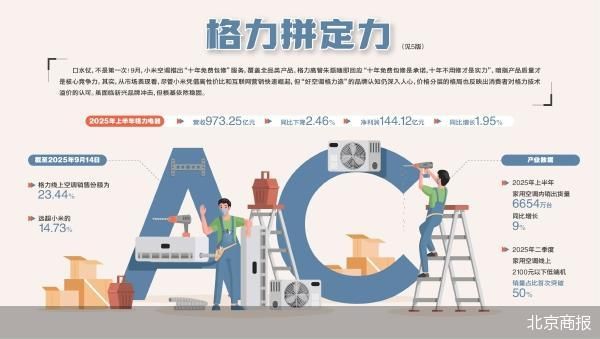
Core Viewpoint - Gree Electric Appliances, a leading player in the air conditioning market, is facing increasing competition from Xiaomi and others, prompting a need for service upgrades and strategic responses to maintain its market position [1][4]. Group 1: Market Position and Competition - In August 2023, Gree's online sales market share reached 24.4%, surpassing Midea, while still maintaining a significant gap over Xiaomi and other brands [1]. - Gree's market director emphasized the company's long-standing service offerings in response to Xiaomi's announcement of a "10-year free repair" service, indirectly questioning Xiaomi's product quality control [1][9]. - The rivalry between Gree and Xiaomi has intensified, particularly following a patent infringement lawsuit where Gree won against Xiaomi, highlighting the competitive tension in the industry [4]. Group 2: Financial Performance - Gree's air conditioning segment reported a revenue of 762.8 billion yuan in the first half of 2025, a year-on-year decline of 5.1%, indicating pressure on demand [5]. - Overall revenue for Gree Electric in the same period was 973.25 billion yuan, down 2.46%, while net profit increased by 1.95% to 144.12 billion yuan [5]. - In contrast, competitors like Midea and Haier reported significant revenue growth, with Midea's revenue increasing by 15.7% to 252.3 billion yuan [5]. Group 3: Industry Trends and Challenges - The air conditioning market is experiencing structural changes, with low-end models gaining popularity, which contrasts with Gree's focus on mid-to-high-end products [6]. - Gree's limited success in launching sub-brands to target the price-sensitive market has hindered its ability to compete effectively against rivals that utilize multi-brand strategies [6]. - Despite the challenges, Gree has seen significant growth in innovative products, such as the "no direct wind" series, which experienced a 131% increase in sales [7]. Group 4: Strategic Initiatives - Gree has introduced new retail formats, such as "Dong Mingzhu Health Home" stores, to enhance customer experience and drive sales, with the first store achieving over 85.6 million yuan in sales on its opening day [7]. - The company is focusing on improving consumer awareness of its differentiated products through experiential marketing, addressing the gap in consumer understanding of technology benefits [8][9]. - Gree's long-standing reputation for quality and service remains a competitive advantage, although it must adapt to the evolving market landscape and consumer preferences [9].
格力还没到“坐不住”的时候
Bei Jing Shang Bao· 2025-09-23 15:23
Core Viewpoint - The air conditioning industry is facing challenges due to product homogenization and increased competition, particularly from Xiaomi, which is impacting Gree's market position and growth potential [4][10][20]. Group 1: Market Position and Competition - Gree's market share in online air conditioning sales is 23.44%, ranking second behind Midea's 24.06%, but it has shown a strong performance in August 2025 with a market share of 24.4%, surpassing Midea [5][13]. - Xiaomi has introduced a "10-year free repair" service, prompting Gree to respond by highlighting its own similar service and emphasizing its product quality [5][10]. - The competition between Gree and Xiaomi has escalated, with both companies engaging in public disputes over sales data and product quality, reflecting a broader struggle between traditional manufacturing and internet-driven business models [10][11][20]. Group 2: Financial Performance - Gree's air conditioning segment reported revenue of 762.8 billion yuan in the first half of 2025, a decline of 5.1% year-on-year, indicating pressure on its core business [13][14]. - In contrast, Midea and Haier reported significant revenue growth of 15.7% and 10.2%, respectively, highlighting Gree's underperformance relative to its competitors [13][14]. - Gree's overall revenue for the first half of 2025 was 973.25 billion yuan, down 2.46%, with a net profit of 144.12 billion yuan, up 1.95% [13][14]. Group 3: Product Innovation and Consumer Perception - Gree is focusing on product differentiation to combat market homogenization, with innovative products like the "wind does not blow people" series seeing a 131% increase in sales [15][16]. - The company is also exploring new retail channels, such as the "Dong Mingzhu Healthy Home" stores, which aim to enhance consumer experience and drive sales [16][17]. - Despite facing pressure from low-cost competitors, Gree maintains a strong brand reputation for quality and reliability, which continues to attract consumer trust [19][20].

A股大分化:“小登”追AI算力狂赚,“老登”守白酒地产躲牛市
Di Yi Cai Jing· 2025-09-23 13:39
Core Viewpoint - The market is experiencing a significant divergence between traditional "old stocks" (represented by sectors like liquor, real estate, and coal) and "new stocks" (focused on technology sectors such as AI and semiconductors), with the latter showing substantial gains while the former declines [1][3][8]. Group 1: Market Performance - As of September 23, the Shanghai Composite Index has risen by 14.02% year-to-date, with technology sectors like SW Communication and SW Electronics seeing gains of 103% and 93% respectively, while traditional sectors like SW Coal and SW Food & Beverage have declined by 1.82% and 0.78% [1][2]. - The performance of individual stocks reflects this trend, with tech stocks like Cambrian (688256.SH) doubling in price, while major liquor stocks like Kweichow Moutai (600519.SH) have seen a decline of 3.16% [3][5]. Group 2: Sector Analysis - The "new stocks" or "small stocks" have shown remarkable growth, with companies like Xinji Technology (300502.SZ) and Zhongji Xuchuang (300308.SZ) experiencing year-to-date increases of 329% and 253% respectively, driven by the AI computing wave [3][5]. - In contrast, the "old stocks" have struggled, with 16 out of 21 major liquor stocks experiencing declines, and several blue-chip stocks like Haitian Flavoring (603288.SH) and Gree Electric (000651.SZ) also showing negative performance [4][5]. Group 3: Investment Perspectives - The divide between "old stocks" and "new stocks" has sparked debates within the investment community, with traditional investors advocating for value investing based on cash flow and safety margins, while tech investors focus on growth potential and disruptive technologies [6][7]. - Current market dynamics suggest that the tech sector is seen as a trend-driven investment, supported by policies favoring AI and computing power, while traditional value investment strategies are becoming less effective, leading to extreme sector divergence [8].