
JGJC(000799)

Search documents
酒鬼酒(000799) - 000799酒鬼酒投资者关系管理信息20250804
2025-08-04 13:52
Group 1: Company Performance and Challenges - The company's performance in the first half of the year has been under pressure due to a weakened demand in the white liquor market and intensified competition, leading to a pronounced Matthew effect [2] - The company is undergoing a transformation period, focusing on C-end sales to drive growth, which requires time to yield results [2] - The company has implemented a "雷扫行动" (雷扫行动) to enhance market development and improve service and management levels [2] Group 2: Product Strategy - The company has initiated a "二低一小" (two low and one small) product strategy, which includes low-end liquor, low-alcohol liquor, and small liquor products [2][3] - The low-end liquor strategy aims to leverage increased production capacity to support mid-to-low-end product offerings, emphasizing cost-effectiveness [3] - The low-alcohol liquor is designed to appeal to younger consumers, featuring low alcohol content without compromising flavor [3] Group 3: Collaborations and Market Positioning - The collaboration with 胖东来 (Pang Donglai) on the 酒鬼·自由爱 (Jiu Gui: Free Love) product is based on shared values and cultural alignment [3] - The company has established a cooperative plan with 胖东来, with ongoing progress in various aspects of the partnership [3] Group 4: Pricing and Profitability - The company is focusing on stabilizing the pricing strategy for its internal reference series due to a decline in high-end liquor demand, prioritizing price stability over volume growth [3] - The net profit margin for 2024 is expected to be low due to significant marketing expenditures aimed at boosting terminal sales and reducing inventory [3]

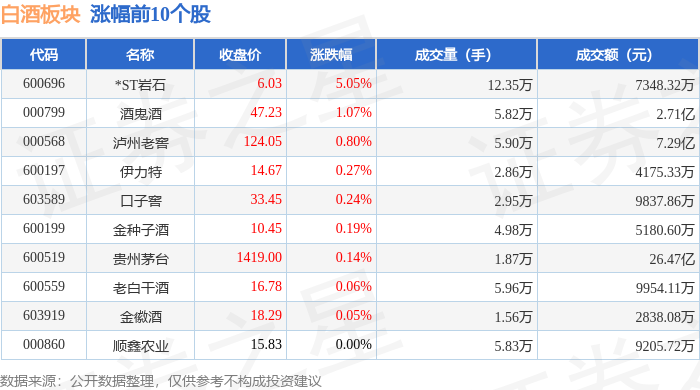
白酒板块8月4日涨0.07%,*ST岩石领涨,主力资金净流出2.55亿元
Zheng Xing Xing Ye Ri Bao· 2025-08-04 08:29
证券之星消息,8月4日白酒板块较上一交易日上涨0.07%,*ST岩石领涨。当日上证指数报收于3583.31, 上涨0.66%。深证成指报收于11041.56,上涨0.46%。白酒板块个股涨跌见下表: | 代码 | 名称 | 收盘价 | 涨跌幅 | 成交量(手) | 成交额(元) | | | --- | --- | --- | --- | --- | --- | --- | | 600696 | *ST岩石 | 6.03 | 5.05% | 12.35万 | 7348.32万 | | | 000799 | 酒鬼酒 | 47.23 | 1.07% | 5.82万 | | 2.71亿 | | 000568 | 泸州老窖 | 124.05 | 0.80% | 5.90万 | | 7.29亿 | | 600197 | 伊力特 | 14.67 | 0.27% | 2.86万 | 4175.33万 | | | 603589 | 口子警 | 33.45 | 0.24% | 2.95万 | 9837.86万 | | | 661009 | 金种子酒 | 10.45 | 0.19% | 4.98万 | 5180.60万 | | | ...





食品饮料周观点:育儿补贴政策落地,推新积极挖掘增量-20250803
GOLDEN SUN SECURITIES· 2025-08-03 10:36
Investment Rating - The report maintains an "Increase" rating for the food and beverage industry, indicating a positive outlook for the sector [5]. Core Insights - The implementation of the childcare subsidy policy is expected to stimulate growth in the food and beverage sector, particularly benefiting the infant formula and dairy product markets [4]. - The report highlights three main investment themes in the liquor segment: strong leading brands, sustained regional advantages, and recovery-driven elastic stocks [1][2]. - In the beer and beverage segment, Budweiser faces sales pressure but is seeing price recovery, while the sugary tea category is gaining market share during peak seasons [3]. Summary by Sections Liquor Industry - Leading brands such as Moutai, Wuliangye, and Luzhou Laojiao dominate the global rankings, with Moutai valued at $58.4 billion, maintaining its position as the most valuable liquor brand globally [2]. - The liquor sector is transitioning from scale growth to high-quality development, with a focus on brand strength and market positioning [2]. Beer and Beverage Sector - Budweiser's Q2 2025 results show a revenue decline of 3.9% and a profit drop of 31.1%, with a notable 6.2% decrease in sales volume [3]. - The sugary tea segment is experiencing a resurgence, with brands like Kang Shifu and Uni-President maintaining leading positions, and sales of Yuanqi Forest's iced tea growing by 53.9% year-on-year [3]. Food Sector - The national childcare subsidy program, effective from January 1, 2025, is projected to enhance birth rates and subsequently increase demand for dairy products [4]. - New product launches by companies like Qiaqia and Ximai are aimed at expanding market presence and tapping into health-oriented consumer trends [4][7].
天风·食品饮料 | 深度调整期行业迎4大变化,重视白酒相对底部机会
Sou Hu Cai Jing· 2025-08-03 08:14
Group 1 - The core viewpoint is that the PE recovery in the liquor sector may precede the EPS recovery, with expectations of an EPS turning point in Q2 2026 due to a low performance base [1][4] - The liquor industry is currently undergoing significant changes, including product matrix adjustments, channel upgrades, marketing innovations, and a rational approach to growth targets [1] - The industry is transitioning to a "quality-price ratio" competition phase, with leading companies already positioning themselves for this shift, which is expected to accelerate industry concentration [2] Group 2 - The liquor sector is characterized by low valuations, low expectations, low holdings, and high dividends, with several leading companies offering dividend yields above 4%, indicating relative bottom opportunities [3] - Companies like Yanghe, Luzhou Laojiao, Wuliangye, and Gujing Gongjiu are highlighted for their strong dividend returns, while Kweichow Moutai also maintains a high dividend yield of 3.55% [3] - The focus is on strong brands and resilient demand, with recommendations to pay attention to leading liquor companies that are likely to achieve value re-evaluation as consumer spending gradually recovers [3][4]


天风证券:2025年上半年白酒行业迎4大变化
Mei Ri Jing Ji Xin Wen· 2025-08-01 00:47
Core Viewpoint - The white liquor industry is expected to undergo significant changes in the first half of 2025 due to economic and policy influences, presenting potential investment opportunities as the sector is currently in a deep adjustment phase [1][3][4]. Group 1: Industry Changes - The white liquor industry is experiencing five major changes: 1) Product matrix transformation focusing on low-alcohol, youth-oriented, and high cost-performance products; 2) Continuous channel upgrades with companies forming platform firms to enhance channel control and balance online and offline sales; 3) Marketing strategies shifting away from "red envelope" competition to nurturing new scenarios and demographics; 4) Rational goal-setting with leading companies focusing on channel health and long-term development [1][3][4]. - The industry is transitioning from an "advertising king - channel king - brand king" phase to a "quality-price ratio" competition phase, with leading companies already positioning themselves for this shift [3]. Group 2: Investment Opportunities - The sector currently exhibits characteristics of low valuation, low expectations, low holdings, and high dividend returns, with companies like Yanghe, Luzhou Laojiao, Wuliangye, and Gujing Gongji boasting dividend yields above 4%, while Kweichow Moutai has a yield of 3.55% [4]. - The expectation is that as consumer spending gradually recovers and the strengths of leading companies become more pronounced, firms with strong barriers will be the first to achieve value re-evaluation [4]. - Investment suggestions include focusing on strong brands with resilient demand and attractive dividend returns, such as Kweichow Moutai, Wuliangye, and Shanxi Fenjiu, as well as companies like Luzhou Laojiao and others that may benefit from policy and demand changes [5].


天风证券:白酒行业迎4大变化,板块PE修复或先于EPS修复
Xin Lang Cai Jing· 2025-08-01 00:42
Core Insights - The report from Tianfeng Securities indicates that the Chinese liquor industry will undergo four significant changes in the first half of 2025 due to economic and policy influences [1] Group 1: Industry Changes - Product Matrix Changes: Liquor companies are focusing on low-alcohol, youth-oriented, and high-cost performance trends, emphasizing the serialization of low-alcohol products, mid-range pricing strategies, and product quality upgrades [1] - Continuous Channel Upgrades: Companies are enhancing channel control by forming platform companies and balancing online and offline channels [1] - Marketing Strategies: The industry is moving away from "red envelope" competition, focusing instead on cultivating new scenarios and target demographics [1] - Rational Goals: Leading liquor companies are prioritizing channel health and long-term development, adopting a rational perspective on performance growth targets [1] Group 2: Investment Opportunities - Value Line: Companies with strong brands, resilient demand, and attractive dividend returns, such as Kweichow Moutai, Wuliangye, and Shanxi Fenjiu, are recommended for investment [1] - Elasticity Line: Potential recovery opportunities driven by policy and demand changes are highlighted for companies like Luzhou Laojiao, Shanxi Fenjiu, Jiugui Liquor, Shede Liquor, Shui Jing Fang, Huazhi Liquor, and Zhenjiu Lidu [1]
白酒在胖东来、山姆、盒马找到“新卖场”
Tai Mei Ti A P P· 2025-08-01 00:32
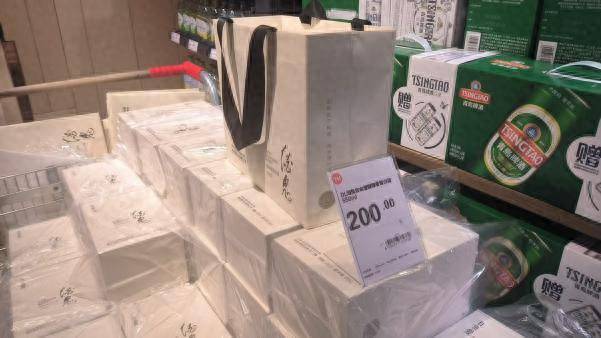
Core Insights - The rise of new retail formats such as supermarkets is creating new opportunities for the Chinese liquor industry, particularly in the white liquor segment [1][2] - The collaboration between new supermarkets and liquor companies is reshaping distribution channels, moving away from traditional methods that have proven difficult for profitability [2][4] Group 1: New Retail Formats - New supermarkets like Pinduoduo, Sam's Club, and Hema are leveraging their pricing, supply chain, and brand advantages to promote private label white liquors, creating a new channel for growth [1][2] - The launch of "Jiu Gui • Zi You Ai" by Pinduoduo and Jiu Gui Jiu Co. has generated significant market interest, with the product selling out on its first day [2][3] - Hema's self-branded white liquor products have also seen substantial sales growth, with "Qing Xiang Yi Hao" achieving over 20 million yuan in sales within six months, marking an 80% year-on-year increase [2][3] Group 2: Market Trends - The trend towards lower-priced white liquors is evident, with products like "Bao Feng • Zi You Ai" priced at 75 yuan and "Jiu Gui • Zi You Ai" at 200 yuan, appealing to cost-conscious consumers [3][4] - Traditional supermarkets are struggling, with major players like Carrefour and Yonghui closing numerous stores and experiencing significant revenue declines [5][6] - The total number of stores among the top 100 supermarket chains in China has decreased by 9.8%, indicating a contraction in traditional retail [5] Group 3: Industry Dynamics - The shift towards new retail formats is seen as a necessary response to the declining traditional distribution channels, with white liquor brands needing to adapt quickly to remain competitive [6][7] - The traditional liquor distribution model is under pressure, with a notable decrease in the number of distributors for publicly listed liquor companies, dropping from 58,437 in 2023 to 56,747 in 2024 [6][7] - The competitive landscape is evolving, with traditional liquor chains lacking pricing power and facing challenges in profitability, leading to a potential consolidation towards larger retail brands and online platforms [9]
深度调整期行业迎4大变化,重视白酒相对底部机会
Tianfeng Securities· 2025-07-31 11:16
Industry Rating - The industry rating is maintained at "Outperform" [1] Core Viewpoints - The liquor industry is currently in a deep adjustment phase, influenced by economic and policy pressures, with five major changes observed [2] - The industry is transitioning towards a "quality-price ratio" competition phase, with leading companies already positioning themselves for this shift [2] - Despite being in a weak performance phase, the sector shows characteristics of low valuation, low expectations, low holdings, and high dividends, making leading liquor companies attractive investment opportunities [3] Summary by Sections 1. Industry Background - The liquor industry is facing dual pressures from economic conditions and policy changes, accelerating its decline [7] - The introduction of the "Strict Economy and Anti-Waste Regulations" has further impacted consumption scenarios, particularly in high-end group purchases [7][9] - The industry is expected to undergo a supply-side adjustment, with companies lowering their growth targets to alleviate channel pressures [13] 2. Supply Side - Leading liquor companies have initiated a "control supply" trend to rebalance supply and demand, which may stabilize prices [18] - Companies like Wuliangye and Luzhou Laojiao have implemented supply control policies to manage inventory levels [19] 3. Demand Side - Companies are innovating to meet changing consumer preferences, focusing on quality-price ratio products and low-alcohol options to attract younger consumers [20] - The establishment of manufacturer platforms and embracing online channels are strategies being adopted to enhance sales and manage distribution [26] 4. Investment Recommendations - The report suggests focusing on strong brands with resilient demand and attractive dividend returns, such as Kweichow Moutai and Wuliangye [55] - The potential for earnings per share (EPS) recovery is anticipated in the second quarter of 2026, making it a favorable time to invest [55]

胖东来救“酒鬼”,“成本裸奔”击碎白酒价格魔瓶|大象财富
Sou Hu Cai Jing· 2025-07-31 10:21
Core Viewpoint - The collaboration between Jiugui Liquor and Pang Donglai through the new product "Jiugui Liquor·Free Love" represents a critical moment for Jiugui Liquor, which is facing a severe decline in profits and operational efficiency, while also raising concerns about the potential disruption of its pricing structure [1][3][4][20]. Group 1: Company Performance - Jiugui Liquor's net profit has plummeted by 90%, with a forecast for 2025 indicating a profit of only 12.49 million yuan [3][4]. - The company's revenue for the first three months of the year was 34.4 million yuan, a year-on-year decline of 30.34%, and net profit dropped by 56.78% compared to the previous year [3][4]. - Inventory turnover days have increased to 1576 days, indicating that it would take over four years to convert inventory into cash [3]. Group 2: Market Dynamics - The price of "Jiugui Liquor·Free Love" has been inflated on second-hand platforms, reaching 210-245 yuan per bottle, despite a retail price of 200 yuan [1][8]. - The collaboration has led to a significant increase in Jiugui Liquor's stock price, which rose by 20% following the announcement of the partnership [12]. - The product's cost structure reveals a gross margin of only 15.87%, significantly lower than the industry average of 30%-50% [12][15]. Group 3: Strategic Implications - The partnership is seen as a potential lifeline for Jiugui Liquor, with experts suggesting it could help revitalize the brand and improve sales through Pang Donglai's extensive retail network [18][21]. - The collaboration is part of a broader strategy to penetrate the mid-range market, with expectations of significant sales growth in the coming years [18][19]. - Concerns have been raised about the long-term impact on Jiugui Liquor's pricing structure and brand perception, as the low-margin product could disrupt existing pricing strategies [14][20].
中证国新央企小盘指数下跌1.28%,前十大权重包含酒鬼酒等
Jin Rong Jie· 2025-07-30 14:17
数据统计显示,中证国新央企小盘指数近一个月上涨6.69%,近三个月上涨19.19%,年至今上涨 15.51%。 金融界7月30日消息,A股三大指数收盘涨跌不一,中证国新央企小盘指数 (国新央企小盘,932257)下 跌1.28%,报1150.15点,成交额764.39亿元。 从中证国新央企小盘指数持仓样本的行业来看,工业占比38.00%、原材料占比18.35%、信息技术占比 13.54%、可选消费占比8.90%、公用事业占比5.56%、医药卫生占比5.38%、通信服务占比4.31%、主要 消费占比3.64%、能源占比1.77%、房地产占比0.55%。 资料显示,指数样本每半年调整一次,样本调整实施时间分别为每年6月和12月的第二个星期五的下一 交易日。权重因子随样本定期调整而调整,调整时间与指数样本定期调整实施时间相同。在下一个定期 调整日前,权重因子一般固定不变。特殊情况下将对指数进行临时调整。当样本退市时,将其从指数样 本中剔除。样本公司发生收购、合并、分拆等情形的处理,参照计算与维护细则处理。 据了解,中证国新央企小盘指数由国新投资有限公司定制,在国资委下属央企中选取200只规模较小的 上市公司证券作为 ...