
Bank of Ningbo(002142)

Search documents
26家A股银行分红2600亿元
Shen Zhen Shang Bao· 2025-12-15 22:55
Group 1 - The core viewpoint of the articles highlights that A-share listed banks in China are distributing significant cash dividends, with the six major state-owned banks leading the way, collectively announcing a total cash dividend of 204.657 billion yuan for the mid-term [1][2] - By December 15, 2025, 26 A-share listed banks are expected to disclose mid-term or quarterly dividend plans, with total dividends projected to exceed 260 billion yuan, where the six major state-owned banks account for 78.7% of the total dividends [1][2] - The major state-owned banks, including Industrial and Commercial Bank of China, Agricultural Bank of China, and others, have maintained a dividend payout ratio of 30% or more of their net profit [2] Group 2 - The Industrial and Commercial Bank of China leads the dividend distribution with 50.396 billion yuan, followed by other major banks with significant amounts, indicating a strong trend in dividend payouts among these institutions [2] - In the joint-stock bank category, several banks, including Industrial Bank and China CITIC Bank, are also participating in dividend distributions, with some like Industrial Bank and Ningbo Bank introducing mid-term dividend plans for the first time [2] - The banking sector has shown strong performance in the A-share market, with the overall bank sector rising by 10.71% this year, and specific banks like Agricultural Bank of China seeing a remarkable increase of 48.88% in their stock prices [3]






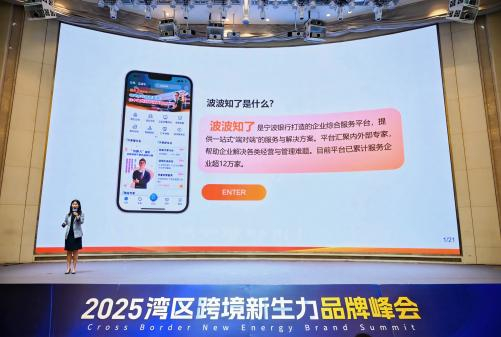
宁波银行深圳分行:以“五大金融”为引领,探索服务实体经济新路径
Guan Cha Zhe Wang· 2025-12-15 14:53
Core Insights - Shenzhen, known for its innovation-driven economy, is undergoing a new round of industrial upgrading and transformation, with financial institutions exploring differentiated development paths in response to national policies on various financial sectors [1] Group 1: Technology Finance - Ningbo Bank's Shenzhen branch has developed a comprehensive service platform called "Bobo Zhiliao" to support enterprises in overseas market expansion, integrating trade data from over 200 countries to assist import-export businesses [2] - The bank has introduced an "AI Foreign Trade Customer Acquisition" tool that automates the collection of overseas business contacts and sends business emails, potentially improving customer acquisition efficiency for small and medium-sized enterprises [2] - The platform has served over 10,000 enterprises in the Shenzhen area, reflecting the bank's transition from traditional credit services to technology-enabled solutions [4] Group 2: Green Finance - In alignment with the "dual carbon" goals, the bank offers "ESG and Dual Carbon Services," which include a carbon database and expert guidance to help companies manage carbon emissions and comply with EU carbon tax regulations, significantly reducing costs and time for businesses [6] - The bank's "Smart Water, Electricity, and Gas" service has benefited over 1,200 enterprises, saving approximately 167 million yuan in costs and reducing carbon emissions by 2.6 million tons [6] Group 3: Inclusive Finance - The bank has formed 19 specialized teams to address the financing challenges faced by small and micro enterprises, providing over 3.8 billion yuan in credit support to 528 such businesses [8] - As a pilot bank for the "Park Loan" initiative, the bank collaborates with innovation parks to offer tailored financial solutions for technology enterprises, demonstrating a commitment to integrating park resources and reducing customer acquisition costs [9] Group 4: Pension Finance - The bank is focusing on the elderly demographic by extending financial services into communities and schools, enhancing financial literacy and risk awareness among older adults [11] - Community activities, such as the "Bay Area Senior Model Competition," aim to engage the elderly while incorporating financial education, although there is room for further development in pension product innovation [11] Group 5: Digital Finance - The bank has conducted numerous workshops on financial digitalization, launching systems like "Kunpeng Treasury" and "Financial Manager" to provide enterprises with comprehensive fund management solutions, serving over 700 groups and 105 listed companies [13] - The integration of various financial management functions aims to streamline processes and reduce manual intervention, enhancing operational efficiency for businesses [15]

宁波银行北京自贸试验区支行联合永赢金租为客户国创汽车开展首笔类直租业务
Bei Jing Shang Bao· 2025-12-15 09:48
Core Insights - The collaboration between Ningbo Bank's Beijing Free Trade Zone branch and Yongying Financial Leasing Co. has significantly reduced the approval time for financing solutions, achieving a 40% reduction compared to traditional leasing processes [1][2] - The innovative "multi-contract integration direct leasing" model allows for faster funding, with a complete process from design to a 30 million yuan fund disbursement completed in just 20 days [2] - The initiative aligns with Beijing's policy to support high-tech industries by simplifying financing processes and expanding contract coverage for technology enterprises [2][3] Group 1 - The rapid response to the needs of Guochuang Automotive demonstrates the effectiveness of the new financing model in addressing urgent equipment procurement for R&D [1][2] - The financing method utilized bank acceptance bills, which lowered the financing costs for the enterprise [2] - The project aims to continuously support Guochuang Automotive's future R&D needs through tailored leasing solutions that combine equipment updates and technology upgrades [2] Group 2 - The Beijing Economic-Technological Development Area is developing an industrial financial cluster, with Ningbo Bank playing a key role in providing innovative financial products for tech enterprises [3] - The collaboration promotes a virtuous cycle of policy guidance, financial innovation, and industrial implementation, contributing to the construction of Beijing as an international technology innovation center [3]
总数突破2600亿,26家上市银行官宣分红方案,多家银行首次分红
Guan Cha Zhe Wang· 2025-12-15 03:47
Group 1 - A total of 26 A-share listed banks have announced interim or quarterly dividend plans, exceeding the 24 banks that did so in 2024 [1] - The total expected dividend amount from these banks is over 260 billion yuan, with state-owned banks accounting for approximately 70% of this total [1] - Industrial and Commercial Bank of China leads with a proposed dividend of 50.396 billion yuan, followed by China Construction Bank, Agricultural Bank of China, Bank of China, Postal Savings Bank, and Bank of Communications with dividends of 48.605 billion yuan, 41.823 billion yuan, 35.250 billion yuan, 14.771 billion yuan, and 13.811 billion yuan respectively [1] Group 2 - Several banks, including Industrial Bank and Ningbo Bank, are announcing dividend plans for the first time [2] - Industrial Bank plans to distribute a cash dividend of 5.65 yuan per 10 shares, totaling 11.957 billion yuan, which represents 30.02% of its net profit attributable to ordinary shareholders for the first half of 2025 [2]


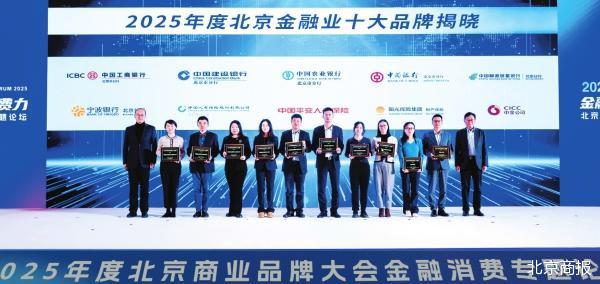
2025年度北京金融业十大品牌揭晓
Bei Jing Shang Bao· 2025-12-14 15:39
Group 1 - The top ten financial brands in Beijing for the year 2025 have been announced [1] - The list includes major banks such as ICBC, China Construction Bank, and Agricultural Bank of China [2] - Other notable companies on the list are China Life Insurance and Ping An Life Insurance [2]

公募销售新规落地,政银绑定深化下银行扩表动能有望复苏
Western Securities· 2025-12-14 12:55
Investment Rating - The report indicates a positive outlook for the insurance sector, recommending specific companies such as China Pacific Insurance, China Ping An, China Life (H), and China Taiping, while also recommending New China Life Insurance [4][17]. Core Insights - The financial industry experienced a mixed performance, with the non-bank financial index rising by 0.81%, outperforming the CSI 300 index by 0.89 percentage points. The insurance sector showed a notable increase of 2.36%, while the banking sector declined by 1.77% [2][11]. - The central economic work conference emphasized a proactive fiscal policy, which is expected to benefit the insurance sector by increasing infrastructure asset supply and improving credit risk perceptions [14][15]. - The report highlights the potential for valuation recovery in the brokerage sector, driven by regulatory changes that align public fund interests with long-term investor returns [18][19]. Summary by Sections 1. Weekly Performance and Sector Insights - The non-bank financial index rose by 0.81%, with the insurance sector outperforming the CSI 300 index by 2.44 percentage points [2][11]. - The banking sector underperformed, with a decline of 1.77%, attributed to macroeconomic policy expectations [3][21]. 2. Insurance Sector Data Tracking - The insurance sector's premium income showed steady growth, with life insurance and property insurance premiums increasing by 9.6% and 4.0% year-on-year, respectively [17][26]. - The report notes that the 10-year government bond yield decreased to 1.84%, which is favorable for the insurance sector's investment strategies [31]. 3. Brokerage Sector Data Tracking - The brokerage sector's PB valuation stands at 1.37x, indicating potential for valuation recovery as earnings improve [19][42]. - Regulatory changes in public fund sales are expected to enhance the industry's focus on long-term investor interests [18][19]. 4. Banking Sector Data Tracking - The banking sector's PB valuation is at 0.54x, suggesting it remains undervalued [21][25]. - The central economic work conference's focus on domestic demand and flexible monetary policy is expected to support the banking sector's growth [22][23].




A股上市银行密集派发中期分红,总额超2600亿元引关注
Huan Qiu Wang· 2025-12-14 02:53
Group 1 - The core viewpoint of the article highlights that as of December 13, 26 A-share listed banks have disclosed their mid-term or quarterly dividend plans for 2025, surpassing the 24 banks that did so in the same period of 2024, with total dividends expected to exceed 260 billion yuan [1][3] - The banks disclosing dividend plans include 6 large state-owned banks, 6 joint-stock banks, and 14 small and medium-sized banks, with the six major state-owned banks expected to contribute over 200 billion yuan in cash dividends [3] - Industrial and Commercial Bank of China leads with an estimated dividend of approximately 50.4 billion yuan, followed by China Construction Bank, Agricultural Bank of China, Bank of China, Postal Savings Bank of China, and Bank of Communications [3] Group 2 - Joint-stock banks such as Industrial Bank and CITIC Bank are expected to have mid-term dividends exceeding 10 billion yuan, while China Everbright Bank and Minsheng Bank are projected to exceed 5 billion yuan [3] - Some small and medium-sized banks, like Shanghai Bank and Nanjing Bank, also show significant dividend amounts, with several banks like Industrial Bank and Ningbo Bank introducing mid-term dividend plans for the first time [3] - The increase in dividend frequency among commercial banks is a response to the new "National Nine Articles" aimed at promoting multiple dividends per year for listed companies, enhancing the connection between company profits and investor returns [3] Group 3 - More frequent dividends can directly enhance shareholder satisfaction, allowing investors to share in the banks' operational success in a timely manner [4] - Stable cash returns align well with the investment needs of long-term funds such as social security funds, pension funds, and insurance capital, helping to attract these funds for long-term holding [4] - The positioning of banks as dividend-oriented can create a virtuous cycle of attracting long-term capital, enhancing stock price stability, and reducing abnormal price fluctuations caused by short-term speculation [4]
银行周报(2025/12/8-2025/12/12):11月社融数据:社融增速磨底,对公贷款延续短期化特征-20251214
GUOTAI HAITONG SECURITIES· 2025-12-14 02:34
Investment Rating - The report assigns an "Overweight" rating to the banking sector [6] Core Insights - The growth rate of social financing is stabilizing, with a year-on-year increase of 8.5% in November 2025, remaining unchanged from the previous month. Excluding government bonds, the growth rate is 6.0%, which is an increase of 0.1 percentage points from the previous month [6] - New social financing in November amounted to 2.49 trillion yuan, a year-on-year increase of 159.7 billion yuan, primarily supported by corporate bond issuance, while credit and government bonds showed negative growth [6] - The report highlights a trend of short-term borrowing among enterprises, with corporate loans increasing by 610 billion yuan, a year-on-year increase of 360 billion yuan [6][4] Summary by Sections 1. Social Financing Data - In November, the total social financing growth rate was 8.5%, with a new social financing addition of 2.49 trillion yuan, up 159.7 billion yuan year-on-year. The growth rate excluding government bonds was 6.0% [6][2] - Corporate bond financing net increased by 416.9 billion yuan, a year-on-year increase of 178.8 billion yuan, primarily driven by state-owned enterprises [6][4] 2. Credit and Loan Trends - The report indicates a weak increase in credit, with November's RMB loan growth rate at 6.4%, down 0.1 percentage points from the previous month. New loans for the month totaled 390 billion yuan, a year-on-year decrease of 190 billion yuan [6] - Personal loans decreased by 206.3 billion yuan, with short-term loans down by 215.8 billion yuan year-on-year, indicating pressure on both short-term and medium-to-long-term loans [4][6] 3. Deposit Trends - RMB deposit growth rate in November was 7.7%, down 0.3 percentage points from the previous month, with new deposits amounting to 1.41 trillion yuan, a year-on-year decrease of 760 billion yuan [6] - The report notes a slowdown in deposit migration, with corporate deposits increasing by 645.3 billion yuan, a year-on-year decrease of 94.7 billion yuan [6][4] 4. Investment Recommendations - The report suggests focusing on three investment themes: identifying banks with potential for performance growth, emphasizing banks with convertible bond expectations, and continuing dividend strategies [6]


11月金融数据点评:社融增速平稳,M1增速受基数影响回落
Orient Securities· 2025-12-13 15:34
Investment Rating - The report maintains a "Positive" outlook for the banking sector in 2026, indicating a return to fundamental narratives supported by policy financial tools and asset expansion resilience [6][23]. Core Viewpoints - The banking sector is expected to stabilize net interest margins due to a concentrated repricing cycle of deposits, with structural risks anticipated to receive policy support [3][23]. - The report highlights two main investment themes: focusing on quality small and medium-sized banks and state-owned banks with defensive value [24]. Summary by Sections Financial Data Analysis - In November 2025, social financing (社融) grew by 8.5% year-on-year, with a monthly increment of 2.49 trillion yuan, exceeding market expectations [10][9]. - The structure of social financing showed a decrease in RMB loans by 116.3 billion yuan year-on-year, indicating weak demand for credit [10][9]. - Government bonds decreased by 104.8 billion yuan year-on-year, while corporate direct financing increased by 170.2 billion yuan, with bond financing up by 178.8 billion yuan [10][9]. Loan Trends - Total RMB loans grew by 6.4% year-on-year in November, with a total of 390 billion yuan in new loans, reflecting a decline in both household and corporate loans [13][14]. - Household loans saw a significant drop, with short-term loans down by 178.8 billion yuan and medium to long-term loans down by 290 billion yuan [13][14]. - Corporate loans increased by 281.9 billion yuan, primarily driven by bill discounting [14][13]. Monetary Supply - M1 growth fell to 4.9% year-on-year, while M2 grew by 8.0%, with the gap between M2 and M1 increasing to 3.1% [20][21]. - New RMB deposits totaled 1.41 trillion yuan in November, a decrease of 760 billion yuan year-on-year, with declines across all categories including household and non-bank deposits [20][22]. Investment Recommendations - The report suggests focusing on quality small and medium-sized banks such as Nanjing Bank, Hangzhou Bank, and Ningbo Bank, while also considering state-owned banks like Bank of Communications and Industrial and Commercial Bank of China for their defensive value [24][23].


宁波银行北京分行成功举办数字人力 3.0 系统发布会,助力企业人力资源管理升级
Bei Jing Shang Bao· 2025-12-13 14:13
Core Insights - The event "2025 Human Resource Management Transformation and Upgrade Seminar and Ningbo Bank Digital Human Resource 3.0 Launch" was successfully held in Beijing, focusing on exploring new paths for digital transformation in human resources [1] - The seminar gathered over 80 representatives from state-owned enterprises, listed companies, and key private technology enterprises in Beijing to discuss new opportunities in the industry [1] Group 1: Company Initiatives - Ningbo Bank has been recognized for its commitment to empowering enterprise development and serving the real economy, as highlighted by the Deputy Director of the Economic Service Department of the Beijing Federation of Industry and Commerce [3] - The bank's Digital Human Resource 3.0 system, based on the "6865" service plan, introduces four functional modules: Executive Dashboard, HR Smart Hub, Financial Accelerator, and Employee Benefits Station, aimed at providing comprehensive solutions for digital upgrades in human resource management [3][4] - The system is designed to break down data barriers across human resources, financial accounting, and business operations, creating a closed-loop management ecosystem that supports executives, HR departments, finance departments, and employees [4] Group 2: Industry Trends and Compliance - The seminar featured a presentation by a senior partner from Beijing Dacheng Law Firm, focusing on labor management policy trends, including employment stability policies, labor remuneration standards, social insurance requirements, and employee rights protection [6] - Key areas of focus included compliance points and risk prevention measures for enterprises in human resource management, providing clear guidance for legal and regulatory adherence [6] Group 3: Future Outlook - The successful hosting of the seminar not only provided a platform for collaboration among participating enterprises but also introduced advanced human resource management concepts and practical digital solutions [9] - The launch of the Digital Human Resource 3.0 system marks a significant step for Ningbo Bank in expanding its service offerings and enhancing its financial technology capabilities, aiming to assist more enterprises in their digital transformation journeys [9]

