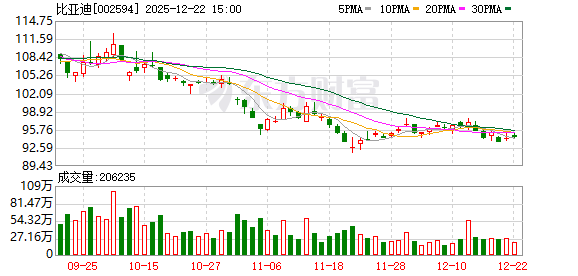
BYD(002594)

Search documents
已爆单!外媒叹:这波中国又赶上了
Xin Lang Cai Jing· 2025-12-22 14:17
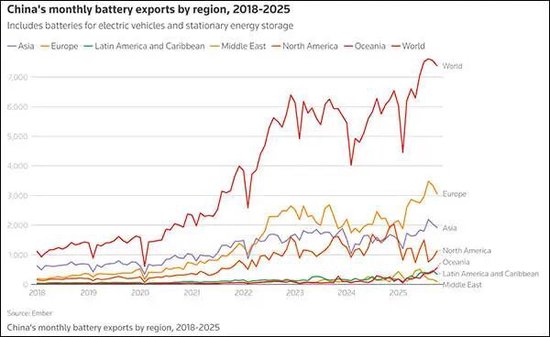
Core Insights - The current surge in China's energy sector, particularly in the energy storage industry, is described as one of the biggest surprises of the year, with leading companies experiencing high demand and full order books [1][8] - The demand surge is attributed to domestic market reforms and international factors such as AI data centers, aging European grids, and the expansion of renewable energy, which have collectively boosted international demand for energy storage [1][8] Domestic Market Dynamics - As of October this year, China has exported over $65 billion worth of energy storage and electric vehicle batteries, with a projected 75% year-on-year increase in global shipments of lithium-ion battery cells from Chinese companies [1][8] - Domestic demand is primarily driven by data centers and renewable energy projects, supported by market reforms and government subsidies [1][8] International Market Trends - UBS has raised its forecast for global battery storage installations by 25% for 2026, while the International Energy Agency expects a 16% year-on-year increase in global battery storage investment this year, reaching $66 billion [2][9] - Chinese companies dominate the core battery cell manufacturing segment, with major suppliers like CATL, Hicharge, and BYD leading the global rankings [2][9] Future Projections - Analysts predict a 40% year-on-year growth in global storage demand by 2026, driven by the increasing needs of data centers in the U.S. due to cloud computing and AI [3][10] - The U.S. market is seen as a key area for Chinese storage manufacturers, currently holding a 20% market share, although there are policy risks for Chinese firms in this market [3][10] Policy and Regulatory Changes - Recent reforms in China's electricity market are changing the economic viability of energy storage, allowing for more competitive pricing models that enhance profitability [5][12] - The Chinese government has set ambitious targets for energy storage capacity, aiming for over 180 GW by 2027, with significant investments expected [6][13]




“深港汽车快通计划”在前海综合保税区启动
Zhong Guo Xin Wen Wang· 2025-12-22 12:44
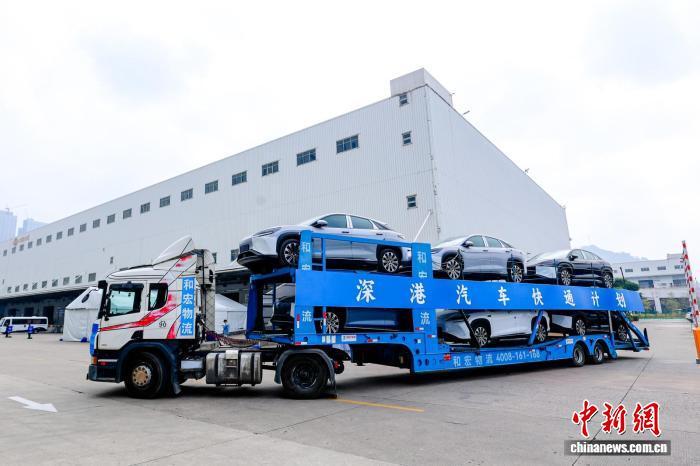
Core Insights - The "Shenzhen-Hong Kong Automotive Fast Track Plan" was launched in the Qianhai Comprehensive Bonded Zone, facilitating the export of domestic new energy vehicles to Hong Kong [1][3] Group 1: Implementation and Benefits - Under the plan, eligible domestic new energy vehicles can apply for pre-import approval and vehicle qualification from Hong Kong customs while still in the Shenzhen special regulatory area, streamlining the export process [3] - This initiative is expected to significantly reduce operational costs for companies and allow Hong Kong residents to access domestic new energy vehicles more quickly [3][4] - The plan is a key project for promoting the Guangdong-Hong Kong-Macao Greater Bay Area development, with customs from both regions collaborating closely to enhance cross-border trade facilitation [3][4] Group 2: Operational Efficiency - Shenzhen customs is providing "point-to-point" services for new energy vehicle exporters, including dedicated personnel for document review and guidance on compliance, which reduces the time required for application processing [4] - The plan is projected to save companies several million yuan annually by cutting down on costs associated with vehicle storage and processing time in Hong Kong, with reports indicating over 70% reduction in vehicle stay duration compared to traditional methods [6]
比亚迪涨薪了,最高或涨4500元
Guo Ji Jin Rong Bao· 2025-12-22 12:25
同时,调薪覆盖范围呈现"全岗位兼顾、核心岗倾斜"特征。 比亚迪(002594)涨工资了。 12月22日,不少标有"比亚迪员工"的网友在脉脉等平台发文称,比亚迪涨薪500元至3000元不等,最高 涨薪4500元。对此,《国际金融报》记者向比亚迪方面求证,其表示涨薪属实,但对于涨薪幅度以及涉 及人员数量并不方便透露。 记者从知情人士处了解到,此次调薪的核心逻辑是"绩优者多得",不同绩效等级对应明确涨幅梯度。多 数绩效达标员工的月薪涨幅集中在1000元左右,表现突出者可达到3200元/月,而少数绩效顶尖的核心 技术人才或管理层,能斩获4500元/月。未获得调薪的员工多为绩效待改进者,部分事业部也存在因业 务调整暂未参与调薪的情况。 截至今年11月,年内比亚迪的累计销量达到418万辆,随着年关将近,若12月单月销量仍保持40万辆朝 上,比亚迪2025年全年销量预计突破460万辆,有望突破曾对外宣布的460万辆全年销量目标。 基层生产岗中,深圳、郑州等基地的普工底薪自2025年4月已上调至2770元(含800元技能津贴),叠加此 次调薪后,综合月薪普遍突破6000元,高强度加班场景下可达9300元;技术研发岗是调薪重点 ...
X @Balaji
Balaji· 2025-12-22 12:03
To be clear: I will always be an Elon supporter, and of course Tesla pioneered modern EV technology, but the Chinese companies in this space are highly competent and not to be underestimated.BYD announced their charger earlier this year, in March: https://t.co/GS3zVqavJk https://t.co/dWAjIttIvBDominic Lee 李梓敬 (@dominictsz):BYD's charging station in China, 400km in 5 minutes!Gasoline what? https://t.co/WgWGc5Nd3q ...

技术研发“大军”集体涨薪?比亚迪回应:属实
Nan Fang Du Shi Bao· 2025-12-22 11:57
12月22日,有消息称"比亚迪技术研发人员涨薪"。对此,比亚迪方面回应称,"情况属实"。但对于"大 部分涨薪500-1000元、少部分涨薪2000-3000元"的传闻,比亚迪方面未予以置评。 网传消息称,不同于年初的全员普调,本次调薪精准锚定研发部门,基础薪资涨幅区间为500-1000元, 而承担关键技术突破任务的骨干人员涨幅可达2000-3000元。其中,电池材料、自动驾驶算法、电驱系 统三大领域的工程师成为重点激励对象,部分项目组平均调薪幅度超过20%。 业绩方面,比亚迪2025年三季报显示,今年前三季度,比亚迪实现营业收入5662.7亿元,同比增长约 13%;归母净利润为233.3亿元,同比下降7.55%。值得注意的是,2025年前三季度,比亚迪研发投入达 437.5亿元,同比增长31%,累计研发投入超2200亿元。 在本月举行的比亚迪临时股东大会上,比亚迪董事长兼总裁王传福曾表示,在电动化上半场,低温充电 速度慢等用户需求痛点,亟待通过技术突破予以解决。后面还有重磅技术发布,但目前不方便透露。 王传福表示,比亚迪的核心竞争力在于技术,公司麾下12万工程师团队,是公司后续技术攻坚、重塑领 先优势的关键底 ...
长源东谷:公司目前主要客户包括福田康明斯、东风康明斯等大型发动机整机和大型整车生产厂商
Zheng Quan Ri Bao Wang· 2025-12-22 11:40
Core Viewpoint - Changyuan Donggu's main business focuses on the research, production, and sales of core engine components, including diesel, gasoline, and natural gas engine cylinder blocks, cylinder heads, and connecting rods [1] Group 1: Business Overview - The company primarily serves large engine and vehicle manufacturers, including Foton Cummins, Dongfeng Cummins, Xi'an Cummins, Chongqing Cummins, Dongfeng Commercial Vehicle, Guangxi Yuchai, Shanghai Diesel, SANY Heavy Industry, BYD, and Seres [1] - There is no reliance on a single customer, mitigating customer dependency risks [1] Group 2: Clientele - The company has a diverse customer base, which includes several major players in the engine and vehicle manufacturing industry [1] - Detailed data on the top five customers can be found in the company's periodic reports [1]



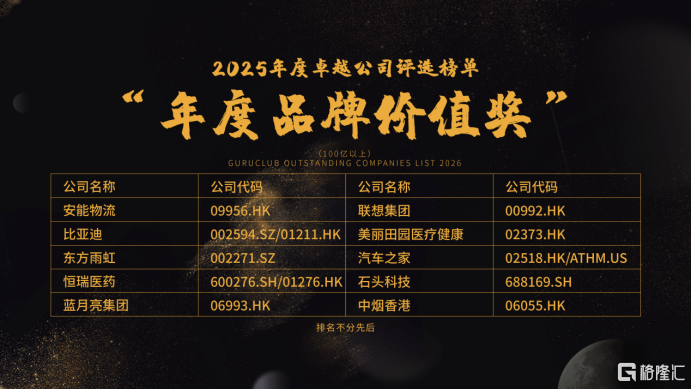
格隆汇“科技赋能·资本破局”线上分享会暨“金格奖”——“年度品牌价值奖(大市值)”奖项揭晓:安能物流(09956.HK)、比亚迪(002594.SZ/01211.HK)、东方雨虹(002271.SZ)等10家企业上榜
Ge Long Hui· 2025-12-22 11:30
Core Insights - The "Golden Award" annual outstanding company selection by Gelonghui will reveal a list of notable companies, including Aneng Logistics, BYD, Oriental Yuhong, and others, recognized for their brand value in the capital market [1] - The "Annual Brand Value Award (Large Market Capitalization)" aims to honor companies with the highest brand value, emphasizing the importance of brand differentiation, recognition, and customer loyalty [1][2] Group 1: Award Recipients - Ten companies received the "Annual Brand Value Award (Large Market Capitalization)" including Aneng Logistics (09956.HK), BYD (002594.SZ/01211.HK), and Lenovo Group (00992.HK) [1] - The award selection process involved quantitative data analysis and expert review to determine the final results [1] Group 2: Evaluation Criteria - The evaluation of brand value considered multiple factors such as brand differentiation, recognition, and customer loyalty [1] - The aim of the award is to create a reference for the most valuable listed companies and unicorns in the investment community [2]


比亚迪涨薪
Xin Lang Cai Jing· 2025-12-22 11:24
Group 1 - BYD confirmed the rumors regarding salary increases for technical R&D personnel, stating that the situation is true, but did not comment on specific figures mentioned in the news [2][6] - In 2024, BYD announced a salary adjustment policy based on employee performance, with two salary adjustments and one promotion opportunity each year to ensure fair compensation [2][7] - BYD's total employee count has surpassed 900,000, making it the largest among A-share listed companies, with nearly 110,000 R&D personnel, the highest in the automotive industry globally [2][7] Group 2 - At a recent shareholder meeting, BYD's chairman Wang Chuanfu emphasized the need for technological breakthroughs to address user pain points in electric vehicle charging, hinting at upcoming significant technology releases [2][7] - BYD has seen a significant increase in sales, with total vehicle sales rising from under 1 million in 2021 to over 3 million in 2023, and projected to reach 4.27 million in 2024 [3][7] - In the first 11 months of this year, BYD sold 4.18 million vehicles, a year-on-year increase of 11.3%, with overseas sales reaching 917,000 units, surpassing the total for 2024 [3][7] Group 3 - BYD celebrated the production of its 15 millionth electric vehicle, achieving this milestone in just 13 months from the previous 10 million mark, showcasing rapid growth in the Chinese EV market [4][8] - The company's Q3 2025 financial report indicated a revenue of 194.985 billion yuan, a year-on-year decrease of 3.05%, and a net profit of 7.823 billion yuan, down 32.6% [4][8] - For the first three quarters of 2025, BYD reported a revenue of 566.27 billion yuan, a year-on-year increase of approximately 13%, while net profit decreased by 7.55% to 23.33 billion yuan [4][8] - R&D investment for the first three quarters of 2025 reached 43.75 billion yuan, a 31% increase year-on-year, with total R&D spending exceeding 220 billion yuan [4][8]
年底车市静悄悄 | 棱镜
Xin Lang Cai Jing· 2025-12-22 11:19
Group 1 - The Chinese automotive market is experiencing a significant decline in sales, with retail sales of passenger vehicles dropping by 32% year-on-year in early December 2025, totaling 297,000 units [2][28] - The new energy vehicle (NEV) market also saw a decline, with retail sales of 185,000 units, down 17% year-on-year [2][28] - This decline is attributed to the phasing out of the vehicle purchase tax exemption and uncertainty surrounding the "trade-in" subsidy policies [3][29] Group 2 - The current vehicle purchase tax is set at 10%, with a reduced rate of 5% for NEVs, and the exemption cap has been lowered from 30,000 yuan to 15,000 yuan [5][31] - There is a prevailing market sentiment of caution among consumers, with 58.2% of dealers reporting that November sales did not meet expectations due to this cautious attitude [6][33] - The "trade-in" subsidies have been paused in many regions, impacting consumer purchasing behavior [8][34] Group 3 - The anticipated "year-end surge" in sales, typically seen in the fourth quarter, has not materialized this year, leading to a "flat tail" effect instead of the expected "tail effect" [36][44] - The automotive market saw a rare decline in November, with retail sales down 8.1% year-on-year, attributed to high sales figures from the previous year and the suspension of trade-in subsidies [38][39] - The inventory warning index for dealers reached a high of 55.6%, indicating over 3.3 million vehicles in stock, with more than 30% of dealers facing inventory pressure [35][41] Group 4 - Over 20 automotive companies have introduced "purchase tax guarantee" policies, where manufacturers will cover the difference in tax if consumers order vehicles before the end of 2025 but do not receive them until after [41][44] - This policy is expected to affect purchasing behavior, leading consumers to delay purchases, which could suppress immediate demand in the fourth quarter [42][44] - The exit of subsidies is projected to significantly impact the market, with estimates suggesting a potential sales growth slowdown from 8% in 2025 to -2% in 2026 [45][46] Group 5 - The automotive industry is shifting from a "policy-driven" to a "market-driven" and "technology-driven" model, indicating a maturation of the market [46] - The average price of new energy vehicles is expected to decrease from 185,000 yuan in 2023 to 156,000 yuan in 2025, putting pressure on profit margins [52] - The penetration rate of new energy vehicles has surpassed 50%, indicating a significant shift in consumer adoption and market dynamics [52]