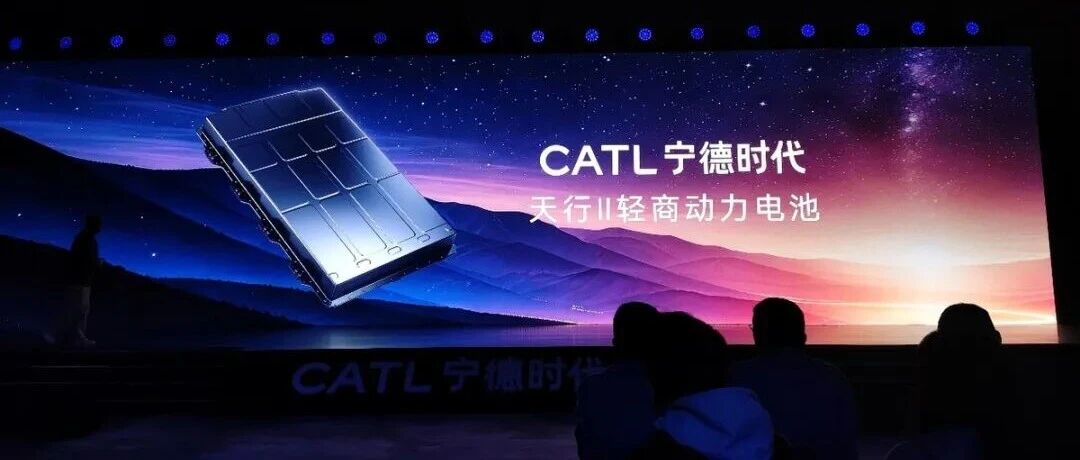
CATL(300750)

Search documents
港股异动 | 宁德时代(03750)逆市涨超4% 大摩指公司在锂价上行周期中已证明具备成本转嫁能力
智通财经网· 2026-01-30 02:43
Core Viewpoint - CATL's stock price is expected to rise relative to the industry average in the next 15 days, with a probability of 70% to 80% according to Morgan Stanley [1] Group 1: Company Performance - CATL's stock price has recently rebounded, showing an increase of over 4%, with a current price of 493.2 HKD and a trading volume of 7.92 billion HKD [1] - The company has demonstrated its ability to pass on cost increases to customers, as evidenced during the previous lithium price upcycle [1] - CATL maintains a sufficient low-cost inventory for the first quarter of 2026 [1] Group 2: Industry Trends - Global lithium-ion battery energy storage system (ESS) shipments are projected to reach 550 GWh by 2025, representing a year-on-year growth of 79% [1] - China is expected to lead the global ESS market in 2025, with a market size of 352 GWh, accounting for 64% of the global total [1] - CATL remains the global leader in the ESS market with a shipment volume of 167 GWh, capturing a 30% market share and achieving an 80% year-on-year growth [1]

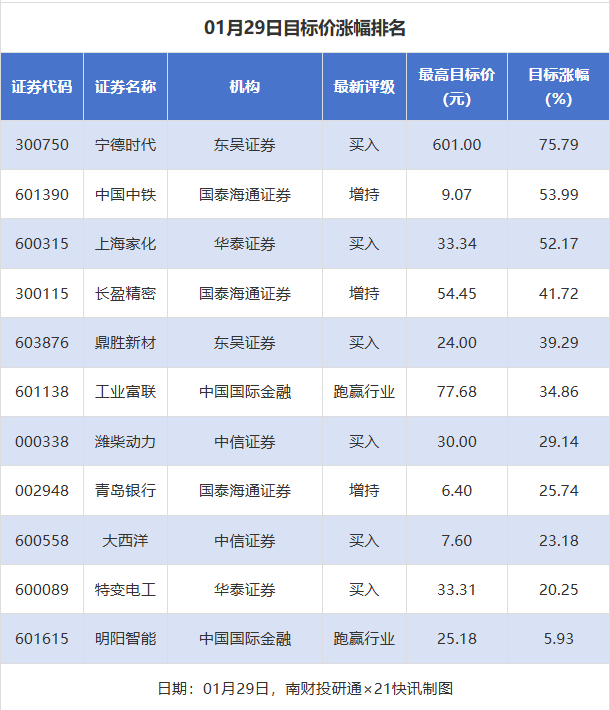
10股目标价涨幅超20%,宁德时代达75%
2 1 Shi Ji Jing Ji Bao Dao· 2026-01-30 02:20
Core Viewpoint - The brokerage firms have set target prices for listed companies, with 10 stocks showing a target price increase of over 20% based on the latest closing prices [1] Group 1: Target Price Increases - A total of 11 target price adjustments were made by brokerages for listed companies [1] - The companies with the highest target price increases include CATL (Ningde Times) at 75.79%, China Railway at 53.99%, and Shanghai Jahwa at 52.17% [1] - These companies belong to the battery, infrastructure, and cosmetics industries respectively [1]


公募基金重仓股格局生变 AI科技成长股受青睐
Jin Rong Shi Bao· 2026-01-30 02:03
Group 1 - The core focus of the article is the significant shift in public fund holdings towards technology growth stocks, particularly in the AI sector, with companies like Zhongji Xuchuang becoming the top holdings [1][3] - Zhongji Xuchuang has surpassed Ningde Times to become the largest holding in public funds, driven by the strong demand for AI-related infrastructure [1][5] - The overall allocation of public funds to technology companies has increased from 25% in Q1 2024 to 40% in Q4 2025, indicating a growing interest in the AI industry [3] Group 2 - Other companies like Xinyi Sheng and Cambrian-U have also emerged as significant holdings, benefiting from the AI boom [2] - Xinyi Sheng, a high-performance optical module provider, has seen its ranking rise to the 3rd position among fund holdings by Q4 2025 due to increased AI computing demand [2] - Cambrian-U, a leading AI chip company, has fluctuated in rankings but reached the 5th position in Q4 2025, reflecting the rapid development of AI applications [2] Group 3 - UBS analyst Xiong Wei suggests that the AI industry will continue to thrive in 2026, with a focus on AI models, applications, and computing infrastructure [3][4] - Concerns about an "AI bubble" are low, as major domestic model manufacturers are supported by healthy cash flows, and there is a cautious approach to capital expenditures [4] - Despite the rise of AI, other sectors like renewable energy and consumer goods remain resilient, with companies like Ningde Times and Kweichow Moutai still holding significant positions in public fund portfolios [4][5]



27股获推荐 宁德时代目标价涨幅达75%丨券商评级观察
2 1 Shi Ji Jing Ji Bao Dao· 2026-01-30 01:26
Group 1 - The core viewpoint of the article highlights the target price increases for several listed companies, with notable gains for Ningde Times, China Railway, and Shanghai Jahwa, reflecting strong market confidence in these sectors [1][2]. Group 2 - On January 29, the companies with the highest target price increases were Ningde Times (75.79%), China Railway (53.99%), and Shanghai Jahwa (52.17%), indicating significant bullish sentiment in the battery, infrastructure, and cosmetics industries respectively [1][2]. - A total of 27 listed companies received broker recommendations on January 29, with Qingdao Bank receiving the most recommendations at 5, followed by Mingyang Smart Energy and Ruoyuchen with 2 each [1][3]. - Three companies had their ratings upgraded on January 29, including TBEA, which was upgraded from "Hold" to "Buy" by Huatai Securities, reflecting improved outlooks for these firms [4][6]. - Five companies received initial coverage on January 29, with Qingdao Bank rated "Recommended" by Guolian Minsheng Securities, indicating new interest from analysts in these stocks [6][7].


公募基金重仓股格局生变
Jin Rong Shi Bao· 2026-01-30 00:49
寒武纪-U是一家AI芯片公司,专注于云端和边缘计算的人工智能芯片研发。作为国内AI芯片领域 的领先企业,其股价此前曾一举超过贵州茅台成为A股"股王"。早在2024年四季度,寒武纪-U就跻身基 金重仓股第8位,之后除了在2025年三季度掉出前20名外,一直在10名左右徘徊。在AI应用的快速发展 带动下,寒武纪-U在2025年四季度一举升至基金重仓股第5位。 从重仓股排行可以看出,主动权益类公募基金的持仓结构发生了明显变化,AI等科技成长股成 为"重点关注对象"。事实上,科技行业上市公司比重增加不仅体现在公募基金前10大重仓股上,也体现 在整体的持仓变化上。Wind数据显示,公募基金2025年四季度对科技行业上市公司的持仓已经从2024 年一季度的25%上升到40%。与此同时,新能源、消费、金融行业的占比有所下降。这一变化反映了市 场对科技行业特别是AI行业发展的高度关注。 近期披露完毕的2025年公募基金四季报显示,中际旭创、宁德时代、新易盛、紫金矿业、寒武纪- U、立讯精密、贵州茅台、东山精密、美的集团、中国平安成为主动基金的前十大重仓股。 在人工智能(AI)产业的投资浪潮下,科技成长风格成为主导。其中,中际 ...

15股获券商买入评级,宁德时代目标涨幅达75.79%
Di Yi Cai Jing· 2026-01-30 00:37
Core Viewpoint - On January 29, a total of 15 stocks received buy ratings from brokerages, with 2 stocks announcing target prices, indicating a positive outlook for these companies [1] Group 1: Stock Ratings - Among the stocks with buy ratings, Ningde Times and Dingsheng New Materials have the highest target price increases, with potential rises of 75.79% and 39.29% respectively [1] - Out of the 15 stocks, 12 maintained their ratings, 2 had their ratings upgraded, and 1 received its first rating [1] Group 2: Industry Analysis - The sectors with the most stocks receiving buy ratings include Capital Goods (6 stocks), Technology Hardware and Equipment (3 stocks), and Semiconductors and Semiconductor Equipment (2 stocks) [1]
汰劣立规“反内卷” 中国电池产业转向价值竞争
Zhong Guo Chan Ye Jing Ji Xin Xi Wang· 2026-01-30 00:20
Core Insights - The battery industry is entering a phase of "de-involution" as government policies aim to optimize capacity planning and regulate market competition, signaling an end to the era of disorderly growth in battery production [1][2]. Group 1: Policy Changes - A joint meeting by four government departments emphasized the need to optimize capacity planning and avoid overcapacity risks in the battery sector [1]. - The Ministry of Finance and the State Taxation Administration announced a phased reduction of the export VAT rebate for battery products, decreasing from 9% to 6% from April 1, 2026, and completely eliminating it by January 1, 2027 [1][2]. - The phased approach to the export VAT rebate aims to provide a transition period for the industry, allowing for the orderly exit of low-quality production capacities [3][4]. Group 2: Industry Challenges - The reduction in export rebates is expected to increase export costs for companies, particularly affecting small and medium-sized enterprises that rely on low-price strategies [2][6]. - Current production capacity in China's battery sector exceeds 3000 GWh, while actual demand is projected to be around 1500 GWh by 2025, leading to low utilization rates [2][3]. - The price of storage systems has dropped by 80% over three years, with some battery export prices falling below production costs, resulting in negative profit margins for certain companies [2]. Group 3: Market Dynamics - Despite challenges, the demand for electric and storage batteries remains strong, with expectations for the share of storage batteries to increase from one-quarter to potentially one-half of the market [3][4]. - The new policies are expected to accelerate industry consolidation, pushing companies to focus on technological innovation and brand strength rather than price competition [2][3]. - The upcoming changes may lead to a surge in exports as companies rush to ship products before the rebate reduction takes effect, potentially causing supply chain strains [5][6]. Group 4: Globalization and Competitive Landscape - The shift away from subsidy dependence is anticipated to enhance the competitive edge of Chinese battery companies in the global market, focusing on technology, branding, and supply chain integration [9][10]. - Companies are expected to adapt by strengthening international collaborations and optimizing production strategies to mitigate the impact of rising costs due to the rebate changes [10][11]. - The long-term outlook suggests that the balance of supply and demand will increasingly depend on global market needs and technological advancements rather than just domestic production capacity [4][10].
密集官宣全固态电池,纯电车最后一块短板要被补齐了
Hua Er Jie Jian Wen· 2026-01-29 23:23
Core Viewpoint - The new energy vehicle (NEV) industry is experiencing a favorable shift due to changing geopolitical relations, with markets like Europe and Canada opening up to Chinese NEVs, which were previously hindered by tariffs and policy barriers [1][3] Group 1: Market Dynamics - European and Canadian markets are now welcoming Chinese NEVs, with the EU even suggesting price increases for these vehicles, alleviating pressure on domestic brands [1] - Concerns remain regarding the performance of Chinese NEVs in cold climates, particularly in Canada, where battery efficiency may be compromised [1][3] Group 2: Technological Advancements - CATL's "Tianxing II" sodium-ion battery, capable of maintaining 90% capacity at -40°C, represents a significant technological breakthrough for NEVs in extreme cold environments [2][3] - The market response to the "Tianxing II" battery has been muted, overshadowed by rumors of Huawei's solid-state battery, which reportedly offers a range of 3000 km and rapid charging capabilities [2][3] Group 3: Battery Technology Evolution - The NEV industry has transitioned from lithium-ion batteries, primarily led by Tesla, to lithium iron phosphate (LFP) batteries, which are cheaper and safer but have limitations in energy density [4][5] - CATL's fifth-generation LFP battery has achieved a range of nearly 1200 km, making it competitive against traditional lithium-ion technologies [5] Group 4: Future of Battery Technology - Sodium-ion batteries, like the "Tianxing II," are seen as a potential solution for extreme environments, but they do not fully address the industry's need for high-performance, cost-effective solutions [6][7] - Solid-state batteries are viewed as the next major breakthrough, with potential energy densities significantly higher than current lithium-ion technologies, promising ranges over 2000 km and rapid charging times [8][10] Group 5: Market Implications - The cost of batteries constitutes about 40% of the total cost of electric vehicles, making the development of solid-state batteries critical for competitive pricing and profit margins [10][11] - Major automotive and battery companies are racing to develop solid-state technology, with firms like Toyota and Samsung targeting commercial production by 2027 [11][12] Group 6: Challenges Ahead - Despite the promise of solid-state batteries, challenges such as high production costs, charging speed limitations, and the need for new manufacturing processes remain significant hurdles [14][15] - Experts predict that while solid-state technology may see technical advancements by 2030, widespread commercial availability may not occur until 2035 [15]

造纸龙头、宇航电源核心供应商今日申购,宁德时代“小伙伴”上市丨打新早知道
2 1 Shi Ji Jing Ji Bao Dao· 2026-01-29 23:12
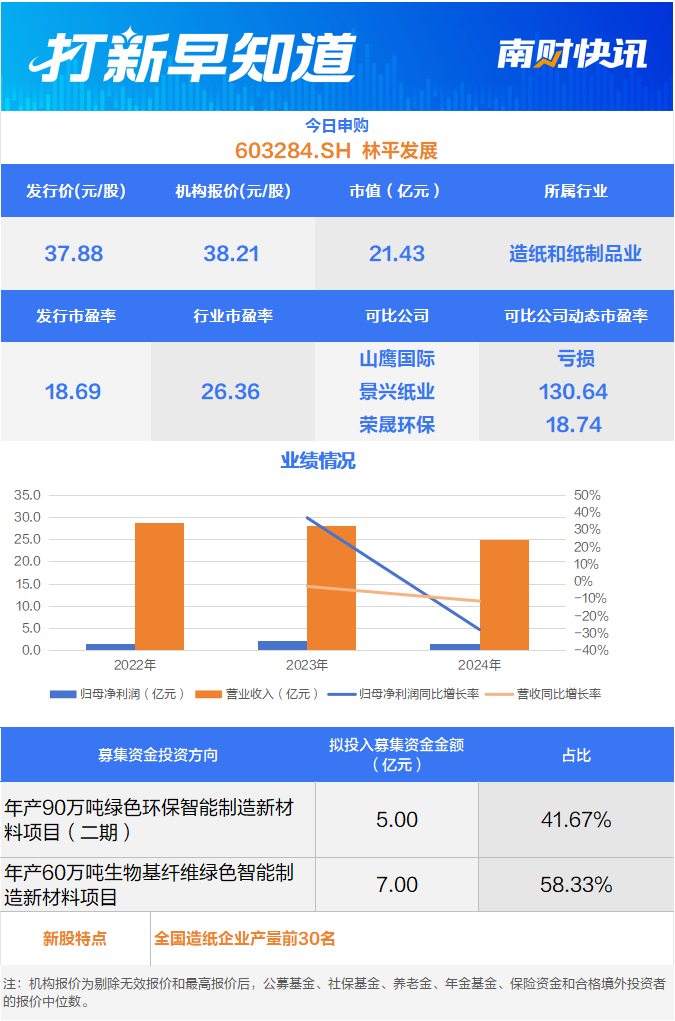
Group 1: Linping Development (603284.SH) - Linping Development primarily engages in the research, production, and sales of corrugated paper and boxboard products, recognized as a high-tech enterprise with independent R&D capabilities [1] - The company has a market capitalization of 21.43 billion yuan and an issuance price of 37.88 yuan per share, with an issuance P/E ratio of 18.69 [2] - Linping Development's production capacity is 1.15 million tons, ranking among the top 30 paper production companies in China, with a projected raw paper output of 1.0197 million tons in 2024 [3] - The company has established stable partnerships with well-known enterprises such as Hohsing Packaging and Xiamen Guomao, leveraging its brand influence and competitive advantages [3] Group 2: Electric Science Blue Sky (688818.SH) - Electric Science Blue Sky focuses on advanced electric energy systems and products, with a market capitalization of 148 billion yuan and an issuance price of 9.47 yuan per share [6] - The company has a strong technical foundation with 367 authorized patents, including 141 invention patents, and has received multiple national science and technology awards [9] - The company’s revenue is highly concentrated, with sales to its largest customer, Aerospace Science and Technology Group, accounting for 45.59% to 53.37% of total revenue from 2022 to mid-2025 [9] Group 3: Meidel (920119.BJ) - Meidel is a leading supplier of intelligent conveyor systems in China, focusing on the R&D, design, manufacturing, and sales of smart manufacturing equipment [11] - The company plans to invest 1.20 billion yuan in its Dalian Meidel Phase IV construction project and 2.00 billion yuan in high-end intelligent conveyor system R&D and production [13] - Meidel's products for the new energy battery sector generated significant revenue, accounting for 63.76% to 58.19% of its main business income from 2022 to mid-2025 [14]
宁德时代轰出2026第一炮!-30℃钠电池、800公里续航!?
电动车公社· 2026-01-29 18:41
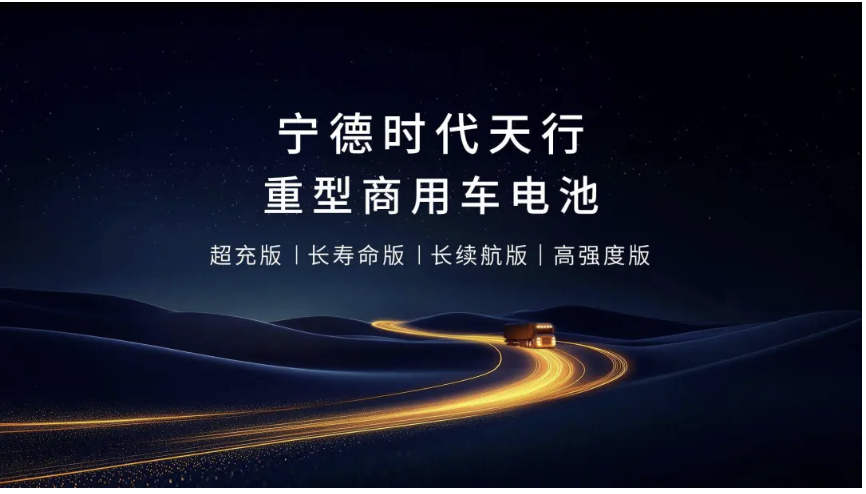
Core Viewpoint - The article emphasizes that 2025 will be a pivotal year for China's new energy vehicle (NEV) market, with significant growth in both passenger and commercial vehicle segments, highlighting the need for advancements in electric commercial vehicles to match the success of passenger vehicles [2][3][4]. Passenger Vehicle Segment - By 2025, the retail penetration rate of new energy passenger vehicles is projected to reach 54%, a 6.4 percentage point increase from 47.6% in 2024, marking a historic high [3]. - This indicates that new energy vehicles have become the preferred choice for consumers in the passenger vehicle market, relegating fuel vehicles to a minority status [4]. Commercial Vehicle Segment - In 2025, the sales of new energy commercial vehicles in China are expected to reach 871,000 units, accounting for 26.9% of total commercial vehicle sales [5]. - Despite a noticeable increase in penetration rates for new energy commercial vehicles starting from Q4 of the previous year, the electrification progress remains significantly behind that of passenger vehicles [5]. Challenges in Commercial Vehicle Electrification - The slow adoption of electric commercial vehicles is attributed to insufficient product capabilities, including issues such as short range, slow charging speeds, low energy efficiency, battery degradation in cold temperatures, and low resale value [10][11]. Innovations by CATL - On January 22, CATL launched the "Tiankang II Light Commercial Series" battery solutions, which include sodium batteries, long-range options, high/low-temperature fast charging, and battery swapping solutions tailored for new energy light commercial vehicles [13][14]. - The focus on light commercial vehicles is due to their potential for electrification, with recent months showing penetration rates above 30%, significantly higher than the overall industry [16]. Key Battery Technologies - The new "Tiankang II Light Commercial Series" includes several battery versions, such as ultra-fast charging, long-range, high-temperature, low-temperature, and battery swapping versions, each addressing specific pain points in the light commercial vehicle sector [18][19]. - The low-temperature version utilizes sodium-ion technology, which performs significantly better than lithium-ion batteries in cold conditions, maintaining over 92% capacity at -20°C and functioning at -30°C [30][32]. Safety and Performance - Sodium batteries exhibit superior safety, remaining functional even when punctured or cut, which allows for reduced protective measures and more efficient use of vehicle space [36][39]. - While sodium batteries currently have lower energy density compared to lithium batteries, ongoing engineering efforts aim to close this gap [40][42]. Market Impact - The introduction of the "Tiankang II Light Commercial Series" is expected to usher in a "no barriers" era for electrification in the light commercial vehicle market, enhancing product capabilities and attracting more users to adopt electric commercial vehicles [68]. - The operational cost savings from switching to electric vehicles are substantial, with electric light trucks potentially saving up to 32,000 yuan annually compared to fuel vehicles, not including maintenance cost reductions [86][87]. Broader Implications - The reduction in logistics operational costs will ultimately benefit consumers through lower delivery fees, reflecting a more efficient use of resources across various industries [90][91].