Arm plc(ARM)

Search documents
桥水二季度大举增持英伟达,加仓谷歌、微软、Meta,清仓阿里等中概
华尔街见闻· 2025-08-14 10:46
Core Viewpoint - Bridgewater Associates, one of the largest hedge funds globally, significantly increased its investments in major U.S. tech companies during the second quarter of this year, particularly in Nvidia, which is now its third-largest holding [1][3]. Summary by Sections Investment Increases - Bridgewater raised its stake in Nvidia by nearly 4.39 million shares, bringing its total to 7.23 million shares, a 154% increase from the previous quarter, making up 4.61% of its total portfolio [3][7]. - Microsoft saw a 111.9% increase in shares, with an additional 905,620 shares added, totaling 1.72 million shares, now representing 3.44% of the portfolio [3][7]. - Alphabet was increased by approximately 2.56 million shares, totaling 5.60 million shares, an 84.1% rise, now accounting for 3.98% of the portfolio [3][7]. - Meta's shares increased by over 38,146 shares to 807,073 shares, marking an 89.6% increase, now 2.40% of the portfolio [4][7]. - Uber's shares surged by 314,000, a 531% increase, now making up 1.41% of the portfolio [5][7]. - Johnson & Johnson's shares increased by over 199,000, a 667.8% rise, now 1.41% of the portfolio [6][7]. Investment Reductions - Bridgewater reduced its Amazon holdings by approximately 795,500 shares, a 6% decrease, now 1.10% of the portfolio [8][9]. - AMD shares were reduced by about 408,860 shares, a decrease of 18.89% [11]. - PayPal saw a reduction of nearly 447,790 shares, a drop of over 12% [10]. - The fund completely exited its positions in Alibaba, Baidu, and JD.com, which were previously increased in the first quarter [12][13]. New Investments - Bridgewater initiated a position in Arm with nearly 474,000 shares, representing 0.31% of the total portfolio [14]. - New positions were also taken in Intuit, EQT, Lyft, and Ulta Beauty, with each holding a small percentage of the overall portfolio [14]. Major Holdings - The SPDR S&P 500 ETF remains Bridgewater's largest holding, despite a reduction of 731,882 shares, now accounting for 6.51% of the portfolio [15][18]. - The iShares Core S&P 500 ETF increased by nearly 6.2% to approximately 2.31 million shares, now 5.78% of the portfolio [17][18]. - The second to tenth largest holdings include Nvidia, Alphabet, Microsoft, Meta, Salesforce, Booking Holdings, and GE Vernova, with various changes in share counts and percentages [17][18].





心智观察所:买来的“特供”芯片一定不安全
Guan Cha Zhe Wang· 2025-08-14 03:08
Core Viewpoint - The article discusses the security risks associated with NVIDIA's H20 chip, particularly the potential for backdoor vulnerabilities, and highlights the broader implications for the semiconductor industry regarding chip security and trustworthiness [1][13]. Group 1: Security Concerns - The National Internet Information Office of China has formally questioned NVIDIA regarding the security risks of its H20 chip, which has been reported to have potential backdoor vulnerabilities [1]. - NVIDIA's Chief Security Officer, David Leber, claimed that all of NVIDIA's GPU chips do not contain any form of backdoor or monitoring software, although this statement raises skepticism about its credibility [2][13]. - The article categorizes backdoors into three types: malicious self-contained, post-hoc cracking, and covert implantation, emphasizing that all chips, including those from major Western companies, are susceptible to such vulnerabilities [3][4]. Group 2: Historical Context of Vulnerabilities - Major Western IC design companies, including Intel, AMD, and ARM, have been reported to have serious vulnerabilities in their chips, with Intel's Management Engine being a notable example of a high-risk backdoor [5][6]. - Recent vulnerabilities in Intel CPUs, such as the Downfall vulnerability, have led to legal actions against the company, highlighting ongoing security issues and the potential for data breaches [6]. - ARM processors have also been found to have critical design flaws that cannot be patched through software updates, necessitating hardware upgrades for resolution [7]. Group 3: Implications for Chip Purchases - The article argues that chips purchased from external sources are inherently less secure than those developed in-house, as they may contain undisclosed vulnerabilities and backdoors [9][12]. - The reliance on foreign technology can lead to a lack of transparency and control over security updates, as seen in the case of Intel's long-standing vulnerabilities [12]. - The H20 chip, being a China-specific version, is suggested to carry greater security risks compared to globally available models, as it is only subject to scrutiny from local researchers [13].



桥水Q2持仓曝光:狂买英伟达、微软,建仓芯片设计巨头Arm
Ge Long Hui A P P· 2025-08-14 02:19
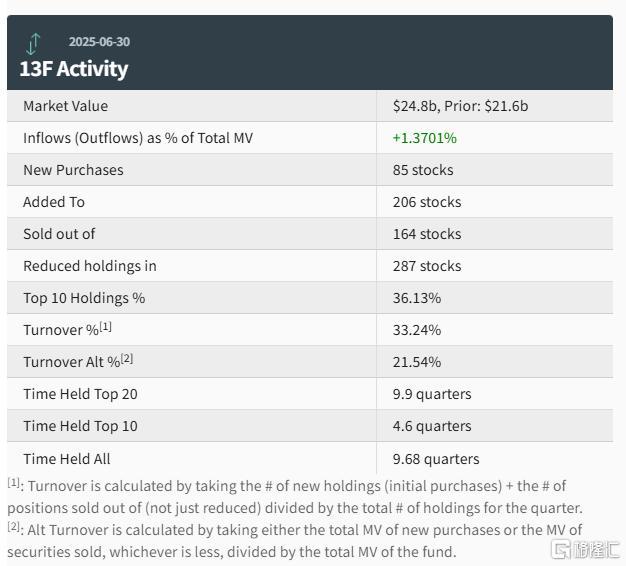
Core Insights - Bridgewater Associates, the world's largest hedge fund, significantly increased its holdings in major U.S. tech companies, particularly Nvidia, during Q2 of this year [1][6] - The fund's total assets reached $24.8 billion, reflecting a 14.81% increase from the previous quarter [1][2] - The fund's strategy included adding to 206 positions, initiating 85 new positions, and reducing 287 positions, with 164 positions completely sold out [1][2] Holdings Overview - The top five holdings in Bridgewater's portfolio include SPDR S&P 500 ETF (6.51%), iShares Core S&P 500 ETF (5.78%), Nvidia (4.61%), iShares Core MSCI Emerging Markets ETF (4.16%), and Alphabet (3.98%) [3][5] - Nvidia saw a substantial increase in shares held, rising by 4.39 million shares to a total of 7.23 million, marking a 154% increase [6][8] - Microsoft, Alphabet, and Meta also experienced increased holdings, with Microsoft rising to 1.72 million shares (3.44%), Alphabet to 5.60 million shares (3.98%), and Meta to 807,073 shares (2.40%) [6][8] New and Sold Positions - Bridgewater initiated new positions in Arm (473,725 shares), Lyft (247,900 shares), and Intuit (58,838 shares), among others [6][7] - The fund completely exited positions in several Chinese stocks, including Alibaba, Pinduoduo, Baidu, and JD.com [1][8] - Additionally, the fund reduced its stake in Amazon and PayPal, with Amazon's holdings decreasing by 795,500 shares and PayPal by 448,000 shares [8][9]



桥水基金Q2大举增持英伟达、谷歌
Ge Long Hui A P P· 2025-08-13 22:34
Core Insights - Bridgewater Associates reported a significant increase in its holdings for Q2, ending June 30, with notable additions to positions in Nvidia, Google, and Microsoft [1] Holdings Summary - The fund increased its stake in Nvidia by approximately 4.39 million shares, representing a growth of 154.37% [1] - Google saw an increase of 2.56 million shares, with a growth rate of 84.08% [1] - Microsoft was boosted by 910,000 shares, reflecting an increase of 111.88% [1] New Positions and Exits - Bridgewater established new positions in Arm and Lyft [1] - The fund completely exited its positions in Alibaba, Pinduoduo, Baidu, and JD.com, which are Chinese concept stocks [1] Fund Size - As of June 30, Bridgewater's total assets under management reached $24.8 billion, marking a quarter-over-quarter increase of 14.81% [1]

押注科技巨头:桥水二季度大举增持英伟达,加仓谷歌、微软、Meta
Hua Er Jie Jian Wen· 2025-08-13 22:29
Group 1 - Bridgewater Associates, one of the largest hedge funds globally, significantly increased its holdings in major U.S. tech companies during Q2 of this year, particularly in Nvidia [1] - The fund raised its stake in Nvidia by nearly 4.39 million shares, bringing its total holdings to 7.23 million shares, a growth of over 154% compared to the end of Q1 [1] - Bridgewater also added to its positions in other tech giants, including Alphabet, Microsoft, and Meta, while completely exiting positions in Alibaba and Chevron [1] Group 2 - In Q2, Bridgewater initiated a new position in chip design company Arm with approximately 474,000 shares, representing 0.31% of its total holdings [1] - The fund also entered new positions in Intuit (approximately 59,000 shares), EQT (787,000 shares), Lyft (approximately 247,900 shares), and Ulta Beauty (over 58,000 shares), with respective holdings of 0.19%, 0.19%, 0.16%, and 0.11% [1]


隔夜美股 | 三大指数上涨 Bullish(BLSH.US)上市首日收涨83.78%
智通财经网· 2025-08-13 22:21
Market Performance - The three major U.S. indices rose, with the S&P 500 index setting a closing record for the second consecutive trading day, closing at 6466.58 points, up 0.32% [1] - The Dow Jones increased by 463.66 points, or 1.04%, closing at 44922.27 points, while the Nasdaq rose by 31.24 points, or 0.14%, closing at 21713.14 points [1] - European indices also saw gains, with Germany's DAX30 up 0.51%, the UK's FTSE 100 up 0.17%, and France's CAC40 up 0.66% [1][2] Commodity Prices - Light crude oil futures for September fell by $0.52 to $62.65 per barrel, a decrease of 0.82%, while Brent crude for October dropped by $0.49 to $65.63 per barrel, down 0.74% [2] - Spot gold increased by 0.23%, reaching $3355.91 [3] Cryptocurrency Market - Bitcoin rose nearly 1.9% to $122,387.5, while Ethereum increased by 2.9% to $4,724.39 [4] Macroeconomic Developments - Trump's potential candidates for the Federal Reserve chair have expanded to 11, including notable Wall Street strategists, indicating a lengthy selection process [5] - Chicago Fed President Goolsbee expressed the need for more evidence of inflation improvement before making policy changes, suggesting that all meetings this fall could be opportunities for policy adjustments [6] Corporate News - Bridgewater Associates significantly increased its holdings in Nvidia by 154.37% and exited positions in Alibaba and other Chinese stocks [8] - Apple plans to enter the AI robotics, home security, and smart display markets, with a desktop robot as a core part of its strategy [9] - Oracle is laying off employees in its cloud infrastructure division to manage costs amid rising AI expenditures [10] - Tesla is hiring for its autonomous driving department, indicating potential expansion into the New York ride-hailing market [11] - Amazon aims to expand its same-day delivery service for fresh groceries to over 3,300 cities by the end of the year, impacting competitors like Kroger and Walmart [12] Analyst Ratings - Standard Chartered Bank raised its year-end price target for Ethereum from $4,000 to $7,500, citing improved industry participation and increased holdings [13] - The bank anticipates the stablecoin market will grow approximately eightfold by the end of 2028, significantly impacting Ethereum network fees [14]


【太平洋科技-每日观点&资讯】(2025-08-14)
远峰电子· 2025-08-13 11:32
Market Performance - The main board led the gains with notable increases in stocks such as Jishi Media (+10.09%), Zhongdian Xilong (+10.05%), and Beiwai Technology (+10.04) [1] - The ChiNext board saw significant rises with Guangku Technology (+20.01%) and Rongke Technology (+20.00%) [1] - The Sci-Tech Innovation board also performed well, with Zhongchuan Special Gas (+20.01%) and Jinchengzi (+20.01%) [1] - Active sub-industries included SW Communication Network Equipment and Devices (+8.75%) and SW Passive Components (+7.03%) [1] Domestic News - TSMC announced plans to gradually phase out 6-inch wafer manufacturing over the next two years and continue to integrate 8-inch wafer capacity to enhance efficiency [1] - Guangli Micro announced the acquisition of 100% equity in LUCEDA, a global leader in silicon photonic chip design automation software [1] - Kaifeng Gas reported that its gas filling and storage project in Shantou, Guangdong, is nearing completion, with an expected annual output value exceeding 80 million yuan upon reaching full capacity [1] - IDC data indicated that China's tablet market shipment volume is projected to reach 8.32 million units in Q2 2025, reflecting a year-on-year growth of 15.6% [1] Company Announcements - Aiwei Electronics reported total revenue of 1.37 billion yuan for H1 2025, a year-on-year decrease of 13.4%, while net profit attributable to shareholders increased by 71.09% to 157 million yuan [3] - Ankai Micro reported total revenue of 234 million yuan for H1 2025, a decrease of 3.02%, with a net loss of 49 million yuan [3] - Pengding Holdings reported total revenue of 16.375 billion yuan for H1 2025, a year-on-year increase of 24.75%, with net profit attributable to shareholders rising by 57.22% to 1.233 billion yuan [3] - Youyan Silicon reported total revenue of 491 million yuan for H1 2025, a decrease of 3.2%, with net profit attributable to shareholders declining by 18.74% to 106 million yuan [3] Overseas News - Vuzix announced the launch of the new Vuzix LX1 smart glasses, designed for warehouse operations, expected to be mass-produced by the end of the year [4] - Samsung Electronics is developing a rectangular SoP packaging technology to compete for large-scale chip system integration orders with Intel and TSMC [4] - SK Hynix plans to apply six-layer extreme ultraviolet (EUV) technology to mass production of 1c DRAM to enhance DDR5 and high-bandwidth memory (HBM) product performance [4] - Arm introduced Arm Neural Technology at SIGGRAPH, which can significantly reduce GPU workload for mobile content by up to 50% [4]

天风证券晨会集萃-20250813
Tianfeng Securities· 2025-08-12 23:45
Group 1: Macro Strategy and Market Overview - The three major equity indices continued to rise in early August, with the Shanghai Composite Index and Shenzhen Component Index both increasing by over 2%, and the ChiNext Index rising by 4.88% [20][21] - The central bank's net cash injection was 163.5 billion yuan, maintaining stable liquidity in early August, with the 7-day reverse repo rate (DR007) hovering around 1.45% [21][22] - Commodity prices showed mixed trends, with non-ferrous metals rebounding, crude oil slightly declining, and precious metals rebounding again [21] Group 2: Fixed Income and Bond Market - The upcoming issuance of 20-year special government bonds is expected to peak, presenting trading opportunities during the issuance process [2] - The new and old bond yield spread for 20-year bonds typically narrows by 0.4-1.5 basis points, with notable exceptions during significant market events [2] Group 3: Export Growth and Trade Analysis - China's exports showed steady growth in the first seven months of 2025, with a cumulative year-on-year increase of 6.1%, surpassing the 5.8% growth rate for the entire year of 2024 [23][24] - The global trade volume is expected to cool down in the second half of the year, influenced by preemptive demand in the U.S. and a decline in imports [23][24] - China's share of global exports has been increasing, with a notable rise in exports to non-U.S. regions compensating for declines in U.S. exports [24][25] Group 4: Company-Specific Insights - Yuan Da Pharmaceutical achieved a revenue of 10.784 billion yuan in 2024, a year-on-year increase of 10.59%, and a net profit of 2.286 billion yuan, up 31.28% [28][31] - The company is pioneering a new treatment for sepsis, STC3141, which has shown promising results in clinical trials [29][30] - Yuan Da's nuclear medicine segment is expanding, with significant sales growth expected from its core product, yttrium-90 microspheres, which has treated nearly 2,000 patients [30][31] Group 5: Industry Trends and Recommendations - The semiconductor industry is projected to continue its optimistic growth trajectory in 2025, driven by AI and high-performance computing [7] - The demand for storage solutions, particularly HBM and DDR5, is expected to remain strong, with price increases anticipated in the third quarter [7] - The construction materials sector, particularly cement and explosives, is expected to benefit from major infrastructure projects like the New Tibet Railway [34]




Seaport:Arm(ARM.US)积极拓展新市场 首予“买入”评级
智通财经网· 2025-08-12 06:25
据悉,Arm为从手机到个人电脑和数据中心等广泛的半导体领域开发知识产权(IP)。 截至周一美股收盘,Arm收涨1.84%,报141.05美元。该股今年以来累计上涨14%。 智通财经APP获悉,Seaport Research Partners首次覆盖Arm Holdings(ARM.US),予"买入"评级,目标价 为150美元,原因是这家半导体公司正在不断拓展新市场,并增加了其产品种类。 Seaport 分析师Jay Goldberg周一表示:"Arm声称,目前50%的数据中心服务器都包含某种形式的IP。这 包括CPU、AI先进节点、网络设备以及其他芯片。这一比例较不到10年前的0%有了大幅提升。我们预 计其渗透将更加深入和更广泛。该公司在汽车领域的设计能力也相当出色,尽管这方面的进展需要遵循 该行业极长的时间周期。总体而言,该公司的潜在市场规模已扩大了约两倍。" ...
Why Arm Holdings Stock Popped Higher on Monday
The Motley Fool· 2025-08-11 21:53
After getting dinged for what many considered a lackluster earnings report earlier this month, one pundit argues that the company is now undervalued. The analyst pointed out that Arm is notably strong in a customer segment well poised for significant growth: data centers. These facilities are being fitted out to better serve the artificial intelligence (AI) functions that require far more computing power than preceding technologies. Another aspect of the company's business that Goldberg admires is its offer ...