BABA(BABA)

Search documents
传阿里巴巴拟分拆旗下AI芯片企业“平头哥”独立上市
Zhi Tong Cai Jing· 2026-01-23 01:07
Core Viewpoint - Alibaba is preparing to spin off its AI chip manufacturing subsidiary, T-Head, into an independent entity with plans for an initial public offering (IPO) in the future, although the specific timeline remains uncertain [1] Group 1: Company Overview - T-Head Semiconductor Co., Ltd. was established in September 2018 as Alibaba's wholly-owned semiconductor chip business, covering a full-stack product series including data center chips and IoT chips [1] - T-Head has launched several AI inference chips, including the Hanguang 800, CPU Yitian 710, and AI chip PPU, as well as SSD controller chip Zhenyue 510 in the storage chip sector [1] - The company has also announced plans to release network chips and has achieved significant shipments of its edge-side YuZhen IoT chips, covering both cloud and terminal applications [1] Group 2: Industry Context - Baidu, another major internet giant, has also announced plans to spin off its Kunlun chip division, with a listing application submitted to the Hong Kong Stock Exchange for approval to list Kunlun shares on the main board by January 1, 2026 [1]
新股消息 | 传阿里巴巴(09988)拟分拆旗下AI芯片企业“平头哥”独立上市
智通财经网· 2026-01-23 00:57
Group 1 - Alibaba is preparing to spin off its AI chip manufacturing subsidiary, T-Head, into an independent entity with employee ownership before seeking an IPO, although the specific timeline is not yet determined [1] - T-Head was established in September 2018 as Alibaba's wholly-owned semiconductor chip business, covering a full-stack product series including data center chips and IoT chips [1] - T-Head has launched several AI chips, including the AI inference chip Lingang 800, CPU Yitian 710, and storage chip Zhenyue 510, and is also planning to release network chips, thereby establishing a comprehensive data center chip layout [1] Group 2 - Baidu has also announced plans to spin off its Kunlun chip division, with a listing application submitted to the Hong Kong Stock Exchange, aiming for completion by January 1, 2026 [2] - After the spin-off, Kunlun will remain a subsidiary of Baidu [2]
中概股普涨,金龙指数上涨1.58%!阿里巴巴大涨超5%,传平头哥拟独立上市,SpaceX冲刺史上最大IPO
Jin Rong Jie· 2026-01-23 00:45
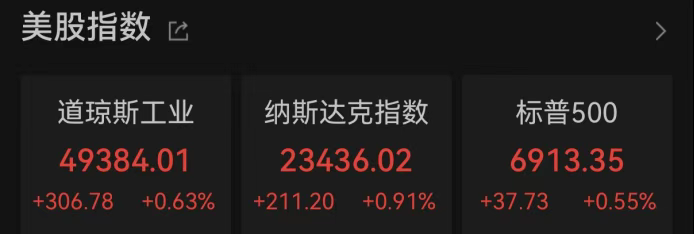
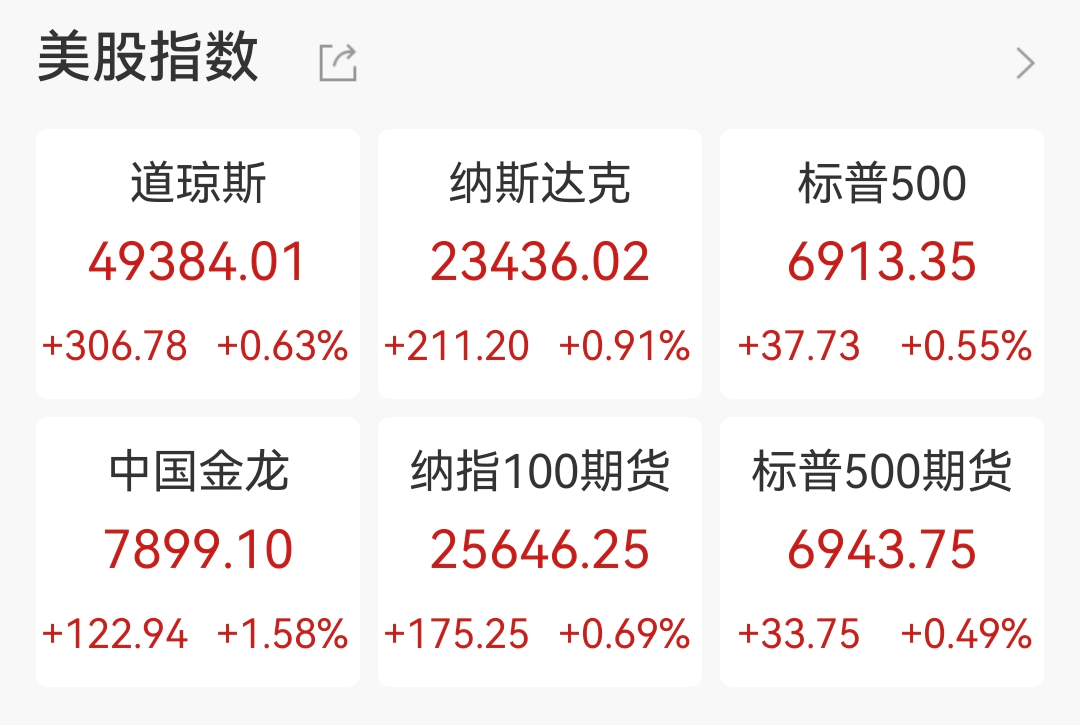
美东时间1月22日,美股三大股指延续反弹态势,连续第二个交易日收涨,地缘政治紧张情绪缓解与美 国经济数据的稳健表现形成双重支撑。与此同时,大宗商品市场呈现明显分化,金银价格同步刷新历史 新高,国际油价则承压回落,市场资金在风险偏好回升与避险需求之间呈现结构性流动特征。 截至收盘,道琼斯工业指数上涨0.63%报49384.01点,纳斯达克综合指数涨0.91%报23436.02 点,标普 500指数涨0.55%报6913.3点,其中道指已完全收复本周早些时候的失地,而标普500指数和纳指本周仍 小幅下跌约0.4%。 科技巨头领涨,中概股普涨显韧性 大型科技股成为市场最大亮点。Meta大涨5.66%,特斯拉上涨4.15%,微软、亚马逊涨逾1%,英伟达、 谷歌也均录得上涨。特斯拉CEO马斯克在达沃斯世界经济论坛上透露,公司已在工厂中使用部分 Optimus机器人执行简单任务,并预计到2026年底Optimus将能够"执行更复杂的任务",可能在明年年底 前向公众销售人形机器人。 中概股同样迎来普涨行情,纳斯达克中国金龙指数上涨1.58%,万得中概科技龙头指数涨1.09%。个股 方面,阿里巴巴涨5.05%,旗下芯片公司平 ...

A股盘前播报 | 事关降准降息!央行再发声 阿里或拆分旗下AI芯片企业平头哥独立上市
智通财经网· 2026-01-23 00:45
1、阿里或拆分旗下AI芯片企业平头哥独立上市,股价大涨5%,概念股曝光 类型:行业 情绪影响:正面 盘前要闻 据报道,阿里正准备将旗下芯片公司平头哥单独上市,以迎合投资者对人工智能这一热门领域的浓厚兴 趣,美股股价大涨5%,不过,阿里方面未作回应。分析称,AI芯片是其与OpenAI等领先公司竞争的重 要战略方面。A股市场上同时具备阿里概念和芯片概念的个股南方精工、佰维存储等,2025年净利预计 增速均超100%。 2、央行:今年降准降息还有空间 继续维护好金融市场平稳运行 类型:宏观 情绪影响:正面 央行行长潘功胜接受采访表示,2026年,中国人民银行将继续实施好适度宽松的货币政策,灵活高效运 用降准降息等多种货币政策工具,保持流动性充裕。今年降准降息还有一定的空间。人民银行还将做好 利率政策执行和监督,促进社会综合融资成本低位运行,支持资本市场稳定发展。 3、落实个人消费贷款最新财政贴息政策 六大行集体公告 类型:行业 情绪影响:正面 近日,工商银行、农业银行、中国银行、建设银行、交通银行、邮储银行均已发布公告,落实个人消费 贷款财政贴息政策优化相关服务。提高贴息标准方面,取消单笔消费贴息金额上限500元的 ...

阿里旗下芯片企业,或独立上市
Xin Lang Cai Jing· 2026-01-23 00:31
Core Viewpoint - Alibaba Group is preparing to advance the independent listing of its AI chip subsidiary, Pingtouge, with plans for internal restructuring and potential IPO exploration [1][3][4]. Company Overview - Pingtouge, established in 2018, focuses on AI chips and RISC-V ecosystem technology, formed from the integration of acquired companies and internal teams [5]. - The company has launched several AI chip series, including the "Hanguang" series and the "Yitian" series of general-purpose server CPUs, with significant deployment on Alibaba Cloud [2][5]. Market Context - The move aligns with a current trend of IPOs in the AI chip sector, with other companies like Baidu also pursuing similar strategies for their chip divisions [2][6]. - Recent reports highlighted the signing of projects involving 1,747 devices and 22,832 computing cards, with a total computing power of 3,579P, including significant contributions from Alibaba Cloud [5]. Product Development - Pingtouge's latest AI chip, PPU, is primarily aimed at inference scenarios, although it has recently been introduced and has limited external application news [2][5]. - Industry insiders have noted the performance of Pingtouge's chips as satisfactory, with a significant portion being utilized internally by Alibaba [2][5].
美股三大指数齐涨,特斯拉涨超4%、阿里涨超5%;纽约期金破4900美元涨超2%
Jin Rong Jie· 2026-01-23 00:18
欧洲三大股指全线收涨,德国DAX指数涨1.2%报24856.47点,法国CAC40指数涨0.99%报8148.89点,英 国富时100指数涨0.12%报10150.05点。国内期货夜盘多数上涨,合成橡胶涨停,苯乙烯、20号胶等品种 涨超2%,塑料涨超1%,工业品板块整体表现活跃。 地缘政治因素成为影响市场的重要变量。格陵兰岛自治政府总理延斯-弗雷德里克·尼尔森在努克举行的 新闻发布会上表示:"格陵兰岛选择丹麦王国,选择欧盟",并指出"盟友的支持至关重要"。 乌克兰总统泽连斯基在达沃斯论坛上称,乌克兰具备保护格陵兰岛的能力,"我们知道如何在那里作 战,如果我们是北约成员国,就能解决这个问题,但我们不是"。 1月23日,美股三大指数于前一交易日收盘集体上涨,道琼斯指数涨0.63%,纳斯达克指数涨0.91%,标 普500指数涨0.55%。大型科技股多数走高,Meta收涨5.66%,特斯拉因马斯克宣布美国得州无人驾驶出 租车RoboTaxi取消安全监督员涨超4%。热门中概股表现亮眼,纳斯达克中国金龙指数收涨1.58%,阿里 巴巴涨超5%,哔哩哔哩涨超4%,理想汽车、京东涨超3%。同时,黄金、白银齐创历史新高,纽约期金 ...
四大证券报精华摘要:1月23日
Zhong Guo Jin Rong Xin Xi Wang· 2026-01-23 00:17
Group 1: Commercial Aerospace - The Chinese commercial aerospace sector is entering a new phase aimed at large-scale launches and commercial closed-loop systems, with significant breakthroughs expected in rocket capacity over the next 3 to 5 years [1] - By 2025, China's commercial aerospace is projected to complete 50 launches, accounting for 54% of total space launches, with 25 commercial rockets launched and 311 commercial satellites in orbit, representing 84% of total satellites [1] - The capital market for commercial aerospace companies is accelerating, with several leading firms preparing for IPOs, including Blue Arrow Aerospace and Zhongke Aerospace [1] Group 2: Public Fund Performance - The latest public fund reports reveal that the top ten holdings include companies like Zhongji Xuchuang, Ningde Times, and Tencent, with notable increases in holdings for companies like Zhongji Xuchuang, which saw an increase of 22.602 billion yuan [2] - The automotive industry is facing cost pressures due to rising prices of memory chips and metals, impacting supply chain dynamics and competition [2] Group 3: Biopharmaceutical Industry - Over 50 biopharmaceutical companies have disclosed their 2025 performance forecasts, with nearly 50% showing positive expectations, particularly in the CXO sector, where WuXi AppTec anticipates a revenue increase of approximately 15.84% [3] - The biopharmaceutical industry is expected to enter a new phase of high-quality development as structural reforms and supportive policies continue to evolve [3] Group 4: Fundraising and Market Trends - The public fund market has seen a resurgence, with several equity funds raising over 7 billion yuan, indicating a positive trend in active equity fund performance [4] - The Shanghai Suiruan Technology Co., Ltd. has received approval for its IPO, aiming to raise 6 billion yuan for product development and business expansion [5] Group 5: Aluminum Market - The aluminum market has shown strong performance, with prices rising over 12% since mid-December 2025, supported by favorable macroeconomic conditions and demand for aluminum in various applications [6] - The copper-aluminum price ratio exceeding 4 suggests a potential shift towards aluminum in sectors like air conditioning, indicating new demand growth [6] Group 6: Banking Sector - Five listed banks have reported a year-on-year increase in net profit for 2025, with improvements in non-performing loan ratios for three banks [9] - The banking sector is expected to maintain stable performance, supported by improved funding costs and a potential stabilization of net interest margins [9] Group 7: Chemical Industry - The chemical industry is experiencing positive performance, with over 60% of companies reporting improved earnings, driven by rising prices of certain chemical products [10] - The DOP market is expected to maintain upward momentum due to strong raw material prices and limited supply, indicating a stable support for pricing [10]





英特尔盘后跌近10%,阿里涨超5%,黄金白银创历史新高
2 1 Shi Ji Jing Ji Bao Dao· 2026-01-23 00:15
1月23日,美股三大指数收盘集体上涨,道指涨0.63%,纳指涨0.91%,标普500指数涨0.55%。 美国当天公布的一系列宏观数据整体偏强。地缘政治担忧消散,叠加美国经济数据强劲,提振风险偏好。美股主要股指连续第二个交易日上涨,完全收复 本周早些时候的失地。降息预期减弱下,短期美债承压。2年期美债收益率上行2.5个基点,10年期收益率则持平于昨日尾盘。美元下挫0.5%,逼近98关 口。 美股大型科技股普涨,万得美国科技七巨头指数上涨1.47%。个股方面,微软、亚马逊涨超1%,Meta收涨5.7%,创7月31日以来最大单日涨幅;甲骨文涨 超2%,AMD涨超1%。 特斯拉涨超4%,据智通财经,全球首富、特斯拉CEO埃隆·马斯克最新表示,特斯拉可能会在明年年底前开始向公众销售其人形机器人"Optimus"(擎天 柱)。当地时间周四(1月22日),马斯克在瑞士达沃斯举行的世界经济论坛年会上发表演讲时表示,特斯拉已经在工厂中使用部分擎天柱执行一些简单 任务。 英特尔盘后大跌近10%,报49.14美元。英特尔第四季度营收136.7亿美元,同比减少4.1%,市场预估134.3亿美元;第四季度调整后每股收益0.15美元,上 ...

陆家嘴财经早餐2026年1月23日星期五
Wind万得· 2026-01-23 00:13
Monetary Policy and Economic Measures - The central bank governor Pan Gongsheng stated that a moderately loose monetary policy will continue in 2026, with room for further cuts in reserve requirement ratios and interest rates to maintain ample liquidity [3] - The first batch of 936 billion yuan of ultra-long special government bonds has been allocated to support approximately 4,500 projects in various sectors, expected to drive total investment exceeding 460 billion yuan [4] - The People's Bank of China will conduct a 900 billion yuan MLF operation on January 23, net injecting 700 billion yuan into the market, marking the 11th consecutive month of increased operations [4] Consumer and Investment Trends - State-owned banks collectively announced the implementation of personal consumption loan interest subsidy policies, allowing some high-quality clients to enjoy effective interest rates in the "2%" range, lower than current housing loan rates [3] - Public funds have focused their fourth-quarter 2025 positions on core sectors such as electronics and power equipment, with Zhongji Xuchuang becoming the largest holding stock [3] Market Performance - The A-share market saw a slight increase, with the Shanghai Composite Index rising 0.14% to 4122.58 points, and the Shenzhen Component Index increasing by 0.5% [6] - The Hong Kong stock market also experienced minor fluctuations, with the Hang Seng Index rising 0.17% to 26629.96 points, and net inflows from southbound funds amounting to 5.166 billion HKD [6] Corporate Developments - Alibaba Group has decided to support its chip company "Pingtouge" for independent listing, with plans for restructuring to a mixed-ownership enterprise [7] - Xiaomi Group has initiated a stock repurchase plan of up to 2.5 billion HKD [9] - Nanjing Bank reported a net profit growth of 8.08% year-on-year for 2025 [9] Regulatory and Policy Updates - The State Administration for Market Regulation has issued a red card for the first time in the public utility sector, prohibiting a merger between two gas companies [10] - Nine departments jointly issued opinions to promote high-quality development in the pharmaceutical retail industry, encouraging mergers and acquisitions among retail pharmacies [10] Economic Indicators - The unemployment rate for urban labor aged 16-24 was reported at 16.5% in December 2025, while the rate for those aged 25-29 was 6.9% [5] - The National Bureau of Statistics reported a 28.1% year-on-year increase in sales revenue for the smart device manufacturing industry in 2025 [10]




1月23日早餐 | 阿里平头哥或筹划IPO;商业航天迎多个催化




Xuan Gu Bao· 2026-01-23 00:11
Market Overview - US stock market continues to rise, with Dow Jones up 0.63%, Nasdaq up 0.91%, and S&P 500 up 0.55% [1] - Meta shares increased by 5.66%, marking the largest single-day gain since July 31 [1] - Tesla shares rose by 4.15%, while Microsoft and Amazon saw increases of at least 1.31% [1] Company Developments - Intel's Q1 guidance is disappointing, leading to a post-market drop of over 10% [2] - Nvidia completed a $5 billion investment in Intel in Q4 [2] - Tesla plans to sell humanoid robots to the public by the end of this year or next year [3] - OpenAI is quietly developing humanoid robots with a team of 100 in San Francisco [4] - Meta's Threads platform has surpassed 400 million monthly active users and is launching ads globally [5] Commodity Insights - Goldman Sachs raised its gold price target to $5,400, indicating that wealthy individuals are competing with central banks for limited physical reserves [6] - COMEX gold futures rose by 1.97%, while silver futures increased by 4.05%, both reaching historical highs [7] - US natural gas futures prices surged by 81% within three days, reaching the highest level since December 2022 [7] Regulatory and Policy Updates - The People's Bank of China (PBOC) Governor Pan Gongsheng stated there is still room for further interest rate cuts and reserve requirement ratio reductions this year [8] - The Ministry of Commerce and other departments encourage horizontal mergers and acquisitions in the pharmaceutical retail sector [12] - The State Council's Food Safety Office is drafting national standards for prepared dishes and will seek public opinions soon [12] Industry Trends - The semiconductor industry is seeing significant developments, with Alibaba's T-HEAD planning for an independent IPO [10] - The prepared food sector is undergoing a transformation, with a focus on quality and safety in the supply chain [11] - The retail pharmacy industry is expected to accelerate consolidation, with a projected decrease in the number of pharmacies by nearly 20,000 since Q4 2024 [13] Financial Projections - Zhaoyi Innovation expects a net profit of approximately 1.61 billion yuan for 2025, a 46% increase year-on-year [17] - Shengmei Shanghai anticipates revenues between 6.68 billion and 6.88 billion yuan for 2025, reflecting a growth of 18.91% to 22.47% [18] - Runtu Co. forecasts a net profit of 600 million to 700 million yuan for 2025, representing a growth of 181.05% to 227.89% [18]