Bank of America(BAC)

Search documents
Will 2026 Be a 'Lackluster' Year for the Stock Market? Why This Expert Thinks So
Investopedia· 2025-12-15 22:30
Key Takeaways The stock market defied expectations again this year. One Wall Street analyst is telling investors not to expect it to happen in 2026. Subramanian on Monday said "buy-the-dream" AI stocks are "maybe headed for a little bit of an air pocket.†The AI trade has been pressured recently by concerns that tech companies are spending too much on a technology with uncertain commercial potential. Subramanian acknowledged similarities between today's market and the Dotcom Bubble of the 1990s, but noted th ...


【银行观察】 银行负债管理精细化 迫在眉睫
Zheng Quan Shi Bao· 2025-12-15 22:09
Core Viewpoint - Since 2022, commercial banks have implemented various measures to reduce liability costs, including multiple rounds of deposit rate cuts and the removal of high-interest deposit products, leading to a situation where shorter-term deposit rates exceed longer-term rates, known as "inverted" deposit rates [1][2] Group 1: Deposit Rate Adjustments - Commercial banks have lowered deposit rates in response to market conditions, with some banks removing long-term deposit products to stabilize net interest margins [1][2] - The net interest margin for commercial banks has decreased significantly, with the latest figure reported at 1.42% in Q3 of this year, indicating a low level historically [1][2] Group 2: Asset and Liability Management - To stabilize net interest margins, banks are focusing on both increasing asset yields and reducing liability costs, with a particular emphasis on optimizing deposit structures [2] - The reliance on interest margin income is high within the banking sector, making it crucial for banks to maintain reasonable net interest margins to ensure stable income and profit [2] Group 3: Impact on Residents - The reduction in deposit rates and the withdrawal of higher-yield products have raised concerns among residents, particularly older individuals who rely heavily on bank deposits for their surplus funds [3] - Residents are encouraged to diversify their asset allocation by considering government bonds or low-risk bank wealth management products to balance risk and return in light of declining deposit rates [3] Group 4: Future Outlook - The downward pressure on net interest margins is expected to continue, with a high probability of further deposit rate reductions, which is necessary for both the banks' operational needs and the broader economic context [4] - Effective liability management by banks and proactive asset allocation by residents are essential for reducing financing costs and promoting a healthy economic cycle [4]
Where Will Bank of America Be in 5 Years?
The Motley Fool· 2025-12-15 21:30
This huge financial institution has long been a top Buffett holding.Berkshire Hathaway owns dozens of stocks in its massive $317 billion public equities portfolio. One of the leading positions for a long time has been Bank of America (BAC +0.38%). The Warren Buffett-led conglomerate owns 7.8% of the bank's outstanding shares, displaying his appreciation for the business.In the past five years, this bank stock has generated a total return of 110% (as of Dec. 11), slightly outperforming the broader S&P 500 (^ ...

Financial Sector Breaks Out as Capital Rotates and Leadership Shifts
Yahoo Finance· 2025-12-15 17:30
Core Viewpoint - The financial sector is experiencing a significant breakout, indicating renewed momentum and potential leadership as capital rotates into financials, with the XLF ETF serving as a key vehicle for investors to gain exposure [5][24]. Group 1: XLF ETF Overview - XLF currently manages approximately $54 billion in assets, has a dividend yield of 1.33%, and a net expense ratio of 0.08%, making it an efficient sector ETF [1]. - The ETF provides broad exposure to the financial sector, tracking the Financial Select Sector Index and including major companies like Berkshire Hathaway, JPMorgan Chase, Visa, Mastercard, and Bank of America [2]. - XLF has seen positive inflows of 2.38% over the past month and 3.76% over the past three months, with a total of $27.9 billion in inflows over the past year, indicating strong institutional confidence [9]. Group 2: Technical Developments - XLF rose 2.37% last week and decisively cleared the $54 resistance level, marking a potential inflection point after a prolonged consolidation [4][8]. - The financial sector has broken out of a multi-month consolidation, signaling improved sentiment and early signs of sector leadership [5][7]. Group 3: Individual Stock Performances - JPMorgan Chase, the second-largest holding in XLF, has a weighting of approximately 10.8% and recently posted Q3 EPS of $5.07, exceeding estimates, with revenue rising 8.8% YOY to $47.12 billion [11][12][13]. - Bank of America, with a weighting of roughly 4.8%, confirmed sector strength by breaking out to fresh 52-week highs, reporting Q3 EPS of $1.06, beating estimates, and a revenue increase of 10.8% YOY [14][16]. - Charles Schwab, with a market capitalization of $171 billion, is positioned for a potential breakout, currently trading less than 3% below its 52-week high, with a Moderate Buy rating from analysts [17][18][19]. - Robinhood has shown exceptional growth, with a YTD increase of 220% and a three-year surge of nearly 1,200%, reporting Q3 EPS of 61 cents and revenue doubling YOY to $1.27 billion [21][22]. Group 4: Market Sentiment and Future Outlook - The financial sector's breakout reflects shifting expectations around interest rates and improving sentiment, suggesting that financials may lead into year-end and beyond [24][25]. - Analysts maintain a favorable outlook on leading financial stocks, indicating that the sector is becoming increasingly relevant for investors [10][24].

How AI Is Impacting Productivity at JPM, BAC, C & Others
ZACKS· 2025-12-15 13:46
Core Insights - Artificial intelligence (AI) is recognized as the most significant technological disruption since the Internet, fundamentally altering work, creativity, and decision-making processes [1] - Major U.S. banks, including JPMorgan, Citigroup, Bank of America, and Wells Fargo, are investing billions in AI to enhance productivity and adapt to evolving client needs [1] AI Integration in Banking - AI is moving from pilot projects to being integrated into daily banking operations, viewed as a productivity and headcount lever by executives [2] - Banks are leveraging AI as a force multiplier to improve operational efficiency, accelerate software development, and enhance client service, leading to higher output per employee [3] JPMorgan's AI Initiatives - JPMorgan has reported a productivity increase from approximately 3% to 6% due to AI, with operations specialists seeing potential productivity gains of 40% to 50% as tasks become more automated [4] - The bank maintains a substantial technology budget of around $18 billion annually, with a $2 billion investment in AI aimed at achieving measurable returns on investment [5] Citigroup's AI Strategy - Citigroup is scaling internal generative AI tools to enhance developer productivity, freeing up about 100,000 developer hours weekly, with 180,000 employees accessing these tools [6] - The bank has an annual technology budget of approximately $12 billion, indicating strong organizational support for AI integration across functions [7] Bank of America's AI Spending - Bank of America has committed $4 billion of its roughly $13 billion technology budget to AI, linking this investment to tangible productivity improvements in both frontline and tech teams [8] - The bank's AI initiatives, including the virtual assistant Erica, are designed to handle high-volume service interactions, allowing human employees to focus on more complex tasks [9] Wells Fargo and PNC Financial's Approach - Wells Fargo and PNC Financial are also focusing on AI to enhance efficiency, with Wells Fargo indicating a potential decline in headcount as a result of automation [10] - PNC Financial's CEO has suggested that AI will accelerate existing automation efforts, potentially stabilizing headcount while scaling the business over the next decade [12] Overall Efficiency Gains from AI - The transition to AI-driven productivity is expected to yield sustainable expense leverage, with early evidence showing improvements in operations, software development, and client support [13] - The long-term success of AI integration will depend on the ability to embed it into everyday decisions and workflows while maintaining regulatory compliance [14]



X @Bloomberg
Bloomberg· 2025-12-15 11:10
Goldman Sachs and Bank of America are headlining a group of investors putting about $20 million into the parent company of the Texas Stock Exchange https://t.co/wJQcvqFCGN ...

新兴市场外汇套利交易明年继续被看好,波动性成唯一隐忧
Di Yi Cai Jing· 2025-12-15 07:51
Core Insights - Emerging market carry trades are expected to remain effective through 2026, driven by low borrowing costs from central banks in developed economies and sustained interest rate differentials between developed and emerging markets [1][3]. Group 1: Performance of Emerging Market Carry Trades - The Bloomberg Emerging Market Carry Index has achieved a year-to-date return of 16.71%, the highest since 2009, when it reached 19.89% [3]. - In the previous five years, four years recorded negative returns, with rates of -2.84%, -5.02%, -0.52%, and -3.17% for 2020, 2021, 2022, and 2024 respectively [3]. - High benchmark interest rates in countries like Brazil, Mexico, and South Africa have resulted in three-month implied yields of 13.4%, 7.5%, and 6.6%, significantly outperforming developed economies [3]. Group 2: Market Sentiment and Strategies - The trajectory of the U.S. economy is seen as a key factor for the continued strong performance of emerging market currencies, with expectations of a slowdown encouraging the Federal Reserve to ease monetary policy [4]. - Investment firms like Invesco and Goldman Sachs recommend increasing short positions on the U.S. dollar against currencies such as the Brazilian real and South African rand [4]. - Neuberger Berman highlights that reduced volatility in the foreign exchange market and a weak dollar create favorable conditions for emerging market carry trades [5][6]. Group 3: Volatility Concerns - There is ongoing debate about whether low foreign exchange volatility can be maintained, as adverse currency movements could quickly erase gains [7]. - Current indicators from JPMorgan show emerging market currency volatility is near a five-year low, but concerns remain about potential increases due to factors like U.S. midterm elections and Federal Reserve policy divergences [7]. - Vanguard Group believes that market disruptions from events like Trump's tariff policies are diminishing, suggesting a stable environment for emerging market currencies in 2026 [7].
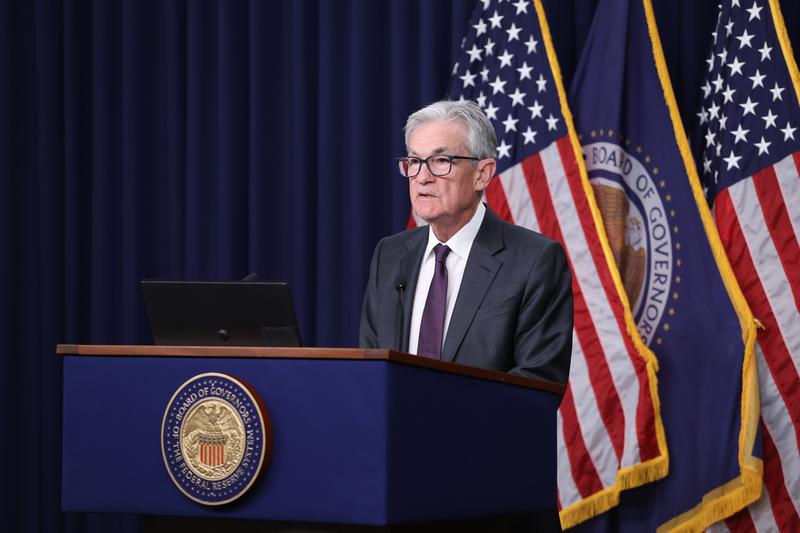
美联储RMP+美财政部美债发行管理≈ QE?
Hua Er Jie Jian Wen· 2025-12-15 06:40
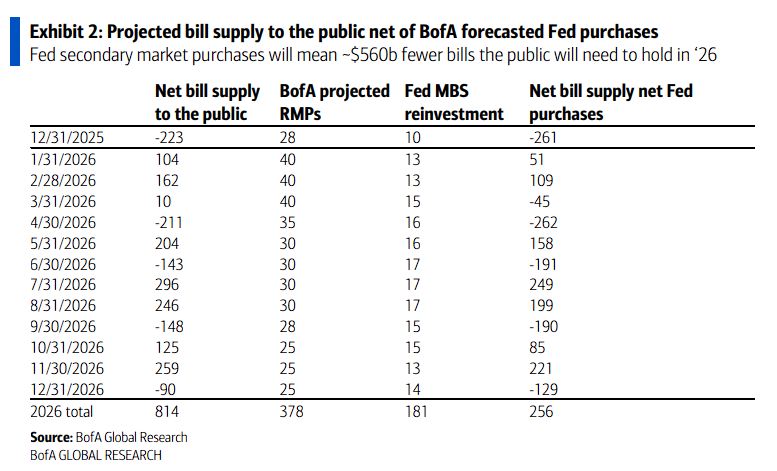
Core Viewpoint - The Federal Reserve's newly launched Reserve Management Purchases (RMPs) plan, in conjunction with the U.S. Treasury's bond issuance strategy adjustments, is creating a market effect similar to quantitative easing (QE) [1] Group 1: RMPs and Market Effects - The RMPs plan, while not traditional QE, allows the Treasury to increase short-term Treasury bill issuance and reduce the supply of medium- to long-term bonds [1][2] - Bank of America (BofA) projects that by 2026, the Federal Reserve will purchase a total of $560 billion in Treasury bills through RMPs and MBS reinvestments, while the Treasury plans to issue an additional $500 billion in short-term bills and reduce medium- to long-term bond issuance by $600 billion [1][2] Group 2: Treasury Issuance Adjustments - The Treasury is expected to issue $500 billion more in short-term bills in 2026 compared to 2025, while reducing medium- to long-term bond issuance by $600 billion [3][4] - This significant shift in supply structure aims to address the large amount of medium- to long-term bonds maturing in 2026 and the increased Treasury buyback operations [4] Group 3: Impact on Treasury Yields - The Treasury has indicated its intention to maintain stable long-term bond auction sizes in the coming quarters, focusing on increasing short-term Treasury bill issuance to meet financing needs [5] - BofA's scenario analysis suggests that a higher issuance of Treasury bills could lead to a net easing effect of 20-30 basis points on the 10-year Treasury yield [5][6] Group 4: Investment Opportunities - BofA recommends investors focus on three trading opportunities: 1. Going long on front-end swap spreads, currently at negative 18 basis points, with risks stemming from unexpected fiscal deficits [8] 2. Going long on 5-year real yields, currently at 103 basis points, supported by a historically accommodative financial environment [8] 3. Selling the volatility spread between 1-year and 10-year rates, currently at 2 basis points, with risks from rising uncertainty in Fed policy [8]
美联储鹰派噪音压不住买盘! 华尔街坚定“黄金信仰” 金价有望五连涨
智通财经网· 2025-12-15 02:45
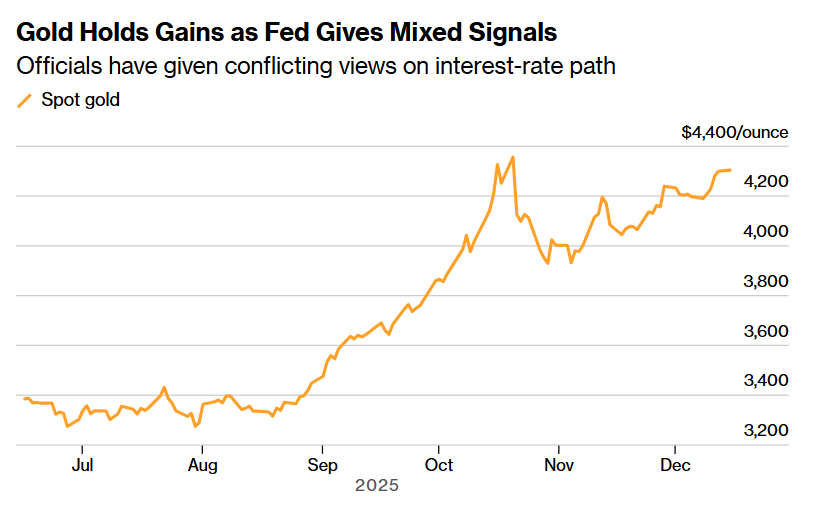
智通财经APP获悉,周一亚盘开盘交易之后,黄金现货价格在每盎司约4,320美元附近交易,连涨四日后继续上行且 延续上周强劲涨势,亚盘时段的亚洲黄金股则集体走高。尽管美联储在美东时间周三宣布连续三次降息,不过有三位 政策制定者投票出反对票,导致股票市场投资者们对于2026年美联储进一步宽松货币政策的幅度仍存在明显分歧,上 周五美股三大股指均显著回调,但是上周现货基准下的金价仍然累计上涨逾2%。 整体而言,黄金在连续四天上涨后继续稳步上行,凸显出美联储官员们的相互矛盾的鹰派与鸽派之间摇摆言论已经促 使多数利率期货交易员对明年进一步货币宽松的押注有所升温。 荷兰合作银行资深策略师Philip Marey指出,为了配合在美国中期选举前刺激经济,美联储预计将在2026年11月前将 利率降至中性水平甚至更低;这位策略师表示,考虑到美联储货币政策传导滞后性,美联储降息举措需要在10月前完 成才能影响11月中期选举,因此在特朗普政治施压下的美联储可能到2026年9月降息至2.75%-3.00%, 相当于3次25基 点的降息——显著高于FOMC点阵图所显示的2026年仅降息一次的利率中值预期。 截至新加坡时间上午10:30,黄 ...
美银:牛熊指标接近触发“卖出”信号 资金轮动预示2026年经济“火热运行”预期
智通财经网· 2025-12-15 01:46
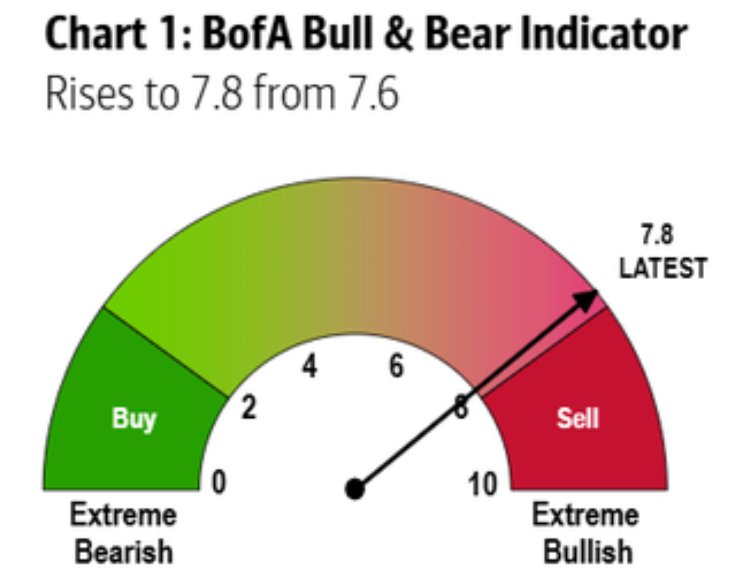
哈内特在12月12日的报告中表示,经过修订的、被广泛关注的反向指标——美银牛熊指标已升至7.8,使 市场仓位"接近极度看涨"区域。该指标此前在10月初曾触及8.9,这一水平在历史上通常与战术性市场顶 部相关。 市场押注繁荣,收益率走低 投资者正在押注一种既能支持增长又不会导致借贷成本大幅上升的政策背景。哈内特表示,这种平衡可 以通过生产率的飙升或美元的大幅贬值来实现。这种紧张关系正体现在各种资产关系中,包括白银价格 首次与石油平价(自1980年以来),以及长期主权债务的持续崩盘;奥地利的100年期债券现已从2020年3月 的峰值下跌了76%。 这位策略师补充说,总统特朗普的竞选优先事项,例如限制收益率、干预关键行业以及探索稳定币框架 等,可能会加强在不让长期利率上升的情况下维持增长的努力。 轮动至小型股 哈内特强调的最引人注目的转变之一是资金从超大市值股票轮动到美国小型股。相对表现指标显示,微 型股和中型股的表现优于超大市值股,扭转了大型科技和消费平台公司多年来的主导地位。 哈内特将此举与对2026年经济将更热、受国内驱动更多的预期联系起来。消费者行为数据显示,支出继 续按收入阶层分化(法拉利表现明显逊于通用 ...