
BIDU(BIDU)

Search documents
第一批用百度AI赚到钱的人,是做什么的?
Sou Hu Cai Jing· 2025-12-16 15:38
Core Insights - The development of AI is transitioning from a "toy" phase to a "money-making" phase, with over 500,000 applications created on the "秒哒" platform, serving over 10 million users and marking a significant shift towards solving complex business problems [1][3][4] Group 1: AI Application Development - The "秒哒" platform has generated over 500,000 commercial applications in just eight months, covering more than 200 scenarios, and has created economic and efficiency value exceeding 5 billion yuan [3][4] - The platform's applications are categorized into three main types: e-commerce mini-programs, business software for internal systems, and AI efficiency applications, all contributing to significant economic value [6][10] Group 2: Creator Support Initiatives - Baidu announced the "Creator Dream Plan," aiming to support 1 million creators in generating income over the next three years through traffic support, revenue sharing, and technical assistance [4] - The initiative seeks to bridge the gap between AI application generation and monetization, fostering a community of core creators with stable income [4] Group 3: User Experiences and Case Studies - Users from various backgrounds have successfully utilized the "秒哒" platform to create applications that address real-world problems, such as a finance manager who streamlined accounting processes from two weeks to one day [8][9] - Other examples include a novel creation tool for writers and an interactive dental care application for children, showcasing the platform's versatility and impact on different industries [12][13] Group 4: Technological Advancements - The "秒哒" platform operates on a robust technical framework that includes demand models, code models, and UI models, ensuring applications are not just prototypes but fully operational and commercially viable [6][14] - The platform has seen a significant user base growth, with over 400,000 developers, 81% of whom are non-programmers, indicating a democratization of application development [6][10] Group 5: Market Trends and Future Outlook - The shift from "usable" to "powerful" no-code tools is evident, as these platforms now support complex business logic and user-friendly interfaces, enabling ordinary individuals to create professional-grade applications [14][15] - The stories of users transforming their pain points into successful applications highlight the potential for ordinary people to become creators in the AI-driven economy [15][16]



从“AI创新者”到“AI建造者”,李彦宏把AI落到真实世界
Xin Lang Cai Jing· 2025-12-16 14:03
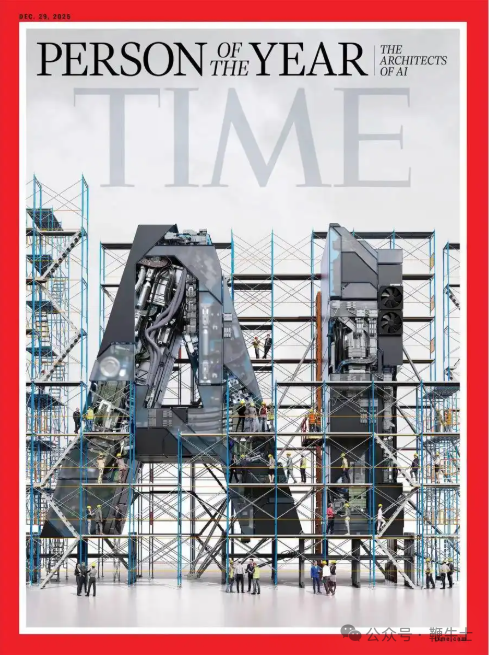
Core Insights - The central theme of the article is the recognition of "The Architects of AI" by Time magazine, marking a shift from the hype of AI to a more grounded phase of development and application [1][24]. Group 1: Recognition and Evolution - On December 11, Time magazine announced its 2025 Person of the Year as "The Architects of AI," indicating a transition in the global narrative of artificial intelligence from a prophetic phase to a construction phase [1][24]. - Baidu's founder, Li Yanhong, has been recognized multiple times by Time magazine, evolving from "Innovator" in 2018 to "AI Leader" in 2023, and now to "AI Builder," reflecting Baidu's strategic implementation of AI [6][29]. - Baidu has transformed from a search engine company to a leading full-stack AI company, with a diverse portfolio including chips, cloud infrastructure, models, agents, applications, and consumer products [7][30]. Group 2: AI Applications and Strategy - At the Baidu World Conference on November 13, the company showcased a series of advanced AI products and applications, emphasizing the importance of real-world applications in creating sustainable value [8][31]. - The article highlights the intense competition in the AI sector, with model parameters skyrocketing from hundreds of billions to trillions, leading to a significant increase in training costs and a homogenization of foundational models [9][32]. - Li Yanhong emphasizes that the focus should be on applications rather than creating a superintelligent AI, pointing out the need for AI to address challenges in China's strong manufacturing sector [10][33]. Group 3: Innovative Solutions - A key example of Baidu's application of AI is the recently launched super-intelligent agent "Famu," designed to find optimal solutions in real industrial environments [11][34]. - Unlike most generative AIs focused on chat and image generation, "Famu" aims to solve complex problems such as supply chain scheduling and traffic signal optimization [12][35]. - Li Yanhong anticipates that the most significant breakthrough in the industry by 2025 will be in multimodal AI, with hopes for revolutionary changes in drug development through AI [13][36]. Group 4: Long-term Vision and Strategy - Baidu's strategy is clear: leveraging full-stack technology to tackle challenging problems, which may not seem as grand as the concept of general artificial intelligence (AGI) but will create substantial value for the real economy [15][38]. - The article suggests that Li Yanhong's focus on applications is a higher-dimensional strategic determination, as models without applications may merely be code without real-world impact [15][38]. - The evolution of Li Yanhong's identity as a "builder" has been a long-term strategy, with roots tracing back seven years [16][39]. Group 5: Future of AI - The article concludes that future AI giants will not be those with the largest parameter models but those that can effectively solve real human problems using AI [23][46]. - Li Yanhong's shift from a prophetic role to a builder's mindset is seen as essential for AI companies to thrive in the evolving landscape [24][47].
百度脑图2026年3月31日停服,用户需提前导出数据
Xin Lang Ke Ji· 2025-12-16 12:57
【#百度脑图宣布将停止服务#】百度脑图日前发布公告,因产品调整,百度脑图将于 2026 年 3 月 31 日 正式停止服务。"我们对由此带来的不便深表歉意。请您务必于停服前及时登录账户,将重要数据导出 保存至本地,以免造成损失。" 百度脑图是一款脑图编辑工具,用户可以在线上直接创建、保存并分享思路。 脑图不会忽然彻底挂掉让大家的数据都秀达的,喜爱赫也会提前半年让大家迁移数据 ●。 百度脑图官方问答页面称,脑图不会忽然彻底挂掉让大家的数据都丢失的,真要挂也会提前半年让大家 迁移数据。 FAQ 更新时间: 2019 年 7 月 11 日 1. 还有人维护不? 有,每次大面积出错的时候我们是知道的,但由于最近两个问题之前没见过,处理起来费了点 时间。 ...

全球关注,美国重要数据今晚公布;美股三大期指齐跌;甲骨文近3个月暴跌46%;国际油价大跌,布油跌破60美元/桶【美股盘前】
Mei Ri Jing Ji Xin Wen· 2025-12-16 12:35
Market Overview - Major U.S. stock index futures are experiencing declines, with Dow futures down 0.18%, S&P 500 futures down 0.36%, and Nasdaq futures down 0.54% [1] Company News - Oracle's stock continues to decline, down 1.3% to $182.5 per share, marking a 46% drop from its historical high of $345 per share reached in September [1] - Ford has announced the cessation of production for its all-electric F150 Lightning truck, shifting focus to hybrid vehicles and smaller, more affordable electric cars. This decision is expected to result in a $19.5 billion reduction in revenue, with most losses accounted for in the current quarter [2] - PayPal has submitted an application to become a bank in the U.S., named "PayPal Bank," aiming to expand its financial services [1] Industry Developments - Nasdaq has filed a proposal with the SEC to extend trading hours to 23 hours on weekdays, which would significantly increase trading time for stocks and exchange-traded products [2] - Tesla's market capitalization is projected to potentially reach $3 trillion by the end of 2026, driven by advancements in artificial intelligence and the commercialization of autonomous driving and robotics. Currently, Tesla's stock is down 1.13% [2] Energy Sector - Brent crude oil futures have fallen below $60 per barrel for the first time since May, currently trading at $59.42 per barrel, reflecting a 1.43% decline [3] Economic Indicators - The U.S. is set to release a combined non-farm payroll report for October and November, with economists predicting an addition of 50,000 jobs in November and an unemployment rate of 4.5%. This data suggests a weak labor market without rapid deterioration, which could influence the stock market positively by increasing the likelihood of further interest rate cuts by the Federal Reserve [3]




AI眼镜大决战已到?对话9位操盘手和专家真相:蛋糕分得心慌慌
3 6 Ke· 2025-12-16 12:21
Core Viewpoint - The entry of major companies into the AI glasses market is seen as a double-edged sword, potentially benefiting both startups and established players by expanding the market rather than creating direct competition [1][4][15]. Group 1: Market Dynamics - Major companies like Xiaomi, Baidu, and Alibaba have entered the AI glasses market, with significant sales reported, indicating a growing interest and demand [3][11]. - The sales of lightweight, screenless AI glasses in China surged by 463% in the first half of 2025, marking a historical high [11][14]. - The overall market for AI glasses is expected to grow rapidly, with projections indicating that China's market could exceed 1 billion yuan within three years [14][15]. Group 2: Competitive Landscape - The competition is characterized by both major companies and startups coexisting, with startups like Rokid and Thunderbird also achieving significant sales milestones [3][8]. - Analysts suggest that the entry of large firms will accelerate market growth and user education, benefiting startups in the long run [15][18]. - The market is still in its early stages, and there is a consensus that it is not yet time for intense competition, as the focus remains on expanding the market [15][19]. Group 3: Financial Viability - Despite the surge in sales, many companies, including major players, are struggling to achieve profitability due to high R&D costs and competitive pricing strategies [19][20]. - Companies like Xiaomi and Alibaba have indicated that they do not rely on selling glasses for profit, highlighting the industry's current financial challenges [19][20]. Group 4: Supply Chain and Innovation - The supply chain is a critical factor, with major companies leveraging their negotiating power to drive down costs and improve product offerings [22][36]. - Startups are focusing on technological innovation and differentiation to carve out their niche in the market, often achieving breakthroughs that larger companies have not [29][33]. Group 5: Future Outlook - The AI glasses market is anticipated to reach a tipping point similar to the "iPhone moment" by 2025, with significant advancements expected in technology and user adoption [4][51]. - The industry is currently focused on enhancing user experience and integrating AI glasses into daily life, which is seen as essential for widespread acceptance [54][55].




细看百度财报
YOUNG财经 漾财经· 2025-12-16 11:50
Core Viewpoint - Baidu's recent financial performance reflects significant challenges, particularly in its core online marketing revenue, which has seen a continuous decline, raising questions about its future growth potential in the face of shifting user behavior and competition from other platforms [3][4][6]. Revenue Structure Adjustment - Baidu's online marketing revenue for Q3 2025 was 153 billion yuan, a substantial decline of 18% year-on-year, marking the sixth consecutive quarter of negative growth [4]. - In contrast, the overall Chinese internet advertising market grew by 6.4% year-on-year, reaching 1,875.1 billion yuan, with competitors like Tencent and Kuaishou showing strong revenue growth [5]. User Attention Shift - The decline in Baidu's advertising business is attributed to a shift in user attention towards platforms like Douyin and Xiaohongshu, which offer more engaging content and direct transaction capabilities [6][8]. - Baidu's monthly active users (MAU) grew only 1% year-on-year to 708 million, while Douyin's MAU reached 936 million, growing 14.7% [6]. AI and Business Transformation - Baidu is attempting to pivot towards AI-driven marketing solutions, with AI-native marketing services revenue increasing by 262% to 28 billion yuan, although this growth includes a shift of traditional advertising budgets rather than new market expansion [8][12]. - The company has restructured its business to focus on AI, with AI-related revenues growing over 50% year-on-year to approximately 100 billion yuan, accounting for nearly 40% of core revenue [10]. Profitability Challenges - Baidu reported a net loss of 112.32 billion yuan for Q3 2025, primarily due to a 161.90 billion yuan impairment of long-term assets, which was a strategic move to optimize its AI infrastructure [9]. - The company's sales costs rose by 12% year-on-year to 183 billion yuan, driven by increased investments in smart cloud infrastructure and content costs [9]. Autonomous Driving Business - Baidu's autonomous driving service, "Luobo Kuaipao," saw a significant increase in orders, reaching 3.1 million, with a year-on-year growth rate accelerating to 212% [12][13]. - The service has achieved full autonomous operation in all major cities in mainland China and is expanding internationally, although it has not yet reached profitability [13]. Market Sentiment and Future Outlook - Despite Baidu's short-term financial struggles, several investment firms maintain positive ratings, viewing the company as transitioning from a traditional search giant to an AI-driven technology group [14]. - Analysts highlight the potential for Baidu's AI capabilities and autonomous driving business to drive future growth, with significant valuations assigned to these segments [15][16].
昆仑芯将赴港上市
半导体芯闻· 2025-12-16 10:57
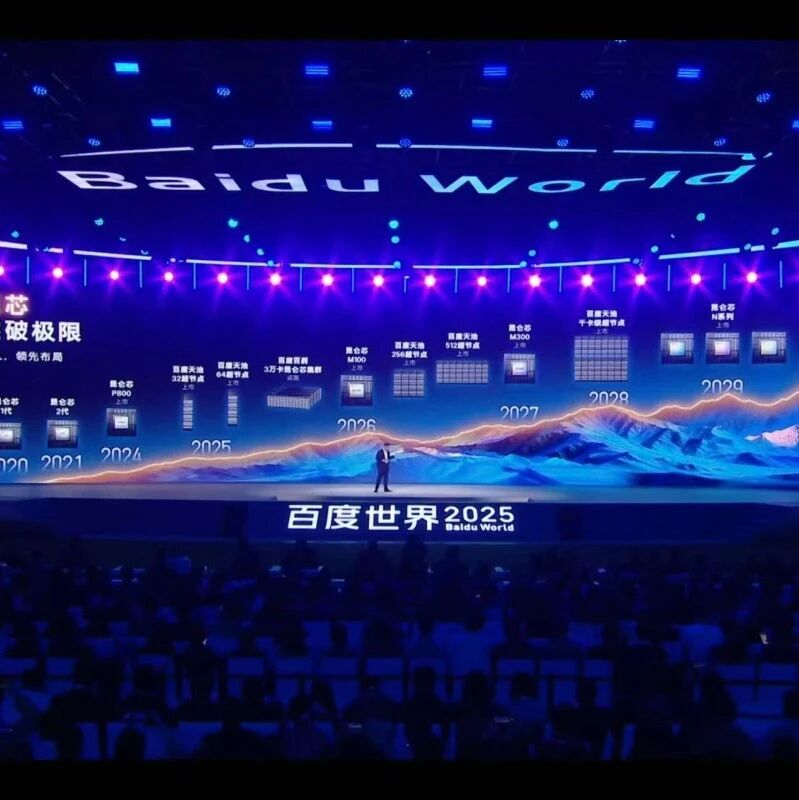
Core Viewpoint - Kunlun Core, a self-developed chip project under Baidu, is accelerating its path to IPO following its upcoming share reform [1][3]. Group 1: Company Overview - Kunlun Core was established in 2011 and began independent financing in 2021, with Ouyang Jian as CEO [1]. - Baidu is the controlling shareholder of Kunlun Core, which has completed six rounds of financing, the latest in July this year [1]. Group 2: Product Development - The main product of Kunlun Core is the P800 chip, set to launch in 2024, which has been validated within Baidu's operations [1]. - In the first half of this year, Baidu activated a 30,000-card cluster based on the P800 chip, achieving high cost-performance in training a multimodal model [1]. Group 3: Future Product Roadmap - Kunlun Core plans to release the M100 chip in 2026, optimized for large-scale inference scenarios, and the M300 chip in 2027, aimed at ultra-large multimodal model training and inference [1][3]. - Baidu will launch the "Tianchi 256 Super Node" in the first half of 2026, which supports 256 interconnected cards, enhancing total interconnect bandwidth by four times and improving performance by over 50% compared to the previous model [3]. - The "Tianchi 512 Super Node" is expected in the second half of 2026, supporting 512 interconnected cards and capable of training trillion-parameter models [3]. Group 4: Long-term Vision - According to Baidu's roadmap, Kunlun Core anticipates launching a new generation of N series chips by 2029 and achieving a million-card Kunlun Core single cluster by 2030 [4].
全球AI领域,为什么只有中美领跑,为什么日欧难堪大用?
Sou Hu Cai Jing· 2025-12-16 10:12
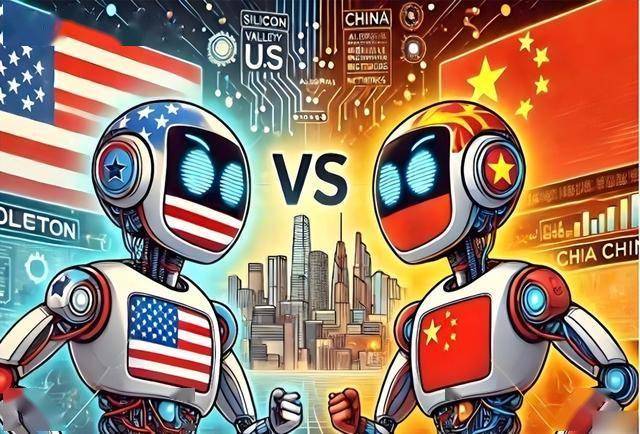
Group 1 - The core argument of the article is that the AI development landscape is predominantly led by the United States and China, while other countries lag behind due to their economic models and investment approaches [1][20]. Group 2 - The U.S. AI ecosystem thrives on a venture capital model that encourages risk-taking and innovation, with a cultural inclination towards adventure and exploration [3][5][7]. - American investors are willing to take risks on high-investment, long-cycle, and highly uncertain AI projects, leading to the rapid rise of companies like OpenAI and Anthropic [7][9]. - The collaboration between private capital and government in the U.S. creates a conducive environment for AI development, contrasting with the more conservative investment approaches seen in Europe and Japan [9][11]. Group 3 - Japan and Europe face significant challenges in AI investment due to their bank-led models, which are risk-averse and focus on short-term gains, hindering long-term innovation [11][18]. - Japan's bureaucratic loan approval processes and a shortage of skilled AI professionals exacerbate its struggles in the AI sector [15][13]. - Europe's extreme focus on privacy and ethical considerations limits data collection, which is essential for AI development, resulting in a significant funding gap compared to the U.S. [18][20]. Group 4 - China's AI growth is significantly influenced by early investments from American venture capital, which helped establish a robust tech ecosystem [20][22]. - The transition of Chinese tech companies into industrial capital has created a self-reinforcing cycle of investment and innovation in AI [24][26]. - China's ability to rapidly adapt AI applications to real-world scenarios has led to a competitive advantage, allowing for mass production and cost-effective solutions [26][28].


普通人也能用AI赚钱了,百度沈抖:人人都是创造者
Yang Zi Wan Bao Wang· 2025-12-16 10:00
Core Insights - The era of AI is transforming creation from being a privilege of a few to a right accessible to many [1] - AI is now integral to production and decision-making processes, allowing anyone with ideas to become a creator [3] - The development of technology has led to new entrepreneurial models where the creation of value precedes the establishment of a company [3] Group 1: AI and Creation - AI significantly lowers the barriers to production, enabling employees and entrepreneurs to create value directly [3] - The shift in creation dynamics allows for a more democratized approach to innovation, where anyone can contribute [3] Group 2: Business Model Transformation - The traditional sequence of establishing a business before creating a product has been reversed; now, products can be developed and monetized first [3] - The focus is on creating tools that generate sustainable income from day one, rather than just simple applications [3] Group 3: Baidu's Initiatives - Baidu's no-code application platform, Miaoda, has generated over 500,000 commercial applications in eight months, creating economic value exceeding 5 billion [3] - The "Creator Dream Plan" aims to support 1 million creators over the next three years through various forms of assistance [4] - Baidu anticipates that Miaoda will generate at least 10 billion in value in the coming year [5]

百度秒哒商业应用生成数突破50万个,创造价值超50亿
Guan Cha Zhe Wang· 2025-12-16 09:57
Core Insights - The article discusses the transition of AI development from a "toy" phase to a monetizable stage, highlighting the launch of Baidu's no-code application platform "MiaoDa" which has generated over 500,000 commercial applications in just eight months [1][2] Group 1: MiaoDa Platform Progress - MiaoDa has seen a daily increase of over 150% in new applications, with half of these applications featuring backend capabilities, covering over 200 scenarios including education, business, content creation, and enterprise services [1][3] - The platform has created economic and efficiency value exceeding 5 billion yuan [1][3] Group 2: Creator Support Initiatives - Baidu announced the "Creator Dream Plan," aiming to support 1 million creators over the next three years through traffic support, revenue sharing, project matching, and technical assistance [1][2] - By 2026, Baidu plans to select 15 high-potential projects for expedited investment opportunities, with individual developers potentially receiving over 1 million yuan [1][2] Group 3: User Demographics and Application Types - 81% of MiaoDa users are non-programmers, primarily from workplace and university backgrounds, with applications serving over 10 million users and around 100,000 daily users [3][4] - The applications fall into three main categories: monetizable tools like e-commerce mini-programs, business software for low-cost internal systems, and AI efficiency applications for various life scenarios [3][4] Group 4: User Case Studies - Users from various industries shared success stories, such as engineers creating cost-saving design systems and content creators developing AI tools for niche markets [4] - Young creators have also utilized MiaoDa to develop innovative applications, showcasing the platform's potential to enhance creativity and practical skills among youth [4] Group 5: Industry Trends - The maturation of no-code platforms is enabling a broader range of individuals to participate in innovation and commercialization at lower costs, indicating a shift in competitive dynamics in the AI sector [5][6] - Future competition may focus on building a comprehensive ecosystem that encompasses creation, distribution, and monetization [6]