BIDU(BIDU)

Search documents
美股热门中概股盘前集体上涨,金山云涨超14%


Ge Long Hui A P P· 2026-01-12 09:19
格隆汇1月12日|美股市场热门中概股盘前集体上涨,其中,金山云涨超14%,脑再升科技涨超6%,阿 里巴巴涨超4%,哔哩哔哩、百度涨超3%,小鹏汽车、蔚来涨超2%。 ...
6家院校与共同体“数据分析+”人才培育智能体签约
Qi Lu Wan Bao· 2026-01-12 08:56
Core Insights - The establishment of the data analysis industry education integration community aims to address talent cultivation and industry needs through a collaborative ecosystem [1] - Rapid advancements in artificial intelligence are driving a shift from experience-driven to data-driven management in enterprises, showcasing significant efficiency improvements in various applications [3] - A pressing talent gap exists in the industry, exacerbated by issues such as disconnection between education and industry, lack of qualified instructors, and insufficient practical resources [3] Group 1 - The proposed "data analysis + talent cultivation intelligent system" focuses on creating a new ecosystem for industry development by aligning educational outcomes with industry demands [1][4] - The intelligent system platform will utilize knowledge graphs and AI technology to create a comprehensive talent cultivation framework, ensuring that educational content is continuously updated to meet industry needs [4] - The platform aims to enhance teaching quality by providing AI-assisted tools for educators and personalized learning paths for students, bridging the skills gap effectively [4] Group 2 - The report emphasizes the importance of collaboration among industry stakeholders to build a community that integrates education and industry, fostering the development of skilled data analysis professionals [6] - The proposed solutions are seen as innovative and practical, offering valuable insights for enhancing the integration of education and industry, thereby supporting the national strategy for talent development [6]


百度集团-SW现涨超4% 昆仑芯赴港独立上市 百度持股价值或达220亿美元
Zhi Tong Cai Jing· 2026-01-12 03:19
Core Viewpoint - Baidu has announced the spin-off of its AI chip subsidiary Kunlun Chip, submitting a listing application to the Hong Kong Stock Exchange, which is expected to unlock significant value for the company [1] Group 1: Company Developments - Baidu's stock price increased by 4.22%, reaching HKD 143.2, with a trading volume of HKD 866 million [1] - The spin-off of Kunlun Chip is part of Baidu's strategy to evaluate its AI cloud infrastructure as an independent business segment, with an implied value exceeding USD 50 billion [1] Group 2: Market Valuation and Projections - Goldman Sachs estimates that if Kunlun Chip receives a valuation multiple similar to Cambricon (40 times sales), Baidu's 59% stake could be valued at USD 22 billion, representing 45% of Baidu's current total market capitalization [1] - Sales projections for Kunlun Chip indicate expected revenues of RMB 3.5 billion in 2025, increasing to RMB 6.5 billion in 2026, with JPMorgan's more aggressive forecast suggesting revenues could reach RMB 8.3 billion in 2026 [1]
港股异动 | 百度集团-SW(09888)现涨超4% 昆仑芯赴港独立上市 百度持股价值或达220亿美元
智通财经网· 2026-01-12 03:15
Core Viewpoint - Baidu Group-SW (09888) announced the spin-off of its AI chip subsidiary Kunlun Chip, submitting a listing application to the Hong Kong Stock Exchange, which is expected to unlock significant value for the company [1] Group 1: Company Developments - As of the report, Baidu's stock rose by 4.22% to HKD 143.2, with a trading volume of HKD 866 million [1] - The spin-off of Kunlun Chip is part of Baidu's strategy to evaluate its AI cloud infrastructure as an independent business segment, with an implied value exceeding USD 50 billion [1] Group 2: Market Valuation and Projections - Goldman Sachs estimates that if Kunlun Chip receives a valuation multiple similar to Cambricon (40 times sales), Baidu's 59% stake could be valued at USD 22 billion, representing 45% of Baidu's current total market capitalization [1] - Sales projections for Kunlun Chip indicate expected revenues of RMB 3.5 billion in 2025, increasing to RMB 6.5 billion in 2026, with JPMorgan's more aggressive forecast suggesting revenues could reach RMB 8.3 billion in 2026 [1]
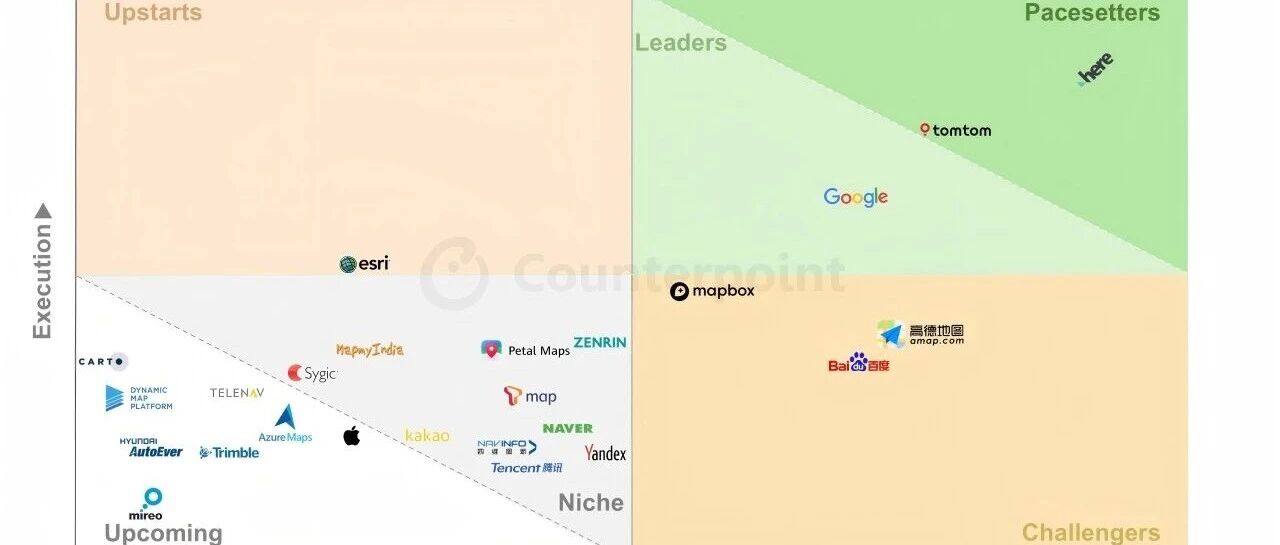
HERE 与 TomTom 在 2026 年定位平台竞争力评估指数中脱颖而出,成为先锋
Counterpoint Research· 2026-01-12 02:45
Core Insights - The article discusses the findings of the "2026 Positioning Platform Competitiveness Assessment Report" by Counterpoint Research, highlighting HERE and TomTom as "Pacesetters" in the positioning platform competitiveness index [4][7] - The report emphasizes the transformation of positioning platforms from traditional mapping solutions to AI-driven data platforms, enhancing user experience through real-time intelligence and personalized services [4][5] Group 1: Positioning Platform Competitiveness - HERE and TomTom are recognized as "Pacesetters" in the positioning platform competitiveness index, while Google is categorized as a "Leader" [4][7] - Baidu, Gaode, and Mapbox are classified as "Challengers" due to their strong platform capabilities but limited market coverage [4][8] - ESRI is noted as an "Upstart" for its execution capabilities, although it still lags behind leading companies in certain dimensions [4] Group 2: HERE's Performance - HERE excels in both platform capability and execution, supported by a comprehensive service product portfolio and a robust partner ecosystem across various verticals like automotive and logistics [5] - The company is leading the transition towards software-defined vehicles (SDVs) and collaborates closely with automakers to guide their transformation [5] - HERE is increasing its R&D investment in product technology and innovation, particularly in AI solutions for the automotive and logistics sectors [5] Group 3: TomTom's Innovations - TomTom has made significant strides with its Orbis map in 3D visualization and traffic analysis, earning its place alongside HERE as a "Pacesetter" [5] - The company is the second global entity, after Google, to launch a Model Context Protocol (MCP) server, facilitating rapid deployment of navigation systems for automakers [5] Group 4: Market Dynamics - The proliferation of location-aware AI features like "search" and "nearby" is leading to hyper-localized and highly personalized user experiences becoming mainstream [7] - Google Maps benefits from its strong core mapping capabilities and vast crowdsourced data from billions of monthly active users, solidifying its "Leader" status [8] - Baidu and Gaode are recognized as regional leaders in China, while Mapbox stands out for its developer-centric approach, offering customizable SDKs for users focused on personalization and visualization [8]

GEO专家交流-如何看待GEO底层技术及产业机遇
2026-01-12 01:41
Summary of GEO Technology and Industry Opportunities Company Overview - **Company**: Baidu - **Business Segment**: GEO (Generative Engine Optimization) - **Revenue Contribution**: GEO accounts for approximately 40% of Baidu's advertising search business, which contributes two-thirds of the annual revenue [1][2] Core Insights and Arguments - **Technological Framework**: Baidu's GEO utilizes a technology toolchain that includes RAG optimization, large model base, and vector database retrieval to achieve precise marketing and content distribution [1][2] - **Content Service Ecosystem**: Baidu has established over 20 data crowdsourcing bases across the country to gather data annotation materials, which support AI training and enhance optimization capabilities [5][6] - **Marketing Solutions**: The company offers end-to-end marketing strategies through keyword package services, enabling clients to achieve targeted exposure on various AI platforms [6][7] - **AI Content Generation**: Baidu integrates its Wenxin large model with GPU collaboration to provide toolchain services, allowing users to optimize content through conversational interfaces [1][7] - **Regulatory Compliance**: In response to AI regulatory policies, Baidu has implemented safety controls on its GEO engine and Wenxin model, ensuring that AI-generated content is clearly marked for compliance [8][9] Performance Metrics - **Optimization Results**: The optimization engine has reportedly increased retention rates and click-through rates by approximately 260% across platforms [12] - **GO Advertising Pricing**: GO advertising is priced about 30% higher than traditional advertising, with an expected long-term value increase of around 10% [21][27] Additional Important Points - **Client Industries**: GEO primarily serves industries such as tourism, legal, consumer goods, and e-commerce, with a focus on sectors that benefit from increased exposure and click rates [17] - **Cost Structure**: The pricing model for GEO includes toolchain fees, data services charged by person-days, and project-based pricing for marketing solutions [18][20] - **Competitive Advantage**: Baidu's integration of large model capabilities creates a significant technical barrier, allowing for automated strategy generation and optimization [22][23] - **Future Strategy**: Baidu's future plans focus on technology integration, compliance system development, and ecosystem collaboration to transition smoothly from the search era to new media and short video platforms [10][25] Conclusion Baidu's GEO technology represents a significant advancement in AI-driven marketing and content optimization, with a robust framework that supports compliance and enhances client engagement across various industries. The strategic focus on technology integration and regulatory adherence positions Baidu favorably in the evolving digital landscape.
李彦宏要IPO敲钟了
3 6 Ke· 2026-01-11 23:47
Core Viewpoint - Baidu's Kunlun Chip is set to go public, marking a significant move in the Chinese semiconductor industry as it aims to capitalize on the growing demand for AI and computing power [1][4][9]. Group 1: Company Background and Development - Kunlun Chip, originally part of Baidu's AI chip division, was spun off in 2021 with an initial valuation of 13 billion RMB [1][6]. - The chip development began in 2011, with significant milestones including the launch of the first Kunlun chip in 2018, which achieved a computing power of 260 Tops [2][3]. - By 2024, the third generation of Kunlun chips is expected to be mass-produced, targeting various industries such as finance, energy, and education [3]. Group 2: IPO Details and Market Position - Kunlun Chip has submitted a listing application to the Hong Kong Stock Exchange, indicating a strong push towards an IPO [4][5]. - The company has attracted a diverse range of investors, including major firms like BYD and various venture capital funds, reflecting its status as a unicorn from inception [6][7]. - Analysts predict that Kunlun Chip's sales could reach 3.5 billion RMB in 2025 and 6.5 billion RMB in 2026, highlighting its growth potential [7]. Group 3: Competitive Landscape and Strategic Importance - The current IPO wave in the semiconductor sector, particularly for AI chips, has created a competitive environment that Baidu aims to leverage with Kunlun Chip [8][9]. - Baidu's CEO has emphasized the strategic benefits of the IPO, including enhanced market perception and improved financial resource allocation [7]. - The anticipated valuation of Kunlun Chip could significantly impact Baidu's overall market value, with estimates suggesting a potential worth of 22 billion USD for Baidu's stake post-IPO [9].
Robotaxi行业深度:商业化进展、竞争格局、产业链及相关公司深度梳理
Sou Hu Cai Jing· 2026-01-11 14:54
Group 1 - Robotaxi is a shared mobility service based on L4/L5 autonomous driving technology, offering advantages such as safety and low cost, and is a key application for advanced intelligent driving [1][5] - The global Robotaxi market is rapidly commercializing, with significant developments in the Middle East, Europe, and major cities in Asia, supported by favorable policies and demographic trends [1][2] - In China, Robotaxi development is advanced due to cost control, infrastructure, data richness, and resource reuse, with a regulatory framework being established to support commercialization [1][2][20] Group 2 - The industry is currently in a pilot phase, characterized by a bipolar driving pattern between the US and China, with leading companies like Waymo and Tesla in the US, and companies like Baidu's Apollo and Pony.ai in China [2][39] - The business model typically involves a triangular cooperation model of "intelligent driving technology + hardware production + terminal operation," with ongoing negotiations over profit distribution and control [2][41] - The global market for Robotaxi is projected to reach $352.6 billion by 2035, with the Chinese market expected to exceed 158.3 billion yuan by 2030 [2][6] Group 3 - The industry is experiencing a shift in value from hardware to data operations, with the supply chain comprising core hardware, autonomous driving solution providers, and operational efficiency [2][6] - Companies are accelerating their global expansion, leveraging technological and cost advantages, particularly in markets like the Middle East [2][48] - The competitive landscape is evolving, with leading companies in China focusing on full autonomous operations in major cities, while the second tier is rapidly catching up [2][46] Group 4 - The regulatory framework in China is crucial for the development of Robotaxi, with multiple departments creating a closed-loop management system to ensure safety and compliance [20][21] - Cost reduction is a fundamental driver for Robotaxi, as eliminating human driver costs allows for a more competitive pricing model [22][23] - Technological advancements are driving down the costs of key components, such as sensors and chips, which is essential for scaling operations [30][40]


【重磅深度】全球Robotaxi商业化拐点将现,看好国内L4公司出海再扬帆
东吴汽车黄细里团队· 2026-01-11 14:10
Core Viewpoint - The global shared mobility market is undergoing a critical transition from human-driven to automated services, exhibiting significant regional differentiation [4][9]. North America Market - The North American ride-hailing market is dominated by Uber and Lyft, creating a stable pricing power. In the Robotaxi sector, Waymo holds a monopoly while Tesla aggressively disrupts the market. Chinese Robotaxi companies face barriers due to a 2025 U.S. Department of Commerce ban on hardware and software, complicating their commercialization path [4][9][16]. European Market - The European regulatory environment is fragmented and stringent, with local automakers lagging in L4 algorithm development. This creates a unique "hybrid model" opportunity, where "U.S./local platforms + Chinese technology" could break through. Uber and Lyft's collaboration with Baidu Apollo indicates that de-branding technology output is a favorable solution for entering the European market [4][9][16]. Middle East Market - The Middle East presents a unique "three highs and one low" characteristic: high customer spending, high policy support, high infrastructure investment, and low energy costs. Gulf countries are eager to reduce oil dependency, viewing autonomous driving as a national strategy. Chinese companies like WeRide and Pony.ai benefit from dual advantages of road rights and licenses, making it an ideal training ground and commercialization area for overseas expansion [4][9][16]. Southeast Asia Market - The Southeast Asian ride-hailing market is large but has low customer spending. Low labor costs may lead to economic challenges for Robotaxi operations. In the short term, large-scale deployment of Robotaxis is not cost-effective, and two-wheeled vehicles remain mainstream. Singapore, with its high labor costs, may achieve Robotaxi commercialization [4][5][9]. Investment Focus - Focus on the L4 RoboX industry chain, prioritizing B-end software over C-end hardware. Recommended stocks include: - Hong Kong stocks: Xpeng Motors, Horizon Robotics, Pony.ai, WeRide, Cao Cao Mobility, and Black Sesame Technology - A-shares: Qianli Technology, Desay SV, and Jingwei Hirain - Downstream application-related stocks from the Robotaxi perspective include integrated models (Tesla, Xpeng Motors), technology providers with revenue-sharing models (Horizon, Baidu, Pony.ai, WeRide, Qianli Technology), and the transformation of ride-hailing/taxi services (Didi, Cao Cao Mobility, Ruqi Mobility, Dazhong Transportation, Jinjiang Online) [6][9]. Regulatory and Market Barriers - The regulatory landscape for Robotaxis abroad features a dual approach of support and regulation. Companies must assume clear accident liability and purchase sufficient liability insurance. Vehicles must have complete data recording capabilities and undergo third-party safety assessments. Operationally, there are restrictions on operational areas, fleet size, and speed [12][14]. Market Size and Growth - The North American shared mobility market is projected to grow significantly, with the total Gross Transaction Value (GTV) expected to reach billions by 2030. The European market also shows substantial potential, albeit with slower conversion rates. The Middle East is characterized by strong government support, while Southeast Asia presents a high-growth potential due to infrastructure gaps [21][22][27]. Pricing Dynamics - Pricing dynamics vary significantly across regions, influenced by local labor costs and regulatory environments. North America has high labor costs, allowing Robotaxis to survive without extreme price reductions. In contrast, Europe faces stringent labor protections that increase operational costs. The Middle East's pricing is shaped by government-led transportation strategies, while Southeast Asia's ultra-low fares are supported by low labor costs [33][34]. Profitability Disparities - Profitability varies significantly across countries, with developed regions showing higher absolute margins per Robotaxi. Revenue per vehicle in China, UAE, UK, and the US is estimated at approximately $40,000, $90,000, $250,000, and $250,000 respectively, with gross margins reflecting these disparities [34][35].




李彦宏要IPO敲钟了
投资界· 2026-01-11 08:11
Core Viewpoint - Baidu is preparing for the IPO of Kunlun Chip, aiming to capitalize on the rising demand for computing power in China, with plans to list on the Hong Kong Stock Exchange in 2026 [2][6]. Group 1: Kunlun Chip Development - Kunlun Chip, originally part of Baidu's intelligent chip division, was spun off in 2021 with an initial valuation of 13 billion RMB [2][7]. - The chip project began in 2018, with the first AI chip launched at the Baidu AI Developer Conference, achieving a computing power of 260 TOPS [4]. - By 2024, the third generation of Kunlun Chip is expected to be mass-produced, targeting various industries including internet, finance, and education [4][5]. Group 2: Market Position and Financials - Kunlun Chip has attracted significant investment, with a valuation of 130 billion RMB during its first round of financing in 2021, and has since seen multiple rounds of investment from notable firms [7][8]. - The company is projected to achieve sales of 3.5 billion RMB in 2025 and potentially 6.5 billion RMB in 2026 [8][9]. - Baidu anticipates that the IPO will enhance Kunlun Chip's market image and allow for independent access to capital markets, benefiting both companies [9]. Group 3: Competitive Landscape - The IPO comes amid a surge in domestic chip companies, with competitors like Moore Threads and Muxi achieving significant market valuations shortly after their listings [10][12]. - Baidu's Kunlun Chip aims to replicate the success of these competitors, with expectations of a similar market valuation upon its IPO [12]. - Analysts suggest that if Kunlun Chip achieves a valuation similar to that of Cambricon, Baidu's stake could be valued at 22 billion USD, representing 45% of its current market cap [12].