BIDU(BIDU)

Search documents
百度(09888.HK):获迪拜RTA全无人测试许可 价值重估进行时
Ge Long Hui· 2026-01-08 21:53
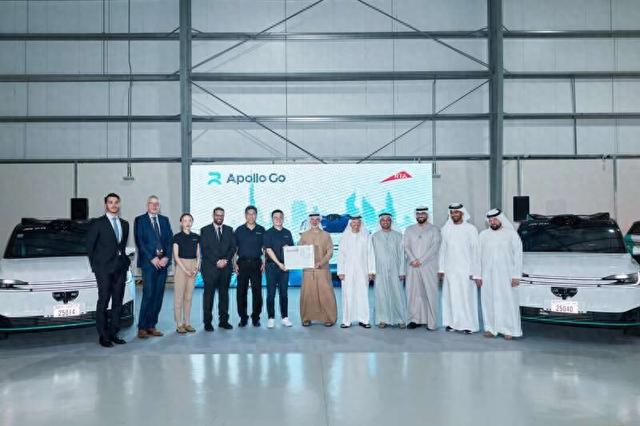
Company Developments - Baidu's autonomous driving platform, Apollo Go, has officially received a fully autonomous driving test license from the Dubai Roads and Transport Authority (RTA) as of January 6, 2026, making it the first and only platform authorized for full autonomous testing in Dubai [1] - The company plans to expand the Apollo Go fleet in Dubai to over 1,000 vehicles [1] - Apollo Go has successfully established a fully autonomous vehicle integrated operation base in the Middle East and has covered 22 cities globally, providing over 17 million services with more than 250,000 fully autonomous orders per week [1] Financial Insights - As of Q3 2025, the company estimates its quickly monetizable net cash portion to be 180.1 billion yuan, indicating a strong cash reserve and safety net [2] - AI-related business revenue reached 9.6 billion yuan in Q3 2025, showing a year-on-year growth of over 50% [2] - The company maintains its revenue and non-GAAP net profit forecasts for 2025 and 2026, while introducing new forecasts for 2027, estimating revenue at 135 billion yuan and non-GAAP net profit at 22.1 billion yuan [2] Valuation and Target Price - The company has adjusted its target prices for US and Hong Kong stocks upward by 8.5% and 7% to $205 and HK$196, respectively, based on a sum-of-the-parts (SOTP) valuation method [2] - The new target prices correspond to a non-GAAP P/E ratio of 25 times for US stocks and 21 times for Hong Kong stocks for the years 2026 and 2027, indicating an upside potential of 40% and 35% compared to current valuations [2]

百度:围绕AI“魔改”经典IP等场景,累计巡查清理违规视频284条
Xin Lang Cai Jing· 2026-01-08 15:54
Core Viewpoint - The announcement highlights Baidu's commitment to addressing the issue of "AI-modified" videos in response to a national initiative aimed at regulating such content starting January 1, 2026 [1][5]. Group 1: Governance Measures - Baidu is actively responding to the national governance initiative by enhancing content review processes and implementing a collaborative mechanism between technical identification and manual review [1]. - The company aims to accurately target key areas of AI content violations, focusing on identifying sensitive elements such as military uniforms, notable figures, and classic IP images through advanced detection methods [1]. - A specialized model for political content control is being developed to improve semantic recognition and intent prediction, thereby preventing the generation of inappropriate "AI-modified" content at the source [1]. Group 2: Progress and Achievements - To date, Baidu has inspected and removed a total of 284 videos related to AI-modified classic IPs and politically sensitive content, resulting in the closure of 2 accounts [2]. - Specific cases of violations include inappropriate AI-generated portrayals of military figures and classic literary characters, which have been promptly addressed by removing the offending videos and closing the accounts involved [3]. Group 3: Future Commitment - Baidu is committed to continuing its efforts in regulating "AI-modified" videos to create a healthier online environment for youth [4].
AI正在进公司,谁成了职场人的默认工具丨AI产品榜·网站榜2025年12月
36氪· 2026-01-08 13:35
AI 产品榜 · 网站榜 2025 年 12 月榜单 , 本文里包含 19 个 AI 榜单。 | AI产品榜·网站榜(web) | | | --- | --- | | 全球总榜 | 全球搜索引擎 | | 国内总榜 | 全球聊天机器人 | | 出海总榜 | 全球Al虚拟角色 | | 全球 · 增速/降速榜 | 全球AiPPT工具 | | 国内・増速榜 | 图片生成/编辑 | | 全球视频生成/编辑 | 全球音乐/会议助理 | | Vibe Coding | Al云榜 | | AI产品榜·智能体榜 | | 以下文章来源于AI产品榜 ,作者李榜主 AI产品榜 . AI产品榜 aicpb.com:全球影响力AI产品榜单,互联网女皇 Mary Meeker 都在引用!按月发布;AI产品榜大会:你必参的 AI 行业盛会;发起人:李榜主 wx:QBB2387 能留在网站里的AI。 第 31 期 AI 产品榜·网站榜 (Web) ( 2025 年 12 月榜)由 AI 产品榜、 36kr 、硅星人联名发布。 非商用引用数据标注来源:【公众号@AI产品榜 aicpb.com】 亮点摘要 全球总榜: 真正的 " 世界级入口 " ...






AI眼镜大战终局前瞻:阿里与百度的超级终端争夺战
3 6 Ke· 2026-01-08 09:54
Core Insights - The 2025 consumer electronics landscape is dominated by "AI glasses," with major players like Baidu and Alibaba launching significant products, leading to a global competition termed the "Hundred Glasses War" [1][12] - The competition is fundamentally about the control of the "next-generation super terminal" narrative, with a focus on hardware, AI capabilities, and ecosystem development [1][4] Group 1: Competition Focus - The competition has evolved from basic hardware comparisons to a multi-dimensional ecosystem battle, highlighting three core competitive focuses: lightweight design and user experience, practical AI capabilities, and ecosystem collaboration [1][4] - Baidu's Xiaodu AI Glasses Pro weighs 39 grams and offers a stylish design, while Alibaba's Quark AI Glasses provide two series targeting different user needs, emphasizing comfort and integrated prescription options [2][3] - The challenge of balancing display quality, battery life, and comfort is referred to as the "impossible triangle" in the industry [2] Group 2: AI Capabilities and Ecosystem - Baidu's AI glasses leverage the Wenxin Yiyan model for real-time translation, AI recognition, and meeting summaries, while Quark integrates its capabilities with local services like navigation and payment [3][4] - The two companies differ in their approaches: Baidu focuses on personal assistant features, while Quark emphasizes efficiency tools for local living [4] Group 3: Market Dynamics and Challenges - The current market faces high return rates, with traditional e-commerce platforms seeing around 30% and content platforms like Douyin reaching 40-50%, primarily due to insufficient functionality and user experience [6] - Key issues include mismatched battery life, inadequate functionality across devices, and a lack of perceived value for high-priced products, leading to consumer regret [6][7] Group 4: Future Outlook - The AI glasses market is expected to see significant growth, with global shipments projected to exceed 23.68 million units by 2026, and the Chinese market alone surpassing 4.91 million units [8][9] - The industry is anticipated to shift towards a model of "head concentration and segmented coexistence," with major players dominating the general market while niche companies focus on specialized areas [9][10] - Technological advancements are expected to address current limitations, with improvements in battery life, display technology, and the development of native applications [10][11] Group 5: Business Models and Consumer Adoption - The business model is shifting from hardware sales to a "hardware + service" subscription model, with companies like Quark and Baidu exploring service monetization strategies [10][11] - By 2026, AI glasses are projected to become more affordable, with prices potentially dropping to the 1500-2000 yuan range, making them more accessible to consumers [11]
谷歌市值超苹果;内存价格涨势将延至2026年丨新鲜早科技
2 1 Shi Ji Jing Ji Bao Dao· 2026-01-08 03:08
Group 1: Market Movements - Google's market capitalization reached $3.89 trillion, surpassing Apple's $3.85 trillion for the first time since 2019 [2] - Major tech stocks saw varied performance, with Intel rising over 6% and Google increasing by over 2% [2] Group 2: AI Developments - OpenAI launched ChatGPT Health, which connects medical records and health apps to help users understand health reports [3] - Lenovo and NVIDIA announced a collaboration to create an "AI Cloud Super Factory," aiming to significantly reduce AI deployment time and scale up to 100,000 GPUs [4] - Siemens and NVIDIA expanded their strategic partnership to develop industrial AI solutions, with plans to create AI-driven manufacturing bases starting in 2026 [5] - Genie Sim 3.0, an open-source simulation platform driven by large language models, was launched by Zhiyuan Robotics at CES [8] Group 3: Corporate Announcements - Xiaomi awarded its 2025 Technology Awards, with the top prize going to the self-developed chip "玄戒O1" [7] - ByteDance denied rumors of entering the automotive industry but confirmed ongoing collaborations in automotive intelligence with Mercedes-Benz [9] - Baidu's "萝卜快跑" received the first full autonomous driving test license in Dubai, with plans to expand its fleet to over 1,000 vehicles [10] Group 4: Financial Activities - xAI completed its E-round financing, raising $20 billion, exceeding its initial target of $15 billion [20] - Su Mei Da plans to acquire a 16.92% stake in Blue Science and Technology for approximately $4.03 billion [22] - Zhongwei Company announced plans to sell up to 1.3% of its shares in Tuojing Technology, with an expected transaction value of approximately 1.393 billion yuan [17]






香港恒生指数跌超1%,舜宇光学科技、百度集团跌超2%
Mei Ri Jing Ji Xin Wen· 2026-01-08 02:10
(文章来源:每日经济新闻) 每经AI快讯,1月8日,香港恒生指数跌超1%,舜宇光学科技、百度集团跌超2%。 ...

Robotaxi-行业近况更新
2026-01-08 02:07
Summary of Robotaxi Industry Conference Call Industry Overview - The Robotaxi industry is experiencing accelerated development due to the opening of autonomous driving road rights, expanding from remote areas like Shanghai Lingang to the entire Pudong and Minhang districts. Other cities such as Beijing, Guangzhou, Shenzhen, and Hangzhou are following similar trends, with large-scale rollout expected by 2026 [1][2]. Key Points and Arguments Policy and Regulatory Changes - Significant changes in policy and enterprise progress in L4 and L3 autonomous driving are noted, with 2025 being seen as the "Robo Taxi Year." The opening of road rights has expanded significantly, with Shanghai allowing operations in popular areas by 2025 [2]. - Platforms must now apply for demonstration operation licenses through local ride-hailing or taxi companies, limiting the direct operational profitability of tech platforms [1][2]. - The assessment for intelligent connected vehicle licenses involves three stages: road testing, demonstration application, and demonstration operation, with a total of 12 types of licenses being gradually integrated across regions [3]. Technological Approaches - Three main technological routes are identified: 1. High-precision map solutions, exemplified by companies like Baidu and Pony.ai, which are mature but costly [4]. 2. Clear map or no-map solutions that rely on advanced algorithms, reducing mapping costs but increasing algorithm complexity [4]. 3. Pure visual end-to-end solutions, like those used by Tesla, which can operate without signals or navigation, closely mimicking human driving [4]. Market Participants - The domestic Robotaxi market consists of three main groups: 1. Technology companies (e.g., Baidu, Pony.ai) with high single-vehicle costs. 2. OEM-backed platforms (e.g., T3 Mobility, Cao Cao Mobility) with lower vehicle costs but weaker algorithm capabilities. 3. Traffic platforms (e.g., Didi, Amap) leveraging user data to enhance competitiveness [5][6]. Commercialization Progress - Companies are nearing single-vehicle breakeven, with Baidu and Pony.ai optimizing hardware and service quality to expand market coverage [7]. - Baidu has deployed 3,000 vehicles, primarily in Wuhan, with daily rides averaging 12-18. Pony.ai operates in major cities but on a smaller scale [11]. Financial Metrics - Baidu's vehicle cost is approximately 280,000 RMB, with daily operational costs around 290 RMB, achieving breakeven in Wuhan and profitability in Shanghai. Pony.ai's daily revenue in Guangzhou is about 299 RMB with a 40% utilization rate [15][16]. Future Industry Landscape - The Robotaxi industry is expected to evolve into three main player types: license holders (local taxi or ride-hailing companies), OEMs with vehicle manufacturing capabilities, and traffic platforms benefiting from data and mapping services [18]. - Amap is positioned to gain significant market share in the autonomous driving sector due to its large user base and partnerships with OEMs [19]. Cost Differences - Operational costs for overseas Robotaxi services are significantly higher than in China, with costs in regions like the Middle East and Europe being 1.5 times higher, and vehicle prices three times higher than in China [21]. Data and Connectivity Costs - Robotaxi operations incur substantial data costs, with each vehicle generating approximately 40GB of data daily, leading to high monthly expenses for data storage and processing [20]. Additional Important Insights - The industry is witnessing a shift towards lower vehicle-to-driver ratios, which will reduce data transmission volumes and associated costs, indicating a trend towards profitability and cost reduction in the Robotaxi sector [22][23].
雷军:没有规划小米SU3车型;百度旗下萝卜快跑获得迪拜无人驾驶测试许可丨早资道
Sou Hu Cai Jing· 2026-01-08 01:35
Group 1 - Lei Jun, founder and CEO of Xiaomi, confirmed that there are no plans for the Xiaomi SU3 model, dismissing various online speculations as mostly false [2][3] - Baidu's autonomous ride-hailing service, Apollo Go, has received the first batch of autonomous driving road licenses from the Dubai Roads and Transport Authority, allowing it to conduct fully autonomous road tests on designated public roads [3] Group 2 - Gaode announced the launch of the "Million Firewood Good Store Support Plan," which aims to support 1 million offline merchants by providing free access to aerial street views, with over 860,000 restaurants having joined since September 10, 2025, leading to significant increases in orders and revenue [4] - Hyundai plans to deploy Boston Dynamics' Atlas humanoid robots in its U.S. factories starting in 2028 and is exploring a subscription model for robot services [5] - TCL showcased its printed OLED vehicle display and independent communication AR glasses at CES 2026, with the latter achieving a 24% market share in the global AR glasses market by Q3 2025, maintaining the top shipment volume for two consecutive quarters [6]


Why Baidu’s Quiet Spin-Off Could Unlock a Major Re-Rating
Yahoo Finance· 2026-01-07 14:32
Core Viewpoint - Baidu's stock has risen approximately 15% recently, reclaiming the $148 price level, primarily due to a strategic move by management involving the spin-off of its AI chip subsidiary, Kunlunxin [3][4]. Company Developments - Baidu has confidentially filed for an initial public offering (IPO) of its AI chip subsidiary, Kunlunxin, on the Hong Kong Stock Exchange, signaling a shift in market perception from being solely an advertising platform to a diverse holding company with high-growth assets [4]. - The spin-off of Kunlunxin is expected to target a valuation of approximately $3 billion (RMB 21 billion), with Baidu retaining a controlling majority stake of about 59%, allowing shareholders to benefit from the chip unit's success while establishing its own market value [5]. Market Context - The spin-off comes at a time when stringent U.S. export controls have limited Chinese companies' access to advanced chips from American suppliers, creating a demand for high-performance alternatives within China [6]. - Baidu's new subsidiary is well-positioned to supply high-performance computing chips to a domestic market that is increasingly reliant on local suppliers due to supply chain concerns [7].
萝卜快跑拿下迪拜首个全无人驾驶测试许可
Xin Lang Cai Jing· 2026-01-07 13:07
迪拜道路与交通管理局负责人在活动现场表示,此次许可的颁发及基地启用,是迪拜推动智慧出行战略 的关键步骤,旨在为公众提供更安全、高效的创新出行选择。百度智能驾驶事业群组总裁则表示,迪拜 前瞻性的政策环境与基础设施为无人驾驶技术落地提供了良好条件,企业期待深度参与当地智慧交通系 统建设。 据了解,双方合作始于2025年3月签署的战略协议。此后,萝卜快跑于同年7月获得了迪拜的首张自动驾 驶测试牌照,并开始组建测试车队。此次获得全无人驾驶测试许可,标志着其在当地的技术验证与商业 化准备进入新阶段。 来源:中国青年报客户端 中国青年报客户端讯(中青报·中青网记者 张真齐)1月6日,萝卜快跑正式获得由迪拜道路与交通管理 局颁发的全无人驾驶测试许可,成为当前迪拜唯一获此许可的企业。根据许可,萝卜快跑可在迪拜指定 区域开展不配备安全员的全无人驾驶车辆公开道路测试,为其后续启动商业化运营铺平了道路。 同日,萝卜快跑在迪拜建设的首个一体化运营基地正式投入启用。该基地具备无人驾驶车辆的日常运 营、维护、安全监控与人员培训等综合功能。迪拜方面表示,该基地的启用是其"2030智能城市战略"的 一部分,该战略目标之一是到2030年将全市 ...