
BMW(BMWYY)

Search documents
大众、宝马、奔驰半年业绩下滑明显,中美市场成两大主因
Guan Cha Zhe Wang· 2025-08-01 00:49
Core Viewpoint - The financial results for the first half of 2025 from major European automakers Volkswagen, Mercedes-Benz, and BMW show significant declines in revenue and profit, attributed to factors such as U.S. tariffs and intense competition in the Chinese market [1][3][9]. Financial Performance Summary - Mercedes-Benz reported a revenue of €72.6 billion (approximately ¥597.9 billion) for the first half of 2025, a decrease of 8.6% year-on-year, with a net profit of €2.7 billion (approximately ¥222.3 billion), down 55.8% compared to the previous year [3]. - Volkswagen's second-quarter revenue was €80.81 billion (approximately ¥665.4 billion), a 3% decline year-on-year, with an operating profit of €3.83 billion (approximately ¥315.3 billion), down 29.4% [3]. - BMW's total sales revenue for the first half of 2025 was €67.7 billion (approximately ¥557.5 billion), a decrease of 8% year-on-year, with a net profit of €4 billion (approximately ¥329.3 billion), down 29% [3]. Sales Performance Summary - Mercedes-Benz's global sales fell by 8% to 1.076 million units in the first half of 2025, with a 14% decline in China, a 6% decline in the U.S., and a 3% decline in Europe [4]. - BMW's global sales decreased by 0.5% to 1.207 million units, with a 15.5% drop in China, although sales in Europe increased by 8.2% [4][6]. Market Challenges - Both Mercedes-Benz and BMW cited U.S. tariffs and fierce competition in the Chinese market as key factors contributing to their declining performance [3][6]. - The impact of U.S. tariffs has been particularly severe, with Volkswagen experiencing a 16% drop in sales in North America and an estimated cost increase of €1.3 billion (approximately ¥10.7 billion) due to tariffs [9][12]. Strategic Responses - Despite the poor financial performance, the companies remain committed to their transformation strategies, with BMW leading in electric vehicle sales, reporting an 18.5% increase in sales of electric and plug-in hybrid models [8]. - Mercedes-Benz and Volkswagen are implementing cost-control measures and restructuring plans to mitigate financial losses, including layoffs and strategic shifts [12][13].

BBA上半年利润齐下跌,原因是什么?
Di Yi Cai Jing· 2025-08-01 00:14
Core Viewpoint - The BBA (BMW, Benz, Audi) group continues to face profit declines in the first half of the year, with Audi being the only company to report revenue growth, while Mercedes-Benz experiences the largest profit drop [1][2]. Financial Performance - BMW reported revenue of €67.7 billion, a year-on-year decline of 8%, with net profit dropping 29% to €4 billion [1]. - Mercedes-Benz's revenue was €66.38 billion, down 8.6%, with net profit falling 55.8% to €2.69 billion [1]. - Audi's revenue increased by 5.3% to €32.57 billion, but net profit decreased by 37.5% to €1.346 billion [1]. Market Performance - Sales in the Chinese market saw significant declines, with BMW, Mercedes, and Audi selling 318,000, 293,000, and 288,000 units respectively, representing year-on-year drops of 15.5%, 14%, and 10.2% [2]. - BMW and Audi experienced some sales growth in European markets, while Mercedes-Benz faced larger declines in both profit and sales [2]. Strategic Adjustments - Audi and Mercedes have adjusted their electric vehicle strategies, with Audi retracting its plan to cease internal combustion engine development by 2033, and Mercedes shifting its focus to a dual development strategy for both fuel and electric vehicles [3]. - BBA is accelerating its electric vehicle transition in China, collaborating with local partners to enhance their offerings and efficiency [3][4]. Impact of Tariffs - Audi's CFO indicated that U.S. tariffs and increased transformation costs are major contributors to profit declines, with losses estimated at €600 million due to tariffs [5]. - Mercedes-Benz warned that tariffs have negatively impacted sales, predicting a significant drop in annual revenue compared to last year [6]. - BMW anticipates a 1.25 percentage point decline in EBIT margin by 2025 due to tariff-related factors [6]. Regional Sales Trends - In North America, BMW saw a slight increase in sales, while Mercedes-Benz and Audi experienced declines of 9% and 6% respectively [7]. - Audi is considering building a factory in the U.S., while BMW is exploring capacity expansion at its Spartanburg facility [7].
贸易协议争议不断,成本转嫁抛向美国,欧洲车企集体盘点关税重创
Huan Qiu Shi Bao· 2025-07-31 22:49
Core Viewpoint - The European luxury car industry is facing significant profit declines due to U.S. tariffs, with major companies like Mercedes-Benz, Porsche, and Audi reporting steep drops in earnings and sales [1][2][4]. Group 1: Financial Impact - BMW reported a sales revenue of €67.7 billion for the first half of the year, an 8% decrease year-on-year, with a net profit of €4 billion, down 29% [2]. - Mercedes-Benz's profits halved from approximately €6.1 billion to about €2.7 billion in the first half of the year, with a 9% decline in global sales [2]. - Porsche's net profit plummeted 71% to €718 million in the first half of 2025, with a nearly 91% drop in automotive business operating profit in Q2 [4]. - Audi's profits fell 37.5% to €1.3 billion in the first half of 2025, with U.S. tariffs causing approximately €600 million in losses [4]. Group 2: Tariff Effects - The U.S. tariffs have created significant uncertainty for companies, with Mercedes-Benz stating that the tariffs have impacted sales and profitability, reducing its profit margin from a potential 6.6% to 5.1% [2]. - The new trade agreement between the U.S. and EU, while reducing tariffs from 27.5% to 15%, still imposes a higher rate than previously, leading to ongoing financial strain for European manufacturers [5]. - The automotive industry is considering passing tariff costs onto U.S. consumers, with companies like Porsche and Aston Martin already raising prices [1][5][7]. Group 3: Market Dynamics - The North American market is crucial for European automakers, with over 20% of European car exports directed to the U.S. [6]. - Companies like Audi and Porsche, which do not have U.S. production facilities, are particularly vulnerable to tariff impacts [6]. - The competitive landscape is shifting as Chinese electric vehicle brands gain market share, exacerbating challenges for German manufacturers [8][9].
宝马重返熊猫债市场 发行35亿元人民币债券
Zhong Guo Xin Wen Wang· 2025-07-31 21:00
中新社北京7月31日电(记者夏宾)记者7月31日了解到,宝马集团近日重返熊猫债市场,在短期债二级市 场表现向好的有利市场环境下,成功发行年初至今首笔总规模35亿元(人民币,下同)的一年期及三年期 人民币债券。 德意志银行集团担任此次熊猫债发行的联席主承销商。该笔熊猫债旨在协助宝马集团内部的各项业务融 资安排。 据德银介绍,在强劲的市场需求推动下,该笔熊猫债发行规模在原有基础上一再扩容,最终一年期成功 募集20亿元,三年期15亿元,均获得银行和非银机构投资者的踊跃认购。 此次发行创下了宝马熊猫债发行史上最低票面利率,也创下了近年来跨国企业发行同期限熊猫债品种的 最低票面利率纪录。 受人民币国际化以及外资发行人和投资者多元化融资渠道需求的驱动,近期熊猫债发行量激增。德银中 国债务资本市场主管方中睿(Samuel Fischer)表示,此次发行体现了宝马对中国市场的信心。(完) (文章来源:中国新闻网) ...
宝马,突发!
Zhong Guo Ji Jin Bao· 2025-07-31 13:13
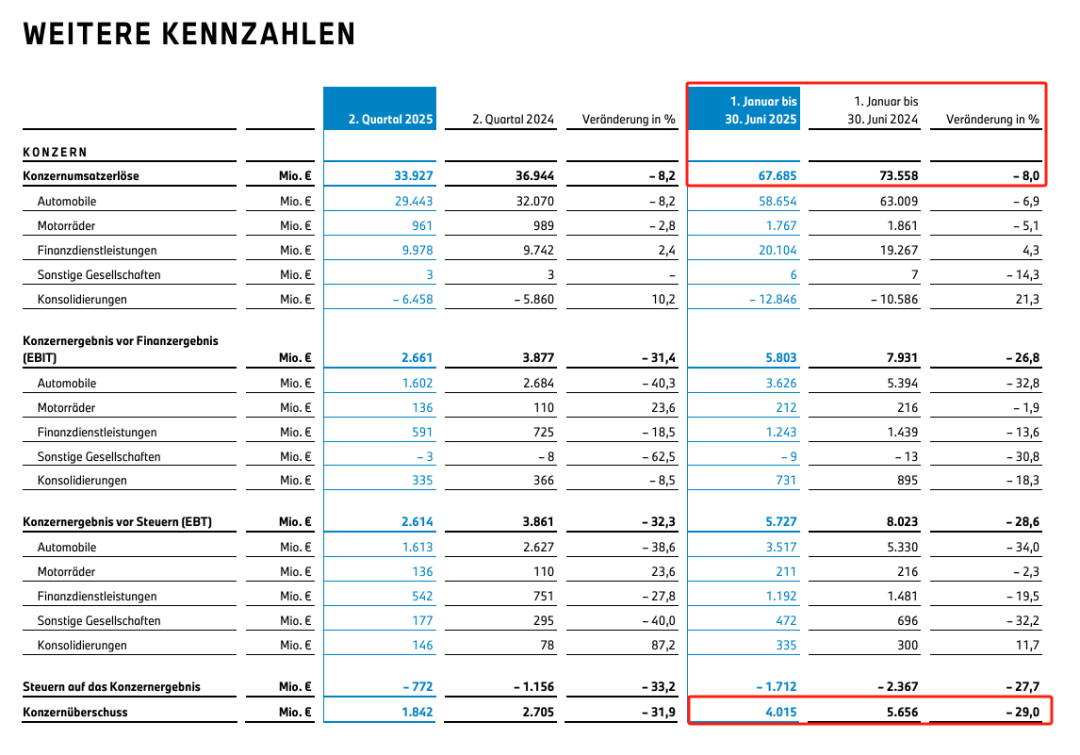
Core Insights - BMW Group reported a decline in sales revenue and net profit for the first half of 2025, with sales revenue at €67.7 billion, down 8% year-on-year, and net profit at €4 billion, down 29% [1][2]. Financial Performance - In Q2 2025, BMW's sales revenue was €33.9 billion, a decrease of 8.2% compared to Q2 2024 [2]. - The EBIT for Q2 2025 was €2.66 billion, reflecting a significant decline of 31.4% year-on-year [2]. - The automotive segment's EBIT margin fell to 5.4% from 8.4% in the previous year [2]. - Total vehicle deliveries for the first half of 2025 were over 1.2 million, remaining stable compared to the previous year [3]. Regional Performance - Sales in the Chinese market dropped by 15.5% due to weak demand for high-end models, indicating a decline in BMW's competitiveness in China [3]. - The European market saw double-digit growth in Q2, with BMW's market share continuing to expand [3]. - The Americas market experienced a cumulative growth of 3.4% in the first half of 2025 [3]. Electric Vehicle Strategy - BMW delivered 318,900 electrified vehicles in the first half of 2025, marking an 18.5% increase year-on-year, with over a quarter of total deliveries being electric models [3]. - The growth in electric models was primarily driven by the i4, iX1, and iX models, with strong performance in plug-in hybrid vehicles in Europe [4]. Strategic Outlook - BMW's Chairman, Oliver Zipse, emphasized the resilience of the company's business model, which is based on globalization, innovation, and attractive products [4]. - The company plans to launch over 40 new and updated models by 2027, covering all market segments and drive types [4]. Market Reaction - Following the disappointing Q2 performance, BMW's stock price has declined, with shares trading at €84, resulting in a total market capitalization of €47.6 billion [5].
宝马,突发!
中国基金报· 2025-07-31 13:10
Core Viewpoint - BMW Group reported a decline in sales revenue and net profit for the first half of 2025, with sales revenue down 8% year-on-year to €67.7 billion and net profit down 29% to €4 billion [2]. Financial Performance - In Q2 2025, BMW Group's sales revenue was €33.9 billion, a decrease of 8.2% compared to Q2 2024 [3]. - The EBIT for Q2 2025 was €2.66 billion, reflecting a significant decline of 31.4% year-on-year [3]. - The automotive segment's EBIT margin fell to 5.4% from 8.4% in the previous year [3]. Sales and Market Performance - BMW Group delivered 621,500 vehicles in the first half of 2025, a slight increase of 0.4% year-on-year [4]. - Sales in the Chinese market dropped by 15.5%, attributed to weak demand for high-end models, while the European market saw double-digit growth in Q2 [4]. - The Americas market experienced a cumulative growth of 3.4% in the first half of the year [4]. Electric Vehicle Transition - BMW Group delivered 318,900 electrified vehicles in the first half of 2025, marking an 18.5% increase year-on-year, with over a quarter of total deliveries being electric models [4]. - The growth in electric models was primarily driven by the i4, iX1, and iX, with strong performance in plug-in hybrid vehicles in the European market [4]. Strategic Outlook - BMW Group's Chairman, Oliver Zipse, emphasized the resilience of the business model, which is based on globalization, innovation, and attractive products [4]. - The company plans to launch over 40 new and updated models by 2027, covering all market segments and drive types, integrating innovative technologies and new design language [4]. Stock Market Reaction - Following the disappointing Q2 performance, BMW Group's stock price has seen a decline, trading at €84 per share with a total market capitalization of €47.6 billion [5].
宝马押注氢能交通,2028年推出首款量产车
财富FORTUNE· 2025-07-31 13:05
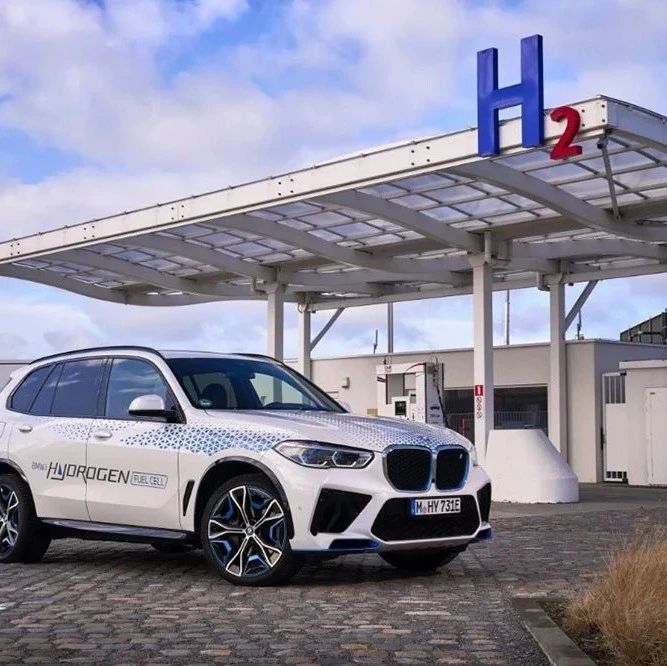
Core Viewpoint - Hydrogen fuel cell vehicles (FCEVs) are entering the market alongside battery electric vehicles (BEVs), but their sales remain significantly lower, with only 12,866 FCEVs registered globally in 2024 compared to 10.8 million BEVs [1] Group 1: Market Participation and Development - BMW plans to launch its first hydrogen fuel cell vehicle by 2028, while Toyota continues to lead in FCEV sales with its Mirai model [1][7] - Other manufacturers like Hyundai and Honda are also involved in the FCEV market, with Honda launching its CR-V e:FCEV in 2024 [1] - BMW has been cautiously producing small batches of hydrogen fuel cell vehicles since 2023, with the iX5 Hydrogen model already demonstrating reliable performance [1] Group 2: Infrastructure Challenges - The lack of hydrogen refueling stations is a significant barrier to FCEV adoption, with the number of stations in the UK decreasing from 15 in 2019 to only 4 by 2025 [2] - In contrast, the UK has a robust network of public charging points for BEVs, with 39,733 charging points available by May 2025 [2] - The high cost of building hydrogen refueling stations, estimated between $1.5 million to $2 million, poses a challenge for widespread infrastructure development [5] Group 3: Strategic Insights - Some industry experts argue that neglecting hydrogen infrastructure is a strategic mistake if the goal is to decarbonize road transport [3] - A complementary relationship exists between FCEVs and BEVs, suggesting that investing in both charging and refueling infrastructure could lower overall costs [4] - The development of hydrogen fuel cell technology could provide resilience against resource shortages associated with battery production [4] Group 4: Future Prospects - BMW is optimistic that by 2028, infrastructure improvements will make hydrogen a viable option for consumers [8] - The decision on where to launch the hydrogen vehicle will depend on local infrastructure conditions, with the UK currently lacking the necessary support [9][10] - Market demand for hydrogen vehicles exists, as indicated by surveys, but translating this interest into actual sales remains a challenge [11][12]
奔驰超长续航新车曝光,消息称计划采用吉利旗下莲花跑车插混技术;印度塔塔汽车将斥资近38亿欧元收购依维柯丨汽车交通日报
创业邦· 2025-07-31 10:42
Group 1 - BYD has recently published a patent for a "floating display device" which involves a technology for aerial imaging, enhancing touch accuracy and sensitivity through a structured interaction mechanism [1] - BMW reported a 29% year-on-year decline in net profit for the first half of the year, with sales revenue of €67.7 billion, down 8% compared to the same period last year [2] - Tata Motors announced an agreement to acquire Iveco for approximately €3.8 billion, excluding its defense business, with the deal expected to be completed by mid-2026 [3] - Mercedes-Benz plans to launch a long-range plug-in hybrid vehicle in the Chinese market, potentially utilizing Geely's Lotus sports car hybrid technology, with ongoing discussions about development details [4]



半年报|电动化占比超1/4、个性化车型表现抢眼,宝马上半年业绩韧劲足
Zhong Guo Jing Ji Wang· 2025-07-31 08:41
Group 1 - BMW Group reported stable global sales in the first half of 2025, with over 1.2 million units sold, maintaining year-on-year levels despite a complex international trade environment [1] - The high-end and personalized brands, including BMW M, Rolls-Royce, and MINI, showed strong performance, with BMW M achieving a record sales figure of over 106,000 units, a 6.5% increase year-on-year [1] - The chairman of BMW Group emphasized the company's resilience based on three pillars: global presence, innovation capabilities, and attractive product offerings [1] Group 2 - BMW Group's electric vehicle sales (including BEV/PHEV) grew by 18.6% year-on-year, accounting for over 25% of total sales in the first half of 2025 [2] - MINI brand emerged as a benchmark for electrification, with pure electric models making up 34.3% of its sales, contributing to a 17.4% increase in global sales [2] - The company invested over €4 billion in R&D focused on new generation technology clusters, preparing for the launch of over 40 new and updated models by 2027 [2]