Honda Motor(HMC)

Search documents
跨国巨头重拾内燃机
Zhong Guo Qi Che Bao Wang· 2025-06-03 02:17
Core Viewpoint - The shift of multinational automakers towards internal combustion engines is driven by ongoing losses in electric vehicle (EV) businesses and the impact of U.S. tariffs under President Trump, leading companies like General Motors and Honda to refocus on more profitable segments like trucks and SUVs [2][4]. Group 1: General Motors - General Motors announced an investment of $888 million to produce a new generation of V8 engines at its Tonawanda plant, marking the largest single investment in its engine facilities [3]. - The new V8 engine is set to be deployed in various full-size trucks and SUVs starting in 2027, with improvements in performance, fuel efficiency, and emissions [3]. - This investment reflects GM's commitment to U.S. manufacturing and job creation, as stated by CEO Mary Barra [3]. Group 2: Honda - Honda plans to reduce its investment in electrification from 10 trillion yen to 7 trillion yen due to a slowdown in the EV market and trade uncertainties, pausing its Canadian EV and battery factory plans [4][6]. - The company aims to focus on hybrid vehicles, targeting global sales of 3.6 million units by 2030, with 2.2 million being hybrid models [5]. - Honda's decision is influenced by a significant drop in net profit, which fell by 24.5% year-on-year for the fiscal year 2024 [6]. Group 3: Other Automakers - Toyota, Mazda, and Subaru have committed to continuing investments in internal combustion engine technology, integrating it with electrification and green fuels [7]. - European automakers like Mercedes-Benz, Ford, and Volkswagen are adjusting their electric strategies while maintaining investments in internal combustion engines [10][11]. - Stellantis plans to invest $6 billion in South America for new vehicle development, including flexible fuel engines, indicating a broader trend among automakers to balance electrification with traditional fuel technologies [11].


日媒:瞄准AI自动驾驶,日本要建“汽车联盟”
Huan Qiu Shi Bao· 2025-06-02 23:04
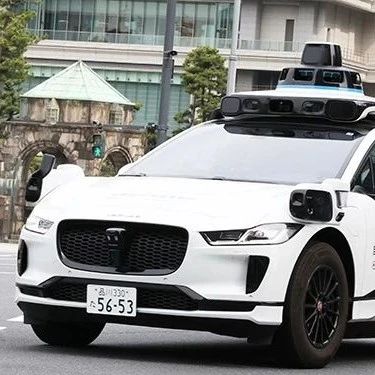
【环球时报特约记者 孙晓蕾】"日本将组建汽车制造商联盟,研发人工智能(AI)自动驾驶汽车技 术。"《日经亚洲评论》日前报道,在日本政府支持下,丰田汽车、本田汽车和其他日本汽车制造商将 合作研发人工智能自动驾驶技术,共同构建AI基础设施并培养相关人才。日本政府拟通过财政补贴等 方式支持该研发机制,旨在强化本国相关供应链体系建设。 据报道,日本政府一直在推动"软件定义汽车"(SDV)的研发。SDV是指以人工智能为核心的软件技术 决定未来汽车。在5月29日举办的讨论会上,日本经济产业省和国土交通省发布了关于汽车产业数字化 转型的"移动性DX战略"修订案。《日刊汽车新闻》网站2日对此报道说,尽管"移动性DX战略"发布至 今仅1年,但随着电动化和智能化汽车的竞争愈演愈烈,日本经济产业省认为有必要灵活地重新审视 该"战略"。此次修订案新增了"支持使用人工智能自动驾驶"的内容。此外,AI基础设施、人才培养、相 关安全标准设定等,将是今后日本车企合作的重点。 对于此次日本政府支持AI自动驾驶研发方面的计划,日本共同社在文章中分析称,由于美国政府对全 球主要贸易伙伴挥舞"关税大棒",日本汽车产业的不确定性增加。有官员表示,有必 ...
日本车企针对AI自动驾驶技术展开合作
日经中文网· 2025-05-31 08:01
Group 1 - Major Japanese manufacturers, including Toyota and Honda, are collaborating on AI-based autonomous driving technology to ensure safety and build AI infrastructure while nurturing talent [1][2] - The Japanese government is supporting the establishment of a collaborative system among large enterprises in the AI autonomous driving sector and is providing assistance to small and medium-sized enterprises to promote domestic production of components [1][2][3] - The development of Software Defined Vehicles (SDV), which rely on software updates via the internet to enhance performance, is a key focus for the Japanese government [2][3] Group 2 - The revised "Digital Transformation Strategy for Vehicles" aims to accelerate the development of AI autonomous driving and includes collaboration in seven areas, such as utilizing generative AI in semiconductor and manufacturing processes [2][3] - Japan's goal is to achieve a domestic and international sales target of 12 million vehicles and a global market share of 30% by 2030 [3] - AI-based autonomous driving is expected to provide smoother driving experiences and reduce the number of cameras and sensors needed, thereby lowering average costs per vehicle [3]
摩根大通:汽车零部件 - 轮胎行业
摩根· 2025-05-29 14:12
Investment Rating - The report provides various investment ratings for Japanese automotive companies, including "Overweight" for Toyota Motor, Suzuki Motor, Yamaha Motor, Isuzu Motors, Denso, Aisin, and Nifco, while "Underweight" is assigned to Nissan Motor and SUBARU [5]. Core Insights - The global auto industry is expected to normalize after overcoming COVID-19 and supply chain issues, with a projected growth rate of approximately 2% CAGR from 2024 [20]. - The report highlights the complexity of the Toyota Group structure, indicating increasing cross-shareholdings among its subsidiaries [7]. - Tariff impacts are noted to be minor in the tire sector, but the competitive environment remains challenging [4]. Coverage Universe & Valuation - Nissan Motor: Underweight, Price: ¥355, Target Price: ¥320, Market Cap: ¥1,318.5 billion, FY24E P/E: NM, ROE: -1.2% [5] - Toyota Motor: Overweight, Price: ¥2,624, Target Price: ¥3,600, Market Cap: ¥41,438.1 billion, FY24E P/E: 6.9, ROE: 13.4% [5] - Mitsubishi Motors: Neutral, Price: ¥432, Target Price: ¥360, Market Cap: ¥631.1 billion, FY24E P/E: 15.4, ROE: 3.7% [5] - Mazda Motor: Neutral, Price: ¥894, Target Price: ¥1,000, Market Cap: ¥564.8 billion, FY24E P/E: 4.5, ROE: 7.3% [5] - Honda Motor: Neutral, Price: ¥1,421, Target Price: ¥1,500, Market Cap: ¥7,500.2 billion, FY24E P/E: 6.4, ROE: 7.5% [5] - Suzuki Motor: Overweight, Price: ¥1,787, Target Price: ¥2,300, Market Cap: ¥3,509.7 billion, FY24E P/E: 8.6, ROE: 14.5% [5] - SUBARU: Underweight, Price: ¥2,625, Target Price: ¥2,500, Market Cap: ¥1,923.9 billion, FY24E P/E: 5.5, ROE: 12.9% [5] - Yamaha Motor: Overweight, Price: ¥1,075, Target Price: ¥1,500, Market Cap: ¥1,103.3 billion, FY24E P/E: 9.7, ROE: 13.3% [5] - Isuzu Motors: Overweight, Price: ¥1,924, Target Price: ¥2,600, Market Cap: ¥1,372.5 billion, FY24E P/E: 9.8, ROE: 9.5% [5] - Denso: Overweight, Price: ¥1,897, Target Price: ¥2,300, Market Cap: ¥5,522.1 billion, FY24E P/E: 13.0, ROE: 8.0% [5] - Aisin: Overweight, Price: ¥1,781, Target Price: ¥2,200, Market Cap: ¥1,440.9 billion, FY24E P/E: 13.4, ROE: 5.2% [5] - Bridgestone: Overweight, Price: ¥6,106, Target Price: ¥6,500, Market Cap: ¥4,357.8 billion, FY24E P/E: 14.7, ROE: 8.0% [5] Earnings Forecast Summary - Toyota's revenue for FY24 is projected at ¥45,095.3 billion, with a YoY growth of 21.4% and a net profit of ¥4,944.9 billion [17]. - Honda's revenue for FY24 is projected at ¥20,428.8 billion, with a YoY growth of 20.8% and a net profit of ¥1,107.2 billion [17]. - Nissan's revenue for FY24 is projected at ¥12,685.7 billion, with a YoY growth of 19.7% and a net profit of ¥426.6 billion [17]. - Suzuki's revenue for FY24 is projected at ¥5,374.3 billion, with a YoY growth of 15.8% and a net profit of ¥267.7 billion [17]. - SUBARU's revenue for FY24 is projected at ¥4,702.9 billion, with a YoY growth of 24.6% and a net profit of ¥385.1 billion [17].


日产考虑出售总部大楼!日本7大车企集体渡劫
Zhong Guo Qi Che Bao Wang· 2025-05-28 01:39
Group 1 - Nissan is considering selling its global headquarters building in Yokohama, Japan, estimated to be worth over 100 billion yen (approximately 5.03 billion RMB), to cover high costs associated with structural reforms such as factory closures [1] - The seven major Japanese automakers, including Toyota, Honda, and Nissan, have reported a collective profit decline of over 20% for the 2024 fiscal year, with Nissan posting a net loss of 670.8 billion yen (approximately 33.7 billion RMB) [2] - Toyota's net profit for the 2024 fiscal year is expected to drop by 35% to 3.1 trillion yen, marking its largest decline in nearly a decade, largely due to new tariffs imposed by the U.S. [6][7] Group 2 - Honda plans to reduce its investment in electrification and software from 10 trillion yen to 7 trillion yen due to a slowdown in the electric vehicle market and trade uncertainties [5] - The U.S. tariffs on imported vehicles and parts have significantly impacted Japanese automakers, with Nissan estimating a loss of 450 billion yen due to these tariffs [7] - Japanese automakers are facing challenges in transitioning to electric and smart vehicles, with high R&D costs and uncertain market demand, leading to adjustments in their product strategies [10] Group 3 - In the Chinese market, Japanese automakers have experienced declining sales, with Toyota's sales down 6.9%, Honda's down 30.9%, and Nissan's at their lowest since 2008, down 12.2% [12][13] - Increased promotional expenses in the North American market are squeezing profits for Japanese automakers, as competition intensifies [13]

本田宣布大幅削减电动化投资,为啥本田不干了?
3 6 Ke· 2025-05-27 08:29
一、本田宣布大幅削减电动化投资 最近几年,只要说起新能源汽车产业的发展,几乎所有车企都在疯狂进行新能源转型,但是就在这样的大背景下,本田却突然宣布要大幅削减电动化投资, 本田这个时候打退堂鼓究竟是想要干什么? 其次,当前市场需求的不确定性,也是本田做出削减电动化投资决策的重要因素。尽管近年来新能源汽车市场取得了显著增长,但近期增速出现了明显放 缓。消费者对电动汽车的接受程度参差不齐,充电基础设施不完善、续航里程焦虑、电池衰减以及较高的保险费用等问题,依然是制约电动汽车市场快速发 展的瓶颈。在这种情况下,车企对于大规模投入电动化领域往往会变得非常纠结和谨慎。因为一旦市场需求未能如预期般增长,前期的巨额投资可能无法获 得相应的回报,进而对企业的财务状况造成严重影响。本田这些年的财务状况也相当不景气,如此严峻的财务状况,使其不得不重新审视电动化投资计划。 据智通财经的报道,日本第二大汽车制造商本田发布声明称,考虑到近期电动汽车市场放缓,本田调整产品投放计划,预计到2030年电动汽车销量占比将低 于此前宣布的30%目标。另一方面,目前市场对混合动力汽车的需求很高,因此本田将进一步增强混动车产品线。 本田计划从2027 ...

金十图示:2025年05月27日(周二)全球汽车制造商市值变化
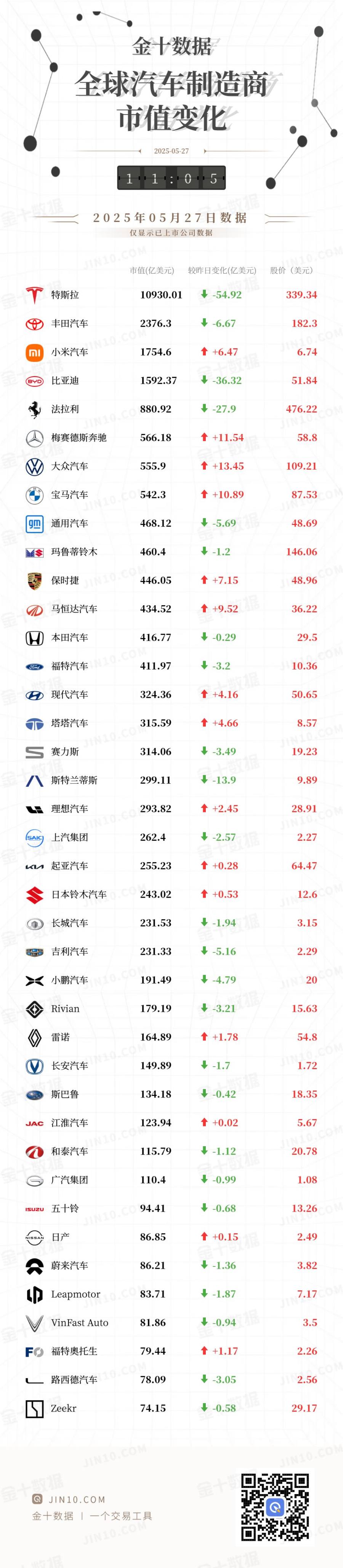
news flash· 2025-05-27 03:13
Group 1 - The article presents the market capitalization changes of global automotive manufacturers as of May 27, 2025, highlighting significant fluctuations in values and percentage changes for various companies [1][3][4]. - BMW leads with a market capitalization of $542.3 billion, showing an increase of 10.89% [3]. - General Motors follows with a market capitalization of $468.12 billion, experiencing a decrease of 5.69% [3]. - Other notable companies include Maruti Suzuki at $460.4 billion (-1.2%), Porsche at $446.05 billion (+7.15%), and Mahindra & Mahindra at $434.52 billion (+9.52%) [3]. Group 2 - The data also includes companies like Ford with a market cap of $411.97 billion (-3.2%) and Hyundai at $324.36 billion (+4.16%) [3]. - Emerging players such as Li Auto and Xpeng are noted with market caps of $293.82 billion (+2.45%) and $191.49 billion (-4.79%) respectively [3][4]. - The report indicates a diverse performance across the automotive sector, with some companies like Rivian and Renault showing declines of 3.21% and increases of 1.78% respectively [4].



多家车企电池工厂计划生变
汽车商业评论· 2025-05-25 14:55
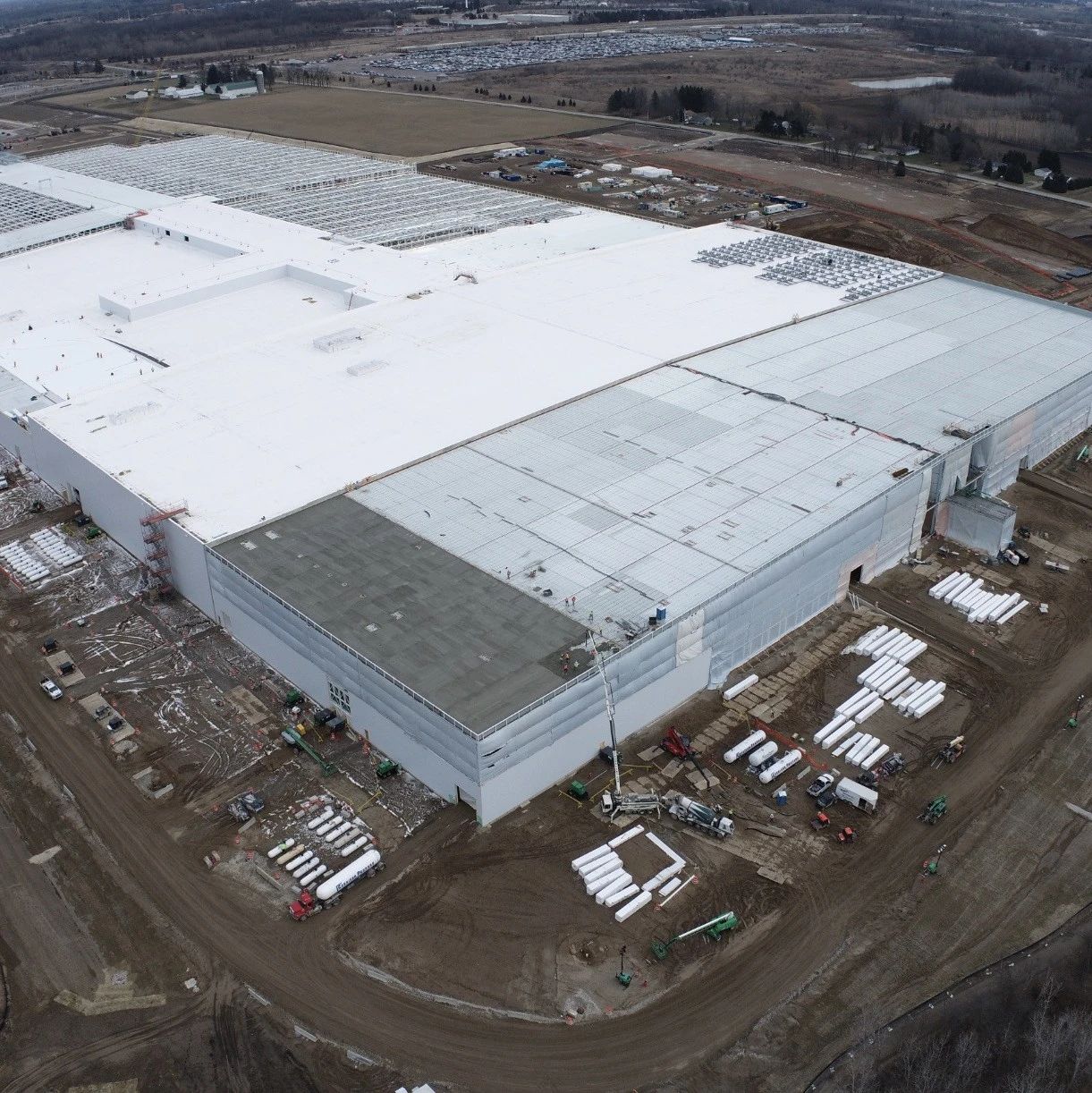
Core Viewpoint - The automotive industry is adjusting its electric vehicle (EV) strategies due to slowing demand and rising costs, leading to a more cautious outlook on EV growth compared to previous optimistic projections [4]. Group 1: Industry Adjustments - Automakers are revising their EV production plans, with Nissan utilizing Ford's battery production facility in Kentucky to mitigate tariff risks associated with importing vehicles and parts [5][7]. - General Motors (GM) has sold its stake in a Michigan battery plant to LG Energy Solution, pausing construction due to a global slowdown in EV demand [9][10]. - Honda has reduced its planned investment in EVs and software from 10 trillion yen to 7 trillion yen (approximately $484 billion), postponing its Canadian EV production facility by two years [14][15]. Group 2: Market Dynamics - Ford's Model e division reported a loss of $850 million despite an increase in EV sales from 10,000 to 31,000 units, indicating challenges in meeting growth expectations [7]. - The U.S. market for EVs is experiencing a slowdown, with potential pressures from proposed tax credit eliminations for EV purchases [7]. - Honda anticipates that by 2030, pure electric vehicles may only account for about 20% of its total sales, down from a previous target of 30% [14]. Group 3: Strategic Partnerships - The collaboration between Ford and Nissan for battery production is seen as a strategic move for both companies, allowing Nissan to avoid tariffs while Ford adjusts its EV strategy [5][7]. - LG Energy Solution's acquisition of GM's stake in the Lansing battery plant is aimed at enhancing production efficiency and meeting market demand [10][13].
汽车行业周报(20250519-20250525):汽车板块投资情绪良好,全年销量展望乐观-20250525
Huachuang Securities· 2025-05-25 14:44
Investment Rating - The report maintains a positive investment sentiment for the automotive sector, with an optimistic outlook for annual sales growth, projecting a retail growth rate of 5.2% and a wholesale growth rate of 8.4% for the year [2][3]. Core Insights - The automotive industry is experiencing a recovery in sales, particularly in April, with a year-on-year increase in wholesale sales of 11.0% and a month-on-month decrease of 10.0%. The report anticipates that sales levels will remain strong, especially for high-end brands priced above 200,000 yuan, with a forecasted wholesale growth rate of 31% for new energy passenger vehicles [2][4]. - The report highlights the strong performance of new energy vehicle manufacturers, with BYD delivering 380,089 units in April, a year-on-year increase of 21%, and other new players like Leap Motor and Xpeng showing significant growth [4][20]. - Traditional automakers like Geely and SAIC also showed notable sales increases, with Geely's sales up by 53% year-on-year in April [4][24]. Data Tracking - In April, the wholesale sales of passenger vehicles reached 2.22 million units, with a year-on-year growth of 11.0% and a month-on-month decline of 10.0%. The export sales for the same month were 430,000 units, reflecting a year-on-year increase of 0.4% and a month-on-month increase of 5.0% [4][24]. - The average discount rate in early May was 7.2%, slightly down from the previous month, with an average discount amount of 10,613 yuan [4][25]. - The report recommends key companies in the automotive sector, including JAC Motors, Li Auto, Geely, and BYD, highlighting their competitive advantages and potential for upward price elasticity [5][6]. Industry News - The report notes that as of late April, the national inventory of passenger vehicles reached 3.5 million units, indicating a slight increase in inventory pressure compared to previous years [31]. - Recent collaborations, such as the strategic partnership between Dongfeng Motor Group and Huawei, aim to enhance smart vehicle technologies and digital transformation within the automotive sector [31][32]. - The report also mentions the overall market performance, with the automotive sector index rising by 1.80% in the latest week, ranking third among 29 sectors [8][33].



一颗“原子弹”炸跑日本金主
3 6 Ke· 2025-05-23 12:00
Core Viewpoint - The incident involving Team Liquid's player Lucas Dias highlights the cultural sensitivity issues within the esports industry and the potential financial repercussions of mismanagement and lack of player education [1][8]. Group 1: Incident Overview - Team Liquid's Rainbow Six division lost to CAG Osaka, leading to player Lucas Dias posting a controversial GIF related to the Hiroshima atomic bomb, which sparked backlash and resulted in the termination of their sponsorship with Honda [1][4][6]. - Honda's sponsorship, which began in January 2019, included significant financial support and collaborative marketing efforts, making the termination a substantial loss for Team Liquid [3][4]. Group 2: Cultural Sensitivity and Management Issues - The incident underscores a cultural gap in the global esports landscape, revealing the need for better player education and management practices to prevent similar occurrences in the future [8][9]. - The esports industry faces challenges in player development, with many players lacking comprehensive education and personal development due to the intense focus on technical skills [9][11]. Group 3: Financial Implications and Industry Response - The loss of a major sponsor like Honda poses a significant financial challenge for Team Liquid, raising questions about how the organization will rebuild brand trust in a difficult economic environment [8][9]. - The incident may lead to stricter scrutiny from brands in the esports industry, emphasizing the importance of maintaining positive relationships with sponsors [8][15]. Group 4: Recommendations for Improvement - The industry should implement stricter contract clauses to prevent sensitive topics from being discussed publicly and establish clear guidelines for player conduct [15][18]. - Regular training on professional ethics and social media conduct for players and staff is essential to mitigate risks associated with public statements [15][18]. - Establishing a robust internal management system to oversee social media content and player behavior can help protect the organization's reputation [15][17].