
Hesai(HSAI)

Search documents
美股异动丨禾赛盘前涨超2% 机构料其有望充分受益L3规范落地
Ge Long Hui· 2025-11-20 09:27
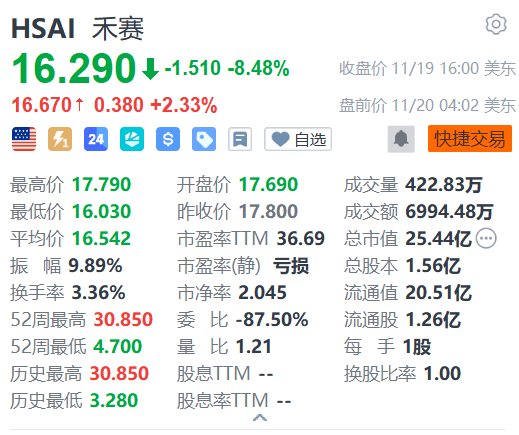
Core Viewpoint - The announcement of the "Automobile Industry Stabilization Growth Work Plan (2025-2026)" by multiple government departments in China, which includes conditional approval for L3-level vehicle production, is expected to significantly benefit companies like Hesai Technology (HSAI.US) in the lidar market [1] Company Summary - Hesai Technology's stock rose by 2.33% to $16.67 in pre-market trading following the news [1] - The company is projected to ship a total of 1.6 million lidar units in 2023, with 610,000 units expected to be shipped in Q4 alone [1] - Hesai is recognized as a global leader in the lidar industry, with the upcoming launch of the ETX, a vehicle-grade lidar with the longest range, set for Q3 2025 [1] - The ETX and FTX product combination is anticipated to play a significant role in the L3-level market, with each L3 vehicle expected to be equipped with 3 to 6 lidar units, valued at approximately $500 to $1,000 each [1] Industry Summary - The new policy is expected to expand the market potential for lidar technology, as L3 vehicles will require more advanced lidar systems compared to L2 vehicles [1] - The combination of increased unit demand and higher pricing for lidar systems is likely to enhance revenue opportunities for companies in this sector [1]


美股全线下跌 谷歌大涨
Zhong Guo Zheng Quan Bao· 2025-11-17 23:24
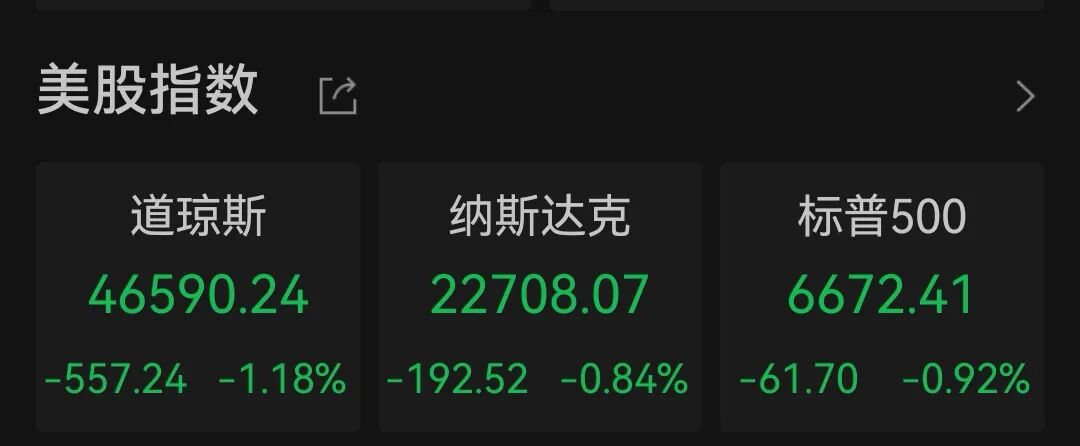
Market Performance - On November 17, US stock indices closed lower, with the Dow Jones down 1.18% at 46,590.24 points, the S&P 500 down 0.92% at 6,672.41 points, and the Nasdaq down 0.84% at 22,708.07 points [2][10] - The Wind US Technology Seven Giants Index fell by 0.47%, with major tech stocks like Nvidia and Apple dropping nearly 2%, while Google rose over 3% [4][10] Chinese Stocks - The Nasdaq Golden Dragon China Index declined by 1.21%, with notable declines in Chinese stocks such as Arctech Solar down over 15% and XPeng Motors down over 10%. However, JinkoSolar rose over 13% and Kingsoft Cloud increased nearly 9% [7][8] Federal Reserve Commentary - Federal Reserve Vice Chairman Jefferson emphasized the need for caution in further interest rate cuts to avoid undermining anti-inflation efforts, indicating a downward risk in the labor market [11] - Another Fed official, Waller, suggested that a rate cut in December could be warranted due to a weak labor market and its impact on low-income consumers [11] Commodity Market - International precious metal futures generally fell, with COMEX gold futures down 1.2% at $4,045.1 per ounce and silver futures down 1.25% at $50.05 per ounce. Crude oil prices also declined, with US oil down 0.62% at $59.72 per barrel [12]





港股周报:关注港股财报季,看好港股科技估值持续提升-20251116
Minsheng Securities· 2025-11-16 09:17
Market Overview - The Hang Seng Index rose by 1.26% this week, with a trading volume of HKD 1.16 trillion[1] - The Hang Seng Technology Index decreased by 0.42%, while the Hang Seng China Enterprises Index increased by 1.41%[1] - Net inflow from southbound trading was HKD 22.6 billion this week, totaling HKD 1,214.3 billion year-to-date, which is 164.5% of the total net inflow for 2024[1] Sector Performance - The top two performing sectors this week were Consumer Staples and Paper & Packaging, with weekly gains of 10.27% and 6.66% respectively[1] - Notable stocks in the Consumer Staples sector included Jiangsu Hongxin, Alpha Enterprises, and JD Health, with increases of 13.21%, 11.54%, and 6.59% respectively[1] - Other strong performing sectors included Pharmaceuticals & Biotechnology (5.4%) and Durable Goods (5.03%)[1] AI Developments - GPT-5.1 was officially released on November 13, featuring enhanced models for improved communication and reasoning capabilities[2] - Baidu launched the Wenxin 5.0 model, which supports multimodal input and output, boasting over 2.4 trillion parameters[2] Company Earnings - Tencent reported Q3 2025 revenue of HKD 192.9 billion, a 15% year-on-year increase, with a net profit of HKD 63.1 billion, up 19%[8] - JD Group achieved Q3 2025 revenue of HKD 299.1 billion, a 14.9% increase year-on-year, but net profit fell to HKD 5.3 billion from HKD 11.7 billion in the previous year[8] - Bilibili's Q3 2025 revenue was HKD 7.69 billion, a 5% increase, with adjusted net profit soaring 233% to HKD 0.79 billion[8] Investment Recommendations - The report suggests focusing on platform-based internet companies with computational resources and model capabilities, including Tencent, Kuaishou, Alibaba, Xiaomi, Baidu, and Meituan[4] - AI ecosystem companies with model or application capabilities are also recommended, such as Qunar, Meitu, JD Health, and Zhihu[4] Risks - Geopolitical risks may impact overseas revenue and competitiveness, potentially affecting stock prices[26] - Regulatory risks in the internet sector could influence industry and individual stock performance[26] - Consumer recovery may not meet expectations, posing a risk to the consumer sector[26]


禾赛科技两月股价跌超30%,招商证券国际下调其目标价
Jing Ji Guan Cha Wang· 2025-11-14 03:56
Core Viewpoint - Hesai Technology faces pressure from the capital market despite strong shipment growth over the past two quarters, with a recent downgrade in target prices by招商证券国际 due to equity expansion from its Hong Kong listing [2][4]. Financial Performance - In Q3, Hesai reported revenue of 795 million RMB, a year-on-year increase of 47.5%, and achieved a net profit of 256 million RMB, marking a turnaround from losses and a quarter-on-quarter growth of 481% [4]. - Excluding a one-time investment gain of 173 million RMB, the core net profit was 83.31 million RMB, exceeding consensus expectations by approximately 30% [4]. - The gross margin was 42.1%, down 5.6 percentage points year-on-year, primarily due to an increase in the proportion of lower-priced ADAS products [4]. Shipment and Market Dynamics - Total shipments reached 441,000 units in Q3, a year-on-year increase of 229% and a quarter-on-quarter growth of 25.43%, although the growth rate has slowed compared to the previous quarter [5]. - The average selling price (ASP) of ADAS lidar decreased from approximately 4,000 RMB in Q1 to 1,800 RMB in Q3, indicating a "volume increase, price decrease" structural change [5]. Future Outlook - Hesai has raised its full-year profit guidance, projecting a net profit range of 350 million to 450 million RMB for 2025, up from a previous estimate of 200 million to 350 million RMB [5]. - The company expects Q4 shipments to be around 600,000 units, with revenue anticipated between 1 billion to 1.2 billion RMB and a gross margin of approximately 40% [5]. - For 2025 to 2026, ADAS product shipments are expected to grow to 2 to 3 million units, with significant growth anticipated in the robotics sector as global demand recovers [5]. Industry Trends - As L3 autonomous driving advances, the number of lidar units per vehicle is expected to increase from one to three to six, potentially raising the per-vehicle value to between 500 to 1,000 USD [6]. - Hesai's customer base is expanding, with new orders from companies like GAC and Chery expected to begin in 2026, alongside additional orders from overseas Robotaxi clients [6]. - Despite concerns over temporary gross margin declines, the long-term market potential in automotive and robotics remains substantial, with quarterly profit fluctuations considered normal in the early stages of scaling [6].

禾赛集团- 因平均售价降低下调预期;维持买入评级
2025-11-14 03:48
Summary of Hesai Group Earnings Conference Call Company Overview - **Company**: Hesai Group (HSAI/2525.HK) - **Industry**: LiDAR solutions provider, focusing on advanced driver assistance systems (ADAS), autonomous mobility, and robotics Key Financial Highlights - **3Q25 Performance**: - Revenue: RMB 795 million, a decrease of 4% YoY but an increase of 41% QoQ [10] - Net income (GAAP): RMB 256 million, a significant increase of 327% YoY [10] - Non-GAAP EPS: RMB 2.01, up 232% YoY [10] - Gross margin: 42.1%, improved by 1.4 percentage points YoY [10] Revenue and Volume Growth Projections - **2026 Estimates**: - Revenue growth forecast lowered to 43% from 52% due to ASP decline [3] - Volume growth projected at 90%, with net income growth expected to reach 80% [2] - LiDAR volume estimate remains at the high-end of management guidance (2-3 million units) for 2026E [1] Market Position and Competitive Landscape - **Market Share**: - Hesai holds a 32.8% market share in the ADAS LiDAR segment as of 8M25, up from 28.4% in 1H25 [11] - Expected contributions from major OEMs: Xiaomi (29%), Leapmotor (26%), Li Auto (21%), BYD (12%) for 2026E [3] - **ASP Trends**: - Forecasted 10% YoY decline in ASP for main ATX product, now projected at US$160 for 2025 [3] - Overall pricing pressure due to rising competition [1] Strategic Developments - **Design Wins**: - Secured design wins with top ADAS customers, achieving 100% LiDAR adoption across their 2026 models [11] - Expansion into new OEMs like Geely and Chery, with expected market shares of 35% and 15% respectively [3] - **Robotics Segment**: - Robotics LiDAR shipments reached 61k units in 3Q25, a 1312% increase YoY [14] - Exclusive supplier agreements with major players in the robotaxi market [14] Future Outlook - **Adoption of L3 Technology**: - Anticipated turning point in LiDAR adoption in 2026, with potential for 2-3 units per vehicle and up to 6 units for L3 vehicles [12] - Higher price tolerance expected from L3 customers due to increased utilization [12] - **Financial Position**: - Raised US$614 million from dual-primary listing in Hong Kong, enhancing financial capacity for product development [14] Risks and Considerations - **Key Risks**: - Slower LiDAR adoption, intensified competition, customer pricing pressure, and policy risks [15][16] - **Valuation**: - Current trading at 23x 2026E P/E, with a target price of US$34/HK$265, implying significant upside potential [4][13] Conclusion - **Investment Rating**: - Goldman Sachs maintains a Buy rating on Hesai Group, citing strong growth potential in the LiDAR market and robust financial performance [14][15]
让出行更安全更轻松(汽车产业链上看创新)
Ren Min Ri Bao Hai Wai Ban· 2025-11-13 22:52
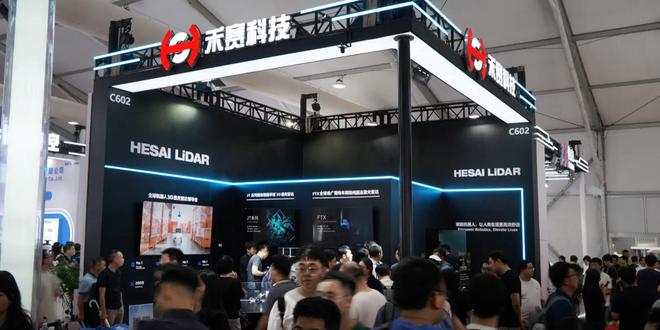
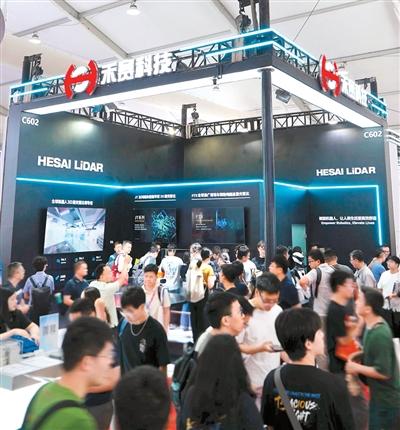
Core Viewpoint - The article highlights the rapid advancements in China's automotive industry, particularly in driving assistance systems, showcasing key players like Hesai Technology, Horizon Robotics, and Zhuoyue Technology, which are driving innovation and competition in this sector. Group 1: Hesai Technology - Hesai Technology showcased its latest lidar technology at the World Robot Conference, emphasizing the importance of lidar as the "eyes" of autonomous vehicles, which helps in accurately detecting surroundings, especially in low-light conditions [6][9]. - The company has made significant progress in the lidar market, reducing prices from approximately 200,000-300,000 RMB to the thousand-yuan level, achieving over 99% cost reduction, thus making lidar accessible to more consumers [8][9]. - Hesai has become the global leader in lidar shipments, collaborating with multiple domestic car models and a top European manufacturer, while also leading the development of domestic lidar technology standards [9]. Group 2: Horizon Robotics - Horizon Robotics focuses on developing specialized computing chips for driving assistance systems, positioning itself as a key player in the smart automotive sector [10][12]. - The company launched the "Journey 2" chip, marking a significant milestone as China's first mass-produced vehicle-mounted intelligent computing chip, which is crucial for the domestic autonomous driving ecosystem [13]. - Horizon has achieved substantial production milestones, with over 10 million units shipped and partnerships with more than 400 vehicle models, reflecting its rapid growth and commitment to R&D, with annual investments exceeding 3 billion RMB [14]. Group 3: Zhuoyue Technology - Zhuoyue Technology aims to provide advanced driving assistance systems for both fuel and electric vehicles, emphasizing that driving assistance should not be exclusive to electric vehicles [15][16]. - The company has developed a comprehensive driving assistance system through extensive parameter optimization and collaboration with component suppliers, resulting in partnerships with 10 car manufacturers and over 30 mass-produced models [16]. - Zhuoyue's approach focuses on "human-machine co-driving," ensuring that the driving assistance system enhances safety and comfort without fully replacing human drivers [18].
禾赛科技(A20721):关注Robotics lidar新领域新应用
HTSC· 2025-11-13 13:53
Investment Rating - The investment rating for the company is "Buy" with a target price of $30.72 [1] Core Views - The company reported Q3 2025 revenue of RMB 795 million, representing a year-over-year increase of 47.5% and a quarter-over-quarter increase of 12.6%. The GAAP net profit was RMB 256 million, marking a significant turnaround from losses, with a quarter-over-quarter growth of 481% [1] - The company anticipates laser radar shipments to exceed 600,000 units in Q4, with revenue expected to surpass RMB 1 billion [1] - The company is well-positioned for continued growth in ADAS and Robotics products, supported by its technological advantages in optical chips, which are expected to maintain stable gross margins [1] Summary by Sections ADAS Sector - The company shipped 380,759 units of ADAS laser radar in Q3, a year-over-year increase of 193.1% and a quarter-over-quarter increase of 25.4%. Demand from major domestic OEMs like Xiaomi, Leap Motor, and BYD has driven this growth [2] - Exclusive supply agreements have been signed with the top two core customers for 2026, and the company has secured L3 level laser radar orders from a top 3 new energy vehicle manufacturer, expected to start supply in the second half of 2026 [2] - The anticipated mass production of L3 autonomous driving vehicles is expected to increase the value of laser radar per vehicle to between $500 and $1,000 [2] Robotics Sector - The company shipped 60,639 units of robotic laser radar, reflecting a year-over-year increase of 1311.9%. The robotics market is rapidly expanding, becoming a significant growth driver for the company [3] - The company has become a supplier for various global Robovehicle and Robot projects, with mechanical rotating radar maintaining high gross margins [3] - By 2026, the company expects to double its robotic business shipments and is exploring new application areas such as smart cities and industrial automation, aiming to become a comprehensive provider of perception and AI solutions [3] Valuation - The target price remains at $30.72, supported by strong demand in the intelligent driving and robotics sectors. The company’s shipment forecasts for 2025, 2026, and 2027 are 1.41 million, 2.16 million, and 2.95 million units, respectively [4] - Revenue forecasts for 2025, 2026, and 2027 are RMB 3.27 billion, RMB 4.73 billion, and RMB 6.39 billion, with net profit estimates of RMB 712 million and RMB 1.1 billion for 2026 and 2027, respectively [4]
拥抱人形机器人时代-首次覆盖双环传动、禾赛科技、拓普集团、三花智控及利达光电-Asia Emerging Robotics Embrace the Humanoid Era - Initiating Coverage of Shuanghuan, Hesai, Tuopu, Sanhua and Leader Drive
2025-11-13 02:49
Summary of the Conference Call on Asia Emerging Robotics Industry Overview - **Industry**: Humanoid Robotics - **Growth Forecast**: The humanoid robot industry is expected to grow significantly, with annual shipments projected to reach approximately 1 million units by 2031 (Total Addressable Market: ~USD 20 billion) and around 50 million units by 2050 (Total Addressable Market: ~USD 800 billion) [2][34] Key Companies Covered - **Shuanghuan**: Rated Outperform, recognized as a global leader in gears and reducers, well-prepared for the humanoid era [8][20] - **Hesai**: Rated Outperform, a frontrunner in "laser eyes" technology, expected to benefit from intelligent vehicles and robotics [11][20] - **Tuopu**: Rated Outperform, a leading auto parts supplier with strong capabilities in robotics [11][20] - **Sanhua**: Rated Market-Perform, has a high-quality core business but limited robotics experience [11][20] - **Leader Drive**: Rated Underperform, concerns over long-term market share and margins [11][20] Core Insights - **Investment Strategy**: Emphasizes investing in companies with broad robotics exposure, proven expertise expansion, and high-quality core businesses. The overarching theme is to "Make No Bet" on specific humanoid robots due to the industry's early-stage nature [4][7][64] - **China's Advantage**: China is positioned as a leader in the humanoid robot industry, benefiting from rapid product iteration, a broad user base, and a well-established supply chain. The approach contrasts with Western companies, which often pursue idealistic solutions [3][34][48] Market Dynamics - **Technological Maturity**: The humanoid robot industry is still evolving, with significant technological barriers remaining, particularly in robotic intelligence and cost [33][34] - **Competition**: The industry faces challenges from non-humanoid robots, which are already deployed in various applications. This competition may impact the adoption and market share of humanoid robots [64][78] Investment Recommendations - **Characteristics of Target Companies**: 1. **Upstream Winners**: Focus on key component suppliers rather than downstream players, as the latter are still too early to identify [9][66] 2. **Broad Robotics Exposure**: Companies should have capabilities beyond humanoid robots to mitigate risks from competition [9][66] 3. **Expertise Expansion**: Companies with a strong ability to adapt to technological changes are preferred [9][66] 4. **High-Quality Core Businesses**: Essential for sustainable cash flows and reasonable valuations [9][66] Conclusion - The humanoid robot industry presents substantial long-term potential, with significant growth expected in the coming decades. Investment strategies should focus on established companies with diversified capabilities and a strong market presence to navigate the evolving landscape effectively [7][64][66]


华泰证券今日早参-20251113
HTSC· 2025-11-13 01:50
Group 1: Macroeconomic Insights - The U.S. Supreme Court's hearing on the "Trump tariffs" has raised questions about the future of U.S. tariff policies, with market expectations shifting towards a potential rejection of these tariffs [2] - The implications of different verdicts on tariffs could significantly affect macroeconomic conditions, fiscal policies, and the bond market [2] Group 2: E-commerce Industry - The e-commerce sector is expected to see moderate growth during the 2025 Double Eleven shopping festival, with GMV projected to increase by mid-to-high single digits, benefiting from platform subsidies and extended promotional timelines [3] - Major platforms are expected to show differentiated performance, with Douyin's GMV growth estimated at 20-25%, Pinduoduo at 10-15%, while JD.com may see low single-digit growth and Alibaba is expected to remain flat [3] - The competitive landscape among e-commerce platforms is anticipated to remain intense in 2026, with a focus on traffic acquisition and core user benefits [3] Group 3: Fixed Income and Asset Allocation - The asset allocation outlook for 2026 suggests a shift from "sharpness" to a more balanced approach, with a focus on identifying more certain opportunities while mitigating tail risks [4] - Key drivers for the global manufacturing cycle include the AI technology revolution and the transition of China's economic drivers, with a continued emphasis on risk assets [4] Group 4: Home Appliances Sector - The home appliance sector has seen a cumulative increase of 7.7% from January to October 2025, with retail sales driven by subsidies but showing signs of weakening marginal growth [5] - Three major trends are identified: the resilience of leading white goods manufacturers, the strengthening of smart technology in appliances, and significant growth potential in emerging technologies like AI and robotics [5] Group 5: Energy Sector - The fourth-generation nuclear power technologies are expected to gain traction due to site restrictions and resource constraints, presenting investment opportunities in related industries [6] - The company is well-positioned to benefit from the ongoing demand for traditional power generation equipment and the anticipated growth in nuclear power projects [14] Group 6: Selected Companies - Gaode Infrared has been initiated with a "Buy" rating and a target price of 18.90 CNY, driven by expected growth in complete equipment orders [10] - Ying Tong Holdings, a leading high-end perfume brand manager, has been initiated with a "Buy" rating and a target price of 2.86 HKD, benefiting from the recovery in high-end consumption [10] - Harsco Electric is positioned to benefit from the normalization of third-generation nuclear approvals and the anticipated acceleration of fourth-generation nuclear development [14]


Li Auto selects Hesai Technology as exclusive LiDAR supplier
Yahoo Finance· 2025-11-12 19:30
Core Insights - Li Auto has chosen Hesai Technology as the exclusive supplier of LiDAR sensors for its next generation assisted driving platform, which includes the L Series, i Series, and MEGA models [1] - The partnership between Li Auto and Hesai, which began in 2021, aims to enhance advanced driver-assistance systems (ADAS) and improve safety in complex driving scenarios [2][3] - As of October 31, Li Auto has delivered over 1.46 million vehicles, indicating strong market performance [2] Group 1: Partnership and Supply Agreement - Hesai's AT series LiDAR has facilitated the mass production of Li Auto's vehicles with advanced driver-assistance capabilities [2] - The expanded agreement solidifies Hesai's role as the exclusive LiDAR supplier for all new Li Auto models starting from May 2025 [1] - Both companies are focused on accelerating the rollout of ADAS to provide safer assisted driving experiences globally [2] Group 2: Hesai Technology's Market Position - Hesai recently produced its 1,000,000th LiDAR unit and was listed on the Hong Kong Stock Exchange, raising approximately HK$4.2 billion ($533 million) for future growth [3] - The company has also expanded its supply deal with a US-based robotaxi company, securing a contract worth over $40 million [3] - Hesai claims to hold the top positions in the automotive LiDAR market, including overall market share, ADAS market share, and Level 4 autonomous driving market share [4]