LI AUTO(LI)

Search documents
21调查|7年期车贷来了 车企“超低息”大促有点儿猛
2 1 Shi Ji Jing Ji Bao Dao· 2026-01-27 14:33
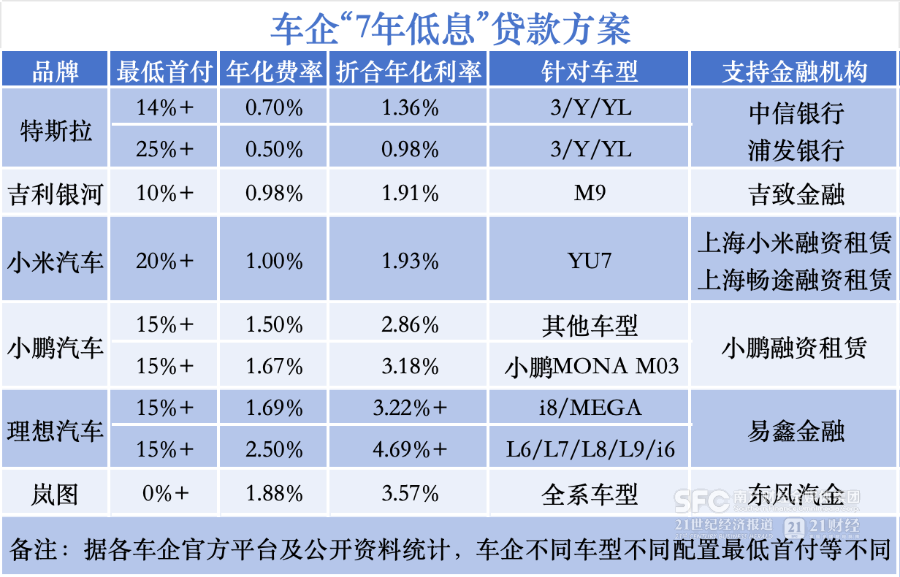
Core Viewpoint - The automotive industry is experiencing a promotional wave of "7-year low-interest" financing plans, driven by government policies aimed at boosting consumer spending and sales before the Lunar New Year [2][5]. Group 1: Promotional Trends - Multiple automakers, including Tesla, Xiaomi, Xpeng, Li Auto, Geely Galaxy, and Lantu, have launched "7-year low-interest" financing options, breaking away from the traditional 1-5 year loan terms [1][5]. - The promotional period for these financing plans is limited, primarily from January to February 2026, aimed at increasing sales volume [6]. Group 2: Financing Details - The financing plans vary significantly among automakers in terms of lending institutions, down payment requirements, and annualized interest rates [6][7]. - Tesla offers a minimum down payment of 14% with an annualized interest rate as low as 0.98% for certain plans, while other brands like Li Auto have higher rates, reaching up to 4.69% [3][7]. - The down payment requirements range from 0% for Lantu to over 25% for Tesla, indicating a wide disparity in accessibility for consumers [6][7]. Group 3: Consumer Impact - The extended loan terms reduce monthly payment burdens, making it easier for consumers to afford new vehicles, but they also lead to higher total interest payments over the loan's duration [10]. - For example, a Xiaomi YU7 financed over 7 years results in a total interest payment of approximately 14,252.28 yuan, compared to a higher monthly payment with a shorter loan term [10]. Group 4: Market Dynamics - The introduction of these financing options is a response to consumer demand for lower upfront costs and monthly payments, particularly before the Lunar New Year [2][5]. - However, concerns about vehicle depreciation and the long-term viability of such financing options exist, especially given the rapid technological advancements in electric vehicles [13][14]. Group 5: Risk and Regulation - Financial institutions face increased risk management challenges due to the longer loan terms and lower down payments, necessitating more stringent consumer assessments [19][20]. - The approval process for "7-year low-interest" loans is more rigorous, with banks requiring higher credit qualifications compared to shorter-term loans [20][21].


理想否认上半年闭店百家,称门店布局规划随实际经营情况动态调整
Xin Jing Bao· 2026-01-27 12:49
新京报贝壳财经讯(记者王琳琳)有传闻称理想汽车计划在2026年上半年关闭约100家低效零售门店。 对此,1月27日,理想汽车对新京报贝壳财经记者回应称:"闭店100家"为不实信息,公司对门店的布局 规划会伴随2026年实际经营情况动态调整,关闭少量低效门店,此举顺应市场变化、提升运营效率,不 影响公司正常经营,更未制定闭店100家的规划。 ...
24家!2026年“苏超”赞助商名单公布
Zhong Guo Jin Rong Xin Xi Wang· 2026-01-27 11:52
Group 1 - The core viewpoint of the article highlights the significant expansion of sponsorship and commercial partnerships for the 2026 season of the Jiangsu Super League (苏超), driven by the success and popularity of the inaugural 2025 season [1][2] - The 2025 season saw a remarkable attendance of over 2.43 million spectators, with an average of 28,000 attendees per match, setting a record for provincial leagues [2] - The number of sponsors increased from 6 during the preparation phase to 41 at the provincial level, with some city-level sponsors reaching into the dozens, indicating a substantial growth in commercial interest [2] Group 2 - The 2026 season will feature a multi-tiered sponsorship structure, including official strategic partners such as Guoyuan V3, Heineken, Adidas, and others, alongside various official sponsors and suppliers [1][3] - Upgrades for sponsor rights include enhanced advertising exposure through LED screens in stadiums and live broadcasts, and a significant reduction in competitive industry categories from 26 to 9, allowing for greater collaboration opportunities [3] - The league is also focusing on small and micro enterprises by opening 32 official sponsorship slots, providing equal rights and benefits to selected businesses, which will be chosen through a structured application process [3]



理想汽车召开全员会 从汽车制造商向具身智能企业转型
Zhong Zheng Wang· 2026-01-27 11:12
中证报中证网讯(记者 龚梦泽)1月26日,理想汽车CEO李想召开线上全员会,系统阐述公司战略升级 方向,明确将从"创造移动的家"转向具身智能领域,以硅基生命构建为核心,推动研发体系与组织架构 全面变革,全力布局人形机器人与系统级通用Agent(智能体)赛道。 基于行业案例复盘,李想指出纯模型路线已成为主流,2024年坚持知识图谱路线的创业团队多数退场, 而Manus等纯模型派企业已成长为"独角兽"。理想将采用科学的后训练模式,保持基座模型每周迭代、 Agent本体每日迭代的节奏,规避"章鱼式"架构等行业误区。 业内分析认为,此次战略升级标志着理想正式从汽车制造商向具身智能企业转型。理想凭借家庭用户场 景积累,在自动驾驶与家政机器人领域具备天然优势,但组织变革落地与技术协同效果仍需时间检验, 其转型进展将为新能源汽车行业竞争维度升级提供重要参考。 针对通用Agent研发,李想分享了行业验证的四条路径,即Claude代表的模型能力派、豆包手机代表的 系统终端派、阿里千问代表的生活生态派及Manus代表的浏览器工具派。理想将聚焦改善生活类场景, 以自动驾驶、人形机器人与家政服务为核心,打造统一的系统与交互方式,满足 ...
理想,被逼,再创业
盐财经· 2026-01-27 10:46
Core Viewpoint - Li Auto has experienced a stark contrast in performance over the past year, with a significant decline in its core automotive business while simultaneously reigniting its investment in humanoid robot development, indicating a strategic pivot towards AI and robotics despite current challenges in vehicle sales and profitability [2][3][10]. Group 1: Financial Performance - In 2025, Li Auto's total vehicle deliveries reached 406,000 units, representing a year-on-year decline of approximately 19%, failing to meet its adjusted annual sales target [2]. - The company recorded a net loss of 624 million yuan in a single quarter for the first time after eleven consecutive profitable quarters, primarily due to a recall of about 11,000 units of its flagship model MEGA, which negatively impacted its gross margin [9][11]. - The gross margin for the third quarter of 2025 fell to 16.3%, with a marginal improvement to 20.4% when excluding the recall impact, indicating a weakening financial position [9]. Group 2: Strategic Shift - Despite facing pressure in its core automotive business, Li Auto has decided to restart its humanoid robot project, which requires substantial investment, showcasing a willingness to explore future technologies [3][10]. - Li Auto's founder, Li Xiang, has articulated a vision for the company to become a leading AI enterprise by 2030, emphasizing the importance of AI and robotics in its long-term strategy [21][24]. - The company is positioning itself to redefine vehicles as "embodied intelligent robots," indicating a shift in product definition and a focus on advanced AI capabilities [18][26]. Group 3: Competitive Landscape - Li Auto faces intensified competition from tech giants like Xiaomi and Huawei, which have entered the automotive sector, disrupting traditional business models and increasing market pressure [13][15]. - The company has acknowledged underestimating the competitive threat posed by these new entrants, which have redefined industry standards and accelerated product development cycles [13]. - The shift towards electric vehicles has diminished the relative advantage of Li Auto's range-extended electric vehicle technology, placing the company in a challenging position as it navigates a rapidly evolving market [15][19]. Group 4: Organizational Challenges - Li Xiang has reflected on the difficulties of transitioning to a professional management system, which has slowed the company's response to market changes and contributed to operational inefficiencies [31][36]. - The company is attempting to revert to a more agile, entrepreneurial approach in response to the pressures faced in its core business and the need for rapid innovation in AI and robotics [39]. - Li Auto's strategic pivot towards humanoid robots is seen as a critical move to regain competitive advantage and re-engage its workforce in a more dynamic and innovative environment [39].

理想汽车回应将关闭约100家门店
2 1 Shi Ji Jing Ji Bao Dao· 2026-01-27 10:42
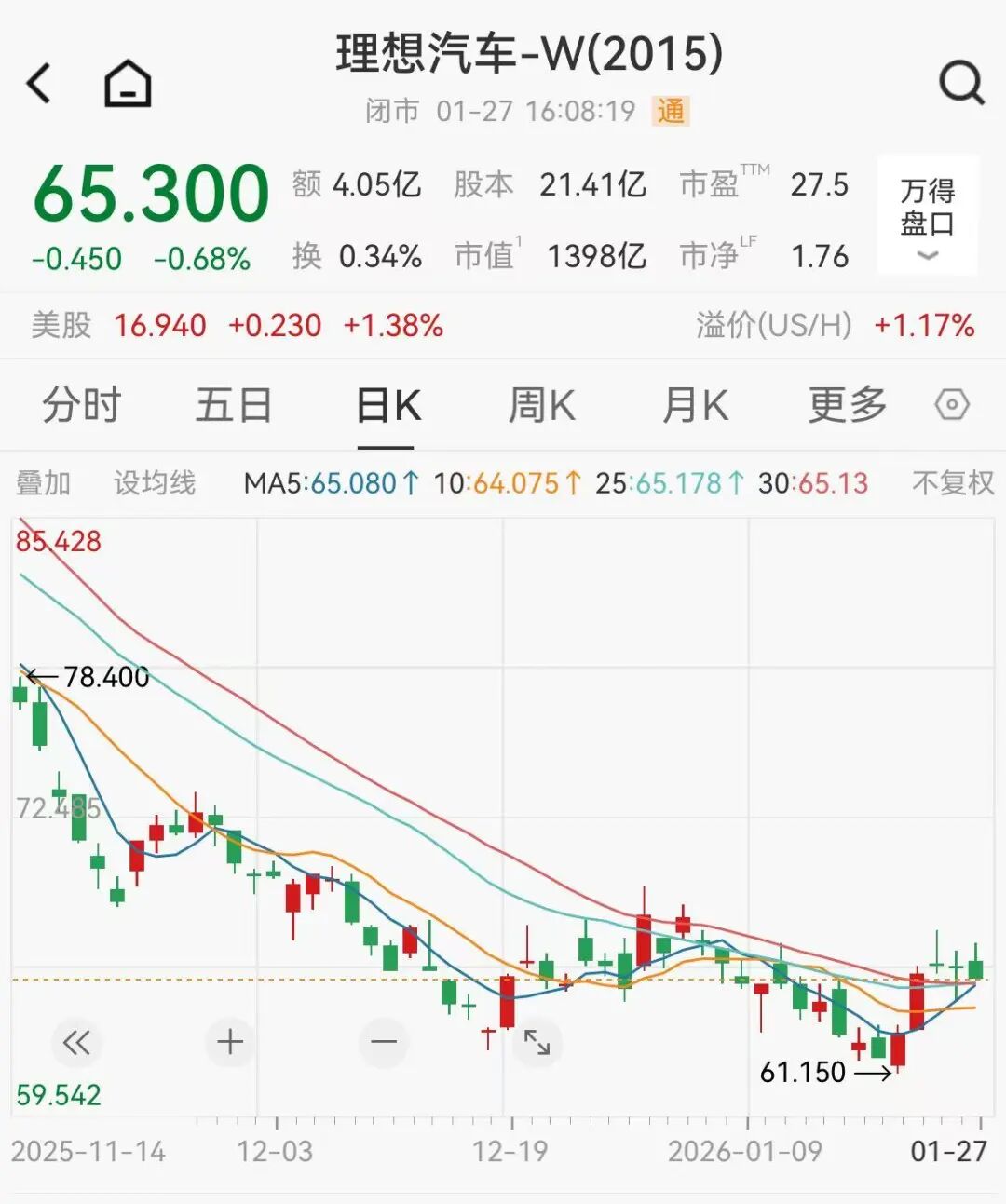
1月27日,理想汽车港股跌0.68%,报收65.3港元/股,总市值为1398亿港元,年内股价微涨0.69%。 近日,《21辟谣》注意到,有媒体报道称,理想汽车(2015.HK)计划在2026年上半年关闭约100家低效零售门店,引发市场关注。 对此,1月27日,理想汽车向《21辟谣》记者表示,近期网络上出现关于理想汽车出现批量闭店、裁员的舆情,均为不实信息。今年公司会针对少量能效 较低的商超门店关停,但不涉及批量关闭情况。 ...
【快讯】每日快讯(2026年1月27日)
乘联分会· 2026-01-27 09:00
Domestic News - The Ministry of Commerce aims to cultivate new growth points in service consumption, focusing on transportation services, housekeeping services, automotive aftermarket services, and more to meet the evolving demands of consumers [4] - In 2025, the number of vehicle transfer registrations is expected to reach 41.11 million, with 38.41 million being automotive transfers, marking a continuous six-year trend of second-hand vehicle transactions surpassing new car registrations [5] - Guangdong province plans to strengthen emerging industries such as new energy, smart connected vehicles, intelligent robotics, and aerospace, aiming to build a more robust modern industrial system [6] - Nanjing is promoting a recycling program for key categories like home appliances and automobiles to support green product consumption [7] - Li Xiang, CEO of Li Auto, predicts that Level 4 autonomous driving will be realized by 2028 at the latest, emphasizing the urgency for companies to adopt AI technologies [9] - NIO has opened its first national dealership in Hungary, marking a significant step in its expansion into the Central European market [10] - XPeng has launched 1,000 mobile charging stations for its X9 model, strategically placed along major highways to assist drivers during peak travel seasons [11] - Lantu has surpassed 100 smart charging stations within a year, providing access to over 1.5 million charging resources nationwide [12] International News - In 2025, European electric vehicle sales are projected to exceed 2.885 million units, a 32.6% increase year-on-year, with a penetration rate of 29.0%, reflecting a significant shift in the automotive market [13] - Toyota has launched its first electric SUV specifically for the Indian market, named Urban Cruiser Ebella, as part of its long-term electrification strategy [14] - Jaguar plans to release its first mass-produced electric vehicle, the Type 00, in the first quarter of 2026, marking a pivotal moment in its transition away from fuel-powered vehicles [15] - Hyundai has no current plans to establish a new manufacturing plant in Canada but is exploring potential collaborations in the hydrogen sector [16] Commercial Vehicles - A new innovation center for power control systems in new energy commercial vehicles has been approved in Jiangsu province, aiming to enhance technological capabilities and international competitiveness [17] - The Zero Mi light truck will be launched in Shandong province, targeting individual entrepreneurs and small logistics companies for urban distribution [18] - The Ministry of Transport has implemented new regulations for online freight platforms, encouraging the use of advanced technologies to optimize transportation efficiency [19] - Hunan province is promoting the application of electric and hydrogen-powered heavy-duty trucks to support low-carbon transportation initiatives [20]



理想汽车:今年会调整关闭少量低效门店
Xin Lang Cai Jing· 2026-01-27 07:56
理想汽车表示,此举是公司基于业务发展实际需求,对渠道布局进行合理规划,不涉及公司实际经营情 况的变化。 责任编辑:刘万里 SF014 理想汽车表示,此举是公司基于业务发展实际需求,对渠道布局进行合理规划,不涉及公司实际经营情 况的变化。 责任编辑:刘万里 SF014 近期,有媒体报道称,理想汽车计划在2026年上半年关闭约100家低效零售门店。1月27日,理想汽车对 此回应中国证券报·中证金牛座记者称,今年会调整关闭少量低效门店,此举是正常的经营调整,不影 响公司正常经营,网传"关闭100家门店"为不实信息。 近期,有媒体报道称,理想汽车计划在2026年上半年关闭约100家低效零售门店。1月27日,理想汽车对 此回应中国证券报·中证金牛座记者称,今年会调整关闭少量低效门店,此举是正常的经营调整,不影 响公司正常经营,网传"关闭100家门店"为不实信息。 ...
理想汽车旗下多家公司近期减资,理想汽车旗下多家公司已注销
Xin Jing Bao· 2026-01-27 04:00
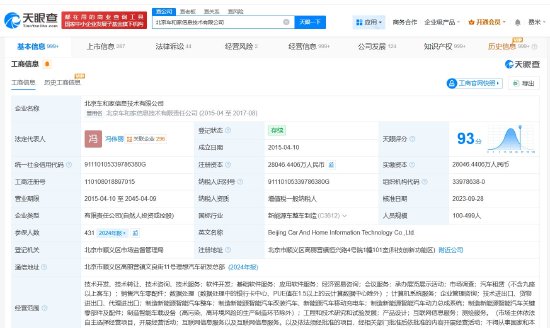
【#理想汽车旗下多家公司近期减资#,#理想汽车旗下多家公司已注销#】#理想汽车将关闭100家门店#1 月26日,据媒体报道,理想汽车近期正在进行一轮深刻的渠道变革:计划在2026年上半年关闭约100家 低效零售门店。其中不乏位于一二线城市的商超核心地段门店。天眼查工商信息显示,理想汽车关联公 司北京车和家信息技术有限公司成立于2015年4月,法定代表人为冯伟丽,注册资本约2.8亿人民币,经 营范围包括基础软件服务、应用软件服务、经济贸易咨询等。股东信息显示,该公司由李想、李铁共同 持股。对外投资信息显示,该公司对外投资11家企业,其中6家企业处于存续状态,其余5家企业已注 销。值得一提的是,近期,理想汽车旗下理想智造汽车服务(上海)有限公司、北京励鼎汽车销售有限 公司、北京罗克维尔斯科技有限公司均发生减资行为。 转自:贝壳财经 ...
理想汽车将关闭100家门店,旗下多家公司近期减资
Xin Lang Cai Jing· 2026-01-27 03:41
近日,据报道,理想汽车近期正在进行一轮深刻的渠道变革:计划在2026年上半年关闭约100家低效零 售门店。其中不乏位于一二线城市的商超核心地段门店。 天眼查工商信息显示,理想汽车关联公司北京车和家信息技术有限公司成立于2015年4月,法定代表人 为冯伟丽,注册资本约2.8亿人民币,经营范围包括基础软件服务、应用软件服务、经济贸易咨询等。 股东信息显示,该公司由李想、李铁共同持股。对外投资信息显示,该公司对外投资11家企业,其中6 家企业处于存续状态,其余5家企业已注销。值得一提的是,近期,理想汽车旗下理想智造汽车服务 (上海)有限公司、北京励鼎汽车销售有限公司、北京罗克维尔斯科技有限公司均发生减资行为。 | | 在周的重要重量 4 | 第2版 日本版 Mall Exa | | | | | | | | | --- | --- | --- | --- | --- | --- | --- | --- | --- | --- | | | | 北京年和蒙德技术角限公司 | | | 大幅一 | 日 应用 · | | 陶务合作 企业服产品 = 由开通公员 · @ 图米 · | | | 基本信詞 000+ | 上市值费 04 ...