
L'Oreal(LRLCY)

Search documents
欧莱雅亮相IMCAS(英卡思)中国大会,以“新龄美”理念开启长寿时代的美妆科学革命
Guan Cha Zhe Wang· 2025-07-18 03:58
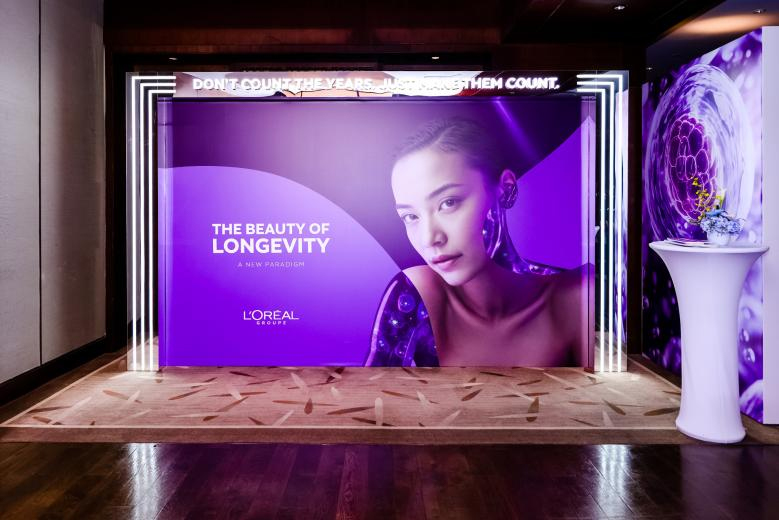
Core Viewpoint - L'Oréal introduced the "Beauty of Longevity" concept at the 2025 IMCAS China Conference, emphasizing the integration of science and aesthetics in the beauty industry [1][5]. Group 1: New Concept of "Beauty of Longevity" - The "Beauty of Longevity" concept represents a structural redefinition of beauty, focusing on three dimensions: scientific health, cultural perception, and socio-economic factors [3][4]. Group 2: Scientific Health - Advances in science have ushered humanity into an unprecedented era of longevity, reshaping perceptions of beauty and aging. L'Oréal's approach has evolved from symptom improvement to root cause intervention, emphasizing lifelong beauty [4][7]. Group 3: Cultural Perception - The current societal view of beauty is often limited, with a narrow focus on youth. L'Oréal advocates for a broader understanding of beauty that embraces aging as a valuable experience rather than a limitation [4][7]. Group 4: Socio-Economic Factors - As the aging society becomes more prominent, new demands and challenges arise. L'Oréal likens the "Beauty of Longevity" to a tree, where scientific health is the roots, cultural perception is the trunk, and socio-economic factors are the leaves [4][5]. Group 5: Forum Insights - The roundtable forum titled "Longevity Revolution: New Frontiers in Beauty Science" highlighted L'Oréal's commitment to addressing aging at its biological roots, utilizing advanced AI diagnostic tools to detect early signs of skin aging [5][7].


【财经】(投资中国)专访欧莱雅兰珍珍:中国市场不仅是“支点”更是“窗口”
Zhong Guo Xin Wen Wang· 2025-07-17 16:29
Core Insights - The Chinese market is not only a "fulcrum" for L'Oréal's global supply chain but also a "window" for driving growth among global partners [1] - L'Oréal has been deeply engaged in the Chinese market for nearly 30 years, establishing strong connections with over 1 billion Chinese consumers through its 32 brands [1][3] - The rise of "self-value" among consumers indicates a shift from functional to emotional resonance in beauty product consumption, necessitating brands to enhance their supply chain capabilities [2] Industry Trends - The Chinese beauty market is becoming a significant force in leading global beauty transformations, with consumers increasingly seeking personalized, experiential, and sustainable products [3] - The digital ecosystem, social media environment, and e-commerce platforms in China are fostering new consumption models and accelerating industry changes [3] - L'Oréal is committed to long-term investments in China, having established two smart operation centers in Suzhou and Nantong, which emphasize automation, digitalization, and sustainability [3]
欧莱雅携跨行业伙伴 首度参展中国国际供应链促进博览会
Zheng Quan Ri Bao Wang· 2025-07-17 14:03
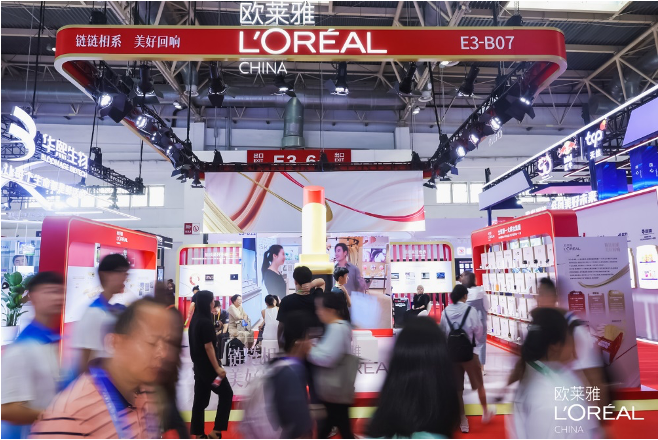
Core Viewpoint - L'Oréal participated in the 3rd China International Supply Chain Promotion Expo, showcasing its commitment to innovation and collaboration in the beauty industry supply chain [1][4]. Group 1: Exhibition Highlights - L'Oréal's theme for the expo was "Connecting Chains, Beautiful Echoes," emphasizing its focus on consumer-centric supply chain systems [1]. - The company set up three major exhibition areas: "Linking Beautiful Life," "Linking Beautiful Ecology," and "Linking Beautiful World," each highlighting different aspects of its supply chain innovations [2]. Group 2: Employment and Economic Impact - L'Oréal operates 32 beauty brands in China and has established a logistics network that serves over 100 million consumers, supported by production and operational centers [2]. - According to Asterès, for every job created by L'Oréal in China, 20 additional jobs are generated across the value chain, promoting employment and industry collaboration [2]. Group 3: Strategic Partnerships - A strategic cooperation agreement was signed between L'Oréal and the China Barcode Technology and Application Association to enhance the digitalization of the cosmetics supply chain [3]. - The partnership aims to develop a comprehensive digital system for the entire industry chain, improving supply chain efficiency and accelerating the visualization process [3]. Group 4: Future Directions - L'Oréal aims to continue focusing on consumer needs and leveraging its end-to-end operational layout in China to respond to diverse demands with agility [4]. - The company plans to enhance consumer experiences through innovative technologies, ensuring that millions of Chinese consumers can enjoy the benefits of beauty products anytime and anywhere [4].
215个品牌GMV破亿!上半年美妆电商战事揭榜
Sou Hu Cai Jing· 2025-07-17 11:48
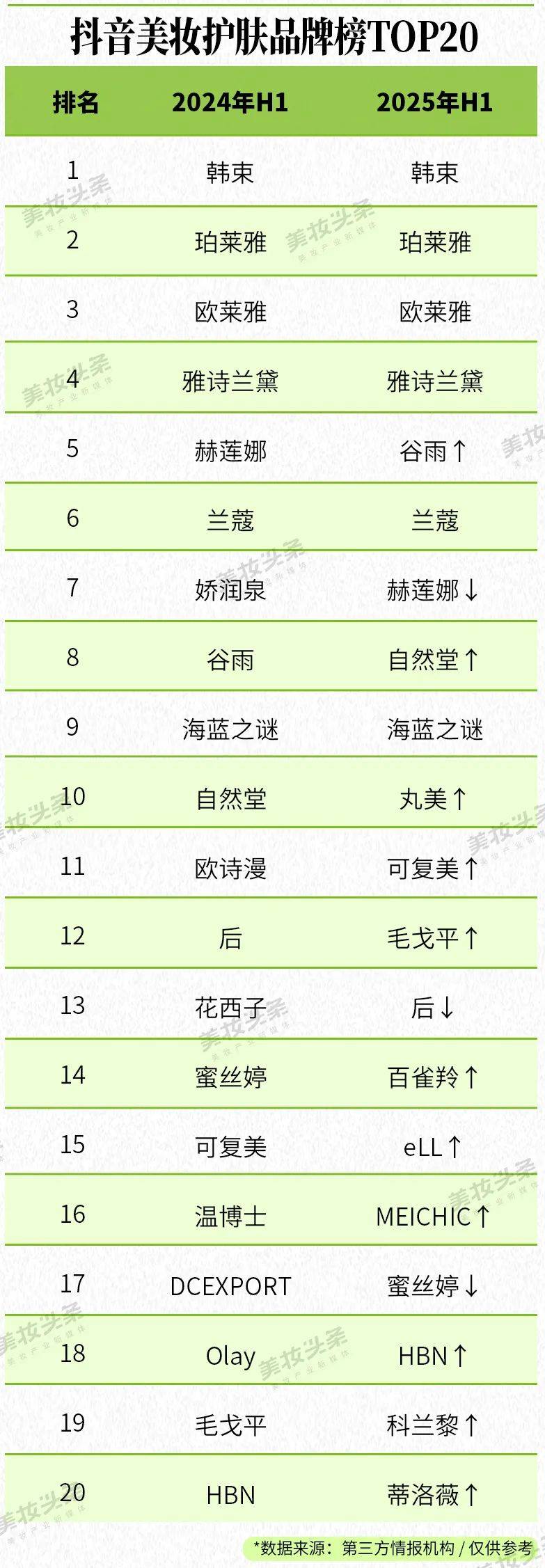
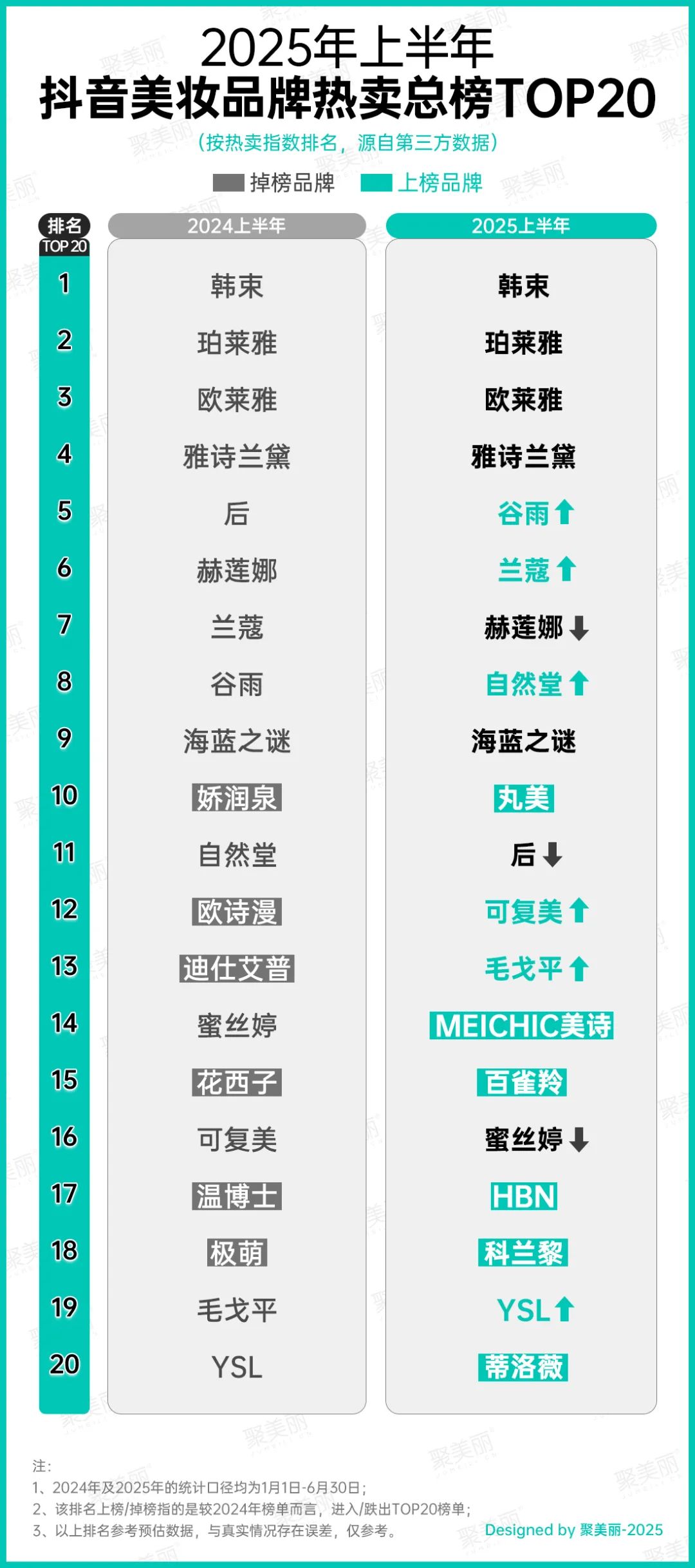
Core Insights - The beauty brand competition on various platforms has intensified, with brands needing to adapt to changing consumer preferences and marketing strategies to survive in the market [1][21][29] Group 1: Douyin Platform Insights - 215 beauty and skincare brands achieved a GMV of over 100 million yuan on Douyin in the first half of 2025 [1] - The top 10 brands in terms of sales include both domestic and international brands, with notable names like 韩束 (Hanshu), 珀莱雅 (Proya), and 欧莱雅 (L'Oreal) [1][5] - Domestic brands such as 谷雨 (Guyu), 自然堂 (Naturally), and 丸美 (Marubi) have shown steady sales growth due to precise product positioning and marketing strategies [5][15] Group 2: Tmall Platform Insights - The top 20 skincare brands on Tmall accounted for 46.2% of the total category GMV, while the top 20 makeup and perfume brands accounted for 39.53% [10] - The presence of domestic brands in the top 20 has decreased compared to the previous year, with brands like 珀莱雅 (Proya) and 自然堂 (Naturally) losing their positions [10][11] - International brands such as 欧莱雅 (L'Oreal), 兰蔻 (Lancôme), and 雅诗兰黛 (Estée Lauder) have maintained strong positions, with some showing upward trends in rankings [11][14] Group 3: JD Platform Insights - JD's beauty sales exceeded 13.32 billion yuan in the first four months of 2025, with a projected total sales of over 30 billion yuan for the first half of the year [21][27] - International beauty brands dominate the rankings on JD, with no domestic brands appearing in the top five during major promotional events [25][27] - The growth of beauty products on JD has been significant, with some categories seeing sales increases of over 500% during promotional events [27][28] Group 4: Market Trends and Strategies - The competition among beauty brands is characterized by the need for tailored strategies that align with the unique ecosystems and user preferences of each platform [29] - Brands like MEICHIC and 蒂洛薇 (Tilowei) have achieved explosive growth on Douyin through innovative marketing strategies involving influencers and live streaming [29] - The overall beauty market in 2025 is expected to continue evolving, with brands needing to understand platform-specific dynamics to thrive [29]


有意思青年登场:Tech时代的美在重新生成
36氪· 2025-07-14 13:11
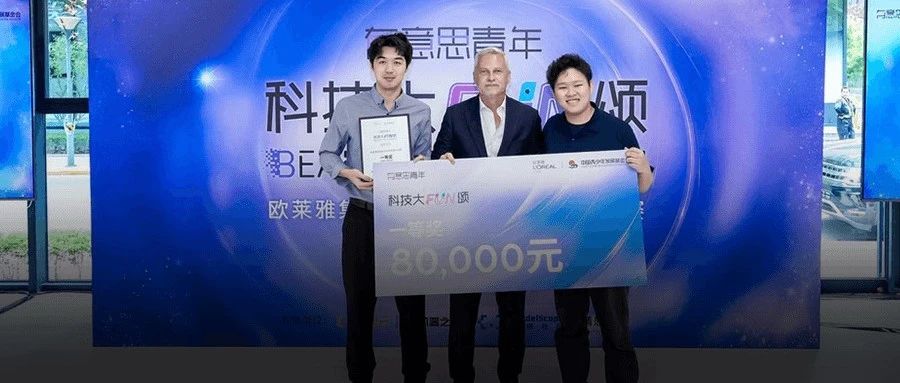
Core Viewpoint - The article emphasizes the transformation of the "Interesting Youth" initiative by L'Oréal China into a future-oriented empowerment platform, focusing on the intersection of technology and beauty, particularly through the lens of AI innovation [2][19][22]. Group 1: Initiative Overview - L'Oréal China's "Interesting Youth" project, which has been ongoing for 22 years, is being upgraded to a platform that empowers young people to participate in defining beauty [2][19]. - The "Tech for Good" theme of the "Tech Big Fun" hackathon aims to leverage AI capabilities to redefine beauty [5][15]. - The hackathon is the first of its kind in China's beauty industry, targeting AI-related innovation talents and blending creativity with technical skills [2][5]. Group 2: Hackathon Details - The hackathon culminated in a final event in Shanghai, where six AI creative teams presented their projects, showcasing their understanding of beauty and technology [5][6]. - The winning project, "Smart Guarding Beauty," developed a multi-agent system for risk assessment and compliance in new product development [10]. - Other notable projects included an AI skincare advisor and a data analysis tool for beauty industry operations, reflecting a diverse range of technological applications [11][12]. Group 3: Youth Empowerment and Engagement - The initiative aims to dismantle biases around beauty, asserting that everyone has the right to participate in defining it [12][20]. - L'Oréal's approach has evolved from merely providing assistance to empowering youth to take control and express their creativity [18][23]. - The platform encourages a culture of experimentation and acceptance of failure, allowing young people to explore their ideas without rigid standards [23][24]. Group 4: Broader Implications - The "Essentiality of Beauty" project aims to redefine beauty as a multidimensional value that encompasses culture, technology, and responsibility [25]. - The hackathon serves as a practical demonstration of this new understanding of beauty, integrating emotional and rational elements through technology [27]. - L'Oréal's strategy reflects a shift from a consumer-centric model to one that fosters co-creation and deeper understanding of beauty among the younger generation [24][27].
欧莱雅否认香港办事处关闭及裁员传闻;《罗小黑战记2》将于7月18日上映丨消费早参
Mei Ri Jing Ji Xin Wen· 2025-07-13 23:15
Group 1 - L'Oréal denies rumors of closing its Hong Kong office and layoffs, stating that the reports are inaccurate and emphasizing ongoing evaluations and optimizations of its organizational structure to adapt to market changes [1] - The company highlights the importance of balancing strategic integration and employee stability amid a changing global consumer market and increasing cost pressures [1] Group 2 - "BilibiliWorld 2025" is set to take place from July 11 to 13 in Shanghai, expected to attract 300,000 visitors over three days, with over 700 exhibitors and more than 1,000 global content creators participating [2] - The event showcases the strong appeal of the ACG (Anime, Comic, and Game) economy, as Bilibili effectively converts its community influence into offline traffic and commercial value [2] - The integration of elements like virtual idols and AI interactions indicates that the event serves as a significant platform for IP incubation, brand collaboration, and content ecosystem extension, reflecting the mainstream emergence of youth-driven subcultures [2] Group 3 - LeEco has been listed as a defendant in a court execution case with a claim exceeding 10.07 million yuan, indicating ongoing financial difficulties and unresolved debt issues [3] - The frequent addition of execution information and asset freezes highlights the company's challenges in governance and compliance, serving as a cautionary tale for aggressive expansion strategies [3] Group 4 - The animated film "Big Fish & Begonia 2" is set to premiere on July 18, with a promotional event that engaged fans through immersive experiences [4] - The film, which took six years to produce, faces significant expectations regarding its ability to replicate the success of its predecessor, testing the balance between commercialization and artistic integrity in Chinese animation [4]
抖音又杀出一个次抛黑马?
3 6 Ke· 2025-07-12 01:34
Core Insights - The beauty industry is experiencing significant shifts, with a competitive landscape characterized by the rise of domestic brands and the stability of international brands [1][2][4] - The top beauty brands on Douyin are dominated by domestic players, with 韩束, 珀莱雅, and 欧莱雅 leading the rankings [2][9] - New entrants like 百雀羚 and 丸美 have made their way into the top 20, indicating a resurgence of domestic brands [9][11] Brand Performance - 韩束 has maintained its position as the top brand, followed by 珀莱雅 and 欧莱雅, while international brands like YSL and 兰蔻 have shown mixed results [2][9] - The emergence of brands like MEICHIC美诗 and 蒂洛薇 highlights the competitive nature of the market, with 蒂洛薇 recently achieving the top spot in the color cosmetics category [9][27] - The performance of brands such as 花西子 and 极萌 has declined, indicating a shift in consumer preferences [7][9] Influencer Ecosystem - The influencer landscape is shifting towards entertainment-oriented and comprehensive content creators, with traditional beauty influencers losing ground [1][44] - Influencers like 韦雪 have gained prominence, showcasing the changing dynamics in the beauty influencer market [44][48] - Brands are increasingly relying on a mix of influencer marketing and self-operated accounts to drive sales [41][42] Market Trends - The beauty market is seeing a trend towards self-operated models and direct-to-consumer strategies, with brands like 林清轩 and 百雀羚 successfully leveraging these approaches [14][20] - The reliance on heavy investment in advertising and low pricing strategies by brands like ELL and 三资堂 raises questions about long-term sustainability [37][39] - The competitive landscape is expected to evolve as brands focus on product development and brand strength to navigate market fluctuations [49]
大湾区外资“引力场”效应凸显,欧莱雅们的选择揭示什么?
2 1 Shi Ji Jing Ji Bao Dao· 2025-07-11 07:26
Core Insights - The Greater Bay Area (GBA) is demonstrating strong attraction for foreign investment amidst global economic uncertainties, with over 1,300 companies establishing or expanding operations in Hong Kong from January 2023 to mid-2025, generating over HKD 160 billion in foreign direct investment (FDI) and creating more than 19,000 new jobs [1][2] Investment Trends - Guangdong Province reported a 23.4% year-on-year increase in newly established foreign enterprises, totaling 12,000 from January to May 2023, with actual foreign investment reaching USD 50.84 billion, a 6.1% increase [1][6] - Major multinational companies, such as L'Oréal, are significantly investing in the GBA, with L'Oréal expanding its operations in Guangzhou and viewing the region as a strategic priority for its global layout [3][7] Major Projects - Significant foreign investment projects include ExxonMobil's USD 10 billion ethylene project in Huizhou, which is the first major petrochemical project wholly owned by a U.S. company in China [3] - Other notable projects include the construction of a 160,000-ton/year ethylene facility by CNOOC and Shell, a fully automated energy factory by GAC Honda, and a gas turbine service base by Mitsubishi Heavy Industries [4] Financial Market Performance - Hong Kong's IPO market raised HKD 107.1 billion in the first half of 2025, a sevenfold increase year-on-year, making it the top global market for IPOs during this period [5] - The performance of foreign enterprises in Hong Kong exceeded expectations, with 671 foreign companies establishing operations, primarily from the U.S., U.K., Singapore, and Canada [5] Economic Environment - The GBA has developed a comprehensive advantage with a complete industrial ecosystem, convenient infrastructure, active technological innovation, and a rich talent pool, enhancing its attractiveness to foreign investors [6][8] - The region is witnessing a shift in foreign investment focus from manufacturing to high-value sectors such as product development, biomedicine, and artificial intelligence, reflecting a transformation in its competitive landscape [6][7] Policy and Talent Dynamics - Policies tailored for foreign investment, such as Guangzhou's "20 measures for high-quality foreign investment development," and Shenzhen's incentives for new foreign enterprises, are fostering a conducive environment for multinational companies [8] - The GBA continues to experience population growth, with an increase of 440,000 residents from 2022 to 2024, supporting its labor market and economic dynamism [8]
欧莱雅香港也将“港人北上”?裁员超200人后,香港分部或并入内地
Guan Cha Zhe Wang· 2025-07-10 02:15
(文/霍东阳 编辑/张广凯) 此外,有业内人士认为欧莱雅香港并入内地是大势所趋,与香港零售业积极转型密切相关。 7月2日,香港特区政府公布了今年5月的零售数据,该月零售业总销货值达313亿港元,按年上升2.4%。但值得注意的是,这是连续13个月零售数据下跌的 首次正增长。其中,线上销售占比升至8.3%,有82%的企业认为数字化是未来核心。 同时,背后也离不开内地游客的推动。据香港旅发局6月16日公布的数据,5月初步访港游客数量达到了408万人次,较去年同期上升两成。今年1-5月,访港 旅客量超2000万人次,按年增加12%,其中内地游客共有1520万人次,按年增加1成。 本文系观察者网独家稿件,未经授权,不得转载。 继7月2日欧莱雅中国否认了"欧莱雅集团计划在中国香港裁员,比例高达90%"的消息后,欧莱雅香港又有了新消息。 7月8日,有港媒报道称欧莱雅香港裁员正在进行中,预计将在9月底完成,涉及员工超过200名,香港分部只剩下少量与前线沟通的员工以维持基本运营。报 道同时也称,欧莱雅香港约有300名员工(不包含销售人员),按裁员200人来算,裁员比例的确不是90%,而是67%。 有被裁员工指出,公司是在赚钱的 ...

瑞银:欧莱雅有望在美妆市场放缓之际保持增长
news flash· 2025-07-09 12:03
Core Viewpoint - UBS analysts Guillaume Delmas and Silvia Xu indicate that despite a slowdown in the overall beauty industry, L'Oréal is expected to achieve sequential growth [1] Group 1: Sales Growth - Analysts forecast a 2.9% organic sales growth for L'Oréal in the second quarter [1] Group 2: Market Insights - In the Chinese market, a key indicator remains consumer confidence, which is currently moving in a positive direction [1] - In the U.S. market, consumer attitudes are becoming more cautious due to ongoing concerns about potential inflation resurgence [1]