Morgan Stanley(MS)

Search documents
摩根士丹利提交比特币、索拉纳币交易所交易基金申请 加码布局数字资产领域
Xin Lang Cai Jing· 2026-01-06 11:57
Group 1 - Morgan Stanley is seeking regulatory approval to launch an exchange-traded fund (ETF) linked to cryptocurrency token prices [2][4] - The planned ETF will track the prices of Bitcoin and Solana [5] - This move will deepen Morgan Stanley's involvement in the cryptocurrency sector, marking two years since the SEC approved a spot Bitcoin ETF [5] Group 2 - Institutional investors are increasingly accepting digital assets, as evidenced by asset management firm Invesco's submission of the first cryptocurrency ETF application last year [5]



Morgan Stanley files for bitcoin, solana ETFs in digital assets push
Yahoo Finance· 2026-01-06 11:15
Group 1 - Morgan Stanley is seeking regulatory approval to launch exchange-traded funds (ETFs) tied to the price of cryptocurrencies, specifically bitcoin and solana, marking the first such initiative by a major U.S. bank [1] - The move is part of a broader trend where mainstream finance companies are increasingly embracing digital assets, encouraged by regulatory clarity under the Trump administration [2] - The Office of the Comptroller of the Currency has allowed banks to act as intermediaries in crypto transactions, bridging the gap between traditional finance and digital assets [2] Group 2 - Investors prefer holding cryptocurrencies through ETFs due to benefits such as greater liquidity, security, and simplified regulatory compliance compared to direct management of the underlying assets [3] - Since the SEC approved the first U.S.-listed spot bitcoin ETF, various financial institutions, primarily asset managers, have launched similar funds [3] - U.S. banks are transitioning from being cautious facilitators to active advisers in the cryptocurrency space [3] Group 3 - In October, Morgan Stanley expanded access to crypto investments for all clients and account types, with Bank of America also allowing wealth advisers to recommend crypto allocations in client portfolios starting January [4] - The SEC has updated listing rules for new spot ETFs tied to cryptocurrencies, facilitating the introduction of new products in the market [4]
Morgan Stanley files for bitcoin ETF
Reuters· 2026-01-06 11:15
Group 1 - Morgan Stanley has filed for an exchange-traded fund (ETF) that will track the price of bitcoin [1]

财富管理系列报告之五:财富管理起源欧洲、发展于美国,未来在亚洲(公司篇)
Soochow Securities· 2026-01-06 10:13
Investment Rating - The report maintains a rating of "Buy" for the non-bank financial industry [1]. Core Insights - The report emphasizes that the wealth management industry is evolving from a seller-driven sales model to a buyer-driven advisory model, with significant growth potential in Asia as national wealth increases and household savings shift towards financial assets [2]. - It highlights the importance of learning from overseas wealth management experiences, particularly from Europe and the United States, to enhance the development of wealth management in China [2]. Summary by Sections UBS Group - European Banking System - UBS is the only international bank that has made wealth management its core strategic focus, with a total investment asset scale reaching $6.8 trillion by Q3 2025, of which the wealth management department accounts for $4.7 trillion, or 70% [2][11]. - The wealth management strategy is centered around a "One-firm" model, integrating investment banking, asset management, and commercial banking to provide comprehensive solutions [22]. - UBS targets high-net-worth and ultra-high-net-worth clients, with specific asset thresholds for different regions, ensuring a focus on affluent clientele [24][27]. Morgan Stanley - American Banking System - Morgan Stanley has a long history and is recognized as a leading financial services company, with a total asset management scale of $3 trillion, ranking 6th globally in wealth management [38]. - The company has shifted its focus towards wealth management, which has shown stable growth over the years, particularly after the 2008 financial crisis [39]. - Morgan Stanley employs a strategy of cost control, business synergy, and compensation incentives to enhance productivity and client service [41]. Charles Schwab - American Discount Brokerage - Charles Schwab has transitioned from a discount brokerage to a leading wealth management institution, offering a full suite of financial services [2]. - The company targets retail clients with a low-cost model, rapidly increasing its asset management scale through client retention and product innovation [2]. - Schwab's revenue is primarily driven by assets under management (AUM), having moved away from reliance on trading commissions [2]. BlackRock - American Fund Management - BlackRock is the largest asset management company globally, with an asset scale of $11.6 trillion by the end of 2024, focusing on passive investment strategies [2]. - The company has diversified its product offerings from fixed income to equity investments, with a significant emphasis on its iShares ETF as a growth driver [2]. - BlackRock's revenue model is based on AUM management fees, supplemented by performance fees and consulting services [2].

异动盘点0106 |内险股延续涨势, 不同集团反弹超34%;美国大型银行股走高,Datavault AI暴涨42.57%
贝塔投资智库· 2026-01-06 04:00
Group 1: Insurance Sector - The insurance sector continues to rise, with China Ping An (02318) up 5.17%, New China Life (01336) up 4.14%, China Life (02628) up 4.83%, and China Pacific Insurance (02601) up 3.29%. The National Financial Regulatory Administration reported that the insurance industry achieved a total premium income of 57,629 billion yuan, a year-on-year increase of 7.6% for the first 11 months of 2025 [1][2]. Group 2: Hydrogen Energy - Guofu Hydrogen Energy (02582) saw a rise of over 7.2% after announcing the delivery of a total of 424 sets of vehicle-mounted high-pressure hydrogen supply systems to clients, which will be used in fuel cell buses in Guangzhou [1]. Group 3: Coal Sector - Coal stocks collectively rose, with China Coal Energy (01898) up 4.33%, Yanzhou Coal Mining (01171) up 3.18%, and China Shenhua Energy (01088) up 2.31%. Since late November, port thermal coal prices have been on a downward trend, dropping from a high of 834 yuan/ton to a low of 670 yuan/ton, before rebounding on December 31, increasing by 8 yuan/ton to 678 yuan/ton [1]. Group 4: Solar Energy and AI - Junda Co., Ltd. (02865) increased by over 6.1% following a report from Guotai Junan that Elon Musk proposed a plan to deploy 100GW of solar AI satellites annually, driving demand for space photovoltaic technology [1]. Group 5: Lithium Mining - Lithium stocks were active, with Ganfeng Lithium (01772) up 4.22% and Tianqi Lithium (09696) up 2.85%. After breaking through the 130,000 yuan/ton mark, lithium carbonate futures surged over 8%, reaching a high of 137,760 yuan/ton [2]. Group 6: Real Estate Sector - Domestic real estate stocks continued to rise, with Beike-W (02423) up 3.44%, Longfor Group (00960) up 5.24%, China Jinmao (00817) up 5.34%, and China Resources Land (01109) up 3.64%. An article published in "Qiushi" magazine emphasized the need to improve and stabilize expectations in the real estate market [2]. Group 7: Baby Products - Different Group (06090) rebounded by over 34.99%. According to a report from China Merchants Securities, the company is positioned as a mid-to-high-end baby products brand with strong product development and channel expansion capabilities, targeting middle-class and high-net-worth consumers [3]. Group 8: Mining Sector - Zijin Mining (02899) rose nearly 6%, reaching a historical high. The company recently announced an annual profit forecast of 51 to 52 billion yuan, an increase of approximately 18.9 to 19.9 billion yuan compared to the previous year's profit of 32.051 billion yuan, representing a year-on-year growth of about 59% to 62% [3]. Group 9: U.S. Stock Market - The Dow Jones Industrial Average broke through 49,000 points, rising 1.3%, with major U.S. bank stocks reaching historical highs. Goldman Sachs (GS.US) rose 3.73%, JPMorgan Chase (JPM.US) rose 2.63%, and Morgan Stanley (MS.US) rose 2.55%. The U.S. ISM reported that the manufacturing PMI fell to 47.9 in December, below the expected 48.4 [4]. Group 10: Precious Metals - U.S. precious metal stocks collectively strengthened, with Hecla Mining (HL.US) up 4.56% and Barrick Gold (B.US) up 3.77%. Spot gold surged 2.5%, reclaiming the $4,400 mark, while spot silver rose 5%, surpassing $76 [4]. Group 11: AI and Technology - Datavault AI (DVLT.US) surged 42.57%, with a cumulative increase of 180% over three trading days after signing a procurement agreement with AP Global Holdings LLC for infrastructure and cybersecurity services [5]. Group 12: Bitcoin and Related Stocks - Bitcoin briefly reached the $93,000 mark, with related stocks rising, including Strategy (MSTR.US) up 4.81% and Coinbase (COIN.US) up 7.77% [6]. Group 13: Oil Sector - Oil stocks saw significant pre-market gains, with Chevron (CVX.US) up 5.1% and ConocoPhillips (COP.US) up 2.59%. Reports indicated that the U.S. had captured Venezuelan President Maduro through military action, leading to a strong performance in oil and gas services [7].


全球经济分化中前行
Guo Ji Jin Rong Bao· 2026-01-06 02:33
Group 1: Economic Resilience in Asia - The core theme for Asia's economy in 2026 is "resilience," with stable exports despite challenges from U.S. trade protectionism, driven by strong AI demand and effective transshipment trade [1][2] - The Asian Development Bank forecasts a 4.6% economic growth for developing economies in the Asia-Pacific region in 2026, with East Asia's growth expected to be 4.1% due to strong external demand, particularly for electronics [3] - The MasterCard Economic Institute highlights that inflation is expected to remain low and stable in Asia, with a projected inflation rate of 2.1% for 2026 [4] Group 2: Monetary Policy Divergence - Central banks in Asia are expected to have inconsistent monetary policies in 2026, with some countries like South Korea and Malaysia ending their easing cycles, while others like the Philippines may consider rate cuts [5][6] - Japan's core inflation is projected to remain above 2%, potentially prompting the Bank of Japan to consider raising interest rates [6] Group 3: Technology and AI Investment - AI-related goods were a major driver of global trade growth in early 2025, with Asia contributing nearly two-thirds of this growth, and the World Trade Organization predicts AI could boost global trade by 34% to 37% by 2040 [7] - The demand for AI chips is expected to rise significantly, with major cloud service providers projected to increase capital expenditures by 40% to 60% in 2026, benefiting countries like South Korea [7][8] - AI investment is anticipated to remain a key theme in Asian markets, with expectations of continued growth in technology sectors due to demographic changes and increased technology adoption [8] Group 4: European Economic Outlook - The European economy is expected to experience moderate growth in 2026, with the OECD predicting a GDP growth rate of about 1.0% for the Eurozone [10][11] - Structural challenges such as population aging and low productivity growth are expected to constrain Europe's potential growth rate [11] - The European Central Bank has adjusted its inflation forecast for the Eurozone to approximately 1.9% for 2026, indicating a gradual return to target levels [13] Group 5: U.S. Economic Projections - The U.S. economy is projected to grow at a moderate pace in 2026, with GDP growth estimates ranging from 2.0% to 2.6% [22][24] - Key factors influencing U.S. economic growth include a shift in monetary policy, fiscal support, and resilience in consumer and business spending [24] - AI investment is expected to create a "super cycle," with a focus on profitability rather than just growth potential in 2026 [26]


跨资产-美联储重启资产购买决定的影响是什么-Cross-Asset Brief-What's the Impact of the Fed's Decision to Restart Asset Purchases
2026-01-06 02:23
Summary of Key Points from the Conference Call Industry and Company Overview - The conference call primarily discusses the impact of macroeconomic factors on various asset classes, particularly focusing on the Federal Reserve's monetary policy, U.S. economic growth, and commodity markets, including metals and currencies. Core Insights and Arguments Federal Reserve's Asset Purchases - The Fed's decision to restart asset purchases at a rate of $40 billion per month aims to enhance control over short-term interest rates during periods of market stress, which is expected to support front-end liquidity and sensitive risk assets [9][2][8] U.S. Economic Growth Outlook - The U.S. GDP growth in Q3 2025 surprised to the upside at 4.3% quarter-over-quarter, compared to a consensus of 3.3%. This growth is attributed to strong consumption and exports, with firms passing through tariff costs by raising prices, which is expected to lower downside risks to the labor market and support a growth rebound in 2026 [14][3][16] Metals Market Sustainability - The recent rally in metals is deemed sustainable, driven by demand from AI-related power consumption. Data centers are projected to consume 500,000 tons of copper in 2025, increasing to approximately 740,000 tons in 2026, contributing significantly to copper demand growth [19][20] Japanese Yen and Interest Rates - A weaker Japanese Yen could lead to a deeper sell-off in long-end Japanese government bonds (JGBs). The Bank of Japan's lack of urgency regarding rate hikes may create perceptions of being behind the curve on inflation, potentially exacerbating the depreciation of the Yen [22][24] UK Inflation and Bank of England - UK inflation fell to 3.2% year-over-year in November, leading to expectations of a rate cut by the Bank of England in Q1 2026. The inflation drop is attributed to seasonal effects and a rapid decline in food prices [26][27] Other Important Insights - The Fed's asset purchases are not classified as quantitative easing but are intended to improve liquidity conditions in the money market [9] - The potential for further price increases by U.S. corporates is anticipated through Q1 2026, with core CPI inflation expected to rise to 3.0% early next year [14] - The discussion highlights the sensitivity of risk assets to liquidity conditions, as evidenced by the widening of 2-year UST SOFR swap spreads following the Fed's announcement [10][12] This summary encapsulates the key points discussed in the conference call, providing insights into the macroeconomic environment and its implications for various asset classes.
跨资产聚焦-年末保持韧性-Cross-Asset Spotlight-Resilient into Year-End
2026-01-06 02:23
Summary of Key Points from the Conference Call Industry Overview - The report discusses the performance of various global asset classes, including equities, commodities, and currencies, with a focus on market sentiment and positioning as of early January 2026. Core Insights and Arguments - **S&P 500 and FTSE 100 Performance**: The S&P 500 slightly retreated from December highs, while the FTSE 100 reached all-time highs, indicating a divergence in market performance [7][8] - **Gold Performance**: Gold closed the year with its strongest annual gain in four decades, with a revised forecast of US$4,800/oz by Q4 2026. However, the pace of price increases may slow due to demand destruction risks as prices rise [7][12] - **Currency Movements**: The USDCNY dipped to its lowest level in two years, reflecting changes in currency dynamics [10][11] - **Market Volatility**: The MOVE Index reached lows not seen since 2021, indicating reduced market volatility [14][18] Important but Potentially Overlooked Content - **Forecasts for Global Indices**: Morgan Stanley provided forecasts for various indices, including a projected S&P 500 return of 6,858 in a bull case and a bear case of 5,600, indicating a potential volatility of -17.2% [3] - **ETF Flows**: The report tracks daily fund flows across approximately 5,000 ETFs globally, covering around US$7 trillion in assets, which provides insights into cross-asset sentiment and positioning [21] - **Market Sentiment Indicator (MSI)**: The MSI aggregates survey positioning, volatility, and momentum data to quantify market stress and sentiment, with current readings indicating a mix of negative and positive sentiment [59][60] Additional Data Points - **Commodities Performance**: Commodities overall saw a total return of 2.5% over the past week, with energy leading gains in global equity sectors [70] - **Bond Market Dynamics**: US high yield and emerging market sovereign bonds tightened by 3 basis points and 4 basis points, respectively, indicating a slight improvement in credit conditions [70] This summary encapsulates the key insights and data points from the conference call, providing a comprehensive overview of the current market landscape and expectations for various asset classes.
2025年度港股承销排行榜
Wind万得· 2026-01-05 22:35
Market Overview - In 2025, the Hong Kong stock market experienced a strong recovery, with the Hang Seng Composite Index rising by 30.98% [2] - The market exhibited a "dual-driven" characteristic, with the Hang Seng Financial Index leading with a 39.26% increase, while the Hang Seng Technology Index and Sustainable Development Enterprises Index rose by 23.45% and 31.36% respectively [2] - The performance of the Hang Seng Hong Kong Stock Connect Small and Medium-sized Enterprises Index (+30.93%) activated financing channels for small and medium-sized enterprises, indicating a significant structural development in the market [2] Equity Financing Trends - The total amount of equity financing in the Hong Kong stock market reached HKD 612.2 billion in 2025, a 250.91% increase from HKD 174.5 billion in the previous year [5][8] - Initial Public Offerings (IPOs) raised HKD 285.8 billion, up 224.24% from HKD 88.1 billion the previous year [22] - Placement financing saw a remarkable increase, raising HKD 289.6 billion, a 438.66% rise compared to the previous year [5] - The amount raised through rights issues decreased to HKD 7.6 billion, down 43.33% from the previous year [5] Financing Method Distribution - In 2025, the distribution of financing methods showed that IPOs accounted for 46.69% of total fundraising, while placements made up 47.31% [12] - Other methods included consideration issuance at 4.40%, rights issues at 1.23%, and public offerings at 0.37% [12] Industry Distribution of Financing - The top three industries for fundraising were Automotive and Parts (HKD 95 billion), Hardware Equipment (HKD 80.9 billion), and Pharmaceuticals and Biotechnology (HKD 80.8 billion) [13] - In terms of the number of financing events, the Pharmaceuticals and Biotechnology sector led with 68 events, followed by Software Services with 66, and Non-bank Financials with 56 [15] IPO Market Insights - A total of 117 companies went public in 2025, a 67.14% increase from 70 in the previous year [18] - The highest fundraising industry for IPOs was Electrical Equipment, raising HKD 44.6 billion, followed by Non-ferrous Metals at HKD 42.8 billion [28] - The top three IPOs by fundraising amount were CATL (HKD 41.006 billion), Zijin Mining International (HKD 28.732 billion), and SANY Heavy Industry (HKD 15.349 billion) [35] Refinancing Market Insights - The total amount raised through refinancing in 2025 was HKD 326.4 billion, a 278.15% increase from HKD 86.3 billion the previous year [40] - The Automotive and Parts sector led refinancing with HKD 66.2 billion, primarily from BYD's placement of HKD 43.5 billion [44] - The number of refinancing projects increased to 574, up 43.50% from 400 the previous year [40] Underwriting and Advisory Rankings - CICC topped the IPO underwriting scale with HKD 51.652 billion, followed by CITIC Securities (HK) at HKD 46.029 billion [54] - Goldman Sachs led the refinancing underwriting scale with HKD 32.244 billion, followed by CICC at HKD 24.967 billion [70]




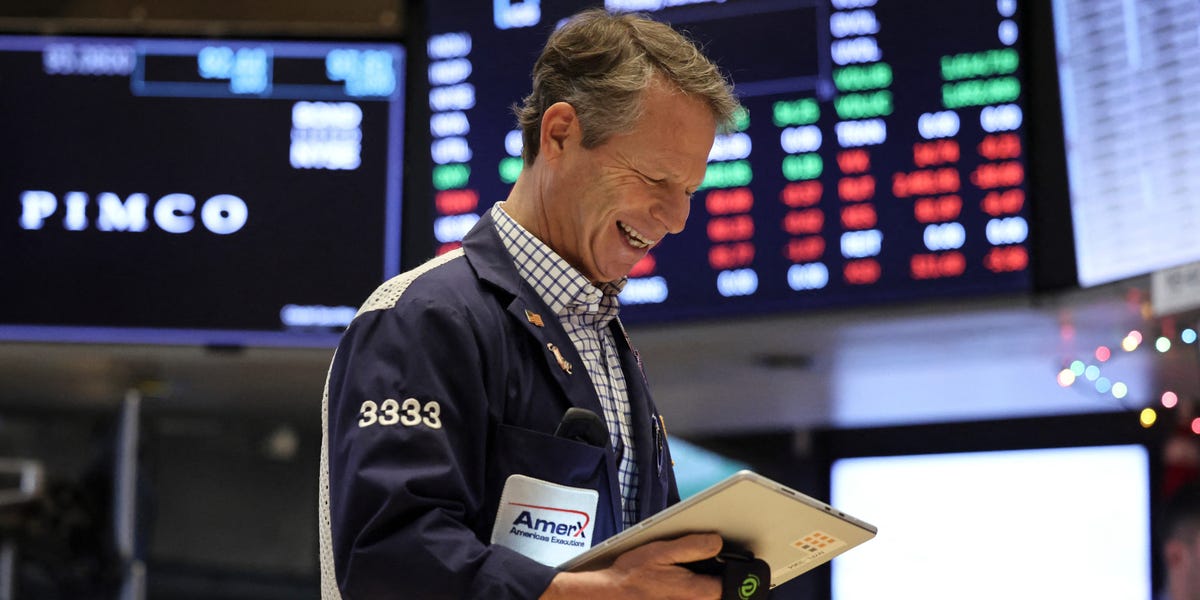
6 Positive Catalysts for Stocks That Investors Are Underestimating: MS
Business Insider· 2026-01-05 19:14
Worried that stocks are due for a rough patch after three consecutive years of strong returns? Don't be, says Morgan Stanley."We think consensus is still underestimating the collective impact of a series of bullish catalysts," said Mike Wilson, the bank's chief US equity strategist, said in a note on Monday. He continued: "While these variables have received attention individually, we believe their collective impact remains underappreciated in terms of fueling the rolling recovery."Here are six big cataly ...