PDD(PDD)

Search documents
蒋凡真正的战场在哪里?
Hu Xiu· 2025-08-12 04:57
Core Insights - Taobao's flash sale strategy is a response to competition from Douyin, aiming to revitalize its platform and adapt to new consumer behaviors [2][4][19] - The flash sale events have significantly increased order volumes, with peak orders reaching 2.2 billion, showcasing the effectiveness of the new marketing approach [10][11][13] Group 1: Flash Sale Strategy - Taobao's flash sale is a strategic shift towards a Douyin-like model, focusing on smaller, frequent promotional events instead of relying solely on major sales [4][5] - The campaign "First Cup of Milk Tea" generated substantial buzz, with Taobao achieving multiple trending topics on social media, indicating strong consumer engagement [4][5][6] - The integration of service providers into the sales strategy has proven effective, with significant sales increases reported by partnered brands [6][10] Group 2: Market Dynamics - The restaurant industry is facing severe challenges, with a closure rate of 61.2% in 2024, making the flash sale a critical lifeline for struggling businesses [10][11] - The competition landscape is heavily influenced by pricing strategies, with Taobao leveraging its supply chain to offer better prices than competitors [16][18] - The flash sale model aims to disrupt the existing market dynamics, targeting a shift from a 721 to a 541 or 442 industry structure, which would stabilize the ecosystem for merchants and delivery personnel [7][8] Group 3: Consumer Engagement - The focus on creating a sense of urgency and excitement through themed promotions is designed to enhance consumer participation and loyalty [5][6] - The strategy includes a variety of marketing campaigns that resonate with consumers' everyday experiences, such as "First Meal" and "First Snack" [5][6] - The emphasis on immediate feedback and engagement is crucial for maintaining merchant confidence and encouraging ongoing participation in the platform [7][10]


刚刚,日韩股市异动
Sou Hu Cai Jing· 2025-08-12 01:11
Market Performance - US stock market showed a calm performance ahead of the July Consumer Price Index (CPI) report, with all three major indices closing slightly lower. The Dow Jones fell by 0.45% to 43975.09 points, the Nasdaq dropped by 0.3% to 21385.4 points, and the S&P 500 decreased by 0.25% to 6373.45 points [10][9][1]. Economic Indicators - The upcoming CPI report is expected to serve as a benchmark for assessing the impact of US trade policies on inflation and will provide guidance for the Federal Reserve's interest rate decisions [10][1]. - A recent Bank of America survey indicated that approximately 91% of respondents believe US stocks are overvalued, marking the highest percentage since the survey began in 2001 [10][1]. Sector Performance - Major technology stocks experienced mixed results, with Apple down 0.83%, Microsoft down 0.05%, Amazon down 0.62%, Nvidia down 0.35%, Google down 0.21%, while Tesla rose by 2.85%, Meta down 0.45%, AMD down 0.28%, and Intel up 3.51% [10][1]. International Market Movements - Japanese and South Korean stock markets showed positive movements, with the Nikkei 225 index rising over 2% to a new historical high of 42681.89 points, and the KOSPI200 index increasing by over 1% to 437.83 points [2][1]. Labor Statistics - President Trump announced the nomination of economist E.J. Antoni as the next director of the Bureau of Labor Statistics, indicating potential reforms in the agency's data reporting methods [14][13]. - The administration is also considering candidates for the upcoming vacancy of the Federal Reserve Chair, including current vice chairs and the Dallas Fed president [16][15].







PDD Holdings Inc. Sponsored ADR (PDD) Falls More Steeply Than Broader Market: What Investors Need to Know
ZACKS· 2025-08-11 22:46
Company Performance - PDD Holdings Inc. Sponsored ADR (PDD) experienced a decline of 1.07% to $113.04, which was less than the S&P 500's daily loss of 0.25% [1] - Over the last month, PDD's shares increased by 8.91%, outperforming the Retail-Wholesale sector's gain of 2.27% and the S&P 500's gain of 2.71% [1] - The upcoming earnings per share (EPS) is projected at $1.91, indicating a 40.31% decrease compared to the same quarter last year, with quarterly revenue expected to be $14.28 billion, up 6.91% from the previous year [2] Full Year Estimates - For the full year, earnings are projected at $8.7 per share, representing a decline of 23.14%, while revenue is expected to be $59.22 billion, reflecting an increase of 8.28% from the prior year [3] Analyst Estimates and Rankings - Recent adjustments to analyst estimates for PDD reflect short-term business trends, with positive revisions indicating analysts' confidence in business performance [4] - The Zacks Rank system currently rates PDD as 5 (Strong Sell), with a 1.55% decrease in the Zacks Consensus EPS estimate over the past month [6] Valuation Metrics - PDD is currently trading at a Forward P/E ratio of 13.14, which is lower than its industry's Forward P/E of 18.58 [7] - The company has a PEG ratio of 1.43, compared to the Internet - Commerce industry's average PEG ratio of 1.5 [7] Industry Context - The Internet - Commerce industry, part of the Retail-Wholesale sector, has a Zacks Industry Rank of 170, placing it in the bottom 32% of over 250 industries [8]

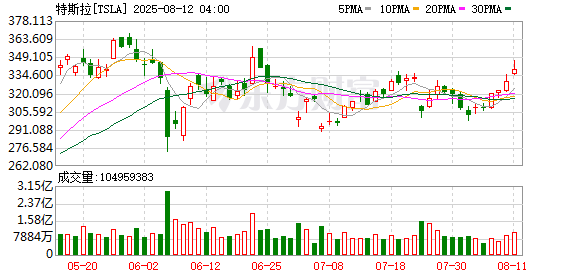
美股收跌!特斯拉涨近3%录得四连涨 “两房”大涨创新高!金银大跌 美国通胀数据即将来袭
Mei Ri Jing Ji Xin Wen· 2025-08-11 22:25
Market Overview - Major U.S. stock indices experienced a collective decline, with the Dow Jones Industrial Average falling by 200.52 points (0.45%) to close at 43,975.09 points, the Nasdaq down by 64.62 points (0.30%) at 21,385.40 points, and the S&P 500 decreasing by 16.00 points (0.25%) to 6,373.45 points [1] - Large-cap tech stocks mostly declined, with Apple down 0.83%, Amazon down 0.62%, Facebook down 0.45%, Nvidia down 0.3%, Google down 0.21%, and Microsoft down 0.02% [3][4] Notable Stock Movements - Tesla saw an increase of nearly 3%, marking its fourth consecutive day of gains [3] - Fannie Mae rose over 15% and Freddie Mac increased by more than 13%, both reaching their highest closing levels since 2008 [3] Sector Performance - Bank stocks showed mixed results, with Morgan Stanley up 0.53%, Bank of America up 0.38%, and JPMorgan up 0.32%. Conversely, Citigroup fell by 0.44%, Goldman Sachs down 0.24%, and Wells Fargo down 0.31% [5] - Gold stocks generally declined, with Harmony Gold, Eldorado Gold, and AngloGold down over 1%, and Coeur Mining down 0.3% [5] Chinese Stocks - The Nasdaq Golden Dragon China Index fell by 0.29%, with individual stocks showing mixed performance. Xpeng Motors rose nearly 6%, Tencent Music up over 2%, while NIO, Bilibili, and Xiaoma Zhixing increased by over 1%. On the downside, WeRide fell over 4%, TAL Education down more than 3%, and Li Auto down nearly 3% [6] Commodity Prices - The FTSE A50 futures index fell by 0.32% to 13,881 points [9] - Crude oil prices saw slight increases, with WTI crude up by 8 cents to $63.96 per barrel (0.13% increase) and Brent crude up by 4 cents to $66.63 per barrel (0.06% increase) [9] - Gold futures dropped by 2.78% to $3,394.1 per ounce, while silver futures fell by 2.29% to $37.66 per ounce [10] Currency Exchange - The offshore RMB (CNH) against the USD was reported at 7.1965, a decrease of 72 points from the previous Friday's close [11] Economic Indicators - Attention is focused on upcoming U.S. inflation data, particularly the Consumer Price Index (CPI) for July, which is expected to provide insights into the impact of tariffs on consumer prices [12][13]


Is Most-Watched Stock PDD Holdings Inc. Sponsored ADR (PDD) Worth Betting on Now?
ZACKS· 2025-08-11 14:00
Core Viewpoint - PDD Holdings Inc. Sponsored ADR has seen significant interest in the market, with its stock performance outpacing the broader market and its industry over the past month [2][18]. Earnings Estimates - For the current quarter, PDD is expected to report earnings of $1.91 per share, reflecting a decrease of -40.3% year-over-year, with a consensus estimate change of -2.8% over the last 30 days [5]. - The consensus earnings estimate for the current fiscal year is $8.7, indicating a decline of -23.1% from the previous year, with a slight change of -1.6% in the last month [5]. - For the next fiscal year, the earnings estimate is $11.28, suggesting an increase of +29.7% compared to the prior year, although this estimate has also seen a minor change of -1.3% [6]. Revenue Projections - The consensus sales estimate for the current quarter is $14.28 billion, representing a year-over-year growth of +6.9% [11]. - For the current fiscal year, the revenue estimate is $59.22 billion, indicating a growth of +8.3%, while the next fiscal year's estimate of $67.95 billion suggests a growth of +14.7% [11]. Recent Performance - In the last reported quarter, PDD generated revenues of $13.18 billion, a year-over-year increase of +9.7%, but fell short of the Zacks Consensus Estimate of $14.17 billion by -6.93% [12]. - The EPS for the same period was $1.56, down from $2.83 a year ago, resulting in an EPS surprise of -37.35% [12]. - Over the last four quarters, PDD has surpassed consensus EPS estimates twice and revenue estimates on multiple occasions [13]. Valuation Metrics - PDD is currently graded C in the Zacks Value Style Score, indicating that it is trading at par with its peers [17]. - The assessment of valuation multiples such as price-to-earnings (P/E), price-to-sales (P/S), and price-to-cash flow (P/CF) is essential for determining whether the stock is fairly valued [15][16]. Market Sentiment - The Zacks Rank for PDD is 5 (Strong Sell), suggesting potential underperformance relative to the broader market in the near term [7][18].

淘宝闪购:用抖音的刀,割竞对的肉
Sou Hu Cai Jing· 2025-08-11 10:55
Core Insights - Taobao is undergoing a transformation to adopt Douyin's operational strategies, with the launch of "Flash Sale" as a key initiative to revitalize its platform and compete effectively in the market [1][3][19] Group 1: Flash Sale Strategy - The Flash Sale initiative is a direct response to the competitive pressure from Douyin, aiming to create a new operational model that emphasizes frequent, smaller promotional events rather than relying solely on major sales events [3][4] - The campaign "First Cup of Milk Tea" generated significant buzz, with Taobao achieving a peak order volume of 2.2 billion, showcasing the effectiveness of its marketing strategies [11][12] - Taobao's approach includes integrating service providers into its ecosystem, leveraging their resources to enhance order fulfillment and compete against rivals [5][17] Group 2: Market Dynamics - The restaurant industry is facing severe challenges, with a closure rate of 61.2% in 2024, making the Flash Sale a critical lifeline for many struggling businesses [11][12] - The introduction of new social security policies is expected to increase operational costs for small restaurants, further emphasizing the need for innovative sales strategies like Flash Sale to maintain profitability [11][12] - The competitive landscape is shifting, with Taobao aiming to disrupt the existing market dynamics by establishing a new order structure that benefits both merchants and delivery personnel [7][8] Group 3: Competitive Landscape - Taobao's Flash Sale is positioned as a strategic move to not only regain market share but also to redefine consumer expectations and behaviors in the e-commerce space [9][14] - The initiative is seen as a critical battle against competitors, particularly Pinduoduo, which poses a significant threat due to its supply chain efficiencies and pricing strategies [18][19] - The success of Flash Sale could potentially alter the perception of Taobao's market dominance, creating a new competitive narrative that challenges existing players [14][15]

人工智能周报(25年第32周):OpenAI发布GPT5,腾讯混元开源多个小尺寸模型-20250811
Guoxin Securities· 2025-08-11 07:24
Investment Rating - The report maintains an "Outperform" rating for the industry, indicating expected performance above the market benchmark by over 10% [3][33]. Core Insights - The AI sector is currently the main investment theme, with major companies benefiting from advancements in cloud computing, advertising, and AI-generated content (AIGC). North American giants have seen accelerating revenue growth in Q2, leading to an upward adjustment in annual capital expenditures [3][30]. - The report highlights the competitive landscape in the e-commerce sector, where platforms are intensifying investments in instant retail to seek new growth opportunities [3][30]. - Key companies recommended for investment include Tencent Holdings, Alibaba, Meitu, Kuaishou, NetEase Cloud Music, and Tencent Music, all of which are expected to benefit from AI advancements [3][30]. Summary by Sections Company Dynamics - Kimi K2 model from Hugging Face ranks first in daily downloads, with over 40,000 downloads per day [17]. - Baidu AI Search leads the domestic market with 322 million monthly active users [20]. - Alibaba's OKKI AiReach has helped merchants discover an average of 1,325 new potential customers [20]. - OpenAI has launched its models on Amazon Web Services, enhancing accessibility for AI applications [21][22]. Underlying Technology - OpenAI has released its flagship AI model, GPT-5, which integrates reasoning capabilities and rapid response advantages across four versions [27]. Industry Policy - The Chinese government is implementing the "Artificial Intelligence +" initiative, which is expected to create new growth opportunities for companies in the AI industry [28]. - Support for digital infrastructure, including 5G and industrial internet, is being strengthened through long-term loans [28][29].
985大学生返乡第一次吃螃蟹 拼多多“千亿扶持”助力消费普惠进彝乡
Sou Hu Cai Jing· 2025-08-11 06:39
Group 1 - The article highlights the significant changes in rural areas, particularly in Bu Tuo County, due to the introduction of e-commerce platforms like Pinduoduo, which have improved access to a variety of goods, including seafood like blue crabs [3][9][12] - Pinduoduo's "100 billion support" plan has accelerated the integration of urban and rural economies by providing subsidies and resources to remote areas, enhancing the availability of quality products and services [3][12][16] - The rapid growth of self-pickup points for Pinduoduo's grocery service, "Duoduo Buy Vegetables," has led to increased consumer engagement and a shift in shopping habits among local residents [4][9][11] Group 2 - The article illustrates the personal journey of a young woman, Luo Ling, who has experienced the stark contrast between urban and rural life, and how e-commerce has bridged some of these gaps for her family [4][5][15] - Luo Ling's mother, Aji Meiriwai, represents the resilience of rural women, adapting to new shopping methods and utilizing Pinduoduo to enhance their family's quality of life [13][16] - The narrative emphasizes the emotional connection between Luo Ling and her mother, showcasing how modern conveniences like online shopping can strengthen familial bonds despite geographical distances [15][16]

2025 年展望 - 消费互联网股盈利下调,已过峰还是仍有更多-2Q25 preview_ Negative earnings revisions among consumer Internet stocks_ behind us or more to come_
2025-08-11 02:58
Summary of Key Points from the Conference Call Industry Overview - The focus for the 2Q25 earnings season is on consumer Internet stocks, particularly whether negative earnings revisions have ended or will continue, impacting investor sentiment towards digital entertainment leaders and consumer Internet names [3][34][24] - The average share price of consumer Internet stocks fell by 5% over the past three months, while digital entertainment leaders saw a 31% increase [3][20] Earnings Revisions and Stock Performance - Consumer Internet companies experienced an average 20% cut in 2025 Bloomberg consensus adjusted EPS estimates over the past three months [9][20] - Despite the earnings estimate cuts, the average share price decline for these companies was only 4%, indicating a potential disconnect between earnings expectations and market performance [20][24] Competitive Landscape - Investment intensity in the food delivery and quick commerce sectors is expected to peak in 3Q25, with Alibaba and Meituan being the primary competitors [13][34] - Alibaba's competitive advantage is bolstered by its financial resources, with an estimated Rmb600 billion in cash and equivalents, compared to significantly lower amounts for JD and Meituan [34][13] Company-Specific Insights Alibaba - Alibaba's narrative has shifted towards cloud and AI, with a capex plan of at least Rmb380 billion over the next three years [30][51] - The company is expected to see cloud revenue growth of 22% year-on-year in FY26E, driven by its cloud-first strategy [30][44] Meituan - Meituan faces challenges due to its limited financial resources compared to Alibaba, which may lead to market share loss and a negative impact on long-term earnings outlook [3][34][39] - The company captured 80% of industry revenue share and 99% of industry profit in 2024, but the new competitive landscape suggests potential downside [3][34] Pinduoduo - Pinduoduo plans to invest over Rmb100 billion in building a high-quality e-commerce ecosystem, which is expected to slow revenue growth to 5% year-on-year in FY25E, down from 59% in 2024 [14][16] Trip.com - Trip.com is accelerating its overseas expansion with a focus on talent acquisition and capital investment, establishing a Rmb1 billion tourism innovation fund [17][18] Baidu - Baidu is undergoing a significant AI transformation, with AI-generated content in search results expected to reach 70% by 3Q25, which may negatively impact ad revenue [19][46] Investment Recommendations - The report suggests selective rotation back to consumer Internet operators from digital entertainment leaders, considering valuation and recent earnings revisions [3][24] - Top picks in the consumer Internet sector include TME, Kuaishou, Alibaba, Trip.com, and Tencent [3][24] Conclusion - The upcoming earnings season will be critical in determining the trajectory of consumer Internet stocks, with a focus on management commentary regarding competition and financial guidance for the next quarters [3][34]


第3选择:职场冲突的新解法
3 6 Ke· 2025-08-11 02:53
Group 1 - The core idea of the article revolves around the concept of the "Third Option," which emphasizes finding collaborative solutions in conflicts rather than engaging in zero-sum games [1][5][13] - The case of ByteDance illustrates how a product team and a technical team resolved their conflict by breaking down a feature into three versions, leading to unexpected user approval and collaboration [1][3] - The "Third Option" is contrasted with traditional approaches to conflict resolution, which often involve compromise or confrontation, highlighting the potential for creating greater value through collaboration [3][5] Group 2 - The article discusses the "Four Steps to Collaboration" as a practical guide to implementing the "Third Option" in workplace conflicts [6] - The first step involves inviting the other party to explore a better solution together, signaling a willingness to cooperate [7] - The second step focuses on defining mutually recognized success criteria to ensure that both parties have a clear understanding of what constitutes a win [8] - The third step encourages brainstorming without limitations to generate creative solutions [9] - The final step is to confirm the collaborative solution and take action, ensuring it meets the established success criteria [10] Group 3 - The article warns against the "GET Trap," which refers to the pitfalls of focusing on personal gain, being controlled by emotions, and defending one's territory, ultimately hindering collaboration [12] - It emphasizes that the essence of the "Third Option" lies in improving communication and overcoming limited thinking, rather than competing for scarce resources [13] - The article concludes by reiterating that true success in conflicts comes from creating win-win situations, rather than viewing life as a zero-sum game [13]