PDD(PDD)

Search documents
Is PDD Holdings (PDD) Zhang Lei’s Top Pick?
Yahoo Finance· 2026-02-15 22:47
Group 1 - PDD Holdings Inc. (NASDAQ:PDD) is a significant investment for billionaire Zhang Lei, representing 27.76% of his portfolio, valued at $1.14 billion [1] - Approximately 70% of analysts covering PDD remain optimistic, with a consensus price target of nearly $150, indicating a potential upside of 50% despite regulatory and competitive challenges [1] - Citi recently adjusted its price target for PDD from $170 to $142, maintaining a 'Neutral' rating, citing improved U.S. traffic at Temu as a factor mitigating profitability pressures [2] Group 2 - Morgan Stanley has reiterated an 'Overweight' rating on PDD with a price target of $148, although it has removed the stock from its "Top Pick" list due to increasing regulatory risks in China [4] - PDD Holdings operates digital marketplaces that enhance productivity for merchants and consumers through integrated sourcing, logistics, and fulfillment networks [5] - Citi previously characterized a Rmb 100,000 tax fine in Shanghai as "smaller-than-feared," suggesting it alleviated some regulatory concerns [3]

高毅资产美股持仓曝光!加仓拼多多、贝壳等
Ge Long Hui· 2026-02-15 08:04
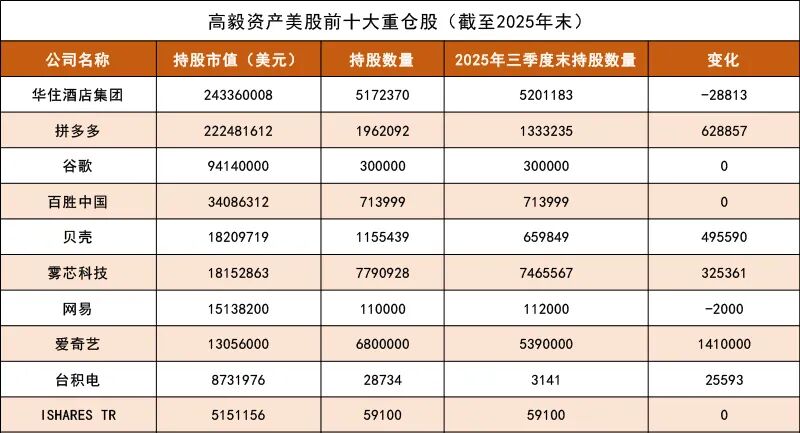
Group 1 - Gao Yi Asset held stocks of 13 companies in the US stock market with a total market value exceeding $600 million as of the end of 2025 [2] - The top ten holdings of Gao Yi Asset prominently feature Chinese concept stocks, with significant increases in positions for Pinduoduo and Beike, and a new investment in Yixian E-commerce [2] - The top ten holdings include Huazhu Group, Pinduoduo, Google, Yum China, Beike, Wuxi AppTec, NetEase, iQIYI, TSMC, and ISHARES TR, indicating a dominant presence of Chinese concept stocks [2] Group 2 - As of the end of last year, Gao Yi Asset held 1.333 million shares of Pinduoduo, having increased its position by 629,000 shares compared to the end of the third quarter [3]



2026年互联网大厂春节放假大比拼,最高17天假。
猿大侠· 2026-02-15 04:11
Holiday Arrangements - Major companies have announced their holiday schedules for the upcoming Spring Festival, with most adhering to the national statutory holiday of 9 days [3][4] - Tencent will have a holiday from February 14 to February 23, totaling 10 days, while 58.com has the longest holiday of 17 days from February 7 to February 23 [4] - Other companies like Alibaba, ByteDance, Baidu, Meituan, Didi, Pinduoduo, Kuaishou, JD, and Xiaomi will follow the statutory holiday from February 15 to February 23, each with 9 days off [4] Employee Sentiment - There is a general satisfaction among employees regarding the holiday duration, with many expressing hope that future holidays will not be less than 9 days [3]





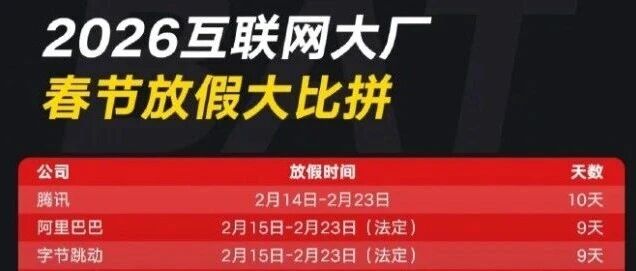
高毅资产美股持仓曝光,总市值超6亿美元,七只中概股占据前十大重仓
Jin Rong Jie· 2026-02-15 03:58
Group 1 - Gao Yi Asset holds shares in 13 companies in the US stock market, with a total market value exceeding $600 million, focusing heavily on Chinese companies listed overseas [1] - The top ten holdings of Gao Yi Asset include seven Chinese concept stocks, with Huazhu Hotels Group being the largest position, showing a strong preference for Chinese enterprises [1] - Huazhu Hotels Group reported a hotel revenue of 30.6 billion yuan for Q3 2025, a year-on-year increase of 17.5%, with over 12,000 hotels in operation and membership exceeding 300 million [1] Group 2 - Gao Yi Asset increased its holdings in several Chinese concept stocks, including Pinduoduo, Beike, and iQIYI, with Pinduoduo seeing an increase of 629,000 shares, nearly a 90% rise [1] - Another private equity firm, Jinglin Asset, also increased its holdings in Pinduoduo by over 600,000 shares during the same reporting period [2] - Pinduoduo reported Q3 2025 revenue of 108.28 billion yuan, a year-on-year growth of 9%, but faced pressure on operating profit margins due to intensified market competition and ongoing investments under its "billion support plan" [2]
高毅资产去年四季度加仓 拼多多、贝壳等
Mei Ri Jing Ji Xin Wen· 2026-02-15 03:37
Core Insights - Gao Yi Asset disclosed its US stock holdings as of the end of 2025, indicating a total market value exceeding 600 million USD across 13 companies [2] - The firm increased its positions in Chinese concept stocks such as Pinduoduo and Beike in the fourth quarter of the previous year, and initiated a new investment in Yixian E-commerce [2] - The top ten holdings of Gao Yi Asset in the US stock market include Huazhu Group, Pinduoduo, Google, Yum China, Beike, Wuxi AppTec, NetEase, iQIYI, TSMC, and ISHARES TR, with Chinese concept stocks dominating the portfolio [2]
高毅资产美股持仓曝光
Shang Hai Zheng Quan Bao· 2026-02-15 01:17
Group 1 - Gao Yi Asset's latest US stock holdings were disclosed, showing a total market value exceeding $600 million across 13 companies as of the end of 2025 [1][3] - The top ten holdings are dominated by Chinese concept stocks, with significant increases in positions for Pinduoduo and Beike, and a new investment in Yixian E-commerce [1][3][9] - The largest holding is Huazhu Hotels Group, which has consistently been the top position for multiple quarters [4][9] Group 2 - Huazhu Hotels Group reported a hotel revenue of 30.6 billion yuan for Q3 2025, a year-on-year increase of 17.5%, with over 12,000 hotels in operation [5] - Pinduoduo saw a revenue of 108.28 billion yuan in Q3 2025, with a year-on-year growth of 9%, marking a decline in growth rate [7] - The overall sentiment in the private equity sector is optimistic regarding domestic demand recovery in 2026, with expectations for opportunities in consumer and real estate sectors [10][11] Group 3 - The real estate cycle's impact on consumption is diminishing, and domestic demand is being driven by growth in other sectors [12] - Increased social capital activity is expected to positively influence economic recovery, supported by proactive policy signals [12][13] - Analysts suggest that the turning point for domestic demand is approaching, with opportunities emerging in sectors like hospitality and consumer goods [11][13]
年货消费迎来“00后主理人”:“手搓”年味火了,为宠物花钱更多了
Di Yi Cai Jing· 2026-02-14 08:40
Group 1 - The core trend of emotional consumption and pet consumption is rising during the Spring Festival, with young consumers becoming the main drivers of this trend [1][2] - The online retail sales for the national New Year goods festival reached 989.73 billion yuan by February 8, 2026, with post-00s consumers accounting for over 30% of the total sales and a year-on-year increase of 47% in order value [1] - The demand for "emotional value" in New Year goods is increasing, with products that evoke nostalgia and emotional resonance, such as home decorations and childhood snacks, becoming popular among young consumers [1] Group 2 - The DIY segment is gaining traction, with searches for "New Year DIY" increasing by over 200% and "Horse Year DIY" searches rising by 600%, indicating a willingness to pay a premium for creative and personalized products [2] - The pet market is experiencing significant growth during the Spring Festival, with sales of pet toys, clothing, and food seeing substantial increases, including a 115.60% rise in pet clothing sales compared to last year [2][3] - The pet consumption market in China reached 312.6 billion yuan in 2025, with a growing trend towards diversification in pet products, including offerings for various types of pets beyond just cats and dogs [3] Group 3 - Pre-made dishes are maintaining growth in the New Year meal segment, with sales of a new series of dishes increasing by 116% since launch, reflecting consumer demand for unique and high-quality meal options [3][4] - Consumers are prioritizing regional flavors and are open to trying creative dishes, with nearly 90% preferring hometown flavors and over 80% willing to experiment with innovative New Year meals [4] - Health considerations, such as low-fat and low-sugar options, are becoming increasingly important in the decision-making process for young consumers regarding New Year meals [4]
中概股全线走低、美股全线大跌,有色金属、半导体芯片、苹果重挫
Sou Hu Cai Jing· 2026-02-14 04:30
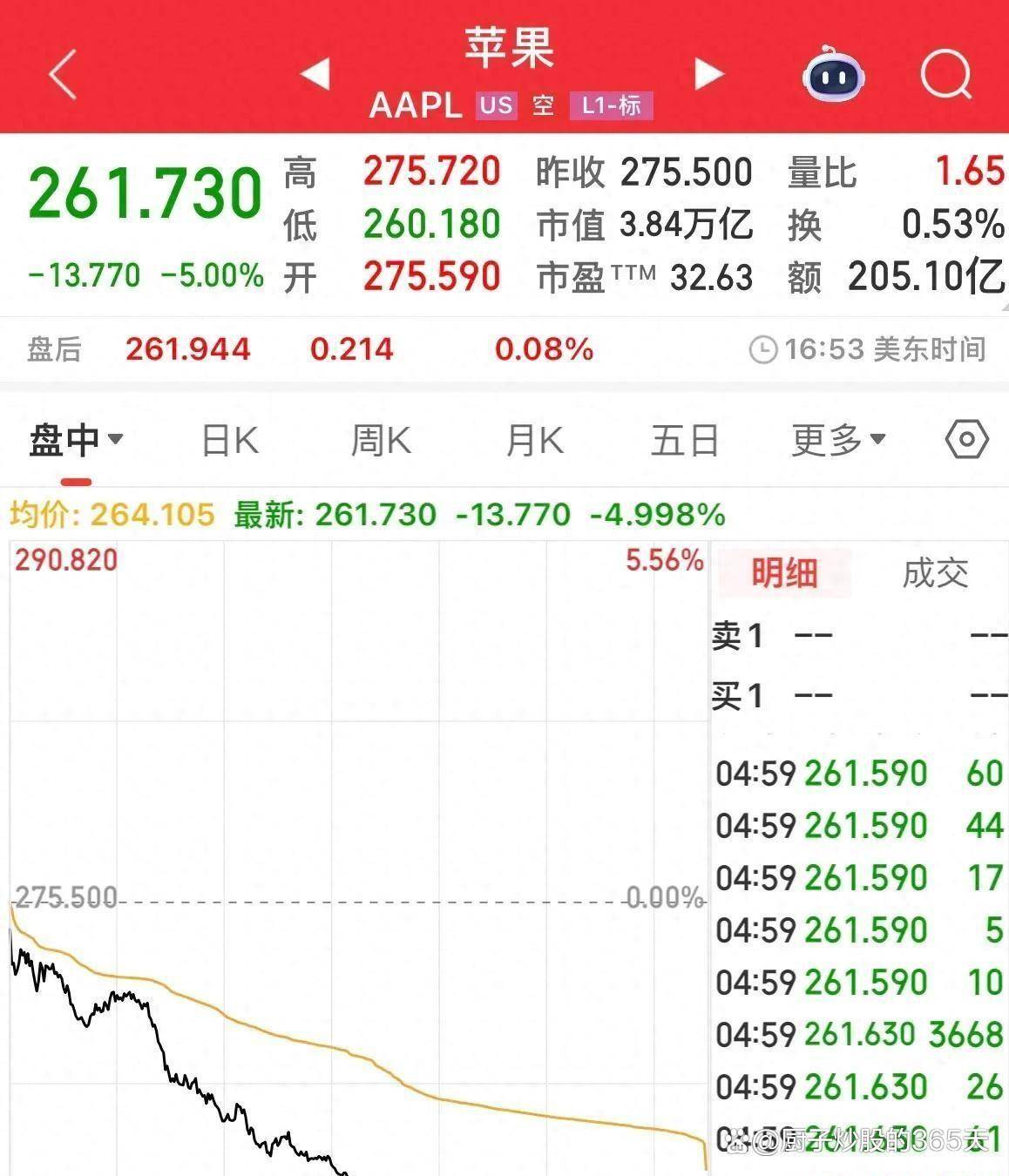
Market Overview - The US stock market experienced a significant decline, with the Dow Jones Industrial Average dropping 669.42 points (1.34%) to close at 49,451.98 points, the Nasdaq Composite falling 469.32 points (2.03%) to 22,597.15 points, and the S&P 500 decreasing by 108.71 points (1.57%) to 6,832.76 points [1][2][3] Market Sentiment - Over 4,100 stocks declined, indicating widespread market panic as investors rushed to sell assets, particularly in the tech and growth sectors. The VIX index surged, reflecting heightened risk aversion [2][3] Sector Performance - The sell-off affected nearly all sectors, with notable declines in precious metals and semiconductor stocks. The precious metals sector saw significant drops, with gold futures down 3.08% and silver futures plummeting 10.62% [4][5][6][8] - The Philadelphia Semiconductor Index fell by 2.5%, with individual stocks like AEHR Test Systems down 17.58% and Intel down over 3% [8][10] Major Companies - Apple Inc. experienced a substantial drop of 5.00%, resulting in a market cap loss of over $120 billion, attributed partly to regulatory concerns [12] - Other major tech companies also faced declines, with Tesla down 1.62%, Amazon down 2.20%, and Meta Platforms down nearly 3% [12] Financial Sector - Bank stocks fell across the board, with JPMorgan Chase down over 2%, Goldman Sachs down over 4%, and Citigroup down over 5%, driven by concerns over AI disrupting traditional wealth management [13][14] Economic Indicators - Recent economic data, including a drop in initial jobless claims and lower-than-expected existing home sales, contributed to market anxiety about potential economic overheating and prolonged high interest rates [24][25][26] Global Market Impact - The sell-off in the US markets had a ripple effect on global markets, with European indices also closing lower after initially opening higher, indicating a widespread sentiment of fear [18][19][20] AI Concerns - The market's decline was exacerbated by fears regarding the disruptive impact of AI technologies on various industries, leading to significant stock price drops in sectors perceived to be at risk [21][22][30] Storage Chip Sector - In contrast to the overall market trend, storage chip stocks saw gains, with companies like SanDisk and Seagate Technology rising significantly, reflecting a belief that AI's growth will increase demand for data storage [29]


晚间暴雷!黄金、白银、原油、美股全线崩盘,42只中概集体下跌
Sou Hu Cai Jing· 2026-02-14 04:22
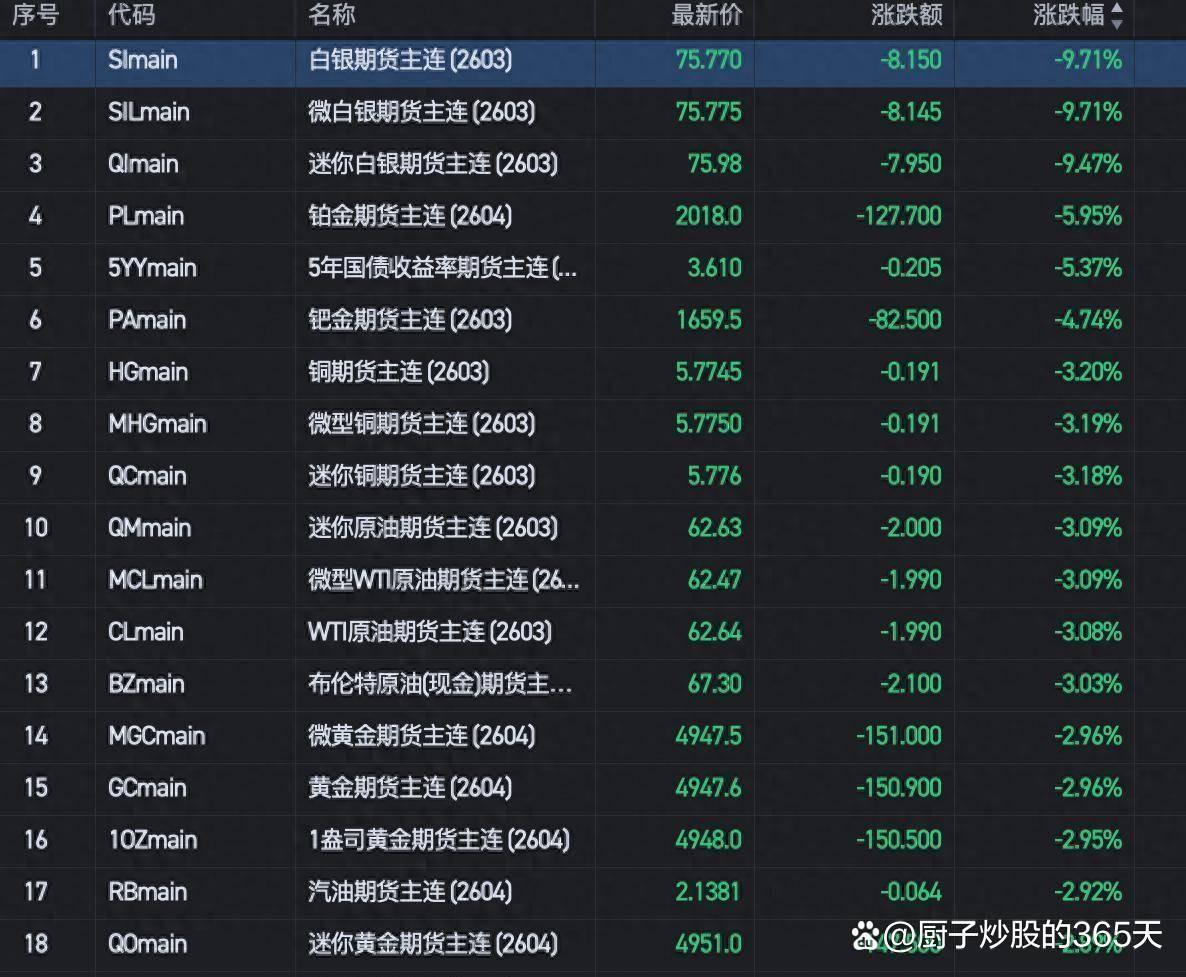
Market Overview - On February 13, 2026, a significant asset sell-off occurred in global financial markets, particularly impacting U.S. stock indices. The Dow Jones Industrial Average fell by 669.42 points (1.34%) to close at 49,451.98, while the Nasdaq Composite Index dropped 469.32 points (2.03%) to 22,597.15. The S&P 500 Index also declined by 108.71 points (1.57%) to 6,832.76 [1]. Commodity Market Impact - The sell-off extended to the commodity markets, with gold and silver experiencing substantial declines. COMEX gold futures fell by 3.08% to $4,941.4 per ounce, while COMEX silver futures plummeted by 10.62% to $75.01 per ounce [2][3]. Technology Sector Reaction - Major technology companies were severely affected, with Apple’s stock price dropping by 5%, resulting in a market value loss of over $120 billion (approximately 800 billion RMB). Other tech giants like Microsoft, Amazon, Tesla, Meta, and Nvidia also saw significant declines [3][4]. Chinese Concept Stocks - The Nasdaq Golden Dragon China Index, which includes many Chinese concept stocks, fell by 3% on the same day, indicating a collective sell-off in this sector. Over 40 Chinese concept stocks experienced substantial declines, with Tencent Music down 10.57% and Alibaba down 3.40% [3][4][6]. Employment Data Influence - The catalyst for this market turmoil was a strong U.S. employment report released on February 11, showing a non-farm payroll increase of 130,000 in January, significantly above the expected 70,000. This led to a shift in market expectations regarding Federal Reserve interest rate cuts, with the probability of a March rate cut dropping from 19.6% to 6% [5][6]. Capital Expenditure Concerns - Major tech companies announced aggressive capital expenditure plans for 2026, with Alphabet projecting $175 billion to $185 billion and Amazon estimating $200 billion, both nearly doubling their 2025 expenditures. This raised investor concerns about the return on such investments, especially as many companies reported record profits but saw stock price declines [10][11]. Market Sentiment and Volatility - The market's fear and volatility increased sharply, with the VIX index rising significantly. The sell-off was exacerbated by algorithm-driven trading, which triggered stop-loss orders and led to extreme price movements [15][16][17]. Global Market Impact - The financial turmoil that began in Wall Street quickly spread to global markets, with Asian and European stock markets opening lower in response to the U.S. declines [18].



美股三大指数周线齐跌
财联社· 2026-02-14 00:39
Market Overview - The three major indices showed mixed performance, with the Dow Jones up 0.10% to 49,500.93 points, the S&P 500 up 0.05% to 6,836.17 points, and the Nasdaq down 0.22% to 22,546.67 points [3] - All three indices recorded weekly declines, with the S&P 500 down 1.4%, the Dow down 1.2%, and the Nasdaq down 2.1% [3] Economic Indicators - The U.S. Bureau of Labor Statistics reported that the January CPI rose 2.4% year-over-year and 0.2% month-over-month, both below market expectations [3] - The core CPI, excluding volatile food and energy prices, increased by 2.5% year-over-year and 0.3% month-over-month, aligning with market expectations [3] - Phil Blancato, Chief Market Strategist at Osaic, indicated that this data could pave the way for interest rate cuts and inflation control if the trend continues [3] Sector Performance - Concerns over AI disruption led to market sell-offs, affecting various sectors including software, real estate, trucking, and financial services [6] - Financial stocks such as Charles Schwab and Morgan Stanley fell by 10.8% and 4.9%, respectively, while software company Workday dropped 11% and commercial real estate firm CBRE fell 16% [6] - The media sector was also impacted, with Disney down approximately 3% and Netflix down 6% [7] Technology Stocks - Major tech stocks mostly declined, with Nvidia down 2.21%, Apple down 2.27%, Microsoft down 0.13%, Google down 1.06%, and Amazon down 0.41% [7] - Tesla saw a slight increase of 0.09%, while Oracle rose by 2.34% and Netflix increased by 1.33% [7] Chinese Stocks - The Nasdaq Golden Dragon China Index fell by 0.10%, with Alibaba down 1.89%, JD.com down 1.38%, and Pinduoduo up 0.06% [7] - NIO remained flat, while Xpeng rose by 1.36% and Li Auto fell by 1.81% [7]