
XIAOMI(XIACY)

Search documents
港股异动 | 小米集团-W(01810)午后涨近5% 8月交付量超3万辆 市场关注产能逐步释放
智通财经网· 2025-09-02 06:08
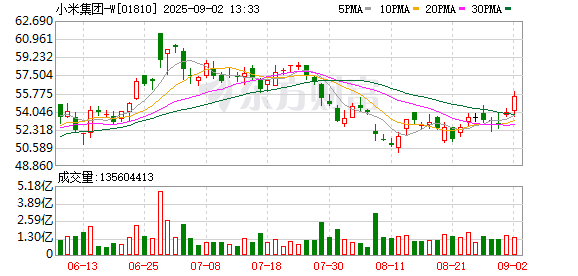
Group 1 - Xiaomi Group-W (01810) saw a nearly 5% increase in stock price, reaching 56.6 HKD with a trading volume of 10.042 billion HKD [1] - Xiaomi Auto reported over 30,000 vehicle deliveries in August, marking the second month since July with such delivery figures [1] - The company plans to open 32 new stores in September, expanding its presence to 370 stores across 105 cities in China [1] Group 2 - First Shanghai's recent report indicates that Xiaomi's order volume significantly exceeds its current delivery capacity, highlighting a notable supply-demand gap [1] - To address market demand, Xiaomi's second-phase factory has commenced production, with current capacity gradually ramping up [1] - Recent business changes at Guohua (Qingdao) Intelligent Equipment Co., Ltd. include the addition of Beijing Xiaomi Intelligent Manufacturing Equity Investment Fund as a shareholder, with registered capital increasing from approximately 9.3522 million RMB to about 10.4745 million RMB [1]

港股小米集团午后逆势拉升,现涨超3%
Mei Ri Jing Ji Xin Wen· 2025-09-02 05:32
Group 1 - Xiaomi Group's stock price increased by over 3% in the afternoon session on September 2 [2]

北水动向|北水成交净买入120.46亿港元 阿里(09988)绩前获北水加仓 小米(01810)再遭抛售
智通财经网· 2025-08-29 09:59
Summary of Key Points Core Viewpoint - The Hong Kong stock market saw significant net inflows from Northbound trading, with a total net buy of 120.46 billion HKD on August 29, 2023, indicating strong investor interest in certain stocks, particularly Tencent and Alibaba [1]. Group 1: Northbound Trading Activity - Northbound trading recorded a net buy of 120.46 billion HKD, with 13.42 billion HKD from the Shanghai Stock Connect and 107.04 billion HKD from the Shenzhen Stock Connect [1]. - The most bought stocks included Tencent (00700), Alibaba-W (09988), and Innovent Biologics (01801) [1]. - The most sold stocks were Xiaomi Group-W (01810), New China Life Insurance (01336), and SMIC (00981) [1]. Group 2: Individual Stock Performance - Tencent (00700) had a net buy of 15.83 billion HKD, supported by strong performance from its mobile game "Valorant," with projected first-year revenue of 5 to 6 billion RMB [4]. - Alibaba-W (09988) saw a net buy of 11.49 billion HKD, reporting Q1 FY2026 revenue of 247.65 billion RMB, a 2% year-on-year increase, and a record high capital expenditure of 38.68 billion RMB, up 220% [5]. - Innovent Biologics (01801) received a net buy of 7.18 billion HKD, with a 50.6% increase in revenue to approximately 6 billion RMB in the first half of the year, exceeding market expectations [5]. Group 3: Notable Net Sales - Xiaomi Group-W (01810) faced a net sell of 8.61 billion HKD, with a 40% year-on-year increase in automotive revenue, but smartphone business margins were under pressure due to rising storage costs [7]. - New China Life Insurance (01336) experienced a net sell of 3.34 billion HKD, despite reporting a 25.5% increase in revenue to 69.43 billion RMB and a 33.5% increase in net profit [7]. - SMIC (00981) had a net sell of 614.7 million HKD, reflecting ongoing challenges in the semiconductor sector [7].


凌晨重磅!美联储,降息大消息
Sou Hu Cai Jing· 2025-08-29 00:14
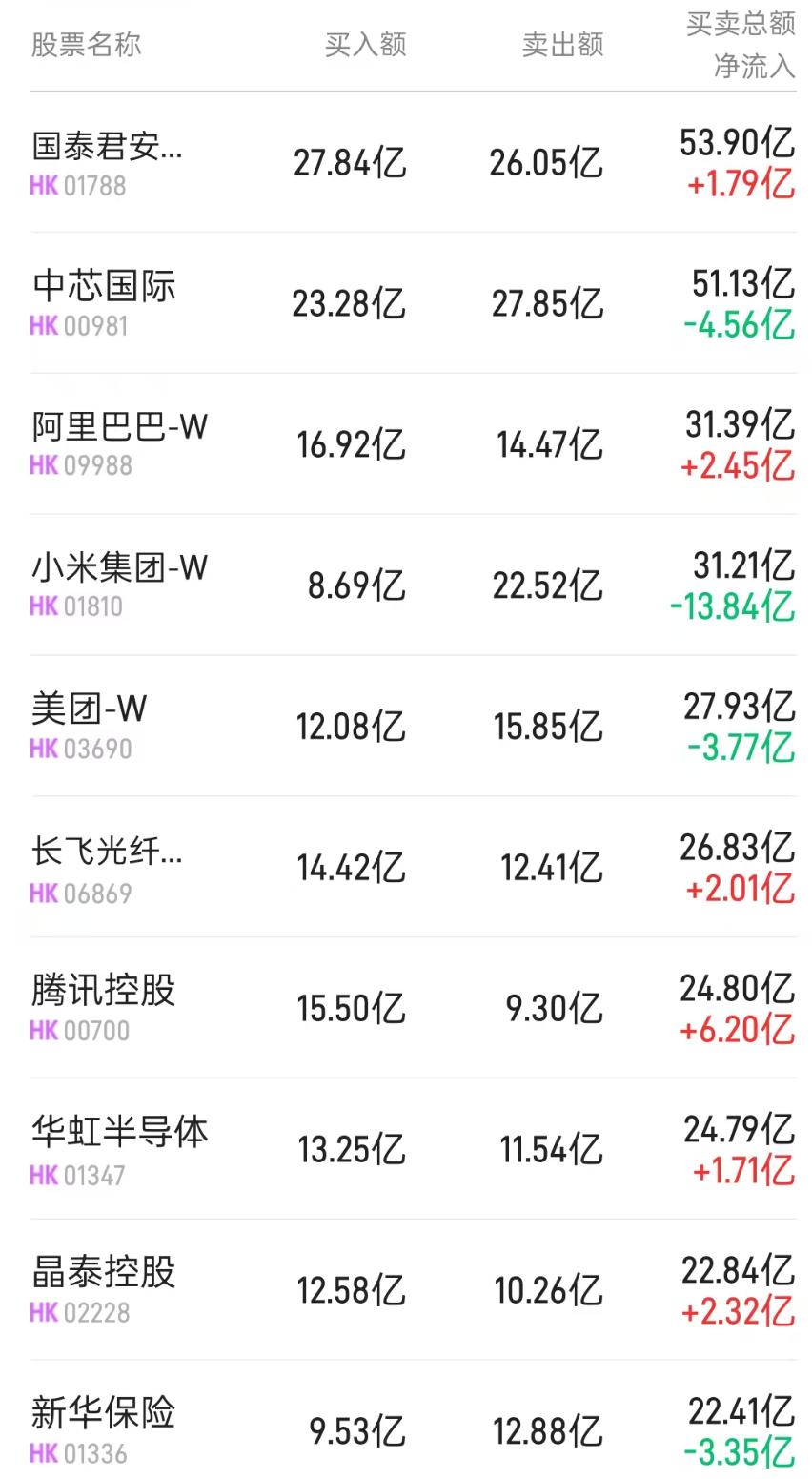
Core Viewpoint - Federal Reserve officials support a 25 basis point rate cut in September, indicating a shift towards a more accommodative monetary policy to prevent labor market deterioration and to guide inflation back to the 2% target [13]. Group 1: Market Performance - The Dow Jones Industrial Average and S&P 500 index both reached record closing highs, with the Dow up 0.16% at 45,636.9 points and the S&P 500 up 0.32% at 6,501.86 points [1]. - The Nasdaq also saw a slight increase of 0.53%, closing at 21,705.16 points [1]. - Major tech stocks mostly rose, with the US Tech Giants Index increasing by 0.47% [2]. Group 2: Individual Stock Movements - Google (Alphabet) rose over 2%, Amazon increased by more than 1%, Apple by nearly 1%, and Microsoft by 0.57%, while Nvidia fell by 0.82% and Tesla dropped over 1% [5][6]. - Among Chinese concept stocks, the Nasdaq Golden Dragon China Index rose by 0.14%, while the Wande Chinese Tech Leaders Index fell by 0.01% [7]. Group 3: Chinese Concept Stocks - Meituan fell by 4.78%, Alibaba by 2.18%, and JD.com by 1.40%, leading the decline in the Wande Chinese Tech Leaders Index [10]. - Notable gainers included NetEase, which rose by 2.35%, Baidu by 1.24%, and Xiaomi by 1.15% [10]. - Ctrip Group surged nearly 15%, while Newegg fell over 18% [10]. Group 4: Federal Reserve Insights - Federal Reserve Governor Waller emphasized the need for immediate action to lower rates, citing labor market and inflation data as supportive of this move [13]. - Morgan Stanley's Chief Investment Officer Lisa Shalett noted that while the market anticipates an over 80% chance of a rate cut in September, the actual likelihood may be closer to 50% due to strong economic indicators [15][16].


北水成交净卖出13.76亿 北水全天加仓科网股 抛售小米集团-W超15亿港元
Zhi Tong Cai Jing· 2025-08-27 00:29
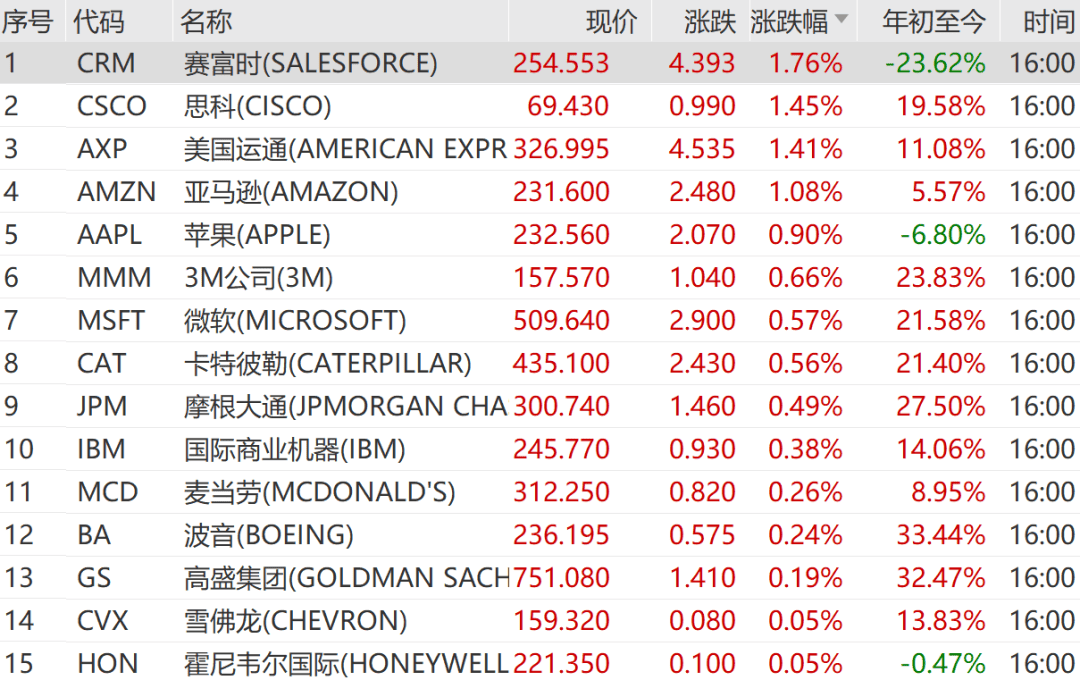
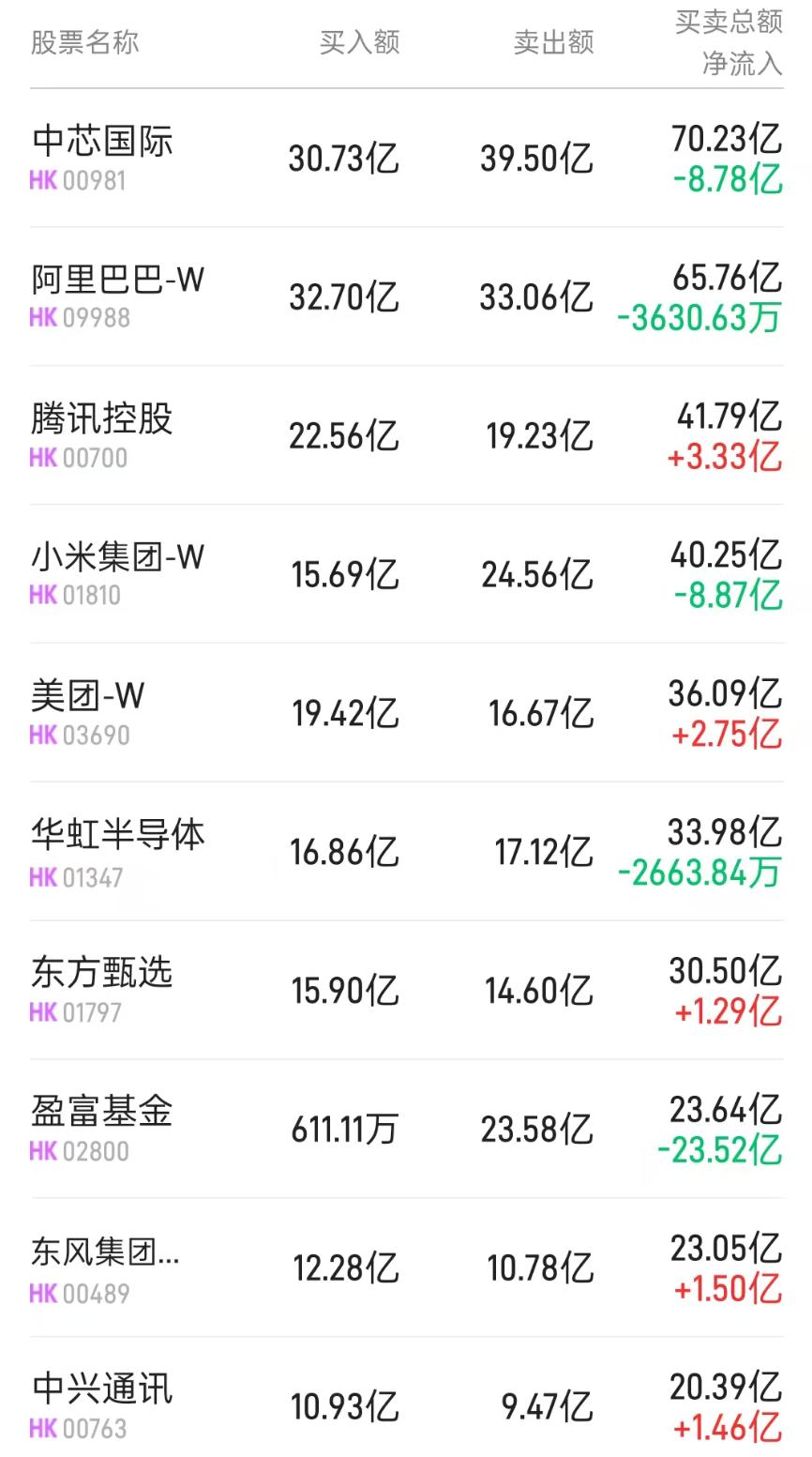
Core Insights - The Hong Kong stock market experienced significant net selling from northbound capital, totaling HKD 13.76 billion, with a net sell of HKD 24.36 billion from the Shanghai Stock Connect and a net buy of HKD 10.6 billion from the Shenzhen Stock Connect [2] Group 1: Stock Performance - ZTE Corporation (中兴通讯) saw a net buy of HKD 4.07 billion, while Semiconductor Manufacturing International Corporation (中芯国际) and Hua Hong Semiconductor (华虹半导体) faced net sells of HKD 8.11 billion and HKD 1.29 billion, respectively [7] - Alibaba (阿里巴巴-W) and Kuaishou (快手-W) were the most bought stocks, while Xiaomi Group (小米集团-W) and the Tracker Fund of Hong Kong (盈富基金) were the most sold [2][8] Group 2: Trading Volume and Activity - The trading volume for ZTE Corporation reached 11.50 billion, with a buy amount of HKD 7.06 billion and a sell amount of HKD 4.44 billion [5] - The total trading volume for Semiconductor Manufacturing International Corporation was HKD 70.23 billion, with a buy amount of HKD 30.73 billion and a sell amount of HKD 39.50 billion [3] Group 3: Market Trends and Insights - The report from Dongfang Securities suggests that the market for domestic AI chips is expected to grow, driven by advancements in design technology and manufacturing processes [7] - Citigroup indicated that major e-commerce platforms will likely maintain a degree of subsidies to secure market share amid changing consumer behaviors in China [6]

小米集团-W(01810):汽车毛利率表现持续强劲,看好公司长期价值成长
SPDB International· 2025-08-26 07:55
Investment Rating - The report maintains a "Buy" rating for the company, Xiaomi Group, with a target price of HKD 75.0, indicating a potential upside of 43% from the current price of HKD 52.55 [1][3][27]. Core Views - The short-term and long-term fundamentals of Xiaomi show growth potential, driven by strong demand in the new energy vehicle sector and ongoing investments in technology such as chips and AI [1][2]. - The company is expected to achieve a smartphone shipment of 175 million units in 2025, with high-end products supporting margin growth [1][3]. - The IoT segment is projected to grow nearly 50% due to the expansion of major appliances and overseas business [1][3]. - The internet business is anticipated to maintain stable revenue growth and high margins due to a growing user base [1][3]. - The automotive segment is expected to exceed the delivery target of 350,000 units, with scale effects and high-end models improving margins [1][3]. Financial Projections - Revenue is forecasted to grow from RMB 270.97 billion in 2023 to RMB 756.75 billion by 2027, with a compound annual growth rate (CAGR) of approximately 20% [3][12]. - Adjusted net profit is expected to increase significantly from RMB 19.27 billion in 2023 to RMB 71.50 billion in 2027, reflecting a CAGR of around 39% [3][12]. - The target price corresponds to a price-to-earnings (P/E) ratio of 29.9x, indicating room for valuation growth [2][13]. Segment Valuation - The report employs a sum-of-the-parts valuation method, assigning target P/E ratios of 23.0x for smartphones, 27.0x for IoT, and 20.0x for internet services, along with a target price-to-sales (P/S) ratio of 2.5x for electric vehicles [2][13]. - The total valuation for Xiaomi is estimated at HKD 75.0, based on projected revenues and net profits across its business segments [2][13].
北水动向|北水成交净卖出13.76亿 北水全天加仓科网股 抛售小米集团-W(01810)超15亿港元
智通财经网· 2025-08-25 10:01
Summary of Key Points Core Viewpoint - The Hong Kong stock market experienced significant net selling from Northbound funds, totaling 1.376 billion HKD on August 25, with notable movements in various stocks [1]. Northbound Fund Activity - Northbound funds had a net selling of 2.436 billion HKD through the Shanghai Stock Connect and a net buying of 1.06 billion HKD through the Shenzhen Stock Connect [1]. - The stocks with the highest net buying included Alibaba-W (09988), Kuaishou-W (01024), and ZTE Corporation (00763) [1]. - The stocks with the highest net selling included the Tracker Fund of Hong Kong (02800), Xiaomi Group-W (01810), and Semiconductor Manufacturing International Corporation (00981) [1]. Stock-Specific Transactions - Semiconductor Manufacturing International Corporation (00981) had a total transaction of 7.023 billion HKD, with a net outflow of 878 million HKD [2]. - Alibaba-W (09988) recorded a total transaction of 6.576 billion HKD, with a net outflow of 36.31 million HKD [2]. - Xiaomi Group-W (01810) had a total transaction of 4.025 billion HKD, with a net outflow of 887 million HKD [2]. Market Trends and Insights - Kuaishou-W (01024) received a net inflow of 471 million HKD, supported by the launch of its AI model and significant revenue growth [5]. - ZTE Corporation (00763) saw a net inflow of 407 million HKD, while Semiconductor Manufacturing International Corporation (00981) and Hua Hong Semiconductor (01347) faced net outflows of 811 million HKD and 129 million HKD, respectively [6]. - Xiaomi Group-W (01810) faced a net outflow of 15.24 billion HKD, with concerns over its smartphone business margins due to rising storage costs [7]. Additional Notable Transactions - Dongfeng Motor Group (00489) received a net inflow of 149 million HKD, with ongoing discussions about privatization and other strategic transactions [6]. - Tencent Holdings (00700) and Oriental Selection (01797) had net inflows of 180 million HKD and 202 million HKD, respectively [8].

小米集团(1810.HK):全生态协同发力 盈利创历史新高
Ge Long Hui· 2025-08-23 02:40
Core Viewpoint - Xiaomi Group reported strong financial results for Q2 2025, with revenue of 115.96 billion RMB, a year-on-year increase of 30.5%, and adjusted net profit of 10.83 billion RMB, up 75.4% year-on-year, exceeding Bloomberg consensus expectations and setting historical highs [1] Group 1: Smartphone Performance - Xiaomi's smartphone revenue decreased by 2.1% year-on-year to 45.52 billion RMB, primarily due to a 2.7% decline in average selling price (ASP) to 1,073.2 RMB, partially offset by a 0.6% increase in shipment volume to 42.4 million units [1] - Despite an increase in high-end smartphone shipments in mainland China, the launch of the REDMIA5 series in April 2025 led to a decline in ASP in overseas markets, contributing to a 0.6 percentage point drop in smartphone gross margin to 11.5% [1] Group 2: IoT and Internet Services - IoT and lifestyle consumer products achieved revenue of 38.71 billion RMB in Q2, a year-on-year growth of 44.7%, setting a historical high, with a gross margin of 22.5%, up 2.8 percentage points year-on-year [2] - Internet services revenue reached 9.1 billion RMB, growing 10.1% year-on-year, with a gross margin of 75.4%, slightly down year-on-year but still a core profit contributor [2] - Global monthly active users increased to 731.2 million, up 8.2% year-on-year, supporting revenue growth in services [2] Group 3: Automotive Business - The company delivered 81,302 new vehicles in Q2, a historical high, with the Xiaomi YU7 series SUV achieving over 240,000 orders within 18 hours of launch, indicating strong market interest [2] - The vehicle models feature high-end configurations such as an 800V silicon carbide high-voltage platform and laser radar, with an ASP of 253,700 RMB, up 10.9% year-on-year, contributing to improved profitability [2] Group 4: Investment Outlook - The company's effective execution of its "high-end + full ecosystem + globalization" strategy led to another quarter of unexpected growth in Q2 2025, with short-term growth driven by YU7 vehicle deliveries and AIoT product launches [3] - Long-term growth potential is anticipated from the implementation of large model technology and the synergy of the "people, vehicle, home" ecosystem [3] - The company is assigned a target price of 62.3 HKD per share, indicating an upside potential of 18.6% from the recent closing price, maintaining a "buy" rating [3]
小米集团(1810.HK):2Q25汽车业绩表现亮眼 智能手机业务调整基本符合预期
Ge Long Hui· 2025-08-23 02:40
Group 1 - The core viewpoint of the articles highlights Xiaomi's strong performance in the automotive sector, with a significant increase in revenue and profit margins, while the smartphone business faces challenges due to ASP declines and rising component costs [1][2][3] Group 2 - In Q2 2025, Xiaomi reported revenues of 116 billion yuan and adjusted net profits of 10.8 billion yuan, meeting market expectations [1] - Automotive revenue grew by 40% year-on-year, with a gross margin reaching a historical high of 26.4%, driven by ASP growth and economies of scale [1] - Smartphone revenue declined by 2% year-on-year, primarily due to the impact of the REDMI A5 release on overseas ASP, while ASP in mainland China benefited from a higher proportion of high-end models [1] - AIOT revenue increased by 45% year-on-year, although gross margin decreased by 2.7 percentage points to 22.5% due to promotional activities [1] - The management maintains a sales target of 350,000 vehicles for the year, emphasizing the scale effects of the platform [1] Group 3 - In Q2 2025, 81,000 smart vehicles were delivered, with ASP increasing by 6.7% to 254,000 yuan, and adjusted net losses narrowed to 300 million yuan [2] - The automotive gross margin increased by 3.2 percentage points to 26.4% in Q2 2025, with forecasts for 2025/26 adjusted to 26.0% and 27.1% respectively [2] - The smartphone gross margin is expected to stabilize and recover with the release of new high-end models, despite a downward trend due to rising memory prices [2] Group 4 - The target price for Xiaomi has been lowered to 60 HKD, with revenue forecasts for 2025/26 adjusted to 483 billion and 605.8 billion yuan respectively [3] - Adjusted EPS for 2025/26 has been revised down to 1.67 and 2.01 yuan, reflecting uncertainties in the smartphone and AIoT businesses [3] - The valuation for the smartphone and AIoT segment is set at 25 times earnings, while the automotive business maintains a sales multiple of 2.2 times [3]
小米集团-W(01810.HK):品牌势能仍足 待汽车产能释放及新车周期启动
Ge Long Hui· 2025-08-23 02:40
Group 1 - The core viewpoint indicates that the company maintains strong brand momentum in the mid-term, but requires the release of automotive production capacity and the 2026 new vehicle product cycle to drive growth [1] - The company's net profit forecast for 2025-2027 has been revised down from 471/674/731 billion to 415/555/686 billion, reflecting a year-on-year growth of 52%/34%/24% [1] - The current stock price of 52.55 HKD corresponds to a PE ratio of 30.1/22.6/18.2 for 2025-2027 [1] Group 2 - In Q2 2025, the company's non-GAAP net profit was 10.8 billion, a year-on-year increase of 75%, which was in line with expectations [1] - Mobile business revenue was 45.5 billion, with an average selling price (ASP) declining by 3% and 11% quarter-on-quarter and year-on-year respectively, primarily due to increased shipment volume in Africa and intense price competition in overseas markets [1] - IoT revenue reached 38.7 billion, showing a year-on-year growth of 45% and a quarter-on-quarter growth of 20%, exceeding previous expectations, mainly driven by large home appliances [1] Group 3 - The automotive and new business segment is expected to achieve profitability in a specific month or quarter in H2 2025 [2] - The company anticipates a decline in main business net profit in Q3 2025, primarily due to rising storage costs and the absence of new product launches, with a projected gross margin drop to 11% [2] - The IoT business is expected to see seasonal revenue decline to around 30 billion, while gross margin is anticipated to improve [2]