XPENG(XPEV)

Search documents
小鹏为什么选择物理AI这条路
雷峰网· 2025-11-07 00:43
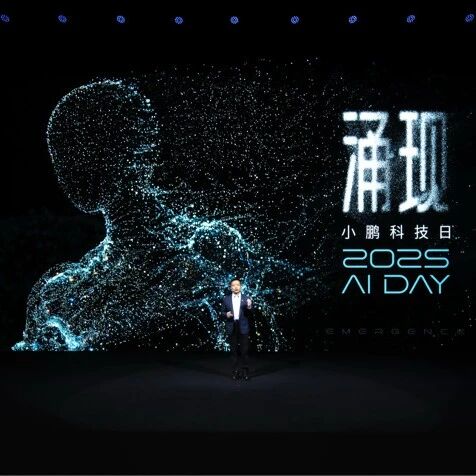
Core Viewpoint - The future of automobiles is envisioned as four-wheeled robots, with intelligent driving becoming the core competitive point in the industry by 2025, as electric vehicle technology matures and becomes a basic threshold for entry [2][9]. Group 1: Industry Trends - The development of the new energy industry has shifted focus from electrification to intelligent driving, marking a new cycle of competition [2]. - Major tech companies are investing in physical AI, indicating a consensus that the next generation of human-machine interaction will be through robotics [2][9]. - The emergence of physical AI is expected to revolutionize various sectors, including automotive, robotics, and flying cars, creating a more integrated technological ecosystem [7][28]. Group 2: Company Developments - Xiaopeng Motors has been an early adopter of AI in the automotive sector, positioning itself in the first tier of intelligent driving companies in China [3]. - The company has achieved significant breakthroughs with its second-generation VLA model, which allows for autonomous understanding of physical laws, enhancing its intelligent driving capabilities [5][20]. - Xiaopeng's investment in AI infrastructure includes a 4.5 billion yuan annual investment in computing power, establishing a large-scale intelligent computing cluster to support its AI model training [16]. Group 3: Product Innovations - Xiaopeng plans to launch multiple products, including three Robotaxi models and a highly humanoid robot named IRON, aiming for mass production by the end of 2026 [22][30]. - The second-generation VLA model is designed to eliminate reliance on high-precision maps, enabling more flexible and cost-effective deployment of Robotaxi services [28]. - The company is also advancing in the flying car sector, with over 7,000 orders for its land carrier and ongoing flight verification for its multi-person tilt-rotor flying car [30]. Group 4: Competitive Landscape - The competition in the physical AI space is intensifying, with Xiaopeng and Tesla both recognizing the need for a combination of diverse hardware and unified software architecture to support AI's development in the physical world [12][17]. - Xiaopeng's approach to physical AI aims to create a synergistic effect across its various business lines, optimizing costs and enhancing overall competitiveness [26]. - The industry is witnessing a shift from a single-direction chase to a collaborative innovation model, where breakthroughs are achieved through the convergence of multiple fields [33].


一度涨超14%,小鹏汽车现场自证
Zhong Guo Ji Jin Bao· 2025-11-07 00:19
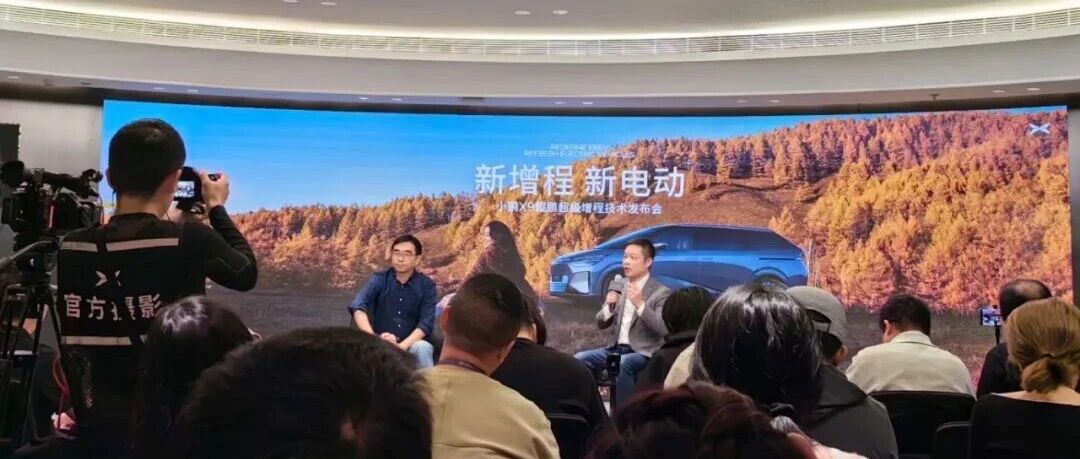
Core Insights - Xiaopeng Motors officially entered the extended-range electric vehicle market with the launch of its new technology solution, the Kunpeng Super Range, and announced the pre-sale of its first super range model, the Xiaopeng X9 [4][14] Group 1: Product Launch and Technology - The Kunpeng Super Range technology aims to address the five major pain points of traditional extended-range vehicles, including short pure electric range and slow charging speed [15][17] - The new model features a combination of "super fast charging large battery + large fuel tank" and is equipped with a third-generation 1.5T high-efficiency turbocharged engine [15][17] Group 2: Market Positioning and Strategy - Xiaopeng Motors is positioning itself as a global AI automotive company, catering to users in regions with weak electricity infrastructure and extreme climate conditions [15][18] - The company conducted market research in Mexico and Australia, identifying challenges in the adoption of pure electric vehicles due to inadequate charging infrastructure and vast uninhabited areas [15][18] Group 3: Public Perception and Trust - CEO He Xiaopeng publicly demonstrated the internal structure of the humanoid robot IRON to dispel doubts about its authenticity, showcasing the company's commitment to transparency [2][5][12] - The demonstration was part of a broader effort to rebuild trust after initial skepticism regarding the robot's design and functionality [5][12]
一度涨超14%!小鹏汽车,现场自证
Zhong Guo Ji Jin Bao· 2025-11-07 00:18
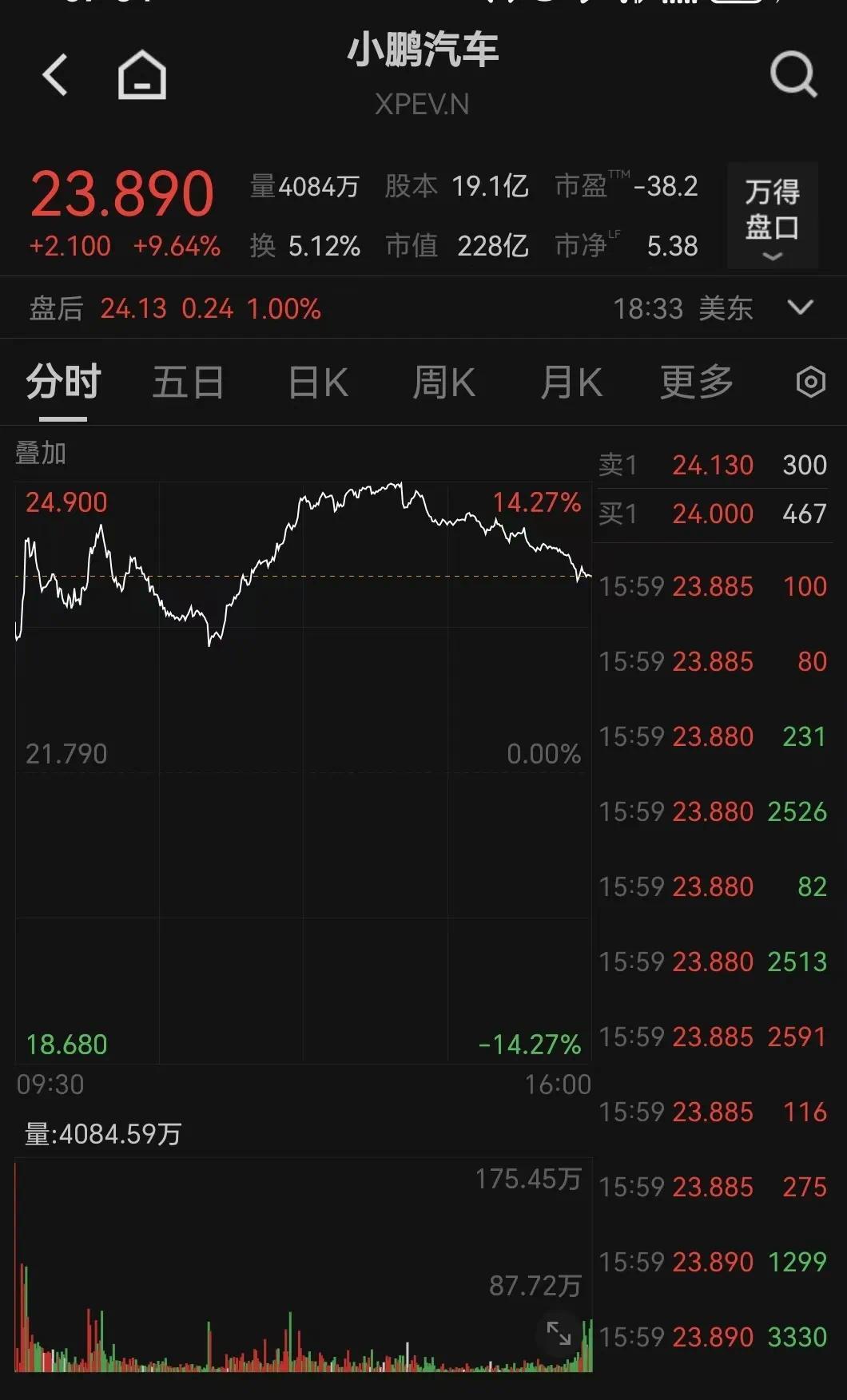
Core Viewpoint - XPeng Motors experienced a significant stock price increase, with shares rising over 14% during intraday trading and closing nearly 10% higher following the demonstration of its humanoid robot, IRON, by CEO He Xiaopeng, who confirmed that the robot contains no human inside [2][5][6]. Group 1: Robot Demonstration - He Xiaopeng publicly showcased the internal structure of the IRON robot at the launch event, cutting open its left foot to dispel rumors of a human inside [5][6]. - The demonstration was a response to public skepticism following the robot's debut at the 2025 XPeng Technology Day, where its lifelike appearance raised questions about its authenticity [6][8]. - He Xiaopeng expressed emotional difficulty in convincing the robot team to conduct a second demonstration, highlighting the team's attachment to the robot [6][9]. Group 2: Entry into Extended Range Market - XPeng Motors officially entered the extended range market with the launch of its new Kunpeng Super Extended Range technology and the pre-sale of its first extended range model, the XPeng X9 [5][11]. - The decision to enter this market was driven by the need to cater to global users facing different charging infrastructure challenges, as identified in market research conducted in Mexico and Australia [12]. - He Xiaopeng emphasized that XPeng Motors aims to be more than just a pure electric vehicle company, indicating a strategic shift in its business model [11][12]. Group 3: Future Projections - He Xiaopeng predicted a significant increase in revenue and sales scale for XPeng Motors in 2026 and 2027 compared to 2025, driven by the new extended range offerings [12]. - The company aims to address five core pain points of traditional extended range vehicles, including short electric range and slow charging speed, through its new technology [12].

OpenAI高管言论引发风暴,AI板块再遭抛售!纳指跌近2%
Xin Lang Cai Jing· 2025-11-07 00:16
Core Viewpoint - The recent comments from OpenAI executives regarding seeking government backing for their investments have sparked significant market reactions, leading to declines in major tech stocks and raising concerns about an "AI bubble" [1][3][6]. Market Reaction - The S&P 500 index fell by 1.12% to 6720.32 points, the Nasdaq Composite dropped by 1.9% to 23053.99 points, and the Dow Jones Industrial Average decreased by 0.84% to 46912.3 points [2]. - Major tech stocks led the decline, with Nvidia down 3.65%, Tesla down 3.5%, and Microsoft experiencing a seven-day losing streak [2][8]. OpenAI's Clarification - OpenAI's CFO Sarah Friar initially suggested the need for a financial ecosystem involving banks, private equity, and federal government support for their chip investments, which was misinterpreted as seeking government guarantees [2][4]. - Following the backlash, both Friar and CEO Sam Altman clarified that OpenAI does not intend to seek government backing for its infrastructure investments and emphasized that if the company fails, it should be allowed to fail [6][7]. Future Projections - Altman projected that OpenAI's annual revenue is expected to exceed $20 billion, potentially reaching "hundreds of billions" by 2030, with plans to launch enterprise-level products and expand into consumer electronics and robotics [6]. - Altman also suggested that the government should establish a "national strategic computing reserve" to sign power procurement agreements for public benefit, rather than to support private companies [6]. Employment Impact - The Challenger report indicated that U.S. employers cut over 150,000 jobs in October, the highest number in over two decades, influenced by cost-cutting measures and the adoption of AI [8].


8点1氪:山姆客服回应APP支付跳转色情页面;俞敏洪确认孙东旭离职,称“没有任何龃龉和隔阂”;小红书拿下支付牌照
36氪· 2025-11-07 00:13
Group 1 - Sam's Club app incident where a user reported being redirected to a pornographic website during payment, leading to customer service suggesting a re-download of the app from official channels [4][6] - Yu Minhong confirmed the departure of Sun Dongxu from Oriental Selection, stating there were no conflicts and maintaining good communication [4][6] - Pop Mart faced issues with misprinted product names, leading to the withdrawal of affected items from sale, while the misprints gained popularity in the secondary market [5][7] Group 2 - Sun Dongxu's total compensation for the fiscal year ending May 31, 2023, was reported at 16.39 million yuan, an increase from 10.49 million yuan the previous year [6] - Little Red Book obtained a payment license, allowing it to conduct internet payment services [6] -融创中国 announced the successful restructuring of $9.55 billion in offshore debt, marking it as the first major real estate company to clear its offshore debt [8][11] Group 3 - Tesla shareholders approved Elon Musk's unprecedented $1 trillion compensation plan, marking the highest executive reward in history [9] -碧桂园's offshore debt restructuring plan was approved by a majority of creditors, expected to reduce debt by approximately $11.7 billion [11] - Xiaomi announced the discontinuation of its calling app, clarifying that this does not affect the ability to make calls on Xiaomi phones [10][12] Group 4 -寒武纪's stock surged by 9.79%, surpassing Kweichow Moutai's stock price, reflecting strong market interest in the semiconductor sector [14] -百胜中国 stated that the strategic evaluation of the Pizza Hut brand by Yum! Brands will not impact its operations in China, where it continues to grow [13] - Nissan plans to sell its global headquarters for approximately 4.5 billion yuan as part of cost-cutting measures amid financial difficulties [17]



一度涨超14%!小鹏汽车,现场自证
中国基金报· 2025-11-07 00:11
Core Viewpoint - Xiaopeng Motors experienced a significant stock price increase, with shares rising over 14% during intraday trading and closing nearly 10% higher following the demonstration of its humanoid robot, IRON, which was confirmed to have no human inside [2][5][24]. Group 1: Humanoid Robot Demonstration - CEO He Xiaopeng publicly demonstrated the internal structure of the humanoid robot IRON, cutting open its left leg to show its mechanical components, which is a rare move in the industry [5][16]. - The demonstration aimed to address public skepticism regarding whether the robot contained a human, with He Xiaopeng expressing emotional commitment to proving the robot's authenticity [7][17]. - The robot's unveiling at the 2025 Xiaopeng Technology Day generated significant attention, leading to public doubts that prompted the need for further demonstrations [9][11]. Group 2: Entry into Extended Range Market - Xiaopeng Motors officially entered the extended range vehicle market with the launch of its new Kunpeng Super Extended Range technology, marking a strategic shift from its previous focus solely on pure electric vehicles [19][20]. - The decision to enter this market was influenced by global market conditions, including varying charging infrastructure and user needs in different regions, such as Mexico and Australia [21][23]. - He Xiaopeng projected that the company's revenue and sales scale would see significant growth in 2026 and 2027 compared to 2025, indicating confidence in the new market strategy [25].
需要撕衣验证?全网都吵疯了!小鹏的人形机器人,是不是真人
自动驾驶之心· 2025-11-07 00:05
Core Viewpoint - Xpeng Motors has transitioned from being solely an automotive company to an AI company, showcasing its humanoid robot IRON at AI Day 2025, which has sparked widespread discussion and interest in the robotics field [10]. Group 1: Robot Development and Features - Xpeng has been developing humanoid robots for 7 years, evolving from quadrupedal forms to a fully humanoid design with a new skeletal structure and bionic muscle system, significantly reducing mechanical appearance [11]. - The IRON robot stands approximately 1.78 meters tall and weighs 70 kg, making it taller than competitors like NEO [12]. - Equipped with 22 degrees of freedom in its hands and a total of 65 degrees of freedom, IRON can perform complex daily tasks such as folding clothes and cleaning surfaces [14][15]. - The robot's movement capabilities are enhanced by a sophisticated control system, although specific details about its operation remain undisclosed [17][18]. Group 2: AI and Interaction - The core of IRON is powered by Xpeng's self-developed AI brain, utilizing three Turing AI chips with a total computing power of 2,250 TOPS, integrating various cognitive models for perception, language understanding, and action decision-making [24]. - The head features a 3D curved display that serves as both a face and an interactive interface, facilitating more natural human-robot communication [25]. Group 3: Market Strategy and Future Plans - Xpeng plans to mass-produce IRON by 2026, but it will initially be used in specific commercial scenarios such as showroom guides and sales assistants, rather than for large-scale manufacturing [31]. - The company acknowledges the current limitations of robots in industrial applications, estimating a timeline of 3-5 years for industrial use and 5-10 years for household integration [32]. - Xpeng will also launch the IRON SDK to invite third-party developers to create additional applications, with initial partnerships including major companies like Baosteel [33].

英伟达↓3.65%、特斯拉↓3.5%、苹果↓0.1%、微软↓1.98%、谷歌↑0.2%、亚马逊↓2.86%、Meta↓2.67%
财联社· 2025-11-06 23:45
Core Viewpoint - The article discusses the recent decline in major tech stocks due to concerns over the U.S. job market and misinterpretations of OpenAI executives' statements regarding government backing for AI investments [1][3]. Group 1: OpenAI's Financial Strategy - OpenAI's CFO, Sarah Friar, indicated the company is seeking a financial ecosystem involving banks, private equity, and federal government guarantees to support its substantial chip investments [2]. - Following public backlash, Friar clarified that OpenAI is not seeking government guarantees for its infrastructure investments, and the term "backstop" was misinterpreted [3][6]. - CEO Sam Altman emphasized that OpenAI does not intend to seek government backing and is prepared to face failure without federal support, while projecting annual revenues to exceed $20 billion and potentially reach "hundreds of billions" by 2030 [6]. Group 2: Market Reactions and Employment Trends - The Challenger report revealed that U.S. employers cut over 150,000 jobs in October, marking the highest number of layoffs in that month in over two decades, influenced by cost-cutting and AI adoption [8]. - The tech sector is experiencing greater labor market risks compared to 2022, as layoffs are not being absorbed by other industries as quickly as before [8]. Group 3: Stock Performance - Major tech stocks saw declines, with Nvidia down 3.65%, Apple down 0.14%, and Microsoft down 1.98%, among others, reflecting the overall market sentiment [9]. - Duolingo, a language learning platform, experienced a significant drop of 25% due to disappointing earnings guidance, while an unnamed food delivery platform fell 17.45% for similar reasons [11]. - Chinese stocks showed mixed performance, with Alibaba up 1.69% and JD down 0.28%, indicating varied investor sentiment in the Chinese market [12].

美股全线下跌,道指跌近400点
Di Yi Cai Jing Zi Xun· 2025-11-06 23:44
Market Overview - The US stock market experienced a significant decline, with the technology sector being the main focus of sell-offs due to concerns over high valuations and economic outlook [2][3] - The Dow Jones Industrial Average fell by 398.7 points to close at 46,912.3, a decrease of 0.84%; the S&P 500 dropped by 75.97 points to 6,720.32, down 1.12%; and the Nasdaq Composite decreased by 445.81 points to 23,053.99, a decline of 1.90% [2] Technology Sector Performance - Major technology stocks faced declines, with Microsoft down 1.98%, Amazon down 2.86%, Tesla down 3.50%, and Nvidia down 3.65%. Only Google saw a slight increase of 0.15% [2] - The Philadelphia Semiconductor Index fell by 2.4%, indicating a cooling enthusiasm for AI-driven growth stocks [2] Employment and Economic Data - A report from Challenger, Gray & Christmas revealed that US companies announced layoffs of 153,000 in October, a month-on-month increase of 183.1%, marking the highest October layoffs since 2003. Year-to-date layoffs reached 1.1 million, a 65% increase year-on-year [3] - The report attributes layoffs to the integration of AI, slowing consumer demand, and rising costs, suggesting a challenging labor market in Q4 [3] - Revelio Labs reported a net decrease of 9,100 jobs in October, primarily in government sectors, as investors increasingly rely on private data due to delays in official statistics [4] Individual Stock Movements - DoorDash's stock plummeted by 17.5% after its Q3 profits fell short of Wall Street expectations, significantly impacting the non-essential consumer sector [4] - Snap's stock rose by 9.7% after reporting revenue that exceeded expectations and announcing a partnership with Perplexity AI [4] Commodity Market - International oil prices saw a decline, with WTI crude oil futures closing at $59.43 per barrel, down 0.29%, and Brent crude at $63.38 per barrel, down 0.22% [4] - COMEX gold futures fell by 0.05%, closing at $3,991.0 per ounce [4]



人工智能行至中场,“物理AI”成关键赛点
3 6 Ke· 2025-11-06 23:41
Core Insights - The concept of "Physical AI" is emerging as a focal point in the global technology competition, with major tech companies investing heavily to secure their positions in this next technological era [1][19] - NVIDIA's CEO Jensen Huang has identified Physical AI as a core direction for AI development, emphasizing its potential to enhance physical interaction capabilities [3][19] - The competition spans from Silicon Valley to China, with companies making investments in the hundreds of billions to capture the narrative of the next technological age [1] Group 1: Physical AI Development - Physical AI is defined by the collaborative evolution of mechanics, control, and perception, moving from "digital understanding" to "physical interaction" [3] - The implementation of Physical AI relies on three key components: physical modeling and training in virtual environments, generation and reasoning of high-quality physical data, and the perception and decision-making loop in real-world scenarios [3][6][7] Group 2: Technological Innovations - Virtual modeling serves as the foundation of Physical AI, utilizing a combination of classical physics laws and deep learning to create highly accurate simulation environments [6] - High-quality data generation is crucial for Physical AI, employing a fusion of synthetic and real data to address the scarcity and labeling challenges of real physical data [6][7] - Major tech companies like NVIDIA are showcasing their Physical AI applications, integrating platforms that simulate real-world environments and generate synthetic data for training [8] Group 3: Industry Applications - In the automotive sector, companies like Tesla and Xpeng are leveraging Physical AI for advancements in autonomous vehicles and robotics, with Tesla's Optimus robot utilizing driving data for training [12][19] - Amazon is entering the Physical AI space with new robotic systems aimed at automating warehouse operations, planning to achieve 75% automation in logistics by 2027 [13][19] - Physical AI is expected to revolutionize productivity across various sectors, including manufacturing and transportation, by enabling autonomous decision-making and optimizing operational efficiency [14][16] Group 4: Future Outlook - Gartner predicts that by 2030, all IT work will be deeply integrated with AI, with 25% of IT tasks performed independently by robots [14] - The ultimate value of Physical AI lies in liberating humans from repetitive physical labor, allowing them to focus on higher-value activities [14][19] - The competition for dominance in Physical AI is not just a commercial battle but a critical measure of national technological competitiveness, influencing the future landscape of various trillion-dollar markets [19]