
XPENG(XPEV)

Search documents
再次回应“机器人质疑”!何小鹏哽咽:有时候心中的成见是一座大山
Xin Lang Ke Ji· 2025-11-06 13:30
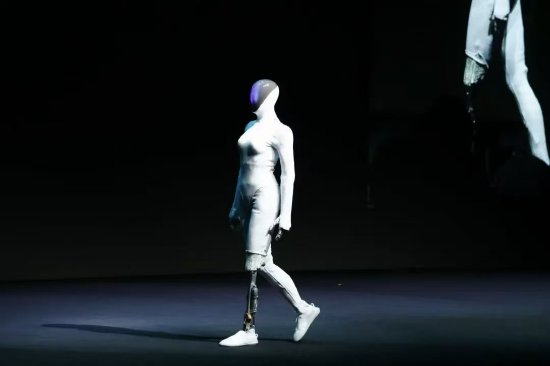
在昨日的媒体沟通会上,何小鹏还表示,2026年年底小鹏目标实现规模量产高阶人形机器人。并认为, 未来机器人行业会有不同公司做不同的类型机器人,但小鹏选择做拟人的,同时也可以对小鹏的机器人 进行二次开发。他还提到,"机器人量产远比我们量产汽车要难,但是我们已经选择了,我们就坚定的 把它做好。"(罗宁) 在11月5日的"2025小鹏科技日"上,小鹏全新一代IRON亮相,并展示了猫步般轻盈的步态。随后,有不 少网友质疑,称"感觉是个真人在努力扮演机器人"。 他表示,如果它是来自于海外的其他的公司,我们也许会看到很多朋友不会有那么多的质疑,而会鼓掌 会欣喜。"大家不敢相信一个强大的机器人技术来自中国的公司,所以有时候我们心中的成见是一座大 山,它限制了束缚了我们,就像十年前有很多人不相信中国的新能源车可以做好并且走向全球一样。" 新浪科技讯 11月6日晚,在小鹏X9超级增程技术发布会上,小鹏汽车就"全新一代IRON机器人是否内藏 真人"等质疑再次回应,小鹏汽车CEO何小鹏在现场一度哽咽,并表示,"当我今天早上回到这里,当 IRON机器人的拉链被打开,去证明自己是个机器人的时候,说实话,那个时候我有一点点心酸,因为 竟 ...


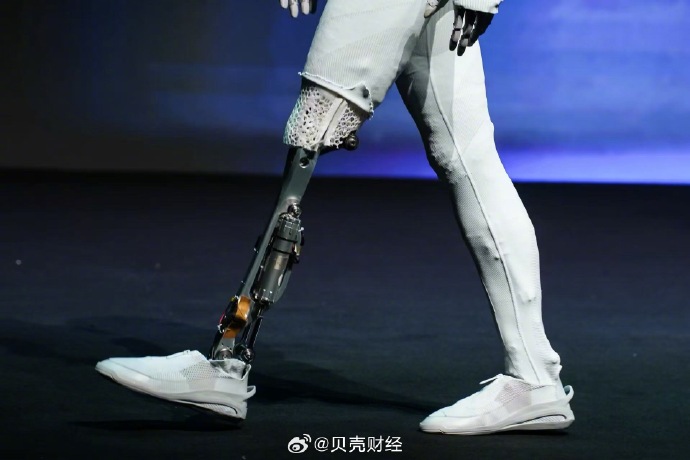
小鹏现场剪开机器人腿部自证
Xin Lang Cai Jing· 2025-11-06 13:07
Core Viewpoint - Xiaopeng Motors addressed concerns regarding the authenticity of its new generation IRON robot during the X9 super-range technology launch, demonstrating the robot's internal mechanical structure live on stage to dispel doubts about it being a real human [1] Group 1 - Xiaopeng Motors' CEO He Xiaopeng expressed emotional commitment to proving the robot's authenticity, stating that the decision to cut open the robot's "skin and muscle" was made just an hour before the event [1] - The demonstration involved cutting open the leg covering of the IRON robot while it was powered on, marking a first for the company [1] - The event aimed to provide transparency and reassurance to the audience regarding the robot's capabilities and design [1]
何小鹏回应此前智驾OTA效果不佳:因为我们在研发第二代VLA
2 1 Shi Ji Jing Ji Bao Dao· 2025-11-06 12:57
21世纪经济报道记者何煦阳 报道 (原标题:何小鹏回应此前智驾OTA效果不佳:因为我们在研发第二代VLA) 何小鹏:在二季度的某一天,我们加大了下一代VLA的开发的力度,我们后面甚至因此停止了标准 VLA的开发,影响了现在Max版本跟现在VLA版本的用户体验,因为我们发现一个全新的大门在打开。 我们有能力在未来的时间给大家带来更安全更丝滑更强力的自动驾驶系统的时候,我们打算暂停现在的 开发,全力以赴在新版本的VLA里面向前。 (视频编辑许婷婷,实习生余星惠) ...
小鹏明年将推出三款Robotaxi,高德成为其首个合作伙伴
2 1 Shi Ji Jing Ji Bao Dao· 2025-11-06 12:53
Core Insights - The company plans to launch three Robotaxi models by 2026, emphasizing its commitment to developing both software and hardware in-house [1] - The partnership with Amap marks the first global ecological collaboration for the company's Robotaxi initiative [1] - The company envisions scaling up Robotaxi operations significantly, aiming for tens of thousands to millions of units globally, not just in China [1]
大众成为小鹏软件与芯片首发战略合作伙伴
2 1 Shi Ji Jing Ji Bao Dao· 2025-11-06 12:52
Core Insights - The company aims to open-source its autonomous driving technology, including chips, EEA architecture, and the second-generation VLA large model, to partners globally [2] - Volkswagen has been announced as the first customer for the second-generation VLA, with plans to integrate it into their new mass-production vehicles next year [2] - The collaboration between the company and Volkswagen is expected to advance autonomous driving technology in China and globally [2]
2025小鹏科技日,小鹏驶入物理AI纪元
2 1 Shi Ji Jing Ji Bao Dao· 2025-11-06 12:49
21世纪经济报道记者何煦阳报道 11月5日,小鹏在广州小鹏科技园举办以"涌现Emergence"为主题的2025小鹏科技日。发布会上,小鹏汽 车围绕"物理AI"发布了四项重要应用:包括小鹏第二代VLA、小鹏Robotaxi、全新一代IRON,以及汇 天两套飞行体系,这四项AI应用均有明确的量产计划。小鹏汽车董事长CEO何小鹏宣布,小鹏汽车的 定位升级为"物理AI世界的出行探索者,面向全球的具身智能公司"。 ...
小鹏X9鲲鹏超级增程开启预售 何小鹏详解入局增程赛道原因:走向全球市场需要新的补能方式
Mei Ri Jing Ji Xin Wen· 2025-11-06 12:29
Core Insights - Xiaopeng Motors has launched its first range-extended model, the Xiaopeng X9 Kunpeng Super Range Extender, with a starting price of 350,000 yuan for the Max version and 370,000 yuan for the Ultra version, which is nearly 10,000 yuan lower than the starting price of the pure electric version [1] - The company aims to differentiate its range-extended products from traditional fuel MPVs, highlighting a potential annual savings of 43,000 yuan for users, equating to the cost of a MONA model in three years [1] Group 1: Product Development and Market Strategy - Xiaopeng Motors began researching range-extended products in 2022, and after evaluating the market potential and competition, the management concluded that the market ceiling for range-extended products is still high with a favorable return on investment [2] - The company recognizes the need for new energy solutions to enter global markets, emphasizing that vehicles must achieve over 1,000 kilometers of range, necessitating power sources beyond pure electric [2] - The Xiaopeng X9 features the Kunpeng Super Range Extender technology, an 800V high-voltage platform, a 63.3 kWh battery, 5C ultra-fast charging, and a 60L fuel tank, with a pure electric range of 452 kilometers and a total range of 1,602 kilometers [2] Group 2: Competitive Landscape and Industry Trends - The current market for range-extended vehicles has evolved, with September data showing wholesale sales of pure electric vehicles at 947,000 units, a year-on-year increase of 32.4%, while range-extended vehicles saw sales of 129,000 units, a year-on-year increase of 8.7% [3] - The significant drop in lithium carbonate prices from approximately 600,000 yuan per ton in 2022 to around 70,000 yuan per ton currently has created opportunities for reducing vehicle prices and enhancing battery capacity [3] - Industry experts suggest that range-extended vehicles provide a better user experience compared to traditional fuel vehicles, making them a viable option for consumers transitioning to electric vehicles [4] Group 3: Future Plans and Market Expansion - Xiaopeng Motors plans to differentiate its technology strategy based on vehicle size, with smaller models using pure electric and larger models adopting a "pure electric + range extender" approach, targeting lower-tier cities for market penetration [5] - The Xiaopeng X9 range-extended model is set to launch this month, with plans for other models like the G6, G7, and P7+ to also feature the Kunpeng Super Range Extender technology [5] - By the second half of 2026, Xiaopeng Motors aims to introduce its range-extended products to overseas markets [5]
小鹏X9超级增程版发布:CLTC续航1602公里,预售价35万元起
Feng Huang Wang· 2025-11-06 12:24
Core Viewpoint - Xiaopeng Motors has launched the Xiaopeng X9 Super Extended Range version, claiming it features the "world's longest" range with a combination of a 60L fuel tank and a 62.5kWh battery, achieving a CLTC comprehensive range of 1602km and a pure electric range exceeding 452km [1] Summary by Categories Product Features - The Xiaopeng X9 is equipped with a 60L fuel tank and a 62.5kWh battery [1] - It achieves a CLTC comprehensive range of 1602km and a pure electric range of over 452km [1] Pricing and Availability - The pre-sale price for the Max version is set at 350,000 yuan, while the Ultra version is priced at 370,000 yuan [1] - The official launch of the vehicle is scheduled for this month [1]

何小鹏亲自证明,小鹏机器人没有人!雷军真的应该好好学一下
Sou Hu Cai Jing· 2025-11-06 11:16
Core Viewpoint - The release of Xiaopeng's robot has sparked widespread skepticism, with many questioning its authenticity due to its graceful walking posture, leading to a 5% drop in Xiaopeng's stock price [1] Group 1: Company Response and Strategy - Xiaopeng's founder, He Xiaopeng, released a video clarifying that the robot does not contain a human inside, showcasing a smart approach to managing public relations by allowing the narrative to develop before addressing the concerns [3] - Instead of resorting to legal threats against critics, Xiaopeng's strategy involved a measured response that emphasized transparency and engagement with public skepticism [3] Group 2: Product Development and Market Position - Xiaopeng's robot has been noted for its impressive walking capabilities, indicating significant advancements in robotics algorithms, positioning Xiaopeng as a strong competitor in the humanoid robot sector [5] - The company has seen a transformation in its operational style, moving from a focus on marketing to a more grounded approach in manufacturing and research, with monthly sales surpassing 40,000 units and a market valuation exceeding that of Li Auto [5] - Xiaopeng's recent developments reflect a broader trend in the industry where many companies prioritize flashy marketing over substantial R&D, highlighting Xiaopeng's commitment to genuine innovation [5][7] Group 3: Industry Context and Competitive Landscape - The current landscape shows a divergence between Chinese tech companies focusing on consumer services and American firms investing in advanced technologies like AI and robotics, with Xiaopeng standing out for its tangible product development [7] - He Xiaopeng's leadership is framed as a model for other entrepreneurs, emphasizing the importance of resilience and innovation in the face of competition, particularly in the context of U.S.-China economic dynamics [7]
小鹏IRON因太逼真“被迫”自证,人形机器人商业化春天已至?
Mei Ri Jing Ji Xin Wen· 2025-11-06 11:06
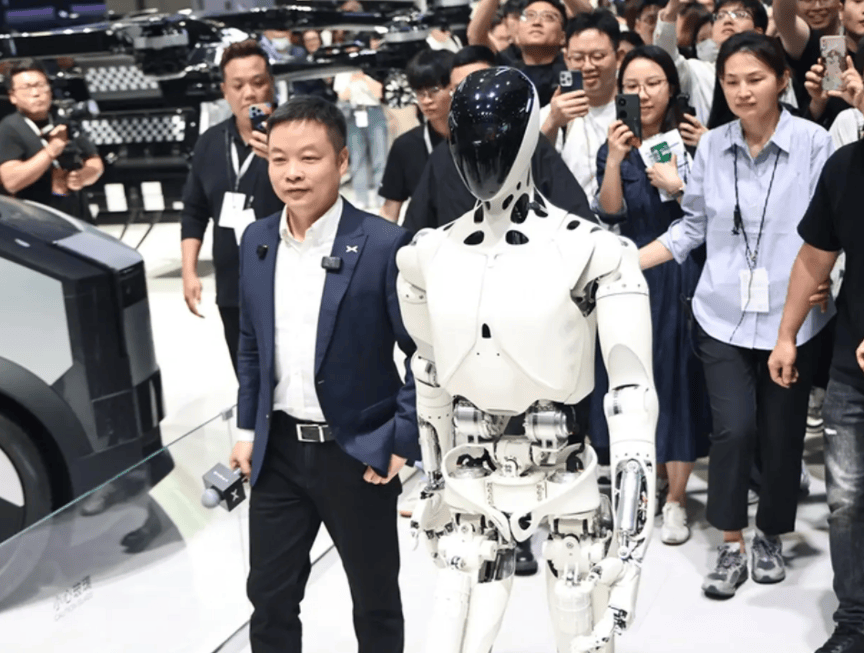
Core Insights - The new generation of Xpeng's IRON robot has become a focal point of public discussion, showcasing advanced humanoid movements that sparked debates about its authenticity [1][2] - Xpeng's chairman, He Xiaopeng, addressed skepticism by revealing the robot's internal structure, effectively transforming a potential PR crisis into an opportunity for technical education [1] - The controversy highlights a paradox where the robot's technological sophistication leads to increased scrutiny, demonstrating that the more human-like the robot appears, the more it is subject to doubt [2] Technological Advancements - Xpeng has successfully transitioned from laboratory prototypes to practical products, with the IRON robot now performing sorting, handling, and quality inspection tasks in its factory [2] - The collaboration with Baosteel marks a significant step into industrial inspection scenarios, differentiating Xpeng from competitors who struggle to move beyond mere demonstrations [2] - The robot's design features 82 degrees of freedom and a precision gait error of just 2 millimeters, supported by three self-developed Turing chips providing 2250 TOPS of computing power, which is 15 times that of Tesla's Optimus [1] Cost Efficiency - Xpeng has managed to reduce the cost of high-end humanoid robots to below 500,000 yuan, approximately 40% lower than Tesla's expected costs, addressing the industry's long-standing issue of high costs and scalability [2] Market Strategy - The choice to focus on industrial applications rather than consumer markets aligns with the current maturity of the technology, allowing for the accumulation of critical data for future iterations [2] - Xpeng's plan for mass production by the end of 2026 is based on solid advancements in technology, cost, and application scenarios, indicating a viable path for commercialization [3] Industry Implications - The ongoing debate surrounding the IRON robot signifies a pivotal moment for the humanoid robotics industry, suggesting that commercialization is not a distant fantasy but a current reality [3] - As more companies enter the humanoid robotics field, technological iterations will accelerate, costs will decrease, and application scenarios will expand, marking a shift from technical showcases to practical implementations [3]