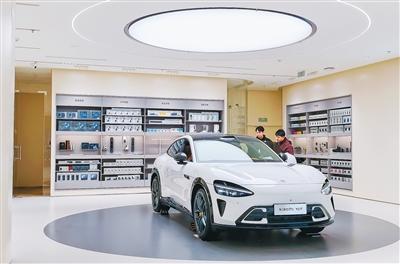
吉利汽车

Search documents
港股开盘:恒指涨0.23%、科指涨0.21%,AI应用概念股延续强势,科网股及创新药概念股活跃
Jin Rong Jie· 2026-02-11 01:32
Market Overview - The Hong Kong stock market opened higher with the Hang Seng Index rising by 0.23% to 27,246.18 points, the Hang Seng Tech Index up by 0.21% to 5,462.7 points, and the National Enterprises Index increasing by 0.17% to 9,258.27 points, indicating a mixed trading environment near key technical levels [1] Blue Chip Performance - Semiconductor company SMIC reported a significant increase in capacity utilization, reaching 93.5% in 2025, an 8 percentage point increase year-on-year, with projected sales revenue of $9.327 billion, a 16.2% increase, and net profit of $685 million, up 39.1% [2] - PCCW expects a revenue growth of 7% to HKD 40.252 billion in 2025, with EBITDA increasing by 3% and losses narrowing by 16% [2] - Television Broadcasts Limited anticipates turning a profit, while Dongyue Group expects profit growth of over 100% [2] Consumer and Real Estate Sector Challenges - Bosideng International reported a 32.5% year-on-year decline in net operating income for January, while Yue Yuen Industrial saw a 12.5% decrease [3] - The real estate sector is under pressure, with New World Development announcing a 29.79% year-on-year drop in contract sales for January, and Yuzhou Group reporting a slight increase of 5.79%, but market skepticism about overall industry recovery persists [3] Company Developments - Minth Group announced a joint venture with Aisin and Toyota to produce aluminum vehicle body components, aiming to strengthen its supply chain in the North American market [4] - Stone Four Pharmaceutical Group plans to participate in the eighth batch of national centralized procurement with 45 products across various treatment areas [5] - Gilead Sciences completed a placement raising approximately HKD 835 million, with 90% allocated for global Phase III clinical trials of an oral GLP-1 receptor agonist for obesity [5] Institutional Insights - Industrial Securities noted that the ongoing loose overseas liquidity environment and expectations of interest rate cuts by the Federal Reserve could lead to foreign capital inflows into Hong Kong stocks in 2026 [6] - The recent stabilization in Hong Kong stocks, particularly in the Hang Seng Tech sector, suggests potential for valuation recovery and performance realization in AI, innovative pharmaceuticals, and high-dividend sectors [6] - Guotai Junan Securities highlighted the potential for a phase of upward movement in Hong Kong stocks around the Lunar New Year, with increased correlation to A-shares [6] Focus on Innovative Pharmaceuticals - Open Source Securities expressed optimism about the innovative pharmaceutical sector, noting that the total value of License-out transactions has exceeded last year's figures, and the quality of China's innovative drug pipeline is improving [7]
HEV能救燃油车吗?
Zhong Guo Qi Che Bao Wang· 2026-02-11 01:28
Core Viewpoint - Geely Auto's strategic shift towards hybrid electric vehicles (HEVs) indicates a significant change in the automotive industry, as HEVs regain market prominence amidst the backdrop of favorable policies and a market penetration rate exceeding 50% for new energy vehicles [1][3] Group 1: Policy Impact - The upcoming reduction in new energy vehicle purchase tax, effective in 2026, creates a favorable environment for HEVs, as they will benefit from a tax reduction while PHEVs face stricter technical requirements [3][4] - Local policies in cities like Guangzhou and Shanghai are increasingly favoring HEVs, providing them with similar privileges as new energy vehicles, enhancing their attractiveness to consumers [3][4] Group 2: Technological Advancements - Recent technological improvements have addressed previous limitations of HEVs, such as short electric range and efficiency issues, making them more competitive [4][6] - Predictions indicate that by 2030, HEV battery capacity will increase significantly, enhancing their electric range and overall efficiency [4] Group 3: Market Dynamics - The global automotive market is witnessing a clear differentiation in powertrain routes, with HEVs showing potential for greater market share, especially in China where traditional fuel vehicles still dominate [5][6] - HEVs are positioned as a practical choice for consumers who drive over 15,000 kilometers annually, lack fixed charging stations, or reside in areas with underdeveloped infrastructure [5][6] Group 4: Strategic Positioning - HEVs are viewed as an "upgrade" to traditional fuel vehicles rather than a direct replacement, serving as a transitional option for consumers hesitant about fully electric vehicles [6][8] - Major automotive companies are adopting a dual-track strategy, investing in both electric and hybrid technologies while leveraging HEVs to extend the lifecycle of their fuel vehicle platforms [6][8] Group 5: Industry Trends - The rise of HEVs reflects the necessity for diverse automotive powertrain technologies, as a single solution cannot meet the varied demands of the market [7][8] - HEVs are expected to play a crucial role in the gradual transition towards full electrification, providing a buffer for manufacturers and consumers during this shift [8]

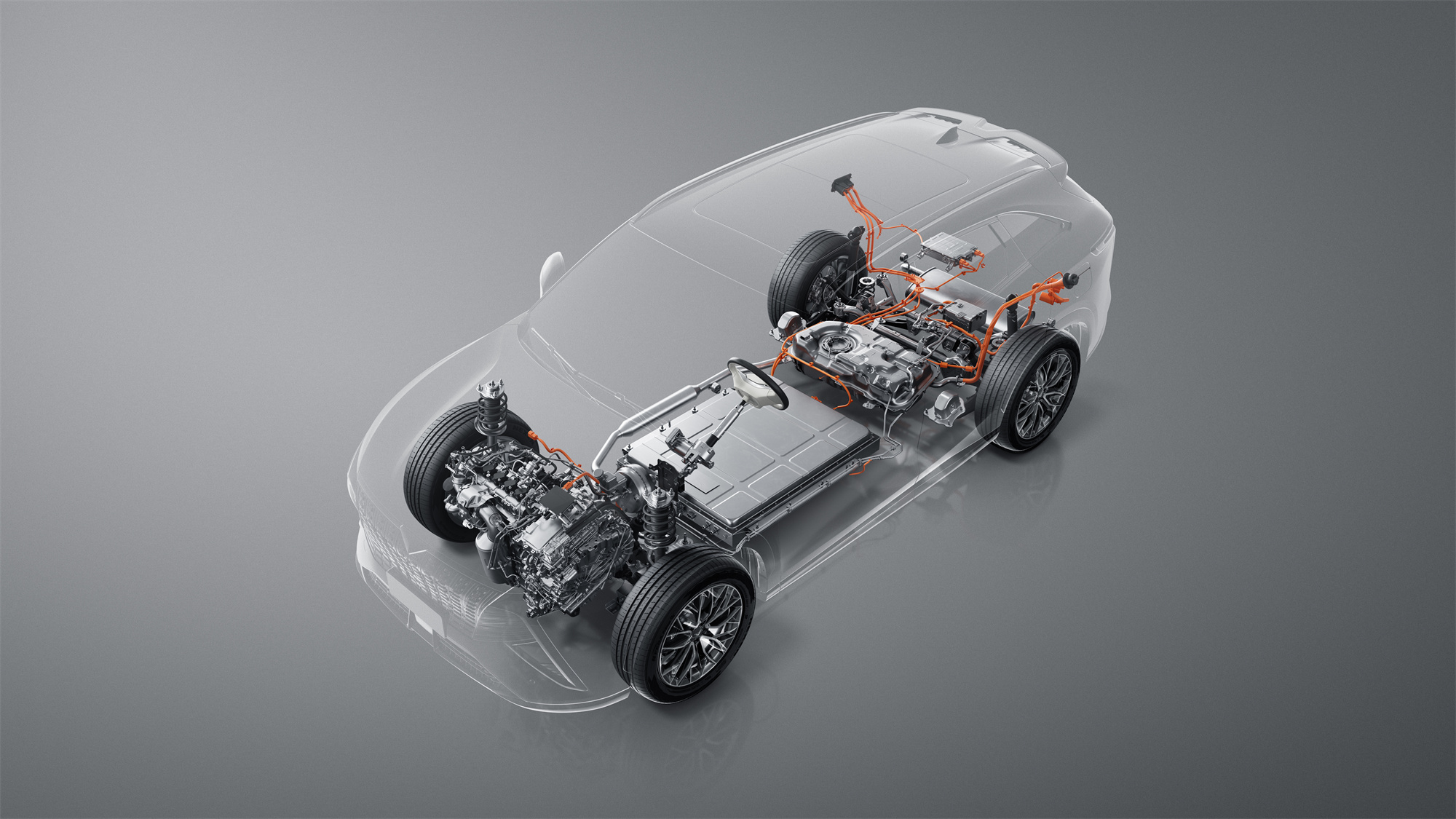
未知机构:固态年会干货及中期评审进展更新20260209国联民生电新-20260211
未知机构· 2026-02-11 01:25
Summary of Solid-State Battery Conference and Mid-Term Review Industry Overview - Focus on the solid-state battery industry, particularly the outcomes of the solid-state battery academic and industrial conference held on February 7-8, 2026, and the results of the second mid-term review [1][2] Key Conclusions from the Conference - The conference is seen as a turning point for solid-state batteries transitioning from laboratory to production lines - Four main conclusions were drawn: - Sulfide materials are becoming the mainstream technology - Key industry timelines are set for 2027 for demonstration vehicles and 2030 for mass production - Significant challenges remain in process costs and industry chain collaboration - Clear advancements in lithium metal anodes and composite cathode technologies [1][2] Mid-Term Review Results - The second round of mid-term evaluations showed significant improvements over the first round, with leading manufacturers nearing commercialization thresholds - Key performance metrics include: - Cycle life target of 300 cycles or more, with leading manufacturers achieving close to this threshold with a decay rate of ≤10% - Energy density metrics reached 350-360 Wh/kg, the highest among all tested companies - Fast charging capabilities of 1C and peak performance of 2C, comparable to current ternary power batteries - The "no anode" (self-generating anode) approach is highlighted as a core innovation, offering significant improvements in energy density and potentially extending cycle life [3] Key Information from the Conference - High-profile attendees included the Minister of Industry and Information Technology and various battery and automotive companies - The overall industry pace is set for 2026 to be the year of solid-state batteries, with a ramp-up phase from 2028 to 2030 - The preference for sulfide electrolytes is confirmed, with leading manufacturers opting for the no-anode solution while others choose silicon-based or artificial graphite anodes [4] Catalysts and Industry Progress - The positive results from the mid-term review, combined with manufacturers' goals for near-term production, are boosting confidence in the industry - Rapid advancements in the construction of solid-state battery production lines are underway, with equipment tenders for various processes already initiated - Upcoming tenders for dry dispersion and dry film processes are expected to commence shortly, with further equipment tenders planned for early 2026 [5] Investment Recommendations - Recommendations focus on three main areas: materials, equipment, and electrolytes, aligning with mainstream technologies such as no anode, sulfide electrolytes, and dry processing - Specific investment targets include: - **No Anode Materials**: Top recommendation is Zhongyi Technology, a key supplier benefiting from lithium battery expansion, with expected revenues exceeding 250 million in 2026 - **Equipment**: Recommended companies include Lingge Technology and Huazi Technology, which are positioned to benefit from the expansion of solid-state electrolyte production - **Electrolytes**: Strong recommendation for Xiamen Tungsten New Energy, a core supplier for leading electronic manufacturers, with potential to dominate in the lithium sulfide sector [6][7]

美联储再度强调独立性,中国央行继续适度宽松
Dong Zheng Qi Huo· 2026-02-11 00:44
1. Report Industry Investment Ratings No relevant content provided. 2. Core Views of the Report - A - shares are trading in a narrow range with shrinking volume, and technology stocks are still leading. Hong Kong stocks have stopped falling and rebounded recently, potentially presenting a right - side allocation opportunity. Overall, domestic equity risks are controllable, and a spring rally is expected [1][12]. - Gold prices are oscillating and closing lower, and silver is weakening. Pre - holiday funds are gradually reducing positions and flowing out of precious metals. The Fed officials' speeches defend independence, and the monetary policy has entered a short - term wait - and - see stage, lacking incremental stimulus. The US retail sales data in January unexpectedly weakened [2][15]. - The market for treasury bond futures is oscillating in a narrow range. There is short - term upward momentum in the market, but the cost - performance of chasing the rise is not high. After the upward momentum of the market slows down, attention should be paid to short - selling opportunities [3][19]. - Steel prices continue to oscillate weakly. The fundamental pressure before the holiday is increasing, the inventory accumulation pressure of each variety is rising, and the order situation is average, which suppresses steel prices. However, the cautious market sentiment also reduces post - holiday risks, and attention should be paid to potential undervalued opportunities [4][22]. - As the Spring Festival approaches, the cotton yarn production and sales continue to slow down. The spinning mill operation rate has slightly declined, but Xinjiang spinning mills will maintain a relatively high operation rate during the Spring Festival, and the current yarn inventory of spinning mills is not high [5][35]. - The main ports in the country are severely congested. It is recommended to view the market with a bullish oscillation mindset recently and adopt a wait - and - see approach for now [6][60]. 3. Summary According to Relevant Catalogs 3.1 Financial News and Comments 3.1.1 Macro Strategy (Stock Index Futures) - Multiple humanoid robot companies have started the IPO process, and the industry is accelerating from technology R & D to commercial implementation. The "Qiushi" magazine has called for accelerating the cultivation of future industries. A - shares are trading in a narrow range with shrinking volume, and technology stocks are leading. Hong Kong stocks may present a right - side allocation opportunity. It is recommended to continue holding long positions in stock index futures [11][12][13]. 3.1.2 Macro Strategy (Gold) - Fed official Logan emphasized the independence of monetary policy. Gold prices are oscillating and closing lower, and silver is weakening. Pre - holiday funds are flowing out of precious metals. The US retail sales data in January unexpectedly weakened. It is recommended to reduce positions before the holiday, and the gold - silver ratio is expected to rise [14][15][16]. 3.1.3 Macro Strategy (Treasury Bond Futures) - The central bank released the fourth - quarter 2025 China Monetary Policy Implementation Report, stating that it will continue to implement a moderately loose monetary policy. The market for treasury bond futures is oscillating in a narrow range. There is short - term upward momentum, but chasing the rise is not cost - effective. Attention should be paid to short - selling opportunities after the upward momentum slows down [17][18][19]. 3.2 Commodity News and Comments 3.2.1 Black Metal (Steam Coal) - The price of steam coal in the northern port market was stable on February 10. The supply of market coal is tightening, and port inventories are decreasing. Considering factors such as domestic coal mine seasonal production cuts, import coal policy risks, and high seasonal daily consumption, short - term coal prices are expected to be strongly supported [20]. 3.2.2 Black Metal (Rebar/Hot - Rolled Coil) - 12 out of 16 auto companies had year - on - year sales growth in January. Steel prices continue to oscillate weakly. The fundamental pressure before the holiday is increasing, and the inventory accumulation pressure of each variety is rising, which suppresses steel prices. However, the cautious market sentiment reduces post - holiday risks. It is recommended to view steel prices with an oscillating mindset and hold light positions to pay attention to risks before the holiday [21][22][23]. 3.2.3 Black Metal (Iron Ore) - The Liusi Iron Mine in Huoqiu County, Anhui Province is expected to be put into production in 2027. Iron ore prices are oscillating weakly and are expected to continue to be under pressure around the Spring Festival. The market is cautious about post - holiday steel orders, and the iron - making water of steel mills is expected to change little. After the seasonal restocking of iron ore is over, buying power weakens. It is recommended to pay attention to the inventory accumulation and order situation of finished products around the Spring Festival [24][25]. 3.2.4 Black Metal (Coking Coal/Coke) - The price of coking coal in the northwest market is stable, showing a pattern of weak supply and demand. Before the holiday, the supply is tightening, and the downstream restocking demand is coming to an end. The coking coal futures market oscillates. It is recommended to pay close attention to policy adjustments and post - holiday demand recovery [26][27]. 3.2.5 Agricultural Products (Soybean Meal) - The USDA has raised the global soybean ending inventory. Although the February USDA supply - demand report is bearish, the CBOT soybeans still closed higher overnight due to optimistic market expectations for US soybean demand and the new high of US soybean oil. The domestic spot market is entering the holiday state, and trading is becoming light. It is expected that the soybean meal futures price will oscillate and be weaker than the overseas market [28]. 3.2.6 Agricultural Products (Soybean Oil/Rapeseed Oil/Palm Oil) - The palm oil export volume from February 1 - 10 decreased by 14.25% month - on - month. The Malaysian palm oil inventory at the end of January decreased by 7.72% month - on - month, exceeding market expectations. The palm oil price jumped up after the release of the data. However, the export data in February is poor, and the market sentiment is weak. It is recommended to wait and see before the holiday [29][30][32]. 3.2.7 Agricultural Products (Cotton) - As of February 6, 2026, the cotton planting in Brazil was 88.1% completed. The US cotton listing inspection is nearing the end, and the progress is slower than last year. As the Spring Festival approaches, the cotton yarn production and sales continue to slow down, and the spinning mill operation rate has slightly declined. However, Xinjiang spinning mills will maintain a relatively high operation rate during the Spring Festival, and the current yarn inventory of spinning mills is not high. It is expected that cotton prices will oscillate around the Spring Festival, and attention should be paid to macro - level dynamics [33][34][36]. 3.2.8 Non - ferrous Metals (Lithium Carbonate) - Australian lithium miner PLS signed a lithium supply agreement with a Chinese company. In January 2026, Chile's exports of lithium carbonate and lithium hydroxide increased month - on - month. It is expected that lithium carbonate will continue to destock in February. The power - battery end sales data in January is not optimistic, but the energy - storage end is expected to be more optimistic. It is recommended to view lithium carbonate from a bullish perspective and pay attention to the opportunity of buying on dips after the position and volatility stabilize [37][38][39]. 3.2.9 Non - ferrous Metals (Copper) - The expansion project of MMG's Khoemacau Copper Mine in Botswana started. The CEO of Anglo American Resources called on Africa to turn policy intentions into actual implementation. It is expected that copper prices will continue to oscillate at a high level, and attention should be paid to the opportunity of buying on dips [40][41][42]. 3.2.10 Non - ferrous Metals (Lead) - Zijin Mining announced its production plan for lead and zinc. The Shanghai lead futures oscillated and rebounded at a low level. The lead market is currently in a situation of weak supply and demand. It is recommended to wait and see in the short - term and pay attention to medium - term long - position opportunities [43][44]. 3.2.11 Non - ferrous Metals (Zinc) - The zinc price oscillated. The zinc ore production expectations may change. The LME zinc inventory decreased, and the SHFE zinc warehouse receipts increased. The zinc smelting production in February decreased significantly. It is recommended to wait and see in the short - term and use call options instead of direct trading [45][46]. 3.2.12 Non - ferrous Metals (Tin) - The LME tin futures showed a discount. The SHFE tin warehouse receipts increased, and the LME tin inventory increased. The supply of tin is expected to be less tight, but there are still uncertainties. The demand is weak. It is expected that the tin price will oscillate widely, and attention should be paid to supply recovery and post - holiday consumption warming [46][49][50]. 3.2.13 Energy Chemicals (Crude Oil) - The EIA's forecast of US crude oil production for this year and next year is basically the same as before. The API crude oil inventory increased significantly. Oil prices are oscillating at a high level. It is recommended to pay attention to the follow - up negotiations between the US and Iran [50][51][52]. 3.2.14 Energy Chemicals (Liquefied Petroleum Gas) - Shandong Xinyue Petrochemical resumed production. The LPG price is expected to oscillate strongly. It is recommended to pay attention to the geopolitical situation [53][54]. 3.2.15 Energy Chemicals (Carbon Emissions) - The CEA closing price on February 10 was 80.50 yuan/ton, a slight decline from the previous day. The carbon market is currently in a policy window period, and the trading is mainly for rigid demand. It is recommended that enterprises with demand consider buying on dips [54][55]. 3.2.16 Energy Chemicals (LLDPE) - As of February 6, 2026, the polyethylene social sample warehouse inventory increased. The LLDPE social sample warehouse inventory increased significantly. It is recommended to wait and see before the holiday and pay attention to the post - holiday inventory destocking process [56][57][58]. 3.2.17 Shipping Index (Container Freight Rates) - The main ports in the country are severely congested. The spot freight rate decline has slowed down in mid - and late February. Many shipping companies have announced price increases in March. It is recommended to view the market with a bullish oscillation mindset and wait and see for now [59][60].
申万宏源证券晨会报告-20260211
Shenwan Hongyuan Securities· 2026-02-11 00:44
Core Insights - The report highlights the strong growth potential of Luckin Coffee, projecting a compound annual growth rate (CAGR) of 25% for net profit from 2025 to 2027, driven by an increase in store count and market penetration [9][11] - The report also emphasizes the strategic positioning of Juchip Technology in the low-power AIoT chip design sector, with expectations of significant revenue growth and a favorable valuation compared to peers [3][12] - The oil and petrochemical industry is anticipated to experience a decline in oil prices, impacting upstream performance while downstream sectors may see a mixed outlook, with polyester margins expected to improve by Q4 2025 [13][14] Luckin Coffee Analysis - Luckin Coffee, established in 2017, utilizes a new retail model leveraging mobile internet and big data to provide high-quality coffee at competitive prices, achieving a market share of approximately 21.8% in China's fresh coffee sector by 2023 [9][10] - The company has a robust R&D system with 85 employees, continuously innovating and winning multiple international awards, including the IIAC International Coffee Tasting Competition [10] - The marketing strategy focuses on a youthful image and efficient private domain operations, resulting in a record of over 1 billion transactions by 2024 [10][11] - The store count reached 29,214 by Q3 2025, with a mix of direct and franchise models tailored to different market segments [10][11] - The target price for Luckin Coffee is set at $49, based on a 2026 PE valuation of 19 times, reflecting a discount compared to competitors like Starbucks [11] Juchip Technology Insights - Juchip Technology is recognized as a leading low-power AIoT chip designer, expanding its offerings from mid-to-high-end audio to edge AI applications [3][12] - The company has developed a proprietary protocol stack that enhances wireless audio capabilities, demonstrating its competitive edge in high-interference environments [3][12] - Revenue projections for Juchip Technology indicate a net profit of 2.04 billion, 2.89 billion, and 3.77 billion from 2025 to 2027, with a target PE of 38 times, suggesting a 21% upside potential [3][12] Oil and Petrochemical Industry Overview - The report forecasts a decrease in crude oil prices, with Brent crude expected to average $63.1 per barrel in Q4 2025, reflecting a 7.4% decline from the previous quarter [13][14] - Price differentials for various petrochemical products are expected to widen, with certain margins improving while others face compression [13][14] - Key companies in the sector are projected to experience varied performance, with some like China National Offshore Oil Corporation expected to see profit growth, while others like China Petroleum may face significant declines [13][14] - Investment recommendations include focusing on high-quality polyester companies and major refining firms, anticipating improved competitiveness due to cost reductions and market dynamics [13][14]



智通港股沽空统计|2月11日
智通财经网· 2026-02-11 00:27
Group 1 - The core point of the article highlights the top short-selling stocks in the market, with New World Development Co. Ltd. (80016) and JD Health (86618) having the highest short-selling ratios at 100% [1][2] - Alibaba (09988), Meituan (03690), and Tencent Holdings (00700) lead in short-selling amounts, with figures of 1.877 billion, 1.732 billion, and 1.504 billion respectively [1][2] - The deviation values for New World Development Co. Ltd. (80016), Geely Automobile (80175), and JD Group (89618) are the highest at 44.46%, 33.42%, and 28.46% respectively [1][2] Group 2 - The top ten short-selling stocks by ratio include New World Development Co. Ltd. (80016) and JD Health (86618) at 100%, followed by JD Group (89618) at 94.89% [2] - The top ten short-selling amounts are led by Alibaba (09988) at 1.877 billion, followed by Meituan (03690) at 1.732 billion, and Tencent Holdings (00700) at 1.504 billion [2] - The highest deviation values are recorded for New World Development Co. Ltd. (80016) at 44.46%, Geely Automobile (80175) at 33.42%, and JD Group (89618) at 28.46% [2]



神秘AI模型在海外爆火,知情人士:系智谱即将发布的GLM-5;福特汽车全球销量首次落后于比亚迪;传百度临近春节秘密启动“O计划”丨邦早报
创业邦· 2026-02-11 00:07
Group 1 - BYD has filed a lawsuit against the U.S. government to reclaim tariffs imposed on imported materials, claiming significant costs for its operations in the U.S. [2] - Over 1,000 companies, including major players like Costco and Toyota, have initiated similar lawsuits against the U.S. government regarding tariffs [2]. - NIO's CEO Li Bin emphasized the importance of optimizing the CBU mechanism to maximize efficiency and minimize costs in the company's operations [6]. Group 2 - Ford's global sales fell by approximately 2% to around 4.4 million units, while BYD's sales reached 4.6 million units, marking a significant shift in the automotive market [6]. - BYD aims to increase its export volume to 1.3 million units in 2025, following a successful year of expansion in Europe, South America, and Asia [6]. - NIO plans to implement a "store partner" program to enhance operational efficiency and market responsiveness, allowing store managers greater decision-making power [6]. Group 3 - The European Union has approved Google's acquisition of cybersecurity startup Wiz for $32 billion, marking Google's largest acquisition to date [9]. - Apollo Global Management is nearing a $3.4 billion loan agreement to finance the purchase of NVIDIA chips for Elon Musk's xAI [10]. - Alibaba's DAMO Academy has released an open-source foundational model for embodied intelligence, RynnBrain, enhancing its AI capabilities [10]. Group 4 - The Shanghai government has opened over 5,200 kilometers of autonomous driving test roads, with plans to expand the testing area further [17]. - Toyota and Nissan reported sales increases in China for January, while Honda's sales continued to decline due to delays in new electric vehicle launches [17]. - The launch of the Robotaxi ride-hailing service by Alipay indicates a growing trend towards automated transportation solutions in urban areas [15].




李书福加持、资本热捧,“中国版马斯克”横空出世?
3 6 Ke· 2026-02-10 23:31
Core Insights - The article discusses the emergence of a new player in the AI industry, particularly focusing on the leadership of Yin Qi at Jieli Technology and the launch of the new model Step 3.5 Flash by Jiyue Xingchen, which aims to integrate AI into the physical world [2][9][35] Group 1: Industry Trends - The domestic large model sector is experiencing intense competition, with major players releasing new model versions and engaging in aggressive talent acquisition, including a combined investment of 4.5 billion yuan for recruitment during the Spring Festival [2] - The current landscape indicates a shift towards physical AI, as companies like OpenAI and Google are investing in robotics and integrating AI into hardware, marking a transition from virtual to physical applications of AI [4][28] Group 2: Company Developments - Jiyue Xingchen, under Yin Qi's leadership, is the only company in China focusing on both large models and terminal applications, aiming to bring AI into the physical world [2][9] - The company has secured 5 billion yuan in B+ round financing, setting a record for the largest single financing in the Chinese large model sector in the past year [9][25] Group 3: Leadership and Vision - Yin Qi, a veteran in the AI field, has shifted his focus from his previous company, Megvii, to the automotive sector, believing that AI combined with vehicles represents a significant opportunity for growth [9][12][28] - His strategy emphasizes the importance of profitability and creating a closed-loop system for AI applications, which he believes is essential for long-term success [14][25] Group 4: Technological Innovations - Jiyue Xingchen's new model, Step 3.5 Flash, is designed for intelligent agents, offering low latency and high-speed capabilities, which are crucial for applications in autonomous driving and smart cabins [26][29] - The company has achieved deep compatibility with several domestic AI chip manufacturers, ensuring a closed-loop for domestic computing power [27] Group 5: Market Positioning - The collaboration between Jiyue Xingchen and Jieli Technology aims to create a comprehensive intelligent driving system, which has already been implemented in over 300,000 vehicles [29] - Yin Qi's approach focuses on partnering with leading automotive companies to establish a strong market presence and build a data-driven feedback loop for continuous improvement [32]
福特汽车全球销量首次落后于比亚迪
Xin Lang Cai Jing· 2026-02-10 23:04
Core Insights - BYD's global sales surpassed Ford for the first time last year, ranking sixth globally with annual sales of 4.6 million vehicles [1] - Ford's global wholesale sales declined by approximately 2%, falling to around 4.4 million vehicles, despite growth in the U.S. market [1] - BYD has made significant inroads in Europe, South America, and Asia, with an export target of 1.05 million vehicles by 2025, aiming to increase this to 1.3 million vehicles this year [1] - Toyota maintained its position as the global sales leader for the sixth consecutive year, with a 4.6% increase in global sales, reaching 11.3 million vehicles [1] Company Performance - BYD's annual sales reached 4.6 million vehicles, marking a significant achievement in surpassing Ford [1] - Ford's sales decline indicates challenges in retaining market share, particularly in Europe and China, where competitors like BYD, Xiaomi, and Geely are gaining traction [1] Market Dynamics - The competitive landscape is shifting, with BYD leveraging high cost-performance and advanced technology in electric vehicles to capture market share from traditional automakers [1] - The growth of electric vehicle sales is evident, as BYD's expansion into new markets and increased export targets reflect a broader trend in the automotive industry [1]


啥样的车,更受市场欢迎?
Ren Min Ri Bao Hai Wai Ban· 2026-02-10 22:52
Core Insights - The upcoming Spring Festival is driving consumer interest in the automotive market, with various incentives such as trade-in subsidies and shopping bonuses contributing to increased sales activity [2] Group 1: Market Trends and Sales Data - In 2025, the cumulative sales of new energy vehicles priced between 100,000 to 200,000 yuan are projected to reach 6.941 million units, representing the largest market share [4] - The price range of 80,000 to 100,000 yuan is expected to see a sales growth of 78.4%, making it the fastest-growing segment [4] - Sales of new energy passenger vehicles under 150,000 yuan are anticipated to grow significantly, with units sold in the 80,000 and below, 80,000 to 100,000, and 100,000 to 150,000 yuan segments reaching 1.533 million, 1.494 million, and 3.549 million respectively, reflecting year-on-year growth of 51.8%, 78.4%, and 59.5% [5] Group 2: Consumer Demand and Preferences - The 100,000 to 150,000 yuan price range is popular due to its alignment with family purchasing needs and practical value, making it a high-cost performance segment [5] - The increase in sales for the 80,000 to 100,000 yuan segment is closely linked to government policies, including a fixed subsidy for scrapping old vehicles, which encourages consumers to purchase new energy vehicles [6] - The 100,000 to 150,000 yuan segment is expected to remain the mainstay for new energy vehicle sales, while the 150,000 to 200,000 yuan segment is projected to experience rapid growth due to consumer upgrades [7] Group 3: Fuel Vehicle Market Dynamics - In 2025, traditional fuel vehicle sales are expected to reach 13.427 million units, a decline of 4% year-on-year, with the 100,000 to 150,000 yuan price range being the most concentrated segment [8] - The competitive advantage of fuel vehicles lies in their refueling convenience and stability, while new energy vehicles offer lower operating costs and advanced technology features [8] - The market for fuel vehicles is dominated by well-established joint venture brands, with models like the Nissan Sylphy and Volkswagen Lavida leading in sales [9] Group 4: Shifts in Market Structure - By 2025, domestic brand passenger vehicle sales are projected to reach 20.936 million units, a 16.5% increase, resulting in a market share of 69.5% [11] - The shift in market dynamics is attributed to domestic brands gaining a competitive edge in the transition to new energy vehicles, with several new entrants achieving significant sales milestones [11] - Domestic brands are increasingly capturing market pricing power by offering high-quality products at lower prices compared to traditional international brands, leading to a shift from price competition to value competition [12]