
中国人民银行

Search documents
科技、消费、楼市等大利好!央行重磅报告释放信号
Sou Hu Cai Jing· 2025-11-11 23:14
Core Insights - The People's Bank of China (PBOC) maintains a loose monetary policy, moving away from "flood irrigation" strategies, with a focus on direct financing and an upgraded policy toolkit for interest rates, exchange rates, and risk management [3][4]. Economic Performance - GDP growth for the first three quarters stands at 5.2%, with final consumption contributing 53.8% to economic growth, surpassing investment [5][10]. - High-tech manufacturing value added increased by 9.7%, with significant growth in industrial robots, 3D printing equipment, and new energy vehicles [5][10]. - Core CPI has rebounded to 1%, indicating potential price stabilization [5][10]. Monetary Supply and Financing - M2 growth is at 8.4% and social financing at 8.7%, both exceeding nominal GDP growth, leading to a passive increase in macro leverage [5][10]. - The proportion of RMB loans in social financing has dropped below 50% for the first time, indicating a shift towards direct financing methods [5][10]. Interest Rates - The average interest rate for new corporate loans is 3.24%, while personal housing loans are at 3.06%, both showing a year-on-year decrease of approximately 40 basis points [7][8]. - If the Loan Prime Rate (LPR) decreases by another 20 basis points next year, corporate loan rates may fall below 3% [7][8]. Exchange Rate Management - The RMB/USD exchange rate reached a low of 7.1055, with a 4.63% depreciation in the CFETS index, yet cross-border capital flows remain stable [9][10]. - The PBOC has implemented measures to stabilize the exchange rate, indicating a policy floor around 7.1 [9][10]. Credit Structure Optimization - Credit allocation has focused on strategic sectors, with significant growth in loans for technology (11.8%), green projects (22.9%), and the elderly care industry (58.2%) [10][13]. - Long-term loans constitute about 67% of RMB loans, with a notable emphasis on supporting real enterprises [13][14]. Risk Management in Financial Institutions - The report emphasizes the need for orderly risk resolution in small and medium-sized financial institutions, promoting reforms and potential mergers [14][15]. Market Outlook - The report suggests a shift in China's financial engine from credit-driven to capital-driven growth, indicating a new set of rules for wealth preservation and appreciation for investors [15][16].


央行三季度货币政策执行报告提出 综合运用多种工具 保持社融相对宽松
Zhong Guo Zheng Quan Bao· 2025-11-11 20:43
Core Viewpoint - The People's Bank of China emphasizes the implementation of a moderately accommodative monetary policy to maintain relatively loose social financing conditions and improve the monetary policy framework [1][2]. Monetary Policy Implementation - The report highlights the need to balance short-term and long-term goals, stabilize growth while preventing risks, and ensure internal and external equilibrium [2]. - It stresses the importance of macroeconomic governance effectiveness and aims for a 5% economic growth target for the year [2]. - The report calls for the use of various monetary policy tools to ensure ample liquidity and to guide banks in maintaining credit support [2][4]. Financial Indicators - The report suggests a shift in focus from traditional loan metrics to social financing scale due to changes in financing structure and economic transformation [3]. Interest Rate and Exchange Rate Management - The report advocates for deepening interest rate marketization reforms and improving the transmission channels of monetary policy [4]. - It emphasizes the need for a sound interest rate relationship to enhance the effectiveness of monetary policy and reduce arbitrage opportunities [4]. Regulatory Measures - The report outlines measures to regulate interest rate self-discipline mechanisms and ensure banks do not offer loans below certain yield thresholds [5]. - It aims to support banks in stabilizing net interest margins and expanding the space for counter-cyclical monetary policy adjustments [5]. Financial Innovation - The report encourages the development of various financial sectors, including technology finance, green finance, inclusive finance, pension finance, and digital finance [6]. - As of September, the balance of structural monetary policy tools supporting these initiatives was 3.9 trillion yuan [6][7]. Risk Management - The report emphasizes the establishment of a comprehensive macro-prudential management system and mechanisms for systemic financial risk prevention and resolution [7]. - It calls for enhanced monitoring, assessment, and early warning of systemic financial risks, as well as the expansion of the macro-prudential toolbox [7].
综合运用多种工具 保持社融相对宽松
Zhong Guo Zheng Quan Bao· 2025-11-11 20:09
Monetary Policy Implementation - The People's Bank of China emphasizes the need for a moderately accommodative monetary policy to maintain relatively loose social financing conditions [1][2] - The report highlights the importance of balancing short-term and long-term goals, supporting economic growth while managing risks, and ensuring internal and external equilibrium [1][2] Financial Environment and Tools - The report calls for the use of various monetary policy tools to ensure ample liquidity and to guide banks in maintaining stable credit support [2][3] - It stresses the need for a scientific approach to financial total indicators, shifting focus from loans to social financing scale due to changes in financing structure and economic transformation [2][3] Interest Rate and Market Mechanisms - The report advocates for deepening interest rate marketization reforms to enhance the transmission channels of monetary policy [2][3] - It emphasizes the importance of maintaining reasonable interest rate relationships to improve the effectiveness of monetary policy and reduce arbitrage opportunities [3] Structural Monetary Policy Tools - As of September, the balance of structural monetary policy tools supporting key areas was 3.9 trillion yuan, with loan growth in related sectors exceeding 10% [4] - The report highlights the rapid growth of loans in the pension industry, approaching 60%, indicating a diverse range of covered subjects [4] Financial Risk Management - The report outlines the need for a comprehensive macro-prudential management system and mechanisms for systemic financial risk prevention and resolution [4][5] - It calls for enhancing the macro-prudential management of systemically important financial institutions and expanding the coverage of additional regulatory measures to non-bank sectors [5]
央行:前三季度GDP同比增长5.2% 下阶段将保持金融总量合理增长
Qi Huo Ri Bao Wang· 2025-11-11 18:00
Core Viewpoint - The People's Bank of China (PBOC) has implemented a moderately accommodative monetary policy to support economic recovery and maintain financial market stability, with GDP growth of 5.2% year-on-year in the first three quarters of the year [1]. Group 1: Monetary Policy Implementation - The PBOC has maintained ample liquidity by utilizing various monetary policy tools such as open market operations, medium-term lending facilities, and re-lending [1]. - The focus is on ensuring reasonable growth in money and credit, meeting the effective credit demand of the real economy, and improving the efficiency of fund utilization [1]. - The PBOC aims to lower the comprehensive financing costs in society by enhancing the market-oriented interest rate adjustment framework and effectively implementing interest rate policies [1]. Group 2: Credit Structure Optimization - The PBOC is guiding the optimization of credit structure by utilizing 500 billion yuan for consumer services and elderly care re-lending, as well as increasing the re-lending quota for technological innovation and transformation [1]. - The aim is to support key domestic demand areas such as consumption and technological innovation, while continuing to implement structural monetary policy tools [1]. Group 3: Risk Management and Stability - The PBOC emphasizes the importance of risk prevention and resolution, focusing on the orderly resolution of financial risks in key areas and improving the financial risk monitoring and early warning system [3]. - Future actions will include maintaining reasonable growth in financial aggregates and ensuring that the growth of social financing and money supply aligns with economic growth and price level expectations [3].
央行:宏观政策取向需保持一致性
Bei Jing Shang Bao· 2025-11-11 15:49
Core Viewpoint - The People's Bank of China (PBOC) emphasizes the need for a balanced monetary policy that supports economic growth while managing risks, ensuring internal and external equilibrium, and maintaining the health of the banking system [1][4]. Group 1: Economic Performance - In the first three quarters of the year, China's GDP grew by 5.2%, demonstrating resilience and vitality in economic operations [3]. Group 2: Monetary Policy Strategy - The report outlines a monetary policy strategy focused on balancing short-term and long-term goals, stabilizing growth while preventing risks, and enhancing macroeconomic governance effectiveness [4][5]. - The PBOC plans to implement a moderately accommodative monetary policy to address external uncertainties and insufficient domestic demand, aiming to achieve the annual economic growth target of around 5% [4][5]. Group 3: Financial Market and Credit Policy - The report stresses the importance of maintaining reasonable growth in financial totals and social financing conditions, while closely monitoring changes in major foreign central banks' monetary policies [5][6]. - It highlights the need to enhance credit support for small and medium-sized enterprises (SMEs) and to stimulate consumption through financial measures [6]. Group 4: Financial Market Development - The report advocates for the development of a "technology board" in the bond market and the use of risk-sharing tools for technology innovation bonds to support private technology enterprises [7]. - It also emphasizes the importance of advancing the internationalization of the Renminbi and enhancing the openness of capital projects [7].
央行解读五组利率比价关系,专家:存款搬家说法不准确
21世纪经济报道· 2025-11-11 15:37
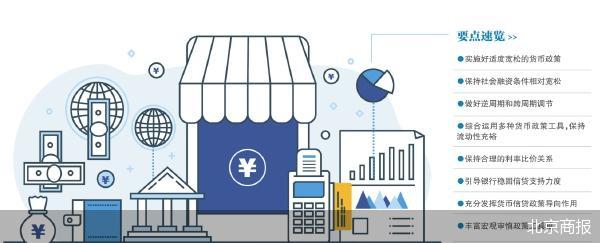
Core Viewpoint - The People's Bank of China emphasizes the importance of maintaining reasonable interest rate relationships to enhance the effectiveness of monetary policy and facilitate the transmission mechanism of monetary policy [1][2]. Group 1: Importance of Interest Rate Relationships - Interest rates and their relationships are crucial for macroeconomic balance and resource allocation, requiring a well-functioning market-oriented interest rate system [1]. - The central bank's guidance on interest rate relationships is a key measure to improve the modern monetary policy framework in China [1][2]. Group 2: Key Interest Rate Relationships to Monitor - The relationship between central bank policy rates and market rates is vital; deviations can hinder the effectiveness of interest rate transmission [5]. - The relationship between asset and liability rates of commercial banks is important, as discrepancies can compress banks' net interest margins and limit their support for the real economy [5]. - The relationship between different asset yields, such as loans and bonds, should not diverge excessively for the same entity, reflecting the need for coordination among financial markets [5][6]. - The relationship between short-term and long-term interest rates reflects term premiums, and banks should maintain reasonable term spreads [6]. - The relationship between different risk rates indicates risk premiums, where higher credit ratings should correspond to lower financing costs [6]. Group 3: Recent Trends and Adjustments - The central bank has been actively correcting temporary deviations in interest rate relationships to ensure effective monetary policy transmission [4][7]. - Recent trends show a slowdown in household deposit growth and an increase in non-bank deposits, attributed to asset reallocation based on changing return rates [9][10]. - Investors are increasingly converting savings into other assets as deposit rates decline, indicating a dynamic reallocation of assets [10]. Group 4: Future Directions - The central bank aims to continue transforming the monetary policy framework, focusing on price-based regulation and enhancing the effectiveness of interest rate adjustments in resource allocation [10].
刚刚 央行发布2025年第三季度中国货币政策执行报告!
Zheng Quan Ri Bao· 2025-11-11 14:56
Core Viewpoint - The People's Bank of China (PBOC) is committed to implementing a moderately accommodative monetary policy to support economic recovery and maintain financial market stability [1][2]. Group 1: Monetary Policy Implementation - The PBOC plans to deepen financial reforms and enhance high-level opening-up, aiming to build a robust financial system and improve the monetary policy framework [1][2]. - The report emphasizes maintaining ample liquidity and ensuring that social financing and money supply growth align with economic growth and price level expectations [2][5]. - The PBOC will utilize various monetary policy tools to support key areas such as technological innovation, consumption, small and micro enterprises, and stabilizing foreign trade [2][5]. Group 2: Price Level and Economic Indicators - The report indicates an improvement in price levels, with the Consumer Price Index (CPI) showing a year-on-year decline of 0.1% in the first three quarters, consistent with earlier periods [3]. - The core CPI, excluding food and energy, has been rising since the Spring Festival, reaching a 1% increase in September, with a year-on-year rise of 0.6% for the first three quarters [3]. - The Producer Price Index (PPI) has remained stable, with a narrowing decline in the third quarter compared to the second quarter [3]. Group 3: Financial Metrics and Trends - The report highlights a gradual shift away from focusing solely on quantitative targets, advocating for a more comprehensive view of financial metrics such as social financing scale and money supply [4][5]. - As of now, the total balance of RMB loans has reached 270 trillion yuan, while the social financing scale stands at 437 trillion yuan, indicating a natural decline in financial growth rates as the economy transitions to high-quality development [4][5]. - The growth of social financing and money supply is expected to align with nominal economic growth rates, reflecting changes in the financial supply-side structure [4].
【新华解读】央行最新货政报告:金融总量指标需科学看待 保持合理利率比价关系
Xin Hua Cai Jing· 2025-11-11 14:18
Core Viewpoint - The report indicates that the moderately loose monetary policy has effectively supported the real economy, and with the coordination of macro policies, the annual economic growth target of around 5% is expected to be achieved [1][4]. Monetary Policy Effectiveness - The report highlights that the counter-cyclical adjustment effects of monetary policy have gradually emerged, with reasonable growth in financial aggregates and low social financing costs [2]. - As of the end of September, the social financing scale stock and broad money supply (M2) increased by 8.7% and 8.4% year-on-year, respectively, with the RMB loan balance reaching 270.4 trillion yuan [2]. - Loans in sectors such as technology, green finance, inclusive finance, elderly care, and digital economy have grown faster than the overall loan growth rate, with loans for the elderly care industry increasing by nearly 60% [2]. Coordination of Policies - The report emphasizes the ongoing strengthening of coordination between monetary and fiscal policies, which has facilitated the smooth issuance of government bonds [3]. - The net financing amount of government bonds is expected to reach 11 trillion yuan in 2024, with this year likely to exceed 12 trillion yuan [3]. Future Monetary Policy Direction - The People's Bank of China plans to maintain reasonable growth in financial aggregates and leverage monetary credit policy effectively, balancing short-term and long-term goals, as well as internal and external factors [3]. - The report stresses the importance of implementing moderately loose monetary policies to fully release policy effects [3]. Financial Indicators and Their Interpretation - The report includes sections addressing how to scientifically view financial aggregate indicators, noting that the current RMB loan balance has reached 270 trillion yuan, and the social financing scale stock is at 437 trillion yuan [6]. - Experts suggest that as the economy transitions from high-speed growth to high-quality development, the focus should shift from merely pursuing high growth in financial aggregates to optimizing the use of existing financial resources [6]. Interest Rate Mechanism - The report discusses the complexity of the money creation and derivation process, emphasizing that loan issuance is not the only way for banks to derive money [7]. - It highlights the need for maintaining reasonable interest rate relationships and improving the effectiveness of monetary policy through better coordination and execution of interest rate policies [8].
央行报告释放关键信号
Di Yi Cai Jing Zi Xun· 2025-11-11 13:33
Core Insights - The People's Bank of China (PBOC) has outlined five core monetary policy strategies for the next phase, focusing on maintaining reasonable growth in financial totals, leveraging monetary credit policy, balancing internal and external factors, accelerating financial market reforms, and proactively managing financial risks [2][3]. Monetary Policy - The PBOC emphasizes the implementation of a moderately accommodative monetary policy to keep social financing conditions relatively loose [2][3]. - The report highlights the importance of balancing short-term and long-term goals, supporting real economy while maintaining the health of the banking system, and enhancing macroeconomic governance effectiveness [3][6]. Economic Growth - China's GDP grew by 5.2% year-on-year in the first three quarters, indicating resilience and vitality in economic operations, with a target of around 5% growth for the year likely to be achieved [3][4]. - The collaboration between fiscal, monetary, and industrial policies is crucial for supporting growth and structural adjustments, creating a synergistic effect [3]. Financial Structure - The report indicates that the total social financing scale has become increasingly important as a measure of economic and financial interaction effectiveness, with the current RMB loan balance reaching 270 trillion and total social financing stock at 437 trillion [5][6]. - The shift towards direct financing is evident, with companies increasingly opting for bond issuance over bank loans, reflecting a broader trend in financing structure changes [5][6]. Financial Support for Key Areas - As of September 2025, structural monetary policy tools supporting key national strategies have reached nearly 4 trillion, with loan growth in these areas exceeding 10% [7][8]. - The PBOC is focusing on enhancing financial support for sectors such as technology innovation, green finance, and small and micro enterprises, indicating a commitment to optimizing financial resources for economic development [8].

中国人民银行:将扎实做好金融“五篇大文章”
Xin Hua She· 2025-11-11 13:25
Core Viewpoint - The People's Bank of China reported that by the end of September, the balance of structural monetary policy tools supporting the financial "five major articles" reached 3.9 trillion yuan [1] Group 1 - The People's Bank of China will fully leverage the guiding role of monetary credit policy in the next phase [1] - The focus will be on solidly implementing the financial "five major articles" [1]