红旗连锁

Search documents
美团阿里商战,奶茶店员和骑手崩溃了
Di Yi Cai Jing· 2025-07-08 02:32
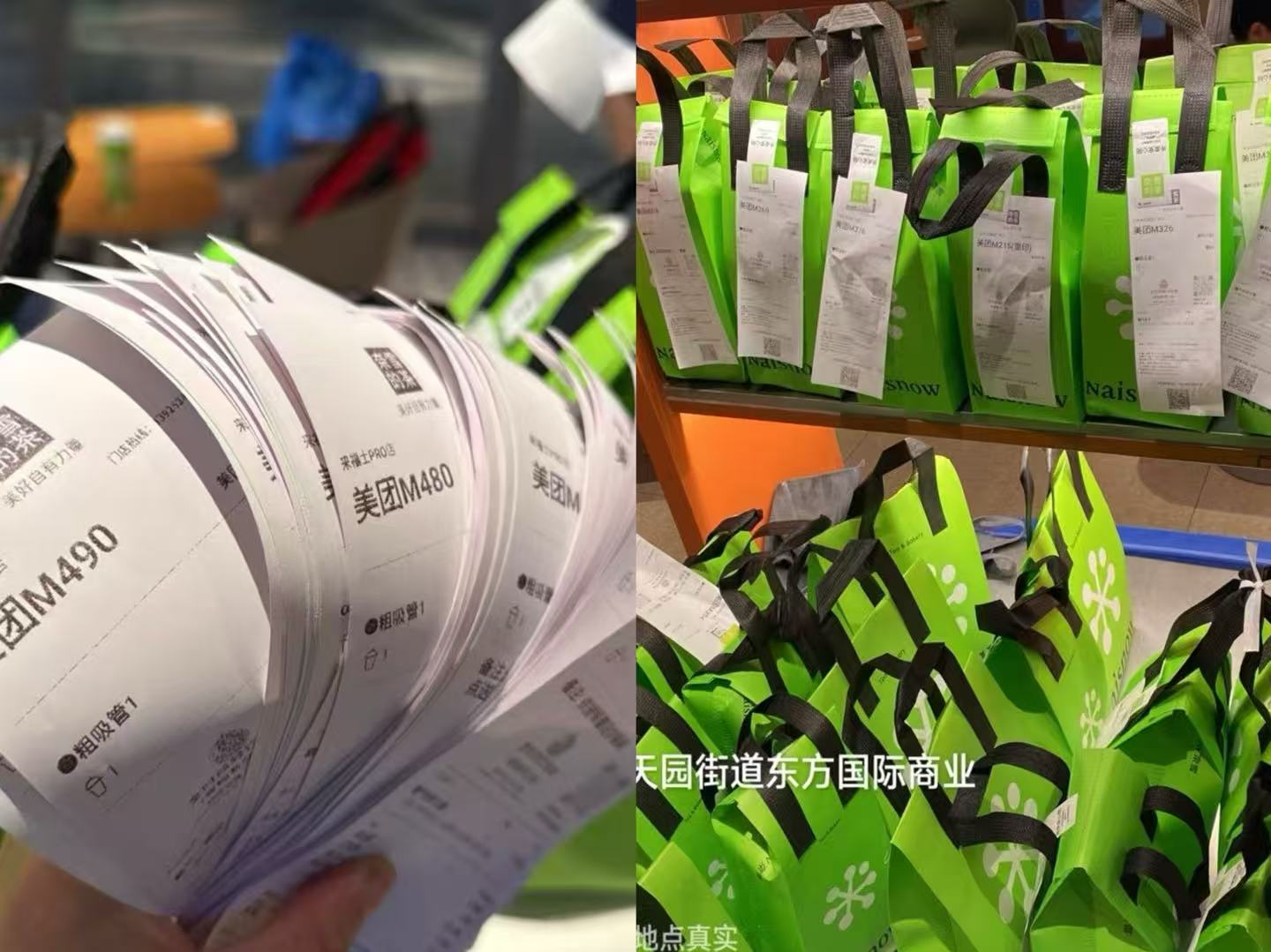
Core Insights - The recent subsidy war among major platforms like Meituan and Alibaba has led to an unprecedented surge in orders for tea and coffee products, significantly impacting both store staff and delivery riders [1][21][15] - The intense competition has resulted in record-breaking sales for many beverage stores, with some reporting order volumes doubling compared to the previous year [3][7][21] - Despite the increase in sales, the pressure on staff and delivery riders has intensified, leading to extreme working conditions and challenges in managing the overwhelming order flow [9][22][21] Group 1: Sales and Order Growth - Many beverage stores experienced a dramatic increase in orders, with some reporting a 30% week-on-week growth and a doubling of orders compared to the same period last year [3][21] - Specific stores, such as a Milk Tea shop, saw daily sales jump from approximately 13,000 yuan to 17,000 yuan, setting new revenue records [7] - The surge in orders is attributed to aggressive promotional activities, with drinks being offered at significantly reduced prices, sometimes as low as 0.01 yuan [1][7] Group 2: Operational Challenges - Stores had to rapidly increase staff numbers to handle the influx of orders, with some locations doubling their workforce from two to four employees [3][21] - The overwhelming volume of orders led to operational strain, with some stores temporarily halting services to manage the backlog [8][9] - Delivery riders faced similar challenges, with order volumes increasing by 1.5 times, leading to longer working hours and heightened stress levels [22][9] Group 3: Industry Dynamics - The competition among platforms is seen as a strategic move to capture market share in the high-frequency consumption category of tea and coffee, which is sensitive to pricing and social sharing [15][21] - The subsidy war has not only increased sales but also highlighted underlying issues in supply chain responsiveness and workforce management within the industry [22][21] - Industry experts predict that the current level of subsidies will continue until at least the end of August, but brands need to prepare for a post-subsidy marketing strategy [22][21]


今年涨价最猛的水果,快吃不起了
Hu Xiu· 2025-07-08 00:56
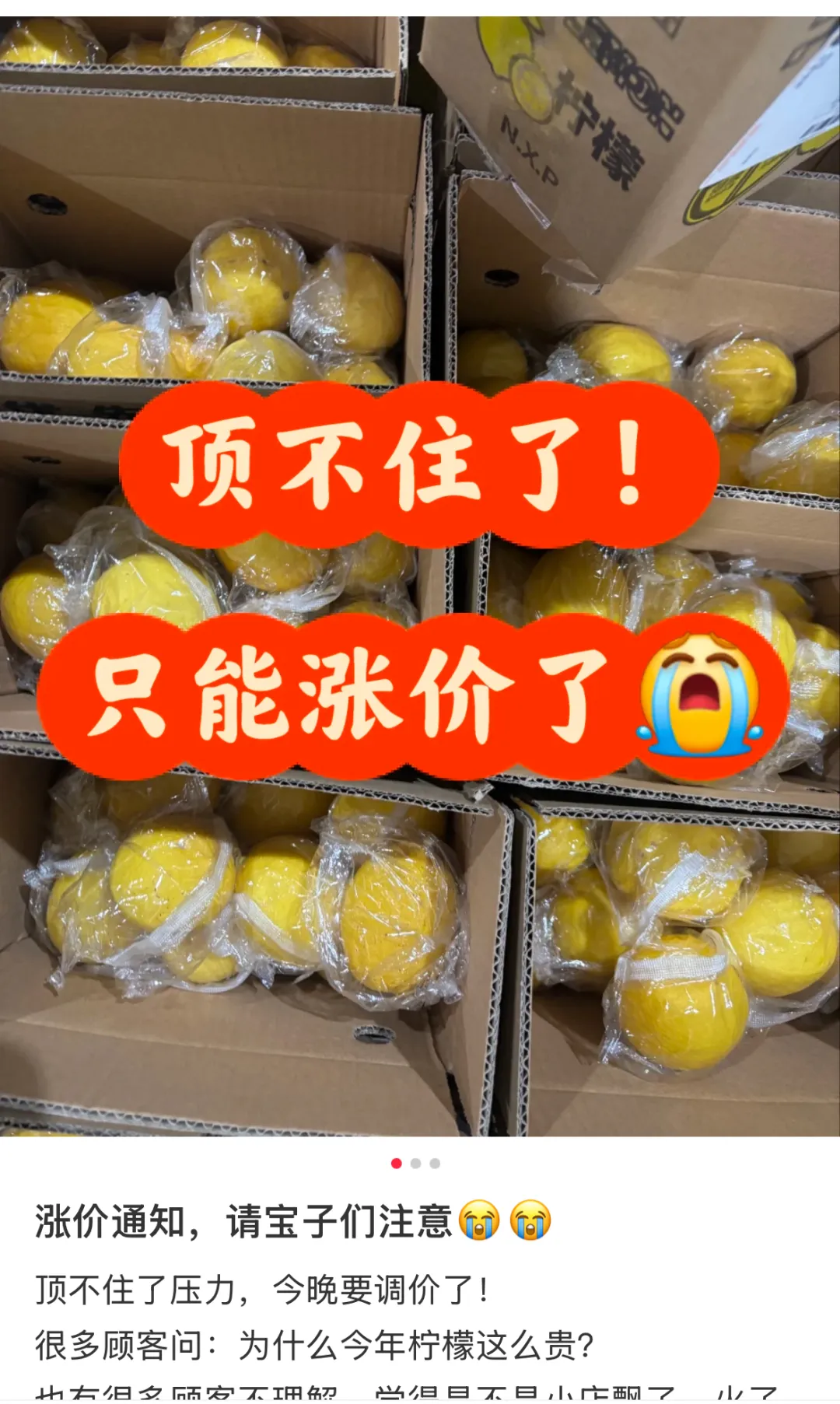
Core Viewpoint - The price of lemons has surged significantly this year, with retail prices reaching as high as 29.9 yuan per kilogram, raising concerns about potential price increases in related beverage markets [2][3][4]. Price Trends - The wholesale price of lemons began to rise in May, starting from around 9.5 yuan per kilogram at the beginning of the year to 14.02 yuan per kilogram by the end of June [7]. - Retail prices for yellow lemons have reached 10 yuan per kilogram, with premium A-grade lemons priced at 15 yuan per kilogram [9]. Supply and Demand Dynamics - The surge in lemon prices is attributed to a significant decrease in supply due to extreme weather conditions affecting major production areas, particularly in Sichuan's Anyue County, which accounts for over 70% of China's lemon production [10][14]. - The production in Anyue has decreased by approximately 40% compared to last year, leading to a supply shortage [14][15]. - Global lemon production has also been impacted, with countries like Turkey and Italy experiencing severe weather that has led to reduced yields [20][21]. Export Growth - The export volume of Anyue lemons reached 3 million kilograms, a significant increase compared to previous years, with export revenue rising to 128 million yuan in 2023, marking a 78% year-on-year growth [22]. Impact on Beverage Industry - The rising lemon prices are expected to affect the tea beverage market, as many popular tea brands rely heavily on lemons as a key ingredient [26]. - Major tea brands like Mixue and Nayuki have established their own supply chains to mitigate the impact of rising lemon prices, while smaller tea shops are struggling and may need to substitute with cheaper lemon varieties [27][30].
外卖大战喂饱了谁?
吴晓波频道· 2025-07-07 15:09
Core Viewpoint - The ongoing competition in the Chinese tea and coffee market is intensifying, with major players like Luckin Coffee and Kudi vying for market share, while external factors such as price wars and consumer preferences are shaping the landscape [4][20][34]. Group 1: Market Dynamics - The recent price war initiated by Meituan and Taobao has significantly increased order volumes, with Taobao surpassing 80 million daily orders and Meituan exceeding 120 million [4]. - The share of tea and coffee orders on major delivery platforms has surged, with JD's tea and coffee orders exceeding 50% and Ele.me's increasing to 25% due to aggressive subsidies [4][5]. - The competition is characterized by a diverse array of brands, indicating a fragmented market with many regional players [7][34]. Group 2: Company Strategies - Luckin Coffee has expanded its store count to 24,032, while Kudi has reached over 15,000 stores, with ambitious plans to open 50,000 by year-end [7][20]. - Luckin is adopting a strategy similar to Bawang Chaji, focusing on plant-based milk coffee targeting younger consumers, while Kudi resembles Mixue Ice City, appealing to a younger demographic with frozen fruit coffee [20]. - The overall market is experiencing a decline in rental prices and foot traffic, which is affecting operational viability for many brands [21][22]. Group 3: International Expansion - Chinese tea and coffee brands are increasingly looking to expand internationally, with several brands opening stores in North America [8][10][12]. - The success of these brands abroad will depend on their ability to adapt to local consumer preferences and market conditions [28][30]. - There is a significant opportunity for Chinese brands to leverage their strengths in innovation and supply chain management to capture market share in the global arena [38]. Group 4: Future Outlook - The current competitive landscape is reminiscent of the 2015 O2O battle, suggesting potential risks and challenges ahead [33]. - Companies are advised to focus on product quality and sustainable business practices rather than merely expanding store counts [36]. - The Chinese tea and coffee market still has room for growth, particularly in regions that have yet to fully engage with coffee culture [39][40].



外卖平台对轰“钞能力”:商家1亿个订单,有平台补贴2亿
阿尔法工场研究院· 2025-07-07 15:04
Core Viewpoint - The article discusses the intense competition in the Chinese tea beverage market, particularly during the recent delivery wars among major platforms like JD, Meituan, and Ele.me, highlighting the impact of subsidies on consumer behavior and brand dynamics [2][3][12]. Group 1: Market Dynamics - During the recent delivery wars, JD's tea drink orders reached nearly 50% of its total orders, while Taobao's tea drink orders accounted for 25% [6]. - The competition has led to a significant increase in sales for brands like Kudi, which achieved 100 million orders with 200 million yuan in subsidies from platforms [12]. - The tea beverage industry is experiencing a rapid elimination process, with over 160,000 tea shops closing in the past year [8][40]. Group 2: Consumer Behavior - Consumers are benefiting from the price wars, with many enjoying low-cost tea drinks, leading to a surge in consumption [11][12]. - The article notes that consumers are becoming accustomed to lower prices, which may affect their willingness to pay normal prices once the subsidies end [19][20]. - The perception of tea drink prices has shifted, with consumers now viewing previous prices as inflated, leading to a potential decline in sales for higher-priced products [20][21]. Group 3: Brand Positioning - New brands like Jasmine Milk White are leveraging platform resources to gain visibility and sales, achieving significant order growth during the subsidy period [13][16]. - Jasmine Milk White's unique positioning and product development strategies have allowed it to stand out in a crowded market [32][35]. - However, the brand faces challenges in maintaining price integrity and brand strength amidst intense competition and consumer price sensitivity [25][38]. Group 4: Industry Challenges - The tea beverage market is increasingly saturated, with a net decrease of 54,000 tea shops in the past year, indicating a tough competitive landscape [40]. - The article highlights the difficulty of differentiating products in a market where many brands offer similar items, leading to a homogenization of offerings [43]. - Jasmine Milk White's limited number of stores (1,300) compared to competitors like Mixue Ice City (over 33,000) poses a significant challenge for scaling and market presence [45]. Group 5: International Expansion - To seek growth, Jasmine Milk White is expanding into overseas markets, with plans to open stores in the U.S. and Thailand, having already established 19 overseas locations [46]. - The brand is adopting a "cross-border + local" supply chain model to ensure quality and compliance in its international operations [47]. - However, the brand faces challenges related to food safety and customer service, as evidenced by complaints and operational issues in its stores [48][49].
菊乐又要冲刺IPO了,年近八旬的创始人“沉迷”上市
Nan Fang Du Shi Bao· 2025-07-07 09:06
菊乐股份又要冲刺IPO了,这一次,公司选择了北交所。 近日,菊乐股份发布《关于申请公开发行股票并在北交所上市暨停牌进展公告》表示,公司于6月25日向北交所报送了 向不特定合格投资者公开发行股票并上市的申报材料,并于6月30日获得北交所正式受理,公司股票目前已停牌。 据南都湾财社记者了解,早在2017年,菊乐早在2017年就递交过上市申请文件,折戟后,公司又分别于2019年、2020 年、2023年多次提交上市申请材料,如今公司再次启动IPO。换言之,公司在上市之路上"奋战"了近八年。 这八年时间,公司实际控制人童恩文也从菊乐股份冲刺IPO之初的70岁,到如今的78岁高龄,年近八旬,这位创始人仍 执着于上市之路。 菊乐酸乐奶 拟募集资超5亿用于扩产等项目,产能过剩下逆势扩产"赌注" 据菊乐股份近日披露的招股书,公司本次拟公开发行不超过2312.07万股人民币普通股,占发行后总股本的20%,拟募 集资金超过5亿元,用于温江乳品生产基地改扩建项目、营销网络中心升级建设项目、研发中心升级建设项目以及信息 化系统建设项目。 | 项目名称 | 投资总额 | 拟使用夢 集资金 | 备案情况 | 环评情况 | | --- | ...
淘宝闪购补贴“冲单” 美团“反攻”宣布日订单1.2亿
2 1 Shi Ji Jing Ji Bao Dao· 2025-07-06 15:00
Core Insights - The recent surge in food delivery orders on July 5 is attributed to a new round of aggressive subsidies from platforms like Taobao Flash Sale and Meituan, leading to a significant increase in user engagement and order volume [2][3][4][6]. Group 1: Subsidy War Dynamics - Taobao Flash Sale initiated a substantial subsidy program, announcing a 500 billion yuan plan, which coincided with a spike in user orders, with reports of users placing multiple orders in a single day [2][4]. - Meituan responded aggressively by distributing a large number of coupons, including "0 yuan delivery" offers, resulting in a record-breaking order volume of over 1.2 billion on July 5, with more than 1 billion being food orders [3][7][8]. - The competition has intensified, with Meituan's order volume surpassing previous peaks, indicating a shift in market dynamics as platforms vie for consumer attention during the summer promotional season [7][9]. Group 2: Market Impact and Consumer Behavior - The influx of subsidies has led to a notable increase in order volumes across the industry, with Taobao Flash Sale achieving a daily order peak of 60 million, which is 66.7% of Meituan's previous peak [5]. - Consumers are increasingly drawn to the low-cost offerings, with many opting for multiple beverage orders throughout the day, highlighting a shift in consumption patterns driven by promotional incentives [9]. - Industry leaders, including Meituan's CEO, have acknowledged the challenges posed by high subsidy rates and the potential for "false prosperity" in order volumes, emphasizing the need for sustainable competition practices [9].
一杯茶饮的品牌使命
Mei Ri Jing Ji Xin Wen· 2025-07-06 13:52
Core Viewpoint - The rise of Chinese tea brands in international markets reflects a broader transition from "Made in China" to "Brand from China," showcasing cultural and emotional connections with consumers [1][3][5] Group 1: Market Dynamics - Chinese tea brands are gaining popularity overseas, driven by technological innovation, cultural depth, and emotional value [1] - The growth of new tea brands is a response to the saturation of the domestic market, with annual growth rates slowing from over 20% to 5.7% [3] - The global market presents a new battleground for these brands, as they seek to establish a competitive edge through pricing strategies and supply chain efficiencies [3][4] Group 2: Cultural Significance - The emergence of tea brands abroad is not just about market expansion but also about cultural resonance, as these brands serve as cultural ambassadors [5] - The narrative surrounding tea brands can transform them into social currency and identity markers, enhancing their acceptance in diverse markets [2] - The cultural journey of tea brands is seen as a new trend in China's service trade, with significant potential for growth [4] Group 3: Competitive Landscape - Despite the rise of Chinese brands, many Western brands continue to dominate the market, capturing significant brand premiums [3] - The disparity in profit retention highlights the need for Chinese brands to strengthen their global presence and brand equity [3] - The success of brands like Mixue Ice City in overseas markets illustrates the effectiveness of low-cost strategies supported by a robust global supply chain [3]
中国创业者的信心从哪里来?首先是9亿人的刚需升级机会
创业家· 2025-07-06 10:22
Core Viewpoint - The article emphasizes the structural opportunities in China's consumer market, particularly focusing on the 900 million people in lower-tier cities as the main consumer base for future growth [5][12]. Group 1: Market Dynamics - The consumer landscape in China has shifted, with the previous focus on high-end brands in first-tier cities evolving to include a broader range of products catering to lower-tier markets [5][6]. - The connection between high-tier and low-tier markets has been established, allowing for a more integrated consumer experience across different city levels [7][9]. - The emergence of new business models based on modern infrastructure and production relationships is crucial for capitalizing on these market changes [11][12]. Group 2: Consumer Segmentation - The consumer market can be visualized as a cake, with the affluent class at the top, the middle class facing economic pressures in the middle, and the 900 million people in lower-tier cities forming the base [9]. - The article identifies two structural opportunities in the consumer market: the rise of new national brands and the development of new nationwide chains [13]. Group 3: Consumption Trends - The "启承消费时钟" (Qicheng Consumption Clock) categorizes consumer behavior into four phases: essential needs, optional purchases, alternatives, and upgrades, reflecting the changing economic conditions [12][13]. - The pandemic has shifted consumer preferences, with essential goods gaining prominence while optional items have become less prioritized [12][13]. - The rise of discount brands and alternative products is noted, with examples like "鸣鸣很忙" in the snack sector, indicating a trend towards value-oriented consumption [13].


张华薇:某国集团系统性抢注40多个中国知名品牌商标,包括瑞幸咖啡、蜜雪冰城
Feng Huang Wang Cai Jing· 2025-07-05 06:54
Core Insights - The "2025 China Enterprises Going Global Summit" was held in Shenzhen, focusing on providing a high-end platform for Chinese companies to address challenges in international expansion and explore collaborative transformation paths [1] Group 1: Event Overview - The summit was organized by Phoenix Network and aimed to facilitate discussions on the restructuring of global industrial chains [1] - The theme of the summit was "For an Open World," emphasizing the need for dialogue on rules and resource connections [1] Group 2: Legal Challenges - Zhang Huawai, a prominent legal expert, highlighted the significant increase in intellectual property litigation involving Chinese companies in the U.S., with 1,173 new cases filed in 2023, marking a 19% year-on-year increase [2] - Patent litigation saw a notable rise of 56.1%, while 66.1% of trademark defendants lost cases due to default judgments [2] - The cross-border e-commerce sector faced 1,092 lawsuits in 2023, accounting for 94.6% of cases, with 99.38% of defendants being Chinese companies [2] - The trend is expected to worsen in 2024, with projections of 1,302 cases involving Chinese companies, of which 1,165 will be as defendants, representing 89.48% [2] - A concerning trend of malicious trademark registration has emerged, with systematic registrations of over 40 well-known Chinese trademarks by foreign entities [2] - Companies are advised to prioritize and expedite their cross-border intellectual property strategies to mitigate legal risks [2]


贵州甜品,正在“霸屏”北上广
东京烘焙职业人· 2025-07-05 00:39
Core Viewpoint - The article discusses the rising popularity of Guizhou's traditional dessert "Bingjiang" (ice slurry) in major cities like Beijing, Shanghai, and Guangzhou, highlighting its unique ingredients and cultural significance [5][12][38]. Group 1: Product Overview - Bingjiang is a traditional Guizhou dessert made from ice, fruits, and glutinous rice, often served with crushed peanuts and soybean powder [6][10]. - The dessert has historical roots dating back to the Song Dynasty, evolving through various cultural influences over the centuries [7][9][11]. - It has become a popular summer treat, often paired with street food and available at various stalls and tea shops [12][15][34]. Group 2: Market Trends - Since last year, Bingjiang has gained traction as a trendy street food item, with many vendors specializing in it and prices ranging from 13 to 22 yuan [12][13]. - Major tea brands have incorporated Bingjiang into their summer menus, significantly boosting sales [15][16]. - New specialty stores focusing solely on Bingjiang have emerged in cities like Shanghai and Shenzhen, offering various flavors and combinations [24][27][31]. Group 3: Factors Behind Popularity - The dessert's unique texture and flavor profile, combining smoothness with a chewy consistency, have contributed to its appeal [40][41]. - Bingjiang's simple preparation process and low cost make it an attractive option for entrepreneurs, with production costs around 3 to 8 yuan per cup [48][50]. - Its strong regional identity and seasonal relevance resonate well with consumers, especially as Guizhou becomes a popular tourist destination [51][53]. Group 4: Cultural Significance - Bingjiang serves as a bridge between traditional and modern culinary practices, preserving historical recipes while adapting to contemporary tastes [54][55]. - The dessert's ingredients reflect the wisdom of local ethnic groups, enhancing its cultural value [51][56]. - It has become a symbol of Guizhou's culinary heritage, appealing to both locals and tourists [61]. Group 5: Health and Innovation - The dessert has been adapted to meet health-conscious consumer demands, with options like zero-sugar versions and functional ingredients [57][58]. - Innovative combinations with other ingredients, such as yogurt and various fruits, have expanded its market appeal [36][60]. - The integration of Guizhou's unique ingredients into broader tea and beverage offerings has redefined their health benefits and market positioning [62][66]. Conclusion - The rise of Guizhou's Bingjiang is not merely a trend but a cultural phenomenon that combines food innovation, health consciousness, and regional pride, positioning it as a potential staple in the dessert market [74].