京东

Search documents
中国股票策略:H 股投资:变与不变-China Equity Strategy H-shares investingwhat's changed and what hasn't
2025-07-25 07:15
Summary of the Conference Call on H-shares Investing Industry Overview - The focus is on the H-shares market in Hong Kong, particularly the investment framework and performance outlook for H-shares and the broader China equity market [2][29]. Key Points and Arguments Investment Framework Update - Southbound investors have increased their allocation to HK equities to 21% of HK free float, prompting a reassessment of the investment framework for H-shares [2]. - Key factors influencing H-shares include: 1. Policy and regulations 2. Earnings, especially revision trends 3. Innovations 4. Fund flows, particularly from southbound investors 5. Valuations 6. Macro conditions 7. Geopolitics [2][30]. Market Sentiment and Performance - The HK market may face pressure in the near term due to potential earnings downgrades, particularly in the food delivery sector [2][4]. - Despite this, there is optimism for "dip buying" due to attractive valuations, especially in AI-related tech stocks [4]. - The market has become less sensitive to geopolitical issues, with increased local liquidity impacting index performance more significantly [3][4]. Earnings and Economic Outlook - UBS analysts forecast a 4% downside to HSCEI consensus earnings, primarily due to competition in food delivery [4][63]. - The macroeconomic environment remains lukewarm with limited stimulus expectations in the near term [4]. - Earnings revision is identified as the most critical driver of stock price performance in the HK market [11][77]. Sector and Stock Selection - A barbell strategy is recommended, favoring select internet and tech stocks alongside high dividend names [5][24]. - Small-cap stocks are viewed as having potential for convergence with A-shares, supported by increased interest from southbound investors [5][28]. Fund Flows and Liquidity - Southbound inflows are expected to decelerate in the second half of the year, although they may be offset by foreign inflows [4][63]. - HIBOR has declined significantly, with expectations of a slight rebound, which may affect liquidity [4][64]. Policy and Regulatory Environment - Anticipated policy changes, particularly related to the "anti-involution" campaign, could provide support for the market [4][64]. - The influence of tariffs and geopolitical factors has diminished, although uncertainty remains [4][64]. Valuation and Market Drivers - Valuations are not cheap compared to historical levels but remain attractive relative to other major markets [65]. - The report suggests that the HK equity market is likely to consolidate as it awaits catalysts such as competition normalization in food delivery and government responses to economic slowdowns [70]. Additional Important Insights - The correlation between economic factors and stock performance has decreased, with earnings revisions becoming more significant [3][34]. - The report highlights the importance of innovation, particularly in AI and healthcare, as a supportive factor for market performance in the second half of the year [4][64]. - A detailed list of companies with significant earnings forecast downgrades was provided, including Meituan (-45%) and Zhongsheng Group (-36%) [56]. This summary encapsulates the critical insights and projections regarding the H-shares market and broader equity landscape in Hong Kong, emphasizing the evolving dynamics of investment strategies and market influences.
股票市场概览
Guoxin Securities Hongkong· 2025-07-25 05:03
国信证券(香港)·资讯日报 股票市场概览 港股市场表现 美股市场表现 | 年 月 2025 7 | 日 25 | | | | --- | --- | --- | --- | | 资讯日报 | | | | | 海外市场主要股市上日表现 | | | | | 指数 | 收市价 | | 升跌% | | | | 单日 | 年内 | | 恒生指数 | 25,667 | 0.51 | 27.95 | | 恒生国企 | 9,258 | 0.18 | 26.99 | | 恒生科技 | 5,743 | (0.05) | 28.53 | | 美国道琼斯 | 44,694 | (0.70) | 5.05 | | 美国标普 500 | 6,363 | 0.07 | 8.19 | | 美国纳斯达克 | 21,058 | 0.18 | 9.05 | | 德国 DAX | 24,296 | 0.23 | 22.03 | | 法国 CAC | 7,818 | (0.41) | 5.93 | | 英国富时 100 | 9,138 | 0.85 | 11.81 | 美国主要指数一年表现 纳斯达克 合指数 标普 指数 道琼斯工业 均指数 日本主要指 ...
港股专题报告:港股当前整体升势仍较健康,核心驱动逻辑正从前期避险情绪与仓位回补,逐渐有转向基本面改善与政策预期向好的迹
ZHONGTAI INTERNATIONAL SECURITIES· 2025-07-25 03:36
Market Performance - On July 24, the Hang Seng Index rose by 129 points or 0.5%, closing at 25,667 points, marking a five-day winning streak[1] - The Hang Seng Tech Index fell by 0.05% to 5,743 points, ending its five-day rise[1] - Market turnover reached HKD 294.8 billion, indicating active trading, with a net inflow of HKD 3.7 billion through the Stock Connect[1] Sector Highlights - The financial sector was a key support, with China Galaxy (6881 HK) and CITIC Securities (6066 HK) rising by 4.4% and 3.9% respectively[1] - China Duty Free (1880 HK) surged by 15% due to positive news regarding Hainan Free Trade Port[1] - Semiconductor stocks remained active, while major tech stocks like Baidu (9888 HK) and Alibaba (9988 HK) saw declines of over 3%[1] Economic Outlook - The overall upward trend in the Hong Kong market is supported by improving fundamentals and positive policy expectations, with a shift from risk aversion to fundamental recovery[2] - Anticipation of trade agreements between the EU and the US is expected to ease global supply chain concerns, potentially benefiting the Hong Kong market[2] Real Estate Market - New home sales in 30 major cities fell by 21.7% year-on-year, although this was an improvement from the previous week's 24.9% decline[5] - The inventory-to-sales ratio for major cities increased to 105.7, up from 102.2 a year ago, indicating a growing supply relative to sales[7] - Land transaction volume dropped by 62.9% year-on-year, reflecting a significant slowdown in real estate activity[8] Policy and Investment Strategy - The central government's recent urban work conference emphasized support for the real estate sector, although no new major measures were announced[9] - Investment strategies should focus on high-dividend sectors such as telecommunications, utilities, and finance, while also considering growth areas like AI and biotechnology[12]
“马云密友”钱峰雷盯上稳定币,正式进军加密支付领域
阿尔法工场研究院· 2025-07-24 11:31
Core Viewpoint - Recently, Jingwei TianDi announced its entry into the cryptocurrency payment sector by launching the stablecoin platform "Fopay," which led to an 18% surge in the company's stock price. This move reflects the strategic ambitions of Zhejiang businessman Qian Fenglei, who is building a Web3 ecosystem and has become the largest shareholder of Jingwei TianDi [1][2][3]. Group 1: Company Developments - On July 21, Jingwei TianDi officially announced its entry into the cryptocurrency payment market and launched the mobile payment application "Fopay," which is based on stablecoin concepts and aims to provide a one-stop payment platform [2][4]. - The company has partnered with several licensed institutions to offer stablecoin custody and prepaid card payment services through "Fopay," which is expected to create more business opportunities for the company and its shareholders [4][5]. - Since its listing in January 2024, Jingwei TianDi's stock price has increased over fourfold, closing at 9.07 HKD per share with a market capitalization of 8.74 billion HKD [5][6]. Group 2: Strategic Investments - Qian Fenglei's investment firm, Hengfeng International, completed a $100 million financing round last year to build the Web3 ecosystem FO.COM, which includes the stablecoin payment platform "Fopay" as a key component [3][11]. - Qian Fenglei has invested over 1 billion HKD in Jingwei TianDi, increasing his shareholding to 29.9%, making him the largest shareholder [3][6]. - The strategic acquisition of shares in Jingwei TianDi aligns with Qian Fenglei's broader goal of establishing a Web3 ecosystem, indicating a significant shift in the company's business direction [6][7]. Group 3: Market Context - The stablecoin market is experiencing heightened interest, particularly following the successful IPO of Circle, which saw a nearly 170% increase on its first day of trading [13]. - The competition for stablecoin licenses is intensifying, with several companies, including Ant Group and JD.com, actively seeking to enter the market as regulations evolve [15][16]. - The upcoming implementation of Hong Kong's stablecoin regulations is expected to further fuel competition, as only a limited number of licenses will be issued, creating a "supply-demand" imbalance [15][17].

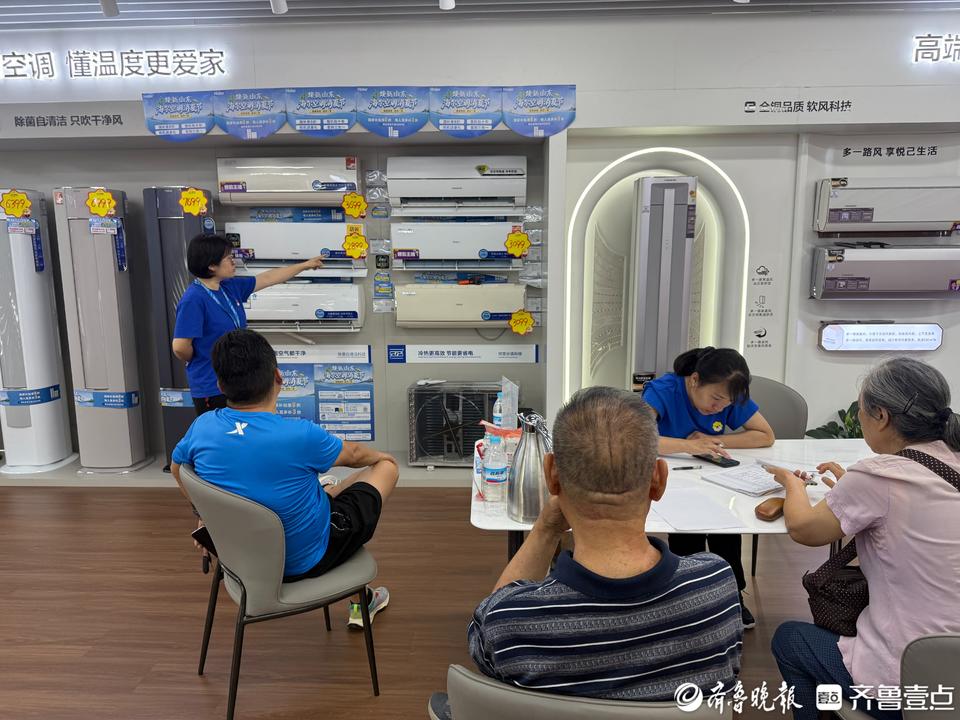
今夏空调市场乘“热”而上,济南有门店销量同比涨300%
Qi Lu Wan Bao Wang· 2025-07-24 10:16
Core Insights - The air conditioning market in Jinan is experiencing a significant sales surge due to prolonged high temperatures and multiple subsidies, leading to increased consumer demand and busy installation services [1][11]. Sales Performance - Sales in air conditioning stores have seen remarkable growth, with some stores reporting a 300% year-on-year increase in sales [2][4]. - Major retailers like JD.com and Suning have also reported substantial increases in air conditioning sales, with JD.com noting over 200% growth since July and Suning reporting an 82% increase in energy-efficient air conditioners [4][11]. - Gree Electric stated that its popular air conditioning models saw a 240% increase in sales during the 618 shopping festival [4]. Installation Services - The surge in air conditioning sales has put pressure on installation services, with some engineers installing up to 14 units per day, which is three times the average of previous years [5][8]. - Companies like Midea and Gree are implementing measures to support installation teams, including cross-regional assistance and additional subsidies for installers [8][9]. Market Trends - The current market is witnessing a shift towards smart and energy-efficient air conditioning units, with features like voice control and mobile connectivity becoming standard even in mid-range products [9][11]. - The ongoing sales boom is expected to accelerate the elimination of outdated products and expand the market for high-efficiency appliances [9][11]. Consumer Behavior - Consumers are taking advantage of substantial subsidies, with some air conditioners being sold at discounts of up to 50%, making them more affordable [11]. - The combination of high temperatures and attractive subsidies is driving a significant increase in consumer purchases, indicating a favorable market environment for air conditioning products [11].

36氪出海·行业|从融资到上市:机器人企业加速奔向商业化与全球市场
3 6 Ke· 2025-07-24 10:01
Core Insights - The robotics industry is experiencing a renewed wave of financing, with significant investments reported in July from various companies, indicating strong investor interest despite previous commercialization doubts [2][7] - Major players like JD.com are leading funding rounds, with companies such as Qianxun Intelligent and Zhongqing Robotics securing substantial amounts, highlighting the competitive landscape in the robotics sector [2][3] - The trend of companies pursuing IPOs is accelerating, with multiple firms initiating the process to become publicly listed, reflecting a growing confidence in the market [4][5] Financing Activities - Qianxun Intelligent completed nearly 600 million RMB in Pre-A+ financing, led by JD.com, with participation from several other investment firms [2][3] - Zhongqing Robotics announced a total of nearly 1 billion RMB in financing across Pre-A++ and A1 rounds, with JD.com also leading the A1 round [2][3] - A total of over 26 robotics startups raised significant funding in the first half of the year, with 286 financing events recorded, marking a 138% year-on-year increase [2] Market Trends - The robotics sector is witnessing a shift towards commercialization and mass production, with expectations that 2025 will be a pivotal year for humanoid robots [7] - Many robotics companies are still facing challenges with profitability, as they navigate complex technologies and long development cycles [7][8] - The overseas market is becoming a primary growth area for domestic robotics firms, with many companies expanding their global presence through acquisitions and direct sales [7][8] IPO Developments - Several robotics companies are actively pursuing IPOs, with Yushut Technology and others making significant moves to enter the public market [4][5] - The market sentiment is positive, as evidenced by stock price increases following announcements related to potential listings [4] International Expansion - Companies are increasingly focusing on international markets, particularly in high-end manufacturing regions like Europe and North America, to enhance their revenue streams [7][8] - The challenges of international expansion include building teams, adapting technology, and ensuring compliance with local standards [8]


全球资本格局重塑下中国资产战略布局思考——依托“泡泡机制”承接中概股回流|资本市场
清华金融评论· 2025-07-24 09:58
Core Viewpoint - The article discusses the trend of Chinese concept stocks (Chinext) returning to the Hong Kong market due to increasing regulatory pressures in the U.S. and the potential for Hong Kong to become a global technology capital hub and a strategic point for integrating Chinese assets into the global market [2][5][10]. Summary by Sections Background of U.S.-China Tensions - The U.S. has long had regulatory tensions regarding Chinese companies listed in the U.S., particularly following the signing of the Holding Foreign Companies Accountable Act (HFCAA) in late 2020, which requires foreign companies to undergo audits or face delisting [4][5]. - In early 2025, the U.S. Treasury Secretary indicated the possibility of delisting Chinese stocks, prompting a response from Hong Kong's financial authorities, who are prepared to welcome these companies back [5][6]. Pathways for Chinext to Return - The Hong Kong Stock Exchange (HKEX) has established three main pathways for Chinext to return: 1. Re-listing in Hong Kong after privatization in the U.S. 2. Secondary listing in Hong Kong through instruments like Depositary Receipts (DR). 3. Dual primary listing, allowing companies to be listed on multiple exchanges while meeting all regulatory requirements [6][8]. Impact on Hong Kong Market - The return of Chinext is expected to significantly increase trading volume in the Hong Kong market, as seen during previous return waves in 2018-2021, where companies like Xiaomi and Alibaba contributed to substantial increases in IPO fundraising [8][9]. - The structure of the Hong Kong market is also anticipated to change, with a shift towards technology and new economy sectors, as traditional sectors like finance and real estate see their weight decrease [9][11]. Global Capital Market Dynamics - The return of Chinext is reshaping the global capital market landscape, reflecting a shift in financial power dynamics between the U.S. and China, and indicating a move towards a multi-polar capital market structure [10][12]. - The trend is also contributing to a "de-dollarization" movement, as global capital seeks alternatives to U.S. assets, with Hong Kong emerging as a strategic exit for capital fleeing from U.S. markets [12][13]. Regulatory and Market Environment - Hong Kong's unique regulatory environment and its position as a bridge between mainland China and international markets provide a favorable backdrop for the return of Chinext, enhancing its appeal to both domestic and international investors [14][15].

中泰国际每日晨讯-20250724
ZHONGTAI INTERNATIONAL SECURITIES· 2025-07-24 02:26
Market Overview - On July 23, the Hang Seng Index rose by 408 points or 1.6%, closing at 25,538 points, marking its highest closing level of the year[1] - The Hang Seng Tech Index increased by 2.5%, closing at 5,745 points, with total market turnover reaching HKD 333.1 billion, the highest since April 10[1] - Despite the rise, net outflow from Hong Kong Stock Connect was HKD 1.319 billion, indicating a lack of broad-based market strength[1] Sector Performance - Major tech stocks drove the index higher, with Tencent (700 HK) up 4.9% to HKD 552, a new high for the year[1] - Other notable gains included Alibaba (9988 HK) and Meituan (3690 HK), which rose between 2.5% and 3.3%[1] - AI and robotics stocks showed strong performance, with companies like UBTECH (9880 HK) rebounding by 5.8% after a recent share placement[4] Economic Dynamics - The Trump administration is shifting from broad tariffs to targeted investment agreements, maintaining at least a 10% baseline tariff while negotiating investment commitments from countries like Japan and the Philippines[3] - This strategy may help control inflationary pressures from imported goods, as certain key agricultural and energy products receive exemptions[3] Real Estate Insights - New home sales in 30 major cities fell to 1.23 million square meters, a year-on-year decline of 21.7%, although this was an improvement from the previous week's 24.9% drop[6] - The cumulative transaction volume for new homes in first-tier cities showed mixed results, with Guangzhou up 15.6% year-on-year, while Beijing and Shanghai saw declines[7] Investment Strategy - The overall sentiment in the Hong Kong market remains positive, with expectations of foreign capital inflows potentially accelerating the market's upward momentum[2] - Investors are advised to focus on high-dividend sectors such as telecommunications, utilities, and financials while looking for opportunities in growth areas like AI and biomedicine[13]
深圳机器人企业悄然间全国登顶!雨林生态催生全新产业高地
Sou Hu Cai Jing· 2025-07-24 01:03
Core Insights - Shenzhen's robotics industry is experiencing rapid growth, highlighted by significant investments and technological advancements [3][5][6][9][11][13]. Investment Highlights - LimX Dynamics secured a new round of financing led by JD.com, focusing on collaboration in retail, logistics, and services, with plans to launch a full-size humanoid robot by the second half of 2025 [5]. - Zhongqing Robotics completed nearly 1 billion RMB in financing across two rounds, with notable investors including XPeng Motors' Starway Capital and CATL's Puxuan Capital [6]. - UBTECH Robotics won a procurement project worth 90.51 million RMB, setting a record for the largest single bid amount in the humanoid robotics sector globally [9]. Industry Growth Metrics - Shenzhen's robotics industry chain generated a total output value of 201.2 billion RMB in 2024, marking a year-on-year growth of 12.58%, maintaining its position as the leading city in China for robotics [13]. - The city is home to approximately 67,000 robotics companies, accounting for 37.65% of Guangdong Province's total, and has the highest number of listed companies and investment events in the country [11]. Ecosystem and Innovation - Shenzhen's unique "industrial rainforest" ecosystem fosters innovation, with a concentration of robotics companies and top research institutions creating a complete supply chain from AI models to assembly [14][15]. - The city is transforming into a testing ground for robotics applications, with plans to open at least 50 application scenarios by 2025, covering various sectors including industrial manufacturing and urban governance [15].

事关绿证核发,重要方案出炉;国资接棒!北京证券,归来;优必选再度融资超24亿港元→
新华网财经· 2025-07-24 00:27
Group 1: Policy and Regulatory Updates - The National Energy Administration issued a work plan for the issuance of green certificates for distributed renewable energy generation projects in Zhejiang, Henan, and Guangdong provinces [1] - The Ministry of Commerce announced the development of a list of prohibited and restricted import and export goods for Hainan Free Trade Port, which will clarify management boundaries for businesses [3] - The Ministry of Finance plans to deepen tax reform to ensure continuous policy support for the construction of the free trade port [3] Group 2: Industry Performance and Trends - In the first half of the year, China's telecommunications industry reported stable operations, with telecom business revenue reaching 905.5 billion yuan, a year-on-year increase of 1% [4] - As of June, China's total installed power generation capacity reached 3.65 billion kilowatts, a year-on-year increase of 18.7%, with solar power capacity growing by 54.2% [4] - The National Grid's fixed asset investment exceeded 270 billion yuan in the first half of 2025, marking an 11.7% year-on-year increase [5] Group 3: Market Developments - On July 23, Tencent Holdings' market capitalization reached 5 trillion HKD, the highest since July 2021, with a stock price increase of 4.94% [10][18] - The Shanghai Gold Exchange issued a notice to enhance market risk control amid recent market instability [8] - The China Fund Industry Association reported that in June 2025, 100 asset-backed special plans (ABS) were newly registered, totaling 92.341 billion yuan [8] Group 4: Corporate Actions - UBTECH announced a share placement agreement to issue 30.1555 million H-shares at 82 HKD per share, raising approximately 2.473 billion HKD [18] - China Resources Group reported a revenue of 437.6 billion yuan and a profit of 47.4 billion yuan for the first half of 2025, indicating growth in both revenue and profit [15] - The establishment of a new company, Dongjie Zhikong, focusing on intelligent robotics, was recently registered [17]