
江淮汽车

Search documents
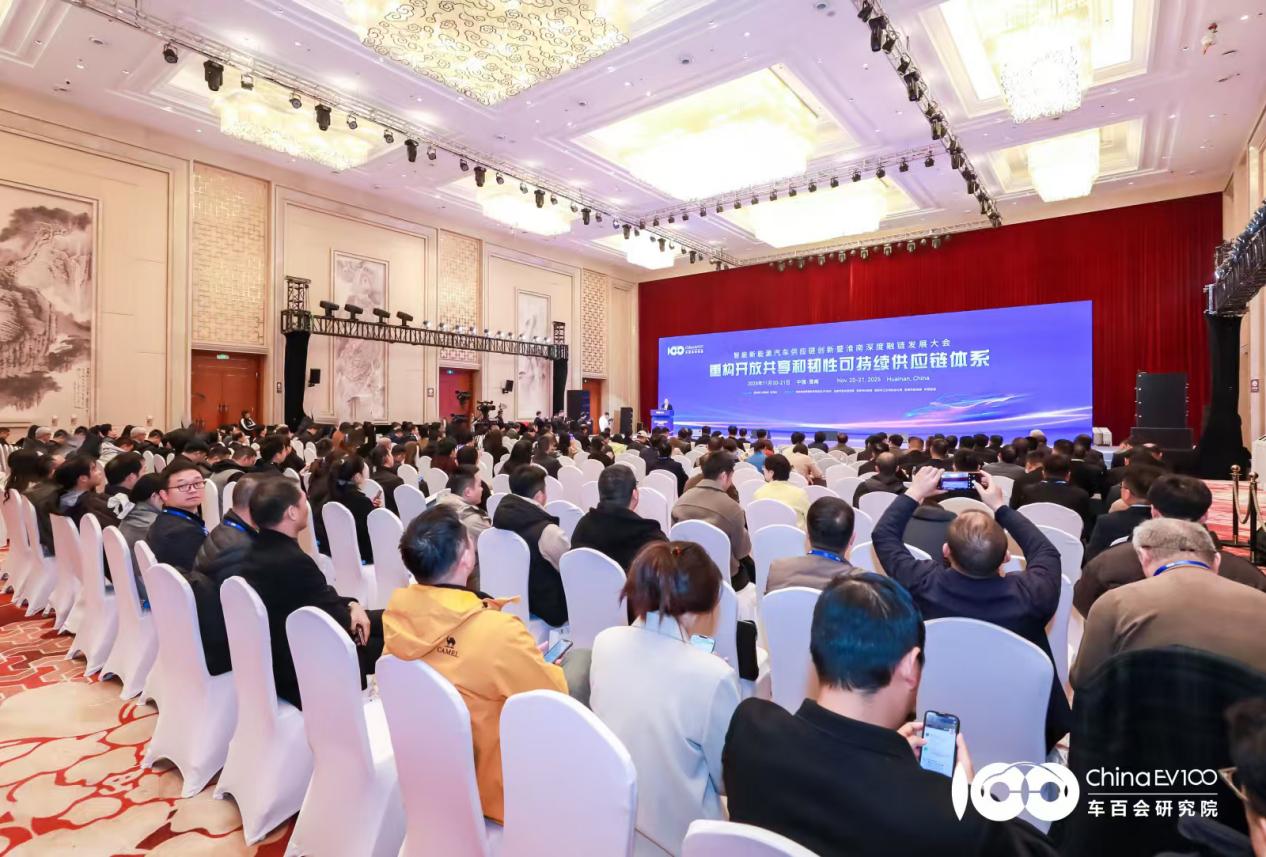
智能新能源汽车供应链迈向改革“深水区”
Zhong Guo Qi Che Bao Wang· 2025-11-22 14:08
Core Insights - The global automotive industry is undergoing a significant structural transformation driven by electrification, intelligence, and globalization, with supply chain restructuring becoming a core competitive battleground [1] - China's role in the global automotive supply chain is rapidly increasing, with the "Chinese content rate" becoming a key indicator of its influence [2][5] - The transition from "following" to "outputting" in China's supply chain reflects its growing capabilities in electric and intelligent vehicle sectors [3] Supply Chain Dynamics - China's power battery global installation share is nearing 70%, leading the world for several years, while the country has shifted from "mass input" to "gradual output" in the intelligent sector [5] - The expected production of 40 million vehicles by the end of the 14th Five-Year Plan, with 12 million for overseas markets, indicates a significant global footprint [5] - A new "dual factory" model is emerging, where "brain factories" are based in China for process control, and "hand factories" are located overseas for automated production, addressing skilled labor shortages [5] Challenges and Opportunities - Despite the promising outlook, the intelligent electric vehicle supply chain faces challenges such as safety, technology, and collaboration [1][6] - The domestic chassis localization level is lagging, which affects the performance of intelligent driving systems [6] - The automotive industry is entering a critical decade of transformation, with AI and connectivity becoming central to the value chain [6][9] Strategic Responses - Companies are encouraged to build resilient supply chain ecosystems by focusing on system output rather than just vehicle output, promoting local production while leveraging global resources [9][10] - The automotive industry must innovate around supply chains to address existing pain points and achieve cost reduction, efficiency, and compliance [10] - Local governments, like Huainan, are prioritizing the development of the new energy vehicle industry, showcasing a proactive approach to fostering an integrated supply chain ecosystem [17] Globalization and Localization - The need for a balance between local production and global supply chain integration is emphasized, with a focus on local market adaptation for overseas expansion [13][14] - The industry's competitive landscape is shifting towards a shared, multi-layered ecosystem to enhance supply chain resilience and stability [15]

江淮领衔 重汽杀进前四 江铃晋级 10月轻卡影响力榜单出炉 | 头条
第一商用车网· 2025-11-22 13:29
Core Insights - The "Light Truck First Influence Index" for major domestic light truck companies scored 1702 points in October 2025, reflecting a 21.3% increase from September 2025 but a 4.7% decrease year-on-year from October 2024 [1][11]. Group 1: Market Trends - October saw the arrival of the National Day and Mid-Autumn Festival, marking a traditional peak season for light truck production companies to enhance brand marketing efforts [3]. - New products, large orders, and new energy vehicles remain hot topics in the light truck market [3]. Group 2: Company Performance - Jianghuai 1 Card launched the L6PLUS and L9PLUS models, focusing on the logistics industry's demand for high-quality transport solutions, catering to the evolving needs for efficiency, reliability, and comfort [5]. - Dongfeng Light Truck continues to rank second, engaging in strategic cooperation with CATL to enhance the development of new energy commercial vehicles [7][11]. - China National Heavy Duty Truck HOWO Light Truck achieved a significant sales milestone with 2581 units sold during a promotional event [7][11]. - Yutong Light Truck signed a strategic agreement for the delivery of 200 new energy light trucks and 500 hydrogen fuel light trucks, emphasizing their advantages in cold chain transport [9][11]. Group 3: Rankings and Competitive Landscape - Jianghuai 1 Card secured the top position in the "Light Truck First Influence Index," followed by Dongfeng Light Truck and Jiefang Light Truck in third place [11][14]. - China National Heavy Duty Truck HOWO Light Truck moved up one position to fourth, while Jiangling Light Truck rose two spots to sixth [11][16]. Group 4: Sales Performance - The light truck market achieved a "nine consecutive increases" in sales, indicating a positive trend for the upcoming months [18].





向“智”向“新”成为增长新引擎 中国汽车工业正从“规模引领”迈向“技术引领”
Yang Shi Wang· 2025-11-22 02:32
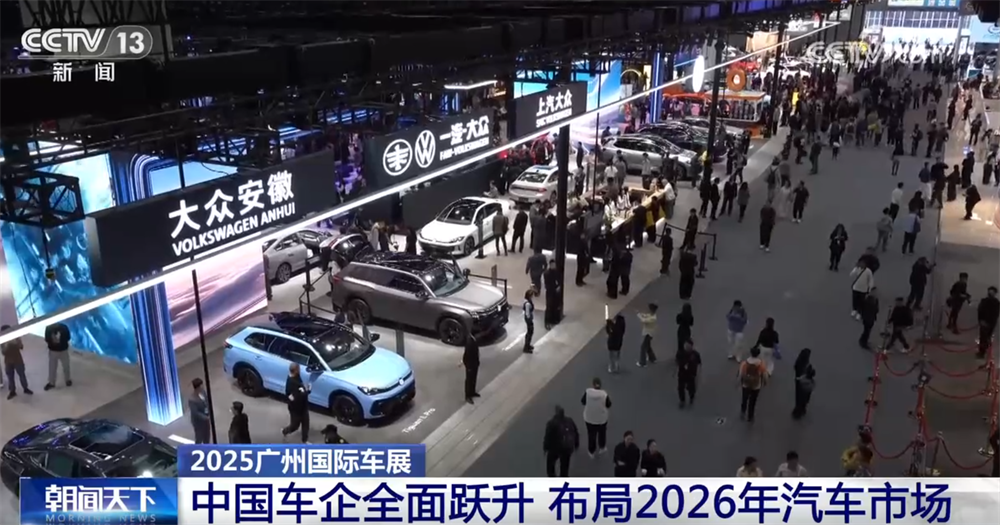
Core Insights - The 2025 Guangzhou International Auto Show is showcasing over 1,000 vehicles, with more than 60% being new energy vehicles, indicating a significant shift towards electric mobility in China's automotive market [1][3] - The new tax policy for new energy vehicles, effective January 1, 2026, will halve the purchase tax and raise the technical standards for subsidy-eligible models, prompting automakers to focus on high-value models [1] - The integration of AI technology across the automotive industry is driving innovation, with a notable collaboration between Huawei and GAC to launch a high-end smart new energy vehicle in the first half of next year [3][5] Industry Trends - China's new energy vehicle market penetration has surpassed 50%, marking a transition from "catching up" to "leading" in the global automotive industry, with a focus on technological leadership [5][11] - Chinese automakers are increasingly expanding into international markets, with exports accounting for 55% of Jiangqi Group's business during the 14th Five-Year Plan, and plans to deepen international engagement in the upcoming 15th Five-Year Plan [5][9] - The automotive industry is moving from merely exporting products to exporting entire supply chains, with a focus on creating globally adaptable vehicle models [7][9] Export Dynamics - New energy and high-end smart vehicles are becoming the mainstay of exports, gaining rapid recognition in markets such as Europe, Southeast Asia, and Latin America [11] - The push for global presence is not just about brand recognition but also about enhancing the influence of Chinese manufacturing on a global scale [9][11]
江淮汽车申请一种自动驾驶预期功能安全场景库构建方法、装置及设备专利,能够提高工作效率
Jin Rong Jie· 2025-11-22 01:26
Core Viewpoint - Anhui Jianghuai Automobile Group Co., Ltd. has applied for a patent related to an automatic driving expected function safety scenario library construction method, device, and equipment, indicating a focus on enhancing safety in autonomous driving technology [1] Group 1: Patent Application Details - The patent, titled "A Method, Device, and Equipment for Constructing an Automatic Driving Expected Function Safety Scenario Library," was published under the number CN 120986448 A and was applied for on August 2025 [1] - The invention involves constructing an initial expected function safety scenario library and determining logical scenario parameter boundaries based on the design operating domain and hazardous behaviors of the autonomous driving system [1] - The method generates simulated autonomous driving scenarios and conducts boundary value testing analysis to identify scenarios that meet preset conditions, which are then added to the initial expected function safety scenario library [1] Group 2: Implications for the Industry - The establishment of an expected function safety simulation scenario library allows for continuous reuse and updating during the development of multiple vehicle series, thereby improving work efficiency in vehicle safety validation [1]
视频丨布局2026年汽车市场 中国车企加速拓展海外市场
Yang Shi Xin Wen· 2025-11-22 01:22
Core Insights - The 2025 Guangzhou International Auto Show is showcasing over 1,000 vehicles, with more than 60% being new energy vehicles, indicating a significant shift towards electrification in the automotive industry [1] - A new tax policy for new energy vehicles will take effect on January 1, reducing purchase tax by half and raising technical thresholds for subsidy-eligible models, prompting automakers to focus on high-value models [1] - The automotive industry is experiencing a transformation driven by technological advancements and user experience improvements, moving away from reliance on subsidies [3] Industry Trends - Smart technology is emerging as a new growth engine for the automotive sector, with a notable collaboration between Huawei and GAC to launch a high-end smart electric vehicle in the first half of next year [5] - The penetration rate of new energy vehicles in China is expected to exceed 50% by 2025, marking a shift from "catching up" to "leading" in the global automotive landscape [7] - Chinese automakers are increasingly focusing on international markets, with exports accounting for approximately 55% of Jiangqi Group's business during the current five-year plan [7] Global Expansion - The Chinese automotive industry is transitioning from merely exporting products to exporting entire supply chains, reflecting a new phase of globalization [9] - The concept of "one model, multiple versions" for global markets is gaining traction among automakers, indicating a strategic approach to internationalization [9] - High-end smart vehicles and new energy models are becoming the main export drivers, with growing recognition in markets such as Europe, Southeast Asia, and Latin America [13]
车展观察丨押注启境,“境系列”首个品牌能否如愿俘获年轻人?
Bei Ke Cai Jing· 2025-11-21 13:08
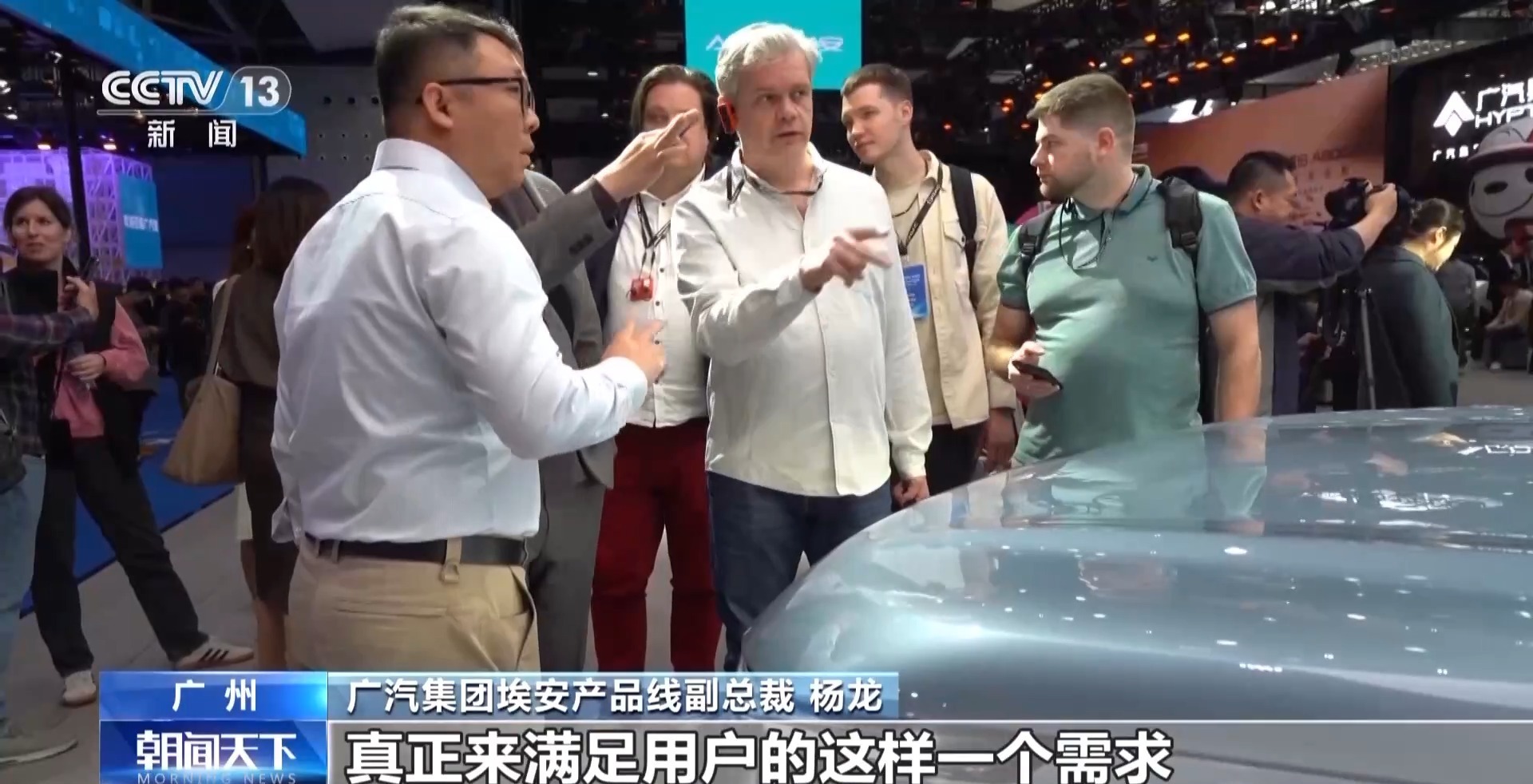
Core Viewpoint - GAC Group and Huawei's QianKun have launched a new automotive brand, Qijing, aimed at filling a market gap for stylish, safe, intelligent, and controllable vehicles targeting young consumers [1][2][4]. Market Context - The Chinese automotive market is becoming increasingly competitive, with the introduction of Qijing raising questions about the necessity of another brand amidst existing offerings [2][14]. - Qijing aims to differentiate itself in the crowded electric vehicle market, which includes strong competitors like Tesla and NIO, by focusing on intelligent features and product quality [17]. Brand Strategy - Qijing is positioned as a high-end intelligent electric vehicle brand, with a focus on appealing to younger consumers, a demographic previously overlooked by Huawei's other automotive collaborations [12][14]. - The brand's name, Qijing, was chosen to reflect a youthful and technological image, as suggested by Huawei's founder Ren Zhengfei [4][12]. Product Development - Qijing plans to launch two new models by 2026, with the first model, a shooting brake, set to be delivered in June 2024 [5][11]. - The brand has adopted Huawei's Integrated Product Development (IPD) and Integrated Product Marketing System (IPMS) to enhance product development and marketing processes [9]. Sales and Distribution - Unlike Huawei's previous sales strategies, Qijing will operate through independent sales channels and will not be sold in Huawei stores, with plans to recruit dealers across 30 new cities [6][8]. - The sales strategy includes a "1 (user center) + N (experience center)" model for network layout [6]. Collaboration Dynamics - The collaboration between GAC and Huawei has been described as intense, with discussions sometimes leading to heated debates, reflecting the different corporate cultures of the two companies [10]. - The partnership has accelerated the development timeline for new models, with significant milestones achieved in a short period [11]. Financial Context - GAC Group is currently undergoing significant reforms due to declining performance, with a 10.49% drop in revenue and a net loss of 4.312 billion yuan in the first three quarters of 2025 [15]. - The company is betting on the success of Qijing as a breakthrough strategy to improve its market position and achieve its goal of having 60% of total sales from its own brands by 2027 [16][17].


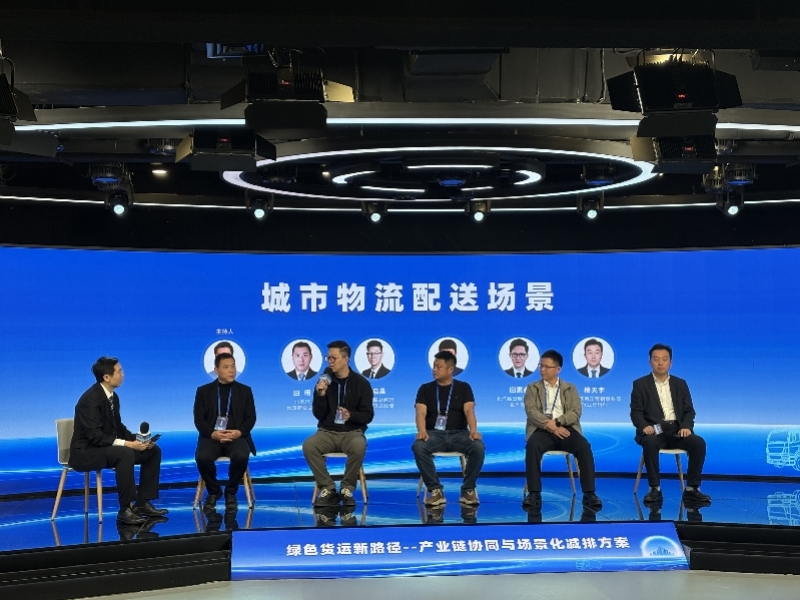
绿色货运新路径研讨会举办,探索产业链协同与场景化减排方案
中国能源报· 2025-11-21 12:29
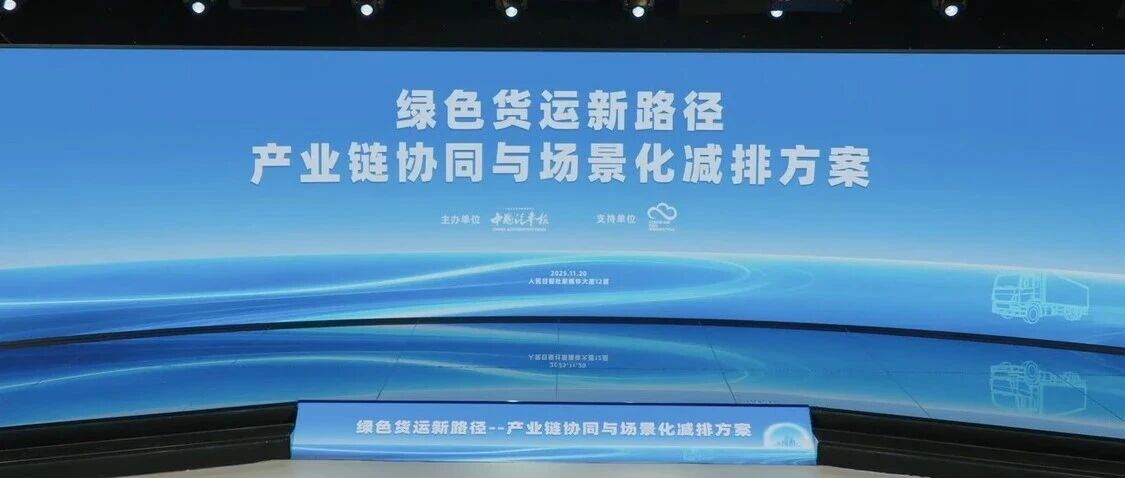
Core Viewpoint - The green transformation of the freight industry is crucial for high-quality development in the context of achieving China's "dual carbon" goals, with road freight playing a foundational role in the logistics system [3]. Group 1: Industry Overview - In the first three quarters of this year, China's road freight volume reached 319.1 billion tons, reflecting a year-on-year growth of 4.9%, indicating strong resilience in the sector [3]. - The rapid development of new energy commercial vehicles is a significant support for green freight, with domestic sales reaching 649,000 units in the first ten months of 2025, marking a year-on-year increase of 60.2% [3]. Group 2: Challenges and Solutions - The development of green freight faces challenges such as insufficient regional collaboration, an imperfect industrial chain coordination mechanism, and lagging infrastructure construction [3]. - The green transformation of urban logistics, particularly through light-duty trucks, is essential as they account for over 70% of urban last-mile logistics demand, directly impacting traffic congestion, air quality, and carbon footprint reduction [3]. Group 3: Key Practices and Innovations - The green transformation of light-duty trucks has progressed from concept promotion to practical implementation, focusing on three main areas: energy structure transformation, innovative operating models, and technology-driven efficiency improvements [5]. - Key experiences in the transformation include policy "combination punches" to unblock transition bottlenecks, activating ecological vitality through the role of leading enterprises, and breaking through technical and resource bottlenecks via industrial chain collaboration [5]. Group 4: Sector-Specific Insights - In the short-haul heavy-duty transport sector, the rapid adoption of new energy heavy trucks is evident, particularly in the steel industry, which accounts for about half of the market share [5][7]. - The promotion of new energy heavy trucks in the steel industry is driven by policy guidance, continuous technological advancements, and significant reductions in acquisition costs [7]. Group 5: Urban Logistics and Technology - Urban logistics delivery is a critical link between production and consumption, with the green transformation directly affecting emission reduction targets and urban ecological optimization [10]. - Challenges in the operation of new energy light-duty trucks include battery range, load limitations, and insufficient refueling infrastructure, particularly in winter [10]. Group 6: Long-Distance Transport - The clean transformation of medium and long-distance transport is vital for the green development of the industry, with a focus on diverse technological pathways [16]. - Hydrogen fuel cell heavy trucks are highlighted for their unique advantages in medium and long-distance scenarios, requiring national-level planning for hydrogen energy corridors to promote coordinated development [18].
充电桩存在闲置与供给不足矛盾,专家:数字化手段让供需匹配
Nan Fang Du Shi Bao· 2025-11-21 12:15
Core Viewpoint - The seminar on "Green Freight New Pathways: Industry Chain Collaboration and Scenario-Based Emission Reduction Solutions" highlights the challenges and opportunities in the logistics sector regarding the adoption of new energy vehicles, emphasizing the need for infrastructure improvements and technological innovations to enhance operational efficiency and reduce costs [1]. Group 1: Charging Infrastructure and Operational Efficiency - There is a structural contradiction in charging station resources, with high idle rates in some areas and insufficient supply in core regions. A digital platform is suggested for precise supply-demand matching and optimizing charging costs through smart algorithms [3]. - The operational efficiency of new energy light trucks is hindered by battery range, load limitations, and inadequate charging facilities, particularly in winter. Recommendations include developing customized models for specific scenarios, accelerating battery swap standardization, and improving cost-sharing mechanisms [3]. Group 2: Cost Reduction and Flexible Solutions - Cost reduction and efficiency enhancement are core drivers for the transformation of logistics companies. There are ongoing challenges related to the purchase costs of new energy vehicles, battery degradation, and second-hand disposal, leading companies to shift towards leasing and flexible procurement methods [4]. - Logistics companies are expected to adopt a gradient configuration of pure electric, range-extended, and hydrogen-powered vehicles based on transportation distance and load requirements, providing a feasible transformation path [4]. Group 3: Technological Innovations and Market Penetration - Vehicle manufacturers are innovating to balance the trade-off between battery range and load capacity, with new products achieving longer ranges through lightweight design and energy optimization [4]. - There is a notable regional disparity in the penetration rate of new energy light trucks, with southern cities showing higher adoption compared to northern regions. Factors such as high insurance costs and low second-hand vehicle residual values are identified as barriers to market growth, necessitating a collaborative approach across policy, technology, and business sectors [4].
商用车板块11月21日跌2.32%,汉马科技领跌,主力资金净流出3.9亿元
Zheng Xing Xing Ye Ri Bao· 2025-11-21 09:33
Market Overview - The commercial vehicle sector experienced a decline of 2.32% on November 21, with Hanma Technology leading the drop [1] - The Shanghai Composite Index closed at 3834.89, down 2.45%, while the Shenzhen Component Index closed at 12538.07, down 3.41% [1] Stock Performance - Hanma Technology (600375) closed at 6.20, down 5.92% with a trading volume of 407,800 shares and a turnover of 257 million yuan [1] - Other notable declines included: - Shuguang Co. (600303) down 5.59% to 3.38 - Dongfeng Motor (600006) down 4.42% to 7.35 - Jinlong Automobile (600686) down 4.34% to 14.09 - Foton Motor (600166) down 4.18% to 2.75 [1] Capital Flow - The commercial vehicle sector saw a net outflow of 390 million yuan from institutional investors, while retail investors contributed a net inflow of 352 million yuan [1] - The detailed capital flow for specific stocks showed: - Jianghuai Automobile (600418) had a net outflow of 95.78 million yuan from institutional investors [2] - Dongfeng Motor (600006) experienced a significant net outflow of 66.15 million yuan [2] - Hanma Technology (600375) had a net outflow of 34.68 million yuan from institutional investors [2]


研报掘金丨国海证券:首予江淮汽车“增持”评级,华为赋能高端化加速
Ge Long Hui A P P· 2025-11-21 06:52
Core Insights - The report from Guohai Securities indicates that in October 2025, the sales of commercial vehicles and new energy vehicles experienced a year-on-year increase, contributing to a positive growth in total sales for Jianghuai Automobile during the same month [1] - In Q3 2025, the company's revenue showed both quarter-on-quarter and year-on-year growth, although the net profit attributable to the parent company faced short-term pressure due to intensified overseas competition and a high base from asset disposal gains in the previous year [1] - The launch of the high-end model, the Zun Jie S800, in collaboration with Huawei has been successful, with over 15,000 units sold within four months, indicating a strong market entry [1] - The company is accelerating its high-end product strategy and has initiated a new product cycle with Huawei, leading to an "overweight" rating for the stock [1] Financial Performance - Jianghuai Automobile's Q3 2025 revenue increased both quarter-on-quarter and year-on-year, reflecting a positive trend in sales performance [1] - The company's gross margin and revenue per vehicle also saw quarter-on-quarter growth, indicating improved operational efficiency [1] Market Position - The collaboration with Huawei is a significant factor in the company's strategy, particularly with the introduction of the Zun Jie S800, which has successfully penetrated the luxury vehicle market [1] - The report highlights the company's ability to "break the circle" in the high-end market segment, suggesting a shift in consumer perception and demand for its products [1]