平安银行

Search documents
AI+投顾:把“专属理财师”装进手机里
Zheng Quan Ri Bao Zhi Sheng· 2025-11-09 16:07
Core Insights - The article emphasizes the integration of artificial intelligence (AI) into the securities industry, driven by national strategic support, marking a new phase in the industry's intelligent transformation [1][2] - AI technology is breaking down service barriers, making investment advisory services more accessible to ordinary investors, thus enhancing service coverage and efficiency [1][3] Industry Transformation - AI is transforming traditional investment advisory services, which were previously limited to high-net-worth individuals, into a more inclusive offering for all investors [1][2] - The shift from human-centric advisory to AI-driven solutions is enabling a more efficient and cost-effective service model, allowing for personalized investment strategies based on individual investor profiles [2][5] User Experience Enhancement - AI tools are simplifying complex financial concepts for novice investors, making professional financial services more approachable [3][4] - For experienced investors, AI provides customized investment recommendations and risk assessments, enhancing the overall investment experience [3][4] Competitive Differentiation - As AI becomes a standard in the securities industry, firms are focusing on creating differentiated AI solutions to maintain a competitive edge [5] - Leading firms are integrating AI with their existing expertise to develop unique service offerings that are difficult for competitors to replicate [5][6] Compliance and Risk Management - The application of AI in investment advisory services must adhere to compliance and risk management standards due to the high-risk nature of capital markets [6] - Data security is highlighted as a critical aspect of AI application, ensuring that the integration of technology does not compromise regulatory requirements [6]



银行长期限存款“退场”背后
Bei Jing Shang Bao· 2025-11-09 13:49
Core Viewpoint - The long-term deposit products, once considered a "stabilizing force" for investors, are gradually disappearing from the shelves of some banks, indicating a profound restructuring of the banking industry's profit logic in response to deepening interest rate marketization and a low-interest environment [1][4][8]. Group 1: Disappearance of Long-term Deposits - As of November 9, major state-owned banks and some joint-stock banks have removed 5-year large certificates of deposit (CDs) from their offerings, with banks like ICBC, ABC, and BOC no longer listing these products [2][3]. - The interest rates for commonly available 3-year large CDs are now between 1.5% and 1.75%, with some banks facing a "one order hard to find" situation due to limited availability [2][3]. - Regional banks are also tightening their long-term CD offerings, with many now focusing on shorter terms such as 1 month, 3 months, and 1 year [3][5]. Group 2: Strategic Shift in Banking - The current low net interest margin has prompted banks to lower their liability costs to maintain stable profit levels, leading to the reduction or cancellation of high-interest long-term CDs [4][7]. - Smaller banks, particularly village banks, are also halting long-term deposit products, reflecting a broader industry trend towards optimizing balance sheets in response to regulatory pressures and changing market conditions [5][7]. - The traditional banking model of high-interest deposits and low-interest loans is facing unprecedented challenges, with net interest margins dropping to historical lows [8][9]. Group 3: Future Directions - The banking sector is expected to increasingly favor short-term adjustments and flexible combinations of various financial products to enhance customer loyalty and stabilize relationships [9]. - Banks are likely to optimize their liability structures by offering more medium- and short-term deposit products, reducing the proportion of high-cost deposits, and improving overall profitability through wealth management services [9].






私人银行客户数两位数增长,“10万户俱乐部”扩容至7家
Di Yi Cai Jing· 2025-11-09 12:37
Core Insights - The domestic private banking sector continues to experience robust growth, with major banks reporting double-digit increases in private banking client numbers and assets under management (AUM) [1][2][3] Group 1: Client Growth and Market Dynamics - As of the end of Q3 2025, several banks, including Ping An Bank and China Merchants Bank, have seen their private banking client numbers grow significantly, with Ping An Bank surpassing 100,000 clients for the first time [1][2] - China Merchants Bank reported a 13.20% increase in private banking clients, reaching 191,418, while Ping An Bank's client base grew by 6.7% to 103,300 [2] - The total number of private banking clients exceeding 100,000 in China has reached seven, indicating a growing trend in the high-net-worth individual (HNWI) segment [1][3] Group 2: High-Net-Worth Individual Trends - The increase in private banking clients is attributed to the expanding base of high-net-worth individuals in China, which has reached 470,000, accounting for 20% of the global total [3] - New economic groups, particularly entrepreneurs and mid-level managers in technology, manufacturing, and pharmaceuticals, are contributing to the growth of private banking clients [3] Group 3: Service Evolution and Technology Integration - The private banking sector is shifting from a product-centric approach to a client-centric model, focusing on comprehensive wealth management and long-term client relationships [6][7] - Banks are enhancing their digital capabilities, with initiatives like AI-driven wealth management tools and 24/7 intelligent advisory services, which are increasing online transaction rates [5][6] Group 4: Competitive Landscape and Future Outlook - The competition among private banks is intensifying, with a shift in focus from the number of clients to the average AUM per client and overall client lifetime value [7] - Some banks are expected to streamline their client bases, concentrating on high-potential clients while reducing low-contribution clients [7]

零售银行如何突出重围?
Tianfeng Securities· 2025-11-08 12:30
Investment Rating - The industry rating is "Outperform" (maintained rating) [3] Core Insights - The future development direction of retail banking should focus on planning adjustments, enhancing credit opening momentum, and adjusting loan risk preferences [1][6] - Retail banks are expected to strengthen their asset under management (AUM) fundamentals and expand "medium-risk - medium-return" retail loans [1][6] - Corporate banking is becoming an important support for retail banks, leveraging regional advantages to establish a "latecomer advantage" [1][6] Summary by Sections 1. Retail Banking's Industry Leadership - Retail banks like Ping An Bank and China Merchants Bank had a significant leadership position before the interest rate cut cycle, with their profitability growing faster than peers [10][11] - The success of retail banking is attributed to technology, teams, and service [14] 2. Current Operating Status of Retail Banks - Retail banking profitability growth has weakened compared to the industry average, with Ping An Bank and China Merchants Bank's net profit growth rates at -3.90% and +0.25% respectively in the first half of 2025 [24][28] - The net interest income and fee-based income of retail banks have faced significant pressure, with Ping An Bank's net interest income declining by 9.33% year-on-year [28][30] 3. Future Directions for Retail Banking - Important planning adjustments include enhancing the "credit opening" effect and tightening high-risk credit loan issuance [1][6] - Retail banks should focus on capturing AUM fundamentals and expanding medium-risk retail loans to balance risk and return [1][6] - Corporate banking is crucial for retail banks, with Ping An Bank and China Merchants Bank showing significant growth in corporate loans [1][6]
你的支付优惠用了吗?各大银行加入双十一“狂欢”,算的什么账?
Sou Hu Cai Jing· 2025-11-08 00:51
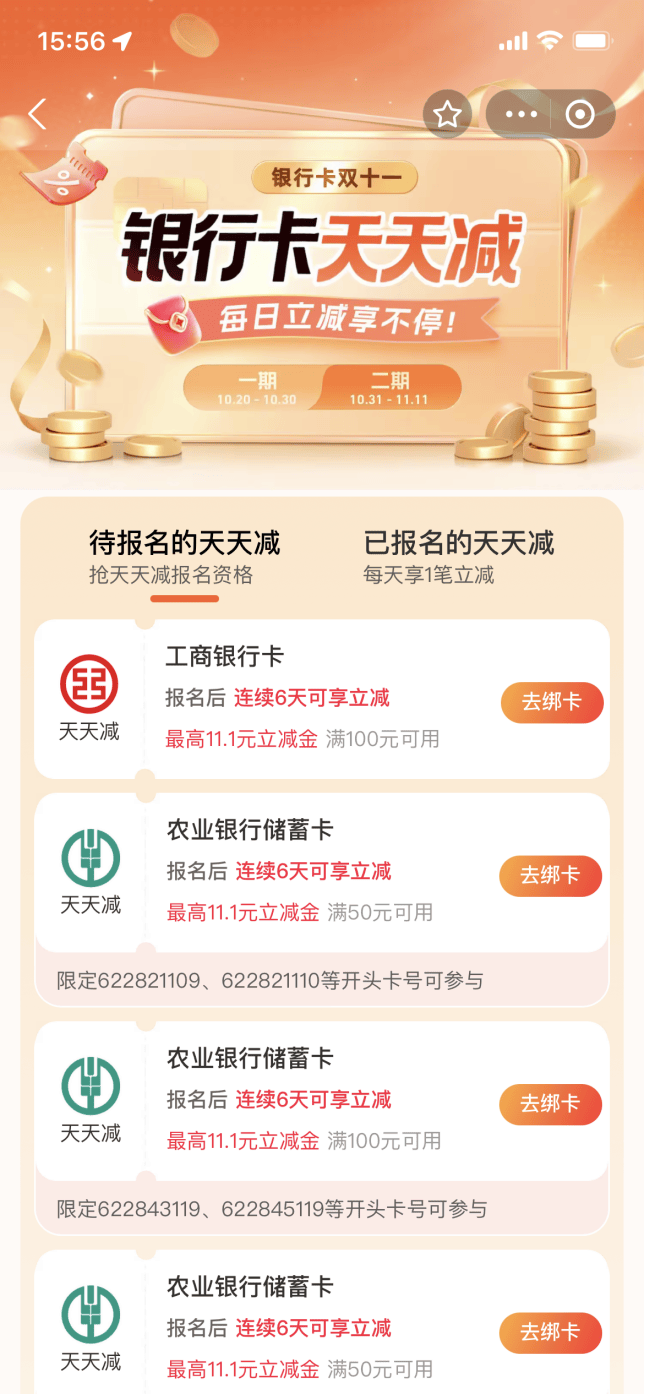
Core Viewpoint - The annual Double Eleven shopping season has officially started, with major commercial banks launching various promotional activities to stimulate consumer spending and boost business before the year-end [1][2]. Group 1: Promotional Activities by Banks - Major banks such as China Construction Bank, Bank of China, Agricultural Bank of China, and others have introduced cashback, discounts, installment benefits, and exclusive offers to attract consumers [1]. - Construction Bank offers a maximum discount of 400 yuan for credit card customers using installment payments on platforms like Alipay and Taobao, while Bank of China provides a random discount of up to 118 yuan for transactions made through Alipay [2]. - Other banks, including China Merchants Bank and Ping An Bank, have also launched various cashback and discount campaigns to engage customers during this shopping season [2]. Group 2: Strategic Insights - Experts suggest that the banks' promotional strategies represent a cost-effective method to acquire and retain customers, activating dormant accounts with low-cost random discounts [5]. - The focus on marketing during peak shopping seasons aims to enhance the usage of bank cards over third-party payment channels, thereby driving growth in credit and debit card transactions [5]. - Recommendations for banks post-Double Eleven include offering temporary credit limit increases and integrating with government consumption voucher programs to enhance customer experience and engagement [5].



上市银行净息差悬于1.3%,银行传统盈利模式或宣告终结
Tai Mei Ti A P P· 2025-11-08 00:44
Core Insights - The A-share banking sector reported a total operating income exceeding 4.3 trillion yuan for the first three quarters, with the six major state-owned banks achieving a profit scale of 1.07 trillion yuan, indicating strong performance despite underlying structural issues [1][2] - The net interest margin (NIM) has shown signs of stabilization, yet remains at historically low levels, with retail loan delinquency rates continuing to rise, highlighting potential long-term challenges for the banking industry [1][4] Group 1: Net Interest Margin Trends - The banking sector's NIM showed a slight recovery in Q3 2025, with Jiangyin Bank reporting a NIM of 1.56%, up 2 basis points from Q2, and Ruifeng Bank at 1.49%, up 3 basis points, contributing to a 6.12% year-on-year increase in net interest income [1][2] - Despite short-term stabilization, the long-term trend of declining NIM persists, with the average NIM for commercial banks at 1.42% in Q2 2025, down 0.12 percentage points year-on-year [2][3] Group 2: Asset Quality and Retail Loan Risks - The overall asset quality of the banking sector appears stable, with most banks maintaining non-performing loan (NPL) ratios below 1.5%, but retail loans are becoming a high-risk area, with consumer loan NPL rates rising to 1.29% as of Q2 2025 [4][5] - The increase in retail loan delinquency is attributed to employment pressures affecting borrowers' income stability, leading to heightened "co-borrowing" risks, where clients with multiple loans face significantly higher delinquency rates [4][5] Group 3: Business Structure and Revenue Sources - Traditional lending remains a dominant revenue source for banks, but there is a growing need for diversification into intermediary services, as evidenced by a 4.60% year-on-year increase in net fee and commission income for A-share listed banks [6][7] - The shift towards a dual-driven model of "lending + wealth management" is essential for improving profitability in retail banking, requiring long-term customer cultivation and ecosystem development [6][7] Group 4: Non-Performing Loan Management - The improvement in NPL ratios is largely driven by increased asset disposal efforts, with a significant rise in the volume of bad debt write-offs and transfers, indicating a proactive approach to managing asset quality [7][8] - However, the reduction in NPLs does not eliminate long-term risks, particularly in the real estate sector, where NPL rates remain elevated, and smaller banks face greater challenges due to concentrated lending practices [8][9]
大家要有心理准备了,接下来,金价很可能这样走?
Sou Hu Cai Jing· 2025-11-07 17:11
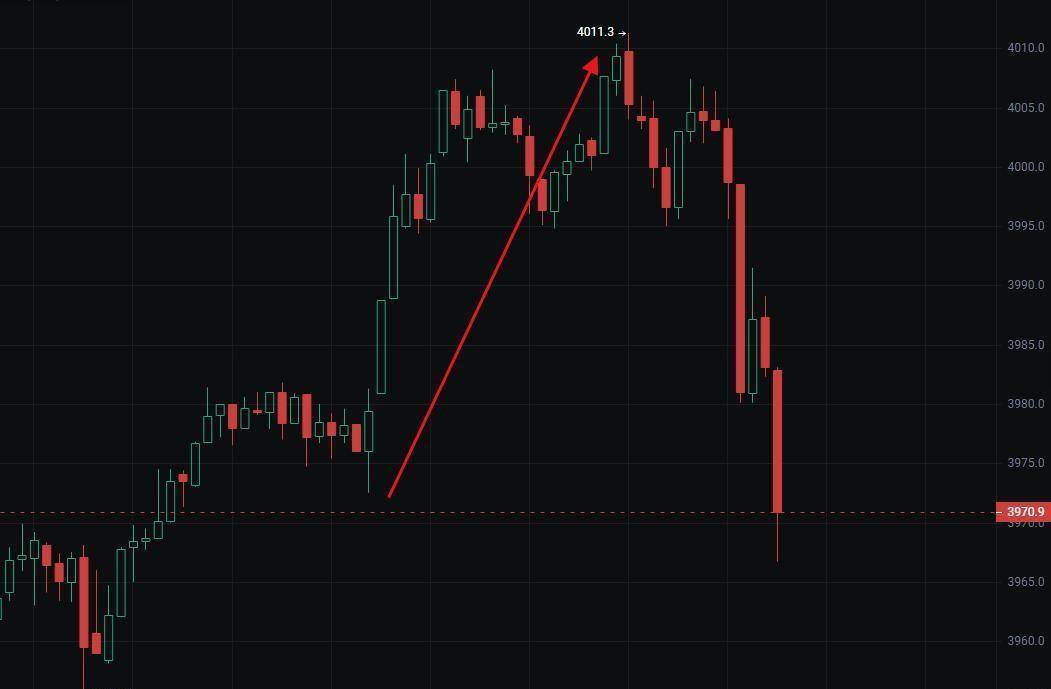
Core Viewpoint - The gold market experienced significant volatility, with prices surging to over $4010 before retreating to around $3966 due to a strong dollar index [1][3]. Price Movements - Gold prices fluctuated dramatically, with international gold prices reported at $3988.22 per ounce and domestic prices at 913.03 yuan per gram [3]. - The price of gold jewelry in brand stores ranged from 1230 to 1261 yuan per gram, while the wholesale market in Shenzhen offered prices as low as 984 yuan per gram, indicating a brand premium of up to 25% [3]. Market Dynamics - The gold recycling market quoted prices at 900 yuan per gram, with varying rates for different purities [5]. - Bank gold bars were priced lower, with Industrial and Commercial Bank of China offering 930.16 yuan per gram, making them more suitable for investment purposes due to lower fees [5]. Investor Behavior - There has been an increase in inquiries about gold ETFs and investment bars, particularly among older investors concerned about policy changes [5]. - Central banks globally have continued to purchase gold, with a net acquisition of 634 tons in the first three quarters of 2025, providing a hidden support level for gold prices around $3960 [5]. Economic Indicators - Despite strong U.S. employment data, market demand for gold as a safe haven remained robust [5]. - The market maintains a 62.5% probability of interest rate cuts, which supports the long-term bullish outlook for gold [7]. Technical Analysis - Gold is currently oscillating between $3966 and $4012, with resistance at $4031-$4050 and support at $3770-$3800 [7]. - Short-term price movements are expected to remain strong, with potential fluctuations based on U.S. economic data [7]. Long-term Outlook - The ongoing geopolitical tensions and the trend of "de-dollarization" are expected to provide long-term support for gold prices [9]. - The potential for a bull market similar to the 1970s is highlighted, with possible annual gains exceeding 100% under extreme conditions [7][9]. Investment Recommendations - Short-term investors are advised to maintain light positions and set strict stop-loss orders, while long-term investors can consider gold ETFs or physical gold with a maximum allocation of 15% of their portfolio [11]. - For personal use, it is recommended to choose wholesale gold or bank gold bars to avoid high brand premiums [11].
吉林省首单科技创新债券落地
Zhong Guo Jing Ji Wang· 2025-11-07 14:53
Group 1 - Jilin Capital successfully issued "25 Jilin Capital MTN002 (Sci-tech Bond)" with an issuance amount of 500 million yuan, a term of 5 years, and a coupon rate of 2.5%, marking the first successful issuance of a sci-tech bond in Jilin Province's interbank market and the first by an equity investment institution in Northeast China [1] - The People's Bank of China (PBOC) Jilin Branch is actively promoting the issuance of sci-tech bonds as part of the national strategy to enhance technological innovation and develop new productive forces [2][4] - Jilin Capital, as the only state-owned capital operation platform in Jilin Province, focuses on supporting the development of technology-driven innovative enterprises and strategic emerging industries through direct equity investment and fund investment [1] Group 2 - The PBOC Jilin Branch is implementing measures to support the issuance of sci-tech bonds, including establishing a project reserve library and conducting policy promotion to assist local enterprises in financing through bond issuance [2][3] - A risk-sharing mechanism for sci-tech bonds is being developed, involving commercial banks and credit enhancement institutions to provide support through credit protection tools and direct purchases [3] - The PBOC Jilin Branch plans to continue supporting qualified financial institutions, technology enterprises, and private equity institutions in issuing sci-tech bonds to inject strong momentum into the development of new productive forces in Jilin [4]
亿元级资产包频“上新”,年底银行加速出清不良资产
Hua Xia Shi Bao· 2025-11-07 12:16
Core Viewpoint - The acceleration of bad asset transfers by banks is aimed at improving financial statements and capital utilization, providing more support for future business expansion and strategic planning [2][4]. Group 1: Bad Asset Transfer Trends - In the fourth quarter, banks are increasingly announcing the transfer of bad loans, with several major banks, including state-owned and joint-stock banks, participating in this trend [3][5]. - In October, Bohai Bank and Guangzhou Rural Commercial Bank initiated significant asset transfers, with Bohai Bank offering nearly 700 billion yuan in debt assets and Guangzhou Rural Commercial Bank proposing over 189 billion yuan [3][4]. - By early November, nine banks had listed 23 bad asset packages totaling over 37 billion yuan, indicating a growing trend in bad asset transfers [3][4]. Group 2: Impact on Financial Metrics - The transfer of bad assets allows banks to clear long-term capital-occupying and poorly performing assets, effectively reducing the non-performing loan (NPL) ratio and improving asset quality [4][7]. - Data from the financial regulatory authority shows that banks disposed of 1.5 trillion yuan in bad assets in the first half of the year, a year-on-year increase of 123.6 billion yuan, leading to a decrease in both the balance of bad assets and the NPL ratio [4][6]. Group 3: Individual Loan Bad Asset Market - The demand for transferring individual loan bad assets is increasing, with the scale of batch transfers reaching 37.04 billion yuan by the end of the first quarter, a year-on-year surge of 761.4% [6][7]. - In November, 17 out of 23 bad asset packages transferred were individual loans, highlighting the growing focus on this segment [6][7]. - Analysts suggest that the transfer of individual bad loans is a normal part of banking operations, initiated in response to regulatory changes and market conditions [6][7].

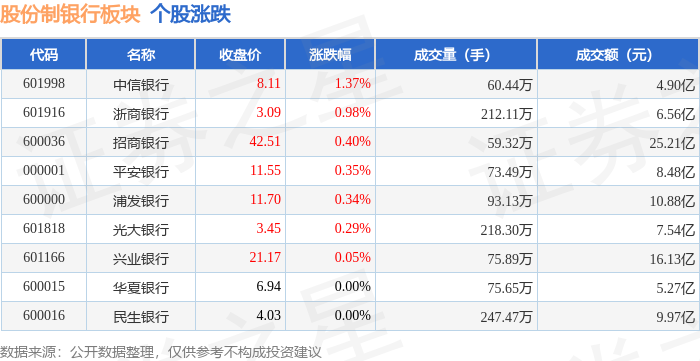
股份制银行板块11月7日涨0.42%,中信银行领涨,主力资金净流出1513.37万元
Zheng Xing Xing Ye Ri Bao· 2025-11-07 08:37
Core Insights - The banking sector saw a slight increase of 0.42% on November 7, with CITIC Bank leading the gains [1] - The Shanghai Composite Index closed at 3997.56, down 0.25%, while the Shenzhen Component Index closed at 13404.06, down 0.36% [1] Banking Sector Performance - CITIC Bank's closing price was 8.11, with a rise of 1.37% and a trading volume of 604,400 shares, amounting to a transaction value of 490 million [1] - Other notable banks included Zhejiang Commercial Bank at 3.09 (up 0.98%), China Merchants Bank at 42.51 (up 0.40%), and Ping An Bank at 11.55 (up 0.35%) [1] - The overall trading volume for the banking sector showed mixed results, with some banks experiencing slight increases while others remained flat or decreased [1] Fund Flow Analysis - The banking sector experienced a net outflow of 15.13 million from institutional investors, while retail investors saw a net inflow of 18.1 million [1] - Specific banks like China Merchants Bank had a net inflow of 17.9 million from institutional investors, while CITIC Bank faced a net outflow of 24.62 million from retail investors [2] - The overall trend indicates a divergence in fund flows, with institutional investors pulling back while retail investors are more active in the sector [2]