红旗连锁

Search documents
被奶茶做局!播放破亿的古茗之歌要把Z世代变成Good世代?
新消费智库· 2025-06-16 11:05
Core Viewpoint - The article discusses the innovative marketing strategies of the tea brand Guming, particularly its use of catchy theme songs and social media engagement to connect with younger consumers, especially Generation Z [5][7][22]. Group 1: Brand Engagement and Marketing Strategies - Guming has successfully leveraged social media platforms like Douyin to create viral content, including a catchy theme song that resonates with young consumers [7][11]. - The brand's theme song, "Good me," serves as a motivational anthem for consumers, particularly students preparing for exams, enhancing its emotional connection with the audience [22][36]. - Guming's marketing approach emphasizes "freshness" and "vitality," aiming to create a lively brand image that appeals to younger demographics [8][25]. Group 2: Product and Pricing Strategy - Guming has introduced a "5A Fresh Standard" to ensure high-quality ingredients and preparation methods, positioning itself as a premium yet affordable option in the tea market [25][34]. - The brand has launched several competitively priced products, such as a 1 yuan "ice water" and a 2.5 yuan "fresh lemon water," to attract cost-conscious consumers while driving sales [33][34]. - Guming aims to become the leading beverage brand in China, competing directly with established players like Mixue Ice Cream and Tea [28][34]. Group 3: Future Growth and Expansion - Guming's founder, Wang Yunan, has expressed ambitions to surpass Mixue in market share, indicating a long-term growth strategy focused on brand strength and customer loyalty [30][36]. - The company currently operates 9,920 stores and aims to reach a target of 30,000 stores, emphasizing quality over quantity in its expansion efforts [30][34]. - Guming's marketing and operational strategies are designed to create a seamless online-to-offline experience, enhancing customer engagement and brand loyalty [26].

避免“内卷式”竞争,促进平台经济健康有序发展
Di Yi Cai Jing· 2025-06-15 13:00
Core Viewpoint - The Chinese food delivery market is experiencing "involutionary" competition, where platforms and merchants are increasing investments without significant improvements in overall market efficiency, leading to resource misallocation and waste [1][2]. Group 1: Market Dynamics - The food delivery industry exhibits typical network economy characteristics, where larger platforms can reduce average delivery costs through increased order and rider density, but this leads to a "subsidy arms race" among competitors [2][3]. - Recent estimates indicate that daily order volume in the food delivery market has peaked at 140 million, significantly up from 100 million year-on-year, with a notable shift towards lower-priced items like beverages [3][4]. Group 2: Economic Theories - The "lemon market" theory explains how information asymmetry leads consumers to rely on price as a primary decision factor, resulting in a market distortion where low-quality offerings prevail [4][5]. - The "disease of cost disease" theory highlights how excessive reliance on subsidies distorts market competition, leading to resource misallocation and inhibiting innovation and quality improvements [6][7]. Group 3: Challenges for Small Merchants - Small merchants face a "prisoner's dilemma" in the price war, where participating may yield short-term sales but create long-term low-price expectations, making it difficult to return to reasonable pricing [7][8]. - The competitive pressure forces small merchants to cut costs, often compromising quality and service, which can damage brand reputation and customer loyalty over time [7][8]. Group 4: Social Costs - The negative impacts of "involutionary" competition extend beyond business, leading to irrational consumption patterns and potential health issues due to increased intake of sugary beverages [9]. - Employment quality is declining as businesses reduce labor costs, affecting workers' rights and job security, while overall market resources are wasted in unproductive competition [9][10]. Group 5: Path to Resolution - To break the cycle of "involutionary" competition, the industry needs to focus on infrastructure improvements and regulatory frameworks that promote sustainable practices rather than relying solely on price subsidies [10][11]. - Enhancing operational efficiency through better logistics and inventory management, along with fostering innovation and quality service, is essential for long-term industry health [10][11].

为什么星巴克降到23元,还是没人买单?
阿尔法工场研究院· 2025-06-15 11:39
Core Viewpoint - Starbucks has implemented a price reduction strategy in China for the first time in over 20 years, lowering prices by an average of 5 yuan for several non-coffee beverages, but consumer response has been lukewarm, indicating that the reduction may not be sufficient to attract price-sensitive customers [3][4][10]. Pricing Strategy - Starting June 10, Starbucks China reduced prices on over ten non-coffee beverages, with the lowest price now at 23 yuan [3]. - This price adjustment is seen as a response to competitive pressures from local brands like Luckin Coffee and others, which offer lower-priced alternatives [10][12]. - Despite the price cut, sales of the reduced items did not show significant improvement, suggesting that the price point remains too high for many consumers [5][7]. Market Competition - The competitive landscape includes brands like Luckin Coffee, Bawang Tea, and Mixue Ice Cream, which offer products at lower price points, making it difficult for Starbucks to compete effectively [7][10]. - Consumers in lower-tier cities are increasingly favoring brands that provide better value for money, which poses a challenge for Starbucks' premium positioning [12][19]. Target Market - Starbucks aims to capture a share of the afternoon tea market by appealing to price-sensitive consumers, particularly in lower-tier cities where the potential for growth is significant [9][12]. - The target demographic includes young consumers from lower-tier cities who are more price-sensitive and prefer sweeter beverages [17][18]. Strategic Adjustments - Starbucks has accelerated its expansion into lower-tier markets since 2022, with plans to cover 1,000 county-level administrative regions by March 2025 [14]. - The company is also exploring strategic partnerships and potential equity sales to enhance its operational efficiency and market penetration [24][25]. Financial Performance - Starbucks China reported a revenue of 21.06 billion yuan for the 2024 fiscal year, reflecting a year-on-year decline of 1.4%, while Luckin Coffee surpassed it with 34.475 billion yuan [21]. - The company is facing challenges in maintaining its high-end brand image while also competing in a price-sensitive market [21][26]. Future Outlook - The effectiveness of the price reduction strategy and its impact on sales will be closely monitored, with potential adjustments based on consumer feedback [11][26]. - The ongoing exploration of strategic partnerships may provide Starbucks with the necessary resources to navigate the competitive landscape in China [24][25].


投资策略周报:关于港股和消费的两大核心问题-20250615
KAIYUAN SECURITIES· 2025-06-15 05:13
Group 1: AH Premium Dynamics - The report discusses the current state of the AH premium, indicating that it has significantly narrowed and may have further room to decline, potentially returning to the lower levels seen between 2016-2019 [1][10][30] - The narrowing of the AH premium is attributed to two main factors: a record net inflow of southbound funds and a temporary improvement in liquidity conditions, which have alleviated pressure on H-share valuations [1][10][24] - The report highlights that as of June 12, 2025, the AH premium index was at 128.05, notably below the established mid-point of 140.68 since 2020, with the overall premium of A-shares over H-shares dropping to 27%, a five-year low [10][12][30] Group 2: Consumer Sector Insights - The report emphasizes that the core driver of the current consumer market rally is not merely a dichotomy between "new consumption" and "traditional consumption," but rather a deeper structural change, with Delta G (marginal change in profit growth) being a key indicator [2][32][36] - Three investment themes are proposed based on Delta G: focusing on sectors with improved economic forecasts, sectors with significant upward revisions in profit forecasts, and industries showing signs of profit recovery, particularly those transitioning from negative to positive growth [2][41][56] - Specific sectors highlighted for their structural opportunities include beverages, e-commerce, motorcycles, personal care products, and packaging, with notable profit growth expected in these areas [2][41][56] Group 3: Investment Strategy Recommendations - The report suggests a diversified investment strategy focusing on domestic consumption, technology growth, cost improvement sectors, and structural opportunities in international markets, particularly in light of easing geopolitical risks [3][64] - The recommended sectors for investment include clothing, automobiles (including electric two-wheelers), general retail, personal care products, food and beverage, and new retail, with a focus on areas showing marginal profit growth improvement [3][64] - The report also advises caution regarding exposure to high geopolitical risk sectors, suggesting a preference for stable dividend stocks and gold as long-term holdings [3][64]
新茶饮,5月开店2178家
3 6 Ke· 2025-06-15 01:18
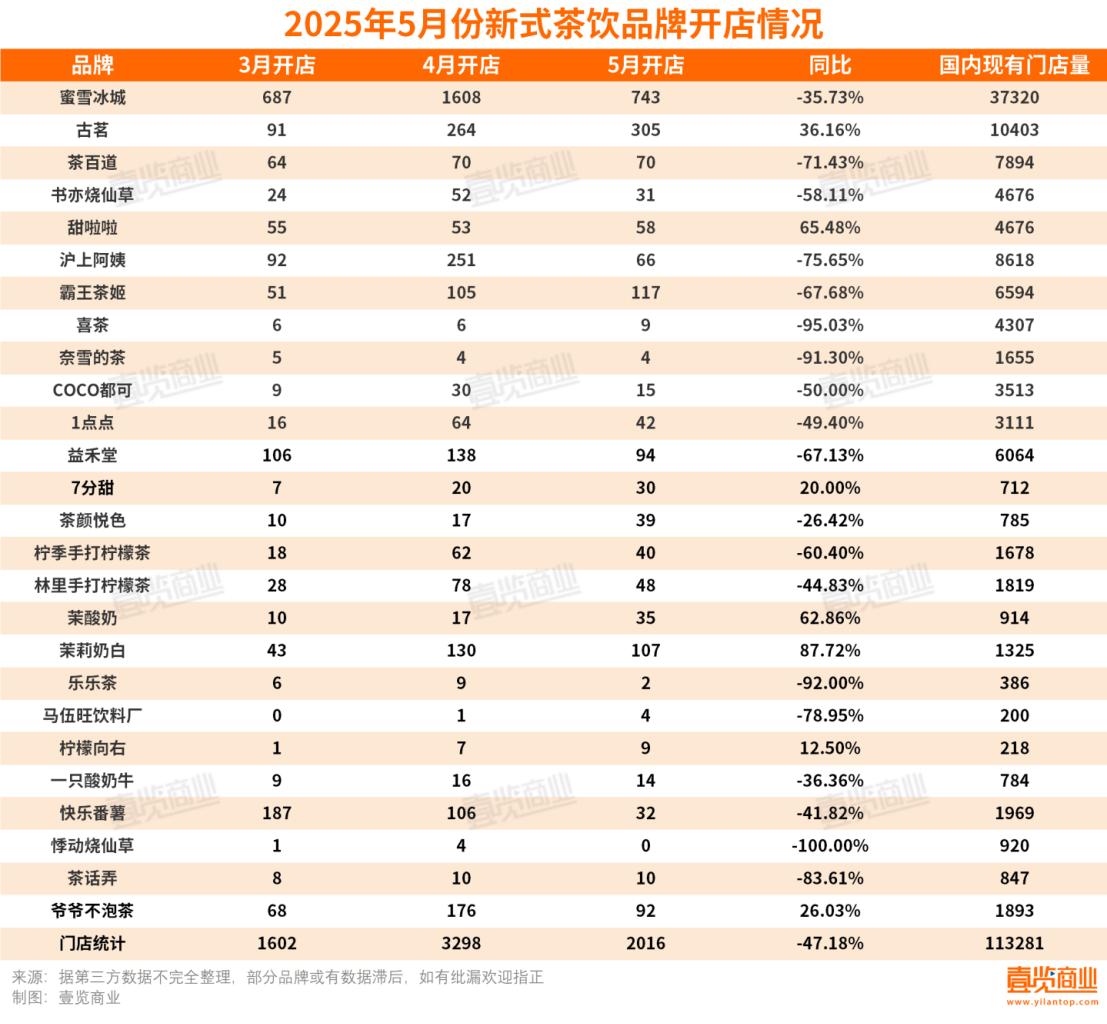
Core Insights - The new tea beverage market is entering a "preparation period" ahead of the Dragon Boat Festival and summer season, with a significant decrease in new store openings in May 2025 compared to previous months and the same period last year [1][4]. Store Opening Trends - In May 2025, 26 new tea beverage brands opened a total of 2016 stores, a decrease of 38.87% month-on-month and 47.18% year-on-year [1][3]. - The total number of stores in the industry reached 113,281, with an increase of 1,029 stores compared to April [1]. - Major brands like Mixue Ice City opened 743 new stores in May, although this was a decrease of approximately 865 stores from April [4]. Brand Performance - Mixue Ice City remains the leader in store openings, followed by Gu Ming with 305 new stores, marking a year-on-year increase of 36.16% [4][7]. - Other brands such as Bawang Chaji and Yihe Tang also showed stable performance with 117 and 94 new stores respectively [4][8]. - Brands like Hey Tea and Nayuki continued to open stores at a slow pace, with only 9 and 4 new stores in May [4][7]. Product Development and Marketing - In May, 26 brands launched approximately 105 new SKUs, an increase of 17 from April, indicating a focus on product innovation [8][11]. - The most popular new product ingredients included peach and bayberry, with several brands introducing related products [11]. - Marketing strategies are shifting from collaboration-driven promotions to influencer marketing, with 7 brands engaging in celebrity or KOL partnerships in May [12]. Industry Dynamics - The industry is experiencing a more differentiated expansion among leading brands, with Gu Ming entering the "10,000 store club" [7]. - Tea Baidao is facing store contraction despite opening 70 new stores, with a net decrease of 104 stores compared to April [7]. - The overall marketing approach is transitioning from heavy reliance on collaborations to a more refined focus on direct sales impact and private domain traffic [12].

从8元奶茶到校园火锅,餐饮品牌争夺高校餐桌
第一财经· 2025-06-14 12:46
Core Viewpoint - The article discusses the growing competition among food and beverage brands in the university market, highlighting the significant market potential and the strategies companies are employing to capture the young consumer base [1][6]. Group 1: Market Overview - The Chinese university dining market reached a scale of 483.28 billion yuan in 2023, with a compound annual growth rate (CAGR) of 31.6%. It is expected to grow to 544 billion yuan in 2024 and surpass 600 billion yuan in 2025 [7]. - The market is characterized by a coexistence of on-campus dining (55.5%) and off-campus social dining (44.5%), indicating a competitive yet complementary landscape [10]. Group 2: Company Strategies - Brands like Bawang Tea and Haidilao are entering university campuses to establish a presence, with Bawang Tea's first campus store at Tsinghua University selling over 2,200 cups on its opening day [7]. - Nova Coffee is adapting to seasonal trends and consumer preferences by offering innovative coffee products and exploring partnerships with universities for low-investment, high-return business models [5]. Group 3: Consumer Behavior - University students are seen as a stable consumer base, with brands aiming to "occupy the mind" of young consumers to convert them into long-term customers [12][13]. - The shift in consumer behavior is evident as students transition from parental purchasing decisions to independent choices, with increased disposable income allowing for higher-quality brand selections [13]. Group 4: Challenges and Considerations - While there is potential for brands to convert university students into long-term customers, challenges include the limited spending power of students and the influence of trends and social factors on their preferences [14]. - Brands must continuously innovate their products and services to maintain relevance and avoid losing consumer interest once the novelty wears off [14].
7家消费公司拿到新钱,影石上市首日涨超270%,智能眼镜销量暴涨|创投大视野
3 6 Ke· 2025-06-14 12:39
Group 1: Investment Activities - Bepei Technology completed Pre-A round investment led by Shunwei Capital, raising nearly $10 million in total funding [1] - Shiok Burger announced Pre-A round financing led by AC Ventures, with existing shareholders increasing their stakes, achieving profitability after 12 months of growth [2] - Feixiong Lingxian completed nearly 100 million yuan in C round financing, providing comprehensive services in the frozen goods supply chain [3] - Wuxian Exploration secured 16 million yuan in angel round financing, focusing on innovative fruit tea products [4] - Maiba obtained 10 million yuan in angel round financing, offering a 24-hour self-service KTV model [5] - Renren Rental completed several hundred million yuan in D1 round financing, leveraging blockchain and AI technologies for a circular rental service platform [6] - Jason Entertainment received strategic investment from Hengdian Capital, focusing on IP copyright operations and content investment [7] Group 2: Corporate Developments - Ximalaya confirmed acquisition rumors by Tencent Music, maintaining brand independence and operational continuity post-acquisition [8] - Yingshi Technology debuted on the Sci-Tech Innovation Board, with a first-day stock price increase of over 270%, achieving a market cap exceeding 70 billion yuan [9] Group 3: Market Trends - Nova Coffee partnered with Lawson convenience stores to enhance market penetration, launching promotional offers and coffee products [12] - The second-hand market is shifting towards trust-based competition, with the opening of "Super Zhuangzhuang," a multi-category second-hand store [13] - The smart glasses market is experiencing significant growth, with global shipments expected to reach 12.8 million units by 2025, and China's market projected to exceed 2.75 million units [13][14] - In the restaurant sector, consumer preferences are shifting towards higher-rated establishments, with a 15.4% increase in average dining orders and a notable rise in the share of high-quality dining options [15]

从8元奶茶到校园火锅,餐饮品牌争夺高校餐桌
第一财经· 2025-06-14 11:52
Core Viewpoint - The article discusses the growing competition among food and beverage brands in the university market, highlighting the potential for significant revenue generation and brand loyalty among young consumers [1][5][11]. Market Overview - The Chinese university dining market reached a scale of 483.28 billion yuan in 2023, with a compound annual growth rate (CAGR) of 31.6%. It is expected to grow to 544 billion yuan in 2024 and surpass 600 billion yuan in 2025 [6][8]. - The market is characterized by a coexistence of on-campus dining services (55.5%) and off-campus social dining (44.5%), indicating a competitive yet complementary landscape [8]. Consumer Behavior - University students are increasingly drawn to innovative food and beverage options, with brands like Nova Coffee and Haidilao adapting their offerings to cater to this demographic [4][7]. - The campus environment serves as a "third space" for students, combining dining with social interaction, which enhances brand engagement [7][10]. Brand Strategy - Brands view universities as critical venues for "mind share" acquisition, aiming to convert students into long-term customers. The transition from student to professional consumer is seen as a key opportunity [11][12]. - The coffee market is particularly targeted, with 90s and 00s generations showing a strong inclination towards coffee consumption, making campuses a strategic focus for brands [11]. Challenges and Considerations - While there is potential for long-term customer conversion, brands face challenges such as limited student purchasing power and shifting consumer preferences influenced by trends and social factors [12]. - Continuous innovation in products and services is essential for brands to maintain relevance and avoid losing student interest [12].

南农晨读 | 沃野田畴
Nan Fang Nong Cun Bao· 2025-06-14 06:01
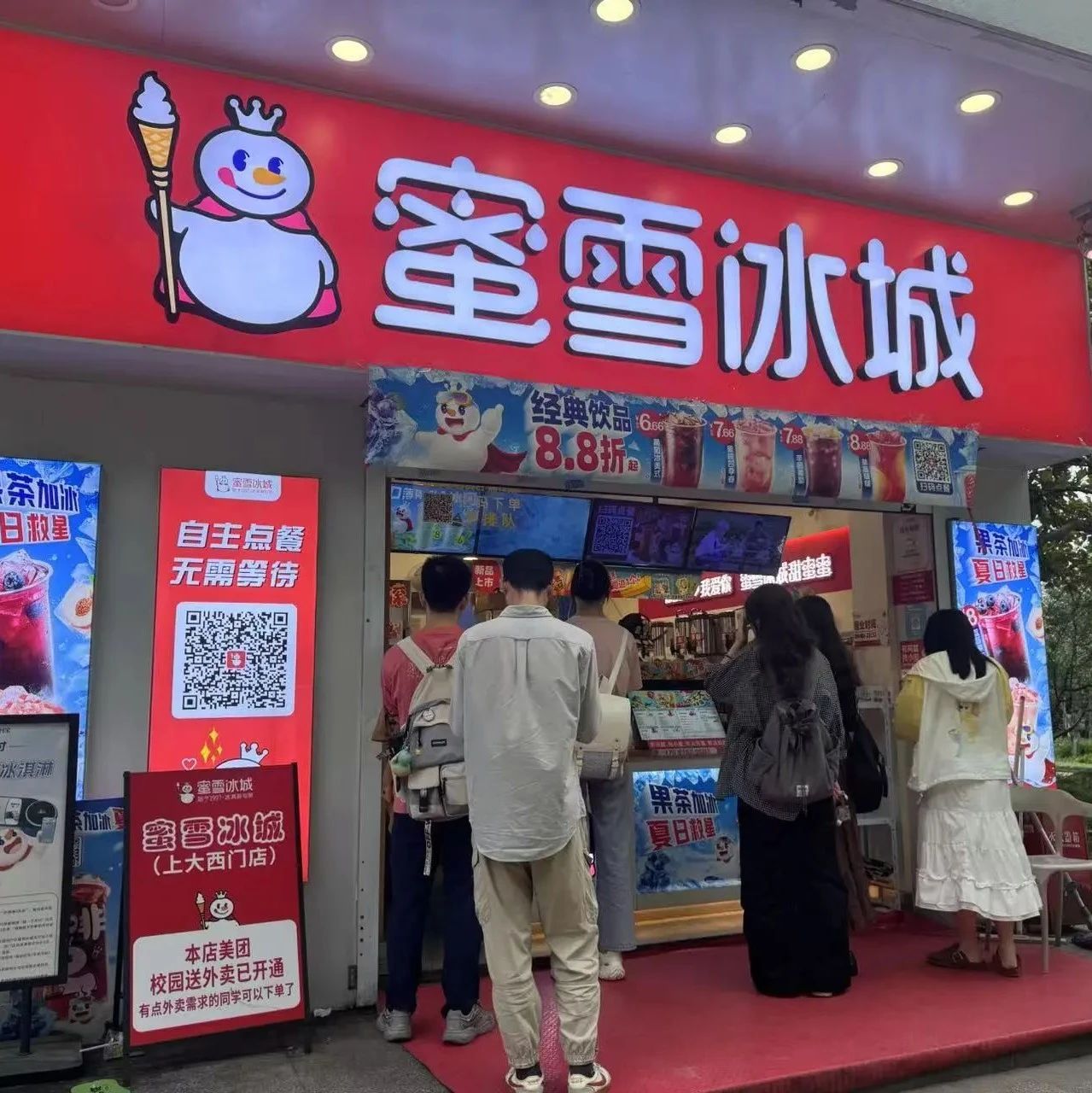
Group 1 - Guangdong's "Zhuhai Year Fish + Lychee" promotional event in Hong Kong resulted in significant sales, totaling 82 million [3][4] - The event showcased a combination of fresh fish and sweet lychees, aiming to penetrate the Hong Kong market [5] Group 2 - A food safety issue arose as the Hong Kong Food and Environmental Hygiene Department reported that a sample from a "Mixue Bingcheng" store exceeded legal limits for coliform bacteria by 70% [7][8][9] - The affected store is located in Shatian, Hong Kong, raising concerns about food safety standards [9] Group 3 - A new initiative in Dongguan involves 00s university students using live streaming to promote local lychee production, enhancing visibility and sales [12][13][14] - The collaboration between South China Agricultural University and local youth organizations aims to leverage technology for agricultural promotion [15][16] Group 4 - The launch of the "Eight Corner Fortune Box," a unique gift box featuring three premium Guangdong products, aims to promote local specialties [20][22][24] - The design of the box is inspired by palace architecture, symbolizing good fortune and health, making it an ideal gift [23][24] Group 5 - Various scenic spots across the country are offering free or discounted entry to students during the exam season, promoting local tourism [25][26][27] - This initiative encourages students to celebrate their academic efforts while exploring cultural heritage [26][27] Group 6 - The upcoming promotional event for Xinjiang's unique "Muya Ge Apricot" will take place on June 16, featuring live demonstrations and sales [29][30][32] - The event aims to enhance consumer awareness and appreciation of local agricultural products [30][32] Group 7 - The first typhoon of the year, "Butterfly," is expected to bring heavy rainfall to Guangdong, with potential impacts on local agriculture and infrastructure [35][36][38] - The storm is projected to strengthen as it moves towards the northern Gulf region, necessitating preparedness measures [37][40]

星巴克首次直接降价,并非放弃“咖位”
财富FORTUNE· 2025-06-13 13:19
Core Viewpoint - Starbucks China is adopting a different strategy compared to other global markets, focusing on unique market conditions and competitive dynamics [1][5]. Group 1: Strategic Changes - Brian Niccol, the new CEO, aims to fundamentally change the company's strategy by streamlining the menu, reducing discounts, and slowing down new store openings to support transformation [2]. - Starbucks China is not included in the global adjustment plan, as the CEO acknowledges the intense competition in the Chinese market and the need for a clear growth strategy [3][4]. Group 2: Financial Performance - In the second fiscal quarter of 2025, Starbucks China's revenue reached $739.7 million, a 5% year-over-year increase, with same-store sales growing by 4%, reversing a downward trend [4]. - In contrast, North America's same-store sales declined by 4% during the same period, highlighting the importance of the Chinese market for the company [4]. Group 3: Pricing Strategy - On June 10, Starbucks China launched a "Summer Heart Price" promotion, reducing prices of certain non-coffee products by an average of 5 yuan, marking the first time the company has proactively lowered prices in over 20 years [6]. - The price adjustments are not considered a price war, as the discounted products still start at a minimum of 23 yuan, differentiating Starbucks from lower-priced competitors [7]. Group 4: Market Dynamics - The non-coffee product market in China is substantial, with projections estimating the ready-to-drink tea market to reach 368.9 billion yuan by 2025, surpassing the coffee market by 100 billion yuan [7]. - Starbucks is adopting a "coffee + non-coffee" dual-engine model to cater to diverse consumer preferences and enhance product offerings [8]. Group 5: Expansion Plans - Unlike the global strategy of reducing new store openings, Starbucks China plans to continue expanding, with a 9% year-over-year increase in store count in the second fiscal quarter of 2025 [8]. - The company is seeking partners to potentially increase its store count from approximately 8,000 to 20,000, indicating significant growth ambitions in the Chinese market [9][10]. Group 6: Long-term Commitment - Brian Niccol reiterated the immense growth potential in the Chinese market, emphasizing the company's long-term commitment to deepening its presence and development in the region [11].