
一汽集团

Search documents
大明电子:聚焦电动化、智能化 努力成为全球汽车车身电子领域一流企业
Shang Hai Zheng Quan Bao· 2025-10-23 18:39
Core Viewpoint - Daming Electronics Co., Ltd. is focused on the research, development, production, and sales of automotive body electronic control systems, aiming to become a leading comprehensive solution provider in the industry with a strong competitive edge globally [8][24]. Company Overview - Daming Electronics was established in 1989 and is one of the few companies in China specializing in automotive body electronic control systems [8]. - The company has developed a comprehensive product system and has successfully entered the supply chains of well-known foreign brands, establishing a diversified customer matrix [8][9]. Business Operations - The company specializes in automotive electronic components, with a complete product range including driver assistance systems, cockpit central control systems, intelligent optical systems, window control systems, and seat adjustment systems [13]. - Daming Electronics has maintained a high production and sales rate across its product lines, indicating strong market demand and stable operational capabilities [17]. Financial Performance - The company's revenue for 2022, 2023, and the first half of 2025 was 1713.46 million, 2147.35 million, and 1297.32 million respectively, showing continuous growth [20]. - The net profit for the same periods was 150.66 million, 205.47 million, and 114.37 million, demonstrating strong profitability [21]. - The overall gross margin for 2022, 2023, and the first half of 2025 was 20.91%, 20.65%, and 18.13%, respectively, indicating a stable gross profit trend [22]. Research and Development - The company has over 160 patents, with more than 15 being invention patents, showcasing its commitment to innovation [18]. - R&D expenses as a percentage of revenue were 5.77%, 5.30%, and 4.35% for the years 2022 to 2025, reflecting ongoing investment in innovation [23]. Market Position - Daming Electronics has established stable partnerships with major domestic automotive manufacturers and has successfully entered the supply chains of international brands like Ford and Toyota [15]. - The company holds a market share of 12.87% in driver assistance systems and 16.29% in window control systems, indicating a strong competitive position in the domestic market [33]. Future Strategy - The company aims to optimize production capacity and enhance its technological capabilities to strengthen its market position and achieve growth in market share [24]. - Daming Electronics plans to leverage its core technologies and product advantages to become a globally competitive player in the automotive body electronic control systems sector [24][28]. Industry Landscape - The automotive electronics industry is characterized by high concentration, with major players from traditional automotive manufacturing countries dominating the market [30]. - Domestic suppliers have improved their competitiveness due to government support and rapid technological advancements, allowing them to gain recognition from global automotive manufacturers [30]. IPO Objectives - The primary purpose of the IPO is to expand capital scale, enhance market competitiveness, and improve corporate governance and management levels [34]. - The company plans to use the raised funds for expanding production capacity and optimizing operational efficiency [38][40].

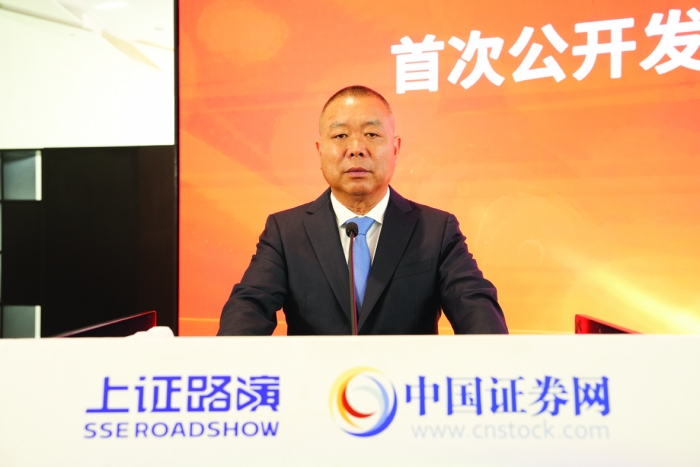
广汽、一汽等均布局“车路云一体化”迎阶段性成果
Mei Ri Jing Ji Xin Wen· 2025-10-23 18:12
Core Insights - GAC Group collaborates with 14 domestic and international automotive and autonomous driving companies to participate in a demonstration event for "Vehicle-Road-Cloud Integration" organized by the National Intelligent Connected Vehicle Innovation Center [1] - The event showcased two key application scenarios: "Cloud-Supported Automatic Emergency Braking" and "Cloud-Supported Green Wave Speed Guidance" [1] - The "Vehicle-Road-Cloud Integration" initiative is expected to significantly support the commercialization of smart public transport and unmanned delivery systems, with a projected industry scale exceeding 300 billion yuan by 2030 [1] Industry Overview - "Vehicle-Road-Cloud Integration" utilizes advanced information and communication technologies to create a cyber-physical system that integrates people, vehicles, roads, and clouds, enhancing traffic safety, energy efficiency, comfort, and operational efficiency [2] - This system allows vehicles to interact with roadside devices and cloud servers, improving safety through real-time risk information sharing and decision-making support [2] - The initiative represents an upgrade from the previous "Vehicle-Road Collaboration" concept, focusing on a holistic design for better synergy between smart vehicles and traffic systems [2] Technological Development - Various regions are actively promoting "Vehicle-Road-Cloud Integration" technology, with significant investments such as Beijing's 9.9 billion yuan project for smart road upgrades [3] - There is ongoing debate in the industry regarding the merits of "Single Vehicle Intelligence" versus "Vehicle-Road-Cloud Integration," with some companies advocating for the former due to lower costs and shorter implementation times [3][4] - GAC Group emphasizes that "Vehicle-Road-Cloud Integration" is a new phase in smart vehicle development, enhancing existing single-vehicle systems with digital infrastructure to overcome perception limitations [3] Market Challenges - Despite policy support and expanding pilot cities, "Vehicle-Road-Cloud Integration" lags behind single-vehicle intelligence in terms of industry enthusiasm, market acceptance, and technological maturity [5] - High costs and long infrastructure development cycles pose significant challenges, leading some companies to pivot towards more popular AI technologies [5][6] - The reliance on government investment for infrastructure and the current inadequacy of roadside technology to meet autonomous driving needs are critical barriers to progress [5][6] Future Directions - Experts suggest a phased approach to promoting "Vehicle-Road-Cloud Integration," starting with closed environments to refine technology before broader implementation [6] - Vehicles must possess standalone intelligent driving capabilities to ensure effective integration with roadside systems, creating a commercial ecosystem that enhances traffic safety [6]

广汽、一汽等均布局,“车路云一体化”迎阶段性成果,万亿赛道将迎来爆发期?
3 6 Ke· 2025-10-22 12:39
Core Viewpoint - GAC Group collaborates with 14 domestic and international automotive and autonomous driving companies to participate in a demonstration event for "Vehicle-Road-Cloud Integration," showcasing applications like "Cloud-Supported Automatic Emergency Braking" and "Cloud-Supported Green Wave Speed Guidance" [1] Group 1: Industry Development - The "Vehicle-Road-Cloud Integration" initiative has gained traction due to multiple factors including policy support, technological advancements, and market demand, with major players like FAW Group, Geely, and Dongfeng also making strategic moves in this area [1] - By 2030, the smart transportation industry in China is expected to exceed 300 billion yuan, with the economic value generated by "Vehicle-Road-Cloud Integration" projected to reach 25,825 billion yuan by 2030 [1] Group 2: Technical Insights - "Vehicle-Road-Cloud Integration" utilizes advanced information and communication technologies to create a cohesive system that enhances traffic safety, energy efficiency, and comfort by integrating vehicles with roadside devices and cloud servers [2] - The system allows for real-time communication of critical risk information beyond the driver's line of sight, significantly improving safety in complex driving scenarios [4] Group 3: Challenges and Controversies - There is ongoing debate in the industry regarding the reliance on "Single Vehicle Intelligence" versus "Vehicle-Road-Cloud Integration," with some companies emphasizing the high costs and long timelines associated with smart road construction [5] - The current state of "Vehicle-Road-Cloud Integration" is hindered by its dependence on government infrastructure investment and the need for improved roadside technology to meet autonomous driving requirements [8][9] - The integration faces challenges such as high costs for smart road upgrades and low connectivity rates for public transport vehicles, which may hinder the formation of a commercial closed loop [8][9]
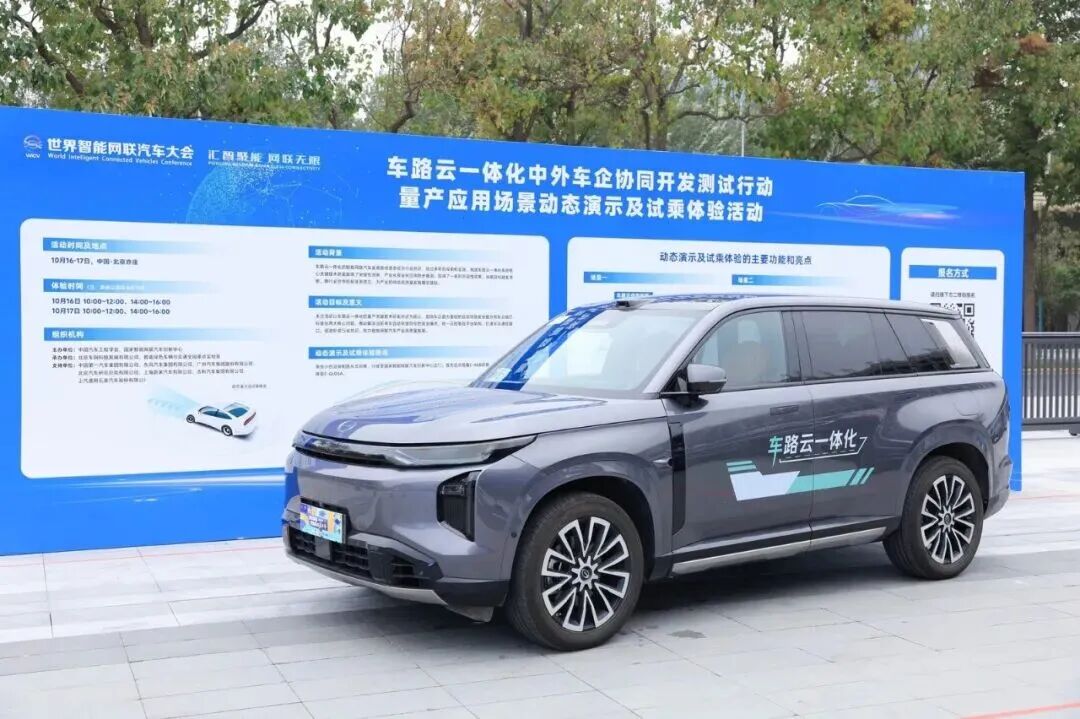
广汽、一汽等均布局!“车路云一体化”迎阶段性成果,万亿赛道将迎来爆发期?
Mei Ri Jing Ji Xin Wen· 2025-10-22 10:04
Core Viewpoint - GAC Group collaborates with 14 domestic and international automotive and autonomous driving companies to participate in a demonstration event for "Vehicle-Road-Cloud Integration," showcasing key applications like "Cloud-Supported Automatic Emergency Braking" and "Cloud-Supported Green Wave Speed Guidance" [1] Group 1: Industry Developments - The "Vehicle-Road-Cloud Integration" initiative aims to unify people, vehicles, roads, and cloud systems using advanced information and communication technologies, enhancing traffic safety and efficiency [2] - The initiative has gained traction due to supportive policies, technological advancements, and market demand, with major players like FAW Group, Geely, and Dongfeng also making strategic moves [1] - By 2030, the smart transportation industry in China is projected to exceed 300 billion yuan, with the economic value of "Vehicle-Road-Cloud Integration" expected to reach 25,825 billion yuan [1] Group 2: Application Scenarios - GAC Group's "Cloud-Supported Automatic Emergency Braking" can provide real-time risk information and decision-making support to enhance driving safety in complex scenarios [3] - "Vehicle-Road-Cloud Integration" is an upgraded version of the previously discussed "Vehicle-Road Collaboration," focusing on a holistic design for better synergy between smart vehicles and traffic systems [3] Group 3: Challenges and Controversies - There is ongoing debate in the industry regarding the reliance on "Single Vehicle Intelligence" versus "Vehicle-Road-Cloud Integration," with some companies emphasizing the high costs and long timelines associated with smart road construction [4] - The current state of "Vehicle-Road-Cloud Integration" is hindered by its dependence on government infrastructure investment and the need for improved roadside technology to meet autonomous driving requirements [7][6] - The high costs associated with implementing "Vehicle-Road-Cloud Integration" may deter consumer adoption, as potential increases in vehicle prices could lead to a lack of commercial viability [7][6] Group 4: Future Directions - Experts suggest a phased approach to promoting "Vehicle-Road-Cloud Integration," starting with closed environments to refine technology before broader implementation [8] - Achieving a balance between "Single Vehicle Intelligence" and "Vehicle-Road-Cloud Integration" is essential for developing a comprehensive and effective transportation system [4]
造车十年 零跑汽车想要撕掉“廉价”标签
Jing Ji Guan Cha Bao· 2025-10-22 03:25
Core Viewpoint - Leap Motor is transitioning from a budget-friendly brand to a higher-end market with the launch of its flagship D19 model, aiming to offer luxury at an accessible price point of around 300,000 yuan [2][3]. Product Development - The D19 is a full-size six-seat SUV with dimensions exceeding 5.2 meters in length, nearly 2 meters in width, and over 3.1 meters in wheelbase, priced significantly higher than previous models [2]. - Leap Motor's product line includes T, B, C, and D series, with the D series positioned as the highest tier [2]. Sales Performance - Leap Motor has achieved monthly sales exceeding 50,000 units recently, with September sales surpassing 60,000 units, making it the top new energy vehicle brand in terms of sales [2]. - Cumulative sales from January to September reached 395,500 units, indicating strong market demand [2]. R&D and Cost Structure - The company emphasizes its robust R&D capabilities, claiming that 65% of the D platform's vehicle costs are self-researched and manufactured, which contributes to cost savings [3]. - Leap Motor's gross margin has improved, reaching 14.1%, with expectations to turn profitable by mid-2025 due to increased sales volume and cost optimization [3]. Technology and Features - The D platform boasts advanced technologies, including over 500 kilometers of electric range, a high-voltage system, and cutting-edge driving assistance features, positioning it competitively in the 300,000 yuan market [4]. Market Strategy and Partnerships - Leap Motor plans to expand the D series to include various vehicle types such as SUVs, MPVs, and sedans, targeting the 300,000 yuan market segment [5]. - Strategic partnerships with Stellantis and FAW Group have been established to enhance international market presence and collaborative development [5]. Competitive Landscape - The D19 will compete with other six-seat SUVs in the 300,000 yuan segment, including models from Li Auto, Aito, and XPeng, indicating a highly competitive environment [5]. - Leap Motor is working on building a premium brand image, recently engaging a celebrity spokesperson to enhance its market presence [5]. Current Development Stage - The company is experiencing a phase of rising sales and improving operational performance, which is crucial for successfully launching the D series [6].


制造强市”,期待更多“一流大学
2 1 Shi Ji Jing Ji Bao Dao· 2025-10-21 04:03
Core Insights - The emergence of new research-oriented universities is reshaping higher education in China, with institutions like Shenzhen University of Technology and Fuyou University achieving high admission scores, surpassing traditional universities in some cases [1][2] - New universities are seen as a part of educational reform rather than direct competitors to traditional institutions, aiming to provide innovative experiences that can be scaled nationally [1][3] Group 1: New University Developments - Fuyou University, established with social funding, is expected to adopt a flexible management model, allowing it to respond quickly to societal needs [2][4] - The university's first four undergraduate programs are closely aligned with national strategic needs and advanced manufacturing talent requirements [2][5] - Ningbo Oriental University of Technology also had a successful first year, with its admission scores closely competing with Zhejiang University, indicating strong demand for its programs [3][6] Group 2: Educational Innovation and Industry Collaboration - Fuyou University has established partnerships with leading companies to create joint laboratories, enhancing its practical education approach [4][5] - The integration of industry needs into academic programs is a common theme among new universities, with a focus on fields like integrated circuits and intelligent manufacturing [4][6] - Shenzhen University of Technology emphasizes a model of "integration of science and education" and "integration of industry and education," linking closely with local industries [6][7] Group 3: Regional Economic Context - Shenzhen and Ningbo are both manufacturing powerhouses with aspirations for high-quality higher education, reflecting a trend of cities investing in educational infrastructure to support economic growth [5][6] - The GDP of Shenzhen is projected to reach 3.68 trillion yuan, with a growth rate of 5.8%, while Ningbo's GDP is expected to be 1.81 trillion yuan, growing at 5.4% [5][6] - The establishment of new universities is seen as a critical step in addressing the educational needs of these rapidly growing urban economies [6][7]



汽车电子龙头本周将申购
Zheng Quan Shi Bao· 2025-10-20 00:19
Core Viewpoint - The upcoming IPO of Daming Electronics focuses on automotive electronic components, with a strong emphasis on partnerships with major domestic and foreign automotive manufacturers [1][2]. Group 1: Company Overview - Daming Electronics specializes in the design, development, production, and sales of automotive body electronic control systems, offering a comprehensive range of solutions [1]. - The company has established stable partnerships with major domestic brands such as Changan Automobile, SAIC Group, BYD, and NIO, as well as foreign brands like Ford and Toyota [1]. Group 2: Financial Performance - The projected revenue for Daming Electronics from 2022 to 2024 is expected to be 1.713 billion, 2.147 billion, and 2.727 billion respectively, with net profits of 151 million, 205 million, and 282 million [2]. Group 3: Market Trends and Innovations - The company is actively expanding into the new energy vehicle sector, with products already applied in various models from brands like BYD and SAIC [2]. - Daming Electronics is conducting research on cutting-edge technologies to enhance product functionality and comfort, aligning with market trends in smart and electric vehicles [2]. Group 4: Fundraising Purpose - The funds raised from the IPO will be used for the construction of a new factory project and to supplement working capital [3].
汽车电子龙头本周将申购
证券时报· 2025-10-20 00:08
Core Viewpoint - The article discusses the upcoming IPO of Daming Electronics, a company specializing in automotive electronic components, highlighting its growth potential and market position in the automotive industry [2][3]. Summary by Sections Company Overview - Daming Electronics focuses on automotive electronic control systems, offering products such as driving assistance systems, cockpit control systems, intelligent optical systems, window control systems, and seat adjustment systems [2]. - The company has established stable partnerships with major domestic and foreign automotive manufacturers, including Changan Automobile, SAIC Group, BYD, and Toyota [2]. Financial Performance - The projected revenues for Daming Electronics from 2022 to 2024 are 1.713 billion, 2.147 billion, and 2.727 billion respectively, with net profits of 151 million, 205 million, and 282 million [3]. Market Trends and Innovations - The company is actively expanding into the new energy vehicle sector, with its products already integrated into various models from brands like BYD and SAIC [3]. - Daming Electronics is conducting research on cutting-edge technologies to enhance product functionality and comfort, aligning with market trends in the automotive industry [3]. Fundraising Purpose - The funds raised from the IPO will be used for the construction of a new factory in Chongqing and to supplement working capital [4]. Recent Market Activity - In October, the A-share market saw three new IPOs with an average increase of 333.4%, indicating a strong market sentiment [4].

打新注意啦!比亚迪、赛力斯小伙伴来了!
Zhong Guo Ji Jin Bao· 2025-10-19 23:33
Group 1: Company Overview - Daming Electronics is a manufacturer specializing in automotive electronic components, focusing on body electronic control systems [1][4] - The company aims to become a leading supplier of comprehensive solutions for automotive body electronic control systems with world-class competitiveness [1] Group 2: Product and Market Position - Daming Electronics offers a variety of products including driver assistance systems, cockpit control systems, intelligent optical systems, window control systems, and seat adjustment systems, characterized by high customization and complexity [1] - The company has established a customer base that includes major domestic brands such as BYD, Changan Automobile, and SAIC Group, as well as foreign brands like Ford and Toyota [4] Group 3: Financial Performance - Projected revenues for Daming Electronics are expected to grow from 17.13 billion CNY in 2022 to 27.27 billion CNY in 2025, with net profits increasing from 1.51 billion CNY to 2.82 billion CNY over the same period [5] - For the first three quarters of 2025, the company anticipates a revenue of 21.47 billion CNY, representing a year-on-year growth of 19.73%, and a net profit of 2.03 billion CNY, reflecting a growth of 5.68% [5] Group 4: Industry Context - Traditional automotive electronic component manufacturers in Japan, the US, and Europe dominate the global market, while Chinese suppliers are numerous but generally less competitive [2]
汽车和汽车零部件行业周报20251019:2025Q3前瞻:销量环比提升,成本端向好-20251019
Minsheng Securities· 2025-10-19 14:20
Investment Rating - The report maintains a positive investment rating for the automotive and automotive parts industry, highlighting potential growth opportunities in the sector [6]. Core Insights - The automotive industry is experiencing a sequential increase in sales and favorable cost conditions, with a notable rise in both total and new energy vehicle sales in Q3 2025 [2][3]. - The report emphasizes the importance of intelligent and globalized breakthroughs in the automotive sector, recommending key players such as Geely, Xpeng, Li Auto, BYD, and Xiaomi Group [4][5]. Summary by Sections 0.1 Passenger Vehicles - Total passenger vehicle sales in Q3 2025 reached 7.686 million units, representing a year-on-year increase of 14.7% and a quarter-on-quarter increase of 8.1% [11][24]. - New energy passenger vehicle sales were particularly strong, with 4.024 million units sold, up 24.2% year-on-year and 10.9% quarter-on-quarter, achieving a penetration rate of 52.4% [11][24]. - The report notes a stable pricing environment, with discounts remaining consistent compared to previous months [25]. 0.2 Auto Parts - The auto parts sector is benefiting from a decrease in raw material costs and shipping fees, which is expected to alleviate cost pressures for companies [3][45]. - Key raw materials such as polypropylene and hot-rolled coil prices have seen significant declines, contributing to improved margins for auto parts manufacturers [45]. 0.3 Heavy Trucks - The heavy truck market is experiencing a boost due to the implementation of trade-in subsidy policies, with wholesale sales reaching 282,000 units in Q3 2025, a year-on-year increase of 58.1% [3]. - New energy heavy truck sales surged by 181.5% year-on-year, indicating strong demand in this segment [3]. 0.4 Motorcycles - The report forecasts a total of 258,000 units for mid-to-large displacement motorcycles in Q3 2025, reflecting an 18.9% year-on-year increase [4]. - Export sales for motorcycles are also strong, with a 50.5% year-on-year increase, driven by growth in the 500-800cc segment [4]. 1.1 Weekly Insights - The automotive sector's performance has been weaker than the overall market, with a 6.1% decline in the A-share automotive sector during the week of October 13-17, 2025 [2]. - The report suggests focusing on key companies such as Geely, Xpeng, and BYD for potential investment opportunities [2][4]. 1.2 Intelligent Electric Vehicles - The report highlights the accelerating growth of intelligent electric vehicles, recommending companies involved in smart driving and smart cockpit technologies [4]. 1.3 Robotics - The report notes the entry of leading companies into the robotics sector, indicating a new era of embodied intelligence [4]. 1.4 Liquid Cooling - The demand for AI is driving the need for higher power density in liquid cooling solutions, positioning it as a necessary choice for high-density applications [4]. 1.5 Motorcycles - The report identifies a trend towards consumer upgrades in the motorcycle segment, recommending leading companies in the mid-to-large displacement category [4]. 1.6 Heavy Trucks - The expansion of trade-in subsidy policies is expected to stimulate demand for medium and heavy trucks, contributing to market recovery [4]. 1.7 Tires - The report emphasizes the ongoing acceleration of globalization in the tire industry, recommending leading and high-growth companies [4].



