
潍柴动力

Search documents
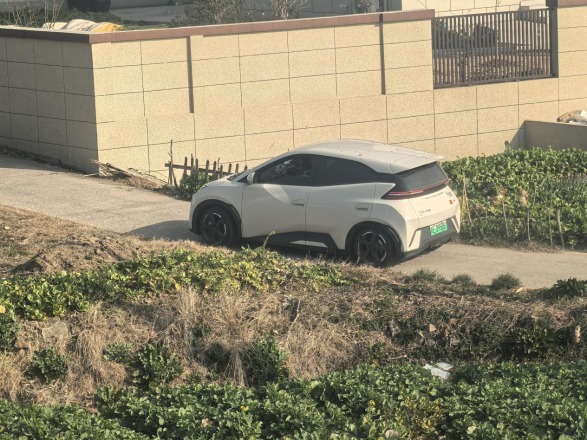
新春走基层|新能源车加速驶向县城 “候鸟车主”春节上演“补能焦虑”
Zhong Guo Jing Ying Bao· 2026-02-21 14:51
Core Insights - The article highlights the rapid penetration of electric vehicles (EVs) into rural markets in China, driven by increasing consumer interest and supportive policies [3][5][6] - Despite the growth in EV adoption, significant challenges remain in charging infrastructure, particularly in rural areas, leading to concerns about charging accessibility for consumers [4][8][12] Group 1: Market Trends - The number of electric vehicle charging facilities in China is projected to reach 20.09 million by the end of 2025, marking a 49.7% year-on-year increase [3] - Public charging facilities are expected to grow to 4.717 million, a 31.9% increase, while private charging facilities will reach 15.375 million, reflecting a 56.2% growth [3] - The increase in charging infrastructure is essential to support the rapid growth of the EV market, with a projected net addition of 7.274 million charging facilities in 2025, a 72.3% year-on-year rise [3] Group 2: Consumer Behavior - Consumers in rural areas are increasingly interested in purchasing EVs, but many have concerns regarding vehicle range, charging costs, and the practicality of ownership [5][6] - Face-to-face consultations and experiences are becoming crucial for potential buyers to understand EVs and alleviate their concerns [5][6] - The presence of various EV brands in rural markets indicates a shift in consumer preferences towards electric vehicles as a viable option for personal transportation [3][5] Group 3: Infrastructure Challenges - Rural areas face significant challenges in charging infrastructure, with many consumers experiencing "charging anxiety" due to limited access to charging stations [4][11] - The distribution of charging facilities is uneven, with economically developed regions having better infrastructure compared to less developed areas [12] - There is a need for tailored solutions to address the unique challenges of rural charging, including the development of slow and fast charging options that cater to local conditions [14][12] Group 4: Policy and Future Outlook - Government policies have been instrumental in promoting EV adoption and the development of charging infrastructure, with a focus on creating a comprehensive support system for rural areas [12][15] - Future strategies should include enhancing the charging network, improving service accessibility, and educating consumers about EV technology to facilitate market growth [12][14] - The integration of renewable energy sources and innovative charging solutions is expected to play a significant role in addressing the charging needs of rural EV users [13][14]

【兴证策略张启尧团队】2026年出海链有哪些投资机会?
Xin Lang Cai Jing· 2026-02-21 01:42
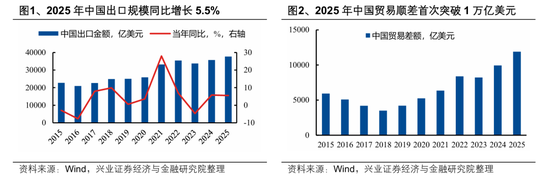
Group 1 - In 2025, China's foreign trade showed strong resilience, with total exports reaching a historical high, growing by 5.5% year-on-year, despite a complex external environment [1][57] - China's trade surplus exceeded $1 trillion for the first time, marking a significant increase of 19.8% year-on-year [1][57] - The net export of goods and services contributed 1.64 percentage points to GDP growth, the second-highest level since 2007, only behind 2021 [3] Group 2 - The diversification of external demand has strengthened, with emerging markets compensating for the decline in exports to the US, which fell by 19.79% year-on-year [6] - Exports to ASEAN, Africa, and the Middle East saw significant growth rates of 25.9%, 13.64%, and 9.7% respectively, contributing positively to the overall export scale [6] - The share of US exports in China's total exports decreased by 3.53 percentage points to 11.15% [6] Group 3 - The product structure of China's foreign trade is shifting towards higher value chains, with high-end products like electrical machinery, machinery, automobiles, and ships being the main export drivers [8] - Traditional light industrial products such as furniture and toys have seen a decline in export scale due to tariff friction and industrial chain relocation [8] Group 4 - The restructuring of global supply chains is creating significant opportunities for Chinese companies, with a notable increase in the number of Chinese enterprises establishing production capacities abroad, reaching 229 in 2025, nearly doubling from 2024 [18] - ASEAN, Mexico, and India are the primary destinations for Chinese production capacity outflows, with ASEAN covering a wide range of industries [18] Group 5 - The AI expansion cycle is a core focus in the Chinese capital market, with significant growth expected in AI computing hardware, supported by macro investment scales and healthy balance sheets of major tech companies [29][30] - The capital expenditure of major cloud service providers is projected to increase significantly, reflecting strong demand for AI computing [35] Group 6 - Cultural and technological value output is becoming a major trend for Chinese enterprises going abroad, with significant growth in IP exports and innovative products in sectors like gaming and new dining [39][41] - The Chinese innovative pharmaceutical sector is increasingly integrated into the global supply chain, with more products commercialized in the US and Europe [41] Group 7 - Key sectors with strong overseas expansion opportunities in 2026 include new energy (batteries, grid equipment), machinery, TMT (technology, media, telecommunications), and innovative pharmaceuticals [46] - The gaming industry is also highlighted for its potential, with significant overseas revenue growth expected [49]




突发! 某大型国有汽车集团原董事长被查
Sou Hu Cai Jing· 2026-02-20 15:48
2026年2月,临近60岁法定退休年龄的方红卫终未等来功成身退。 从车间技术员到陕汽控股董事长,方红卫曾是汽车行业的实干派标杆。1989年清华毕业的他深耕陕汽26载,从基层一步步攀至行业高位,主导陕汽与潍柴 动力战略联姻,为陕汽重卡产业布局奠定关键基石。 这份市场淬炼的产业洞察力本是从政核心优势,却在权力更迭中渐失航向。 2015年转身从政后,方红卫手握政企双重资源,一跃成为西安新能源汽车产业的核心操盘手。 他主导的产业布局推动西安新能源汽车产量跃居全国9.46%,陕汽重卡更抢占中亚市场超40%份额,西安由此跻身全国新能源汽车产业核心城市。 但重大项目审批权背后,权力与资本的近距离接触让政企跨界的身份优势最终异化为贪腐温床。 一边是产业报国的初心,一边是权力寻租的迷途,方红卫的坠落直指政企跨界治理的核心病灶。 作为兼具产业视野和行政权力的管理者,其本应成为打通产业政策与市场实践的桥梁,却令权力突破制度红线。 汽车产业是实体经济核心赛道,新能源转型更是国家战略。 无论是深耕市场的企业管理者还是执掌规划的行政决策者,唯有将权力锁进制度笼子,让产业发展回归市场本质,才能真正行稳致远。 方红卫的迷途既是个人悲剧,更是 ...

智通AH统计|2月18日
智通财经网· 2026-02-18 08:20
Group 1 - The article highlights the top three companies with the highest AH premium rates: Northeast Electric (00042) at 785.25%, Beijing Jingcheng Machinery Electric (00187) at 291.45%, and Sinopec Oilfield Service (01033) at 284.04% [1] - The bottom three companies with the lowest AH premium rates are CATL (03750) at -16.62%, WuXi AppTec (02359) at -6.17%, and China Merchants Bank (03968) at -3.27% [1] - The article provides a detailed ranking of the top ten and bottom ten AH stocks based on their premium rates and deviation values, indicating significant disparities in market valuations between A-shares and H-shares [1][2] Group 2 - The top three companies with the highest deviation values are Beijing Jingcheng Machinery Electric (00187) at 23.16%, Dongjiang Environmental Protection (00895) at 18.78%, and Zhongzhou Securities (01375) at 16.54% [1] - Conversely, the companies with the lowest deviation values include Morning Paper (01812) at -52.60%, Junda Co., Ltd. (02865) at -34.18%, and Changfei Optical Fiber Cable (06869) at -34.18% [1][2] - The article emphasizes that the deviation value represents the difference between the current premium rate and the average premium rate over the past 30 days, providing insights into market trends [2]

新春走基层|政策暖风频吹,新能源车加速"下沉"
2 1 Shi Ji Jing Ji Bao Dao· 2026-02-16 07:33
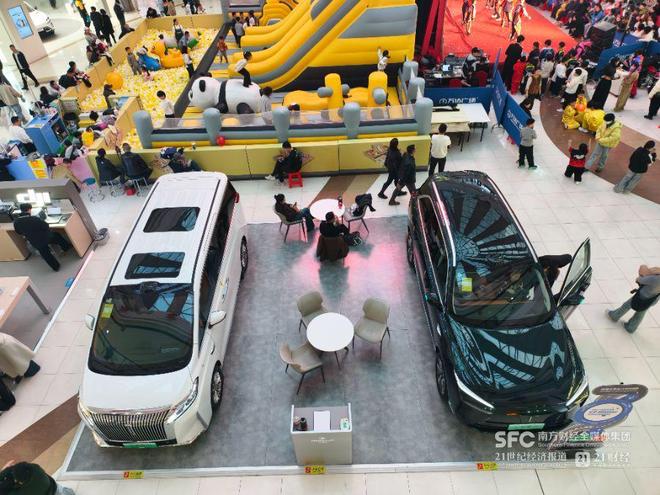
Group 1 - The Chinese automotive market is experiencing a surge in consumer interest, particularly in the lower price range of 60,000 to 100,000 yuan, driven by the continuation of the "National Subsidy" policy and the traditional peak consumption period around the Spring Festival [1][2] - The competition among automotive brands is intensifying, with many companies relocating their dealerships to high-traffic areas such as shopping malls to capture consumer attention and enhance brand visibility [2][3] - Price remains a decisive factor for consumers in third- and fourth-tier cities, leading brands to emphasize pricing and promotional offers in their marketing strategies [2][3] Group 2 - The acceptance of electric vehicles (EVs) is increasing in rural areas, with a notable rise in the number of brands like BYD and Wuling appearing on the streets, indicating a growing market for EVs outside urban centers [6][7] - The sales of new energy vehicles (NEVs) in rural areas are projected to grow significantly, with total sales expected to rise from 397,000 units in 2020 to nearly 7.6 million units by 2024, outpacing urban market growth [7] - The construction of charging infrastructure is crucial for the adoption of EVs, with a projected total of 20.09 million charging points by the end of 2025, reflecting a 49.7% year-on-year increase [8][9]
2026,商用车行业“马力全开”新征程——来自第一商用车网的新年贺词
第一商用车网· 2026-02-16 04:05
Core Viewpoint - The commercial vehicle industry in China is experiencing a strong recovery, with significant growth in both domestic demand and exports, driven by supportive policies and market resilience [1][3]. Group 1: Market Performance - In 2025, the total sales of commercial vehicles reached 4.3 million units, marking an 11% year-on-year increase [1]. - The heavy truck market achieved cumulative sales of 1.145 million units in 2025, a remarkable 27% increase, making it a core engine for the industry's recovery [3]. - Light trucks also performed well, with sales surpassing 2 million units, reaching 2.024 million, a 6.5% increase year-on-year [3]. - The bus sector sold 574,000 units, reflecting a 12.3% growth, with exports exceeding 150,000 units, a nearly 20% increase [3]. - The overall export of commercial vehicles entered the "million vehicle club" for the first time, totaling 1.06 million units, a 17% increase [3]. Group 2: New Energy Vehicles - Sales of new energy heavy trucks reached 231,100 units, with a penetration rate exceeding 50% for the first time in December [3]. - New energy light trucks sold nearly 180,000 units, with a December penetration rate of 42% [3]. Group 3: January 2026 Performance - In January 2026, commercial vehicle sales totaled 359,000 units, a 23.5% year-on-year increase [6]. - Heavy truck sales reached 105,000 units, up 46% year-on-year, while medium truck sales were 14,000 units, a 32.6% increase [6]. - Light truck sales, including pickups, were 160,000 units, an 8.5% increase, and micro trucks saw a significant rise of 93.4% to 45,000 units [6]. - Bus sales reached 8,000 units, reflecting an 18.7% growth, and exports for January were 93,000 units, a 23.6% increase [6]. Group 4: Future Outlook - The commercial vehicle industry is expected to maintain a positive trajectory in 2026, supported by government policies aimed at promoting green consumption and high-quality development [6][8].

说什么,也要让车开进春晚
汽车商业评论· 2026-02-15 23:04
Core Viewpoint - The article discusses the evolving role of the automotive industry in the context of the CCTV Spring Festival Gala, highlighting how automotive brands have increasingly integrated into this national event as a marketing platform over the years [4][19]. Group 1: Historical Context and Evolution - The CCTV Spring Festival Gala has been a significant platform for advertising since its inception in 1984, with the first automotive advertisement appearing in 2004 [4][13]. - Initially, the automotive industry was not a major sponsor of the gala, with the focus shifting from household appliances to internet companies in the 2010s [13][19]. - The first major automotive sponsorship occurred in 2014, marking a turning point for automotive brands in leveraging the gala for marketing [15][19]. Group 2: Current Automotive Brands and Their Strategies - In 2026, several automotive brands, including Jiangqi Group's high-end model Zun Jie S800, Geely's Lynk & Co 900, and Great Wall's Wei brand, are confirmed to participate in the gala, showcasing their flagship models [11][12]. - The article emphasizes that these brands represent the core strength of the Chinese automotive industry, with their participation symbolizing a significant leap in brand image and technology [11][12]. - The integration of automotive brands into the gala reflects a broader trend of showcasing "Chinese manufacturing" and technological advancements [19][26]. Group 3: Marketing Strategies and Audience Engagement - The article outlines various methods of automotive brand integration into the gala, including background branding, vehicle displays, and product placements in skits [21][22]. - The 2024 gala saw innovative marketing strategies, such as Xiaomi's car model being prominently displayed among guests, indicating a shift towards more creative advertising approaches [21][22]. - Experts suggest that the gala remains a valuable platform for automotive brands to build consensus and emotional connections with consumers, particularly during the family-oriented Lunar New Year celebrations [30][32].




1月销量暴增104%!远程超级VAN实现“20连冠”
第一商用车网· 2026-02-15 03:57
Group 1 - The core viewpoint of the article highlights the strong performance of the remote super VAN, which achieved a remarkable 104% year-on-year sales growth in January 2026, securing its position as the champion in the new energy wide-body light commercial vehicle segment for the 20th consecutive month [1] - The market share of the remote super VAN remains the highest, demonstrating its sustained growth resilience and market appeal, further solidifying its leading position in the industry [1] Group 2 - In January, over 80,000 units of Weichai engines topped the sales charts, while Yuchai saw an increase of over 46%, and Chaochai entered the top three in multi-cylinder diesel engine sales [8] - The sales of tractors reached 55,000 units in January, marking an increase of over 50%, with major players like Heavy Truck and Jiefang each selling over 10,000 units, while Dongfeng and Xugong experienced a doubling in sales [8] - A joint venture between CATL and Chery was announced, indicating strategic partnerships in the industry [8]

汽车行业周报:1月新能源车出口量同比翻倍,创历史同期新高
KAIYUAN SECURITIES· 2026-02-14 10:20
Investment Rating - The investment rating for the automotive industry is "Positive" (maintained) [2] Core Insights - In January 2026, China's new energy vehicle (NEV) exports doubled year-on-year, reaching a historical high for the month, with a growth rate of 103.6%. NEVs accounted for 49.6% of total exports, an increase of 12.5 percentage points year-on-year. BYD led the exports with nearly 100,000 units, while traditional automakers like Geely, Chery, and SAIC also saw over 200% growth in NEV exports [3][25][22]. Summary by Sections New Energy Vehicle Exports - In 2025, China's NEV exports grew by 70%, with plug-in hybrid vehicles (PHEVs) being the core growth driver. The growth rate for PHEVs was 127.5%, significantly higher than the 32.5% for pure electric vehicles (EVs) [14][15]. - January 2026 saw NEV exports reach 28.6 million units, with a year-on-year increase of 103.6%. BYD's exports approached 100,000 units, while Geely, Chery, and others also reported significant growth [25][27]. Industry News - The retail market for passenger vehicles in January 2026 was 1.544 million units, a decline of 13.9% year-on-year. February is expected to see the lowest sales of the year due to the impact of the Spring Festival [31]. - The Ministry of Industry and Information Technology is seeking public opinion on five mandatory national standards related to intelligent connected vehicles and autonomous driving systems [35]. Market Performance - The automotive sector outperformed the market, with the Shanghai and Shenzhen 300 index rising by 0.36% and the automotive sector increasing by 1.74%, ranking 9th among A-share industries [5][40]. - The passenger vehicle index rose by 1.21%, while the commercial vehicle index saw a significant increase of 6.28% [5]. Investment Recommendations - For passenger vehicles, the demand for high-end domestic luxury cars is exceeding expectations, with recommendations for companies like JAC Motors and Seres. Beneficiaries include Geely [6]. - In the auto parts sector, profitability is expected to improve, with recommendations for companies such as Desay SV and Zhejiang Xiantong, while beneficiaries include Weichai Power and Fuyao Glass [6].

潍柴点亮“电动力”
Zheng Quan Ri Bao Zhi Sheng· 2026-02-13 15:38
Core Insights - The article highlights the transformation of Weichai Power from an engine manufacturer to an energy solutions provider, capitalizing on the growing demand for reliable power sources in the AI and data center sectors [2][3]. Group 1: Industry Trends - The demand for high-reliability backup power sources is surging due to the increasing need for "zero interruption" power supply in data centers, marking a strategic shift in the energy sector [3][8]. - The global AI competition intensifies the need for stable power supply, with multiple factors driving structural changes in the energy industry [8][9]. Group 2: Company Strategy - Weichai Power has strategically positioned its power energy segment as the seventh business unit of Shandong Heavy Industry Group, reflecting a long-term vision initiated over a decade ago [3][4]. - The acquisition of Baudouin in 2009 was a pivotal move, allowing Weichai to enter the high-end power generation market, which is increasingly relevant in the digital age [4][5]. Group 3: Technological Advancements - Weichai Power has developed a new platform-based large-bore high-speed engine, which has been successfully integrated into backup power systems for AI data centers, showcasing its technological capabilities [4][6]. - The company has achieved a zero failure rate in continuous 1000-hour full-load operation tests, positioning its products to compete directly with international leaders [6][7]. Group 4: Market Positioning - Weichai Power has successfully penetrated the backup power market for data centers, traditionally dominated by international giants like Cummins and Caterpillar, by focusing on technological innovation and product reliability [6][9]. - The company has reduced its delivery time to 45 days, significantly faster than the six-month average of competitors, enhancing its competitive edge in the market [7][9]. Group 5: Future Outlook - Weichai Power is expanding its focus to include solid oxide fuel cells (SOFC) and hydrogen internal combustion engines, indicating a commitment to diversifying its energy solutions [9]. - The company recognizes the ongoing relevance of diesel generators in high-reliability scenarios, while also adapting to the growing demand for gas-powered generators in regions with saturated grid capacities [9].