宝马

Search documents
2025中国汽车零部件行业年中观察
Zhong Guo Qi Che Bao Wang· 2025-07-08 02:04
Core Insights - The Chinese automotive parts industry has shown resilience and vitality amidst a challenging market environment, with growth in vehicle production and sales, while facing intensified competition and higher demands for transformation and upgrading [2][3] - The industry is experiencing new challenges such as deteriorating international trade conditions, tightening regulations on intelligent driving, and increased software failure risks, which are reshaping development paths [3][4] - The introduction of new standards and regulations is driving profound changes in the industry, pushing for safety, green initiatives, and intelligent transformation [11][15] Group 1: Market Dynamics - The automotive parts industry benefits from the continuous growth of the new energy and intelligent vehicle market, while also facing unprecedented challenges [3] - The U.S. tariff policy has created uncertainty in the supply chain, prompting companies to diversify markets and adopt flexible trade methods [3][4] - The tightening of regulations in the intelligent driving sector has led to a collective adjustment in marketing strategies among automotive companies [4][5] Group 2: Technological Advancements - The complexity and quantity of automotive software have increased significantly, necessitating a shift towards a new development model that balances safety and efficiency [5][16] - AI technology is becoming a key driver in the automotive parts industry, influencing various sectors from intelligent driving to battery technology [16][17] - The industry is witnessing a trend of "reverse output," where Chinese suppliers are playing a crucial role in global collaborations, showcasing their technological strengths [10] Group 3: Regulatory Changes - The introduction of new mandatory standards is reinforcing the technical barriers in the industry, promoting a shift towards safer and greener practices [11][14] - Recent regulatory changes aim to enhance the safety performance of automotive components, particularly in areas like battery safety and collision protection [13][14] - The implementation of new payment regulations is expected to improve supply chain resilience and foster a collaborative environment among suppliers and manufacturers [8][9] Group 4: Emerging Trends - The automotive parts industry is increasingly exploring cross-industry opportunities, such as eVTOL and humanoid robots, leveraging existing manufacturing capabilities [17][19] - The shift towards electric and intelligent vehicles is reshaping the industry landscape, with a focus on high-quality development and innovation [8][16] - The collaboration between automotive companies and technology firms is leading to advancements in smart vehicle technologies and enhancing overall market competitiveness [10][19]


AI与机器人技术融合全面提速——2025年德国慕尼黑自动化展观察
机器人圈· 2025-07-07 11:14
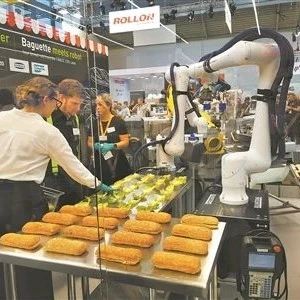
详细会议介绍参看往期文章: (点击蓝字跳转) 一文看懂2025智能机器人关键技术大会(IRCTC)全景!专家报告、学术征文、青年交流全揭晓! 展览展示|抢位2025智能机器人关键技术大会!高曝光商务合作虚位以待,共赴解锁新机遇 9大期刊联合征文|投稿2025智能机器人关键技术大会,年底正刊发表! 机器人制造商发那科(FANUC)在展会上展示机器人做汉堡包。 照片由本报驻德国记者李山摄 在两年一届的2025年德国慕尼黑自动化展上,可以深刻感受到自动化技术在人工智能(AI)加持下更加智能,驱 动工业生产与管理不断变革。AI与机器人技术的融合发展在诸多领域全面提速,展现未来工作生活新方式。多家 公司推出了新一代人形机器人,不过从现场表现来看,人形机器人在技术和实际应用等方面都还有很多工作要 做。 让自动化技术更智能 智能自动化解决方案供应商库卡希望从根本上重新定义机器人的控制方式,并推出了可扩展、可灵活调整的机器 人操作系统iiQKA.OS2。这个软件和控制器平台将人工智能与视觉系统结合,使机器人变得更加灵活,而无需进 行复杂的编程。库卡还与微软合作,开发了一个AI聊天机器人,可将自然语言命令转化为程序代码。此外, ...

智元G1、A2等核心产品启动一定规模量产
China Post Securities· 2025-07-07 07:29
Industry Investment Rating - The industry investment rating is "Outperform" [2] Core Viewpoints - The humanoid robot industry is experiencing accelerated technological iteration and initial commercialization, with domestic manufacturers like ZhiYuan, YueJiang, and ByteDance starting mass production of humanoid robots, indicating a speeding up of the commercialization process [8][21] - Key components such as screws and reducers have seen a greater-than-expected decrease in costs, and the technological solutions are becoming increasingly diverse [8] - Investment focus is shifting towards AI-enabled valuation recovery, with breakthroughs in AI technology expanding application scenarios for humanoid robots and enhancing corporate valuation expectations [8] Summary by Sections Recent Market Review - The humanoid robot index fell by 1.81% during the week of June 30 to July 4, 2025, underperforming compared to the STAR 50 and the CSI 300 indices, but has risen 21.18% year-to-date [15][16] Important Industry Dynamics 1. **Industry Development**: - Madi Technology and Shanghai Robot Industry Technology Research Institute have formed a strategic partnership to enhance the application of intelligent robots in medical, rehabilitation, and elderly care sectors [21] - ZhiYuan Robotics has initiated mass production of its core products G1 and A2 [22] - YueJiang's humanoid robot Atom has begun global delivery, and its CR30H high-speed collaborative robot was showcased in Japan [23][24] - ByteDance's logistics robot production has exceeded 1,000 units, significantly surpassing its initial target [25] 2. **Policy News**: - Shanghai has issued measures to enhance the investment environment, particularly supporting the humanoid robot and intelligent sectors [33] - The establishment of a 10 billion yuan humanoid robot industry investment fund in Hubei Province aims to foster innovation and development in the sector [39] 3. **Supply Chain Dynamics & Company Announcements**: - Jinyang Co. has established a joint venture to focus on the development of joint module products [40] Industry Perspectives - The report emphasizes the importance of focusing on core supply chain companies with technological advantages and mass production capabilities, particularly in key areas such as screws, reducers, motors, and sensors [8][9]
高息高返全面叫停,车市将迎来涨价潮?
Sou Hu Cai Jing· 2025-07-07 02:45
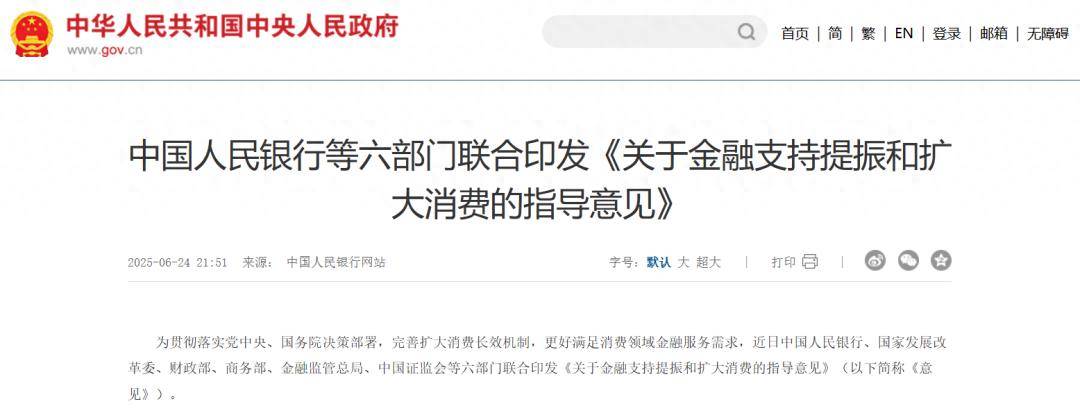
Core Viewpoint - The Chinese automotive industry is undergoing significant reforms in the first half of 2025, marked by stringent regulatory policies and the prohibition of high-interest, high-rebate financial models that have been prevalent in the market [1][3]. Group 1: Regulatory Changes - The Ministry of Industry and Information Technology has introduced a series of strict regulatory policies, while the central bank and six other departments have issued guidelines to support consumer financing in the automotive sector [1]. - The rebate given to dealers by banks has been drastically reduced from 15% to below 4%, and the annual interest rate for car loans has decreased from 6.5% to 3.2% [1]. Group 2: High-Interest, High-Rebate Model - The high-interest, high-rebate financial model, which gained widespread attention in 2022 and faced regulatory scrutiny in 2024, is set to be completely phased out by mid-2025 [3]. - This model was initially designed to benefit banks, dealers, and consumers, with dealers using rebates to subsidize car prices for consumers [3][5]. Group 3: Impact on Dealers and Consumers - Dealers have increasingly relied on high-interest, high-rebate commissions for profit, leading to practices that restrict consumer choices, such as prioritizing loan purchases over cash transactions [5][6]. - The reliance on this model has resulted in banks becoming the financial losers, as consumers tend to repay loans earlier than expected, diminishing banks' anticipated returns [8][10]. Group 4: Price Adjustments Post-Regulation - Following the ban on high-interest, high-rebate policies, major automotive brands like Lexus, Audi, BMW, and Mercedes have begun to raise prices, with Lexus models seeing average increases of over 25,000 yuan [10][12]. - Some brands have implemented promotional strategies to encourage purchases, but these often result in price hikes compared to previous financing options [12][13].
【太平洋科技-每日观点&资讯】(2025-07-07)
远峰电子· 2025-07-06 11:33
Market Performance - The main board led the gains with notable increases in stocks such as Xinyada (+10.03%), Desheng Technology (+10.02%), and Jingbeifang (+10.01%) [1] - The ChiNext board saw significant growth, particularly with Longyang Electronics (+20.00%) and Nanling Technology (+19.98%) [1] - The Sci-Tech Innovation board was led by TuoJing Technology (+5.78%) and JinChengZi (+5.51%) [1] - Active sub-industries included SW Games III (+2.80%) and SW Printed Circuit Boards (+2.03%) [1] Domestic News - Xiamen Silan Microelectronics has commenced the first equipment installation for its 8-inch silicon carbide power device chip manufacturing line, with a total investment of 12 billion yuan and an annual production capacity of 720,000 chips [1] - The foundation for the high-precision photomask project by Lu Wei Optoelectronics has been laid, with a planned investment of 2 billion yuan, focusing on high-end photomasks for AMOLED and LTPO/LTPS [1] - China Mobile Zhejiang announced the procurement results for its 2025 FTTR products, with Huawei and ZTE winning all bids for a total of 99,750 units [1] - Nanya Technology reported a strong revenue growth in June, reaching 4.074 billion New Taiwan dollars, marking a 22.2% month-on-month increase and a 21.1% year-on-year increase, the highest monthly revenue in three years [1] Company Announcements - Mulin Sen plans to acquire an 18.7722% stake in Puri Optoelectronics for approximately 256 million yuan, which will not significantly impact the company's financials [3] - China Software reported a change in equity, with China Electronics increasing its stake to 13.00% following a stock issuance [3] - New Yichang announced a cash dividend of 2.00 yuan per 10 shares for the 2024 fiscal year [3] - Shenzhou Taiyue declared a cash dividend of 1 yuan per 10 shares based on a total share capital of 1,962,564,954 shares [3] Overseas News - Hanmi Semiconductor has begun production of its latest chip packaging equipment, TC Bonder 4, designed for the sixth-generation high bandwidth memory (HBM4) [4] - Codasip, a European RISC-V processor IP supplier, has initiated a sales acceleration program for its core processor design tools [4] - Counterpoint Research reported a 2% year-on-year decline in global smartwatch shipments for Q1 2025, marking the fifth consecutive quarter of decline [4] - BMW announced that its automatic charging robot has passed the trial period and will be deployed based on future market conditions [4]

特斯拉Q2交付下滑,小鹏G7正式上市
Huafu Securities· 2025-07-06 07:18
Investment Rating - The industry rating is "Outperform the Market" [81] Core Insights - Tesla's global sales in Q2 reached 384,122 units, a 13% decline from 443,956 units in the same period last year, marking the second consecutive quarter of decline [3][12] - The decline is attributed to delays in the launch of more affordable models, controversies surrounding CEO Elon Musk's political stance, and a significant drop in sales in the US market [3][12] - Tesla faces increasing competition from new models launched by General Motors, Volkswagen, BMW, BYD, and Xiaomi, while exploring potential in autonomous driving software and humanoid robots [3][13] - Xiaopeng Motors launched the new AI smart family SUV, Xiaopeng G7, with three versions priced between 195,800 and 225,800 yuan, featuring advanced AI capabilities and a long range of 702 km [4][14][15] Market Performance - From June 30 to July 4, the automotive sector increased by 0.1%, underperforming the CSI 300 index, which rose by 1.5%, resulting in a 1.4 percentage point lag [18] - Year-to-date, the automotive sector has increased by 8.2%, ranking 8th among 31 sectors [18] Key Industry Data - In June, retail sales of passenger vehicles reached 2.032 million units, a 15% year-on-year increase, while new energy vehicle retail sales were 1.071 million units, up 25% year-on-year [6][34] - Wholesale sales for passenger vehicles in June totaled 2.473 million units, a 14% increase year-on-year, with new energy vehicle wholesale sales at 1.259 million units, up 28% year-on-year [6][35] New Vehicle Highlights - Xiaopeng G7 features a powerful AI chip configuration, achieving an effective computing power of 2,250 TOPS, making it the highest globally [14][15] - The G7 aims to redefine the market for smart electric SUVs with its advanced AI capabilities and long-range performance [15]


国产面板何以拿下全球七成江山?
Xin Lang Cai Jing· 2025-07-06 06:12
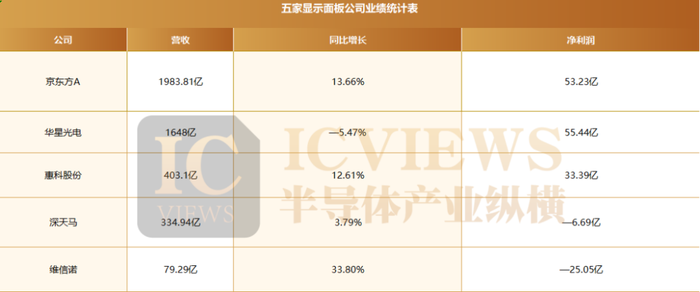
Group 1: Market Position and Growth - By 2024, Chinese companies will control 65% of global polarizer production capacity, expected to exceed 80% by 2027 [1] - In 2025, China's display panel production will account for 70% of the global market share, meaning 7 out of every 10 display panels produced worldwide will come from China [2] - The market size of China's display panel industry will reach 1.3 trillion yuan in 2024, capturing over 50% of the global market [3] Group 2: Key Players and Performance - BOE Technology Group leads the smartphone panel market with a projected shipment of 610 million units in 2025, holding a 68.8% market share in 2024 [2] - In the large-size LCD TV panel market, BOE holds a 25.9% market share, while Huaxing Optoelectronics and Huike occupy 20.2% and 14.4% respectively [2] - In 2024, BOE's revenue is expected to be 198.38 billion yuan, with a net profit of 5.32 billion yuan, marking a significant recovery from previous losses [7] Group 3: Technological Advancements - The introduction of 15 AMOLED production lines is challenging the dominance of South Korean manufacturers, with flexible screens and MiniLED technology driving a new display revolution [3] - Chinese companies are adopting a dual-track strategy, focusing on both LCD and OLED technologies to maintain market leadership [6] - The OLED gaming monitor segment is experiencing rapid growth, with a 132% increase in global shipments in 2024 [8] Group 4: Emerging Markets and Opportunities - The global automotive display panel market is projected to reach 232 million units in 2024, with a 6.3% year-on-year growth [8] - BOE holds a 17.6% market share in the automotive display sector, collaborating with various automotive brands [9] - The esports monitor market in China is expected to grow by 12.4% in 2025, driven by increasing consumer demand and the introduction of new products [12] Group 5: Strategic Developments - The acquisition of LG Chem's OLED polarizer business by Shanshan Holdings is a significant move towards vertical integration in the industry [4] - The construction of the world's first 3000mm ultra-wide polarizer production line by Hengmei Optoelectronics is set to enhance production capacity significantly [5] - The dual strategy of focusing on both LCD and OLED technologies has allowed Chinese manufacturers to effectively compete in the global market [6][13]



硅谷掀AI人才争夺战:Meta开四年3亿美元薪酬,全球顶尖专家不足千人;“大而美”法案如何影响美国各行业;日本驳斥“毁灭性地震”预言 | 一周国际财经
Mei Ri Jing Ji Xin Wen· 2025-07-05 05:54
Group 1 - Meta is offering a compensation package of up to $300 million over four years to attract AI researchers from companies like OpenAI, intensifying the competition for top AI talent in Silicon Valley [1][3][4] - The number of top AI experts globally is reported to be less than 1,000, leading to a significant scarcity of talent [4][18] - Salaries for AI engineers at Meta range from $186,000 to $3.2 million, surpassing those at OpenAI, which range from $212,000 to $2.5 million [6][4] Group 2 - The average annual salary for senior AI research scientists has surged to between $3 million and $7 million, with some top scientists earning over $10 million [7][10] - The disparity in salaries is stark, as senior software engineers without AI experience typically earn between $180,000 and $220,000 [10][14] - The "30k Club" in Silicon Valley indicates that a significant portion of employees earn over $300,000 annually, with Meta's median salary projected at $379,000 for 2024 [15][14] Group 3 - The "Big and Beautiful" tax and spending bill signed by President Trump is expected to increase the national debt by $4.1 trillion by 2034, raising concerns about fiscal deficits [20][21] - The bill will impact various industries, including electric vehicle manufacturers and AI companies, by eliminating certain tax incentives [22][20] - Chip manufacturers, energy companies, and real estate developers are anticipated to benefit from the new legislation [23][20] Group 4 - Jane Street, a quantitative trading firm, has been banned from the Indian market due to alleged market manipulation, with the Indian regulator seizing approximately $570 million in illegal profits [29][28] - The firm reportedly made $4.3 billion in profits from its Indian operations since starting in 2020 [29][28] Group 5 - Nvidia's market capitalization briefly surpassed $3.92 trillion, making it the first company to achieve this milestone, reflecting strong performance in the tech sector [34][33] - The stock market indices, including the S&P 500 and Nasdaq, reached new historical highs, indicating robust market conditions [34][33]





“大限”前欧美谈判僵持 美国威胁农产品征税 欧盟两手准备 车企寻求关税“抵免”
Hua Er Jie Jian Wen· 2025-07-04 19:05
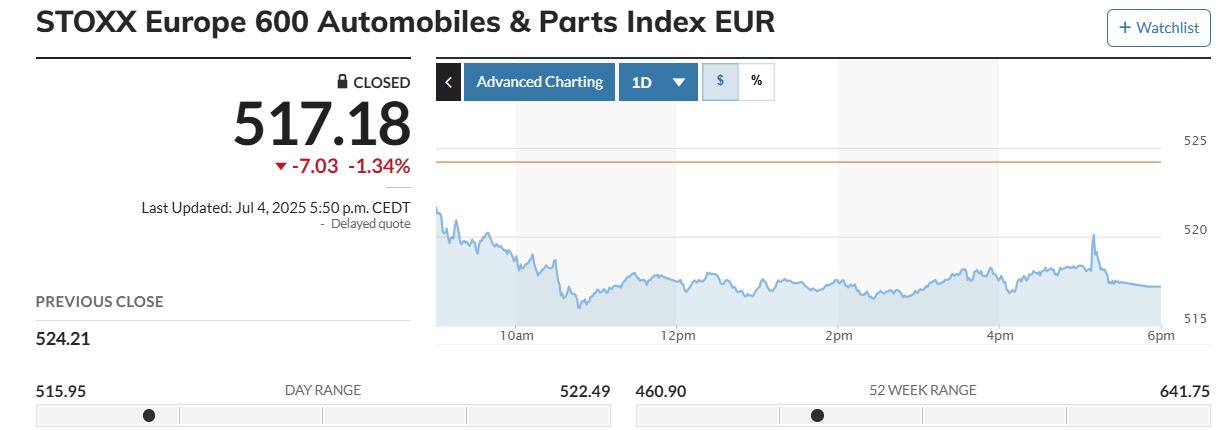
Group 1: Trade Negotiations - The US and EU trade negotiations are at a standstill, with a deadline for a "tariff pause" approaching on July 9 [1][2] - EU representatives are seeking a principle-based agreement before the deadline, while also preparing for potential extensions of the tariff pause if no agreement is reached [2][8] - There are internal divisions within the EU regarding the approach to negotiations, with some countries favoring a quick agreement and others advocating for a stronger stance against US tariffs [1][9] Group 2: Automotive Industry Impact - European automotive manufacturers are facing pressure, with stock prices declining significantly amid tariff threats, including a 17% potential tariff on EU agricultural products and a 50% tariff on other goods if negotiations fail [4][8] - Some European governments and car manufacturers are pushing for an investment-based agreement with the US, where increased investment in the US could lead to tariff reductions [2][3] - The EU's second round of countermeasures against US tariffs has been scaled down from €950 billion to €720 billion, indicating a strategic adjustment in response to ongoing negotiations [10] Group 3: Economic Implications - The EU is prepared to take countermeasures to protect its economy if negotiations do not yield favorable results, with the EU Commission President stating that all options are on the table [10] - The potential for a principle-based agreement could maintain the current "truce" status, avoiding new US tariffs, while failure to reach an agreement could lead to the implementation of previously suspended tariffs [10]

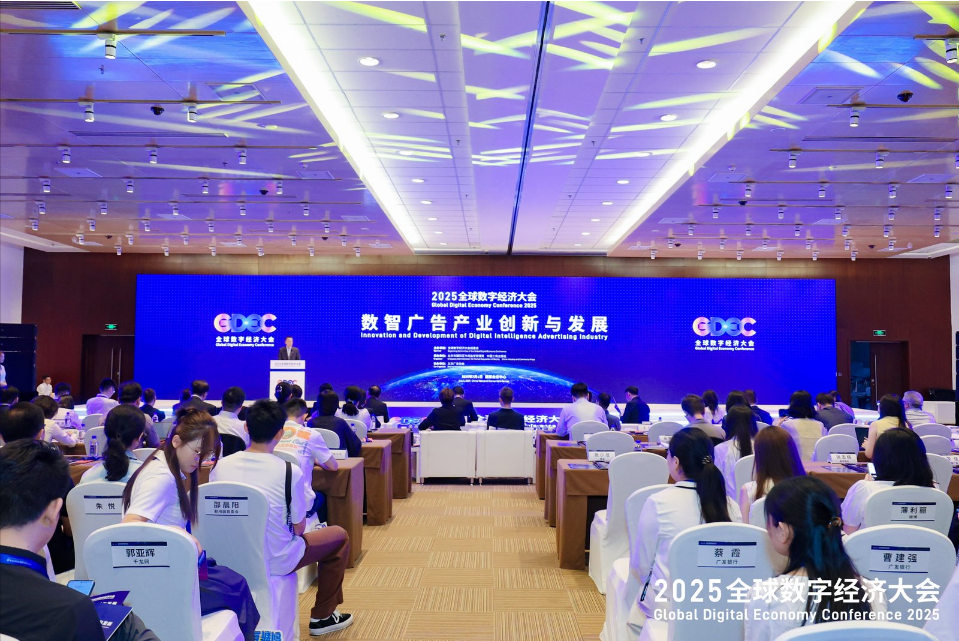
朝阳区市场监管局成功举办全球数字经济大会“数智广告产业创新与发展”专题论坛
Zhong Guo Chan Ye Jing Ji Xin Xi Wang· 2025-07-04 09:45
Group 1 - The Global Digital Economy Conference focused on the innovation and development of the digital advertising industry, highlighting the positive growth trend in China's advertising sector [1] - The advertising industry in China is projected to exceed 1.5 trillion yuan in revenue by 2024, maintaining its position as the second-largest market globally [1] - The digital transformation of the advertising industry is progressing steadily, with innovation indicators expected to rise to 124.2 points in 2024, reflecting a year-on-year increase of 9.9% [1] Group 2 - Beijing's digital regulatory ecosystem is being constructed to support the development of the digital advertising industry through policy supply, industrial clustering, and financial empowerment [3] - Chaoyang District is recognized for its significant role in leading the advertising industry, leveraging its dense resources and strong capabilities in advertising operations [3] - The district aims to create a new ecosystem of collaborative growth by utilizing cultural resources and advanced technology to enhance advertising operations [3] Group 3 - Key industry leaders discussed global advertising trends and the application of artificial intelligence in advertising during the forum, emphasizing the importance of innovation and governance in AI advertising [4] - The forum attracted over a hundred companies from the advertising industry, showcasing Chaoyang District's leadership in promoting digital transformation and high-quality development in advertising [6] - The local market authority is committed to enhancing service quality and efficiency in the advertising industry, contributing to Beijing's status as a global digital economy benchmark city [6]