奈雪的茶

Search documents
4.55亿!茶饮品牌古茗在杭州拿地
Xin Lang Cai Jing· 2026-01-13 02:35
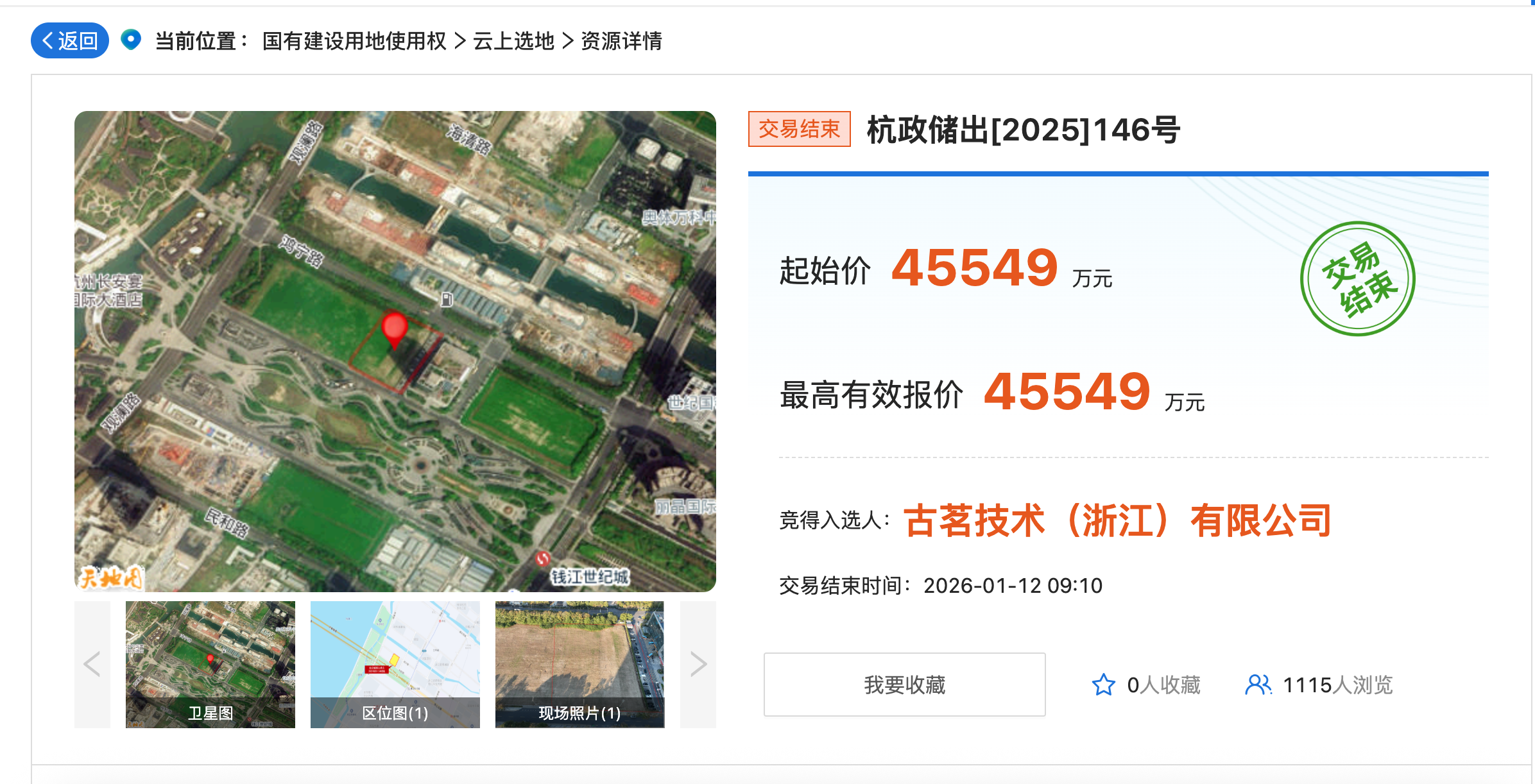
1月12日上午,位于杭州钱江世纪城核心区一宗商业用地挂牌出让。古茗技术(浙江)有限公司以4.55亿元总价竞得该地块,成交楼面价6100元/㎡。 浙江省自然资源网上交易中心官网显示,该地块位于萧山区世纪城核心单元,东至广孚中心,南至秋韵街,西至规划经二路,北至鸿宁路。土地用途为商务 金融用地,用地面积约1.24万平方米,容积率不大于6.0且不低于1.5,建筑高度不大于190米、不小于15米。 根据《建设用地规划条件》和《地块出让合同》,该地块整体自持比例不低于80%,自持年限为40年,自持期间不得分割转让、不得分割登记。该地块被明 确定位为总部经济类用地,竞得者须与杭州市萧山钱江世纪城管理委员会签订《杭州市萧山钱江世纪城核心单元XS010203-04地块投资开发协议》。 《投资开发协议》约定,竞得者及其在杭下属控股企业需达到明确的经营指标,包括年度营业收入不低于10亿元;自土地合同签订之日起至2027年12月31 日,须被认定为杭州市总部企业;2026年至2030年,在钱江世纪城范围内每年合计实现营收分别不低于17亿元、18亿元、20亿元、22亿元及23亿元,累计达 百亿元。 在杭州拿地之前,2022年5月,古 ...

浙江奶茶巨头,花4.55亿元在杭州拿地,地块面积超1.2万平方米
Mei Ri Jing Ji Xin Wen· 2026-01-12 14:53
Core Insights - The tea beverage industry is witnessing a shift in competitive dynamics, moving from front-end competition focused on store density and product iteration to back-end competition emphasizing organizational capability, resource integration, and capital strength [2][8] Group 1: Company Developments - Gu Ming (古茗) has acquired a commercial and financial land parcel in Hangzhou for 455 million yuan, indicating a strategic move towards asset-heavy investments [2][3] - The land is suitable for developing a mixed-use commercial and business building, with a minimum plot size of 800 square meters and a self-holding ratio of at least 80% for 40 years [5] - Gu Ming's revenue for the first half of 2025 reached approximately 5.66 billion yuan, reflecting a year-on-year increase of 41.2% [8][10] Group 2: Industry Trends - Major tea brands, including Gu Ming, are increasingly investing in real estate, which signifies a transition to a platform and ecosystem-based business model [8] - The competitive landscape is evolving as companies focus on building headquarters that enhance supply chain management, digital operations, and product development [8][10] - The trend of "building headquarters" is not limited to Gu Ming; other leading brands like Nayuki and Mixue are also engaging in similar asset acquisitions to strengthen their market positions [6][7] Group 3: Market Positioning - Gu Ming's store distribution is heavily concentrated in second-tier and lower cities, with 81% of its outlets located in these areas, showcasing its strategy of targeting less saturated markets [9][10] - The company has a robust supply chain management system, providing efficient cold chain logistics to 97% of its stores, which contributes to lower operational costs [10] - Analysts predict that Gu Ming could potentially expand its store count to over 40,000 nationwide, indicating significant growth potential in the market [11]

增资68倍!乐乐茶旗下公司“扩容”至6900万,是深耕烘焙还是为上市“补血”?
Sou Hu Cai Jing· 2026-01-12 11:17
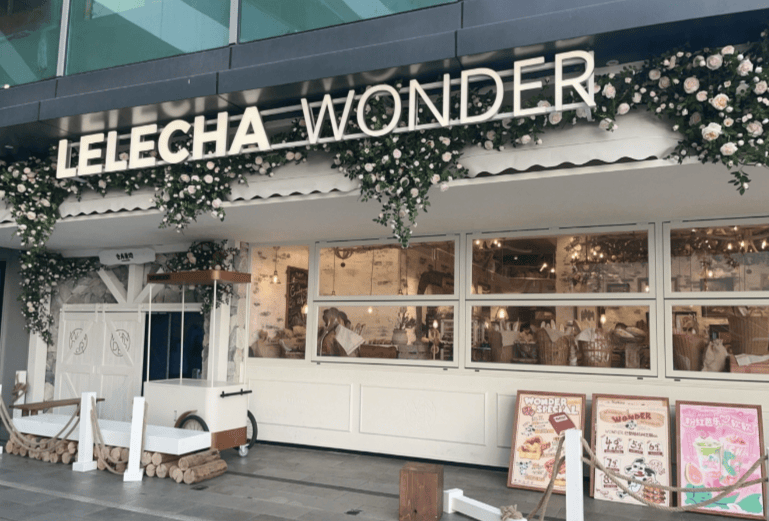
Group 1 - The core point of the article highlights the significant capital increase of Shanghai Letian Catering Management Co., a subsidiary of Lele Tea, which raised its registered capital from 1 million RMB to 69 million RMB, marking a 6800% increase, indicating a strategic shift in the company's operations as it enters a competitive phase in the new tea beverage market in 2026 [2][3] Group 2 - The capital increase reflects a transition towards a "light asset" model, focusing on enhancing the franchise service system and core baking supply chain to support an upcoming plan for opening a thousand stores [2] - There are speculations about Lele Tea preparing for an IPO in Hong Kong, aiming to raise between 300 million to 500 million USD, with the capital increase serving to strengthen the subsidiary's balance sheet and improve its credit rating in the financial market [3] - The investment is also seen as part of the internal integration strategy within the "Nai Xue" group, aiming to establish a more professional compliance management team amidst the challenges of price cuts and market competition in the new tea beverage industry [3]
港股收评:恒指上扬近400点,科指涨超3%,AI应用全线爆发
Ge Long Hui· 2026-01-12 08:49
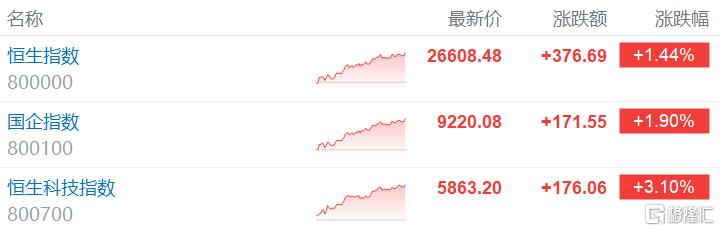
Market Overview - The Hong Kong stock market experienced a surge in bullish sentiment driven by the explosion of AI applications, with the Hang Seng Tech Index rising by 3.1%, while the Hang Seng Index and the China Enterprises Index increased by 1.44% and 1.9% respectively [1][2]. Key Indices Performance - Hang Seng Index closed at 26,608.48, up by 376.69 points (+1.44%) [2] - China Enterprises Index closed at 9,220.08, up by 171.55 points (+1.90%) [2] - Hang Seng Tech Index closed at 5,863.20, up by 176.06 points (+3.10%) [2] Sector Performance - Technology stocks showed strong performance, with Kuaishou rising over 7%, Meituan up 6.6%, and Baidu and Alibaba both increasing by over 5% [4][8]. - AI application stocks saw significant gains, with MaiFushi hitting a limit-up of 32%, and ZhiPu rising over 31% [8]. - AI healthcare stocks continued their strong performance, with companies like Yingshi Intelligent rising nearly 16% and Fangzhou Jianke increasing over 12% [10][11]. - Semiconductor stocks also performed well, with companies like Haowei Group rising over 16% and Xinzhikong rising over 14% [12]. - The restaurant sector was active, with Nayuki's Tea rising over 7% and Haidilao increasing over 5% [13]. Notable Stocks - Kuaishou (Ticker: 01024) rose by 5.55 to 80.25 (+7.43%) [5]. - MaiFushi (Ticker: 02556) surged by 12.45 to 51.25 (+32.09%) [9]. - Yingshi Intelligent (Ticker: 03696) increased by 7.50 to 54.50 (+15.96%) [11]. - Haowei Group (Ticker: 00501) rose by 17.00 to 121.80 (+16.22%) [12]. Investment Trends - The market is witnessing a significant inflow of capital, with net purchases from southbound funds amounting to 7.306 billion HKD, indicating strong investor interest [22]. - Analysts suggest that the technology sector remains a long-term investment focus, supported by multiple favorable factors such as price increases in the supply chain and mergers and acquisitions [24].
抹茶,健康饮品新「顶流」
3 6 Ke· 2026-01-12 03:05
Group 1 - The core point of the article highlights the rising popularity of matcha as a health drink among Gen Z, particularly in the UK and the US, where it has become a trendy alternative to coffee [2][11]. - PerfectTed, a matcha beverage brand, has seen significant growth, achieving a compound annual growth rate of 559% and a revenue of £9.6 million (approximately 90.5 million RMB) in 2025, with a valuation of £140 million (approximately 1.32 billion RMB) [6][10]. - Blank Street Coffee, a coffee shop chain in the US, has successfully integrated matcha into its offerings, with matcha products becoming a major revenue driver, leading to a rebranding that emphasizes matcha [8][10]. Group 2 - Matcha's appeal lies in its perceived health benefits, including a milder caffeine effect compared to coffee, which resonates with young consumers seeking both physical and mental wellness [11][15]. - The cultural significance of matcha, particularly its association with Japanese tea ceremonies, enhances its appeal as a lifestyle product, creating a sense of ritual and mindfulness among consumers [14][15]. - The matcha market is experiencing supply shortages due to increased demand in Western countries, prompting Japanese tea merchants to implement purchase limits, which has opened opportunities for Chinese matcha producers [19][28]. Group 3 - In China, matcha is becoming a popular alternative to coffee, with brands like Heytea and Nayuki launching successful matcha products that cater to local taste preferences [21][25]. - The Chinese matcha industry is maturing, with Zhejiang and Guizhou emerging as key production regions, and brands are increasingly highlighting the origins of their matcha to appeal to quality-conscious consumers [28][29]. - Matcha is being marketed as a "superfood," aligning with modern consumers' desires for healthier lifestyle choices, reflecting a shift towards products that offer both health benefits and emotional value [29].

奶茶店开始“卖饭”?蜜雪、古茗、阿嬷都盯上这门生意
3 6 Ke· 2026-01-10 04:52
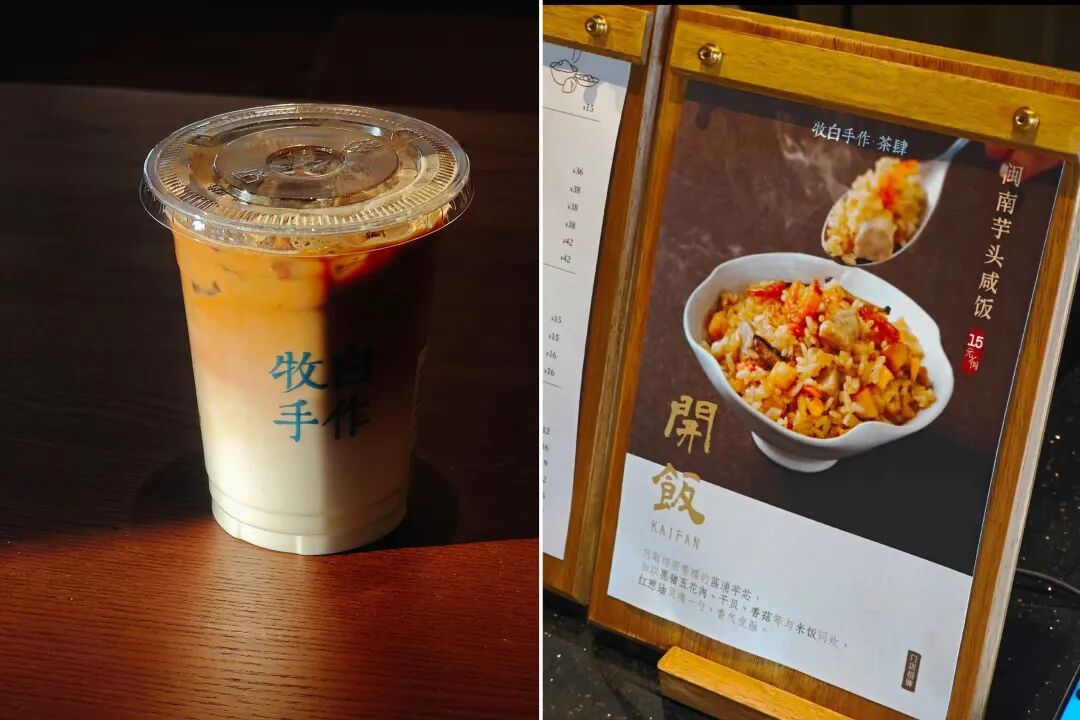
Core Insights - The trend of beverage shops selling food items, particularly rice dishes, is gaining traction, with brands like Mubaishou and A-Ma Handcrafted leading the way in this new market segment [1][3][7] Group 1: New Product Offerings - Mubaishou has introduced a new dish, Min Nan Taro Rice, priced at 15 yuan, which has received positive feedback for its flavor and value [3] - A-Ma Handcrafted has also attracted attention by offering rice dishes, although they primarily sell a rice sauce for customers to pair with rice [7][18] - The beverage industry is increasingly integrating food offerings, moving from simple snacks to full meal options, targeting breakfast and lunch markets [8][13] Group 2: Market Strategy - Brands are redefining their business models by creating new store formats that emphasize the combination of beverages and meals, enhancing customer experience [14][16] - Companies like Nayuki are launching new store concepts focused on light meals, aiming to cater to the lunch crowd with affordable options [17] - The strategy of offering food items is seen as a way to increase average transaction value and enhance brand presence in consumers' daily lives [20][21] Group 3: Industry Trends - The beverage sector is witnessing a shift towards food offerings as a response to market competition, with brands looking to expand their product categories and consumer touchpoints [21][24] - Successful integration of food and beverage offerings often relies on light processing or strong synergy between products, with many brands still exploring this model [24] - Despite the growing trend, food sales currently represent a small percentage of total revenue for many beverage brands, indicating that the fusion of drinks and meals is still in its early stages [24]

当面包开始「奶茶化」
36氪· 2026-01-10 01:19
Core Viewpoint - The article discusses the trend of "milk tea-ification" in the baking industry, where traditional baked goods are increasingly incorporating popular ingredients from the milk tea sector to attract younger consumers and enhance product appeal [4][6][22]. Group 1: Milk Tea-ification in Baking - The baking industry is experiencing a transformation where products are no longer limited to traditional ingredients, with items like taro and glutinous rice becoming central components in baked goods [6][10]. - The trend reflects a broader consumer preference for visually appealing and flavorful products, as seen in the rise of items like "taro snow mountain buns" and "glutinous rice soft European bread" [8][10]. - The incorporation of diverse fillings and flavors is becoming a key selling point, with consumers increasingly valuing products that are rich in ingredients and visually attractive [11][13]. Group 2: Consumer Behavior and Market Dynamics - Despite a general trend of consumption downgrade, consumers are willing to pay a premium for innovative and high-quality baked goods, indicating a shift in spending habits towards frequent, enjoyable food experiences [22][25]. - The average price of baked goods has risen significantly, with items like bagels and ciabatta now commanding prices well above their previous levels, reflecting a willingness to invest in quality [22][28]. - Data shows that while luxury goods are seeing a decline in sales, the demand for high-quality baked products is increasing, with an average annual growth of 8% to 10% in the sector [28][29]. Group 3: Innovation and Product Development - The article highlights the innovative approaches taken by various baking brands, such as integrating local flavors and ingredients into traditional recipes, which enhances the appeal of products like ciabatta [18][20]. - The concept of "doing addition" in product development is emphasized, where brands are not just adding ingredients but also creating new culinary experiences that resonate with consumer preferences [29][31]. - The success of these products is attributed to their ability to balance flavors and meet the emotional needs of consumers, leading to a new wave of popular items in the market [31].

2025餐饮业复盘:新茶饮IPO年,资本盛宴后的供应链暗战
3 6 Ke· 2026-01-09 13:02
Group 1 - The core viewpoint of the article emphasizes that the new-style tea beverage industry is transforming from a "restaurant model" to a "retail model," focusing on large-scale, multi-channel sales to achieve greater market size and stable cash flow [1][2] - In 2025, the new-style tea beverage industry is characterized by a significant capital influx, with four major brands going public, marking it as the "IPO year" for the industry [3][6] - The industry is experiencing a dual trend of store closures and expansions, with 5,788 stores shutting down, indicating a shift towards high-quality development and a "survival of the fittest" market environment [6][19] Group 2 - The article outlines six key strategies for the new-style tea beverage industry, including product standardization, vertical supply chain integration, and online-offline integration to enhance customer retention [10][12][16] - The competitive landscape is diversifying, with leading brands adopting different operational models: efficiency-driven, quality-premium, and digital balance strategies [7][19] - The profitability logic of the industry is primarily driven by the franchise model, allowing rapid expansion with lower risks, while direct-operated models face higher operational costs and slower adjustments [26][30] Group 3 - The article highlights the importance of supply chain management as a core competitive advantage, suggesting that the future competition will focus on efficiency and innovation in supply chain operations rather than just front-end store battles [21][24] - The new-style tea beverage market is characterized by high gross margins and quick product turnover, allowing for potential price reductions while maintaining profitability [28][30] - The article concludes that the industry's future will depend on balancing efficiency and customer experience, with a focus on sustainable profitability for franchisees and consumer satisfaction [32][33]
新茶饮一年消失15.7万家,品类选错了?
3 6 Ke· 2026-01-09 12:39
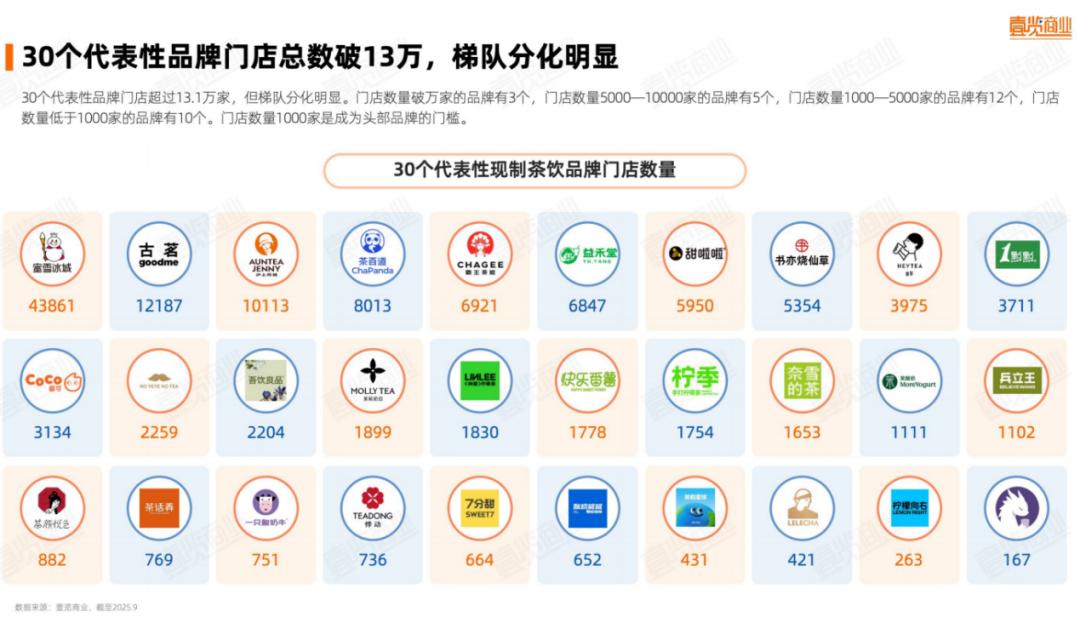
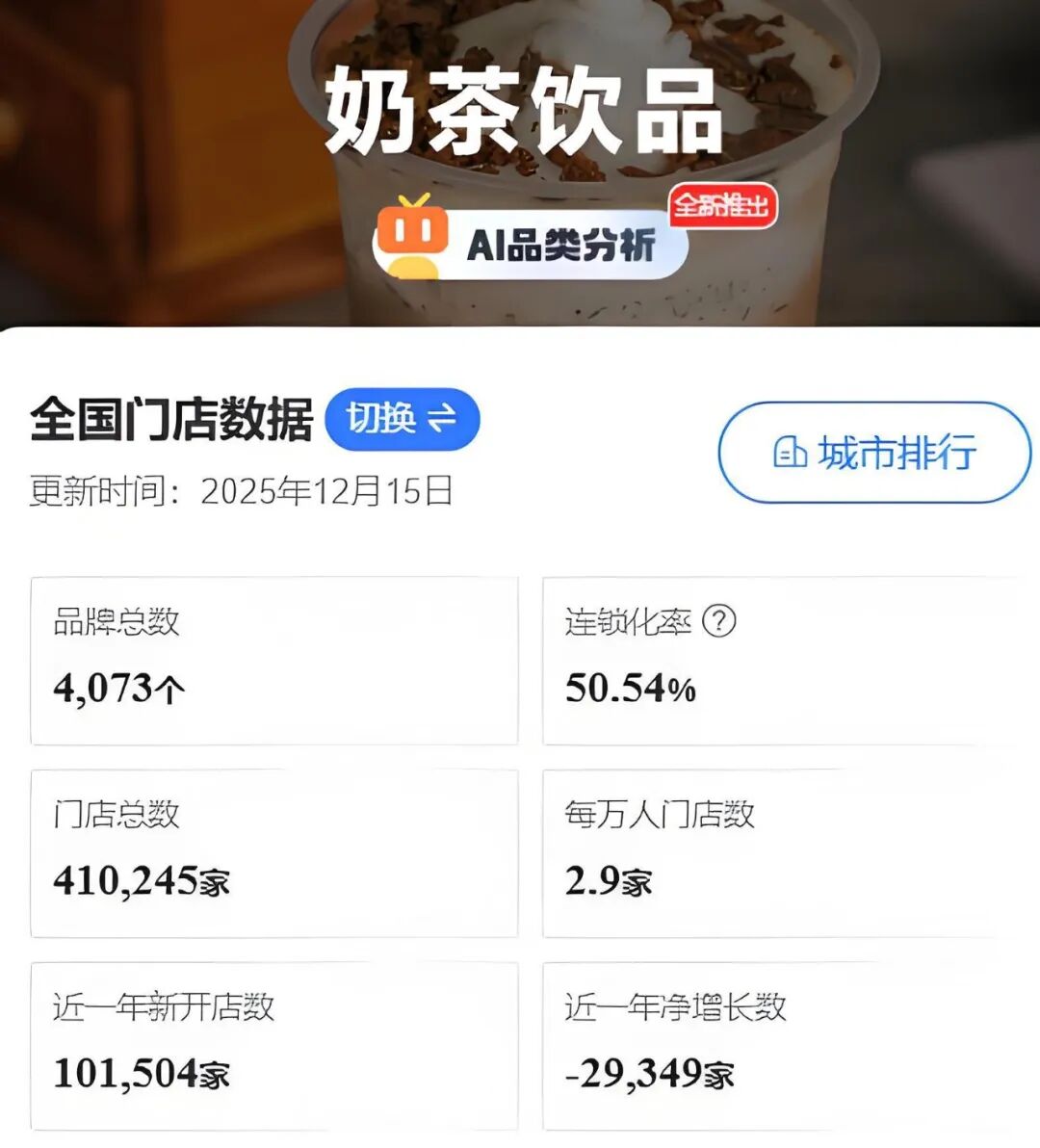
Core Insights - The new tea beverage sector in China has seen significant growth, with major brands like Mixue Ice City, Gu Ming, and others successfully going public, leading to the emergence of the "New Tea Beverage Six Dragons" [1][10] - The total number of tea beverage stores in China has surpassed 400,000, but the industry is experiencing a rapid "survival of the fittest" phase, with 157,000 stores closing in the past year [1][3] Industry Overview - The new tea beverage industry is characterized by a high chain rate of 50.54%, with a total of 410,245 stores and a net decrease of 29,349 stores in the past year [3] - The development of the tea beverage sector has evolved from low-cost, low-quality products in the 1980s to a focus on high-quality tea and innovative flavors in recent years [4][7] Brand Development - Major brands have adopted different strategies, with some focusing on single-hit products while others diversify their offerings [9][10] - The "single-hit" strategy has allowed brands like Shuyi Burned Fairy Grass to optimize their product development and operational efficiency, but it also poses risks if consumer preferences shift [11][13] Product Innovation - The introduction of unique products like cheese milk cap tea has revolutionized the market, leading to a focus on high-quality tea bases and innovative flavor combinations [5][7] - Brands are increasingly exploring the use of fresh fruits and unique ingredients to differentiate their products, although this also complicates supply chain management [8][17] Market Challenges - The rapid expansion of the new tea beverage market has led to intense competition and a high rate of store closures, indicating a need for brands to innovate continuously [1][13] - Supply chain complexities are increasing as brands strive to maintain quality and manage costs, with some companies investing in their own ingredient sourcing [17][18]
霸王茶姬还没做成“东方星巴克”,先得了星巴克的病
3 6 Ke· 2026-01-09 10:24
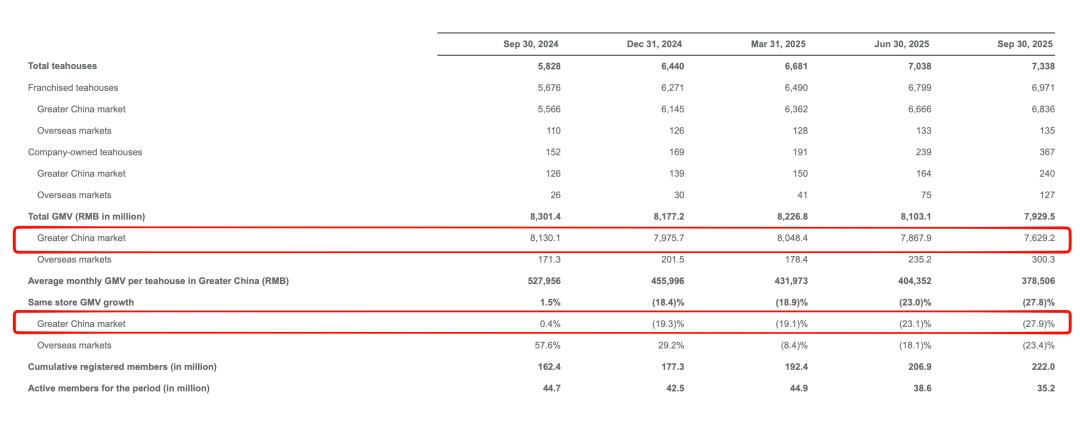
Core Viewpoint - The company BaWang Tea Ji, which went public on NASDAQ less than a year ago, is reportedly considering a secondary listing in Hong Kong, although it has denied these rumors. The company is experiencing a significant slowdown in revenue and profit growth, raising concerns about its market position and brand image [1][3][4]. Financial Performance - BaWang Tea Ji's revenue and profit growth have noticeably slowed over the past year, with growth rates declining for three consecutive quarters. In Q3 of the previous year, the company reported a revenue decline of 9.4% year-over-year and a nearly 40% drop in net profit, marking the first time its quarterly GMV turned negative [1][5]. - The average monthly GMV per teahouse in Greater China has been declining for seven consecutive quarters, with the same-store GMV growth rate falling into negative territory for four quarters, reaching a decline of nearly 28% in Q3 [1][2]. Market Position and Brand Image - BaWang Tea Ji has faced multiple public relations crises that have damaged its high-end brand image, including controversies over product ingredients and employee behavior. The company is known for its significant marketing expenditures, which have helped it establish a premium position in the market [3][4][11]. - The company has refrained from participating in the aggressive food delivery subsidy wars that have benefited competitors, which has contributed to its revenue decline. While other brands like MiXue Ice City and GuMing have seen substantial growth, BaWang Tea Ji's revenue growth has sharply decreased since Q2 of the previous year [5][6][7]. Expansion and Future Strategy - BaWang Tea Ji has expanded its store count significantly, from 1,087 in 2022 to 6,440 in 2024, but the pace of new store openings is expected to slow in 2025 [8][10]. - The company is exploring overseas markets, where it has seen better performance, with GMV in international markets exceeding 300 million RMB, reflecting a year-over-year growth of 75.3% [22]. Stock Performance - Since its peak market valuation of over $7 billion, BaWang Tea Ji's stock price has dropped by more than 60%, with a current market cap of approximately $2.366 billion [23].