
科思创

Search documents
业绩下滑股价不跌反涨,“化工茅”万华化学否极泰来?
2 1 Shi Ji Jing Ji Bao Dao· 2025-08-12 12:29
Core Viewpoint - Wanhua Chemical is currently under performance pressure, but the secondary market shows optimism about the company's recovery from the cyclical bottom, driven by favorable market conditions and unexpected financial results [1][3]. Financial Performance - For the first half of 2025, Wanhua Chemical reported total revenue of 90.901 billion yuan, a year-on-year decrease of 6.35%, and a net profit attributable to shareholders of 6.123 billion yuan, down 25.1% [1]. - In Q2 2025, the company achieved revenue of 47.834 billion yuan, a year-on-year decline of 6.04%, but a quarter-on-quarter increase of 11.07%. The net profit for the same period was 3.041 billion yuan, down 24.30% year-on-year and 1.34% quarter-on-quarter [1]. - The unexpected financial performance led to a rise in the company's stock price [1]. Market Dynamics - The stock price of Wanhua Chemical increased by 2.34% to 62.90 yuan as of August 12, 2025, with a monthly increase of over 14% in July due to reduced TDI production capacity in Europe [2]. - Despite a shareholder reducing their stake, the stock's strong performance continued, supported by institutional optimism regarding the company's business prospects [3]. Business Segments - Wanhua Chemical's main business includes polyurethane (MDI, TDI), petrochemical, fine chemicals, and new materials. In the first half of 2025, the sales revenue from polyurethane products was 36.888 billion yuan, petrochemical products and trade generated 34.933 billion yuan, and fine chemicals and new materials contributed 15.628 billion yuan [4]. - The polyurethane segment faced weak demand for pure MDI products, with market prices around 18,800 yuan/ton, while TDI products maintained growth in the automotive sector, with prices around 12,400 yuan/ton [5]. Industry Outlook - The global TDI supply crisis, exacerbated by a fire at a major European plant, is expected to create a supply-demand imbalance, potentially benefiting Wanhua Chemical [8]. - The company has made significant efforts in cost control and raw material upgrades, which are expected to enhance profit margins for its products [9]. - The overall economic environment remains a concern, with potential impacts on the profitability of the chemical industry, indicating that a full recovery for Wanhua Chemical may take time [9].

海外大宗化工衰退有望加速我国精细化工成长
Orient Securities· 2025-08-12 07:42
Investment Rating - The report maintains a "Positive" investment rating for the basic chemical industry [4] Core Viewpoints - The exit of overseas bulk chemicals is expected to accelerate the growth of China's fine chemicals [6][21] - China's petrochemical capacity has rapidly increased since 2018, surpassing the US in refining capacity in 2023, leading to a stronger competitive position compared to Europe and Northeast Asia [15][6] - The reduction in imports of phenol and the expansion of downstream products like PC and epoxy resins in China have significantly decreased overseas demand for phenol, creating opportunities for domestic fine chemical companies [15][6] Summary by Sections 1. Impact of Overseas Bulk Chemical Exit - The exit of European bulk chemical capacity is driven by the rapid enhancement of China's chemical industry competitiveness [10] - China's share in bulk chemicals has been increasing, with significant capital expenditure leading to output growth [10][18] - The exit of marginal capacity in Europe and Japan is expected to accelerate supply-demand balance restoration in the industry [23][24] 2. Opportunities for Domestic Fine Chemicals - China's technological breakthroughs and industry chain expansion are forcing European upstream bulk chemicals to exit [25] - The trend of European chemical industry exit is unlikely to reverse, providing growth opportunities for China's fine chemical enterprises [25][39] - The exit of bulk chemicals will lead to supply issues in fine chemical products, prompting demand for stable suppliers from China [39][44] 3. Investment Recommendations - Recommended companies include: - Huangma Technology (603181, Buy): A leader in specialty polyether with a total capacity of approximately 225,000 tons and new projects adding 330,000 tons [47] - Changqing Technology (603125, Not Rated): A leader in specialty monomers with a projected capacity increase from 35,000 tons to 90,500 tons by the end of 2024 [47] - Lianlong (300596, Buy): A leader in polymer materials with a focus on anti-aging agents and lubricant additives [47]


精彩回顾|LSEG投行业务线下研讨会(上海场)
Refinitiv路孚特· 2025-08-12 06:18
Core Insights - The article discusses the opportunities and challenges for Chinese enterprises in overseas mergers and acquisitions (M&A) by 2025, highlighting the significant changes in global trade dynamics and the need for compliance, financing, and transaction structuring considerations [1][5][11]. Group 1: M&A Market Overview - As of June 2025, M&A transactions involving Chinese mainland companies accounted for 13% of the global market share, totaling $252 billion, a 130% increase year-over-year, with transaction numbers up by 13% [6]. - The number of mega-deals (over $5 billion) globally increased by 67% compared to the previous year, while transactions over $1 billion involving Chinese mainland companies surged by 440% [6]. - However, cross-border transactions involving Chinese mainland companies totaled $7.4 billion, a decrease of 32% from the previous year, with Sino-American cross-border M&A down by 30% [6]. Group 2: Regional Insights and Trends - Southeast Asia has seen nearly $500 billion in cross-border M&A over the past decade, primarily in high-tech, finance, and industrial sectors, with Singapore, Indonesia, Vietnam, and Malaysia being popular target countries [6]. - Indonesia is highlighted as a growing market with a young workforce and a projected economy ranking seventh globally by 2030, attracting more companies for investment [12]. Group 3: Risks and Challenges - The article outlines the risks and challenges of entering the Indonesian market, including significant changes in economic trends and industry distributions, particularly in infrastructure and public construction [12]. - Legal considerations for investments in Indonesia are emphasized, including requirements for LLCs and specific industry regulations [12]. Group 4: Strategic Insights - The article notes that Chinese enterprises are increasingly adopting strategies such as nearshoring and brand acquisitions to navigate global tariff challenges, with examples of companies successfully leveraging local production to reduce costs [19]. - The importance of risk management tools is highlighted, with companies utilizing geopolitical due diligence and digital tools to monitor tariff policies and streamline decision-making processes [19].

909亿!万华化学!
DT新材料· 2025-08-11 16:03
Core Viewpoint - Wanhua Chemical reported a decline in revenue and net profit for the first half of the year, attributed to weak demand in its core business segments, particularly in polyurethane and petrochemical products [2][3][4]. Financial Performance - The company achieved a revenue of 90.901 billion yuan, a decrease of 6.35% year-on-year [3]. - Net profit attributable to shareholders was 6.123 billion yuan, down 25.1% compared to the previous year [2][3]. - The first quarter revenue was 43.068 billion yuan, reflecting a 6.7% decline year-on-year, with a net profit of 3.082 billion yuan, down 25.87% [2]. Business Segment Analysis Polyurethane Business - The polyurethane segment faced challenges due to slow recovery in overseas investments and weaker-than-expected demand in energy-efficient construction [4]. - The average market price for pure MDI was around 18,800 yuan/ton, while the average for polymer MDI was 16,700 yuan/ton [4]. - TDI products maintained growth in the automotive sector, with an average market price of 12,400 yuan/ton [4]. - Recent supply disruptions in the global TDI market led to a price rebound, with TDI prices increasing from 11,000 yuan/ton to 15,900 yuan/ton, a rise of over 40% [5]. Petrochemical Business - The petrochemical segment experienced compressed profit margins due to falling product prices and increased production capacity in the industry [6]. - Ethylene and propylene production capacities have increased significantly, with ethylene capacity up by 59% and propylene by 55% over the past five years [6]. - Wanhua's own ethylene plant achieved successful production, contributing to a total capacity of 61.74 million tons of ethylene and 34.09 million tons of propylene annually [6]. Fine Chemicals and New Materials - The fine chemicals and new materials segment showed stable development, supported by national strategies and emerging industry demands [7]. - Wanhua is advancing new MDI technology and expanding production capacity for specialty isocyanates [7]. - The company has made significant investments in R&D, leading to the successful launch of several innovative products, including bio-based 1,3-butanediol and optical-grade MS resin [14]. Cash Flow and Market Position - Despite the decline in profits, Wanhua Chemical reported a net cash flow from operating activities of 10.528 billion yuan, an increase of 2.3% year-on-year [9]. - The company ranked 15th in the global chemical industry according to a recent report, reflecting its strong market position and development momentum [9].

跨国化企二季度财报符合预期
Zhong Guo Hua Gong Bao· 2025-08-11 03:15
需求下降、供过于求是影响业绩主要因素 连日来,科莱恩、世索科、科思创、赢创、亨斯迈等全球跨国化企陆续发布了2025年度第二季度财报。 财报显示,跨国化企2025年二季度业绩与预期基本相符。在新的贸易壁垒冲击和充满挑战的经济环境 下,跨国化企高管普遍认为市场供过于求、需求下降是影响业绩的主要因素。 世索科实现了又一个季度的稳健利润率表现:第二季度净销售额达15.9亿欧元,价格总体保持稳定; EBITDA达3.35亿欧元,环比增长8%,核心业务板块利润率提升。以上数据符合企业预期。 科莱恩2025年第二季度价格和销售额保持稳定,盈利能力显著提升。第二季度销售额为9.68亿瑞士法 郎,保持稳定,催化剂以及吸附剂和添加剂业务的增长抵消了护理化学品业务的轻微下滑;价格同样保 持稳定。值得一提的是,该公司催化剂业务恢复增长,销量较去年同期增长5%。 科思创称,尽管销量基本保持稳定,但平均售价下滑和汇率因素对业绩造成了显著负面影响。总体而 言,受价格下跌影响,集团销售额降至34亿欧元;EBITDA为2.7亿欧元,符合预测;合并净利润 为-5900万欧元。 在日益严峻的经济环境下,赢创工业集团2025年第二季度的调整后EBI ...
年内第四起生产中断事件,全球TDI产能再削5%,国内产业链有望迎来利润修复
Xuan Gu Bao· 2025-08-10 14:43
Group 1 - Hanwha Chemical has temporarily halted its TDI production due to equipment failure, marking the fourth major TDI production disruption globally this year [1] - The global TDI supply chain has been significantly impacted following incidents at Mitsui Chemicals, Wanhua Chemical's planned maintenance, and Covestro's force majeure event [1] - The top five TDI producers hold approximately 75% of the market share, indicating a highly concentrated industry where disruptions can lead to a "butterfly effect" [1] Group 2 - Hanwha's annual production capacity is 150,000 tons, accounting for about 5% of the global supply, which is expected to directly affect spot supply in the Asia-Pacific region [1] - Domestic TDI spot prices in China have surged above 16,000 yuan per ton, with some prices reaching as high as 17,000 yuan per ton, as major domestic producers have raised their TDI listing prices in August [1] - According to data from the China Chemical Market Research Institute, the average price of domestic TDI in August increased by 17.94% month-on-month and 16.69% year-on-year [1] Group 3 - Wanhua Chemical has a TDI production capacity of 1.11 million tons per year [1] - Cangzhou Dahua has a TDI production capacity of 160,000 tons per year [1] - The current disruptions in global TDI production capacity may lead to price increases exceeding expectations, potentially restoring profits for related companies [1]

晚报 | 8月11日主题前瞻
Xuan Gu Bao· 2025-08-10 14:28
Group 1: Analog Chips - Texas Instruments (TI) has announced a significant price increase for over 60,000 product models, with general materials rising by 15%-30% and high-end chips doubling in price, marking a rare large-scale adjustment in recent years [1] - The demand for automotive and industrial-grade high-end analog chips has surged over 25%, limiting the capacity allocated to consumer electronics [1] - The price hike by TI is expected to prompt domestic analog chip companies to follow suit, indicating a potential turning point for the industry [1] Group 2: TDI Market - Hanwha Chemical has temporarily halted TDI production due to equipment failure, marking the fourth major TDI production disruption globally this year [2] - The global TDI supply chain is heavily impacted, with TDI prices in China exceeding 16,000 yuan/ton, and some sources reaching 17,000 yuan/ton, reflecting a 17.94% month-on-month increase [2] - The concentrated nature of the TDI market means that production interruptions can lead to significant price fluctuations and potential profit recovery for related companies [2] Group 3: Electronic Skin Technology - Chengdu Humanoid Robot Innovation Center has launched the world's first AI neural network electronic skin, which offers unprecedented tactile perception capabilities [3] - The electronic skin technology is expected to find applications in robotics, medical monitoring, and other fields, with a projected global market size of approximately $6.3 billion by 2024, growing at a compound annual growth rate of over 17% [3] Group 4: Nuclear Fusion - Jiangxi Fusion New Energy Company introduced its hybrid fusion-fission reactor project "Spark One," aiming to achieve demonstration power generation by 2030 [4] - The project utilizes high-temperature superconducting technology and is expected to address several challenges faced by traditional fusion technology [4] - Nuclear fusion is viewed as a key to sustainable energy, offering a clean and virtually limitless energy source [4] Group 5: Hydrogen Energy - A 30MW pure hydrogen gas turbine energy storage demonstration project has commenced in Inner Mongolia, marking a significant breakthrough in hydrogen energy generation [5] - The project aims to establish a "green electricity to green hydrogen, green hydrogen to power" model, contributing to China's dual carbon goals [5] - The hydrogen energy sector is anticipated to become a trillion-level growth driver, supported by policy and technological advancements [5] Group 6: AI Computing Power - Huawei is set to unveil breakthrough technology in AI inference at an upcoming forum, which may reduce reliance on high-bandwidth memory (HBM) and enhance domestic AI model performance [6] - The demand for computing power is expected to rise alongside advancements in AI models, creating new commercial opportunities in AI applications [6] Group 7: Robotics - Beijing Economic-Technological Development Area has launched a plan to support the development of embodied intelligent robots, introducing ten measures to foster innovation in the sector [7] - The focus is on collaborative technology development, data-driven initiatives, and promoting new business models within the robotics industry [7] - The market for humanoid robots is projected to grow significantly, with estimates suggesting a global market size exceeding $150 billion by 2035 [8]



化工板块回调藏机遇?TDI价格飙涨+政策反内卷,龙头春天将至?机构:化工景气度有望持续提升
Xin Lang Ji Jin· 2025-08-07 12:42
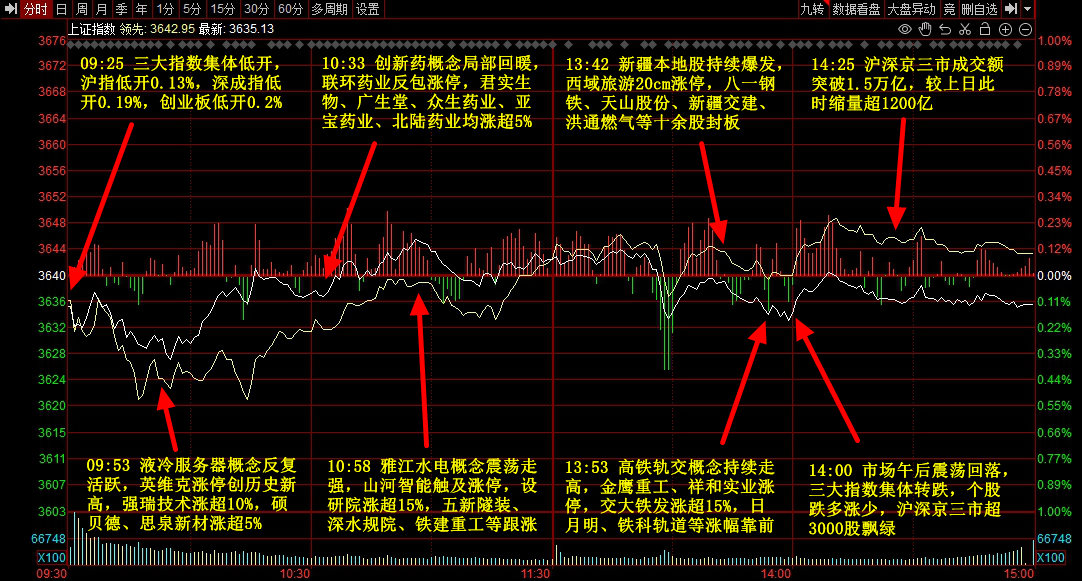
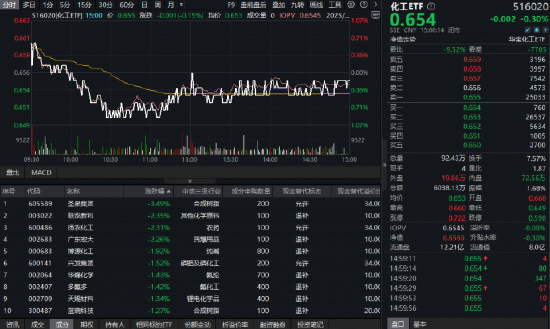
Group 1 - The chemical sector experienced a pullback on August 7, with the chemical ETF (516020) showing a decline of 0.3% at market close after a drop of over 1% during the day [1] - Key stocks in the sector, including Shengquan Group, Lianhong Xinke, Yangnong Chemical, and Guangdong Hongda, saw significant declines, with Shengquan Group down 3.49% and several others dropping over 2% [1][2] - The global TDI market is undergoing a sharp price increase due to supply disruptions, including a force majeure event at Covestro's TDI plant and a chlorine leak at Mitsui Chemicals' facility [2][3] Group 2 - Wanhua Chemical, a leading player in the TDI market with an annual capacity of 1.11 million tons, is expected to benefit from the rising TDI prices, which could enhance its profits significantly [3] - According to research, TDI prices are currently at historical lows, and any increase could lead to substantial profit gains for Wanhua Chemical, estimated at 830 million yuan for every 1,000 yuan per ton increase [3][4] - The chemical ETF (516020) has a significant holding in Wanhua Chemical, accounting for 10.28% of its portfolio as of the second quarter of 2025 [3][4] Group 3 - The chemical industry is facing challenges such as overcapacity and intensified competition, leading to declining profit margins [5] - Recent policies aim to optimize industry structure and encourage mergers, which may enhance market concentration and benefit leading companies [5] - The outlook for 2025 suggests a potential inventory replenishment cycle in the chemical sector, driven by fiscal policy support in China and the U.S., alongside supply constraints in Europe [5] Group 4 - The chemical ETF (516020) tracks the CSI segmented chemical industry index, with nearly 50% of its holdings in large-cap stocks like Wanhua Chemical and Yanhua Co., allowing investors to capitalize on strong market leaders [6] - The ETF provides a diversified exposure to various segments within the chemical industry, including phosphates, fluorochemicals, and nitrogen fertilizers [6]
“反内卷”主题专家会议:MDITDI
2025-08-05 03:20
Summary of Conference Call on TDI and MDI Market Industry Overview - **Industry**: TDI (Toluene Diisocyanate) and MDI (Methylene Diphenyl Diisocyanate) markets - **Current Situation**: Both TDI and MDI markets are experiencing supply tightness due to various factors including production halts and maintenance at key facilities [1][2][4][11] Key Points on TDI Market - **Supply Tightness**: TDI supply is constrained due to Covestro's force majeure and domestic factory maintenance, leading to a decrease in operating rates to 72%-73% [1][2] - **Price Surge**: TDI prices have increased nearly 30% since July 12, with domestic prices around 16,000 RMB/ton and expected to rise to 18,000 RMB/ton in the short term [1][4][21] - **Low Downstream Inventory**: Downstream companies have low inventory levels, with barrel goods holding about one month and bulk goods around half a month [1][5] - **Profit Margins**: TDI's profit margin is significant, with a profit of approximately 4,000 RMB per ton based on current market conditions [1][8] - **Export Growth**: TDI exports are projected to reach 450,000 to 500,000 tons in 2025, an 80% increase year-on-year, driven by reduced overseas capacity [1][10] Key Points on MDI Market - **Global Supply and Demand**: The global MDI market has a total capacity of approximately 11 million tons, with demand around 8.5 million tons, indicating a tight supply situation [11][12] - **Domestic Market Balance**: Domestic MDI capacity is 5.2 million tons, with demand close to 2.8-2.9 million tons, maintaining a relatively balanced supply-demand scenario [12] - **Price Fluctuations**: Domestic MDI prices range from 15,500 to 15,800 RMB/ton, with pure MDI priced about 1,000 RMB higher [13][19] - **Impact of Trade Wars**: The US-China trade war has affected MDI demand, particularly in the refrigerator and spray industries, leading to a 2%-3% loss in demand [16] Additional Insights - **Future Price Trends**: TDI prices are expected to continue rising, influenced by supply constraints and downstream demand capacity [4][21] - **Technological Developments**: New production technologies, such as urea-based methods, are being explored but face challenges in cost and market acceptance [23][24][26] - **Inventory Levels**: MDI inventory levels are normal, with most downstream factories maintaining about two weeks of stock [17][18] Conclusion The TDI and MDI markets are currently characterized by supply constraints and rising prices, with significant export opportunities for TDI. The MDI market remains relatively balanced but is influenced by external factors such as trade policies. Future developments in production technology may impact market dynamics, but acceptance and cost competitiveness remain key challenges.
德国化工企业预计2026年行业方见曙光
Zhong Guo Chan Ye Jing Ji Xin Xi Wang· 2025-08-04 23:22
Group 1 - The German chemical industry is projected to see a 2% decline in production by 2025, with recovery expected in 2026 [1] - In the first half of this year, production in the German chemical sector fell approximately 15% compared to the same period in 2018, with a year-on-year decline of 3% and a sales drop of 2% [1] - The average utilization rate of German chemical companies is at 80%, with around 40% of firms facing order shortages [1] Group 2 - The chief economist of Deutsche Bank indicated that U.S. tariff policies will significantly reduce the export volume of the German chemical industry to the U.S. [1] - Major German chemical companies like BASF and Covestro have lowered their profit forecasts for 2025 due to weak demand and uncertainties related to tariff policies [1] - The German Chemical Industry Association highlighted that high operational costs, complicated approval processes, and rising raw material prices are causing many companies to delay investment plans in Germany [1] Group 3 - The association emphasized the need for Germany to enhance energy transition management, balancing supply security, climate protection, and cost affordability [2] - It suggested that industrial policies should support innovation and technological advancement to improve economic and industry resilience [2] - The association proposed establishing a capital market and banking union within the EU framework to consolidate resources and stimulate investment [2]