小红书

Search documents
今年618,“扶优”战略正重构淘宝
Sou Hu Cai Jing· 2025-06-20 10:02
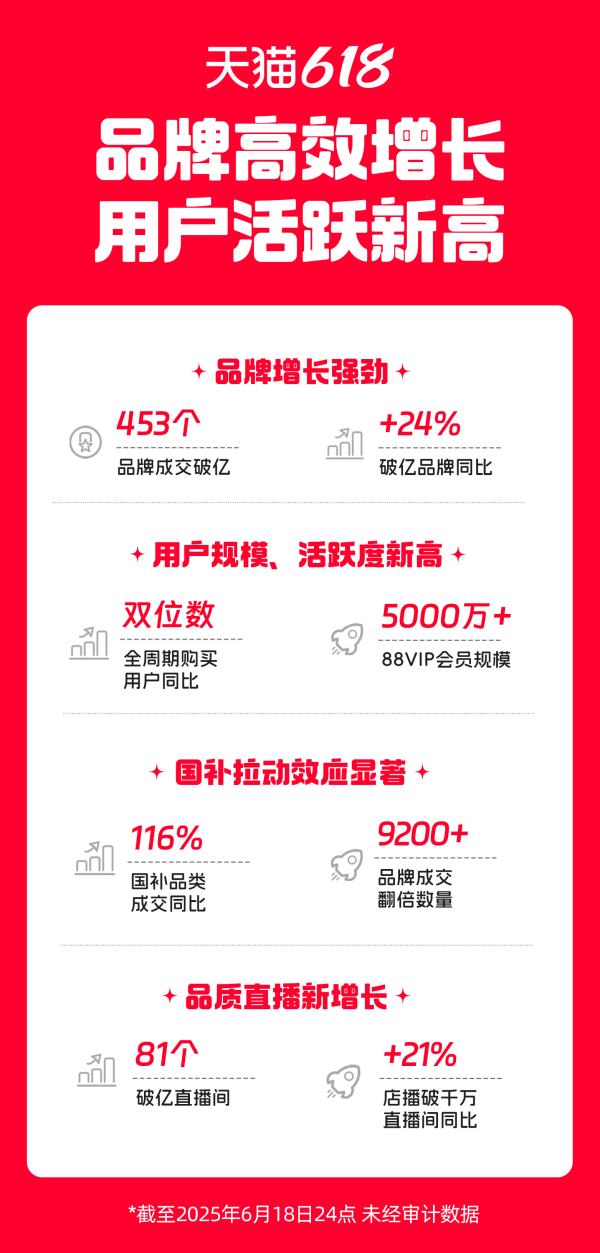
Core Viewpoint - Taobao is transforming its strategy to support high-quality merchants, moving away from low-quality competition and focusing on creating a healthier commercial ecosystem [5][17][26] Group 1: Performance and Strategy Changes - During the 618 shopping festival, Taobao reported record user engagement and transaction volume, with 453 brands achieving over 100 million yuan in sales, a 24% year-on-year increase [1] - Taobao has invested 10 billion yuan in subsidies for quality merchants through various promotional strategies, which has been well-received by both merchants and consumers [4][9] - The platform is shifting its focus from GMV (Gross Merchandise Volume) to the quality of transactions and consumer satisfaction, indicating a strategic pivot towards sustainable growth [6][7][21] Group 2: Merchant Support and Ecosystem Development - Taobao's "扶优" (supporting quality) strategy aims to create a fair and competitive environment for quality merchants while eliminating low-quality practices [19][24] - The introduction of the "真实体验分" (real experience score) system aims to provide a more transparent and fair evaluation of merchants, helping quality businesses stand out [11][12][21] - The collaboration with over 10,000 leading brands for member shopping credits demonstrates Taobao's commitment to investing in quality merchants and enhancing consumer experience [8][12][24] Group 3: Technological and Operational Innovations - Taobao is leveraging AI technology to combat fraudulent practices, such as the use of AI-generated fake images, thereby protecting both consumers and quality merchants [15] - The platform's new advertising collaboration with Xiaohongshu (Little Red Book) aims to enhance interconnectivity and provide additional growth opportunities for merchants [13] - By eliminating practices like "only refunds" and targeting malicious behaviors, Taobao is creating a more equitable operating environment for quality merchants [14][26]


9000+应用参与70+系统级创新体验的联合打造,鸿蒙实现操作系统与应用生态史上最大规模的联合创新
Cai Fu Zai Xian· 2025-06-20 09:33
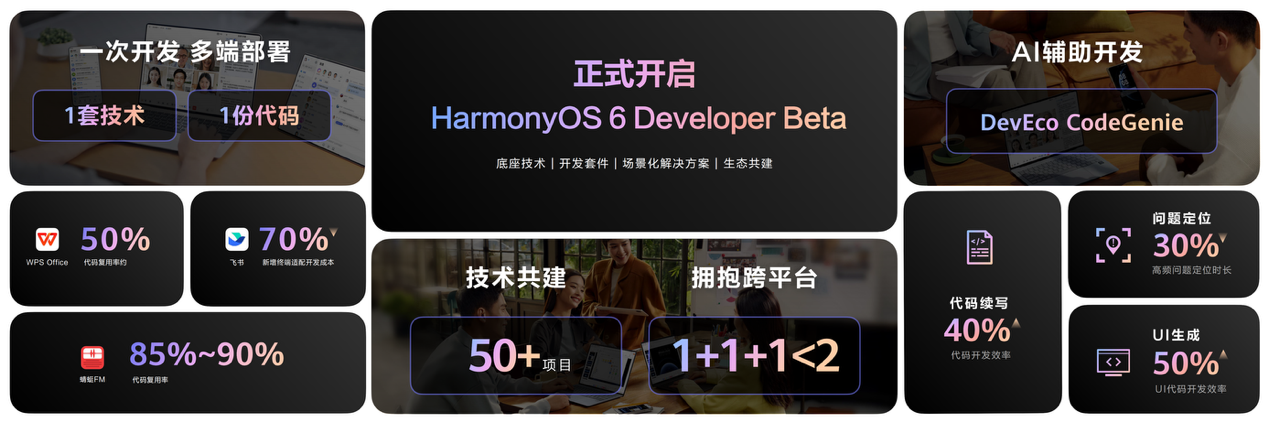
Core Insights - Huawei's Developer Conference 2025 (HDC 2025) showcased significant advancements in the HarmonyOS ecosystem, highlighting over 9,000 applications and more than 70 system-level innovations achieved through collaborative efforts [1] - The introduction of HarmonyOS 6 Developer Beta aims to enhance developer efficiency through a dual-engine approach of "one development, multi-end deployment" and AI-assisted development [1] Group 1: Development Efficiency - The "one development, multi-end deployment" concept revolutionizes application development, allowing developers to use a single technology stack for multiple platforms, achieving a code reuse rate of up to 90% [3] - Applications with identical functionalities across devices, such as Qingting FM, achieved a code reuse rate exceeding 80%, with specific adaptations requiring minimal development time [5] - Applications with partial functional differences, like Feishu and Bilibili, saw a code reuse rate of 50%-80%, significantly reducing development costs for new terminal adaptations [5] Group 2: Innovation and Experience - Developers can quickly implement innovative experiences, as demonstrated by Bilibili's immersive viewing features on new devices with minimal code [7] - The introduction of DevEco CodeGenie, an AI-powered assistant, enhances productivity in coding tasks, with notable improvements in code adoption rates and UI generation efficiency [9] Group 3: Ecosystem Collaboration - Over the past six months, more than 30 partners have collaborated on over 50 projects, fostering a "positive cycle" of ecosystem development [11] - Joint projects with partners like WeChat and Douyin have led to significant performance improvements in application components, such as a fourfold increase in image loading performance [13][15] - The collaborative efforts have resulted in tools that enhance performance, stability, and flexibility, benefiting developers and users alike [15]
工业富联正式实施轮值CEO制度;阿里云将在韩启用第二座数据中心;拼多多旗下Temu与甲骨文达成数据存储协议
Sou Hu Cai Jing· 2025-06-20 05:26
Group 1 - Industrial Fulian officially implements a rotating CEO system, with Chief Data Officer Liu Zongchang appointed as the first rotating CEO for a one-year term [3] - Alibaba Cloud is set to launch its second data center in South Korea as part of a $53 billion global investment plan to meet the growing demand for cloud computing and AI services [4] - Xiaohongshu's head of commercialization, Zhao Weichen, has left the company to pursue entrepreneurship in AI and robotics [5] Group 2 - Apple is seeking to leverage generative AI to accelerate the design process of its custom chips, aiming to enhance productivity significantly [6] - Google may face a €4.12 billion fine related to antitrust issues concerning its Android operating system, following a long-standing case initiated in 2018 [7] - Temu, a low-cost shopping site owned by PDD Holdings, has reached a data storage agreement with Oracle amid scrutiny over data privacy concerns in the U.S. [10] Group 3 - Amazon plans to invest over ₹20 billion (approximately $233 million) in India by 2025 to expand and upgrade its operational infrastructure [13] - Amazon's subsidiary Zoox has opened its first mass production facility in California, capable of producing over 10,000 robot taxis annually [14] - Fox Corporation has acquired the Mexican sports streaming platform Caliente TV to expand its sports programming content [15] Group 4 - Wolfspeed, a semiconductor manufacturer, is expected to announce a pre-packaged bankruptcy plan to rapidly reduce its debt [17] - Vodafone Group has appointed Pilar Lopez, a former Microsoft executive, as its next Chief Financial Officer, effective December 1, 2025 [18] - NTT Corporation has officially changed its name from "Nippon Telegraph and Telephone" to "NTT" as of July 1, 2023 [19] Group 5 - TDK has acquired U.S.-based smart glasses manufacturer SoftEye for less than $100 million, enhancing its portfolio in electronic components [20] - Microsoft's 2025 Work Trend Index report highlights the global workplace's struggle with "infinite workdays," indicating employees receive an average of 117 emails and 153 Teams messages daily [21]






618全网同比增长15.2%,但时间长了20%
Xin Lang Cai Jing· 2025-06-20 01:34
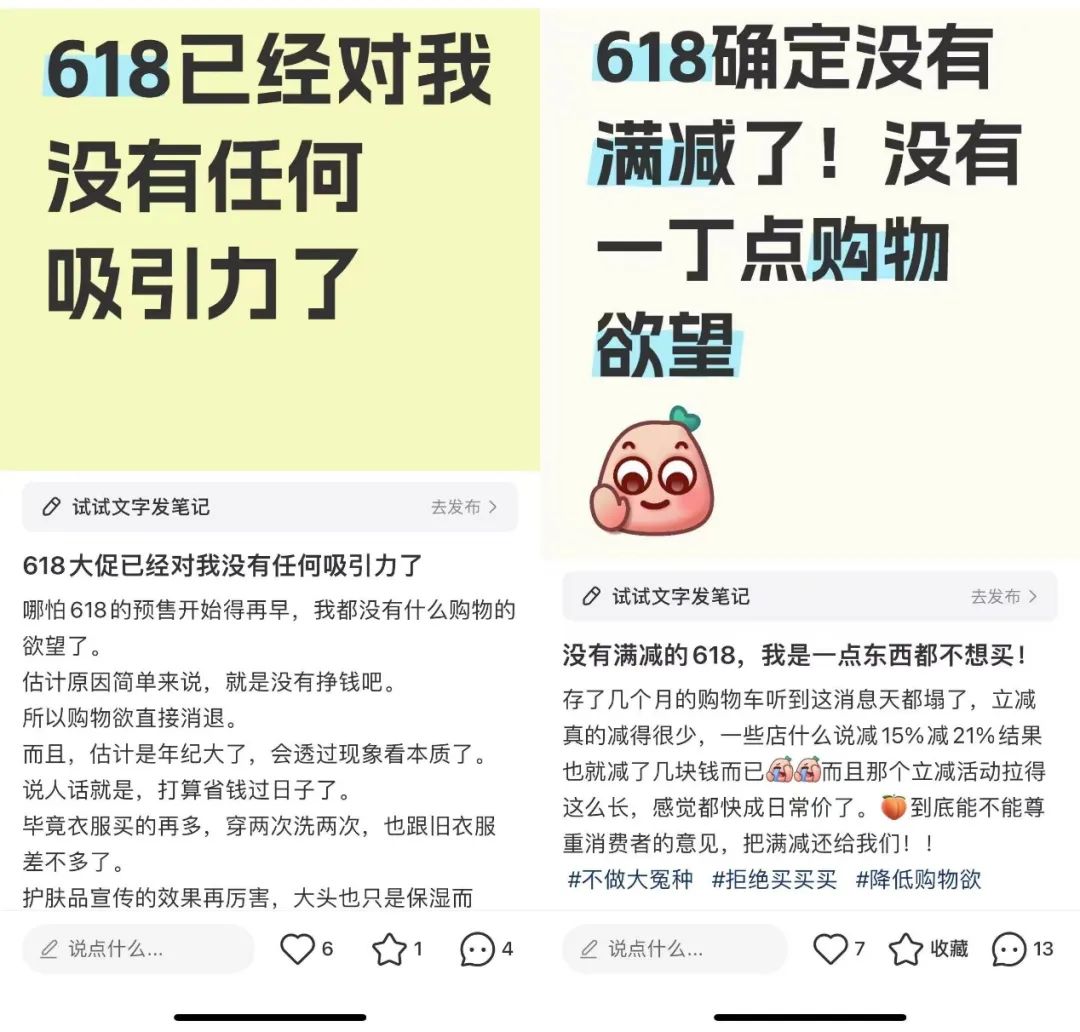
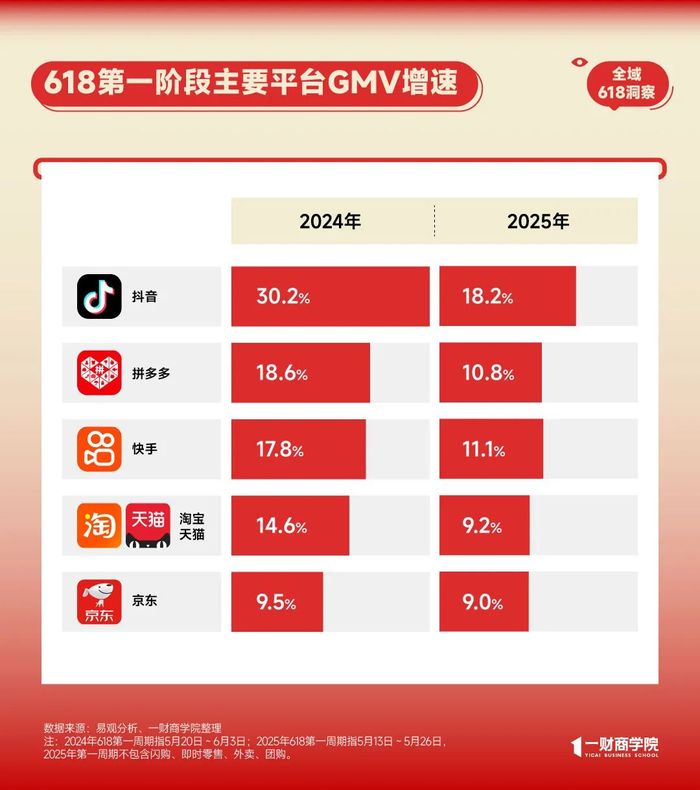
Core Insights - The 618 shopping festival has become less impactful, with consumers showing fatigue and the event being stretched over a longer period, leading to diminished excitement [1][10] - Despite a reported 15.2% year-on-year growth in GMV for major e-commerce platforms, the extended duration of the event has resulted in a less impressive performance when analyzed over a consistent timeframe [2][4] - Instant retail emerged as a significant growth area during the 618 festival, with platforms like JD and Meituan seeing substantial increases in user engagement and transaction volume [6][7] E-commerce Performance - The overall GMV for the 618 event increased by 15.2% year-on-year, but the extended duration of nearly 20% has skewed the perception of growth [2][4] - JD's app achieved a record high in daily active users (DAU), driven largely by its foray into the instant delivery market [6][8] - Instant retail platforms, including Meituan and JD, reported a 18.7% increase in transaction volume, outperforming traditional e-commerce channels [7] Consumer Behavior - Consumers are showing signs of fatigue towards frequent shopping festivals, with the 618 event now competing with numerous other promotional periods throughout the year [10][11] - The introduction of the "Red Cat and Red Jing Plan" aimed to attract users through content-driven marketing, but the effectiveness of such strategies is being questioned [3][11] Subsidy Impact - National subsidies have shifted from being auxiliary to becoming a central component of sales strategies for platforms like JD and Tmall, significantly impacting sales in categories like home appliances and electronics [8][10] - The depletion of subsidy funds has led to price adjustments, with some products being more expensive during the 618 event compared to previous months [10] Marketing Strategies - Tmall invested 50 billion yuan in cash incentives, focusing on live streaming and advertising to boost user engagement and sales [12][14] - JD's strategy included significant investment in its delivery workforce, which has resulted in a substantial increase in user numbers and order volume [13][14] - Douyin has emerged as a strong competitor, with its sales figures approaching those of JD, indicating a shift in consumer shopping behavior towards content-driven platforms [15][16]

补贴战只是表象!流量饥渴下的618:巨头告别单兵作战,服务消费成新战场
Hua Xia Shi Bao· 2025-06-19 16:55
Core Viewpoint - The 618 shopping festival this year has shown strong consumer growth, driven by multiple subsidies and a longer promotional period, with total online transaction volume reaching nearly 2 trillion yuan, a year-on-year increase of approximately 9.8% [3][4]. Group 1: Sales Performance - JD reported over 2.2 billion orders during the 618 festival, with daily active users on its main app reaching a historical high [2]. - Tmall announced that 453 brands achieved over 100 million yuan in sales, marking a 24% year-on-year growth [2]. - The sales of home appliances and 3C products were significantly boosted, with JD reporting a 50% increase in sales volume for mobile phones priced between 4,000 to 6,000 yuan and a 151% increase in AI laptop sales [4]. Group 2: Subsidy Impact - The combination of national subsidies, platform subsidies, and merchant subsidies has stimulated consumer growth, leading to better performance compared to previous years [3]. - The national subsidy program has been pivotal, with 1,620 billion yuan allocated to support consumption upgrades, and an additional 1,380 billion yuan planned for later this year [5]. Group 3: Marketing Strategies - E-commerce giants are actively seeking external traffic sources, with JD partnering with the Jiangsu Sports Industry Group to enhance brand visibility [6]. - Tmall has signed a strategic cooperation agreement with Xiaohongshu to drive traffic to its platform through content marketing [7]. Group 4: New Growth Areas - E-commerce platforms are exploring new growth avenues beyond traditional sales, with JD entering the travel and home service markets, reporting over 100 million yuan in transactions for its home service offerings [8]. - The online retail market has shown a 7.7% year-on-year growth, with service consumption leading the way, particularly in online entertainment and travel [8]. Group 5: Competition Landscape - The competition among e-commerce platforms is intensifying, with a focus on service quality and delivery capabilities, as well as price competitiveness [10]. - The entry of JD and Alibaba into the food delivery market has garnered significant attention, with JD's food delivery service achieving over 25 million daily orders shortly after launch [9].

对话:家办是一份“站在巨人肩膀上”的工作
3 6 Ke· 2025-06-19 12:15
Group 1 - The article discusses the launch of the "Family Office 100 People" interview series by Family Office Insight, aimed at exploring governance, operations, and asset allocation in the family office sector through in-depth conversations with industry veterans [1] - The interview features an industry practitioner, An Xu (pseudonym), who shares her investment journey, starting from strategic investments in internet giants to her current role in a family office focusing on global technology private equity [1][2] - An Xu emphasizes the importance of creating deep connections and real value in her career, highlighting the transformative impact of technology on everyday life [2][4] Group 2 - The investment philosophy of family offices is rooted in diversified asset allocation, contrasting with the more focused approach of strategic investments [7] - Family offices assess investment opportunities based on risk-adjusted returns and liquidity needs, rather than merely selecting the best asset class [7][9] - The unique perspective of family offices allows them to leverage insights from both primary and secondary markets, enhancing their investment decision-making [9] Group 3 - Artificial intelligence (AI) is a key focus area for family offices and their VC partners, with early-stage investments primarily centered on big data and algorithm applications [10] - The emergence of large language models (LLMs) has the potential to reshape knowledge acquisition and decision-making processes [10][12] - Family offices can quickly identify investment opportunities in the AI sector due to their ongoing communication with top fund managers and systematic industry tracking [13] Group 4 - Family offices are increasingly focusing on selecting emerging general partners (GPs) who are closer to the core venture capital ecosystem and can provide differentiated project sourcing [14] - The selection criteria for GPs include geographic proximity to innovation sources, quality of industry connections, and the ability to maintain independent, deep thinking amidst market noise [15][17][18] - The evolving landscape of venture capital in the U.S. presents both challenges and opportunities for family offices, necessitating a strategic approach to investment [20][21] Group 5 - The article highlights the shift in competitive advantage for family offices from capital scale to the ability to integrate scarce resources and top-tier investors [25] - Building a platform for aggregating quality GPs and employing diversified investment strategies is essential for achieving sustained excess returns [25]


造假黑灰产账号超过1000万个,社交平台正经历一场虚假信息攻防战
2 1 Shi Ji Jing Ji Bao Dao· 2025-06-19 11:30
Core Viewpoint - The rise of fake accounts and content on social media platforms, particularly through AI-generated personas, is becoming a significant issue, leading to a large-scale expansion of black and gray market activities [1][2]. Group 1: Nature of Fake Accounts - AI-generated personas, like the fictional Natasha, are being used to create believable yet false identities that attract followers and generate revenue for their operators [1]. - The methods for creating these accounts have become standardized and organized, typically involving three steps: account creation, trust-building, and monetization [1][2]. Group 2: Account Creation Techniques - Common techniques for account creation include: 1. Engaging users through misleading interactions, such as challenges that do not reciprocate [2]. 2. Capitalizing on trending topics or controversies to draw attention [2]. 3. Mass-producing similar accounts with low-cost content [2]. 4. Repurposing existing videos and content to attract views [2]. 5. Utilizing AI to generate various media content [2]. Group 3: Monetization and Market Impact - The monetization of these fake accounts often leads to the promotion of gray market products, including counterfeit goods and dubious health products [2]. - The black and gray market ecosystem is evolving, becoming more sophisticated and organized, with a clear division of labor among participants [3][4]. Group 4: Platform Response and Governance - Platforms like Xiaohongshu are implementing strict measures to combat fake content, including the removal of millions of fake posts and accounts [1][4]. - The governance strategy focuses on three main areas: false content, fake personas, and AI-generated content [4][5]. - Xiaohongshu is enhancing its AI detection capabilities and has established a comprehensive governance mechanism to identify and manage fake accounts [5][6]. Group 5: User Engagement and Reporting - To encourage genuine user engagement, Xiaohongshu has developed a "sincerity score" system to evaluate user authenticity and reward genuine content creators [6]. - The platform plans to improve its reporting mechanisms to make it easier for users to report fake content [6].
从虎扑到喜马拉雅,古典互联网正在消亡?
36氪· 2025-06-19 09:10
Core Viewpoint - The article discusses the decline of classical internet platforms, highlighting recent acquisitions of companies like Hupu and Ximalaya, which reflect a significant drop in their market valuations compared to their peak years [4][5][7]. Summary by Sections Recent Acquisitions - Xunlei acquired Hupu for 500 million, while Tencent Music purchased Ximalaya for 2.9 billion, both indicating a trend of established internet companies selling at lower valuations than in their prime [4]. - Hupu and Ximalaya, both over ten years old and once dominant in their niches, are now struggling to maintain their user bases and market positions [4][5]. Historical Context - The closure of platforms like Tianya Forum and the struggles of others like Renren and Douban illustrate the broader decline of classical internet communities [5][9]. - Hupu's valuation dropped from approximately 7.7 billion in 2019 to 500 million in 2023, reflecting a significant loss in user engagement and market value [8]. Financial Performance - Ximalaya's peak valuation was around 5 billion in 2021, but it faced challenges in maintaining growth and profitability, leading to its eventual acquisition by Tencent [7][15]. - Hupu's financial instability is evident from its failed IPO attempts due to high accounts receivable and fluctuating profits, with net profits varying significantly from 2013 to 2015 [14]. Market Dynamics - The rise of mobile internet and social media platforms has shifted user attention away from traditional content communities, leading to a decline in user engagement and content quality [18][19]. - Both Hupu and Ximalaya rely heavily on advertising and subscription models, making them vulnerable to market fluctuations and changes in user behavior [21][22]. Future Prospects - Despite the decline of classical internet platforms, there are still opportunities for niche content platforms to thrive, as seen with companies like Bilibili and Xiaohongshu, which have successfully adapted their business models [26][29]. - The article suggests that while the classical internet era is fading, community-driven platforms still hold potential for growth if they can balance content quality with monetization strategies [31].

史上最长“618” AI促进电商全流程“智变” 能否激发新消费动力?
Yang Guang Wang· 2025-06-19 08:11
Core Insights - The 618 shopping festival this year has set a record with a 39-day duration, featuring simplified promotional rules and the integration of AI tools to enhance efficiency and reduce costs for merchants [1][2] Group 1: Event Highlights - The 618 event has transitioned from complex discount structures to more straightforward promotional methods, such as direct price reductions and lower thresholds for consumer vouchers [1] - Major platforms like Taobao, JD, and Douyin have adopted direct discount and subsidy models to attract consumers [1][2] - Consumers are increasingly focused on product quality, cost-effectiveness, and after-sales service rather than being swayed by complicated discount schemes [2] Group 2: AI Integration - AI technology has emerged as a crucial tool for e-commerce during the promotional period, reshaping the entire process from product selection to customer service and logistics [3][4] - Platforms are utilizing AI to create personalized shopping experiences, such as generating custom product lists and enhancing marketing materials [4] - Despite challenges in AI's application, such as understanding complex queries, its potential in e-commerce is significant, promising a new ecosystem driven by technology and data interconnectivity [5][6] Group 3: Future Implications - The integration of AI is expected to redefine the value distribution logic within the e-commerce industry, moving from a focus on traffic competition to a phase of technological symbiosis [5][6] - Chinese brands are encouraged to leverage AI to better understand local consumer needs, positioning themselves for success in the intelligent transformation of the market [6]
2025“最长618”:硝烟散去,生态竞合
3 6 Ke· 2025-06-19 02:28
Core Insights - The 618 shopping festival has shifted from a price war to a focus on ecosystem competition among e-commerce platforms, emphasizing supply chain optimization and user experience enhancement [2][3][11] Promotional Strategies - Major platforms like Tmall, JD, and Douyin launched the 618 promotions earlier than last year, with new strategies such as Tmall's "one item discount" and JD's combination of national subsidies and delivery discounts [2][3] - The promotional tactics have evolved, with platforms moving away from aggressive price competition to enhancing overall service quality and ecosystem collaboration [2][10] Consumer Behavior - Consumers have shown signs of fatigue from continuous promotions, leading to a decline in the urgency to purchase during the 618 festival, despite it being perceived as the cheapest year [3][7] - The shopping experience has been negatively impacted by high return rates and quality issues, prompting platforms to reconsider their pricing strategies [7][8] Sales Performance - Last year's 618 saw a decline in sales, with a total of 742.8 billion yuan, marking a nearly 7% drop year-on-year, the first negative growth since the festival's inception [7] - In contrast, the sales during the subsequent Double 11 festival rebounded significantly, reaching 1.4418 trillion yuan, a 26.6% increase from the previous year [8] Ecosystem Collaboration - Platforms are increasingly forming strategic partnerships to enhance their competitive edge, such as Tmall's collaboration with Xiaohongshu and JD's partnership with Bilibili [11][12] - The industry is transitioning towards a "co-opetition" model, where platforms collaborate to enhance user engagement and drive sales [13][15] Marketing and User Engagement - The rise of content-driven marketing is reshaping consumer decision-making, with platforms leveraging influencers and content creators to build trust and loyalty [13][14] - E-commerce platforms are focusing on improving operational efficiency and marketing effectiveness to better serve merchants and consumers [16][17] Future Outlook - The competition in the e-commerce sector is expected to evolve from mere GMV comparisons to a more nuanced evaluation of ecosystem capabilities and resource integration [16][18] - Platforms are prioritizing long-term sustainability and ecosystem health over short-term gains, indicating a strategic shift in the industry [18]