华能国际

Search documents
公用事业行业2025年度中期投资策略:歧路无喧,电启新程
Changjiang Securities· 2025-07-01 05:44
Group 1: Core Insights - The current electricity industry is at a new starting point, with a focus on the ongoing deepening of electricity reform, which may catalyze a shift in the valuation anchor for the thermal power sector, particularly in Guangdong, where stock prices may present a good opportunity for investment [3][6][9] - The green electricity sector is entering a new demand-driven cycle following the issuance of Document 136, with wind power prices in certain provinces rebounding from historical lows, indicating a potential recovery in green electricity values [3][7][9] - Water and nuclear power assets are increasingly recognized for their long-term stable returns, especially in the current low-interest-rate environment, making them attractive investment opportunities [3][8][9] Group 2: Thermal Power Analysis - Since 2014, the thermal power sector has not demonstrated a systematic upward shift in valuation, with market consensus on profitability stability lacking, leading to a "Schrodinger state" for thermal power stocks as the market anticipates price negotiations in the second half of 2025 [6][17][18] - The market has historically experienced cycles of valuation driven by various factors, including coal price fluctuations and regulatory changes, with the current environment suggesting limited downside for electricity prices in Guangdong despite anticipated adjustments [6][22][24] Group 3: Green Power Development - The introduction of Document 136 has revolutionized the pricing mechanism for green electricity, allowing for better reflection of supply and demand dynamics, which is expected to alleviate previous pressures on green certificates and enhance their value [7][9][15] - The market has priced in pessimistic expectations for green electricity, but with wind resources expected to recover significantly, companies with high wind power ratios are positioned favorably for investment [7][9][15] Group 4: Water and Nuclear Power Insights - Water and nuclear power assets are viewed as the most underweighted in the public utility sector, with their scarcity in stable long-term returns becoming increasingly apparent in the current investment landscape [8][9][29] - The performance of major nuclear power companies is expected to improve significantly as capacity increases during the 14th Five-Year Plan, enhancing their free cash flow and capital expenditure capabilities [8][9][29]
机器人 硅基驱动,具身智跃 - 2025年中金公司中期投资策略会
中金· 2025-07-01 00:40
Investment Rating - The report does not explicitly state an investment rating for the industry Core Insights - The robotics industry is experiencing significant advancements driven by AI and hardware evolution, particularly in sectors like automotive and semiconductor manufacturing [1][6][28] - Companies like Zhijunfang and Youai Zhihe are leading in the development of embodied robots and mobile operation robots, respectively, with applications in high-end manufacturing and energy sectors [1][4][28] - The integration of advanced technologies such as end-to-end VLA and AI-driven algorithms is crucial for enhancing the reliability and efficiency of industrial robots [2][8][10] Summary by Sections Company Overview - Zhijunfang focuses on embodied robotics, collaborating with major clients like Geely and Dongfeng to implement solutions in automotive and semiconductor industries [1][2] - Youai Zhihe, a leader in mobile operation robots, has established itself as a standard setter in the industry, serving clients in semiconductor and energy sectors [4][28] - Jiangsu Fuxing Electric specializes in motor design and manufacturing, producing over 6 million motors annually, with more than 50% exported to Europe and the US [5][32] Technological Developments - The robotics industry is shifting towards a more generalized and cost-effective approach, with a focus on enhancing technology and exploring new application scenarios [10][28] - The transition from industrial control to GPU supercomputing platforms is reshaping the hardware architecture of robots, enabling more sophisticated functionalities [7][28] - The development of intelligent components is essential for the evolution of robotics, requiring collaboration between component manufacturers and robotics companies [26][27] Market Dynamics - The Chinese robotics industry has gained significant global competitiveness, with successful deployments in over 20 countries and notable projects in Europe and Japan [29][30][31] - The rapid development of China's manufacturing sector has provided ample opportunities for robotics companies to innovate and refine their technologies [31][32] - The future of industrial robots is expected to involve greater integration of software and hardware, with a focus on modularization and standardization to enhance efficiency and reduce costs [19][22][23]

智通港股沽空统计|7月1日
智通财经网· 2025-07-01 00:21
Short Selling Ratios - Great Wall Motor-R (82333) and JD Health-R (86618) have the highest short selling ratios at 100.00% [1][2] - BYD Company-R (81211) follows with a short selling ratio of 86.11% [1][2] Short Selling Amounts - Xiaomi Group-W (01810) leads in short selling amount with 1.733 billion [2] - Meituan-W (03690) and Alibaba-SW (09988) follow with 901 million and 803 million respectively [1][2] Deviation Values - JD Health-R (86618) has the highest deviation value at 48.31% [1][2] - SF Holding (N23067) and Xiaomi Group-W (01810) also show significant deviation values of 47.35% and 36.04% respectively [1][2]



太平洋保险“金诺优享”屡遭投诉,投保人维权无门
Guan Cha Zhe Wang· 2025-06-30 10:04
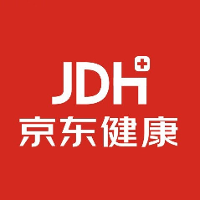
Group 1: Core Issues with Pacific Insurance Products - Pacific Insurance's product "Jin Nuo You Xiang" has faced multiple complaints regarding exaggerated promises and hidden clauses by sales agents [1][2] - A consumer reported that the sales agent promised a 19-year payment period with full access to principal, but the actual contract required 28 years of payments, leading to a significant discrepancy [1][5] - Complaints highlight a systemic issue in the industry where sales tactics mislead consumers about the nature of benefits, particularly regarding "cash dividends" versus "increased coverage" [6][7] Group 2: Financial Performance and Investment Challenges - In Q1 2025, Pacific Insurance reported a net profit decline of 18.1%, with fair value changes in investments dropping from 151 billion to 16.55 billion, a decrease of 89% [8] - The company's total investment assets reached 2.73 trillion, with a significant increase in stock holdings, but faced substantial losses, particularly in investments like Tianqi Lithium, which saw a 60% drop in stock price [9][10] - The management has indicated a strategic shift to avoid over-investing in single industries and to focus on long-term bonds to mitigate risks associated with fluctuating interest rates [10][11] Group 3: Regulatory Environment and Industry Outlook - The insurance industry is facing tighter regulatory scrutiny, with new policies aimed at enhancing risk management and ensuring that investment strategies align with long-term business stability [11] - Pacific Insurance's life insurance segment has shown a decline in revenue, contrasting sharply with competitors like Taikang Life, which reported a 12.4% increase [11]



帮主郑重:A股半年收官战暗藏三大玄机!这两条主线或将引爆下半年行情
Sou Hu Cai Jing· 2025-06-30 04:06
Market Overview - The A-share market is experiencing significant movements, with three key signals emerging that may influence investment directions for the second half of the year [1][3]. Technical Analysis - The Shanghai Composite Index fell by 0.7% due to bank stocks, while the Shenzhen Component and ChiNext Index showed resilience, with the ChiNext Index stabilizing above the 20-day moving average [3]. - A MACD weekly golden cross is forming, historically leading to an average increase of over 25% in the market [3]. - The KDJ indicator suggests potential short-term technical adjustments, with a focus on maintaining a trading volume above 1.2 trillion yuan to break the 3450-point resistance level [3]. Fund Flow Analysis - Northbound capital has been actively returning since mid-June, particularly favoring semiconductor leading stocks, indicating institutional buying behavior [3]. - Domestic capital shows mixed signals, with a net outflow of 26.7 billion yuan from main funds, while speculative funds are targeting sectors like non-ferrous metals and AI computing [3]. Policy Environment - Recent announcements from the four major exchanges indicate a push for multi-dimensional reforms, with the China Securities Regulatory Commission allowing unprofitable companies to list on the ChiNext [4]. - The State Council's emphasis on "technology-driven growth" and the central bank's commitment to support technological innovation are expected to benefit sectors like semiconductors and AI computing [4]. - The upcoming implementation of stablecoin regulations in Hong Kong is likely to boost digital currency-related stocks [4]. Investment Opportunities - Two main investment themes for the second half of the year are identified: 1. "Performance certainty + policy benefits" focusing on semiconductor equipment companies like Zhongwei and Northern Huachuang, and AI computing firms like LianTe and Zhongji Xuchuang, which have strong order backlogs [4]. 2. "Defensive + offensive" high-dividend transformation targets such as Huaneng International and Guodian Power, which are benefiting from capacity price reforms while transitioning to green energy [4]. Special Considerations - The market may experience volatility, particularly if bank stocks continue to decline, with a critical psychological support level at 3400 points [5]. - Emerging technology sectors like humanoid robots and perovskite materials are receiving policy support, making related stocks worth monitoring [5].
中泰国际每日策略-20250630
ZHONGTAI INTERNATIONAL SECURITIES· 2025-06-30 01:49
Market Performance - The Hang Seng Index rose 3.2% last week, closing at 24,284 points[1] - The Hang Seng Tech Index increased by 4.1%, ending at 5,341 points[1] - Weekly trading volume increased by 20.4% to HKD 248.8 billion[1] Sector Analysis - The materials sector surged 7.7%, benefiting from rising gold and non-ferrous metal stocks[1] - The information technology and financial sectors both rose by 4.3%[1] - The energy and utilities sectors declined by 1.1% and 0.4%, respectively[1] Currency and Liquidity - The Hong Kong dollar hit the weak end of the peg at 7.85, prompting the HKMA to buy HKD 9.42 billion for the first time in 2023[1] - The HKMA injected HKD 129.4 billion into the banking system in May, indicating stable liquidity unless further actions are taken[1] Real Estate Market - New home sales in 30 major cities fell 11.8% year-on-year, with a slight month-on-month increase of 16.1%[7] - The property inventory-to-sales ratio for major cities rose to 94.5, up from 83.6 year-on-year[9] - Land transaction volume in 100 major cities dropped by 31.8% year-on-year[10] Investment Recommendations - Focus on AI and robotics sectors, as well as semiconductor industries benefiting from policy support[15] - Caution advised due to ongoing financing activities and potential liquidity challenges in the Hong Kong market[1]
中国华能副总经理李启钊:“能源企业于境外应积极履行多重使命”
Zhong Guo Dian Li Bao· 2025-06-30 00:38
Core Viewpoint - The interview emphasizes the importance of energy cooperation within the Shanghai Cooperation Organization (SCO) framework, highlighting the role of Chinese energy companies in promoting clean energy and supporting economic development in member countries [2][3][4]. Group 1: Importance of Energy Cooperation - Energy industry is crucial for national economy and people's livelihood, with projects enhancing local electricity supply and improving living standards in underdeveloped regions [3]. - Chinese energy projects provide stable and clean electricity, significantly improving daily life for local populations who previously relied on traditional energy sources [3]. - The implementation of these projects showcases the export of Chinese technology and management systems, leading to competitive electricity pricing and fostering local economic development [3][4]. Group 2: Role of Chinese Energy Companies - Chinese companies play a vital role in assisting SCO member countries with energy transition, particularly in regions facing funding shortages [5]. - Since the establishment of the SCO in 2001, Chinese enterprises have deepened energy cooperation, contributing to regional energy security and economic growth [5]. - Notable projects include the Sahiwal coal power plant in Pakistan, which addresses nearly a quarter of the country's electricity shortfall, and significant hydropower projects in Myanmar and Cambodia [5]. Group 3: Social Responsibility and Community Impact - Chinese energy companies actively fulfill social responsibilities, translating ESG principles into tangible practices, such as vocational training and job creation in local communities [6]. - Initiatives include establishing training centers in Pakistan, creating over 2,000 jobs in Cambodia, and providing infrastructure support in Myanmar [6]. - The company has demonstrated commitment during crises, such as restoring power quickly after a major earthquake in Myanmar and addressing power outages in Pakistan [6]. Group 4: Future Directions - The company aims to continue stable operations of existing projects and expand cooperation in clean energy and technology with SCO countries, particularly Uzbekistan [7]. - The focus will be on enhancing regional energy security and development through collaborative efforts [7].

新疆、蒙西“136号文”承接方案发布,存量平稳过渡
Xiangcai Securities· 2025-06-29 14:11
Investment Rating - The industry investment rating is maintained at "Overweight" [2][10]. Core Viewpoints - The report highlights the recent release of the "136 Document" implementation plans in Xinjiang and Inner Mongolia, indicating a stable transition for existing projects [7][9]. - The report emphasizes the acceleration of the national unified electricity market construction, which is expected to lead to a revaluation of electricity asset values [10][42]. - The report recommends focusing on three main lines: hydropower targets with stable fundamentals, thermal power targets with improving performance due to cost reductions, and leading companies with strong operational capabilities in the green electricity sector [10][42]. Summary by Sections Industry Performance - The public utility sector (Shenwan) rose by 0.09% this week, underperforming the market by 1.86 percentage points, ranking 28th among Shenwan's primary industries [4]. - Sub-sectors showed varied performance, with heating services up 6.5%, photovoltaic power up 2.41%, and thermal power down 0.63% [4]. Key Data Tracking - Domestic natural gas prices slightly increased, with the LNG ex-factory price at 4416 RMB/ton, a week-on-week increase of 0.2% [6]. - The average inflow of the Three Gorges Reservoir increased significantly by 29.14% week-on-week [6]. Industry Dynamics - The "136 Document" implementation plans detail fixed electricity prices for existing projects in Inner Mongolia and Xinjiang, with specific pricing mechanisms for different project types [7][9]. Investment Recommendations - The report suggests investing in companies like Huaneng Hydropower, Huaneng International, Jingneng Power, and Funiu Co., which are expected to benefit from the ongoing market reforms and stable project profitability [10][42].
光伏5月新增装机93GW,南方区域电力市场启动连续结算
GOLDEN SUN SECURITIES· 2025-06-29 09:44
Investment Rating - The industry investment rating is maintained as "Increase" [4][3] Core Views - The "136 Document" catalyzes rapid growth in new energy this year, with accelerated electricity market reforms and the southern regional market starting continuous settlement, leading to more flexible electricity pricing reflecting supply and demand changes [3][10] - The cumulative installed capacity of solar power reached 1.08 billion kilowatts by the end of May, with a year-on-year increase of 56.9%, while the share of thermal power generation capacity decreased to approximately 40% [15][67] - The southern regional electricity market officially transitioned to continuous settlement, allowing for daily trading and better reflection of supply-demand dynamics [15][10] Summary by Sections Industry Overview - As of the end of May, the total installed power generation capacity in China reached 3.61 billion kilowatts, a year-on-year increase of 18.8% [15][67] - In the first five months of the year, solar power added 197.85 GW of new capacity, a year-on-year increase of 149.97%, while wind power added 46.28 GW, a year-on-year increase of 134.21% [15][67] Market Dynamics - The average daily trading volume in the southern regional electricity market is expected to reach 3.8 billion kilowatt-hours after the transition to continuous settlement [15][10] - The coal price rebounded to 620 yuan per ton, impacting the thermal power sector [11][3] Key Stocks - Recommended stocks include Huaneng International, Jingtou Energy, Huadian International, Sheneng Co., and Baoneng New Energy, focusing on those with flexible quarterly performance [3][7] - Emphasis on undervalued green electricity operators, particularly in Hong Kong stocks and wind power operators, such as Xintian Green Energy and Zhongmin Energy [3][7] Carbon Market - The national carbon market trading price increased by 4.83% this week, with a total trading volume of 6.68 billion tons and a cumulative trading amount of 458.99 billion yuan [52][69]


黄仁勋首次投资核电,6.5亿美元建首座商业反应堆,预计2030投产
量子位· 2025-06-29 07:43
Core Viewpoint - Nvidia's venture arm NVentures has invested in TerraPower, a nuclear energy company founded by Bill Gates, marking a significant entry into the nuclear sector by Jensen Huang [1][4]. Group 1: Investment and Financing - TerraPower has secured $650 million in funding to construct its first commercial nuclear power plant, the Natrium reactor project, located in Wyoming, USA [2]. - The financing round also included investments from South Korea's Hyundai and Bill Gates himself [4]. Group 2: Technology and Capacity - The Natrium reactor will generate 345 megawatts of power, with a peak output of 500 megawatts, sufficient to power approximately 400,000 homes [3]. - The reactor employs sodium-cooled fast reactor (SFR) technology, which uses liquid sodium as a coolant, enhancing safety and simplifying design compared to traditional water-cooled reactors [13]. - The Natrium system integrates a gigawatt-level molten salt energy storage system, allowing for flexible power output adjustments to meet grid demands [15][17]. Group 3: Future Developments - TerraPower is also developing molten chloride fast reactor (MCFR) technology, which operates at higher temperatures, potentially increasing efficiency and providing process heat for industrial applications [19]. - Both SFR and MCFR technologies are part of the fourth generation of nuclear energy systems, which include various innovative approaches to nuclear power generation [21]. Group 4: Industry Trends - The surge in nuclear investment is driven by the increasing electricity demand from AI data centers, with notable figures like Sam Altman actively investing in nuclear energy companies [37][38]. - Other tech giants, such as Amazon and Google, are also making significant investments in nuclear energy, indicating a broader trend within the industry [46]. Group 5: Additional Applications - TerraPower is not solely focused on nuclear power; it is also exploring the use of nuclear technology for cancer treatment, specifically through the development of Ac-225 for targeted alpha therapy [48][49].